v2.webp)
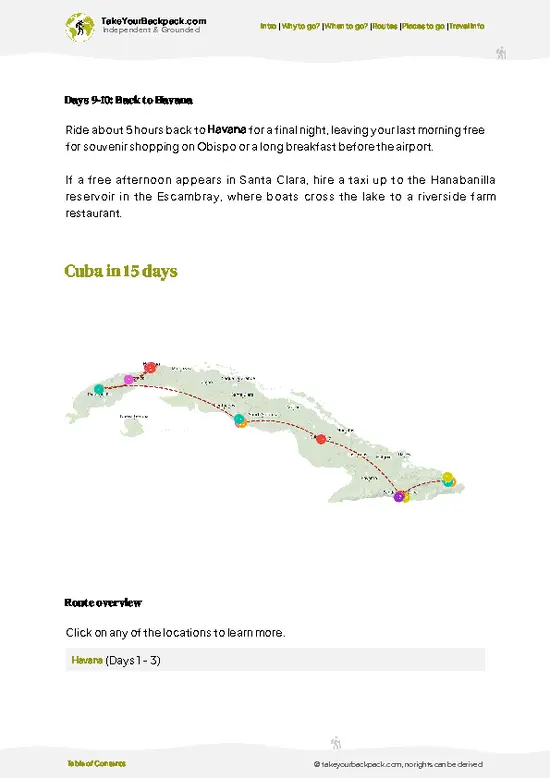
- Pico Turquino: The island's highest point, reached by a steep climb through humid forest to a summit with a bust of José Martí and views over the Caribbean on clear mornings.
- Comandancia de la Plata: The rebel command post used during the 1950s revolution, with a few wooden buildings including Fidel Castro's hut, set high in dense forest.
- Alto del Naranjo: A high lookout along the access route to the Comandancia, with wide views over green ridges and the southern sea.
- Santo Domingo area: The village at the start of many routes, where the Yara river cuts through the valley and families rent rooms and cook meals.
- Cloud forest on the Turquino ascent: Higher up, moss, tree ferns and orchids cover the trees, and birdsong replaces the lowland noise.
- Pico Turquino: The island's highest point, reached by a steep climb through humid forest to a summit with a bust of José Martí and views over the Caribbean on clear mornings.
- Comandancia de la Plata: The rebel command post used during the 1950s revolution, with a few wooden buildings including Fidel Castro's hut, set high in dense forest.
- Alto del Naranjo: A high lookout along the access route to the Comandancia, with wide views over green ridges and the southern sea.
- Santo Domingo area: The village at the start of many routes, where the Yara river cuts through the valley and families rent rooms and cook meals.
- Cloud forest on the Turquino ascent: Higher up, moss, tree ferns and orchids cover the trees, and birdsong replaces the lowland noise.
Spotted a mistake or missing something? Contact us.

 Best Backpacking
.jpg) Hi, I’m Johan (Netherlands 🇳🇱), the creator of TakeYourBackpack. Over the past 3 decades, I’ve backpacked through 90+ countries across six continents, gaining extensive experience with independent travel, long-term trips, and overland routes.
Hi, I’m Johan (Netherlands 🇳🇱), the creator of TakeYourBackpack. Over the past 3 decades, I’ve backpacked through 90+ countries across six continents, gaining extensive experience with independent travel, long-term trips, and overland routes.