×

Cuba🇨🇺 | landmarksCastillo de San Pedro de la RocaSea-edge bastions, cannon batteries, bay-mouth views, dusk cannon firing | things to do and best time to go

Explore San CristóbalExplore Soroa

Backpacking in Castillo de San Pedro de la Roca
UNESCO World Heritage site
🏆 Top pickunique site ranked #1
By Johan Kruseman 🇳🇱 | Updated October 22, 2026

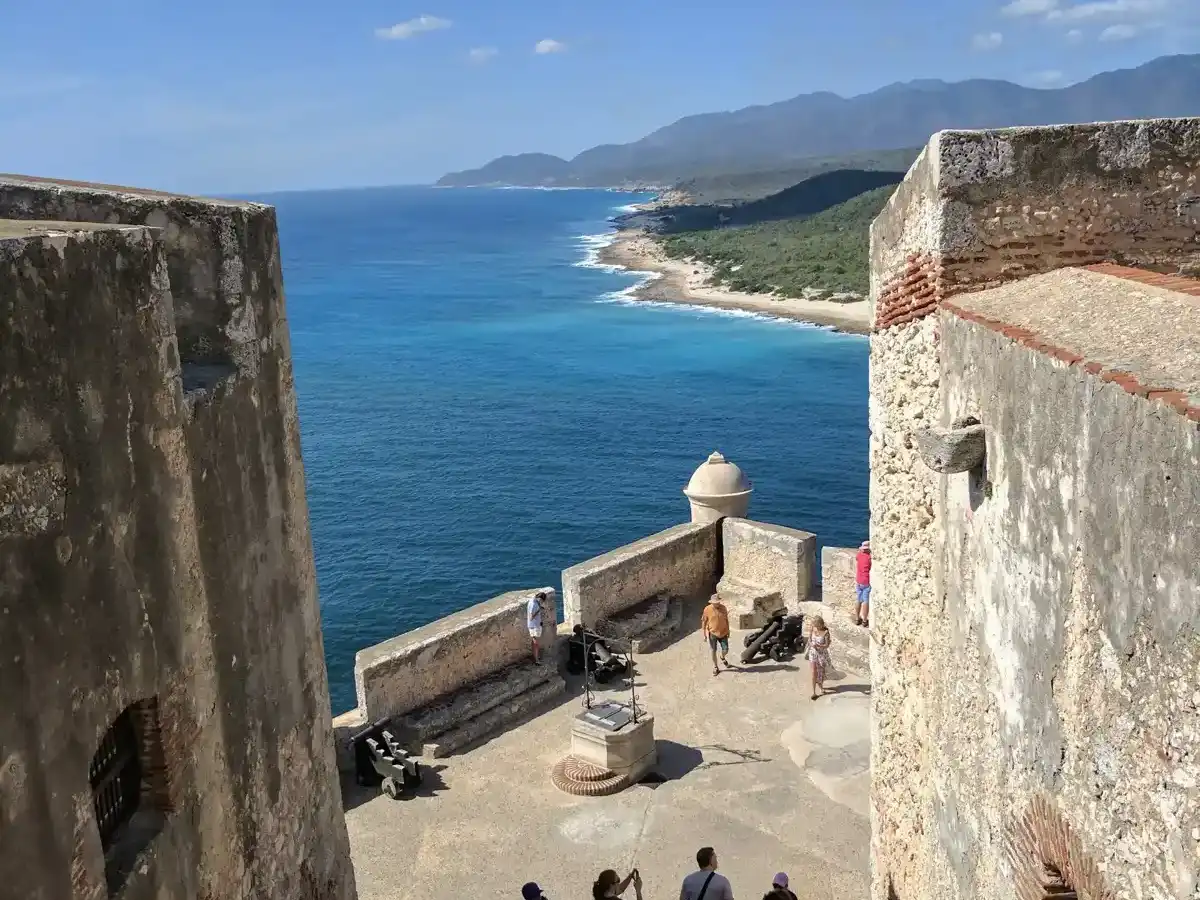
The fortress sits on a 60-meter bluff above the narrow mouth of Santiago de Cuba’s harbor, and UNESCO, which listed it in 1997, calls it the best-preserved and most complete example of Spanish-American military architecture. Castillo de San Pedro de la Roca stands at the entrance to Santiago Bay, on Cuba’s southeastern coast, a short drive west of the city of Santiago de Cuba. The wow-factor is real: stacked terraces, bastions, and cannon platforms drop straight to the sea. Crowds stay modest, mostly tour groups in late morning, and the entry fee is small for what you get. Skip the gift stalls and the paid costume photos. The museum rooms are thin on labels, so they are worth only a quick pass. The ramparts and the views are the point. A driver told me, “Mira el mar primero, después el museo,” and he was right: the sea comes first. Go in the afternoon for softer light, and bring cash in pesos or dollars for the ticket.

Discover everything you want to know in the 📖 Cuba Travel Guide.


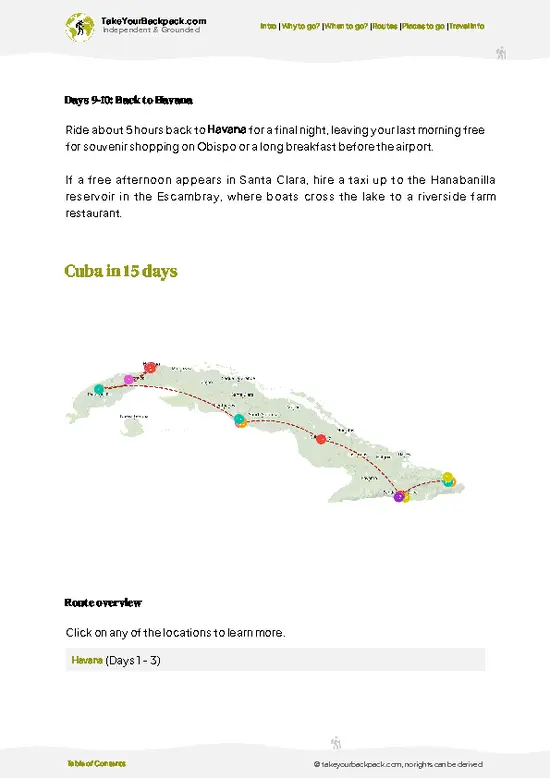
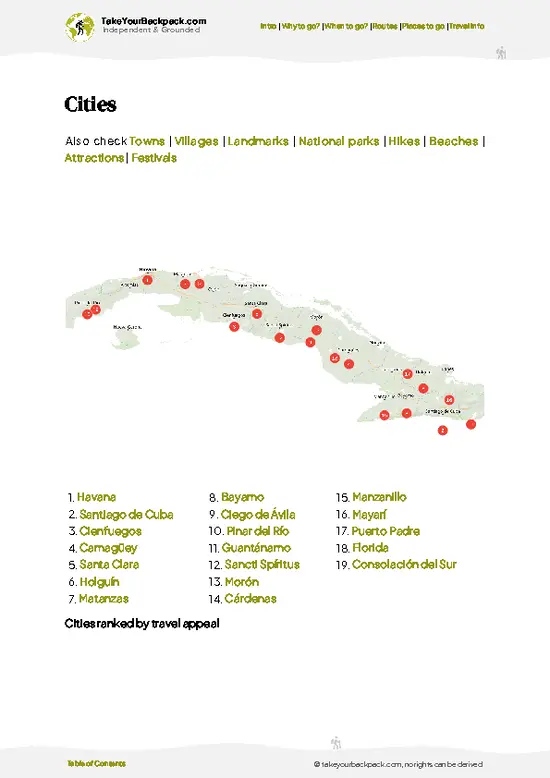
example page 0 from our offline Travel Guide for Cuba
example page 1 from our offline Travel Guide for Cuba
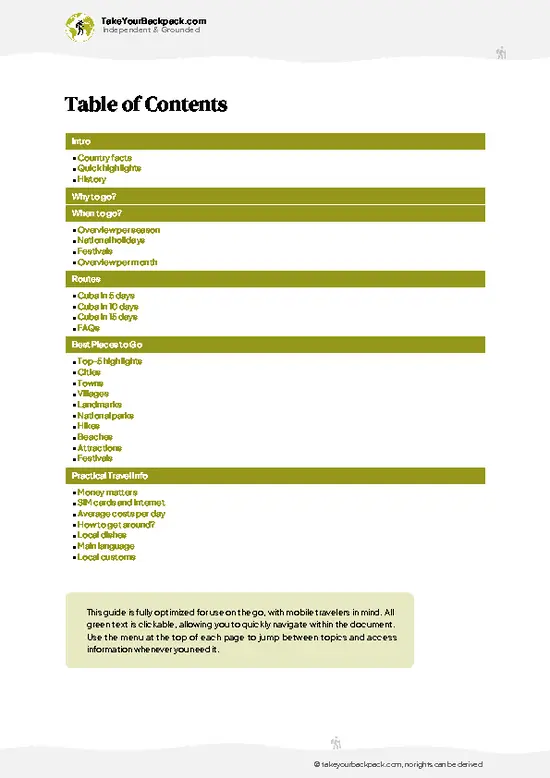
example page 2 from our offline Travel Guide for Cuba
example page 3 from our offline Travel Guide for Cuba
example page 4 from our offline Travel Guide for Cuba
example page 5 from our offline Travel Guide for Cuba
example page 6 from our offline Travel Guide for Cuba
example page 7 from our offline Travel Guide for Cuba
Loading the map 🌍
CLICK TO FILTER
cities
towns
villages
landmarks
national parks
hikes
beaches
attractions
festivals
SHOW COUNTRY’S BESTSHOW ALL

✨ Why go?
Ranked #1 unique site in Cuba
Reasons people choose to visit here

Castillo de San Pedro de la Roca earns the trip because few Caribbean forts survive this intact, with its original layers of terraces, vaulted galleries, and gun batteries still readable as you climb. The site is a UNESCO World Heritage fortress you can walk through in an afternoon, and it needs no guide to appreciate. Walking the upper batteries shows you exactly why Spain chose this headland: you can see every ship approaching the bay long before it arrives.

The second reason is how neatly it fits a route through the east. Santiago de Cuba, the city of son music and Afro-Cuban culture, sits close by, so you can pair the fortress with the cathedral, Casa de la Trova, and the Cementerio Santa Ifigenia. Another pairing is the Cayo Granma islet in the bay, visible from the walls and reachable … read more 👉
Castillo de San Pedro de la Roca earns the trip because few Caribbean forts survive this intact, with its original layers of terraces, vaulted galleries, and gun batteries still readable as you climb. The site is a UNESCO World Heritage fortress you can walk through in an afternoon, and it needs no guide to appreciate. Walking the upper batteries shows you exactly why Spain chose this headland: you can see every ship approaching the bay long before it arrives.

The second reason is how neatly it fits a route through the east. Santiago de Cuba, the city of son music and Afro-Cuban culture, sits close by, so you can pair the fortress with the cathedral, Casa de la Trova, and the Cementerio Santa Ifigenia. Another pairing is the Cayo Granma islet in the bay, visible from the walls and reachable by small ferry.

It is also easy on the wallet. Entry is cheap, there is no long approach hike, and you can combine it with a free stroll along the coast. Photographers get layered stone against open Caribbean water, which is rare in a country where many forts are restored beyond recognition.

💡 HighlightsWhat this place is best known for

  1. The upper terraces and bastions: The main reason people come. Stone platforms step down the cliff toward the sea, and the views over the bay mouth and open Caribbean are the best photo spot on the site.
  2. The cannon batteries: Rows of old iron guns still point at the water. They show how the fort controlled the channel into Santiago Bay.
  3. The vaulted galleries and passageways: Thick-walled arched corridors link the levels. They stay cooler than the open terraces, and the stonework is worth slowing down for.
  4. The Pirate Museum (Museo de la Piratería): Housed inside the fort, it covers the corsairs and buccaneers who raided Santiago. Displays are modest, but the topic suits the setting.
  5. The lower gun platforms near the water: Walking down gives a sense of the fort’s scale from sea level, and you see
… read more 👉
  1. The upper terraces and bastions: The main reason people come. Stone platforms step down the cliff toward the sea, and the views over the bay mouth and open Caribbean are the best photo spot on the site.
  2. The cannon batteries: Rows of old iron guns still point at the water. They show how the fort controlled the channel into Santiago Bay.
  3. The vaulted galleries and passageways: Thick-walled arched corridors link the levels. They stay cooler than the open terraces, and the stonework is worth slowing down for.
  4. The Pirate Museum (Museo de la Piratería): Housed inside the fort, it covers the corsairs and buccaneers who raided Santiago. Displays are modest, but the topic suits the setting.
  5. The lower gun platforms near the water: Walking down gives a sense of the fort’s scale from sea level, and you see how defenders covered the approach.
  6. Views of Cayo Granma: From the walls you can spot this small fishing islet in the bay. It makes a good next stop by ferry.
  7. The evening cannon ceremony: A nightly cannon firing, held at dusk with costumed soldiers, draws a small crowd. It is brief, a bit theatrical, and worth catching if you are staying nearby.
Castillo de San Pedro de la Roca takes about two hours to cover well, or three if you add the museum and linger for photos.
Spotted a mistake or missing something? Contact us.
🌤️ When to go?Best time to visit Castillo de San Pedro de la Roca

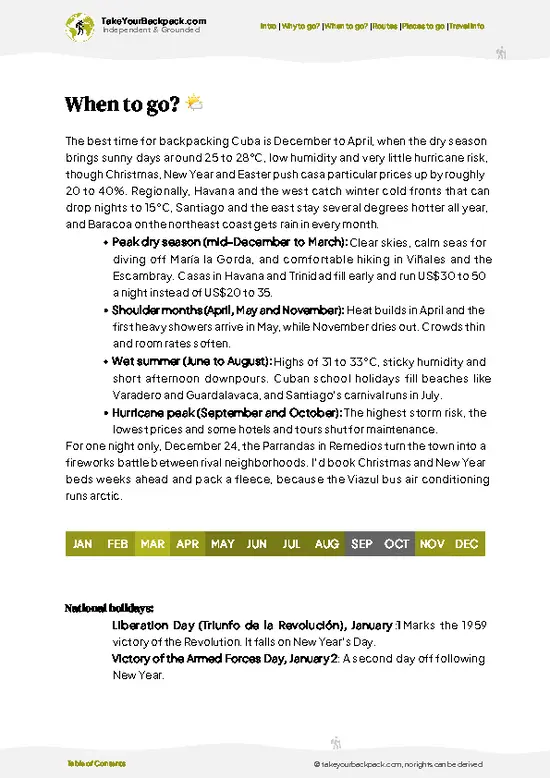
  • Dry Season (November to April): Mornings on the Santiago de Cuba headland run 21 to 30°C (70 to 86°F), with low humidity and rain rare. Daylight lasts roughly 11 to 12 hours, so the ramparts are best walked early, before the sea glare builds. Prices for casas particulares and taxis rise a little, and December to February is the busiest stretch.
  • Carnival Week (July): Santiago’s carnival, around the Santiago feast days in late July, fills beds across the city and pushes taxi fares up. Afternoons hit 32 to 35°C (90 to 95°F). Book rooms weeks ahead.
  • Hot Wet Months (May to October): Expect 26 to 34°C (79 to 93°F), heavy humidity and afternoon downpours, with hurricane risk peaking from August to October. Daylight stretches to about 13 hours. Crowds thin out and rooms are easier to haggle down, but
… read more 👉
  • Dry Season (November to April): Mornings on the Santiago de Cuba headland run 21 to 30°C (70 to 86°F), with low humidity and rain rare. Daylight lasts roughly 11 to 12 hours, so the ramparts are best walked early, before the sea glare builds. Prices for casas particulares and taxis rise a little, and December to February is the busiest stretch.
  • Carnival Week (July): Santiago’s carnival, around the Santiago feast days in late July, fills beds across the city and pushes taxi fares up. Afternoons hit 32 to 35°C (90 to 95°F). Book rooms weeks ahead.
  • Hot Wet Months (May to October): Expect 26 to 34°C (79 to 93°F), heavy humidity and afternoon downpours, with hurricane risk peaking from August to October. Daylight stretches to about 13 hours. Crowds thin out and rooms are easier to haggle down, but the fort’s stone steps have little shade.
Arrive when the gates open and you will have the sea-facing terraces nearly to yourself, whatever the month.


source: climatestotravel.comJANJanuary: excellent for travelingFEBFebruary: excellent for travelingMARMarch: excellent for travelingAPRApril: highly recommended for travelingMAYMay: fair for travelingJUNJune: fair for travelingJULJuly: good for travelingAUGAugust: fair for travelingSEPSeptember: fair for travelingOCTOctober: good for travelingNOVNovember: highly recommended for travelingDECDecember: excellent for traveling
cuba-unique-site-castillo-de-san-pedro-de-la-roca
© Google | Marnin G

✈️ The backpacker research shortcutCuba Travel Guide

An offline-friendly backpacking guide with optimized travel routes, ranked highlights, transport advice, and the best areas to stay.
example page 0 from our offline Travel Guide for Cuba
example page 1 from our offline Travel Guide for Cuba
example page 2 from our offline Travel Guide for Cuba
example page 3 from our offline Travel Guide for Cuba
example page 4 from our offline Travel Guide for Cuba
example page 5 from our offline Travel Guide for Cuba
example page 6 from our offline Travel Guide for Cuba
example page 7 from our offline Travel Guide for Cuba
The digital guide (327 pages) contains:
✅ 115 highlights, ranked by travel appeal
✅ Optimized 5, 10 & 15-day travel routes
✅ Cities, national parks, landmarks, beaches
✅ How to get around
✅ Offline-friendly for travel without Wi-Fi
👉 Click to see all 30+ guide features

📅 Plan smarter in minutes, not weeks
✅ Month by month travel advice
✅ Festivals & national holidays
✅ Budget expectations

🗺️ Go to the right places, skip the overrated ones
✅ Honest pros & cons of destinations
✅ Top hikes, parks & viewpoints
✅ Lesser-known places most travelers miss
✅ Clear “worth it vs skip it” guidance

🛏️ Travel smoothly without rookie mistakes
✅ Best areas to stay
✅ Transport systems explained simply
✅ Common scams & safety advice
✅ SIM cards, money & practical tips

🌍 Understand the country, not just visit it
✅ Culture & traditions
✅ 52 Essential phrases & customs
✅ Festivals worth planning around
✅ Traveler-friendly historical context
✅ Insights that make places more meaningful

📱 Built for real travel conditions
✅ Fully downloadable PDF
✅ Works completely offline
✅ Optimized for phone use
✅ Useful in remote areas & buses
✅ Everything in one place
Stop searching, start planning
Get instant access to your full guide. 30‑day money-back guarantee.
+ Add another guide for just

By proceeding you agree to our terms.
Sent to your inbox immediately after payment • 100% Secure Checkout
Best Backpacking Travel Advisor 2025 tourism awardBest Backpacking
Travel Advisor
2025
What others say about Take Your Backpack Guides:
⭐⭐⭐⭐⭐
Fantastic, amazing amount of information!
⭐⭐⭐⭐⭐
My goodness this is amazing, it's what I've been looking for hats off too you!
⭐⭐⭐⭐⭐
I think this is absolutely BRILLIANT
⭐⭐⭐⭐
Very complete and informative. It's still missing places, but I gotta to commend you
⭐⭐⭐⭐⭐
This is truly amazing, thank you, can't wait to explore it with my kids!
⭐⭐⭐⭐⭐
Awesome resource, thank you!
⭐⭐⭐⭐⭐
This is amazing! Can't wait to explore the ones I haven't seen
⭐⭐⭐⭐
I love this! Well done, great idea.
⭐⭐⭐⭐⭐
Thanks for taking the time to make this gem!
⭐⭐⭐⭐⭐
This might be the best website I've ever seen.
⭐⭐⭐⭐⭐
Congratulations, and thank you so much for your work; it's incredibly valuable.
⭐⭐⭐⭐
In all seriousness I think you did a great job pointing out the important spots
⭐⭐⭐⭐⭐
10/10 very good
⭐⭐⭐⭐⭐
As someone who's only just starting to visit regularly this is awesome, thank you.
⭐⭐⭐⭐
Thank you very much! I'm going to visit my dad, it's going to be very useful!
⭐⭐⭐⭐⭐
This is really cool! We'll be travelling for the first time and this definitely come in handy.
⭐⭐⭐⭐⭐
You are now our minister of culture, congratulations 👨‍💼
⭐⭐⭐⭐⭐
Just wanted to tell you that this is a pearl! Going to follow your recommendations.
⭐⭐⭐⭐⭐
This is so cool. I'll definitely be using the resource for my travels soon.
⭐⭐⭐⭐⭐
This is very impressive! Good work.
⭐⭐⭐⭐⭐
This is an amazing and informative site. Very well done!

🛏️ Where to stay?Where staying makes the most sense

Santiago de Cuba’s city center is the best base, with the Vista Alegre district as a calmer alternative, because the fort sits about 10 km (6 miles) southwest of town on the coast. Almost every backpacker sleeps in casas particulares, private homes renting rooms, which are the social heart of travel here. Hosts swap taxi-sharing tips, cook breakfast and help arrange the ride out to the fort.

Around Parque Céspedes and the Calle Heredia area, you can walk to music venues, the cathedral and the cheapest paladares. Nights are loud with live son, so light sleepers should ask for an upstairs room … read more 👉
Santiago de Cuba’s city center is the best base, with the Vista Alegre district as a calmer alternative, because the fort sits about 10 km (6 miles) southwest of town on the coast. Almost every backpacker sleeps in casas particulares, private homes renting rooms, which are the social heart of travel here. Hosts swap taxi-sharing tips, cook breakfast and help arrange the ride out to the fort.

Around Parque Céspedes and the Calle Heredia area, you can walk to music venues, the cathedral and the cheapest paladares. Nights are loud with live son, so light sleepers should ask for an upstairs room at the back. Streets are busy until late, which feels safe, though bags should stay zipped in crowds.

Vista Alegre is leafier, with mansions turned into guesthouses, quieter evenings and a handful of good restaurants. It suits solo travelers who want rest between long days, and a shared taxi into the center takes about 10 minutes.

There is a small cluster of homestays in the village of Ciudad Turística near the fort too, but options are thin and evenings are silent. Unless you want sea views and solitude, stay in the city and visit the castle as a morning outing.

👛 Costs (as of 22 October 2026)Travel costs and budget guide for Castillo de San Pedro de la Roca

Castillo de San Pedro de la Roca can be covered on about US$32 to 45 a day for a backpacker based in Santiago de Cuba, with the daily total below set at US$38. Foreigners pay in Cuban pesos or cash at the gate, and card payments are unreliable, so bring cash.
CategoryBudget RangeLocal Reality
Entrance TicketUS$5 to 8Foreigner price for the fortress and its small pirate museum. Camera permits can cost extra.
Accommodation (high season)US$15 to 25A room in a casa particular in central Santiago. Low season often drops to US$12 to 20.
Transport to the FortUS$6 to 15A round-trip private taxi costs more, so splitting it with other travelers brings it down. Local buses are rare and unreliable.
FoodUS$8 to 15Casa breakfast around US$3 to 5, and a paladar meal around US$5 to 10. The fort has a basic restaurant
… read more 👉
Castillo de San Pedro de la Roca can be covered on about US$32 to 45 a day for a backpacker based in Santiago de Cuba, with the daily total below set at US$38. Foreigners pay in Cuban pesos or cash at the gate, and card payments are unreliable, so bring cash.
CategoryBudget RangeLocal Reality
Entrance TicketUS$5 to 8Foreigner price for the fortress and its small pirate museum. Camera permits can cost extra.
Accommodation (high season)US$15 to 25A room in a casa particular in central Santiago. Low season often drops to US$12 to 20.
Transport to the FortUS$6 to 15A round-trip private taxi costs more, so splitting it with other travelers brings it down. Local buses are rare and unreliable.
FoodUS$8 to 15Casa breakfast around US$3 to 5, and a paladar meal around US$5 to 10. The fort has a basic restaurant with sea views.
Guide (optional)US$0 to 5Informal guides at the gate speak some English and expect a tip.
Total Daily BudgetUS$38Per person, per day, in high season.


source: cubatravel.cu
⚠️ Prices can change and everyone travels differently, so take this as a rough guide. Hope it helps you plan your adventure!

FAQTraveler FAQ

Castillo de San Pedro de la Roca is a 17th-century Spanish fortress on a cliff at the mouth of Santiago de Cuba’s bay, also called El Morro. Built to defend against pirates, it is a UNESCO World Heritage Site with stepped terraces, bastions, cannons and a small pirate museum. Entry costs roughly US$5 to 8.
Plan on 2 to 3 hours at Castillo de San Pedro de la Roca to cover the ramparts, museum and terraces at a relaxed pace. Add around 30 minutes each way for the ride from Santiago. A morning visit avoids the heat, and some travelers stay for the evening cannon ceremony, which extends the trip to half a day.
Castillo de San Pedro de la Roca lies about 10 km (6 miles) southwest of central Santiago de Cuba, a 20 to 30 minute drive. Most backpackers take a shared or private taxi, with round trips costing roughly US$6 to 15 depending on waiting time. Some arrange a ride with their casa host, and a few hardy travelers cycle the coastal road.
⚠️ Things can change over time, so always validate details locally before you go.

Ideas for continuing your journey

Castillo de San Pedro de la Roca isn’t the only highlight in Cuba. Explore all what Cuba has to offer.
Country photo of Cuba

We 💚 feedbackFinal thoughts on visiting Castillo de San Pedro de la Roca

Castillo de San Pedro de la Roca trips go wrong when people rush through in an hour and miss the lower batteries, or go at midday with no shade. I would arrive mid-afternoon, walk down first, then climb back up for the late light over the water.

✈️ When did I visit Cuba?
As part of my 1.5 year travel around the world trip, I visited Cuba for 6 weeks in February, March 2016, being extremely lucky that that coincided with the free concert of The Rolling Stones.

✍️ Help improve this page!
The information on this page is based on my own backpacking experience in Cuba, supplemented with up-to-date research and feedback from other travelers. Travel details can change, so if you notice anything outdated or incomplete, feel free to let me know.


🙋‍♂️ Give feedback

👋 Meet the founderWho’s Behind Take Your Backpack?

Johan, backpacker and founder of TakeYourBackpackHi, I’m Johan (Netherlands 🇳🇱), the creator of TakeYourBackpack. Over the past 3 decades, I’ve backpacked through 90+ countries across six continents, gaining extensive experience with independent travel, long-term trips, and overland routes.

This site is built on a combination of firsthand travel experience and carefully curated insights from other backpackers. Many guides are based on places I’ve personally visited, while others bring together tips, observations, and practical advice shared by trusted travelers I’ve met along the way.

The goal is to provide realistic, experience-driven guidance — not generic itineraries — so you can explore destinations with better context, clearer expectations, and more confidence.