×

Cuba🇨🇺 | festivalsFestival del ChangüíChangüí, guayo scraper, Guantánamo, Parque Martí | things to do and best time to go

Explore Romerías de MayoExplore Festival de la Cultura Iberoamericana

Backpacking in del Changüí
👌 Worth visitingfestival ranked #13
By Johan Kruseman 🇳🇱 | Updated October 23, 2026

Festival del Changüí suits travelers who want music made by locals for locals, not a polished stage show. If you need English signage, set schedules and air-conditioned venues, you may find it less rewarding. It happens in Guantánamo, in the far east of Cuba, a long way from Havana and Varadero. Changüí is the rootsy son ancestor with tres, bongos and guayo scraper. Book lodging early, carry small cash, and confirm dates locally, since programs shift. I paid about US$1 for a rum and cane juice from a street cart while a trio played on a sidewalk, and nobody hurried me. The festival ends with dancers filling a plaza in the Guantánamo heat.

Discover everything you want to know in the 📖 Cuba Travel Guide.


example page 0 from our offline Travel Guide for Cuba
example page 1 from our offline Travel Guide for Cuba
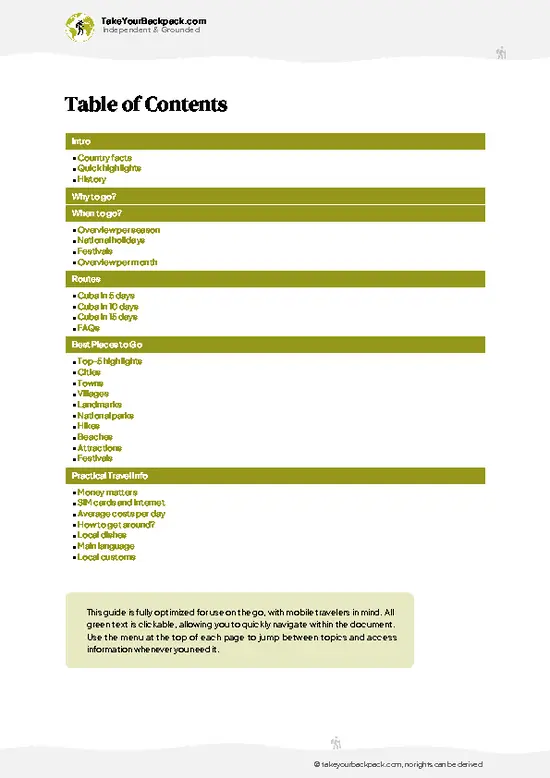
example page 2 from our offline Travel Guide for Cuba
example page 3 from our offline Travel Guide for Cuba
example page 4 from our offline Travel Guide for Cuba
example page 5 from our offline Travel Guide for Cuba
example page 6 from our offline Travel Guide for Cuba
example page 7 from our offline Travel Guide for Cuba
Loading the map 🌍
CLICK TO FILTER
cities
towns
villages
landmarks
national parks
hikes
beaches
attractions
festivals
SHOW COUNTRY’S BESTSHOW ALL

✨ Why go?
Ranked #13 festival in Cuba
What makes this festival worth celebrating

Festival del Changüí is worth routing through because it lets you hear a music form that barely exists outside the Guantánamo province and tourist circuits ignore it. Nearly everyone in the audience knows the lyrics, so you are a guest at a community gathering, not a customer. Musicians play in plazas, cultural houses and neighborhoods, and conversation comes easily when you stand near the tres and guayo players. The setting also pairs well with a longer eastern loop. Guantánamo sits a few hours from Baracoa and the Santiago de Cuba area, so you can fold it into an overland trip. Prices stay low because most events are local and free or nearly free, which makes it far kinder to a backpacker budget than the big Havana music weeks.

💡 HighlightsTop highlights of del Changüí

  1. Changüí street performances in Guantánamo: Trios and larger groups play in open air, with tres, bongos, marímbula and the scraped guayo keeping a driving, scratchy rhythm.
  2. Parque Martí: The central plaza gathers dancers, vendors and spontaneous jam sessions, and it is the best place to feel the town’s pulse.
  3. Casa de la Trova and cultural houses: Smaller indoor sets let you see the hands on the instruments and talk with the musicians afterward.
  4. Guayo and marímbula demonstrations: Players explain how the metal scraper and bass box shape the sound, a clear way to understand why changüí differs from son.
  5. Neighborhood dance nights: Locals dance in the streets and courtyards, and joining in is welcomed even if your steps are rough.
Start with the street performances in Guantánamo, because they set the … read more 👉
  1. Changüí street performances in Guantánamo: Trios and larger groups play in open air, with tres, bongos, marímbula and the scraped guayo keeping a driving, scratchy rhythm.
  2. Parque Martí: The central plaza gathers dancers, vendors and spontaneous jam sessions, and it is the best place to feel the town’s pulse.
  3. Casa de la Trova and cultural houses: Smaller indoor sets let you see the hands on the instruments and talk with the musicians afterward.
  4. Guayo and marímbula demonstrations: Players explain how the metal scraper and bass box shape the sound, a clear way to understand why changüí differs from son.
  5. Neighborhood dance nights: Locals dance in the streets and courtyards, and joining in is welcomed even if your steps are rough.
Start with the street performances in Guantánamo, because they set the sound in your ear and make every later venue easier to follow. Festival del Changüí is best approached that way.
Spotted a mistake or missing something? Contact us.

🌤️ When to go?When is the celebration of Festival del Changüí?

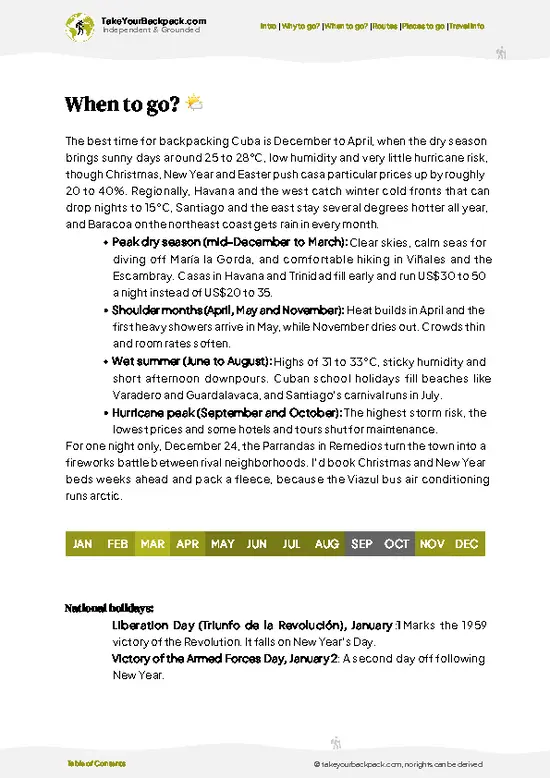
Festival del Changüí is held in Guantánamo, in recent editions in late June or early July, runs several days, and centers on the city of Guantánamo with Casa del Changüí events. Dates are set by the provincial culture office and shift between editions.
  • Best day: Go for the main concert evenings, when the best tres and bongó ensembles play, and arrive early for dance floors that fill by 9 pm.
  • Weather: Expect 24 to 32°C (75 to 90°F), humidity, and sudden downpours. Bring a light rain jacket, sunscreen and a hat.
  • Booking: Reserve a casa particular a few weeks ahead; rates may rise US$5 to 10 a night.
  • Crowds: Travel by road in daylight, since evening transport thins out.
Arrive a day before opening to settle in and catch rehearsals.

source: climatestotravel.comJANJanuary: not recommended for travelingFEBFebruary: not recommended for travelingMARMarch: not recommended for travelingAPRApril: not recommended for travelingMAYMay: not recommended for travelingJUNJune: not recommended for travelingJULJuly: not recommended for travelingAUGAugust: not recommended for travelingSEPSeptember: not recommended for travelingOCTOctober: not recommended for travelingNOVNovember: excellent for travelingDECDecember: not recommended for traveling

✈️ The backpacker research shortcutCuba Travel Guide

An offline-friendly backpacking guide with optimized travel routes, ranked highlights, transport advice, and the best areas to stay.
example page 0 from our offline Travel Guide for Cuba
example page 1 from our offline Travel Guide for Cuba
example page 2 from our offline Travel Guide for Cuba
example page 3 from our offline Travel Guide for Cuba
example page 4 from our offline Travel Guide for Cuba
example page 5 from our offline Travel Guide for Cuba
example page 6 from our offline Travel Guide for Cuba
example page 7 from our offline Travel Guide for Cuba
The digital guide (327 pages) contains:
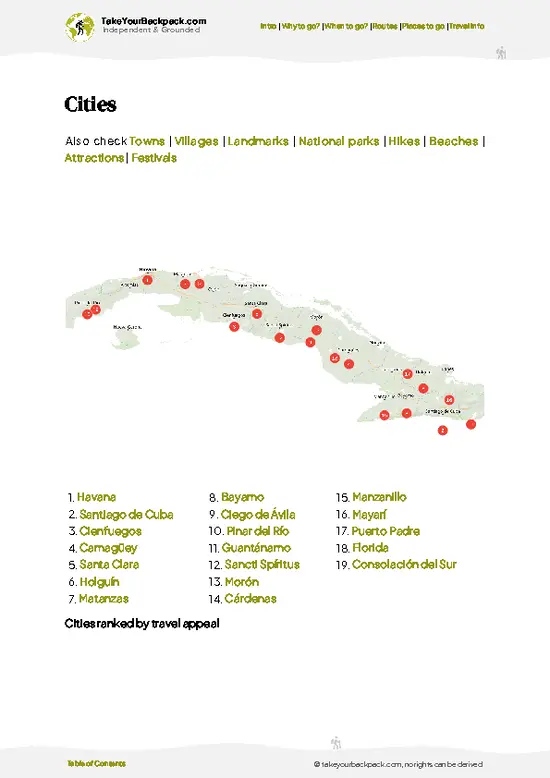
✅ 113 highlights, ranked by travel appeal
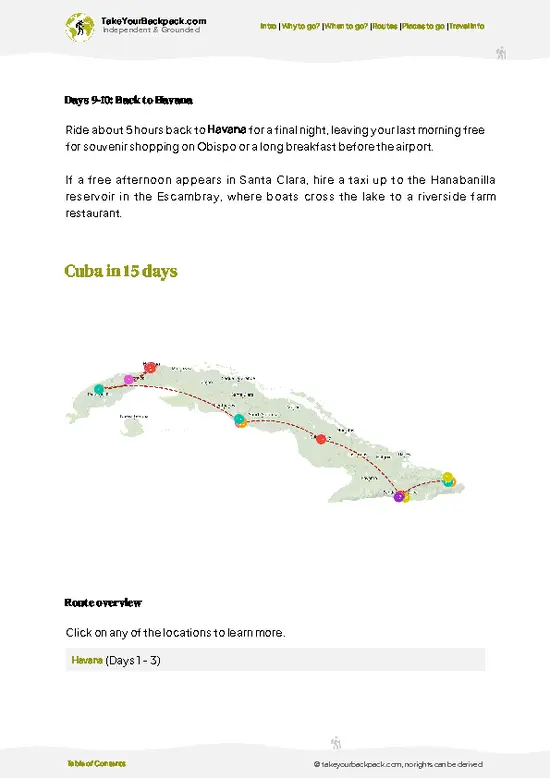
✅ Optimized 5, 10 & 15-day travel routes
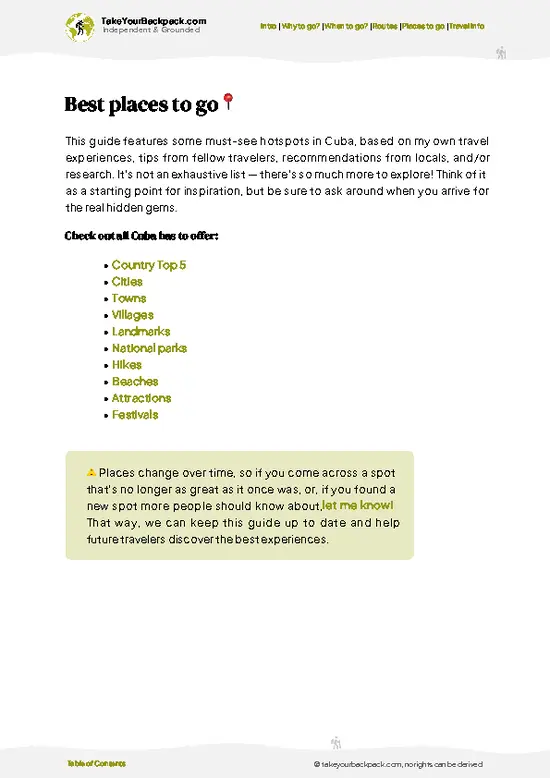
✅ Cities, national parks, landmarks, beaches
✅ How to get around
✅ Offline-friendly for travel without Wi-Fi
👉 Click to see all 30+ guide features

📅 Plan smarter in minutes, not weeks
✅ Month by month travel advice
✅ Festivals & national holidays
✅ Budget expectations

🗺️ Go to the right places, skip the overrated ones
✅ Honest pros & cons of destinations
✅ Top hikes, parks & viewpoints
✅ Lesser-known places most travelers miss
✅ Clear “worth it vs skip it” guidance

🛏️ Travel smoothly without rookie mistakes
✅ Best areas to stay
✅ Transport systems explained simply
✅ Common scams & safety advice
✅ SIM cards, money & practical tips

🌍 Understand the country, not just visit it
✅ Culture & traditions
✅ 52 Essential phrases & customs
✅ Festivals worth planning around
✅ Traveler-friendly historical context
✅ Insights that make places more meaningful

📱 Built for real travel conditions
✅ Fully downloadable PDF
✅ Works completely offline
✅ Optimized for phone use
✅ Useful in remote areas & buses
✅ Everything in one place
Stop searching, start planning
Get instant access to your full guide. 30‑day money-back guarantee.
+ Add another guide for just

By proceeding you agree to our terms.
Sent to your inbox immediately after payment • 100% Secure Checkout
Best Backpacking Travel Advisor 2025 tourism awardBest Backpacking
Travel Advisor
2025
What others say about Take Your Backpack Guides:
⭐⭐⭐⭐⭐
Fantastic, amazing amount of information!
⭐⭐⭐⭐⭐
My goodness this is amazing, it's what I've been looking for hats off too you!
⭐⭐⭐⭐⭐
I think this is absolutely BRILLIANT
⭐⭐⭐⭐
Very complete and informative. It's still missing places, but I gotta to commend you
⭐⭐⭐⭐⭐
This is truly amazing, thank you, can't wait to explore it with my kids!
⭐⭐⭐⭐⭐
Awesome resource, thank you!
⭐⭐⭐⭐⭐
This is amazing! Can't wait to explore the ones I haven't seen
⭐⭐⭐⭐
I love this! Well done, great idea.
⭐⭐⭐⭐⭐
Thanks for taking the time to make this gem!
⭐⭐⭐⭐⭐
This might be the best website I've ever seen.
⭐⭐⭐⭐⭐
Congratulations, and thank you so much for your work; it's incredibly valuable.
⭐⭐⭐⭐
In all seriousness I think you did a great job pointing out the important spots
⭐⭐⭐⭐⭐
10/10 very good
⭐⭐⭐⭐⭐
As someone who's only just starting to visit regularly this is awesome, thank you.
⭐⭐⭐⭐
Thank you very much! I'm going to visit my dad, it's going to be very useful!
⭐⭐⭐⭐⭐
This is really cool! We'll be travelling for the first time and this definitely come in handy.
⭐⭐⭐⭐⭐
You are now our minister of culture, congratulations 👨‍💼
⭐⭐⭐⭐⭐
Just wanted to tell you that this is a pearl! Going to follow your recommendations.
⭐⭐⭐⭐⭐
This is so cool. I'll definitely be using the resource for my travels soon.
⭐⭐⭐⭐⭐
This is very impressive! Good work.
⭐⭐⭐⭐⭐
This is an amazing and informative site. Very well done!

🛏️ Where to stay?Choosing the right base

Stay in a casa particular in central Guantánamo city, ideally within walking distance of Parque Martí, where most festival activity and evening music concentrate. Rooms here put you near stages, peso-priced street food and the local transport hub, so you can walk home after late concerts instead of hunting for a taxi. Hosts are the social heart of a backpacker stay in Cuba: they cook breakfast, arrange shared taxis and often know which neighborhood group is playing that night. Solo travelers should pick a family-run house with other guests, which makes finding travel companions easy. The streets … read more 👉
Stay in a casa particular in central Guantánamo city, ideally within walking distance of Parque Martí, where most festival activity and evening music concentrate. Rooms here put you near stages, peso-priced street food and the local transport hub, so you can walk home after late concerts instead of hunting for a taxi. Hosts are the social heart of a backpacker stay in Cuba: they cook breakfast, arrange shared taxis and often know which neighborhood group is playing that night. Solo travelers should pick a family-run house with other guests, which makes finding travel companions easy. The streets near the park feel safe and busy until late, though you should keep valuables locked and avoid unlit side streets after midnight. If the city is full, Baracoa offers a relaxed alternative with many casas and a few other travelers, but expect a long ride to reach festival events.

👛 Costs (as of 23 October 2026)What things cost and how to budget

Festival del Changüí costs roughly US$35 to 75 a day for an independent traveler, including a casa particular room and street food.
CategoryBudget RangeLocal Reality
Festival ticketsUS$0 to 5Many outdoor concerts are free; some indoor venues charge a small entry fee.
AccommodationUS$20 to 35A casa particular room in Guantánamo, higher in festival week.
Local transportUS$2 to 10Shared taxis and bici-taxis between venues; longer rides cost more.
Food & drinksUS$10 to 20Street snacks, a home-cooked casa dinner, beers and rum.
MiscellaneousUS$3 to 5Tips for musicians, water and sunscreen.
Total Daily BudgetUS$35 to 75Roughly US$55 on a typical day.


source: cubatravel.cu
⚠️ Prices can change and everyone travels differently, so take this as a rough guide. Hope it helps you plan your adventure!

🍲 FoodLocal Cuisine & Drinks

Festival food in Guantánamo is street-corner cooking: pork sandwiches, fried croquetas, tamales, and plates of rice, beans and roast pork from home kitchens set up near the stages. Look for chocolate de Baracoa and coconut sweets like cucurucho if you have a connection to the eastern coast. Drinks are simple: cold Bucanero or Cristal beer, guarapo (fresh sugarcane juice) pressed on the spot, and rum poured in plastic cups, sometimes shared around a table with strangers who quickly become friends.
Bring small bills in cash, because cards rarely work at stalls and change is scarce. Lines move slowly, portions are generous, and sharing a plate is normal. Eat early before popular items sell out, and carry your own water bottle and napkins.

FAQFrequently asked questions about del Changüí

Festival del Changüí takes place in Guantánamo, Cuba, in recent editions in late June or early July, over several days. Exact dates are set by provincial cultural authorities and vary by edition. Check local announcements a month or two beforehand and plan to arrive a day early.
Festival del Changüí costs about US$35 to 75 a day for an independent traveler. Many concerts are free or charge US$0 to 5, while a casa particular room runs about US$20 to 35 a night. Street food and drinks add roughly US$10 to 20 daily.
Festival del Changüí rarely requires advance tickets, since most outdoor concerts in Guantánamo are free or paid at the door. Indoor venues may sell cheap entry for US$1 to 5 on the day. The thing to book ahead is a room, ideally a few weeks early, as casas fill during the festival.
⚠️ Things can change over time, so always validate details locally before you go.

Other Cuban festivals near del Changüí

Explore more nearby:


💡 Not sure where to go next?
Create a personalized itinerary for Cuba including del Changüí and the places that fit your trip.

Generate my itinerary

👉 Discover all festivals

Or checkout all Cuba has to offer (think cities, towns, villages, national parks, hikes, beaches, festivals)
Country photo of Cuba

We 💚 feedbackWhat to keep in mind

Festival del Changüí is best in the evening, when plazas fill and the heat eases enough for dancing. Aim for the main festival days, not the quiet edges. I would bring small bills, a flexible plan and patience, since schedules move, and let a local musician point you to the next set.

✈️ When did I visit Cuba?
As part of my 1.5 year travel around the world trip, I visited Cuba for 6 weeks in February, March 2016, being extremely lucky that that coincided with the free concert of The Rolling Stones.

✍️ Help improve this page!
The information on this page is based on my own backpacking experience in Cuba, supplemented with up-to-date research and feedback from other travelers. Travel details can change, so if you notice anything outdated or incomplete, feel free to let me know.


🙋‍♂️ Give feedback

👋 Meet the founderWho’s Behind Take Your Backpack?

Johan, backpacker and founder of TakeYourBackpackHi, I’m Johan (Netherlands 🇳🇱), the creator of TakeYourBackpack. Over the past 3 decades, I’ve backpacked through 90+ countries across six continents, gaining extensive experience with independent travel, long-term trips, and overland routes.

This site is built on a combination of firsthand travel experience and carefully curated insights from other backpackers. Many guides are based on places I’ve personally visited, while others bring together tips, observations, and practical advice shared by trusted travelers I’ve met along the way.

The goal is to provide realistic, experience-driven guidance — not generic itineraries — so you can explore destinations with better context, clearer expectations, and more confidence.