×

Cuba🇨🇺 | festivalsSantiago de Cuba Carnivalstreet parades, conga lines, elaborate costumes | things to do and best time to go

Explore International Festival of New Latin American CinemaExplore Fiesta del Fuego

Backpacking in Santiago de Cuba Carnival
🏆 Top pickfestival ranked #1
By Johan Kruseman 🇳🇱 | Updated September 4, 2026

Ten, fifteen years ago, Santiago de Cuba Carnival felt raw and almost improvised: rum in plastic cups, deafening conga lines surging down Avenida Garzón, neighbors dragging speakers onto balconies, and exactly zero concern for your sleep schedule. Today it’s more controlled, more fenced, more ticketed, but the core still hits hard: drums, brass, and call‑and‑response choruses that shake your ribs. You’re in Santiago de Cuba, the island’s eastern, Afro‑Cuban heartbeat, near the Caribbean coast and far from the Havana bubble. The carnival runs roughly a week in late July, built around conga, comparsa parades, and street parties that pull in locals, Cubans from other provinces, and a smaller crowd of determined foreign backpackers who don’t mind sweat, noise, and chaos. It’s hot, crowded, and occasionally frustrating, but if you want Cuba loud, physical, and unsanitized, this is where you earn it.

Discover everything you want to know in the 📖 Cuba Travel Guide.


Get your Cuba guide
121 ranked highlights, routes & tips, works offline (450 pages)
Loading the map 🌍
CLICK TO FILTER
cities
towns
villages
landmarks
national parks
hikes
beaches
attractions
festivals
regions
SHOW COUNTRY’S BESTSHOW ALL

✨ Why go?
Ranked #1 festival in Cuba
What sets this place apart

Backpackers flock to the Santiago de Cuba Carnival for a reason: it’s a social energy powerhouse. This festival isn’t just a party; it’s a temporary community where you can dance, laugh, and connect with locals and fellow travelers alike. The vibrant parades and infectious rhythms create an atmosphere that pulls you in, making every moment feel alive.

Planning your route around this carnival means diving deep into cultural immersion. You’re not just a spectator; you’re part of something bigger. The colorful costumes, the pulsating music, and the street food are all experiences that resonate long after the last drumbeat fades. Plus, compared to similar events worldwide, the affordability of Santiago’s festivities is a breath of fresh air. You can enjoy a week of celebration without breaking … read more 👉
Backpackers flock to the Santiago de Cuba Carnival for a reason: it’s a social energy powerhouse. This festival isn’t just a party; it’s a temporary community where you can dance, laugh, and connect with locals and fellow travelers alike. The vibrant parades and infectious rhythms create an atmosphere that pulls you in, making every moment feel alive.

Planning your route around this carnival means diving deep into cultural immersion. You’re not just a spectator; you’re part of something bigger. The colorful costumes, the pulsating music, and the street food are all experiences that resonate long after the last drumbeat fades. Plus, compared to similar events worldwide, the affordability of Santiago’s festivities is a breath of fresh air. You can enjoy a week of celebration without breaking the bank.

Integrating the carnival into your longer travel plans adds a layer of excitement. It’s a perfect way to kick off your Cuban adventure, setting the tone for exploration. So, gear up and embrace the chaos; this is where the journey transforms into something unforgettable.
Want to include Santiago de Cuba Carnival in your Cuba route?
Create a personalized Cuba itinerary that includes Santiago de Cuba Carnival and the places that fit your trip — based on your travel style, budget, and available time. Get your route in seconds.

Generate my trip

💡 HighlightsMust-see experiences and standout moments

  1. Comparsas (street troupes) — Big, loud groups of dancers and musicians that snake through the streets. Think synchronized steps, homemade costumes and drums so present you feel them in your ribs. These troupes are where the carnival’s heart is: local neighborhoods competing for creativity and energy. My personal favorite — you can jump in and dance with them if you’ve got the nerve.
  2. Afro-Cuban percussion and live music — Nonstop congas, bongos, timbales and call-and-response singing that come from deep, local traditions. It’s raw, improvised and fierce: the rhythms are both party fuel and a living link to religious and communal roots. Expect to hear son, rumba and styles you won’t catch on polished tourist stages.
  3. Costumes, masks and giant puppets — Bright hand-made outfits, papier-mâché
read more 👉
  1. Comparsas (street troupes) — Big, loud groups of dancers and musicians that snake through the streets. Think synchronized steps, homemade costumes and drums so present you feel them in your ribs. These troupes are where the carnival’s heart is: local neighborhoods competing for creativity and energy. My personal favorite — you can jump in and dance with them if you’ve got the nerve.
  2. Afro-Cuban percussion and live music — Nonstop congas, bongos, timbales and call-and-response singing that come from deep, local traditions. It’s raw, improvised and fierce: the rhythms are both party fuel and a living link to religious and communal roots. Expect to hear son, rumba and styles you won’t catch on polished tourist stages.
  3. Costumes, masks and giant puppets — Bright hand-made outfits, papier-mâché heads and oversized puppets that are equal parts craft fair and street theater. There’s humor, satire and local stories woven into the designs, so the visuals tell as much of the carnival’s story as the music does.
  4. All-night street parties and spontaneous dancing — The celebration doesn’t shut off at midnight. Streets become living rooms: impromptu dances, people sharing rum and snacks, bands setting up on corners. It’s messy, warm and unapologetically communal — perfect if you like your festivals with equal parts chaos and heart.
  5. Local food, drinks and artisan stalls — Food vendors grill, sell snacks and pour homemade cocktails like guarapita; craft stalls hawk masks, instruments and small keepsakes. Eating and drinking in the crowd isn’t just sustenance — it’s part of the social fabric of the carnival, a way locals gather and welcome visitors.
Spotted a mistake or missing something? Contact us.

🌤️ When to go?When is the celebration of Santiago de Cuba Carnival?


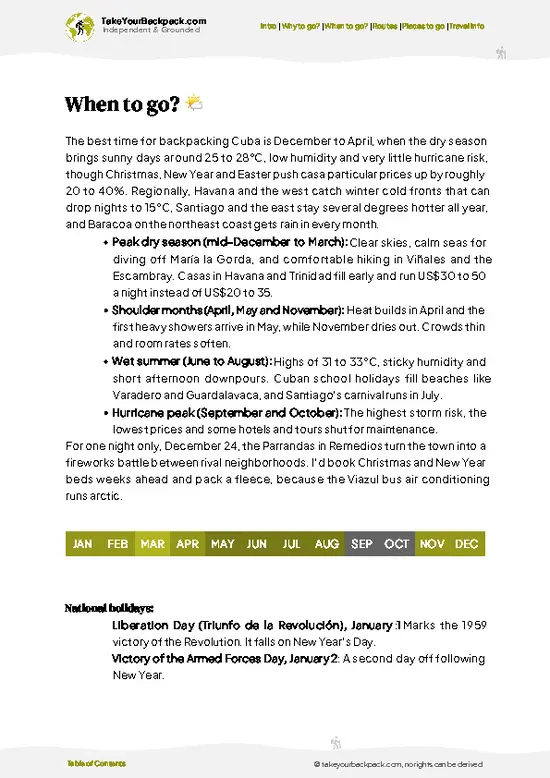
  • Topic: Weather – The carnival runs in July, right in Cuba’s peak summer heat. Expect highs around 32-34°C (90-93°F). It’s humid, and afternoon showers are common, so pack light, breathable gear and a quick-dry poncho. Rain won’t stop the party but can slow you down.

  • Topic: Temperature – Nights cool slightly to 24-26°C (75-79°F), which is a relief after blazing days. This means late-night street dancing is doable but still sticky. Hydrate constantly; heat exhaustion is a real risk if you push too hard.

  • Topic: Daylight Hours – Cuba enjoys long summer days, with about 13-14 hours of daylight. This gives you plenty of time to explore beyond the carnival chaos—think beaches or historic sites before the evening festivities kick off.

  • Topic: Crowds – July draws locals and tourists alike,
read more 👉

  • Topic: Weather – The carnival runs in July, right in Cuba’s peak summer heat. Expect highs around 32-34°C (90-93°F). It’s humid, and afternoon showers are common, so pack light, breathable gear and a quick-dry poncho. Rain won’t stop the party but can slow you down.

  • Topic: Temperature – Nights cool slightly to 24-26°C (75-79°F), which is a relief after blazing days. This means late-night street dancing is doable but still sticky. Hydrate constantly; heat exhaustion is a real risk if you push too hard.

  • Topic: Daylight Hours – Cuba enjoys long summer days, with about 13-14 hours of daylight. This gives you plenty of time to explore beyond the carnival chaos—think beaches or historic sites before the evening festivities kick off.

  • Topic: Crowds – July draws locals and tourists alike, swelling Santiago de Cuba’s population. Expect packed streets and limited accommodation options. Book early to avoid last-minute price hikes and disappointment.

  • Topic: Seasonal Activities – The carnival is the main event, but July also hosts Afro-Cuban cultural showcases and live music. These add layers to your experience but also mean venues fill fast—plan your nights strategically.

  • Topic: Price Fluctuations – Prices spike during the carnival, especially for lodging and transport. Avoid scrambling by locking in your budget accommodations months ahead. Street food and local markets remain affordable, so save your cash for essentials.


Pro-tip: Arrive a few days early to acclimate to the heat and soak in the city’s vibe before the carnival crush hits—your energy and wallet will thank you.


source: climatestotravel.comJANJanuary: not recommended for travelingFEBFebruary: not recommended for travelingMARMarch: not recommended for travelingAPRApril: not recommended for travelingMAYMay: not recommended for travelingJUNJune: not recommended for travelingJULJuly: excellent for travelingAUGAugust: not recommended for travelingSEPSeptember: not recommended for travelingOCTOctober: not recommended for travelingNOVNovember: not recommended for travelingDECDecember: not recommended for traveling

✈️ The backpacker research shortcutCuba Travel Guide

An offline-friendly backpacking guide with optimized travel routes, ranked highlights, transport advice, and the best areas to stay.
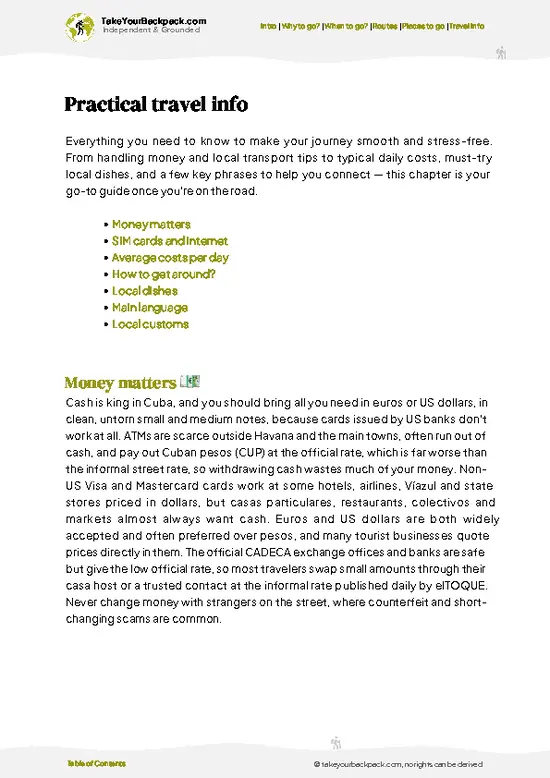
example page 0 from our offline Travel Guide for Cuba
example page 1 from our offline Travel Guide for Cuba
example page 2 from our offline Travel Guide for Cuba
example page 3 from our offline Travel Guide for Cuba
example page 4 from our offline Travel Guide for Cuba
example page 5 from our offline Travel Guide for Cuba
example page 6 from our offline Travel Guide for Cuba
example page 7 from our offline Travel Guide for Cuba
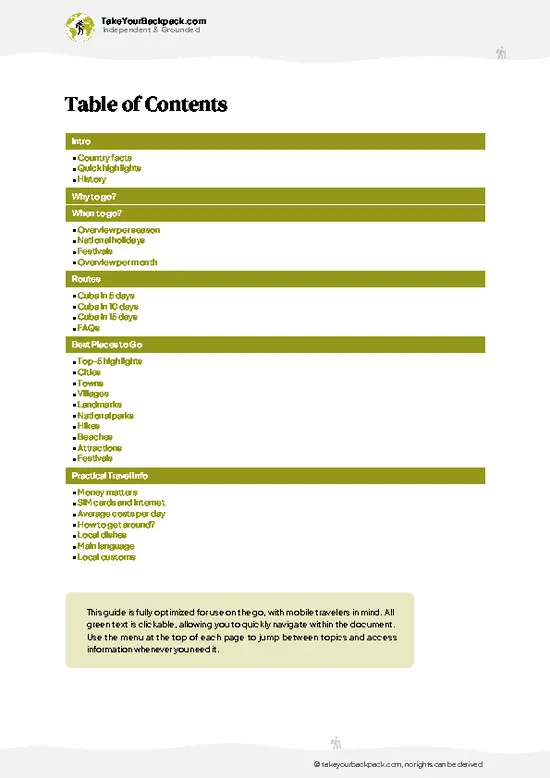
The digital guide (450 pages) contains:
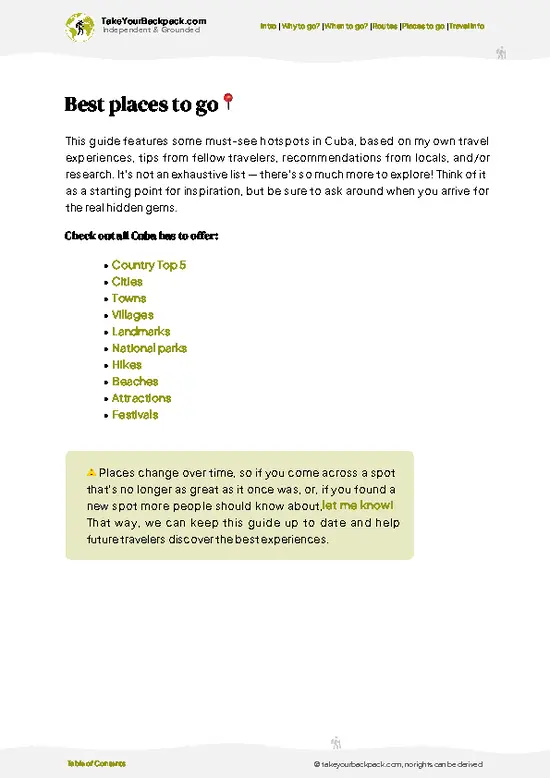
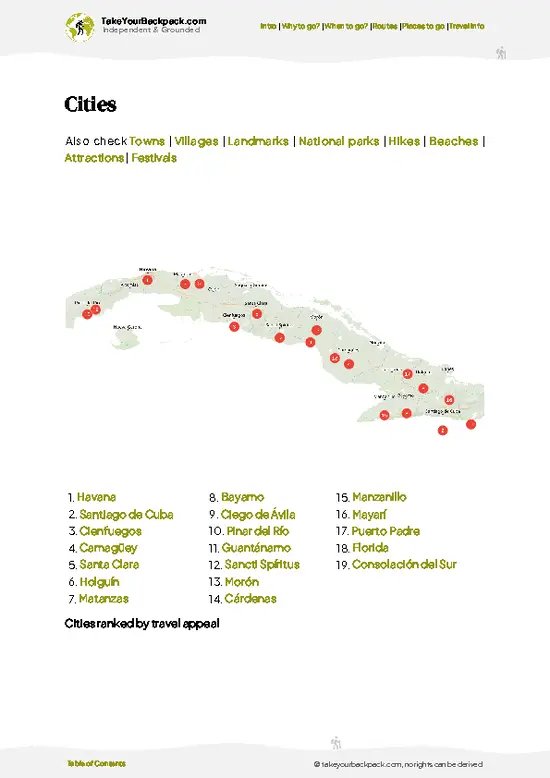
121 highlights, ranked by travel appeal
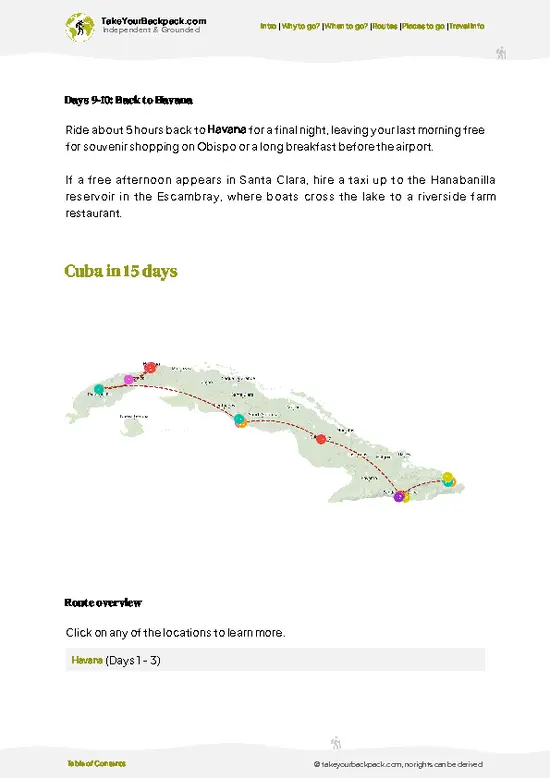
Optimized 5, 10 & 15-day travel routes
Cities, national parks, landmarks, beaches
How to get around
Offline-friendly for travel without Wi-Fi
👉 Click to see all 30+ guide features

📅 Plan smarter in minutes, not weeks
Month by month travel advice
Festivals & national holidays
Budget expectations

🗺️ Go to the right places, skip the overrated ones
Honest pros & cons of destinations
Top hikes, parks & viewpoints
Lesser-known places most travelers miss
Clear “worth it vs skip it” guidance

🛏️ Travel smoothly without rookie mistakes
Best areas to stay
Transport systems explained simply
Common scams & safety advice
SIM cards, money & practical tips

🌍 Understand the country, not just visit it
Culture & traditions
52 Essential phrases & customs
Festivals worth planning around
Traveler-friendly historical context
Insights that make places more meaningful

📱 Built for real travel conditions
Fully downloadable PDF
Works completely offline
Optimized for phone use
Useful in remote areas & buses
Everything in one place
Save weeks of stressful planning
Get instant access to your full guide. 30‑day money-back guarantee.
+ Add another guide for just US$7.80

By proceeding you agree to our terms.
Sent to your inbox immediately after payment • 100% Secure Checkout
Best Backpacking Travel Advisor 2025 tourism awardBest Backpacking
Travel Advisor
2025
What others say about Take Your Backpack Guides:
⭐⭐⭐⭐⭐
Fantastic, amazing amount of information!
⭐⭐⭐⭐⭐
My goodness this is amazing, it's what I've been looking for hats off too you!
⭐⭐⭐⭐⭐
I think this is absolutely BRILLIANT
⭐⭐⭐⭐
Very complete and informative. It's still missing places, but I gotta to commend you
⭐⭐⭐⭐⭐
This is truly amazing, thank you, can't wait to explore it with my kids!
⭐⭐⭐⭐⭐
Awesome resource, thank you!
⭐⭐⭐⭐⭐
This is amazing! Can't wait to explore the ones I haven't seen
⭐⭐⭐⭐
I love this! Well done, great idea.
⭐⭐⭐⭐⭐
Thanks for taking the time to make this gem!
⭐⭐⭐⭐⭐
This might be the best website I've ever seen.
⭐⭐⭐⭐⭐
Congratulations, and thank you so much for your work; it's incredibly valuable.
⭐⭐⭐⭐
In all seriousness I think you did a great job pointing out the important spots
⭐⭐⭐⭐⭐
10/10 very good
⭐⭐⭐⭐⭐
As someone who's only just starting to visit regularly this is awesome, thank you.
⭐⭐⭐⭐
Thank you very much! I'm going to visit my dad, it's going to be very useful!
⭐⭐⭐⭐⭐
This is really cool! We'll be travelling for the first time and this definitely come in handy.
⭐⭐⭐⭐⭐
You are now our minister of culture, congratulations 👨‍💼
⭐⭐⭐⭐⭐
Just wanted to tell you that this is a pearl! Going to follow your recommendations.
⭐⭐⭐⭐⭐
This is so cool. I'll definitely be using the resource for my travels soon.
⭐⭐⭐⭐⭐
This is very impressive! Good work.
⭐⭐⭐⭐⭐
This is an amazing and informative site. Very well done!

🛏️ Where to stay?How to pick the right area

When you’re gearing up for the Santiago de Cuba Carnival, the right place to stay can make all the difference. Head to the vibrant neighborhoods of Centro Histórico or Vista Alegre. These areas pulse with life, and you’ll find a mix of budget-friendly casas particulares and lively hostels.

Centro Histórico is where the action is. You’ll be steps away from the carnival parades, music, and street parties. The atmosphere is electric, and you’ll easily connect with fellow travelers. Just keep your wits about you; while it’s generally safe, the excitement can attract pickpockets.

Vista Alegre offers … read more 👉
When you’re gearing up for the Santiago de Cuba Carnival, the right place to stay can make all the difference. Head to the vibrant neighborhoods of Centro Histórico or Vista Alegre. These areas pulse with life, and you’ll find a mix of budget-friendly casas particulares and lively hostels.

Centro Histórico is where the action is. You’ll be steps away from the carnival parades, music, and street parties. The atmosphere is electric, and you’ll easily connect with fellow travelers. Just keep your wits about you; while it’s generally safe, the excitement can attract pickpockets.

Vista Alegre offers a slightly quieter vibe but still keeps you close to the festivities. It’s a residential area, so you’ll get a taste of local life. Plus, the community here is welcoming, making it easy to strike up conversations and share stories over a cup of café con leche.

Avoid the tourist traps that promise luxury but drain your wallet. Instead, embrace the local scene. Use your budget wisely to savor street food and local music. This way, you’ll preserve your energy and funds for the moments that truly matter—dancing in the streets and soaking up the spirit of the carnival.

👛 Costs (as of 4 September 2026)Travel costs and budget guide for Santiago de Cuba Carnival

The Santiago de Cuba Carnival is a vibrant explosion of culture, music, and dance, but navigating the costs can be a bit tricky. Here’s how to keep your budget in check while soaking in the festivities.
  • Festival Tickets: Expect to pay around $10 to $30 for entry to various events. Some parades are free, but special performances might have a cover. Grab your tickets early to avoid last-minute price hikes.
  • Accommodation: Prices can vary widely. Budget hostels start at about $15 per night, while mid-range hotels can range from $40 to $100. If you want a more local experience, consider staying in a casa particular, which typically costs between $25 and $50 per night.
  • Local Transport: Public transport is affordable. A bus ride will set you back about $1, while a taxi might cost around $5 to $10 for
read more 👉
The Santiago de Cuba Carnival is a vibrant explosion of culture, music, and dance, but navigating the costs can be a bit tricky. Here’s how to keep your budget in check while soaking in the festivities.
  • Festival Tickets: Expect to pay around $10 to $30 for entry to various events. Some parades are free, but special performances might have a cover. Grab your tickets early to avoid last-minute price hikes.
  • Accommodation: Prices can vary widely. Budget hostels start at about $15 per night, while mid-range hotels can range from $40 to $100. If you want a more local experience, consider staying in a casa particular, which typically costs between $25 and $50 per night.
  • Local Transport: Public transport is affordable. A bus ride will set you back about $1, while a taxi might cost around $5 to $10 for short distances. If you’re feeling adventurous, try a shared taxi for a more local vibe, usually around $2 to $5 per person.
  • Food & Drinks: Street food is your best friend here. You can grab a meal for as little as $3 to $7. Restaurants vary; expect to pay $10 to $20 for a sit-down meal. Don’t forget to budget for drinks—local beer is about $2, while cocktails can range from $3 to $8.
  • Miscellaneous Expenses: Set aside around $20 to $50 for souvenirs, tips, or unexpected costs. This can include anything from a handmade craft to a spontaneous dance lesson. Keep your eyes peeled for local artisans and experiences that catch your interest.

Stay sharp and plan ahead. This way, you’ll have the energy and funds to dive into the heart of the carnival without any surprises.


source: cubatravel.cu
⚠️ Prices can change and everyone travels differently, so take this as a rough guide. Hope it helps you plan your adventure!

🍲 FoodLocal Flavors for Backpackers

At the Santiago de Cuba Carnival, food and drinks pulse with the rhythm of the festivities. Street stalls burst with local specialties like *congrí* (rice and black beans) and *yuca con mojo* (cassava with garlic sauce). Don’t miss the chance to dive into a plate of *lechón asado*, slow-roasted pork that’s crispy on the outside and tender inside.

For drinks, grab a tropical cocktail like a *mojito* or a *piña colada*—they’re refreshing and pack a punch. If you’re feeling adventurous, try a glass of *aguardiente*, a potent local spirit that’ll warm you up as you dance through the night.

Quirks abound here. Lines can be long, but that’s part of the experience—strike up a conversation with fellow festival-goers while you wait. Cash is king; many stalls don’t accept cards, so stock up on pesos … read more 👉
At the Santiago de Cuba Carnival, food and drinks pulse with the rhythm of the festivities. Street stalls burst with local specialties like *congrí* (rice and black beans) and *yuca con mojo* (cassava with garlic sauce). Don’t miss the chance to dive into a plate of *lechón asado*, slow-roasted pork that’s crispy on the outside and tender inside.

For drinks, grab a tropical cocktail like a *mojito* or a *piña colada*—they’re refreshing and pack a punch. If you’re feeling adventurous, try a glass of *aguardiente*, a potent local spirit that’ll warm you up as you dance through the night.

Quirks abound here. Lines can be long, but that’s part of the experience—strike up a conversation with fellow festival-goers while you wait. Cash is king; many stalls don’t accept cards, so stock up on pesos before diving in. Serving sizes can be generous, so consider sharing dishes to sample more flavors without overdoing it.

Embrace the communal spirit; sharing food is a way to bond with locals and fellow travelers alike. Each bite and sip is a celebration, a taste of the vibrant culture that makes this carnival unforgettable.

FAQTraveler FAQ

Santiago de Cuba Carnival takes place annually in July, typically lasting for about 3 to 4 days around the 25th of July, coinciding with the city's founding anniversary.
Attending Santiago de Cuba Carnival is generally free as it is a public street festival, but some organized events or shows may charge a small fee, usually under 10 USD.
No, you do not need tickets in advance for the main carnival events since they are held in open public spaces, but booking in advance is recommended for any special performances or concerts during the festival.
⚠️ Things can change over time, so always validate details locally before you go.

Other Cuban festivals near Santiago de Cuba Carnival

Explore more nearby:


💡 Not sure where to go next?
Create a personalized itinerary for Cuba including Santiago de Cuba Carnival and the places that fit your trip.

Generate my itinerary

👉 Discover all festivals

Or checkout all Cuba has to offer (think cities, towns, villages, national parks, hikes, beaches, festivals)
Country photo of Cuba

We 💚 feedbackIs it worth it?

Santiago de Cuba Carnival is a riot of color and rhythm, where the streets pulse with life and the air vibrates with music. You’ll feel the energy seep into your bones, igniting your spirit. But here’s the kicker: accommodation prices skyrocket during the festival. Book early or be ready to camp out. Embrace the chaos, but don’t let it drain your wallet. Save your energy for dancing until dawn; that’s where the real magic happens.

✈️ When did I visit Cuba?
As part of my 1.5 year travel around the world trip, I visited Cuba for 6 weeks in February, March 2016, being extremely lucky that that coincided with the free concert of The Rolling Stones.

✍️ Help improve this page!
The information on this page is based on my own backpacking experience in Cuba, supplemented with up-to-date research and feedback from other travelers. Travel details can change, so if you notice anything outdated or incomplete, feel free to let me know.


🙋‍♂️ Give feedback

👋 Meet the founderWho’s Behind Take Your Backpack?

Johan, backpacker and founder of TakeYourBackpackHi, I’m Johan (Netherlands 🇳🇱), the creator of TakeYourBackpack. Over the past decade, I’ve backpacked through 80+ countries across six continents, gaining extensive experience with independent travel, long-term trips, and overland routes.

This site is built on a combination of firsthand travel experience and carefully curated insights from other backpackers. Many guides are based on places I’ve personally visited, while others bring together tips, observations, and practical advice shared by trusted travelers I’ve met along the way.

The goal is to provide realistic, experience-driven guidance — not generic itineraries — so you can explore destinations with better context, clearer expectations, and more confidence.

Get full Cuba guide •
Instant download • 121 highlights • Full Offline guide