×

Curaçao🇨🇼 | citiesWillemstadPunda waterfront, swinging pontoon bridge, Sephardic synagogue, Pietermaai nights | things to do and best time to go

Explore Tugboat BeachExplore Curaçao International BlueSeas Festival

Backpacking in Willemstad
UNESCO World Heritage site
🏆 Top pickcity ranked #1
By Johan Kruseman 🇳🇱 | Updated October 22, 2026

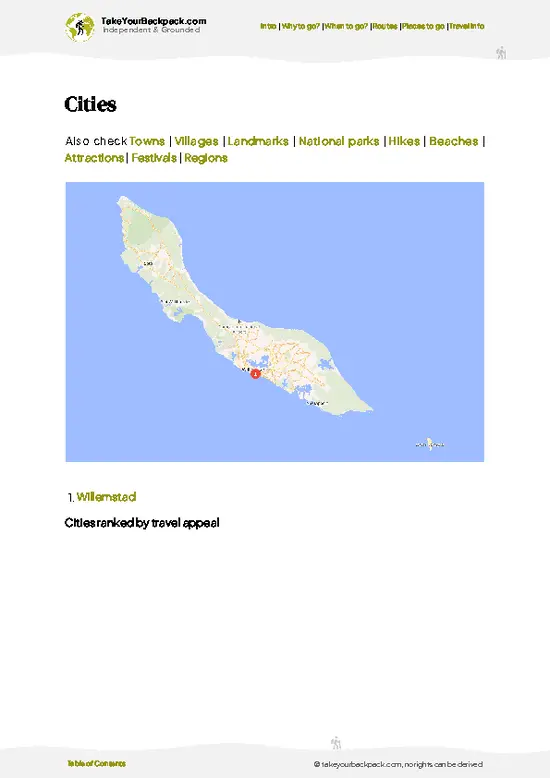
Willemstad suits travelers who like their cities walkable, colorful and a little salty, and who are happy to treat a capital as a base rather than a beach destination. If you want white sand outside your door or a wild nightlife scene, you may find it less rewarding. It sits on Curaçao’s south coast, split by the Sint Annabaai inlet into two halves, Punda and Otrobanda. The Queen Emma pontoon bridge swings open for ships, so it can be shut for 10 to 20 minutes at a time. Experienced travelers don’t wait it out. They cross on the free ferry or just accept the pause and grab a coffee. Cruise ships also flood Punda on certain days, so head to the old streets early or after the ships leave. Compared with Oranjestad in Aruba, Willemstad feels older, less resort-polished and far more lived in.

Discover everything you want to know in the 📖 Curaçao Travel Guide.


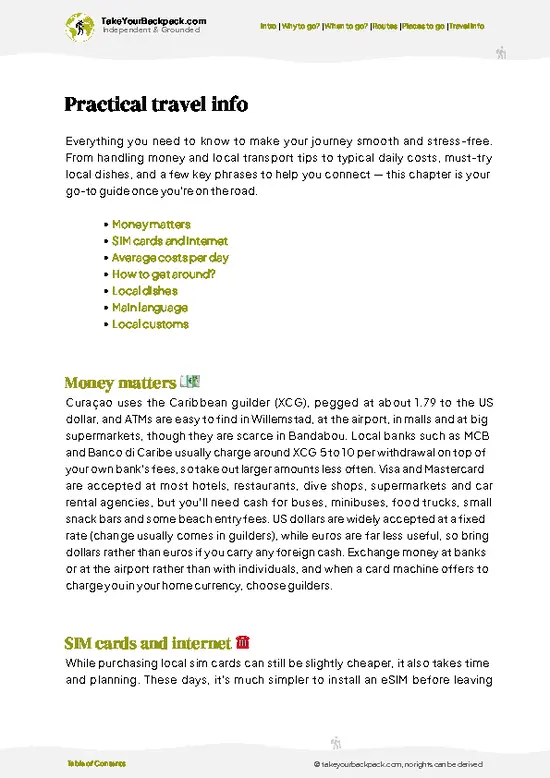
example page 0 from our offline Travel Guide for Curaçao
example page 1 from our offline Travel Guide for Curaçao
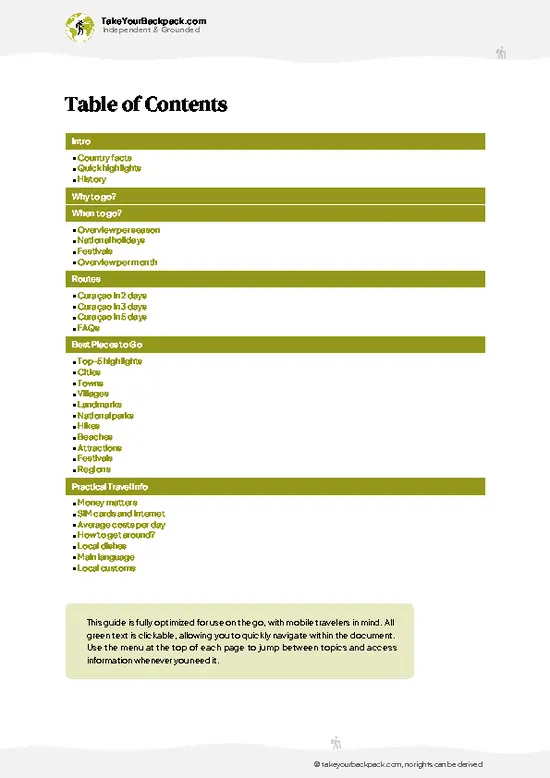
example page 2 from our offline Travel Guide for Curaçao
example page 3 from our offline Travel Guide for Curaçao
example page 4 from our offline Travel Guide for Curaçao
example page 5 from our offline Travel Guide for Curaçao
example page 6 from our offline Travel Guide for Curaçao
example page 7 from our offline Travel Guide for Curaçao
Loading the map 🌍
CLICK TO FILTER
cities
towns
villages
landmarks
national parks
hikes
beaches
attractions
festivals
regions
SHOW COUNTRY’S BESTSHOW ALL

✨ Why go?
Ranked #1 city in Curaçao
The unique appeal for travelers

Willemstad works as a backpacking stop because the whole center is compact enough to cover on foot, and it gives you more variety per block than almost anywhere else in the Caribbean. The UNESCO-listed old center sits on both sides of St. Anna Bay, so you cross between Punda and Otrobanda on foot and see the Dutch gabled facades change into a looser, residential grid within minutes. That alone fills a day without a rental car.

The second reason is basecamp value. Beaches, snorkeling coves and the wild west coast are spread across a long, narrow island, and Willemstad is where the buses, shared minivans and rental offices converge. Sleeping here and fanning out beats moving your bag every night. Hostel and guesthouse options are limited and not rock-bottom cheap, so book ahead for peak weeks. … read more 👉
Willemstad works as a backpacking stop because the whole center is compact enough to cover on foot, and it gives you more variety per block than almost anywhere else in the Caribbean. The UNESCO-listed old center sits on both sides of St. Anna Bay, so you cross between Punda and Otrobanda on foot and see the Dutch gabled facades change into a looser, residential grid within minutes. That alone fills a day without a rental car.

The second reason is basecamp value. Beaches, snorkeling coves and the wild west coast are spread across a long, narrow island, and Willemstad is where the buses, shared minivans and rental offices converge. Sleeping here and fanning out beats moving your bag every night. Hostel and guesthouse options are limited and not rock-bottom cheap, so book ahead for peak weeks.

Food is the third draw. The Old Market (Marshe Bieuw) canteens serve Curaçaoan home cooking at lunch, and the evening food trucks at Plaza Brion add a cheaper dinner option. Nightlife is lively around Pietermaai on weekends. Expect a Dutch-Caribbean city, not a party-hostel scene. For a few days it suits you well, with the sea waiting outside town; for sand-only travelers it is better as a short stop.

💡 HighlightsTop highlights of Willemstad

  1. Handelskade and the Punda waterfront: The row of pastel Dutch gabled buildings is the postcard image of Curaçao. Walk it in the morning for softer light and fewer cruise passengers. Free, 30 to 45 minutes.
  2. Queen Emma Pontoon Bridge: A floating footbridge across Sint Annabaai that swings open to let ships pass. Crossing is free and takes five minutes, longer if it opens. Late afternoon is lovely.
  3. Mikvé Israel-Emanuel Synagogue: Founded in 1651 by Sephardic Jews, it is among the oldest synagogues in continuous use in the Americas, with a sand floor. Entry about US$18 including the museum and an audio tour, 45 minutes. Open weekdays, so avoid weekends.
  4. Kura Hulanda Museum: Housed in a restored former slave-trade quarter in Otrobanda, it explains the transatlantic slave trade and West African cultures.
… read more 👉
  1. Handelskade and the Punda waterfront: The row of pastel Dutch gabled buildings is the postcard image of Curaçao. Walk it in the morning for softer light and fewer cruise passengers. Free, 30 to 45 minutes.
  2. Queen Emma Pontoon Bridge: A floating footbridge across Sint Annabaai that swings open to let ships pass. Crossing is free and takes five minutes, longer if it opens. Late afternoon is lovely.
  3. Mikvé Israel-Emanuel Synagogue: Founded in 1651 by Sephardic Jews, it is among the oldest synagogues in continuous use in the Americas, with a sand floor. Entry about US$18 including the museum and an audio tour, 45 minutes. Open weekdays, so avoid weekends.
  4. Kura Hulanda Museum: Housed in a restored former slave-trade quarter in Otrobanda, it explains the transatlantic slave trade and West African cultures. Entry around US$10 to 12, 1.5 to 2 hours. Go in the morning.
  5. Floating Market: Venezuelan traders sell fruit, vegetables and fish from boats moored along the canal. Cheap to wander and best before noon. Free to visit, 30 minutes.
  6. Fort Amsterdam and the Governor’s Palace: The 17th-century fort guards the harbor entrance and houses government offices and a church with a cannonball lodged in the wall. Free to stroll through, 20 to 30 minutes.
  7. Pietermaai District: A restored neighborhood of colorful townhouses with bars, street art and restaurants. Evenings are best, when it fills with locals. Free to wander, plus the cost of a drink, 1 to 2 hours.
  8. Rif Fort Village: A 19th-century fort at the harbor mouth, now holding shops and restaurants, with views toward the bridge. Free entry, 30 to 45 minutes. Dusk is nicest.
From Willemstad you can reach Christoffel National Park, Playa Kenepa and Shete Boka National Park as easy day trips by car.
The synagogue pairs well with the Floating Market and the Handelskade stroll in a single Punda morning, with the pontoon bridge crossing to the Kura Hulanda Museum in the afternoon.
Spotted a mistake or missing something? Contact us.

Things to do in Willemstad

Ratings based on Tripadvisor reviews. When you book through this link, you support our work at no extra cost to you.

🏘️ NeighborhoodsKey areas and districts to know

Willemstad is really four neighborhoods split by a harbor inlet, and knowing which side you are on saves you a lot of walking in the heat.
  • Punda: The shopping and eating side, with the Handelskade waterfront of pastel Dutch gables and the Floating Market where Venezuelan boats sell fish and produce. It is compact and flat, so do it on foot. Go before 10 am, because tour groups arrive after and the sun gets fierce by late morning.
  • Otrobanda: Across the water, with narrow lanes, restored courtyards, street murals and the Kura Hulanda museum area. It is more local than Punda, and walking is easy but shade is patchy. The swinging Queen Emma pontoon bridge links the two; it opens for ships, so if it is open, take the free ferry instead of waiting.
  • Pietermaai: A ten-minute walk east of Punda, with
… read more 👉
Willemstad is really four neighborhoods split by a harbor inlet, and knowing which side you are on saves you a lot of walking in the heat.
  • Punda: The shopping and eating side, with the Handelskade waterfront of pastel Dutch gables and the Floating Market where Venezuelan boats sell fish and produce. It is compact and flat, so do it on foot. Go before 10 am, because tour groups arrive after and the sun gets fierce by late morning.
  • Otrobanda: Across the water, with narrow lanes, restored courtyards, street murals and the Kura Hulanda museum area. It is more local than Punda, and walking is easy but shade is patchy. The swinging Queen Emma pontoon bridge links the two; it opens for ships, so if it is open, take the free ferry instead of waiting.
  • Pietermaai: A ten-minute walk east of Punda, with faded colonial mansions turned into bars, cafés and small restaurants. This is where evenings happen. Thursday through Saturday is liveliest, and early drinks beat late ones when the cafés fill up.
  • Scharloo: Just behind the waterfront, with grand merchant houses in bright colors, some restored and some crumbling. Wander it in the morning for photos, since there is little to do after dark.

⌛️ 1 dayWhat you can realistically do in a day

This is a walking day built around the old center, with a market morning leading into museums and a slow evening in a quieter district.
8:00 AM: Floating Market. Start before the heat with fruit, fresh fish and a coffee from a nearby stall. The boats sit along the canal in Punda, and the vendors are friendly if you buy something.
9:15 AM: Handelskade and Fort Amsterdam. Stroll the pastel waterfront, then walk through the fort and the Governor’s Palace grounds. It is a few minutes along the water, with plenty of photo stops.
10:30 AM: Mikvé Israel-Emanuel Synagogue. Step in to see the sand floor and hanging brass chandeliers. Allow 45 minutes, then walk back to the water.
12:00 PM: Queen Emma Bridge and lunch. Cross to Otrobanda and eat something local at a snack spot or small restaurant near Rif … read more 👉
This is a walking day built around the old center, with a market morning leading into museums and a slow evening in a quieter district.
8:00 AM: Floating Market. Start before the heat with fruit, fresh fish and a coffee from a nearby stall. The boats sit along the canal in Punda, and the vendors are friendly if you buy something.
9:15 AM: Handelskade and Fort Amsterdam. Stroll the pastel waterfront, then walk through the fort and the Governor’s Palace grounds. It is a few minutes along the water, with plenty of photo stops.
10:30 AM: Mikvé Israel-Emanuel Synagogue. Step in to see the sand floor and hanging brass chandeliers. Allow 45 minutes, then walk back to the water.
12:00 PM: Queen Emma Bridge and lunch. Cross to Otrobanda and eat something local at a snack spot or small restaurant near Rif Fort. Wait for the bridge to close again if it opens.
2:00 PM: Kura Hulanda Museum. Spend about two hours inside the restored buildings, which offer a sober look at the slave trade and African history. It is a short walk from the bridge.
4:30 PM: Otrobanda back streets. Wander the narrow lanes behind the main road, where laundry hangs from balconies and kids play outside, well away from the cruise crowd. Many of the buildings are being restored.
6:30 PM: Pietermaai. Take a short taxi or walk back over the bridge and along the coast to this district for a drink and dinner. Street art, courtyards and relaxed bars make it a good place to end the day.

🌤️ When to go?Weather, crowds, and seasonal trade-offs

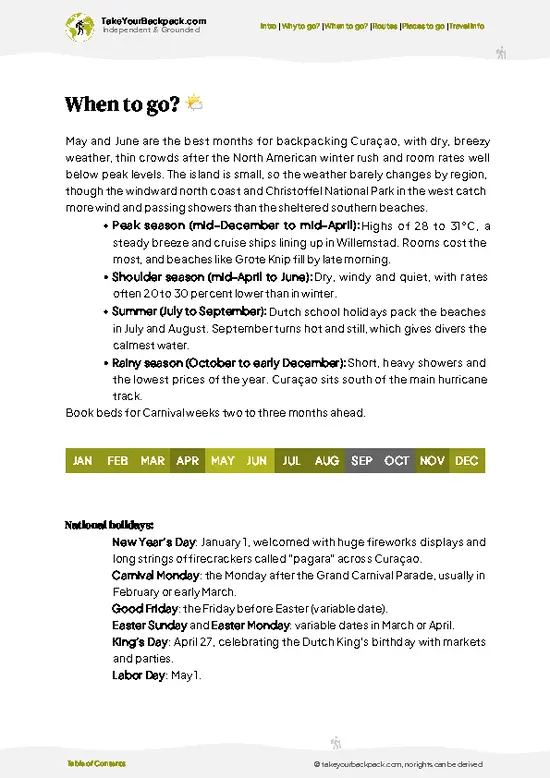
The best months for Willemstad are roughly February to June, when trade winds keep the heat bearable and rain is rare.
  • Dry Season (Feb to Jun): Highs of 30 to 32°C (86 to 90°F), lows around 25°C (77°F), steady breeze and little rain. Days stay long enough for a full sightseeing day, though sun is strong at midday.
  • Peak Holiday Period (Dec to Apr): North American and Dutch visitors fill the waterfront and beds cost the most, with dorm and room rates noticeably higher around Christmas and Carnival.
  • Rainy Season (Oct to Jan): Short, heavy showers, often at night, with similar temperatures of 28 to 31°C (82 to 88°F) and more humidity. Prices drop and the town is calmer. Curaçao sits south of the main hurricane belt, so storms are uncommon.
  • Summer (Jul to Sep): Hottest and stickiest, up to 33°C (91°F),
… read more 👉
The best months for Willemstad are roughly February to June, when trade winds keep the heat bearable and rain is rare.
  • Dry Season (Feb to Jun): Highs of 30 to 32°C (86 to 90°F), lows around 25°C (77°F), steady breeze and little rain. Days stay long enough for a full sightseeing day, though sun is strong at midday.
  • Peak Holiday Period (Dec to Apr): North American and Dutch visitors fill the waterfront and beds cost the most, with dorm and room rates noticeably higher around Christmas and Carnival.
  • Rainy Season (Oct to Jan): Short, heavy showers, often at night, with similar temperatures of 28 to 31°C (82 to 88°F) and more humidity. Prices drop and the town is calmer. Curaçao sits south of the main hurricane belt, so storms are uncommon.
  • Summer (Jul to Sep): Hottest and stickiest, up to 33°C (91°F), with moderate crowds from European holidays.
Book Carnival weekends (usually Jan to Feb) months ahead if you want a bed.


source: climatestotravel.comJANJanuary: highly recommended for travelingFEBFebruary: good for travelingMARMarch: highly recommended for travelingAPRApril: excellent for travelingMAYMay: excellent for travelingJUNJune: excellent for travelingJULJuly: highly recommended for travelingAUGAugust: highly recommended for travelingSEPSeptember: highly recommended for travelingOCTOctober: fair for travelingNOVNovember: fair for travelingDECDecember: good for traveling
curacao-city-willemstad
© Google | Taxi Max

✈️ The backpacker research shortcutCuraçao Travel Guide

An offline-friendly backpacking guide with optimized travel routes, ranked highlights, transport advice, and the best areas to stay.
example page 0 from our offline Travel Guide for Curaçao
example page 1 from our offline Travel Guide for Curaçao
example page 2 from our offline Travel Guide for Curaçao
example page 3 from our offline Travel Guide for Curaçao
example page 4 from our offline Travel Guide for Curaçao
example page 5 from our offline Travel Guide for Curaçao
example page 6 from our offline Travel Guide for Curaçao
example page 7 from our offline Travel Guide for Curaçao
The digital guide (126 pages) contains:
✅ 33 highlights, ranked by travel appeal
✅ Optimized 2, 3 & 5-day travel routes
✅ Cities, national parks, landmarks, beaches
✅ How to get around
✅ Offline-friendly for travel without Wi-Fi
👉 Click to see all 30+ guide features

📅 Plan smarter in minutes, not weeks
✅ Month by month travel advice
✅ Festivals & national holidays
✅ Budget expectations

🗺️ Go to the right places, skip the overrated ones
✅ Honest pros & cons of destinations
✅ Top hikes, parks & viewpoints
✅ Lesser-known places most travelers miss
✅ Clear “worth it vs skip it” guidance

🛏️ Travel smoothly without rookie mistakes
✅ Best areas to stay
✅ Transport systems explained simply
✅ Common scams & safety advice
✅ SIM cards, money & practical tips

🌍 Understand the country, not just visit it
✅ Culture & traditions
✅ 52 Essential phrases & customs
✅ Festivals worth planning around
✅ Traveler-friendly historical context
✅ Insights that make places more meaningful

📱 Built for real travel conditions
✅ Fully downloadable PDF
✅ Works completely offline
✅ Optimized for phone use
✅ Useful in remote areas & buses
✅ Everything in one place
Stop searching, start planning
Get instant access to your full guide. 30‑day money-back guarantee.
+ Add another guide for just

By proceeding you agree to our terms.
Sent to your inbox immediately after payment • 100% Secure Checkout
Best Backpacking Travel Advisor 2025 tourism awardBest Backpacking
Travel Advisor
2025
What others say about Take Your Backpack Guides:
⭐⭐⭐⭐⭐
Fantastic, amazing amount of information!
⭐⭐⭐⭐⭐
My goodness this is amazing, it's what I've been looking for hats off too you!
⭐⭐⭐⭐⭐
I think this is absolutely BRILLIANT
⭐⭐⭐⭐
Very complete and informative. It's still missing places, but I gotta to commend you
⭐⭐⭐⭐⭐
This is truly amazing, thank you, can't wait to explore it with my kids!
⭐⭐⭐⭐⭐
Awesome resource, thank you!
⭐⭐⭐⭐⭐
This is amazing! Can't wait to explore the ones I haven't seen
⭐⭐⭐⭐
I love this! Well done, great idea.
⭐⭐⭐⭐⭐
Thanks for taking the time to make this gem!
⭐⭐⭐⭐⭐
This might be the best website I've ever seen.
⭐⭐⭐⭐⭐
Congratulations, and thank you so much for your work; it's incredibly valuable.
⭐⭐⭐⭐
In all seriousness I think you did a great job pointing out the important spots
⭐⭐⭐⭐⭐
10/10 very good
⭐⭐⭐⭐⭐
As someone who's only just starting to visit regularly this is awesome, thank you.
⭐⭐⭐⭐
Thank you very much! I'm going to visit my dad, it's going to be very useful!
⭐⭐⭐⭐⭐
This is really cool! We'll be travelling for the first time and this definitely come in handy.
⭐⭐⭐⭐⭐
You are now our minister of culture, congratulations 👨‍💼
⭐⭐⭐⭐⭐
Just wanted to tell you that this is a pearl! Going to follow your recommendations.
⭐⭐⭐⭐⭐
This is so cool. I'll definitely be using the resource for my travels soon.
⭐⭐⭐⭐⭐
This is very impressive! Good work.
⭐⭐⭐⭐⭐
This is an amazing and informative site. Very well done!

🛏️ Where to stay?Best areas to stay in Curaçao

Pietermaai and Otrobanda are the best areas for a budget bed in Willemstad. Pietermaai has the highest concentration of hostels and guesthouses, a short walk from the cafés, the waterfront and a small urban beach, and its lanes are lively and generally fine to walk in the evening. The tradeoff is noise on weekend nights, so ask for a room away from the street or pack earplugs.

Otrobanda is quieter once the bars wind down, and its guesthouses and apartments suit travelers who want a calmer night and a short stroll to the pontoon bridge and ferry. It is a little rougher around the edges after dark, … read more 👉
Pietermaai and Otrobanda are the best areas for a budget bed in Willemstad. Pietermaai has the highest concentration of hostels and guesthouses, a short walk from the cafés, the waterfront and a small urban beach, and its lanes are lively and generally fine to walk in the evening. The tradeoff is noise on weekend nights, so ask for a room away from the street or pack earplugs.

Otrobanda is quieter once the bars wind down, and its guesthouses and apartments suit travelers who want a calmer night and a short stroll to the pontoon bridge and ferry. It is a little rougher around the edges after dark, so stick to well-lit main streets and take a taxi late.

Budget beds are limited compared with other Caribbean islands, and dorm space fills fast between December and April, so book weeks ahead. Many guesthouses offer kitchens, which helps cut costs. Staying in the center means you can skip a rental car for your first days, while the beach areas farther out suit those with their own wheels.

🚌 Getting aroundTransportation options and practical tips

Willemstad is easiest on foot, because Punda, Otrobanda, Scharloo and Pietermaai all sit within about 2 km (1.2 miles) of each other and the pastel streets are flat. Traffic clogs on weekday mornings and late afternoons around the bridges, and buses are cheap but slow, so most backpackers walk the center and use buses or taxis only for beaches.
  • Walking: Free and the fastest for the old center. Do it early or after 4 pm, since midday sun is brutal and shade is thin. Bring water, because shops close on Sundays.
  • Queen Emma Bridge and ferry: The pontoon bridge is free for pedestrians and swings open for ships, sometimes for 15 to 20 minutes. Experienced travelers check the ferry across the inlet instead of waiting, and cross at the nearby Queen Juliana Bridge only if they have to.
  • Public buses: Called
… read more 👉
Willemstad is easiest on foot, because Punda, Otrobanda, Scharloo and Pietermaai all sit within about 2 km (1.2 miles) of each other and the pastel streets are flat. Traffic clogs on weekday mornings and late afternoons around the bridges, and buses are cheap but slow, so most backpackers walk the center and use buses or taxis only for beaches.
  • Walking: Free and the fastest for the old center. Do it early or after 4 pm, since midday sun is brutal and shade is thin. Bring water, because shops close on Sundays.
  • Queen Emma Bridge and ferry: The pontoon bridge is free for pedestrians and swings open for ships, sometimes for 15 to 20 minutes. Experienced travelers check the ferry across the inlet instead of waiting, and cross at the nearby Queen Juliana Bridge only if they have to.
  • Public buses: Called “Konvoi” buses, they run from the main terminal near Punda to the suburbs and some beaches for roughly US$1.50 to 2. Services thin out in the evening and on Sundays, and routes can be hard to read, so ask the driver before boarding.
  • Taxis: Fixed government rates, with no meters. A short hop in town costs about US$10 to 15 and the airport run is around US$20 to 30. Agree on the price before getting in, and pay in US dollars or Antillean guilders. Ride-hailing is limited, so taxi stands near hotels and the cruise terminal are the realistic option.
  • Rental car: Small cars from US$30 to 50 a day are the smart move for the west coast beaches like Playa Kenepa, since buses rarely reach them. Book ahead in high season and fill the tank before heading west, where stations are sparse.

👛 Costs (as of 22 October 2026)How expensive it really is

Willemstad costs about US$95 a day for a backpacker who eats locally and uses buses and walking, since this Caribbean island is pricier than most of Latin America.
CategoryBudget RangeLocal Reality
Dorm bed (high season)US$35 to 45Few hostels, fill fast from December to April
Dorm bed (off-season)US$25 to 35Easier to book, lower rates
MealsUS$20 to 30Pastechi, market plates and supermarket groceries
Local transportUS$5 to 10Buses at about US$1.50 to 2, occasional taxis
City transport passUS$0 to 5No tourist pass, pay per ride, center is walkable
Basic activities and entry feesUS$10 to 15Park entries and small museums, beaches mostly free
MiscellaneousUS$5 to 10Sunscreen, snacks, a beer or two
Total Daily BudgetUS$95Using high-season dorm rates
Save money by cooking in a hostel kitchen and buying groceries … read more 👉
Willemstad costs about US$95 a day for a backpacker who eats locally and uses buses and walking, since this Caribbean island is pricier than most of Latin America.
CategoryBudget RangeLocal Reality
Dorm bed (high season)US$35 to 45Few hostels, fill fast from December to April
Dorm bed (off-season)US$25 to 35Easier to book, lower rates
MealsUS$20 to 30Pastechi, market plates and supermarket groceries
Local transportUS$5 to 10Buses at about US$1.50 to 2, occasional taxis
City transport passUS$0 to 5No tourist pass, pay per ride, center is walkable
Basic activities and entry feesUS$10 to 15Park entries and small museums, beaches mostly free
MiscellaneousUS$5 to 10Sunscreen, snacks, a beer or two
Total Daily BudgetUS$95Using high-season dorm rates
Save money by cooking in a hostel kitchen and buying groceries at supermarkets, since eating out can double your daily spend. Tap water is safe, so refill a bottle instead of buying water.
⚠️ Prices can change and everyone travels differently, so take this as a rough guide. Hope it helps you plan your adventure!

🚌 Day tripsShort trips worth adding

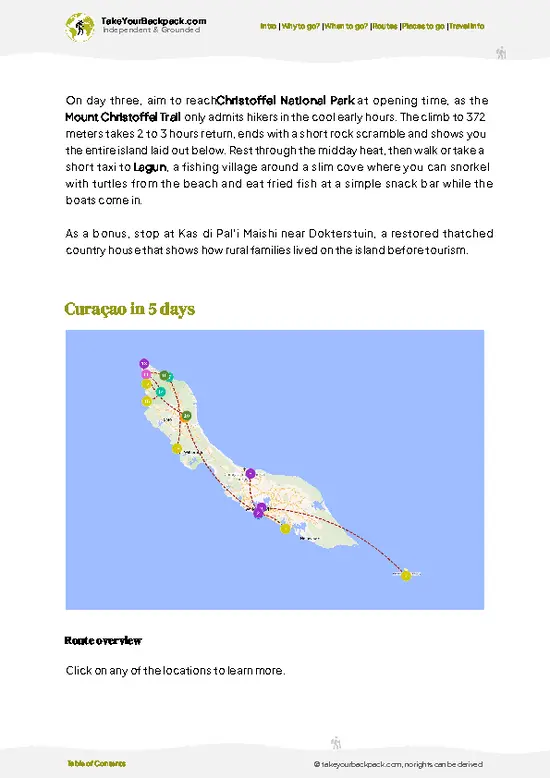
Willemstad works well as a base because the island is only about 60 km (37 miles) long and most highlights are within 90 minutes by car, though buses are limited so a rental or shared ride helps.
Playa Kenepa (Grote Knip): Curaçao’s signature beach has turquoise water and white sand under a cliff, about 45 to 60 minutes west by car. Entry is free or a small fee of US$1 to 3, with parking extra. Go before 10 am on weekends, since Sunday brings local families and the sand disappears. Budget US$30 to 50 for a rental share plus snacks.

Christoffel National Park: The island’s highest point, Mount Christoffel at 372 m (1,220 feet), sits about an hour northwest. Entry is about US$15, and hikers should start at opening, since the climb of 1.5 to 2 hours is miserable in midday heat. The park is best … read more 👉
Willemstad works well as a base because the island is only about 60 km (37 miles) long and most highlights are within 90 minutes by car, though buses are limited so a rental or shared ride helps.
Playa Kenepa (Grote Knip): Curaçao’s signature beach has turquoise water and white sand under a cliff, about 45 to 60 minutes west by car. Entry is free or a small fee of US$1 to 3, with parking extra. Go before 10 am on weekends, since Sunday brings local families and the sand disappears. Budget US$30 to 50 for a rental share plus snacks.

Christoffel National Park: The island’s highest point, Mount Christoffel at 372 m (1,220 feet), sits about an hour northwest. Entry is about US$15, and hikers should start at opening, since the climb of 1.5 to 2 hours is miserable in midday heat. The park is best from February to June and a common mistake is wearing sandals.
👉 Explore Christoffel National Park
Shete Boka National Park: About 40 minutes northwest, this stretch of cliffs has waves crashing into sea caves, especially dramatic on windy days. Entry is about US$15. Wear shoes with grip, because the rocks are slippery, and stay well back from the edges.
👉 Explore Shete Boka National Park
Westpunt: The sleepy western tip, about an hour and fifteen minutes away, is for snorkeling, sunset views and fresh fish at casual spots. Plan on US$25 to 45 for the day with food. Leave town by mid-morning so you are not driving back on dark, unlit roads.
👉 Explore Westpunt

🍲 FoodLocal Flavors for Backpackers

Willemstad’s food mixes Dutch, African, Caribbean and Venezuelan influences, and the best way to try it is at the casual spots rather than the waterfront tourist menus. Order keshi yena, a baked cheese shell, often Gouda or Edam, stuffed with spiced chicken or beef, raisins and olives. Stobá is a slow-cooked stew of beef or goat with papaya or potatoes, and kabritu goat stew is a staple. Fresh fish is often served with funchi, a firm cornmeal side that differs from the version elsewhere.

For a cheap lunch, head to the Old Market (Plaza Bieu) near Punda, where local cooks serve plates of rice, stew and fish from steaming counters for roughly US$8 to 12. Snack on pastechi, a fried pastry stuffed with cheese or meat, for US$1 to 2, a breakfast habit here. Dutch influence shows in bitterballen … read more 👉
Willemstad’s food mixes Dutch, African, Caribbean and Venezuelan influences, and the best way to try it is at the casual spots rather than the waterfront tourist menus. Order keshi yena, a baked cheese shell, often Gouda or Edam, stuffed with spiced chicken or beef, raisins and olives. Stobá is a slow-cooked stew of beef or goat with papaya or potatoes, and kabritu goat stew is a staple. Fresh fish is often served with funchi, a firm cornmeal side that differs from the version elsewhere.

For a cheap lunch, head to the Old Market (Plaza Bieu) near Punda, where local cooks serve plates of rice, stew and fish from steaming counters for roughly US$8 to 12. Snack on pastechi, a fried pastry stuffed with cheese or meat, for US$1 to 2, a breakfast habit here. Dutch influence shows in bitterballen and Gouda cheese platters at bars.

Try Blue Curaçao liqueur, made from the dried peels of the island’s laraha oranges, in cocktails at Pietermaai’s bars. Amstel Bright beer is cheap in supermarkets. Tap water is safe to drink, which cuts your bottled water costs.

🛡️ SafetyStaying Safe: What Travelers Should Know

Willemstad is one of the safer Caribbean cities, and most trouble is petty. The center feels fine in daylight and busy evenings in Pietermaai and Punda, but the quieter back streets of Otrobanda and some outlying neighborhoods are best avoided after dark. Take a taxi at night instead of walking late, and do not carry valuables openly. Solo travelers, including women, generally have an easy time, though the usual rule of staying in lit, populated areas applies.

Car break-ins are the most common problem, especially at beach car parks. Never leave anything visible in a parked car, and take only what you need to the sand. Hawkers around the cruise terminal can be persistent but a polite no works. Sun and strong currents at some beaches are bigger hazards than crime, so drink water, wear reef-safe … read more 👉
Willemstad is one of the safer Caribbean cities, and most trouble is petty. The center feels fine in daylight and busy evenings in Pietermaai and Punda, but the quieter back streets of Otrobanda and some outlying neighborhoods are best avoided after dark. Take a taxi at night instead of walking late, and do not carry valuables openly. Solo travelers, including women, generally have an easy time, though the usual rule of staying in lit, populated areas applies.

Car break-ins are the most common problem, especially at beach car parks. Never leave anything visible in a parked car, and take only what you need to the sand. Hawkers around the cruise terminal can be persistent but a polite no works. Sun and strong currents at some beaches are bigger hazards than crime, so drink water, wear reef-safe sunscreen and check conditions before swimming at exposed spots.

FAQCommon questions from travelers

Willemstad needs two to three days for the old center, covering Punda, Otrobanda, Pietermaai and Scharloo on foot, with the Floating Market and the Queen Emma Bridge as highlights. Add two or three more days for beaches and parks like Playa Kenepa and Christoffel National Park, which are 45 to 60 minutes by car. Five days gives a comfortable mix of city and coast.
Willemstad is generally safe for solo backpackers, and violent crime against visitors is rare. The main issues are car break-ins at beach car parks and quiet back streets after dark, so take a taxi (about US$10 to 15 in town) for late nights. Pietermaai and Punda are busy and comfortable in the evening, and leaving nothing in parked cars is the key habit.
Willemstad is known for its pastel Dutch colonial buildings along the Handelskade, a UNESCO-listed historic center and the floating Queen Emma pontoon bridge that swings open for ships. It is also the home of Blue Curaçao liqueur, made from laraha orange peels, and of the Floating Market where Venezuelan boats sell fresh produce. The island’s beaches, such as Playa Kenepa, are about an hour away by road.
⚠️ Things can change over time, so always validate details locally before you go.

More places to explore across Curaçao

Willemstad isn’t the only highlight in Curaçao. Explore all what Curaçao has to offer.
Country photo of Curaçao

We 💚 feedbackFinal thoughts on visiting Willemstad

Willemstad is best on a weekday morning, when the cruise ships have not yet filled Punda and the market is at its liveliest. I would arrive at the waterfront by 8 and be done with the old town by lunch. Save the evenings for Pietermaai, and pack a light layer of sunscreen and a hat.

✍️ Help improve this page!
The information on this page is based on in-depth research, insights shared by experienced travelers, and feedback from the local travel community in Curaçao. While every effort is made to keep the information accurate and current, conditions can change — so if you spot anything incorrect or outdated, please get in touch.


🙋‍♂️ Give feedback

👋 Meet the founderWho’s Behind Take Your Backpack?

Johan, backpacker and founder of TakeYourBackpackHi, I’m Johan (Netherlands 🇳🇱), the creator of TakeYourBackpack. Over the past 3 decades, I’ve backpacked through 90+ countries across six continents, gaining extensive experience with independent travel, long-term trips, and overland routes.

This site is built on a combination of firsthand travel experience and carefully curated insights from other backpackers. Many guides are based on places I’ve personally visited, while others bring together tips, observations, and practical advice shared by trusted travelers I’ve met along the way.

The goal is to provide realistic, experience-driven guidance — not generic itineraries — so you can explore destinations with better context, clearer expectations, and more confidence.