v2.webp)



- Děvín (the ridge and summit) — The highest hill in the Pálava massif with raw limestone cliffs, steppe vegetation and one of the best 360° views over the Nové Mlýny lakes, the Thaya floodplain and even into Austria on a clear day. Walk the ridge at sunrise or sunset; the light on the loess terraces is what makes Pálava feel like nowhere else.
- Pavlovské stěny (Pavlov cliffs) — A dramatic amphitheatre of limestone walls above the village of Pavlov. Short hikes and scramble routes give you intimate views of the cliffs and the bird-rich wetlands below; botanically special because of the warm, dry rock habitats you don’t see in much of Central Europe.
- Sirotčí hrádek (castle ruin) — Tiny, atmospheric Gothic ruins perched on a rocky spur near Pavlov. It’s a proper cliff-top ruin with close-up
- Děvín (the ridge and summit) — The highest hill in the Pálava massif with raw limestone cliffs, steppe vegetation and one of the best 360° views over the Nové Mlýny lakes, the Thaya floodplain and even into Austria on a clear day. Walk the ridge at sunrise or sunset; the light on the loess terraces is what makes Pálava feel like nowhere else.
- Pavlovské stěny (Pavlov cliffs) — A dramatic amphitheatre of limestone walls above the village of Pavlov. Short hikes and scramble routes give you intimate views of the cliffs and the bird-rich wetlands below; botanically special because of the warm, dry rock habitats you don’t see in much of Central Europe.
- Sirotčí hrádek (castle ruin) — Tiny, atmospheric Gothic ruins perched on a rocky spur near Pavlov. It’s a proper cliff-top ruin with close-up views of the dinos-esque limestone formations and an easy, rewarding walk from Pavlov—perfect for photos and a quiet picnic away from the main trails.
- Pavlov-Dolní Věstonice prehistoric landscape — Open loess slopes and viewpoints where Gravettian hunter-gatherers camped 25-30,000 years ago (this is where famous finds like the so-called Venus-type figurines were discovered). You’re literally standing in a place with deep human prehistory; the feel of the land and the marked viewpoints bring that home without stepping into a formal museum.
- Dolní Věstonice loess exposures (hidden gem) — The local excavation areas and visible loess cliffs are quieter than the town museum and give a real sense of the ancient camp sites and bone horizons. Few day-trippers make the short detour here, so you’ll often have the viewpoint to yourself—great for imagining the Paleolithic landscape.
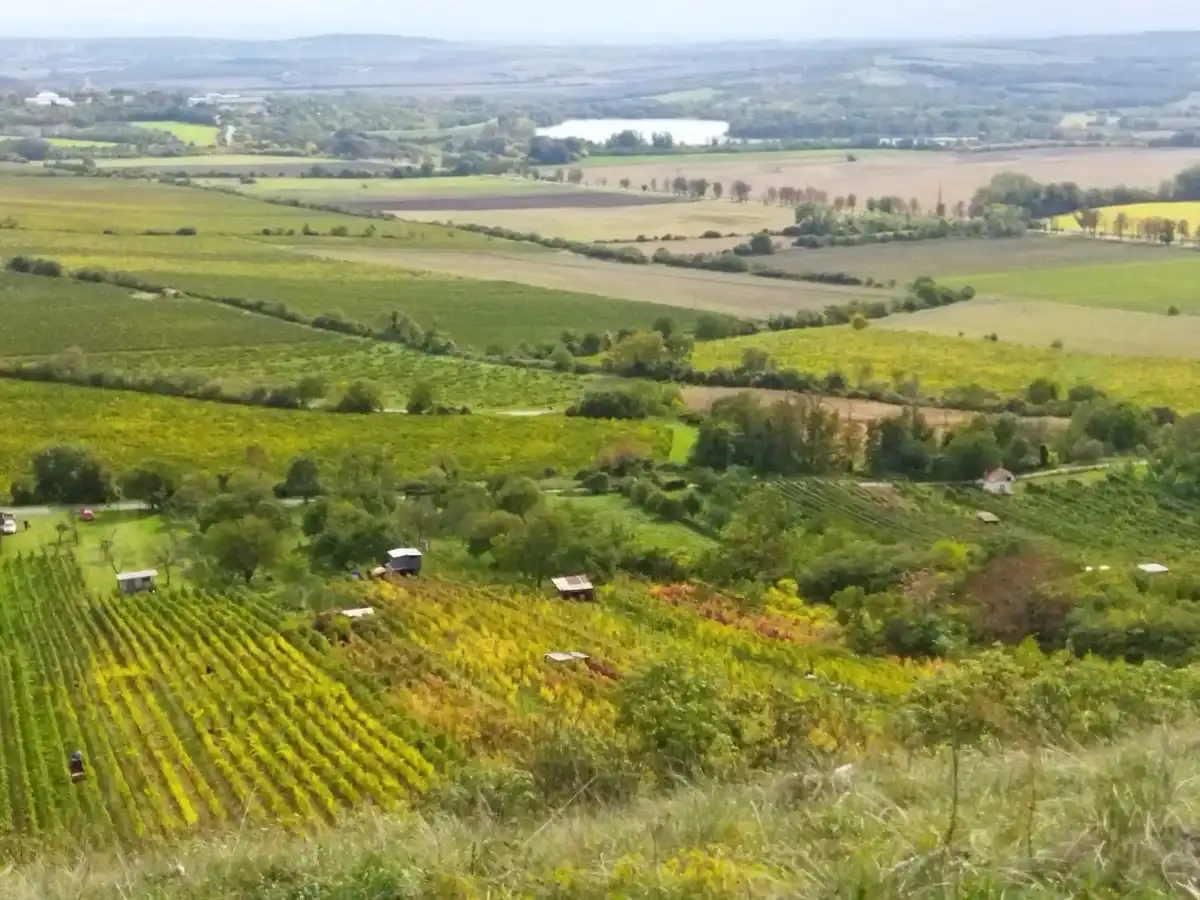
- Klentnice cellar street and family vintners (hidden gem — personal favorite) — Narrow cellar-lined lanes carved into the loess with dozens of family wine cellars where you can sit on a crate, try local Pálava wines (white aromatic varieties), and buy a bottle straight from the producer. It’s low-key, social, and utterly local—my favourite way to end a day in the hills.
- Svatý Kopeček (Holy Hill) and the pilgrimage trail — A compact cultural route of chapels and Stations of the Cross leading to a hilltop chapel with excellent views over Mikulov and the vineyards. It’s a living village tradition that combines a short hike, quiet reflection and a panorama—distinctly Pálava in flavor.
- Mikulov historic core and vineyard terraces — The baroque square, castle ramparts and the surrounding antique vineyards are tightly woven into Pálava’s wine culture. Stroll from town into the terrace paths behind the castle for a lines-of-vines, old-stone feel that’s specific to this microregion.
- Nové Mlýny reservoirs & reedbeds — The lakes and reed margins at the southern edge of Pálava are a migratory-bird hotspot; there are hides, low-key trails and superb sunsets across the water. Combine a bike ride along the shore with binoculars for a classic Pálava nature experience—fish, reed warblers and raptors are common.
- Terraced vineyards and little family wine cellars around Pavlov and Klentnice (hidden gem) — Skip the big wineries and wander the small, steep terraces and single-row plots that dot the slopes. You’ll meet growers selling weird local cuvées, find tiny tasting events and see how the loess-on-limestone terroir actually shapes the wine—this micro-scale viticulture is the region’s soul and hard to copy elsewhere.
Spotted a mistake or missing something? Contact us.

Skip the Line: 10-Z Bunker Entrance Ticket in Brno

PUNKVA CAVES, ABYSS and PERNSTEJN CASTLE =only from Apr to Sep

BMP tank driving experience Prague

Trip to the Austerlitz Battlefield near BRNO in the Czech Republic

Wine Culture and UNESCO Gems Lednice Valtice Area and Mikulov

Half Day Tour to the Macocha Abyss and The Punkva Caves

Brno Food Tasting Tour of Hidden Gems for Small Groups

Brno: 3-Hour History & Legends Walking Tour

3 Hour Private Tour with a Local Guide in Brno

 Best Backpacking
.jpg) Hi, I’m Johan (Netherlands 🇳🇱), the creator of TakeYourBackpack. Over the past 3 decades, I’ve backpacked through 90+ countries across six continents, gaining extensive experience with independent travel, long-term trips, and overland routes.
Hi, I’m Johan (Netherlands 🇳🇱), the creator of TakeYourBackpack. Over the past 3 decades, I’ve backpacked through 90+ countries across six continents, gaining extensive experience with independent travel, long-term trips, and overland routes.