×

Czechia🇨🇿 | best regionsYour Guide to the 2 Best regions in Czechia

Czechia is a country of three historic lands, and the differences between them are bigger than the map suggests. Bohemia in the west holds the beer halls, the castles and most of the tour groups. Moravia in the east trades that for wine cellars, slower trains and prices that make Prague feel like a cover charge. Add the sandstone rock towns and border mountains, and you get regions that vary in crowds, cost and ease of access more than in distance. For independent travel, that matters: a pint costs roughly 45 to 70 CZK (about US$2 to 3) almost everywhere, yet a bed can double within two hours by rail.

By Johan Kruseman 🇳🇱 | Updated October 19, 2026
Explore the best cities in Czechia

Why go?Key Factors That Shape the Experience

Czechia packs an unusual amount of variety into a country you can cross by train in about seven hours. The reason is history: Bohemia, Moravia and Czech Silesia were separate crown lands under the Habsburgs and earlier kings, so dialects, food, architecture and even drinking habits changed from one to the next. Beer dominates the west, wine the south of Moravia, and that split still shapes menus and prices today.

Geography adds another layer. The country is a basin ringed by low mountains, which means the borders hold the forests, rock formations and ski villages, while the interior holds the towns and castles. Nothing is high (the top is Sněžka at 1,603 meters), so hiking suits nearly any fitness level.

The real advantage is infrastructure. The rail network is dense, regional trains reach … read more 👉
Czechia packs an unusual amount of variety into a country you can cross by train in about seven hours. The reason is history: Bohemia, Moravia and Czech Silesia were separate crown lands under the Habsburgs and earlier kings, so dialects, food, architecture and even drinking habits changed from one to the next. Beer dominates the west, wine the south of Moravia, and that split still shapes menus and prices today.

Geography adds another layer. The country is a basin ringed by low mountains, which means the borders hold the forests, rock formations and ski villages, while the interior holds the towns and castles. Nothing is high (the top is Sněžka at 1,603 meters), so hiking suits nearly any fitness level.

The real advantage is infrastructure. The rail network is dense, regional trains reach villages that elsewhere would need a car, and the red-and-white hiking trail markers are among the best maintained in Europe. Czechia is not a country of dramatic wilderness or beaches, and anyone expecting those will be quietly disappointed. It is a country of small distances, strong beer and tidy signage. Rural cash is still handy, since some village pubs and huts do not take cards.
Behind the Scenes of Selection
The list of best regions in Czechia is created based on landscapes, local culture, attractions, vibes, and overall appeal. If you feel a region is missing in this list, please let us know.

When to go?Best Time to Visit Czechia for regions

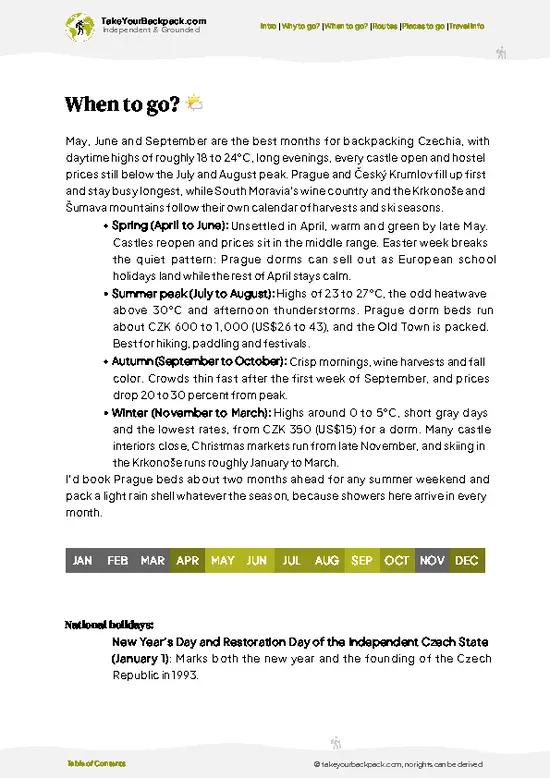
Best months and shoulder seasons: The best months are May, June and September, when daytime highs run about 17 to 24°C, the trails are dry and the crowds are thinner than in July. Spring brings occasional rain, around 60 to 75 mm a month, but also blossom and long evenings. September is often the most settled stretch of the year, and the grape harvest begins in the south of Moravia, so cellars are lively.

Summer, winter and closures: July and August bring 22 to 30°C, with afternoon thunderstorms and the highest accommodation prices. Expect hostel beds and guesthouses to cost 20 to 40 percent more in Prague and the popular Bohemian towns than in the off-season. Rural areas stay far cheaper.

Winter runs from December to February, with temperatures around -5 to 3°C. The mountains on the Polish … read more 👉
Best months and shoulder seasons: The best months are May, June and September, when daytime highs run about 17 to 24°C, the trails are dry and the crowds are thinner than in July. Spring brings occasional rain, around 60 to 75 mm a month, but also blossom and long evenings. September is often the most settled stretch of the year, and the grape harvest begins in the south of Moravia, so cellars are lively.

Summer, winter and closures: July and August bring 22 to 30°C, with afternoon thunderstorms and the highest accommodation prices. Expect hostel beds and guesthouses to cost 20 to 40 percent more in Prague and the popular Bohemian towns than in the off-season. Rural areas stay far cheaper.

Winter runs from December to February, with temperatures around -5 to 3°C. The mountains on the Polish border (Krkonoše, Jeseníky) have the only reliable snow, and ski season runs roughly from late December to March. Christmas markets make early December busy and pricey in the cities, yet quiet elsewhere.

Many castles, chateaux and mountain huts close or run reduced hours from November to March, and some shut entirely until April. Check opening days, since Monday closures are common. In short, go in late spring or early autumn, and bring a rain jacket anyway.

region hoppingHow to Combine regions Into One Trip

How long and in what order: A trip combining several regions in Czechia needs 10 to 14 days, and 7 days is the minimum before it becomes a series of platforms. The country is compact, so the easiest plan is a loop or a line through the middle, starting in Prague and moving east toward Moravia, or the reverse. Moving in one direction avoids doubling back, which wastes more time than any train delay.

Time per stop and travel between them: Allow 2 to 4 nights per region, and at least 2 for anywhere you plan to hike, since trail days start early and finish with beer. Prague to Brno takes about 2.5 to 3 hours by train or bus, and Brno to Ostrava about 2 to 2.5 hours. Hubs like Prague, Brno and Olomouc make easy connection points, and Czech Railways and private operators such as RegioJet and Leo … read more 👉
How long and in what order: A trip combining several regions in Czechia needs 10 to 14 days, and 7 days is the minimum before it becomes a series of platforms. The country is compact, so the easiest plan is a loop or a line through the middle, starting in Prague and moving east toward Moravia, or the reverse. Moving in one direction avoids doubling back, which wastes more time than any train delay.

Time per stop and travel between them: Allow 2 to 4 nights per region, and at least 2 for anywhere you plan to hike, since trail days start early and finish with beer. Prague to Brno takes about 2.5 to 3 hours by train or bus, and Brno to Ostrava about 2 to 2.5 hours. Hubs like Prague, Brno and Olomouc make easy connection points, and Czech Railways and private operators such as RegioJet and Leo Express run frequent intercity services at roughly US$6 to 15 a ticket if booked ahead.

Common planning mistakes: The classic error is trying to see every region in a week, which turns a small country into a long one. Cut the list instead and keep one region for slow days. Another is relying on a rural connection without checking the timetable, since some branch lines run only a few times a day and almost none late in the evening. Plan the return leg first, then fill in the rest. Finally, avoid booking tight transfers between regions on Sundays, when service thins out.

The ListTop regions of Czechia

1 Beskydy Mountains

deep forests, wooden villages, mountain ridges, folklore

Hike through dense spruce woods, encounter traditional architecture, and experience a landscape shaped by local legends and cross-border influences.

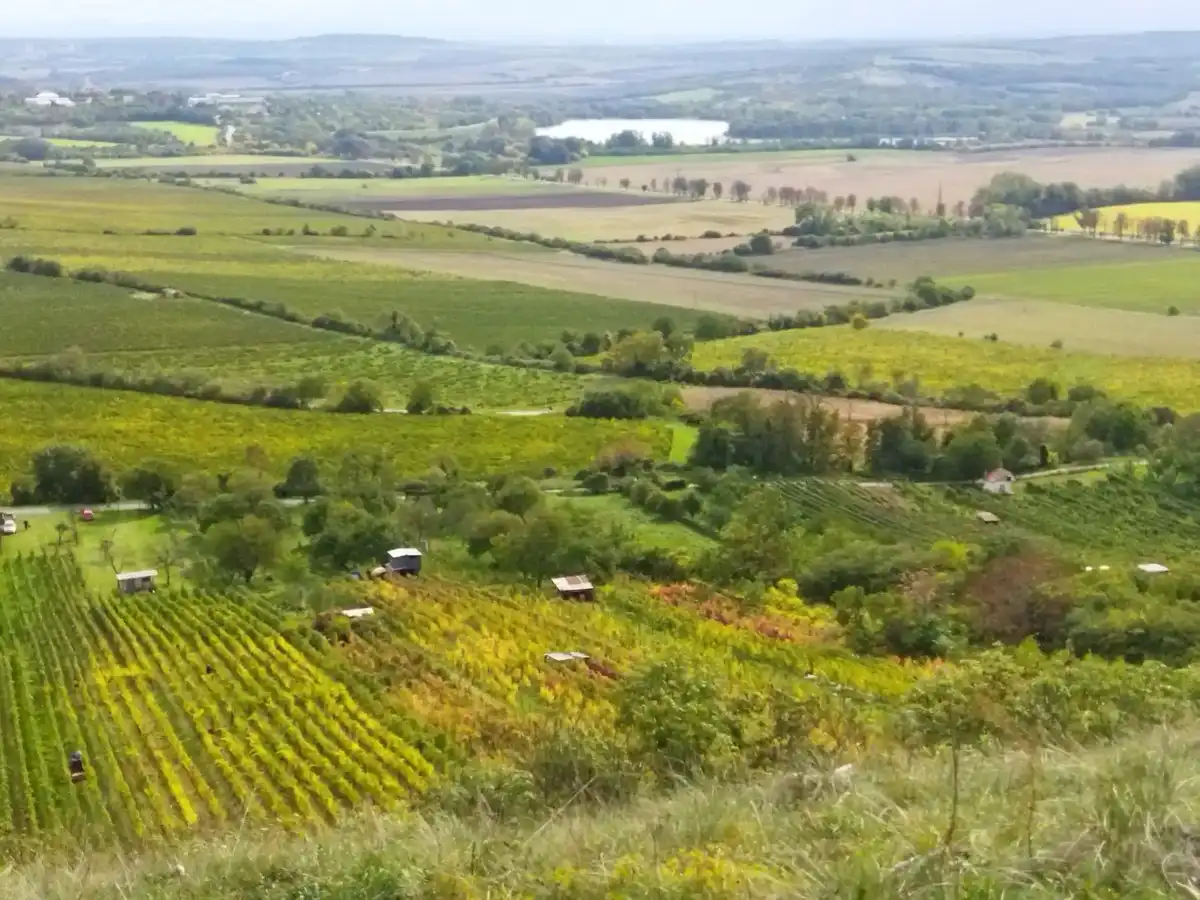
2 Pálava Hills

limestone cliffs, vineyards, steppe flora, ancient ruins

Walk sunlit trails past vineyards and rare wildflowers, then climb to medieval remnants overlooking a patchwork of fields and lakes.

czechia-region-palava-hills
© Google | Zuzana Kudelkova
Loading the map 🌍

Expert viewTips and Advice from Travelers

How many regions to visit: Two to four regions is the right number for most backpackers, and three is the best fit for ten days. Fewer than two and you miss how different the country is. More than four and you spend the trip on trains, watching the same pleasant countryside slide past. Czechia rewards depth, not collecting.

Choosing by travel style: If you want culture and nightlife, pick a Bohemian region with big towns and accept the crowds, because that is where the architecture and the concentration of beer halls sit. If you want walking, choose the sandstone areas or the border mountains, where the marked trails are the real attraction and a hut dinner is a fine reward. If you want wine, folk traditions and lower prices, Moravia is the better choice and worth more of your time than a … read more 👉
How many regions to visit: Two to four regions is the right number for most backpackers, and three is the best fit for ten days. Fewer than two and you miss how different the country is. More than four and you spend the trip on trains, watching the same pleasant countryside slide past. Czechia rewards depth, not collecting.

Choosing by travel style: If you want culture and nightlife, pick a Bohemian region with big towns and accept the crowds, because that is where the architecture and the concentration of beer halls sit. If you want walking, choose the sandstone areas or the border mountains, where the marked trails are the real attraction and a hut dinner is a fine reward. If you want wine, folk traditions and lower prices, Moravia is the better choice and worth more of your time than a fourth Bohemian castle town. Skip the over-packaged day-trip circuits in the busiest towns. They cost more and show you the same courtyards as everyone else, and many chateaux are only worth the entry fee if you take the guided interior tour.

What it costs: Budget US$45 to 70 a day on a frugal backpacker plan, or 1,000 to 1,600 CZK. Dorm beds run roughly 400 to 900 CZK (US$17 to 40), with the high end in Prague in summer. Meals at a local pub with a lunch menu cost about 150 to 250 CZK, and beer 45 to 70 CZK. Castle and chateau entries run 150 to 400 CZK, with guided tours often priced separately. Sandstone-area parks may add boat or gorge fees of 100 to 200 CZK. Regional trains cost about 100 to 400 CZK per leg.

Safety and etiquette: Czechia is very safe, and the main risk is pickpockets in crowded tourist areas, plus taxis in Prague that quote creative fares. Use a ride-hailing app or ask for a printed rate. Outside cities, English is less common, and a few Czech phrases, especially a greeting on entering a shop or pub, are noticed and appreciated. Stay on marked trails, since they are marked for good reason, and in border forests respect closed seasonal paths. Tipping around 10 percent is normal in restaurants, and rounding up is fine in pubs. Keep some cash on hand for huts and small villages.

✈️ The backpacker research shortcutCzechia Travel Guide

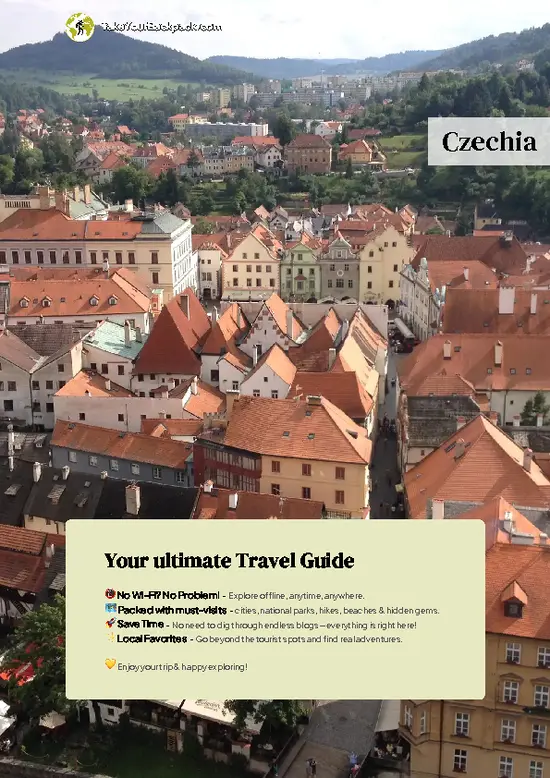
An offline-friendly backpacking guide with optimized travel routes, ranked highlights, transport advice, and the best areas to stay.
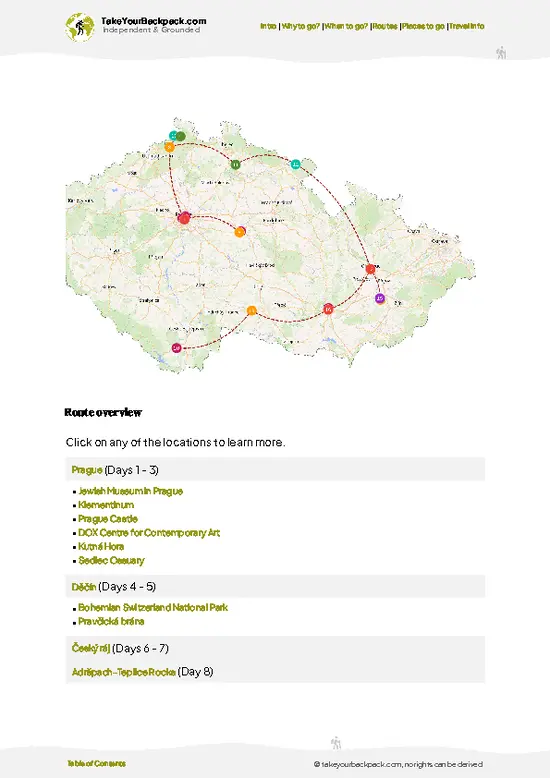
example page 0 from our offline Travel Guide for Czechia
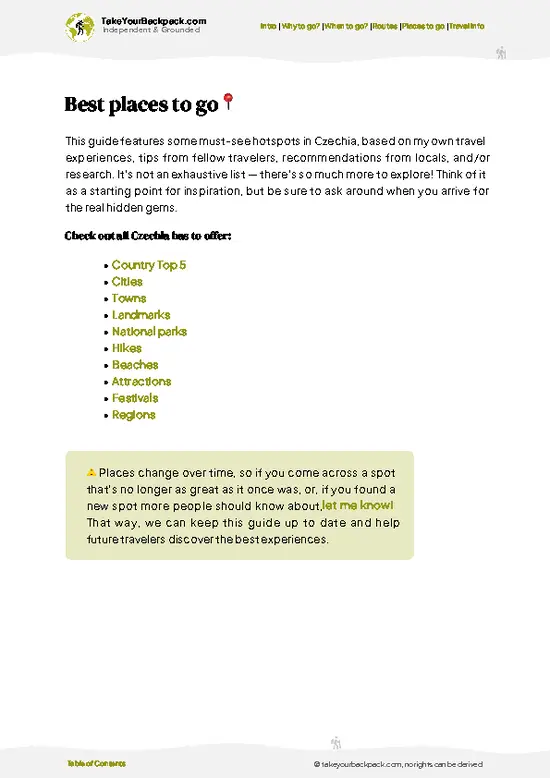
example page 1 from our offline Travel Guide for Czechia
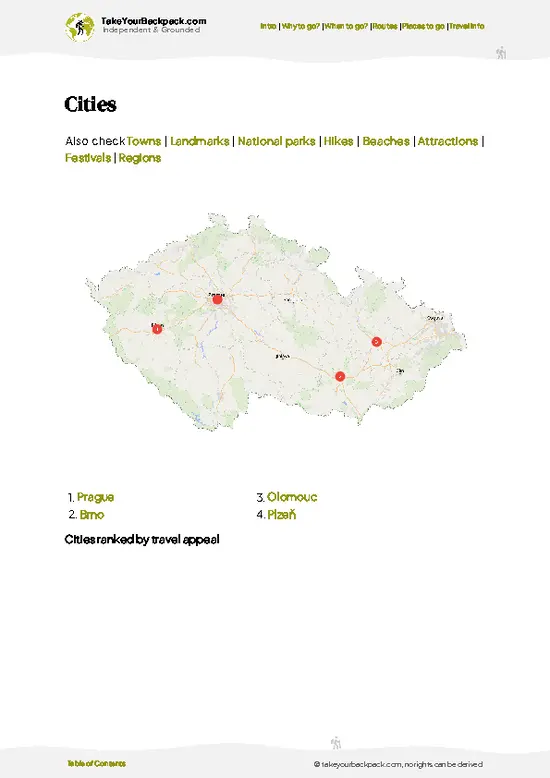
example page 2 from our offline Travel Guide for Czechia
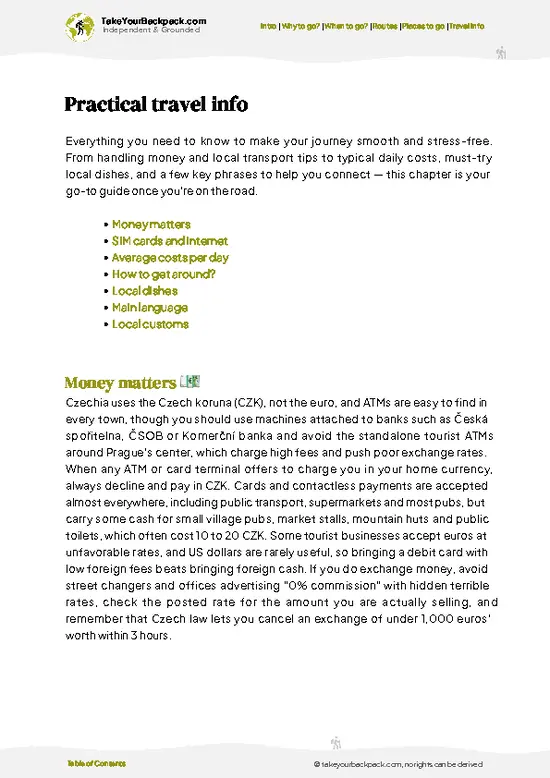
example page 3 from our offline Travel Guide for Czechia
example page 4 from our offline Travel Guide for Czechia
example page 5 from our offline Travel Guide for Czechia
example page 6 from our offline Travel Guide for Czechia
example page 7 from our offline Travel Guide for Czechia
The digital guide (321 pages) contains:
✅ 88 highlights, ranked by travel appeal
✅ Optimized 5, 10 & 15-day travel routes
✅ Cities, national parks, landmarks, beaches
✅ How to get around
✅ Offline-friendly for travel without Wi-Fi
👉 Click to see all 30+ guide features

📅 Plan smarter in minutes, not weeks
✅ Month by month travel advice
✅ Festivals & national holidays
✅ Budget expectations

🗺️ Go to the right places, skip the overrated ones
✅ Honest pros & cons of destinations
✅ Top hikes, parks & viewpoints
✅ Lesser-known places most travelers miss
✅ Clear “worth it vs skip it” guidance

🛏️ Travel smoothly without rookie mistakes
✅ Best areas to stay
✅ Transport systems explained simply
✅ Common scams & safety advice
✅ SIM cards, money & practical tips

🌍 Understand the country, not just visit it
✅ Culture & traditions
✅ 52 Essential phrases & customs
✅ Festivals worth planning around
✅ Traveler-friendly historical context
✅ Insights that make places more meaningful

📱 Built for real travel conditions
✅ Fully downloadable PDF
✅ Works completely offline
✅ Optimized for phone use
✅ Useful in remote areas & buses
✅ Everything in one place
Stop searching, start planning
Get instant access to your full guide. 30‑day money-back guarantee.
+ Add another guide for just

By proceeding you agree to our terms.
Sent to your inbox immediately after payment • 100% Secure Checkout
Best Backpacking Travel Advisor 2025 tourism awardBest Backpacking
Travel Advisor
2025
What others say about Take Your Backpack Guides:
⭐⭐⭐⭐⭐
Fantastic, amazing amount of information!
⭐⭐⭐⭐⭐
My goodness this is amazing, it's what I've been looking for hats off too you!
⭐⭐⭐⭐⭐
I think this is absolutely BRILLIANT
⭐⭐⭐⭐
Very complete and informative. It's still missing places, but I gotta to commend you
⭐⭐⭐⭐⭐
This is truly amazing, thank you, can't wait to explore it with my kids!
⭐⭐⭐⭐⭐
Awesome resource, thank you!
⭐⭐⭐⭐⭐
This is amazing! Can't wait to explore the ones I haven't seen
⭐⭐⭐⭐
I love this! Well done, great idea.
⭐⭐⭐⭐⭐
Thanks for taking the time to make this gem!
⭐⭐⭐⭐⭐
This might be the best website I've ever seen.
⭐⭐⭐⭐⭐
Congratulations, and thank you so much for your work; it's incredibly valuable.
⭐⭐⭐⭐
In all seriousness I think you did a great job pointing out the important spots
⭐⭐⭐⭐⭐
10/10 very good
⭐⭐⭐⭐⭐
As someone who's only just starting to visit regularly this is awesome, thank you.
⭐⭐⭐⭐
Thank you very much! I'm going to visit my dad, it's going to be very useful!
⭐⭐⭐⭐⭐
This is really cool! We'll be travelling for the first time and this definitely come in handy.
⭐⭐⭐⭐⭐
You are now our minister of culture, congratulations 👨‍💼
⭐⭐⭐⭐⭐
Just wanted to tell you that this is a pearl! Going to follow your recommendations.
⭐⭐⭐⭐⭐
This is so cool. I'll definitely be using the resource for my travels soon.
⭐⭐⭐⭐⭐
This is very impressive! Good work.
⭐⭐⭐⭐⭐
This is an amazing and informative site. Very well done!

🛏️ Where to stay?Accommodation Highlights

Czechia has plenty of hostels and budget guesthouses, with Prague dorm beds usually running 400 to 800 CZK (about US$17 to 35) and private rooms in smaller towns often cheaper. In Prague, Staré Město (Old Town) and Nové Město (New Town) put you within walking distance of the main sights and late bars but cost the most and get loud, Žižkov has cheaper beds and dive-bar nightlife a short tram ride out, and leafy Vinohrady or Holešovice trade a 10 to 20 minute commute for quieter streets and local cafés. Outside the capital, Brno has a lively student-driven hostel scene around its compact center, while Český Krumlov fills its small old-town guesthouses fast in summer, so book ahead there.

If you … read more 👉
Czechia has plenty of hostels and budget guesthouses, with Prague dorm beds usually running 400 to 800 CZK (about US$17 to 35) and private rooms in smaller towns often cheaper. In Prague, Staré Město (Old Town) and Nové Město (New Town) put you within walking distance of the main sights and late bars but cost the most and get loud, Žižkov has cheaper beds and dive-bar nightlife a short tram ride out, and leafy Vinohrady or Holešovice trade a 10 to 20 minute commute for quieter streets and local cafés. Outside the capital, Brno has a lively student-driven hostel scene around its compact center, while Český Krumlov fills its small old-town guesthouses fast in summer, so book ahead there.

If you enjoy meeting fellow travelers, consider choosing hostels with high ratings for atmosphere. On the other hand, if you prefer having your own space, a hotel might be a better option.

CzechiaSee More of Czechia

👋 Meet the founderWho’s Behind Take Your Backpack?

Johan, backpacker and founder of TakeYourBackpackHi, I’m Johan (Netherlands 🇳🇱), the creator of TakeYourBackpack. Over the past 3 decades, I’ve backpacked through 90+ countries across six continents, gaining extensive experience with independent travel, long-term trips, and overland routes.

This site is built on a combination of firsthand travel experience and carefully curated insights from other backpackers. Many guides are based on places I’ve personally visited, while others bring together tips, observations, and practical advice shared by trusted travelers I’ve met along the way.

The goal is to provide realistic, experience-driven guidance — not generic itineraries — so you can explore destinations with better context, clearer expectations, and more confidence.