×

DR Congo🇨🇩 | festivalsAmani FestivalLake Kivu stage, peace message, rumba and Swahili rap, Nyiragongo skyline | things to do and best time to go

Explore Lubumbashi BiennaleExplore Festival Amani de Goma

Backpacking in Amani
🏆 Top pickfestival ranked #1
By Johan Kruseman 🇳🇱 | Updated October 22, 2026

Amani Festival suits music-driven travelers who want East and Central Africa’s live scene at close range, and anyone already moving through the Great Lakes region. Travelers who need polished infrastructure, strict schedules or a big international headliner circuit will find it less rewarding. Skip it if you want a camping-style weekend, because this is a city festival with sleeping done elsewhere. It takes place in Goma, on the northern shore of Lake Kivu in the east of the Democratic Republic of the Congo, with Nyiragongo volcano on the horizon. The name means “peace” in Swahili, and the program leans on Congolese rumba, hip-hop, afrobeat and reggae, with East African and international guests alongside local acts. The crowd is young and mostly Congolese, with aid workers, journalists and a few visitors mixed in. It runs for a few days and the mood is warm, loud and communal. Unlike the much larger Sauti za Busara in Zanzibar, which draws a big tourist audience, Amani stays rooted in its local audience and its peace message.

Discover everything you want to know in the 📖 DR Congo Travel Guide.
Safety warning

The current risk level for DR Congo is high. Check the advice before going.


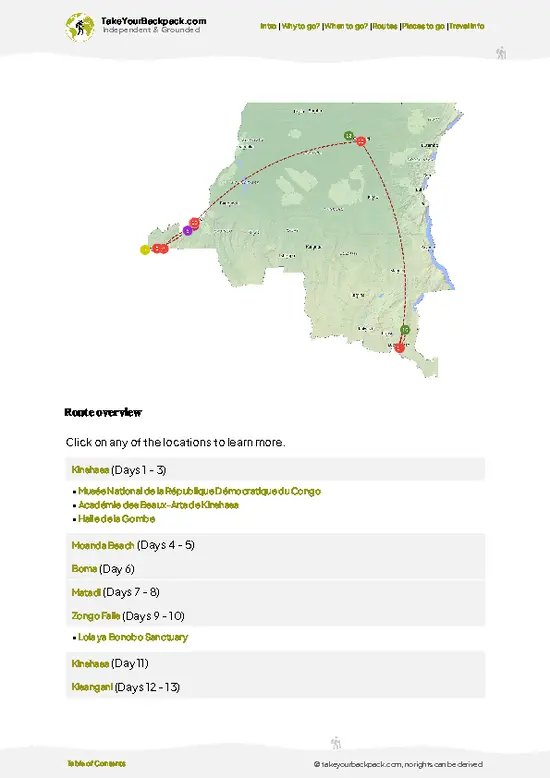
example page 0 from our offline Travel Guide for Democratic Republic of the Congo
example page 1 from our offline Travel Guide for Democratic Republic of the Congo
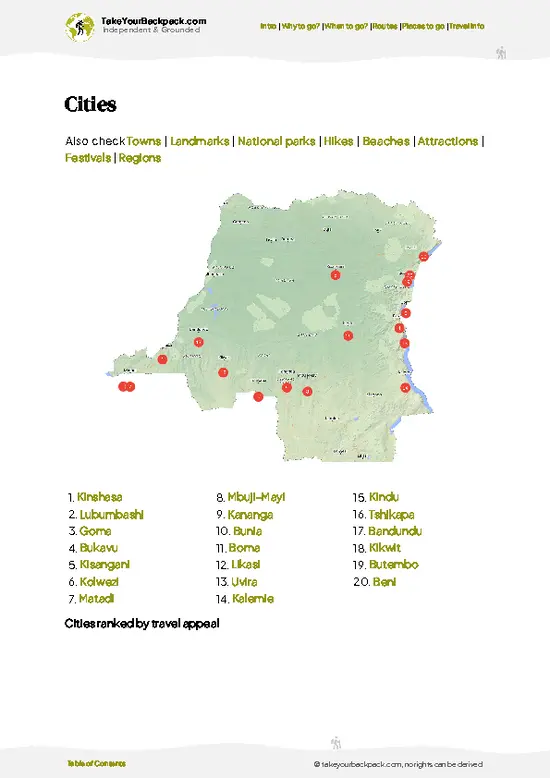
example page 2 from our offline Travel Guide for Democratic Republic of the Congo
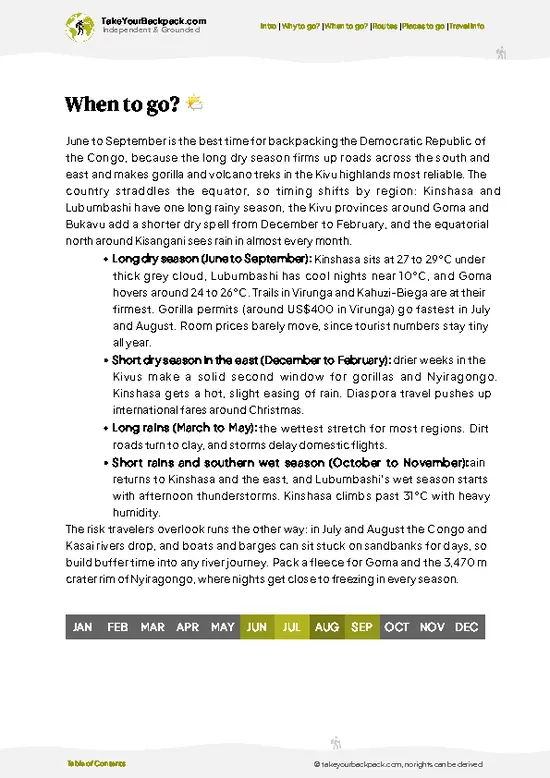
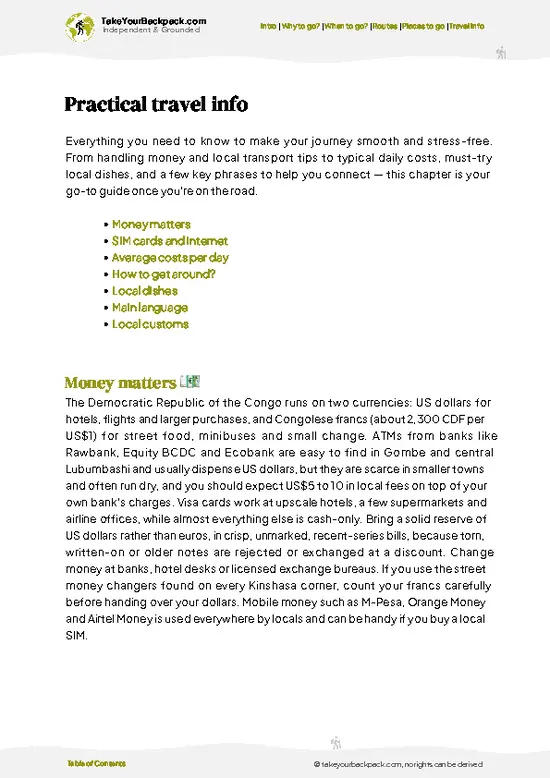
example page 3 from our offline Travel Guide for Democratic Republic of the Congo
example page 4 from our offline Travel Guide for Democratic Republic of the Congo
example page 5 from our offline Travel Guide for Democratic Republic of the Congo
example page 6 from our offline Travel Guide for Democratic Republic of the Congo
example page 7 from our offline Travel Guide for Democratic Republic of the Congo
Loading the map 🌍
CLICK TO FILTER
cities
towns
landmarks
national parks
hikes
beaches
attractions
festivals
regions
SHOW COUNTRY’S BESTSHOW ALL

✨ Why go?
Ranked #1 festival in DR Congo
What makes this festival worth celebrating

Amani Festival is worth routing around because it puts you in a crowd that is overwhelmingly local, which almost never happens at music events in this part of Africa. You are not watching a show for foreigners. You are dancing beside students from Goma, artists from Kinshasa and Bukavu, and families who treat the evenings as a rare shared outing. That creates quick conversations, invitations and a temporary community that no hostel can match.

The second reason is context. The festival grew out of a wish to show a different Goma, one of musicians, poets and organizers rather than headlines, and the peace theme gives each set extra weight. Hearing a rumba band play on the edge of Lake Kivu, with the cone of Nyiragongo in the distance, explains the city better than any museum.

It also fits … read more 👉
Amani Festival is worth routing around because it puts you in a crowd that is overwhelmingly local, which almost never happens at music events in this part of Africa. You are not watching a show for foreigners. You are dancing beside students from Goma, artists from Kinshasa and Bukavu, and families who treat the evenings as a rare shared outing. That creates quick conversations, invitations and a temporary community that no hostel can match.

The second reason is context. The festival grew out of a wish to show a different Goma, one of musicians, poets and organizers rather than headlines, and the peace theme gives each set extra weight. Hearing a rumba band play on the edge of Lake Kivu, with the cone of Nyiragongo in the distance, explains the city better than any museum.

It also fits a longer Great Lakes trip. Pair it with gorilla tracking in Rwanda or Virunga, or with a lake crossing toward Bukavu, and you have a route with real purpose behind it.

💡 HighlightsPlaces and moments you shouldn't skip

  1. The Lake Kivu main stage: The main evenings play out on the Goma lakeshore, so the sound carries over water and the temperature drops as the crowd grows. It is the heart of the festival and where the peace message is delivered from the microphone.
  2. Congolese rumba and soukous sets: Guitar lines, horn riffs and call-and-response vocals bring the whole audience onto its feet. Even if you know none of the songs, the rhythm does the teaching.
  3. Hip-hop and Swahili rap showcases: Young Goma and regional artists rap about daily life, displacement and hope. These slots show where the city’s new generation is heading and often get the loudest reactions.
  4. Nyiragongo on the horizon: On clear nights the volcano sits behind the city, and some visitors extend the trip with a hike up the crater. It gives the lakeside
… read more 👉
  1. The Lake Kivu main stage: The main evenings play out on the Goma lakeshore, so the sound carries over water and the temperature drops as the crowd grows. It is the heart of the festival and where the peace message is delivered from the microphone.
  2. Congolese rumba and soukous sets: Guitar lines, horn riffs and call-and-response vocals bring the whole audience onto its feet. Even if you know none of the songs, the rhythm does the teaching.
  3. Hip-hop and Swahili rap showcases: Young Goma and regional artists rap about daily life, displacement and hope. These slots show where the city’s new generation is heading and often get the loudest reactions.
  4. Nyiragongo on the horizon: On clear nights the volcano sits behind the city, and some visitors extend the trip with a hike up the crater. It gives the lakeside setting a scale you will not find at other music events.
  5. The crowd and the peace theme: Amani means peace, and the audience reflects that, with Congolese families, local artists, activists and visitors sharing the same ground. The speeches between acts and the dancing in the open spaces matter as much as the stage.
Amani Festival gives a first-timer the most at the lakeside main stage on a full evening, when the rumba acts and the crowd are at their best.
Spotted a mistake or missing something? Contact us.

🌤️ When to go?When is the celebration of Amani Festival?

Amani Festival is held in Goma, North Kivu, usually over three days in February, with the main stages set up on the shore of Lake Kivu at Ihusi Hotel grounds and nearby lakeside venues.
  • Best day: Saturday night is the peak, when headline acts from Congo and across East Africa play late and the crowd is largest. Friday is calmer, with a better view of the stage and shorter queues for drinks.
  • Weather: Expect warm days around 25 to 27°C (77 to 81°F), cooler evenings near 16 to 18°C (61 to 64°F), and a chance of short rain showers. Bring a light rain jacket, a sweater for the lakeshore breeze, and closed shoes for muddy ground.
  • Booking: Reserve a bed three to four weeks ahead, since Goma has limited rooms and prices climb by roughly 30 to 50 percent that week. Buy tickets early once sales open.
  • Crowds
… read more 👉
Amani Festival is held in Goma, North Kivu, usually over three days in February, with the main stages set up on the shore of Lake Kivu at Ihusi Hotel grounds and nearby lakeside venues.
  • Best day: Saturday night is the peak, when headline acts from Congo and across East Africa play late and the crowd is largest. Friday is calmer, with a better view of the stage and shorter queues for drinks.
  • Weather: Expect warm days around 25 to 27°C (77 to 81°F), cooler evenings near 16 to 18°C (61 to 64°F), and a chance of short rain showers. Bring a light rain jacket, a sweater for the lakeshore breeze, and closed shoes for muddy ground.
  • Booking: Reserve a bed three to four weeks ahead, since Goma has limited rooms and prices climb by roughly 30 to 50 percent that week. Buy tickets early once sales open.
  • Crowds and roads: Arrive in Goma a day early, travel in daylight, and leave the morning after the closing night, when taxis and moto-taxis are scarce.
Secure your return transport before the last night, because border and airport queues swell on Sunday.


source: climatestotravel.comJANJanuary: not recommended for travelingFEBFebruary: not recommended for travelingMARMarch: not recommended for travelingAPRApril: not recommended for travelingMAYMay: not recommended for travelingJUNJune: excellent for travelingJULJuly: not recommended for travelingAUGAugust: not recommended for travelingSEPSeptember: not recommended for travelingOCTOctober: not recommended for travelingNOVNovember: not recommended for travelingDECDecember: not recommended for traveling

✈️ The backpacker research shortcutDR Congo Travel Guide

An offline-friendly backpacking guide with optimized travel routes, ranked highlights, transport advice, and the best areas to stay.
example page 0 from our offline Travel Guide for Democratic Republic of the Congo
example page 1 from our offline Travel Guide for Democratic Republic of the Congo
example page 2 from our offline Travel Guide for Democratic Republic of the Congo
example page 3 from our offline Travel Guide for Democratic Republic of the Congo
example page 4 from our offline Travel Guide for Democratic Republic of the Congo
example page 5 from our offline Travel Guide for Democratic Republic of the Congo
example page 6 from our offline Travel Guide for Democratic Republic of the Congo
example page 7 from our offline Travel Guide for Democratic Republic of the Congo
The digital guide (330 pages) contains:
✅ 76 highlights, ranked by travel appeal
✅ Optimized 7, 14 & 21-day travel routes
✅ Cities, national parks, landmarks, beaches
✅ How to get around
✅ Offline-friendly for travel without Wi-Fi
👉 Click to see all 30+ guide features

📅 Plan smarter in minutes, not weeks
✅ Month by month travel advice
✅ Festivals & national holidays
✅ Budget expectations

🗺️ Go to the right places, skip the overrated ones
✅ Honest pros & cons of destinations
✅ Top hikes, parks & viewpoints
✅ Lesser-known places most travelers miss
✅ Clear “worth it vs skip it” guidance

🛏️ Travel smoothly without rookie mistakes
✅ Best areas to stay
✅ Transport systems explained simply
✅ Common scams & safety advice
✅ SIM cards, money & practical tips

🌍 Understand the country, not just visit it
✅ Culture & traditions
✅ 52 Essential phrases & customs
✅ Festivals worth planning around
✅ Traveler-friendly historical context
✅ Insights that make places more meaningful

📱 Built for real travel conditions
✅ Fully downloadable PDF
✅ Works completely offline
✅ Optimized for phone use
✅ Useful in remote areas & buses
✅ Everything in one place
Stop searching, start planning
Get instant access to your full guide. 30‑day money-back guarantee.
+ Add another guide for just

By proceeding you agree to our terms.
Sent to your inbox immediately after payment • 100% Secure Checkout
Best Backpacking Travel Advisor 2025 tourism awardBest Backpacking
Travel Advisor
2025
What others say about Take Your Backpack Guides:
⭐⭐⭐⭐⭐
Fantastic, amazing amount of information!
⭐⭐⭐⭐⭐
My goodness this is amazing, it's what I've been looking for hats off too you!
⭐⭐⭐⭐⭐
I think this is absolutely BRILLIANT
⭐⭐⭐⭐
Very complete and informative. It's still missing places, but I gotta to commend you
⭐⭐⭐⭐⭐
This is truly amazing, thank you, can't wait to explore it with my kids!
⭐⭐⭐⭐⭐
Awesome resource, thank you!
⭐⭐⭐⭐⭐
This is amazing! Can't wait to explore the ones I haven't seen
⭐⭐⭐⭐
I love this! Well done, great idea.
⭐⭐⭐⭐⭐
Thanks for taking the time to make this gem!
⭐⭐⭐⭐⭐
This might be the best website I've ever seen.
⭐⭐⭐⭐⭐
Congratulations, and thank you so much for your work; it's incredibly valuable.
⭐⭐⭐⭐
In all seriousness I think you did a great job pointing out the important spots
⭐⭐⭐⭐⭐
10/10 very good
⭐⭐⭐⭐⭐
As someone who's only just starting to visit regularly this is awesome, thank you.
⭐⭐⭐⭐
Thank you very much! I'm going to visit my dad, it's going to be very useful!
⭐⭐⭐⭐⭐
This is really cool! We'll be travelling for the first time and this definitely come in handy.
⭐⭐⭐⭐⭐
You are now our minister of culture, congratulations 👨‍💼
⭐⭐⭐⭐⭐
Just wanted to tell you that this is a pearl! Going to follow your recommendations.
⭐⭐⭐⭐⭐
This is so cool. I'll definitely be using the resource for my travels soon.
⭐⭐⭐⭐⭐
This is very impressive! Good work.
⭐⭐⭐⭐⭐
This is an amazing and informative site. Very well done!

🛏️ Where to stay?Where staying makes the most sense

The best area for backpackers is central Goma near the lakefront, around the Himbi and Les Volcans neighborhoods, where the festival is within a short taxi ride and most guesthouses sit behind guarded gates. This is where most international visitors, NGO workers and journalists end up, so you will meet other travelers easily over dinner or a beer on a terrace.
Himbi is the calmer choice. Its quiet streets, mid-range guesthouses and small restaurants suit solo travelers who want to return after dark without a long walk. Taxis are easy to flag down here, and many drivers know the festival route.
The … read more 👉
The best area for backpackers is central Goma near the lakefront, around the Himbi and Les Volcans neighborhoods, where the festival is within a short taxi ride and most guesthouses sit behind guarded gates. This is where most international visitors, NGO workers and journalists end up, so you will meet other travelers easily over dinner or a beer on a terrace.
Himbi is the calmer choice. Its quiet streets, mid-range guesthouses and small restaurants suit solo travelers who want to return after dark without a long walk. Taxis are easy to flag down here, and many drivers know the festival route.
The lakeshore strip toward Birere and the main road near Ihusi is the most convenient if you want to walk to the stages, though noise runs late during the festival. Expect to share rooms or find simple budget rooms with a fan and a mosquito net.
Keep clear of the areas near the Rwandan border crossing at night, where traffic and crowds make it harder to get your bearings. Check with your guesthouse about which streets to avoid and the safest way home after the last act.
Book early and arrange pickup from the airport or border crossing in advance. Always use a trusted driver after dark rather than walking, even for short distances. Staying put in one central area keeps things simple and safe.

👛 Costs (as of 22 October 2026)Money, prices, and spending tips

Amani Festival costs most independent travelers around US$98 to 170 a day, once you count a bed in Goma, tickets, taxis and food.
CategoryBudget RangeLocal Reality
Festival ticketsUS$10 to 30 per dayDay passes are cheaper than multi-day passes, and prices vary by edition and seating area.
AccommodationUS$35 to 70 per nightGoma has few budget beds, and prices rise during festival week, so book early.
Local transportUS$8 to 20 per dayMoto-taxis and shared taxis are cheap by day, but private taxis after dark cost more and are safer.
Food & drinksUS$15 to 30 per dayGrilled fish with sides runs US$5 to 10, and a large beer is about US$2 to 4.
Miscellaneous expensesUS$10 to 20 per dayCovers bottled water, phone data, small tips and security fees at some venues.
Total Daily BudgetUS$98 to 170Expect to land near US$120 on a typical festival day.
⚠️ Prices can change and everyone travels differently, so take this as a rough guide. Hope it helps you plan your adventure!

🍲 FoodEating & Drinking in Amani

Food at Amani Festival is mostly grilled and fried, served from stalls on the lakeshore and in the grounds around the stages. The smell of charcoal hangs over the crowd all evening.
The thing to try is grilled tilapia from Lake Kivu, usually served whole with fried plantains and a fiery pili pili sauce. Also look for brochettes of goat or beef, sambaza (tiny fried lake fish eaten like crisps), and ugali or rice with beans on the side. Cassava leaves cooked down with peanuts (pondu) is the dish locals will steer you toward if you ask.
For drinks, Primus and Tembo beer come in large bottles that are meant to be shared, and cold sodas like Fanta and Coca-Cola are everywhere. Local Kivu coffee and sweet, milky chai are good for a late night.
Carry cash, in small US dollar bills, since cards are rarely … read more 👉
Food at Amani Festival is mostly grilled and fried, served from stalls on the lakeshore and in the grounds around the stages. The smell of charcoal hangs over the crowd all evening.
The thing to try is grilled tilapia from Lake Kivu, usually served whole with fried plantains and a fiery pili pili sauce. Also look for brochettes of goat or beef, sambaza (tiny fried lake fish eaten like crisps), and ugali or rice with beans on the side. Cassava leaves cooked down with peanuts (pondu) is the dish locals will steer you toward if you ask.
For drinks, Primus and Tembo beer come in large bottles that are meant to be shared, and cold sodas like Fanta and Coca-Cola are everywhere. Local Kivu coffee and sweet, milky chai are good for a late night.
Carry cash, in small US dollar bills, since cards are rarely accepted at stalls and change can be hard to find. Vendors usually accept dollars and give change in Congolese francs. Portions are generous, so splitting a fish between two people works well. Queues are loose, so stand firm and make eye contact with the cook. Stick to freshly grilled food and sealed bottled water for a steadier stomach.

FAQCommon questions from travelers

Amani Festival takes place in Goma, North Kivu, usually in February over about three days. Exact dates change each year, so check announcements a few weeks ahead. Most stages stand on the Lake Kivu shoreline, and Saturday night is the busiest.
Expect to pay roughly US$10 to 30 per day for a ticket, depending on the edition and the area you choose. A realistic daily total, with a bed in Goma, taxis and food, is around US$85 to 120. Beds cost the most, at US$35 to 70 a night in festival week.
Buying tickets ahead is the safest way, particularly for Saturday night, when entry can sell out. Sales usually open a few weeks before the festival, through the organizers and local sellers in Goma. Book your bed three to four weeks early, since rooms fill and prices climb by 30 to 50 percent.
⚠️ Things can change over time, so always validate details locally before you go.

Other Congolese festivals near Amani

Explore more nearby:


💡 Not sure where to go next?
Create a personalized itinerary for DR Congo including Amani and the places that fit your trip.

Generate my itinerary

👉 Discover all festivals

Or checkout all DR Congo has to offer (think cities, towns, villages, national parks, hikes, beaches, festivals)
Country photo of DR Congo

We 💚 feedbackParting advice and final tips

Amani Festival works best in the dry months, usually around February, when evenings by the lake stay clear and the volcano is easier to see. Arrive for the late-afternoon sets, because that is when the crowd fills in and the sound carries over the water. I would bring a light jacket for after dark and book a bed close to the venue before you go.

✍️ Help improve this page!
The information on this page is based on in-depth research, insights shared by experienced travelers, and feedback from the local travel community in DR Congo. While every effort is made to keep the information accurate and current, conditions can change — so if you spot anything incorrect or outdated, please get in touch.


🙋‍♂️ Give feedback

👋 Meet the founderWho’s Behind Take Your Backpack?

Johan, backpacker and founder of TakeYourBackpackHi, I’m Johan (Netherlands 🇳🇱), the creator of TakeYourBackpack. Over the past 3 decades, I’ve backpacked through 90+ countries across six continents, gaining extensive experience with independent travel, long-term trips, and overland routes.

This site is built on a combination of firsthand travel experience and carefully curated insights from other backpackers. Many guides are based on places I’ve personally visited, while others bring together tips, observations, and practical advice shared by trusted travelers I’ve met along the way.

The goal is to provide realistic, experience-driven guidance — not generic itineraries — so you can explore destinations with better context, clearer expectations, and more confidence.