×

Democratic Republic of the Congo🇨🇩 | best festivalsThe 10 Top festivals in DR Congo

In the heart of DR Congo, festivals pulse with life, drawing on rich traditions and vibrant cultures. These events are not just celebrations; they are windows into the soul of the nation. From the bustling streets of Kinshasa to the serene landscapes of Goma, each region offers a unique festival experience that can dramatically shape your backpacking journey.

Timing is crucial. Some festivals align with the dry season, making travel easier and safer, while others thrive in the wet months, bringing a different energy but also potential logistical challenges. The vibe shifts depending on where you are; urban festivals can be crowded and electric, while rural ones offer intimate cultural immersion.

Choosing the right festival impacts your budget and overall experience. Some events are free or low-cost, while others may require advance planning or tickets. Understanding these nuances can preserve your energy and funds for the moments that truly matter, ensuring a richer connection to the local culture.

By Johan Kruseman 🇳🇱 | Updated May 9, 2026
Explore the best regions in DR Congo

Why go?Why These festival Stand Out

Festivals in the DR Congo are a vibrant expression of its rich cultural tapestry, deeply rooted in history and community. They offer a unique glimpse into the heart of Congolese life, showcasing traditions that have been preserved through generations. Unlike many other countries, where festivals can feel commercialized, those in the DR Congo are often raw and authentic, reflecting the true spirit of the people.

The cultural importance of these festivals cannot be overstated. They serve as a platform for storytelling, music, and dance, connecting communities and reinforcing social bonds. However, this authenticity comes with trade-offs. Many festivals are held in remote areas, requiring significant travel time. This can mean long journeys on rough roads, but the payoff is a deeper immersion … read more 👉
Festivals in the DR Congo are a vibrant expression of its rich cultural tapestry, deeply rooted in history and community. They offer a unique glimpse into the heart of Congolese life, showcasing traditions that have been preserved through generations. Unlike many other countries, where festivals can feel commercialized, those in the DR Congo are often raw and authentic, reflecting the true spirit of the people.

The cultural importance of these festivals cannot be overstated. They serve as a platform for storytelling, music, and dance, connecting communities and reinforcing social bonds. However, this authenticity comes with trade-offs. Many festivals are held in remote areas, requiring significant travel time. This can mean long journeys on rough roads, but the payoff is a deeper immersion into local customs and practices that you won’t find in more touristy spots.

Seasonal timing is crucial. The best festivals often coincide with the dry season, making travel easier but also attracting larger crowds. This can dilute the experience, as the intimacy of smaller gatherings is lost in the throngs of visitors. Conversely, attending during the rainy season may offer a more personal experience, but accessibility can be a challenge, and some events may be canceled.

Logistics also play a significant role. Infrastructure in the DR Congo can be underdeveloped, making it essential to plan ahead. Accommodations may be limited, and costs can vary widely depending on location and timing. Understanding these constraints is vital for preserving both energy and budget for the moments that truly matter.

In summary, festivals in the DR Congo are not just events; they are a lifeline to the past and a celebration of community. Embrace the challenges, and you’ll find that the rewards are well worth the effort.
How the List Was Created
The list of best festivals in DR Congo is created based on energy, traditions, crowd experience, activities, and overall excitement. If you feel a festival is missing in this list, please let us know.

When to go?Best Time to Visit DR Congo for festivals

Seasonality and Festivals in DR Congo


The festival scene in DR Congo is deeply tied to the seasons. The country experiences a tropical climate, with a wet season and a dry season that significantly influence festival timing and atmosphere. The dry season, typically from June to September, is when many major festivals occur. This period offers more stable weather, making it easier to navigate and enjoy events. Expect vibrant celebrations, lively crowds, and a palpable energy that can be infectious.

However, this peak season comes with trade-offs. Crowds swell, and prices for accommodations and travel can spike. If you’re looking for a more intimate experience, consider the shoulder seasons. The months just before and after the dry season—April to May and October to November—can offer a balance. … read more 👉

Seasonality and Festivals in DR Congo


The festival scene in DR Congo is deeply tied to the seasons. The country experiences a tropical climate, with a wet season and a dry season that significantly influence festival timing and atmosphere. The dry season, typically from June to September, is when many major festivals occur. This period offers more stable weather, making it easier to navigate and enjoy events. Expect vibrant celebrations, lively crowds, and a palpable energy that can be infectious.

However, this peak season comes with trade-offs. Crowds swell, and prices for accommodations and travel can spike. If you’re looking for a more intimate experience, consider the shoulder seasons. The months just before and after the dry season—April to May and October to November—can offer a balance. While some festivals may be fewer in number, the atmosphere is often more authentic, with locals more engaged and less rushed. Costs tend to be lower, and the weather, while still warm, can be more unpredictable.

The wet season, from December to March, brings its own challenges. Many festivals are less frequent, and heavy rains can disrupt travel plans. However, this is also a time when the landscape is lush and vibrant, offering a different kind of beauty. If you do visit during this time, be prepared for fewer events and a quieter atmosphere, but also for the chance to connect more deeply with local culture.

Understanding these seasonal dynamics is crucial for planning. The right timing can enhance the experience, allowing for both lively celebrations and meaningful interactions. Prioritize your goals—whether it’s high-energy festivals or a more subdued cultural immersion—and plan accordingly.

festival hoppingHow to Combine festivals Into One Trip

General Routing Logic

Traveling through DR Congo for festivals requires a smart approach. Start in the west, where Kinshasa hosts major events like the Festival of African Music. From there, head east toward Goma, which is near the Rwandan border and offers vibrant cultural celebrations. This route allows for a natural progression through the country, minimizing backtracking and maximizing festival exposure.

Typical Time Needed

Plan for at least two to three days at each major festival. This includes time for travel, acclimatization, and soaking in the local vibe. Festivals can be intense, so pacing is key. Don’t rush; allow for downtime to recharge.

Common Planning Mistakes

One common pitfall is underestimating travel times. Roads can be unpredictable, and delays are frequent. Avoid … read more 👉

General Routing Logic

Traveling through DR Congo for festivals requires a smart approach. Start in the west, where Kinshasa hosts major events like the Festival of African Music. From there, head east toward Goma, which is near the Rwandan border and offers vibrant cultural celebrations. This route allows for a natural progression through the country, minimizing backtracking and maximizing festival exposure.

Typical Time Needed

Plan for at least two to three days at each major festival. This includes time for travel, acclimatization, and soaking in the local vibe. Festivals can be intense, so pacing is key. Don’t rush; allow for downtime to recharge.

Common Planning Mistakes

One common pitfall is underestimating travel times. Roads can be unpredictable, and delays are frequent. Avoid cramming too many festivals into a short period; this leads to exhaustion and missed experiences. Instead, prioritize quality over quantity.

Trade-offs and Constraints

Balancing speed and depth is crucial. While it may be tempting to hit as many festivals as possible, the richness of DR Congo’s culture is best appreciated with time. Budget considerations also come into play; some festivals may have entry fees or require guided tours. Factor in comfort—long travel days can wear you down, so consider local accommodations that allow for rest.

Flexibility and Strategic Planning

Stay flexible. Festivals can change dates or be affected by local conditions. Have a backup plan for each stop. This adaptability will help maintain energy and ensure a rewarding experience. Prioritize the festivals that resonate most with your interests, and let the journey unfold naturally.

The ListMust-Visit festivals in DR Congo

1 Amani Festival

peace initiatives, open-air concerts, youth engagement

Join crowds in Goma for music and dialogue, where performances and workshops highlight community resilience and hopes for lasting peace.

2 Festival Amani de Goma

local musicians, peacebuilding, lakeside venue

Celebrate Goma’s spirit with lakeside performances and cultural exchanges that foster unity and showcase the region’s musical diversity.

3 Congo Biennale

international artists, contemporary exhibitions, citywide venues

Engage with Congo’s art world as the Biennale brings together global and local artists for exhibitions and events across Kinshasa.

4 Lubumbashi Biennale

contemporary art, urban installations, cross-border artists

Experience Lubumbashi’s creative pulse as artists transform public spaces, offering new perspectives on Congolese identity and regional connections.

5 Congo International Film Festival

African cinema, filmmaker panels, open-air screenings

Watch films from across Africa and meet directors at screenings and discussions that highlight new voices in Congolese and regional cinema.

6 Festival des Arts de Kinshasa

visual arts, street performances, local crafts

Discover Kinshasa’s creative energy through exhibitions and live acts that reveal the city’s evolving artistic landscape and grassroots talent.

7 Kinshasa Fashion Week

runway shows, local designers, urban style

See Kinshasa’s fashion scene on display, where designers present new collections and urban trends shape the city’s creative identity.

8 Festival de l’Indépendance

national parades, public speeches, flag ceremonies

Mark Congo’s independence with citywide gatherings, official events, and a sense of shared history that brings communities together each June.

9 Kisangani Cultural Festival

traditional dance, storytelling, regional cuisine

Sample Kisangani’s cultural diversity through dance, food, and storytelling that bring together communities from across the region.

10 Festival de la Musique de Lubumbashi

regional bands, open-air stages, urban nightlife

Hear Lubumbashi’s music scene come alive with diverse genres and energetic crowds, offering a snapshot of the city’s contemporary sound.

11 Festival de la Musique de Kisangani

riverfront concerts, traditional rhythms, community choirs

Immerse yourself in Kisangani’s musical heritage, where riverside performances blend local traditions with new influences from across the Congo.

12 Festival de la Musique de Bukavu

lakefront venues, gospel choirs, regional dance

Experience Bukavu’s lakeside music festival, where gospel, dance, and local acts create a lively atmosphere on the shores of Lake Kivu.

13 Festival de la Musique de Goma

volcanic backdrop, fusion bands, local youth

Enjoy Goma’s dynamic music scene, where young performers and fusion bands play against the dramatic setting of the city’s volcanic landscape.

14 Festival de la Musique de Beni

grassroots performers, community stages, northern rhythms

Experience Beni’s local music culture, with community-driven performances that reflect the region’s northern identity and resilience.

15 Festival de la Musique de Mbandaka

Equateur rhythms, open plazas, local ensembles

Explore Mbandaka’s unique soundscape as musicians gather in public spaces, sharing rhythms rooted in the Equateur region’s cultural mix.

16 Festival de la Musique de Kananga

central market stages, folk instruments, community gatherings

Witness Kananga’s musical traditions in bustling markets, where folk instruments and group performances draw locals and visitors together.

17 Festival de la Musique de Mbuji-Mayi

diamond region artists, youth choirs, open-air shows

Join crowds in Mbuji-Mayi for open-air concerts that spotlight emerging talent and the city’s distinct musical influences.

18 Fête de la Musique

citywide concerts, amateur musicians, public squares

Celebrate music in the streets as amateur and professional musicians fill public spaces with performances open to all.

Think you know DR Congo?

Prove you’re a true local — uncover 8 lesser-known festivals in DR Congo that locals tend to keep to themselves.
Loading the map 🌍

Expert viewWhat You Should Know

Energy & Timing
Festivals in DR Congo pulse with life, but timing is everything. Most major events occur during the dry season, roughly from May to October. This is when the weather cooperates, and the roads are passable. If you’re planning to dive into the festival scene, aim for at least two or three key events. This allows you to soak in the atmosphere without burning out.

However, be prepared for the heat. The sun can be relentless, especially if you’re out dancing or exploring. Hydration is non-negotiable. Carry a refillable water bottle and keep it filled. You’ll need that energy for the vibrant rhythms and communal celebrations.

Cultural Context
Understanding the cultural backdrop is crucial. Festivals here are not just parties; they’re a tapestry of history, spirituality, and … read more 👉
Energy & Timing
Festivals in DR Congo pulse with life, but timing is everything. Most major events occur during the dry season, roughly from May to October. This is when the weather cooperates, and the roads are passable. If you’re planning to dive into the festival scene, aim for at least two or three key events. This allows you to soak in the atmosphere without burning out.

However, be prepared for the heat. The sun can be relentless, especially if you’re out dancing or exploring. Hydration is non-negotiable. Carry a refillable water bottle and keep it filled. You’ll need that energy for the vibrant rhythms and communal celebrations.

Cultural Context
Understanding the cultural backdrop is crucial. Festivals here are not just parties; they’re a tapestry of history, spirituality, and community. Each event reflects local traditions, whether it’s the lively Ngoma festival celebrating dance and music or the more solemn ceremonies honoring ancestors.

Engage with locals. They’re often eager to share stories and insights that enrich your experience. But tread carefully; some traditions are sacred. Always ask before taking photos or participating in rituals. Respect goes a long way in building trust and rapport.

Crowd Management
Expect crowds. DR Congo’s festivals attract locals and tourists alike, creating a vibrant but chaotic atmosphere. Arrive early to secure a good spot, especially for performances. If you’re not a fan of large crowds, consider attending smaller, local events. They offer an intimate experience and often feature authentic cultural expressions without the overwhelming throngs.

Be mindful of your belongings. Pickpocketing can happen in crowded areas, so keep valuables close and be aware of your surroundings.

Budget & Comfort Considerations
Festivals can range from free community events to ticketed extravaganzas. Budget accordingly. While many festivals are low-cost, you might find yourself spending more than expected on food, drinks, and souvenirs. Street food is a must-try, but choose vendors wisely. Look for busy stalls; they’re usually a sign of fresh, safe food.

Accommodations can vary widely. In larger cities, you’ll find hotels ranging from budget to mid-range. However, during festival times, prices can spike. Book ahead to avoid last-minute surprises. If you’re venturing into rural areas, be prepared for basic amenities. It’s part of the adventure, but don’t expect luxury.

Planning & Prioritizing
When planning your festival itinerary, prioritize based on your interests. If music and dance are your jam, focus on events like the Ngoma festival. If you’re drawn to spiritual experiences, seek out ceremonies that resonate with you.

Consider travel logistics. DR Congo’s infrastructure can be challenging. Roads may be in poor condition, and public transport can be unreliable. Factor in travel time when scheduling your festival visits. It’s better to miss a festival than to risk getting stuck in transit.

Safety Considerations
Safety is paramount. While many areas are safe during festivals, some regions can be volatile. Stay informed about local conditions and heed travel advisories. It’s wise to connect with local guides who understand the terrain and can navigate potential pitfalls.

Keep a low profile. Flashy clothing or expensive gear can attract unwanted attention. Dress modestly, especially in rural areas. Blend in, and you’ll find locals more welcoming.

Trade-offs & Constraints
One significant trade-off is the balance between experiencing the festival and managing your energy. Festivals can be exhilarating but exhausting. Pace yourself. It’s tempting to dive headfirst into every event, but you’ll enjoy them more if you’re not running on empty.

Another constraint is the unpredictability of local conditions. Weather can change rapidly, and festival schedules may shift. Stay flexible in your plans. Embrace the spontaneity; it’s part of the charm of traveling in DR Congo.

In summary, immerse yourself in the festival culture of DR Congo, but do so with a strategic mindset. Prioritize your experiences, respect local customs, and stay aware of your surroundings. With the right preparation, you’ll not only enjoy the festivals but also create lasting memories that resonate long after the music fades.

✈️ The backpacker research shortcutDR Congo Travel Guide

An offline-friendly backpacking guide with optimized travel routes, ranked highlights, transport advice, and the best areas to stay.
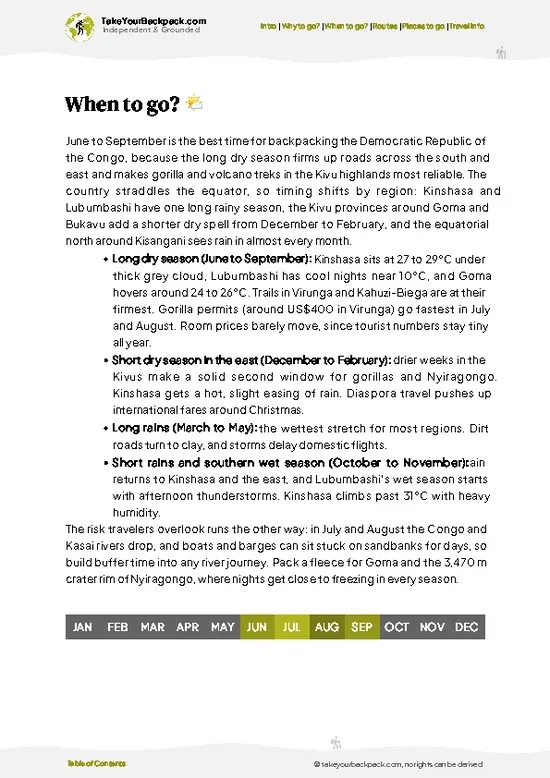
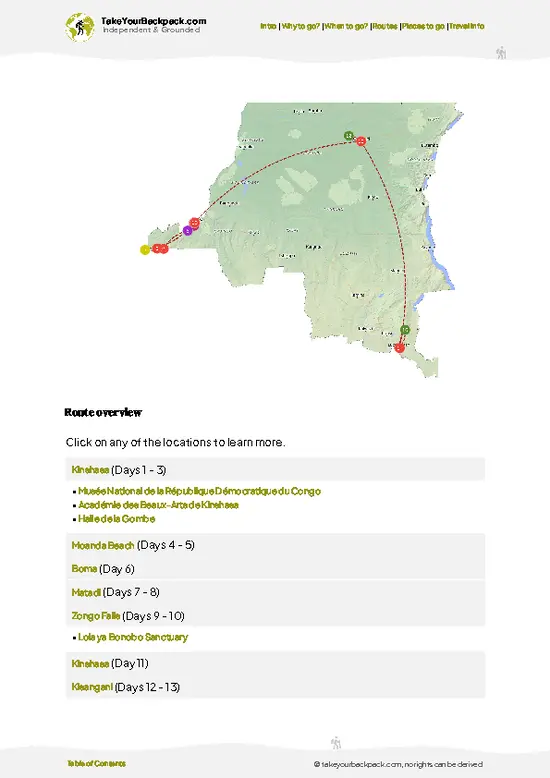
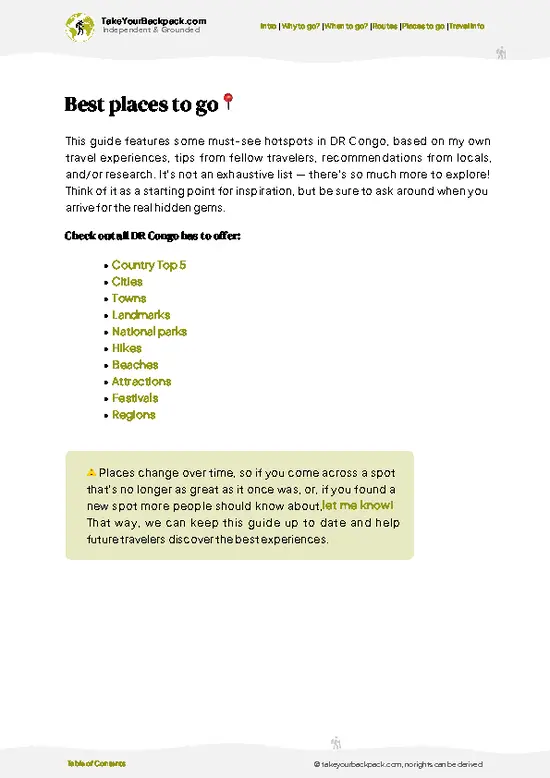
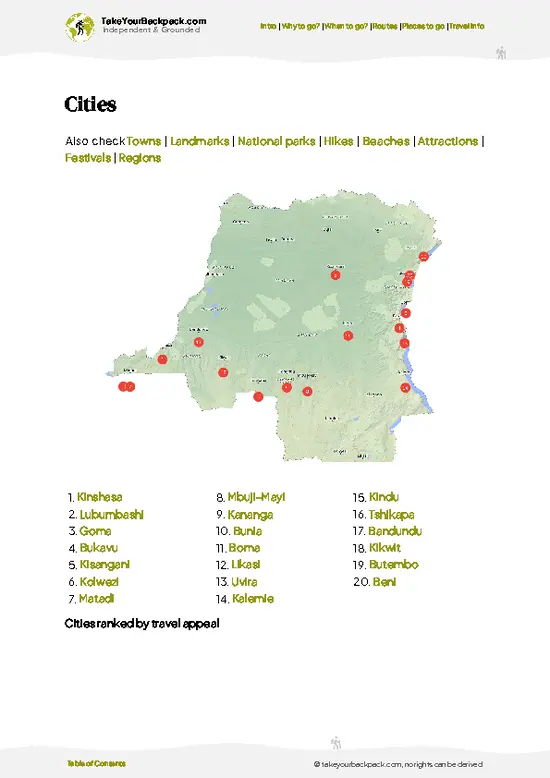
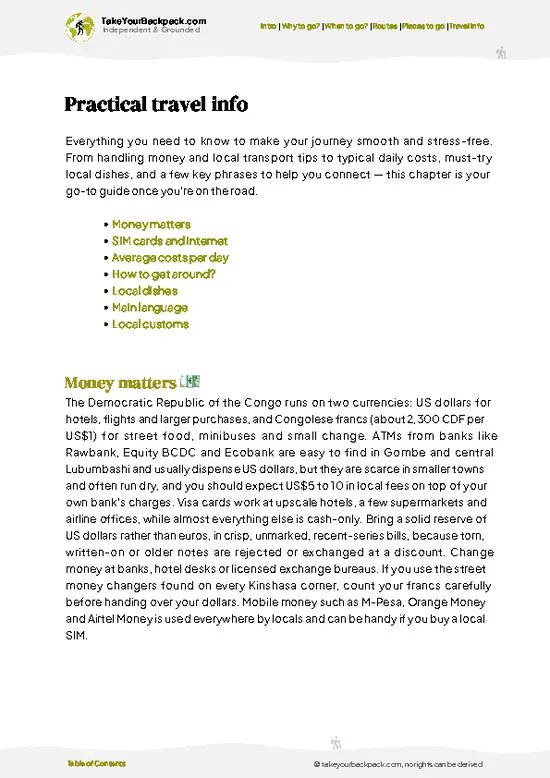
example page 0 from our offline Travel Guide for Democratic Republic of the Congoexample page 1 from our offline Travel Guide for Democratic Republic of the Congoexample page 2 from our offline Travel Guide for Democratic Republic of the Congoexample page 3 from our offline Travel Guide for Democratic Republic of the Congoexample page 4 from our offline Travel Guide for Democratic Republic of the Congoexample page 5 from our offline Travel Guide for Democratic Republic of the Congoexample page 6 from our offline Travel Guide for Democratic Republic of the Congoexample page 7 from our offline Travel Guide for Democratic Republic of the Congo
The digital guide (378 pages) contains:
96 highlights, ranked by travel appeal
Optimized 7, 14 & 21-day travel routes
Cities, national parks, landmarks, beaches
How to get around
Offline-friendly for travel without Wi-Fi
👉 Click to see all 30+ guide features

📅 Plan smarter in minutes, not weeks
Month by month travel advice
Festivals & national holidays
Budget expectations

🗺️ Go to the right places, skip the overrated ones
Honest pros & cons of destinations
Top hikes, parks & viewpoints
Lesser-known places most travelers miss
Clear “worth it vs skip it” guidance

🛏️ Travel smoothly without rookie mistakes
Best areas to stay
Transport systems explained simply
Common scams & safety advice
SIM cards, money & practical tips

🌍 Understand the country, not just visit it
Culture & traditions
52 Essential phrases & customs
Festivals worth planning around
Traveler-friendly historical context
Insights that make places more meaningful

📱 Built for real travel conditions
Fully downloadable PDF
Works completely offline
Optimized for phone use
Useful in remote areas & buses
Everything in one place
Save weeks of stressful planning
Get instant access to your full guide. 30‑day money-back guarantee.


Sent to your inbox immediately after payment • 100% Secure Checkout
Best Backpacking Travel Advisor 2025 tourism awardBest Backpacking
Travel Advisor
2025
What others say about Take Your Backpack Guides:
⭐⭐⭐⭐⭐
Fantastic, amazing amount of information!
⭐⭐⭐⭐⭐
My goodness this is amazing, it's what I've been looking for hats off too you!
⭐⭐⭐⭐⭐
I think this is absolutely BRILLIANT
⭐⭐⭐⭐
Very complete and informative. It's still missing places, but I gotta to commend you
⭐⭐⭐⭐⭐
This is truly amazing, thank you, can't wait to explore it with my kids!
⭐⭐⭐⭐⭐
Awesome resource, thank you!
⭐⭐⭐⭐⭐
This is amazing! Can't wait to explore the ones I haven't seen
⭐⭐⭐⭐
I love this! Well done, great idea.
⭐⭐⭐⭐⭐
Thanks for taking the time to make this gem!
⭐⭐⭐⭐⭐
This might be the best website I've ever seen.
⭐⭐⭐⭐⭐
Congratulations, and thank you so much for your work; it's incredibly valuable.
⭐⭐⭐⭐
In all seriousness I think you did a great job pointing out the important spots
⭐⭐⭐⭐⭐
10/10 very good
⭐⭐⭐⭐⭐
As someone who's only just starting to visit regularly this is awesome, thank you.
⭐⭐⭐⭐
Thank you very much! I'm going to visit my dad, it's going to be very useful!
⭐⭐⭐⭐⭐
This is really cool! We'll be travelling for the first time and this definitely come in handy.
⭐⭐⭐⭐⭐
You are now our minister of culture, congratulations 👨‍💼
⭐⭐⭐⭐⭐
Just wanted to tell you that this is a pearl! Going to follow your recommendations.
⭐⭐⭐⭐⭐
This is so cool. I'll definitely be using the resource for my travels soon.
⭐⭐⭐⭐⭐
This is very impressive! Good work.
⭐⭐⭐⭐⭐
This is an amazing and informative site. Very well done!

🛏️ Where to stay?Where to Stay: DR Congo Edition

Yes — conventional hostels are scarce, but budget guesthouses and basic dorm-style accommodation exist in DR Congo’s main cities; expect rudimentary facilities, intermittent power and water, limited booking options, and bring cash, insect repellent and a power bank.

Goma: many budget guesthouses near Lake Kivu and the Nyiragongo trek — excellent for nature access and an active traveler community but security can be unpredictable and services basic; Bukavu: quieter lakeside guesthouses, good for boat trips and calmer nights but limited nightlife; Kinshasa — Gombe: safest, best nightlife and services but few cheap hostels and higher prices, while Kinshasa — Centre‑Ville has more low-cost options … read more 👉
Yes — conventional hostels are scarce, but budget guesthouses and basic dorm-style accommodation exist in DR Congo’s main cities; expect rudimentary facilities, intermittent power and water, limited booking options, and bring cash, insect repellent and a power bank.

Goma: many budget guesthouses near Lake Kivu and the Nyiragongo trek — excellent for nature access and an active traveler community but security can be unpredictable and services basic; Bukavu: quieter lakeside guesthouses, good for boat trips and calmer nights but limited nightlife; Kinshasa — Gombe: safest, best nightlife and services but few cheap hostels and higher prices, while Kinshasa — Centre‑Ville has more low-cost options but higher risk after dark; Lubumbashi (Centre‑Ville): several inexpensive hotels with some nightlife but variable standards; Kisangani: very basic, cheap guesthouses that are practical for transit but offer few amenities.

If you enjoy meeting fellow travelers, consider choosing hostels with high ratings for atmosphere. On the other hand, if you prefer having your own space, a hotel might be a better option.

DR CongoExplore Beyond This Category

👋 Meet the founderWho’s Behind Take Your Backpack?

Johan, backpacker and founder of TakeYourBackpackHi, I’m Johan (Netherlands 🇳🇱), the creator of TakeYourBackpack. Over the past decade, I’ve backpacked through 80+ countries across six continents, gaining extensive experience with independent travel, long-term trips, and overland routes.

This site is built on a combination of firsthand travel experience and carefully curated insights from other backpackers. Many guides are based on places I’ve personally visited, while others bring together tips, observations, and practical advice shared by trusted travelers I’ve met along the way.

The goal is to provide realistic, experience-driven guidance — not generic itineraries — so you can explore destinations with better context, clearer expectations, and more confidence.

Get full DR Congo guide •
Instant download • 96 highlights • Full Offline guide