×

DR Congo🇨🇩 | festivalsFestival de la Musique de Kisanganiriverfront concerts, traditional rhythms, community choirs | things to do and best time to go

Explore Festival de la Musique de LubumbashiExplore Festival de la Musique de Bukavu

Backpacking in de la Musique de Kisangani
👍 Recommendedfestival ranked #12
By Johan Kruseman 🇳🇱 | Updated September 3, 2026

Forget the idea that Festival de la Musique de Kisangani is just another tourist-friendly street party—this is a kinetic, homegrown celebration that pulses with the real energy of DR Congo’s third-largest city. Kisangani sits on the Congo River, deep in the country’s lush northeast, and the festival throws you straight into the heart of Congolese creativity. Expect a wild mix of soukous, rumba, hip-hop, and traditional rhythms, with crowds that are mostly local—artists, students, and families, not selfie-stick squads. The vibe is raw, communal, and fiercely proud. It usually runs for several days, and if you’re chasing authenticity over comfort, this is where you’ll find it.

Discover everything you want to know in the 📖 DR Congo Travel Guide.
Safety warning

The current risk level for DR Congo is high. Check the advice before going.


Get your DR Congo guide
95 ranked highlights, routes & tips, works offline (372 pages)
Loading the map 🌍
CLICK TO FILTER
cities
towns
landmarks
national parks
hikes
beaches
attractions
festivals
regions
SHOW COUNTRY’S BESTSHOW ALL

✨ Why go?
Ranked #12 festival in DR Congo
The unique appeal for travelers

Backpackers flock to the Festival de la Musique de Kisangani in the DR Congo for a taste of social energy that’s electric. This isn’t just a music event; it’s a temporary community where you can connect with locals and fellow travelers alike. The festival offers a deep dive into cultural immersion, showcasing vibrant rhythms and traditions that pulse through the heart of Kisangani. Plus, it’s surprisingly affordable compared to similar events worldwide, allowing you to save your budget for other adventures. Planning your route around this festival not only enriches your experience but also seamlessly fits into a longer travel itinerary, making every moment count.
Want to include Festival de la Musique de Kisangani in your DR Congo route?
Create a personalized DR Congo itinerary that includes Festival de la Musique de Kisangani and the places that fit your trip — based on your travel style, budget, and available time. Get your route in seconds.

Generate my trip

💡 HighlightsThe experiences that define the visit

  • Riverside concerts on the Congo — Live music staged along the riverfront (and sometimes on boats) gives performances a cinematic backdrop: sunsets, humidity, that wide-water acoustics. The setting turns every set into a communal hangout rather than a formal gig; people bring chairs, share food, and the whole shoreline becomes part of the show.
  • Blend of contemporary and traditional sounds — You’ll hear soukous and Afro-pop rubbing shoulders with older regional rhythms and instruments — thumb pianos, drums and call-and-response vocals. That mix gives the festival a distinct sonic identity: modern energy grounded in local musical lineage.
  • Open-air dance circles and street parades — Expect spontaneous dance circles, choreographed community numbers and parade-style processions that thread through
read more 👉
  • Riverside concerts on the Congo — Live music staged along the riverfront (and sometimes on boats) gives performances a cinematic backdrop: sunsets, humidity, that wide-water acoustics. The setting turns every set into a communal hangout rather than a formal gig; people bring chairs, share food, and the whole shoreline becomes part of the show.
  • Blend of contemporary and traditional sounds — You’ll hear soukous and Afro-pop rubbing shoulders with older regional rhythms and instruments — thumb pianos, drums and call-and-response vocals. That mix gives the festival a distinct sonic identity: modern energy grounded in local musical lineage.
  • Open-air dance circles and street parades — Expect spontaneous dance circles, choreographed community numbers and parade-style processions that thread through town. It’s participatory: watching is fine, but people will happily pull you into a circle if you’ve got two left feet and a big smile.
  • Grassroots jam sessions and cross-cultural collaborations — Daytime workshops, pop-up jams and informal artist meetups are where real surprises happen. Musicians from different backgrounds swap ideas on the fly, so you often witness fresh, one-off collaborations you won’t hear anywhere else.
  • Local food, crafts and night markets — Food stalls selling grilled river fish, skewers and local drinks sit alongside stalls with handmade instruments, vinyl and crafts. The market after dark is part of the festival vibe: lanterns, bargaining, live snippets from nearby stages — it’s where music spills into everyday life.
Spotted a mistake or missing something? Contact us.
🌤️ When to go?When is the celebration of Festival de la Musique de Kisangani?


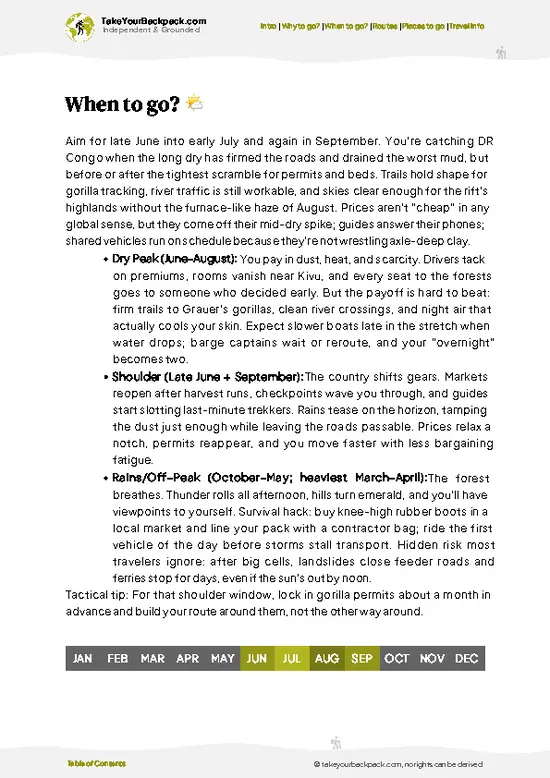
  • Weather: The festival usually falls in the dry season, between June and September, when rain is scarce. This means fewer muddy trails and less chance of soggy gear—critical for keeping your energy up on the move.

  • Temperature: Expect daytime highs around 28-32°C (82-90°F), cooling to 18-22°C (64-72°F) at night. Dress in layers to handle the tropical heat by day and the mild evenings without overheating or freezing.

  • Daylight Hours: Daylight stays steady at about 11-12 hours, giving you plenty of time to explore before and after festival events without rushing.

  • Crowds: The festival draws locals and regional visitors, but it’s not overrun by tourists. Arriving early helps you snag better accommodation and avoid last-minute price hikes.

  • Seasonal Activities: Dry season opens up river
read more 👉

  • Weather: The festival usually falls in the dry season, between June and September, when rain is scarce. This means fewer muddy trails and less chance of soggy gear—critical for keeping your energy up on the move.

  • Temperature: Expect daytime highs around 28-32°C (82-90°F), cooling to 18-22°C (64-72°F) at night. Dress in layers to handle the tropical heat by day and the mild evenings without overheating or freezing.

  • Daylight Hours: Daylight stays steady at about 11-12 hours, giving you plenty of time to explore before and after festival events without rushing.

  • Crowds: The festival draws locals and regional visitors, but it’s not overrun by tourists. Arriving early helps you snag better accommodation and avoid last-minute price hikes.

  • Seasonal Activities: Dry season opens up river excursions and jungle treks around Kisangani, letting you layer your experience beyond the music without weather disruptions.

  • Price Fluctuations: Expect accommodation and transport costs to spike during the festival. Booking ahead locks in better rates and saves your budget for food and local crafts.


Pro-tip: Time your visit for early festival days to catch fresh energy, avoid peak crowd crush, and stretch your budget further.


source: climatestotravel.comJANJanuary: not recommended for travelingFEBFebruary: not recommended for travelingMARMarch: not recommended for travelingAPRApril: not recommended for travelingMAYMay: not recommended for travelingJUNJune: excellent for travelingJULJuly: not recommended for travelingAUGAugust: not recommended for travelingSEPSeptember: not recommended for travelingOCTOctober: not recommended for travelingNOVNovember: not recommended for travelingDECDecember: not recommended for traveling

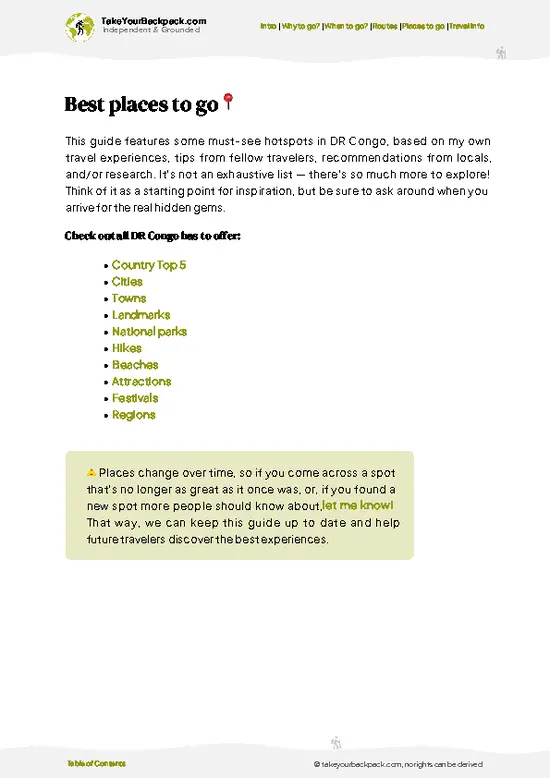
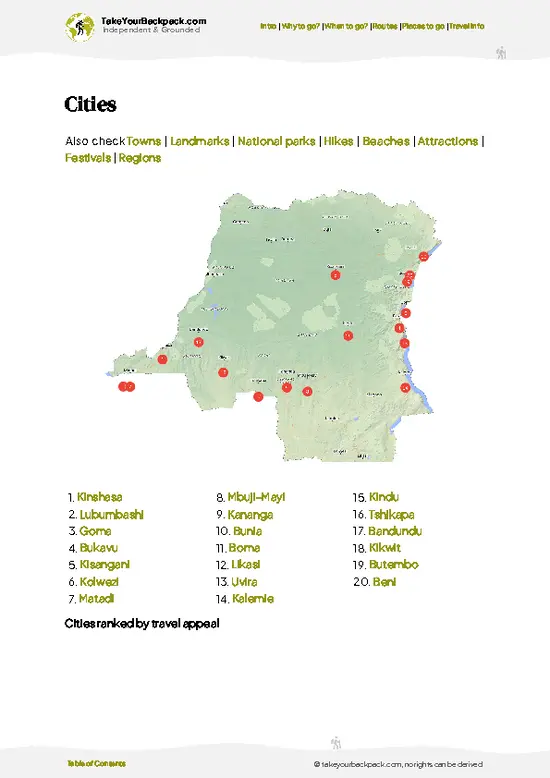
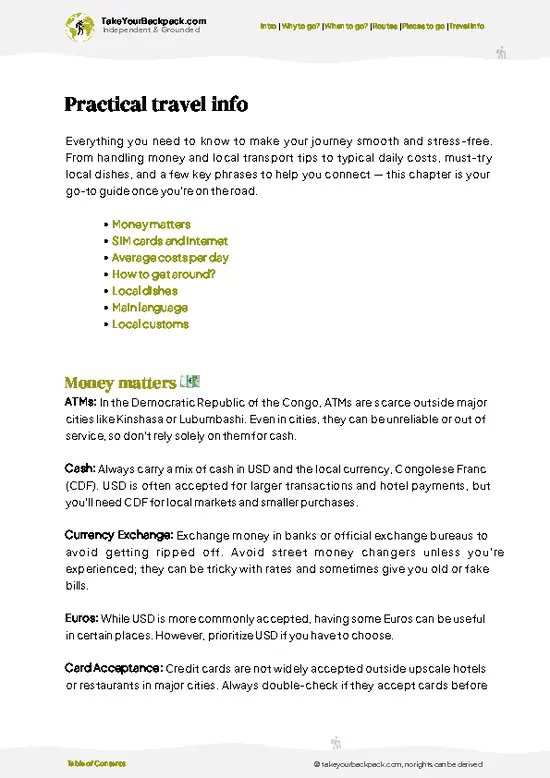
✈️ The backpacker research shortcutDR Congo Travel Guide

An offline-friendly backpacking guide with optimized travel routes, ranked highlights, transport advice, and the best areas to stay.
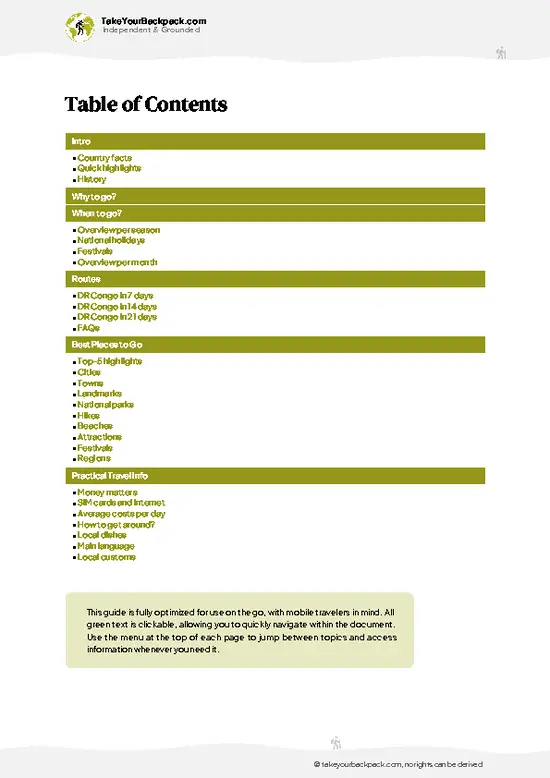
example page 0 from our offline Travel Guide for Democratic Republic of the Congo
example page 1 from our offline Travel Guide for Democratic Republic of the Congo
example page 2 from our offline Travel Guide for Democratic Republic of the Congo
example page 3 from our offline Travel Guide for Democratic Republic of the Congo
example page 4 from our offline Travel Guide for Democratic Republic of the Congo
example page 5 from our offline Travel Guide for Democratic Republic of the Congo
example page 6 from our offline Travel Guide for Democratic Republic of the Congo
example page 7 from our offline Travel Guide for Democratic Republic of the Congo
The digital guide (372 pages) contains:
95 highlights, ranked by travel appeal
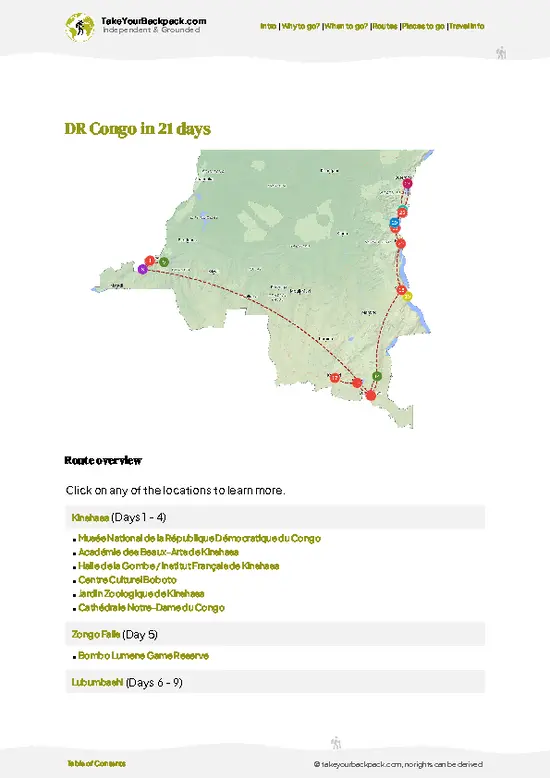
Optimized 7, 14 & 21-day travel routes
Cities, national parks, landmarks, beaches
How to get around
Offline-friendly for travel without Wi-Fi
👉 Click to see all 30+ guide features

📅 Plan smarter in minutes, not weeks
Month by month travel advice
Festivals & national holidays
Budget expectations

🗺️ Go to the right places, skip the overrated ones
Honest pros & cons of destinations
Top hikes, parks & viewpoints
Lesser-known places most travelers miss
Clear “worth it vs skip it” guidance

🛏️ Travel smoothly without rookie mistakes
Best areas to stay
Transport systems explained simply
Common scams & safety advice
SIM cards, money & practical tips

🌍 Understand the country, not just visit it
Culture & traditions
52 Essential phrases & customs
Festivals worth planning around
Traveler-friendly historical context
Insights that make places more meaningful

📱 Built for real travel conditions
Fully downloadable PDF
Works completely offline
Optimized for phone use
Useful in remote areas & buses
Everything in one place
Save weeks of stressful planning
Get instant access to your full guide. 30‑day money-back guarantee.
+ Add another guide for just US$7.80

By proceeding you agree to our terms.
Sent to your inbox immediately after payment • 100% Secure Checkout
Best Backpacking Travel Advisor 2025 tourism awardBest Backpacking
Travel Advisor
2025
What others say about Take Your Backpack Guides:
⭐⭐⭐⭐⭐
Fantastic, amazing amount of information!
⭐⭐⭐⭐⭐
My goodness this is amazing, it's what I've been looking for hats off too you!
⭐⭐⭐⭐⭐
I think this is absolutely BRILLIANT
⭐⭐⭐⭐
Very complete and informative. It's still missing places, but I gotta to commend you
⭐⭐⭐⭐⭐
This is truly amazing, thank you, can't wait to explore it with my kids!
⭐⭐⭐⭐⭐
Awesome resource, thank you!
⭐⭐⭐⭐⭐
This is amazing! Can't wait to explore the ones I haven't seen
⭐⭐⭐⭐
I love this! Well done, great idea.
⭐⭐⭐⭐⭐
Thanks for taking the time to make this gem!
⭐⭐⭐⭐⭐
This might be the best website I've ever seen.
⭐⭐⭐⭐⭐
Congratulations, and thank you so much for your work; it's incredibly valuable.
⭐⭐⭐⭐
In all seriousness I think you did a great job pointing out the important spots
⭐⭐⭐⭐⭐
10/10 very good
⭐⭐⭐⭐⭐
As someone who's only just starting to visit regularly this is awesome, thank you.
⭐⭐⭐⭐
Thank you very much! I'm going to visit my dad, it's going to be very useful!
⭐⭐⭐⭐⭐
This is really cool! We'll be travelling for the first time and this definitely come in handy.
⭐⭐⭐⭐⭐
You are now our minister of culture, congratulations 👨‍💼
⭐⭐⭐⭐⭐
Just wanted to tell you that this is a pearl! Going to follow your recommendations.
⭐⭐⭐⭐⭐
This is so cool. I'll definitely be using the resource for my travels soon.
⭐⭐⭐⭐⭐
This is very impressive! Good work.
⭐⭐⭐⭐⭐
This is an amazing and informative site. Very well done!

🛏️ Where to stay?Best areas to stay in DR Congo

Stay around the bustling neighborhoods of Kisangani, where the festival vibe pulses through the streets. Look for spots near the city center; they’re alive with energy and close to the action. The Avenue de la Révolution is a hotspot for backpackers, filled with local eateries and lively markets.

Consider the areas near the Congo River, where you can soak in the atmosphere and meet fellow travelers. Safety is key, so stick to well-lit streets and populated areas.

You’ll find a mix of budget-friendly guesthouses and communal spaces that encourage socializing. This is where you’ll recharge after … read more 👉
Stay around the bustling neighborhoods of Kisangani, where the festival vibe pulses through the streets. Look for spots near the city center; they’re alive with energy and close to the action. The Avenue de la Révolution is a hotspot for backpackers, filled with local eateries and lively markets.

Consider the areas near the Congo River, where you can soak in the atmosphere and meet fellow travelers. Safety is key, so stick to well-lit streets and populated areas.

You’ll find a mix of budget-friendly guesthouses and communal spaces that encourage socializing. This is where you’ll recharge after a day of music and dance, sharing stories and laughter with new friends. Embrace the rhythm of Kisangani; it’s all part of the adventure.

👛 Costs (as of 3 September 2026)How expensive it really is

The Festival de la Musique de Kisangani is an electrifying experience, but navigating the costs can be tricky. Here’s how to budget wisely to keep your energy and wallet intact.
  • Festival Tickets: Expect to pay between €10 to €30 for a general admission ticket. Prices can vary based on the lineup and seating options. Grab your tickets early to avoid last-minute price hikes.
  • Accommodation: Budget options like hostels or guesthouses range from €15 to €30 per night. Mid-range hotels can cost between €30 to €70. Book ahead, especially during the festival, as places fill up fast.
  • Local Transport: Public transport is affordable, with bus fares around €0.50 to €2. Taxis are available but can be pricier, ranging from €5 to €15 depending on distance. Consider walking to soak in the local vibe.
  • Food & Drinks:
read more 👉
The Festival de la Musique de Kisangani is an electrifying experience, but navigating the costs can be tricky. Here’s how to budget wisely to keep your energy and wallet intact.
  • Festival Tickets: Expect to pay between €10 to €30 for a general admission ticket. Prices can vary based on the lineup and seating options. Grab your tickets early to avoid last-minute price hikes.
  • Accommodation: Budget options like hostels or guesthouses range from €15 to €30 per night. Mid-range hotels can cost between €30 to €70. Book ahead, especially during the festival, as places fill up fast.
  • Local Transport: Public transport is affordable, with bus fares around €0.50 to €2. Taxis are available but can be pricier, ranging from €5 to €15 depending on distance. Consider walking to soak in the local vibe.
  • Food & Drinks: Street food is your best friend here, with meals costing between €2 to €5. Restaurants will set you back €5 to €15 for a decent meal. Don’t forget to try local specialties; they’re often the best value.
  • Miscellaneous Expenses: Set aside around €10 to €20 for souvenirs, tips, or unexpected costs. It’s always good to have a buffer for those spontaneous moments that make travel exciting.

Keep these figures in mind, and you’ll be ready to dive into the festival without breaking the bank. Enjoy the rhythm of Kisangani!


source: congotourisme.org
⚠️ Prices can change and everyone travels differently, so take this as a rough guide. Hope it helps you plan your adventure!

🍲 FoodEating & Drinking in de la Musique de Kisangani

At the Festival de la Musique de Kisangani, the food scene is a vibrant tapestry of local flavors. Dive into moambe, a rich chicken stew simmered in palm oil, or savor fufu, a starchy staple that pairs perfectly with just about anything. Street stalls buzz with energy, serving up grilled fish fresh from the Congo River, seasoned to perfection.

Don’t miss out on malewa, smoked bamboo shoots that pack a punch of flavor. For drinks, grab a local beer or try sugarcane juice—it’s refreshing and sweet, just like the atmosphere.

Etiquette is key here; sharing is common, so don’t hesitate to offer a taste. Cash is king, so keep some on hand. Serving sizes can be generous, so pace yourself to enjoy every bite and sip.

FAQTraveler FAQ

Festival de la Musique de Kisangani usually takes place in June. It spans about 3 days, showcasing local and regional music talents. The exact dates can vary each year, so check local sources before planning.
Attending Festival de la Musique de Kisangani is generally free or low cost, with some events charging around 5 to 10 USD. Costs may vary depending on the venue and specific performances. Budget for local transport and food separately.
Tickets are not typically required in advance for most events at the Festival de la Musique de Kisangani. Entry is often on a first-come, first-served basis, especially for outdoor or public performances. For special or indoor concerts, limited tickets might be available locally.
⚠️ Things can change over time, so always validate details locally before you go.

Other Congolese festivals near de la Musique de Kisangani

Explore more nearby:


💡 Not sure where to go next?
Create a personalized itinerary for DR Congo including de la Musique de Kisangani and the places that fit your trip.

Generate my itinerary

👉 Discover all festivals

Or checkout all DR Congo has to offer (think cities, towns, villages, national parks, hikes, beaches, festivals)
Country photo of DR Congo

We 💚 feedbackKey takeaways before you go

The Festival de la Musique de Kisangani pulses with raw energy. Expect spontaneous dance-offs and local rhythms that’ll surprise you. But watch your wallet; prices can spike unexpectedly. Embrace the chaos, savor the street food, and let the music sweep you away. It’s all about the moments that make you feel alive.

✍️ Help improve this page!
The information on this page is based on in-depth research, insights shared by experienced travelers, and feedback from the local travel community in DR Congo. While every effort is made to keep the information accurate and current, conditions can change — so if you spot anything incorrect or outdated, please get in touch.


🙋‍♂️ Give feedback

👋 Meet the founderWho’s Behind Take Your Backpack?

Johan, backpacker and founder of TakeYourBackpackHi, I’m Johan (Netherlands 🇳🇱), the creator of TakeYourBackpack. Over the past decade, I’ve backpacked through 80+ countries across six continents, gaining extensive experience with independent travel, long-term trips, and overland routes.

This site is built on a combination of firsthand travel experience and carefully curated insights from other backpackers. Many guides are based on places I’ve personally visited, while others bring together tips, observations, and practical advice shared by trusted travelers I’ve met along the way.

The goal is to provide realistic, experience-driven guidance — not generic itineraries — so you can explore destinations with better context, clearer expectations, and more confidence.

Get full DR Congo guide •
Instant download • 95 highlights • Full Offline guide