×

DR Congo🇨🇩 | townsLibengeUbangi River port, airstrip, border proximity | things to do and best time to go

Explore BoloboExplore Ile de la Lwiro

Backpacking in Libenge
👍 Recommendedtown ranked #8
By Johan Kruseman 🇳🇱 | Updated September 3, 2026

Forget the idea that Libenge is some bustling border bazaar or a lively river port—most travelers expect a crossroads, but what you find is a slow, sun-baked town pressed against the Ubangi River in the northwest corner of DR Congo, just across from the Central African Republic. Libenge is more of a pause than a destination: a place where the air smells of woodsmoke and river mud, and the main street is more likely to host goats than backpackers. It’s a practical stopover if you’re threading your way between Gemena and Bangui, or if you’re chasing the raw, unfiltered version of the Congo River’s edge. Don’t expect hostels or a social scene—accommodation is basic, and evenings are quiet, broken only by the hum of generators and distant laughter. Markets offer a glimpse of daily life, but there’s little in the way of organized attractions. Getting here means braving rough roads or unreliable riverboats, and you’ll need patience for both. Compared to Gemena, Libenge is more relaxed but far less equipped for travelers; it’s not scenic in the postcard sense, but the slow rhythm and sense of remoteness are the real draw. Costs are low, but so are comforts. Safety is generally manageable if you keep a low profile, but you’ll stand out—so move with awareness, and expect to earn every moment of authenticity.

Discover everything you want to know in the 📖 DR Congo Travel Guide.
Safety warning

The current risk level for DR Congo is high. Check the advice before going.


Get your DR Congo guide
95 ranked highlights, routes & tips, works offline (372 pages)
Loading the map 🌍
CLICK TO FILTER
cities
towns
landmarks
national parks
hikes
beaches
attractions
festivals
regions
SHOW COUNTRY’S BESTSHOW ALL

✨ Why go?
Ranked #8 town in DR Congo
What makes it a must-see town

Libenge serves as a gateway for backpackers venturing into the wilds of DR Congo. Its walkable streets and small-scale guesthouses create a cozy atmosphere, perfect for solo travelers or small groups seeking a social vibe. The town is a convenient base for nearby hikes and cultural sites, making it easy to dive into local experiences. You’ll find delicious street food that reflects the region’s flavors, adding to the charm. Most travelers stay a few days, soaking in the friendly interactions and planning their next adventure. It’s not a party town, but the warmth of the community makes it a memorable stop.
Want to include Libenge in your DR Congo route?
Create a personalized DR Congo itinerary that includes Libenge and the places that fit your trip — based on your travel style, budget, and available time. Get your route in seconds.

Generate my trip

💡 HighlightsMust-see experiences and standout moments

  • Ubangi River Quay (Embarcadère) — The real heart of Libenge: crowded landings, slow pirogues, people loading goods, and amazing river sunsets. Great spot to watch cross-border traffic and catch boats up and down the Ubangi.
  • Libenge Central Market (Marché Central) — No glossy souvenir shops here, just a chaotic, colourful place to buy fresh produce, smoked fish, fabrics and to eavesdrop on the town’s trade rhythms. Perfect for people-watching and quick street food stalls.
  • Libenge Airstrip — A short, dusty strip used by small aircraft; visiting gives you a sense of how remote travel still is here and offers wide, open views of the river plain—especially interesting if a plane comes or leaves.
  • Border and Customs Quarter — The activity around the customs post is a living lesson in cross-border
read more 👉
  • Ubangi River Quay (Embarcadère) — The real heart of Libenge: crowded landings, slow pirogues, people loading goods, and amazing river sunsets. Great spot to watch cross-border traffic and catch boats up and down the Ubangi.
  • Libenge Central Market (Marché Central) — No glossy souvenir shops here, just a chaotic, colourful place to buy fresh produce, smoked fish, fabrics and to eavesdrop on the town’s trade rhythms. Perfect for people-watching and quick street food stalls.
  • Libenge Airstrip — A short, dusty strip used by small aircraft; visiting gives you a sense of how remote travel still is here and offers wide, open views of the river plain—especially interesting if a plane comes or leaves.
  • Border and Customs Quarter — The activity around the customs post is a living lesson in cross-border life: traders, transporters and paperwork that connect Libenge to Bangui and beyond. It’s noisy, human, and essential to understanding the town.
  • Catholic mission compound — The mission compound (church, school and community buildings) is often a hub for local charity and education, with a simple, well-kept churchyard and a window into the town’s social networks.
  • Boatbuilders’ Yards and Canoe Workshops — Small families carve and repair pirogues along the riverbank; watching craftsmen at work and talking about timber and techniques is one of the most authentic local experiences.
  • Riverside Fishing Camps — Early morning visits show fishermen bringing in nets and the process of smoking fish for market—an excellent hands-on glimpse at a livelihood tied to the Ubangi.
  • Old river warehouses and administrative quarter — Scattered colonial-era buildings and river warehouses (some in decay, some repurposed) tell the story of Libenge as a historic river trading post and make for quietly atmospheric walks.
  • Artisan and Tailoring Stalls — Small workshops and tailors tucked into lanes produce locally made clothing, repairs and simple crafts; haggle politely and you’ll leave with something uniquely Libenge and cheap.
  • Community football pitch and evening market square — Come late afternoon for impromptu football matches, children playing, and markets that spill into the square—where the town’s social life is most visible and easy to join in on.
A few real day-trip options nearby: cross the Ubangi to Bangui (Central African Republic) for city markets and museums, explore the river islands and fishing villages around Libenge, or travel along the Ubangi to Mobayi-Mbongo for more riverine market towns.
Spotted a mistake or missing something? Contact us.

🏘️ NeighborhoodsUnderstanding the local layout

Libenge is a vibrant hub in the heart of DR Congo, offering a mix of local culture and essential amenities for backpackers.

Centre Ville: This is the bustling heart of Libenge. Expect lively markets and street vendors. It’s walkable, with affordable accommodations. Nightlife is limited, but you’ll find local bars for a casual evening. Perfect for short stays.

Quartier des Artisans: Known for its artisan shops, this area has a creative vibe. It’s slightly quieter, making it suitable for longer stays. Transport options are decent, and you can easily explore on foot. Ideal for those wanting to soak in local craftsmanship.

Zone de Santé: This neighborhood is more residential and less touristy. It offers a glimpse into daily life in Libenge. While not as lively, it’s affordable and provides … read more 👉
Libenge is a vibrant hub in the heart of DR Congo, offering a mix of local culture and essential amenities for backpackers.

Centre Ville: This is the bustling heart of Libenge. Expect lively markets and street vendors. It’s walkable, with affordable accommodations. Nightlife is limited, but you’ll find local bars for a casual evening. Perfect for short stays.

Quartier des Artisans: Known for its artisan shops, this area has a creative vibe. It’s slightly quieter, making it suitable for longer stays. Transport options are decent, and you can easily explore on foot. Ideal for those wanting to soak in local craftsmanship.

Zone de Santé: This neighborhood is more residential and less touristy. It offers a glimpse into daily life in Libenge. While not as lively, it’s affordable and provides a peaceful atmosphere for longer visits. Transport access is limited, so be prepared to walk.

⌛️ 1 day1-day itinerary for Libenge

Libenge, a small town in the heart of DR Congo, offers a unique blend of local culture and natural beauty. Start your day early at the bustling market in the center, where the air is thick with the scent of fresh produce and spices. Engage with vendors selling vibrant fabrics and handmade crafts; it’s a sensory feast that sets the tone for your adventure.

In the afternoon, head to the nearby Congo River. The gentle lapping of water against the shore is soothing. Rent a canoe from a local and paddle along the river, soaking in the lush greenery and the occasional sight of fishermen casting their nets. This isn’t just a scenic route; it’s a glimpse into daily life here.

As evening approaches, wander into the neighborhood of Kinsuka. The streets come alive with the sounds of laughter and music. … read more 👉
Libenge, a small town in the heart of DR Congo, offers a unique blend of local culture and natural beauty. Start your day early at the bustling market in the center, where the air is thick with the scent of fresh produce and spices. Engage with vendors selling vibrant fabrics and handmade crafts; it’s a sensory feast that sets the tone for your adventure.

In the afternoon, head to the nearby Congo River. The gentle lapping of water against the shore is soothing. Rent a canoe from a local and paddle along the river, soaking in the lush greenery and the occasional sight of fishermen casting their nets. This isn’t just a scenic route; it’s a glimpse into daily life here.

As evening approaches, wander into the neighborhood of Kinsuka. The streets come alive with the sounds of laughter and music. Stop by a local eatery for grilled fish and plantains, savoring the flavors that define this region. The warmth of the community and the rich tastes will make your day in Libenge feel truly rewarding.
Turn your Libenge visit into an DR Congo adventure
Build a complete DR Congo route with Libenge, hidden gems, must-see destinations, and realistic travel times included.

Generate my trip

🌤️ When to go?Seasonal considerations and timing


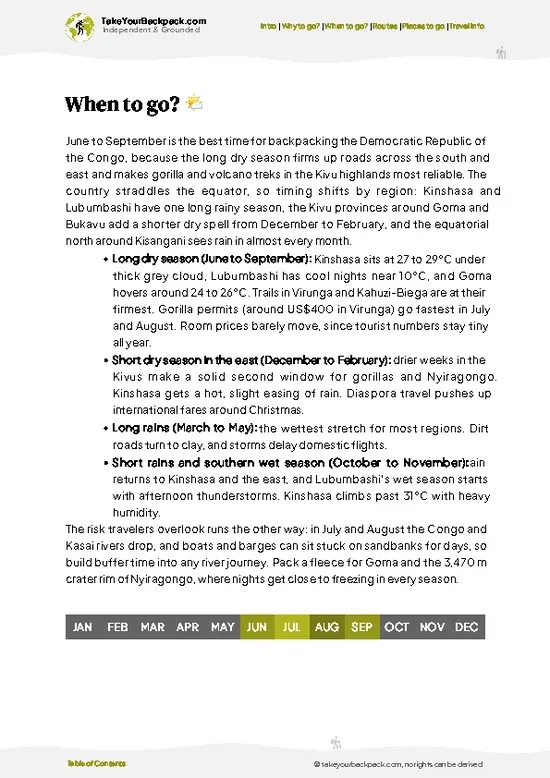
  • Topic: Weather — Libenge’s dry season from June to September offers clearer skies and less mud, making trails manageable. The wet season, October to May, brings heavy rains that can turn paths into slippery challenges and swell the Ubangi River.

  • Topic: Temperature — Expect highs around 30°C (86°F) year-round, but nights cool to about 20°C (68°F) during the dry months, offering relief from the daytime heat and more comfortable camping conditions.

  • Topic: Daylight Hours — Near the equator, daylight stays steady at roughly 12 hours daily, so plan your hikes and river trips knowing you’ll have consistent light from dawn to dusk.

  • Topic: Crowds — Libenge is off the beaten path, so crowds are minimal year-round. However, the dry season attracts a few more adventurous travelers, creating a
read more 👉

  • Topic: Weather — Libenge’s dry season from June to September offers clearer skies and less mud, making trails manageable. The wet season, October to May, brings heavy rains that can turn paths into slippery challenges and swell the Ubangi River.

  • Topic: Temperature — Expect highs around 30°C (86°F) year-round, but nights cool to about 20°C (68°F) during the dry months, offering relief from the daytime heat and more comfortable camping conditions.

  • Topic: Daylight Hours — Near the equator, daylight stays steady at roughly 12 hours daily, so plan your hikes and river trips knowing you’ll have consistent light from dawn to dusk.

  • Topic: Crowds — Libenge is off the beaten path, so crowds are minimal year-round. However, the dry season attracts a few more adventurous travelers, creating a subtle buzz without overwhelming the town.

  • Topic: Seasonal Activities — Dry months are prime for exploring the surrounding forests and riverbanks without interruption. Wet season offers lush greenery but expect limited access to some trails and boat rides.

  • Topic: Price Fluctuations — Prices for local guides and accommodations tend to rise slightly during the dry season when demand peaks, but the trade-off is smoother logistics and better conditions.


Pro-tip: Aim for late dry season—August to September—when the air is crisp, trails firm, and the river calm, giving you the clearest window to soak in Libenge’s raw, unfiltered atmosphere.


source: climatestotravel.comJANJanuary: fair for travelingFEBFebruary: fair for travelingMARMarch: fair for travelingAPRApril: fair for travelingMAYMay: fair for travelingJUNJune: highly recommended for travelingJULJuly: highly recommended for travelingAUGAugust: excellent for travelingSEPSeptember: excellent for travelingOCTOctober: fair for travelingNOVNovember: fair for travelingDECDecember: fair for traveling
when-to-go

✈️ The backpacker research shortcutDR Congo Travel Guide

An offline-friendly backpacking guide with optimized travel routes, ranked highlights, transport advice, and the best areas to stay.
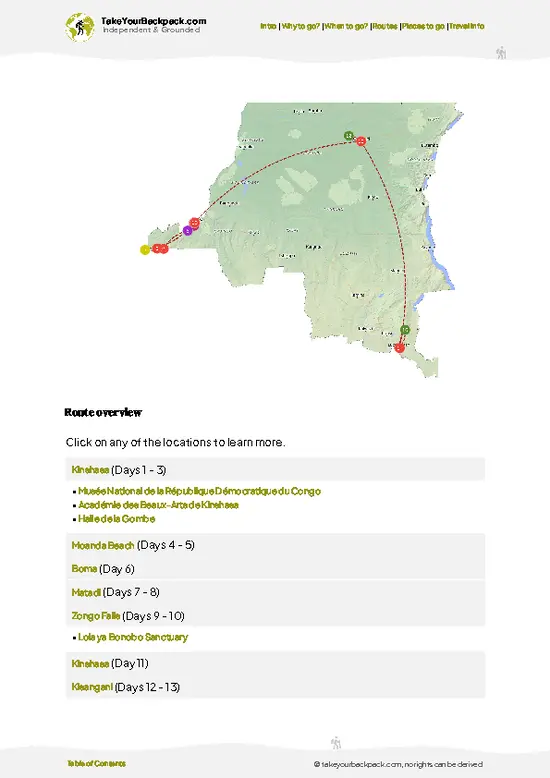
example page 0 from our offline Travel Guide for Democratic Republic of the Congo
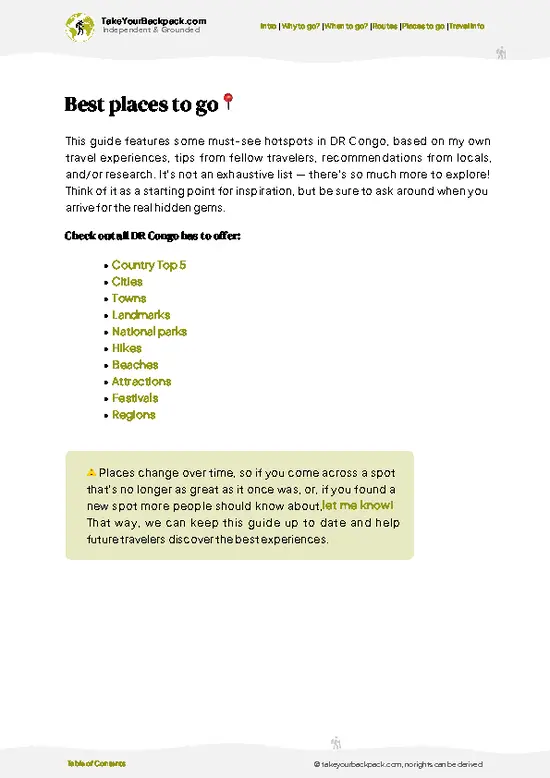
example page 1 from our offline Travel Guide for Democratic Republic of the Congo
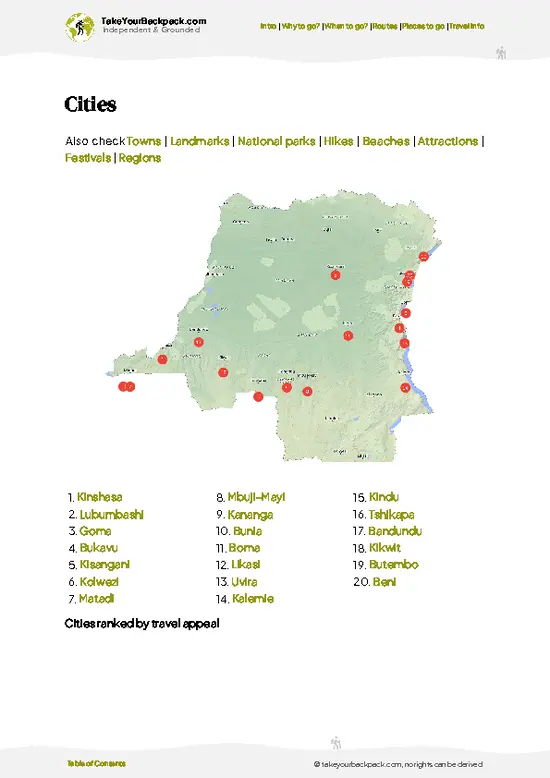
example page 2 from our offline Travel Guide for Democratic Republic of the Congo
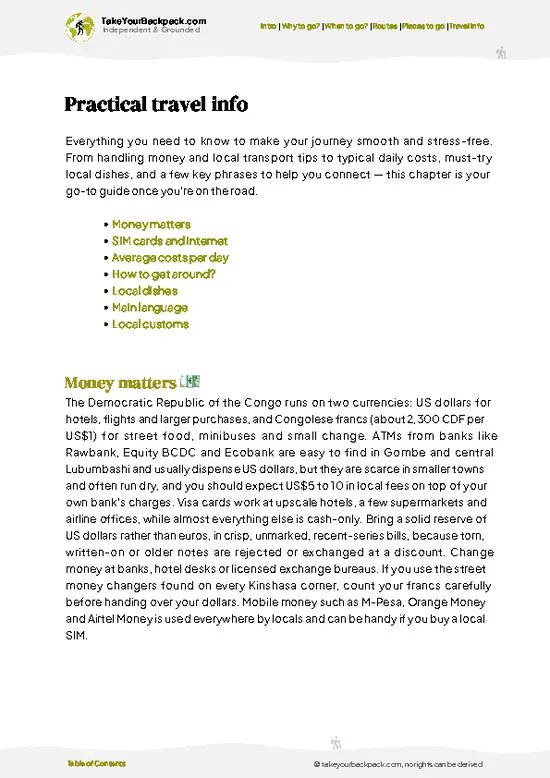
example page 3 from our offline Travel Guide for Democratic Republic of the Congo
example page 4 from our offline Travel Guide for Democratic Republic of the Congo
example page 5 from our offline Travel Guide for Democratic Republic of the Congo
example page 6 from our offline Travel Guide for Democratic Republic of the Congo
example page 7 from our offline Travel Guide for Democratic Republic of the Congo
The digital guide (372 pages) contains:
95 highlights, ranked by travel appeal
Optimized 7, 14 & 21-day travel routes
Cities, national parks, landmarks, beaches
How to get around
Offline-friendly for travel without Wi-Fi
👉 Click to see all 30+ guide features

📅 Plan smarter in minutes, not weeks
Month by month travel advice
Festivals & national holidays
Budget expectations

🗺️ Go to the right places, skip the overrated ones
Honest pros & cons of destinations
Top hikes, parks & viewpoints
Lesser-known places most travelers miss
Clear “worth it vs skip it” guidance

🛏️ Travel smoothly without rookie mistakes
Best areas to stay
Transport systems explained simply
Common scams & safety advice
SIM cards, money & practical tips

🌍 Understand the country, not just visit it
Culture & traditions
52 Essential phrases & customs
Festivals worth planning around
Traveler-friendly historical context
Insights that make places more meaningful

📱 Built for real travel conditions
Fully downloadable PDF
Works completely offline
Optimized for phone use
Useful in remote areas & buses
Everything in one place
Save weeks of stressful planning
Get instant access to your full guide. 30‑day money-back guarantee.
+ Add another guide for just US$7.80

By proceeding you agree to our terms.
Sent to your inbox immediately after payment • 100% Secure Checkout
Best Backpacking Travel Advisor 2025 tourism awardBest Backpacking
Travel Advisor
2025
What others say about Take Your Backpack Guides:
⭐⭐⭐⭐⭐
Fantastic, amazing amount of information!
⭐⭐⭐⭐⭐
My goodness this is amazing, it's what I've been looking for hats off too you!
⭐⭐⭐⭐⭐
I think this is absolutely BRILLIANT
⭐⭐⭐⭐
Very complete and informative. It's still missing places, but I gotta to commend you
⭐⭐⭐⭐⭐
This is truly amazing, thank you, can't wait to explore it with my kids!
⭐⭐⭐⭐⭐
Awesome resource, thank you!
⭐⭐⭐⭐⭐
This is amazing! Can't wait to explore the ones I haven't seen
⭐⭐⭐⭐
I love this! Well done, great idea.
⭐⭐⭐⭐⭐
Thanks for taking the time to make this gem!
⭐⭐⭐⭐⭐
This might be the best website I've ever seen.
⭐⭐⭐⭐⭐
Congratulations, and thank you so much for your work; it's incredibly valuable.
⭐⭐⭐⭐
In all seriousness I think you did a great job pointing out the important spots
⭐⭐⭐⭐⭐
10/10 very good
⭐⭐⭐⭐⭐
As someone who's only just starting to visit regularly this is awesome, thank you.
⭐⭐⭐⭐
Thank you very much! I'm going to visit my dad, it's going to be very useful!
⭐⭐⭐⭐⭐
This is really cool! We'll be travelling for the first time and this definitely come in handy.
⭐⭐⭐⭐⭐
You are now our minister of culture, congratulations 👨‍💼
⭐⭐⭐⭐⭐
Just wanted to tell you that this is a pearl! Going to follow your recommendations.
⭐⭐⭐⭐⭐
This is so cool. I'll definitely be using the resource for my travels soon.
⭐⭐⭐⭐⭐
This is very impressive! Good work.
⭐⭐⭐⭐⭐
This is an amazing and informative site. Very well done!

🛏️ Where to stay?How to pick the right area

In Libenge, the best spot for backpackers is the town center near the market district. It’s where the pulse of daily life beats strongest—vendors shouting, the scent of fresh cassava mingling with river air. This area draws budget travelers because it’s lively yet manageable, with a handful of guesthouses and informal hostels that welcome solo adventurers. Staying here means you’re steps from local eateries and transport hubs, cutting down on costly taxis and awkward navigation. Other neighborhoods tend to be quieter but less connected, often lacking safe, social spots for meeting fellow travelers. … read more 👉
In Libenge, the best spot for backpackers is the town center near the market district. It’s where the pulse of daily life beats strongest—vendors shouting, the scent of fresh cassava mingling with river air. This area draws budget travelers because it’s lively yet manageable, with a handful of guesthouses and informal hostels that welcome solo adventurers. Staying here means you’re steps from local eateries and transport hubs, cutting down on costly taxis and awkward navigation. Other neighborhoods tend to be quieter but less connected, often lacking safe, social spots for meeting fellow travelers. The center’s mix of noise, light, and movement makes it the practical choice for a smoother, more immersive stay.

🚌 Getting aroundMoving around without the hassle

Libenge moves at its own rhythm—less a clockwork town and more a pulse you feel in the air. The sun hits the red earth with a fierce heat by mid-morning, and the streets hum with a mix of motorbikes, pedestrians, and the occasional creak of wooden carts. Time here isn’t about strict schedules; it’s about catching the moment when the market buzzes or when a boat’s horn signals a departure. The scent of river water mingles with dust and cooking fires, grounding you in a place where patience isn’t just a virtue—it’s your best tool.


  • Walking: The heart of Libenge is compact enough to explore on foot, letting you soak in the textures of daily life. It’s free, flexible, and the best way to catch the subtle shifts in light and sound as the day unfolds.

  • Bicycle Taxi (Vélo-taxi): These are everywhere,
read more 👉
Libenge moves at its own rhythm—less a clockwork town and more a pulse you feel in the air. The sun hits the red earth with a fierce heat by mid-morning, and the streets hum with a mix of motorbikes, pedestrians, and the occasional creak of wooden carts. Time here isn’t about strict schedules; it’s about catching the moment when the market buzzes or when a boat’s horn signals a departure. The scent of river water mingles with dust and cooking fires, grounding you in a place where patience isn’t just a virtue—it’s your best tool.


  • Walking: The heart of Libenge is compact enough to explore on foot, letting you soak in the textures of daily life. It’s free, flexible, and the best way to catch the subtle shifts in light and sound as the day unfolds.

  • Bicycle Taxi (Vélo-taxi): These are everywhere, cheap (around 200-500 CDF per ride), and perfect for short hops when the sun is high. They’re slower than motorbikes but offer a breezy, open-air ride that feels more connected to the town’s rhythm.

  • Motorbike Taxi (Moto-taxi): Faster and more expensive (500-1500 CDF), motos are your go-to for covering longer distances quickly. They start early around 6 a.m. and run until dusk, but be ready for a bumpy ride on uneven roads.

  • River Boat: For trips along the Ubangi River, boats leave irregularly, often when full, so flexibility is key. Prices vary, but the ride offers a cool breeze and a chance to watch village life unfold along the banks—an experience worth the wait.

👛 Costs (as of 3 September 2026)How expensive it really is

Backpacking in Libenge, DR Congo, is a raw, off-the-beaten-path experience where costs stay modest but the infrastructure is basic, so every dollar counts.
  • Dorm Accommodation: Options are extremely limited, mostly small guesthouses or local lodges rather than formal hostels. Expect to pay around $5 to $10 per night for a simple shared room with basic bedding and mosquito nets. Don’t expect luxury—think sturdy mosquito netting, a fan if you’re lucky, and a ceiling that keeps the rain out.
  • Meals: Street food and local eateries dominate. A filling meal of grilled fish or chicken with rice or cassava will run about $2 to $4. Fresh fruit and snacks are cheap but seasonal. Avoid imported goods—they spike prices and rarely match local flavors. Water is best bought bottled for about $0.50 per liter
read more 👉
Backpacking in Libenge, DR Congo, is a raw, off-the-beaten-path experience where costs stay modest but the infrastructure is basic, so every dollar counts.
  • Dorm Accommodation: Options are extremely limited, mostly small guesthouses or local lodges rather than formal hostels. Expect to pay around $5 to $10 per night for a simple shared room with basic bedding and mosquito nets. Don’t expect luxury—think sturdy mosquito netting, a fan if you’re lucky, and a ceiling that keeps the rain out.
  • Meals: Street food and local eateries dominate. A filling meal of grilled fish or chicken with rice or cassava will run about $2 to $4. Fresh fruit and snacks are cheap but seasonal. Avoid imported goods—they spike prices and rarely match local flavors. Water is best bought bottled for about $0.50 per liter to avoid stomach issues.
  • Local Transport: Transport is mostly informal—shared taxis or motorbike taxis (boda-bodas). Short rides cost around $0.50 to $1.50 depending on distance. Roads can be rough, so travel times stretch out, but the cost stays low. Walking is often the best way to soak in the town’s atmosphere.
  • Basic Activities/Entry Fees: Libenge isn’t a tourist hotspot, so formal entry fees are rare. Visiting local markets, riverbanks, or community events is free or might involve a small donation of $1 to $2 if you’re lucky enough to be invited in. Guided tours are scarce and pricey if available, so self-guided exploration is the norm.
  • Miscellaneous Expenses: Expect to spend $1 to $3 on essentials like SIM cards, charging your devices, or buying toiletries. Internet access is patchy and often requires buying data bundles, which cost about $5 for a few hundred MBs. Health precautions, like insect repellent, are a must and might add to your upfront costs.

Overall, a realistic daily budget for backpacking in Libenge ranges from about $10 to $20. This keeps you comfortable enough to navigate the town’s rough edges without overspending on scarce amenities. The payoff is a genuine, unfiltered glimpse into life in DR Congo’s remote corners, where every dollar stretches into an authentic experience.


source: congotourisme.org
⚠️ Prices can change and everyone travels differently, so take this as a rough guide. Hope it helps you plan your adventure!

🚌 Day tripsExploring the surroundings

Libenge is a fantastic base for exploring the rich landscapes and cultures of the DR Congo. Each day trip offers a unique slice of adventure, blending natural beauty with local life.

Trip to the Congo River
A short boat ride from Libenge takes you to the Congo River, where the air is thick with the scent of wet earth and the sounds of wildlife. Spend the day fishing or simply soaking in the river’s vastness. The journey is about 30 minutes, and you can expect to spend around $10 for the boat fare. Early mornings are best for spotting wildlife along the banks. A common mistake? Forgetting to bring insect repellent; the mosquitoes can be relentless.


Visit to the Local Markets
Immerse yourself in the vibrant local markets of Libenge, where the colors of fresh produce and handmade crafts … read more 👉
Libenge is a fantastic base for exploring the rich landscapes and cultures of the DR Congo. Each day trip offers a unique slice of adventure, blending natural beauty with local life.

Trip to the Congo River
A short boat ride from Libenge takes you to the Congo River, where the air is thick with the scent of wet earth and the sounds of wildlife. Spend the day fishing or simply soaking in the river’s vastness. The journey is about 30 minutes, and you can expect to spend around $10 for the boat fare. Early mornings are best for spotting wildlife along the banks. A common mistake? Forgetting to bring insect repellent; the mosquitoes can be relentless.


Visit to the Local Markets
Immerse yourself in the vibrant local markets of Libenge, where the colors of fresh produce and handmade crafts pop against the earthy backdrop. It’s a 15-minute walk from the center, and you can easily spend a few hours here. Budget around $5 for snacks and small purchases. The best time is early morning when the market is bustling. Many first-timers miss the chance to engage with vendors; a simple greeting can lead to rich conversations.


Excursion to the Forest Trails
Just an hour’s trek from Libenge, the forest trails offer a sensory overload of sights and sounds. The air is cool and fragrant with pine and damp leaves. This trip is free, but you might want to pack a lunch for the journey. Late afternoon is ideal for a hike, as the light filters through the trees beautifully. A common error is underestimating the trail’s difficulty; wear sturdy shoes to avoid slips.
Want to know what more DR Congo offers?
The DR Congo Travel Guide describes 95 highlights, from cities to national parks, from beaches to hikes

Get the Travel Guide -

🛡️ SafetyStaying Safe: What Travelers Should Know

Libenge is generally safe, but awareness is key. Stick to well-lit areas at night; the streets can feel deserted, and a little caution goes a long way. Solo travelers should blend in—avoid flashy gear and keep your phone tucked away.

Watch for common scams, like overly friendly locals offering unsolicited help that leads to a fee. Always ask for prices upfront. The humidity can be stifling, so stay hydrated and take breaks; a moment in the shade can refresh your perspective. Enjoy the vibrant local life, but stay grounded in your surroundings.

FAQCommon questions from travelers

Libenge is primarily a stopover rather than a destination for extended visits due to limited tourist infrastructure and attractions. It serves as a transit point for travelers moving through the region or accessing nearby natural reserves.
One to two days are sufficient to explore Libenge if necessary, mainly to rest or prepare for onward travel. The town's small size and limited activities mean longer stays offer little additional value.
Libenge cannot realistically be visited as a day trip from nearby cities because of poor road conditions and limited transport options. Travel times are long and unpredictable, making overnight stays necessary for most visitors.
⚠️ Things can change over time, so always validate details locally before you go.

Other Congolese towns near Libenge

Explore more nearby:

  • Basankusu—Lulonga River confluence, palm oil industry, forest edge| 300 km away
  • Wamba—Okapi Reserve access, research station, forest villages| 592 km away
  • Bolobo—Congo River bend, riverbank villages, local ferries| 699 km away

💡 Not sure where to go next?
Create a personalized itinerary for DR Congo including Libenge and the places that fit your trip.

Generate my itinerary

👉 Discover all towns

Or checkout all DR Congo has to offer (think cities, towns, villages, national parks, hikes, beaches, festivals)
Country photo of DR Congo

We 💚 feedbackParting advice and final tips

Libenge is raw and real, a place where the air hums with life. The best surprise? The warmth of the locals; they’ll share stories over a simple meal that linger long after. Just be ready for the heat—it’s relentless, but it’s part of the experience.

✍️ Help improve this page!
The information on this page is based on in-depth research, insights shared by experienced travelers, and feedback from the local travel community in DR Congo. While every effort is made to keep the information accurate and current, conditions can change — so if you spot anything incorrect or outdated, please get in touch.


🙋‍♂️ Give feedback

👋 Meet the founderWho’s Behind Take Your Backpack?

Johan, backpacker and founder of TakeYourBackpackHi, I’m Johan (Netherlands 🇳🇱), the creator of TakeYourBackpack. Over the past decade, I’ve backpacked through 80+ countries across six continents, gaining extensive experience with independent travel, long-term trips, and overland routes.

This site is built on a combination of firsthand travel experience and carefully curated insights from other backpackers. Many guides are based on places I’ve personally visited, while others bring together tips, observations, and practical advice shared by trusted travelers I’ve met along the way.

The goal is to provide realistic, experience-driven guidance — not generic itineraries — so you can explore destinations with better context, clearer expectations, and more confidence.

Get full DR Congo guide •
Instant download • 95 highlights • Full Offline guide