×

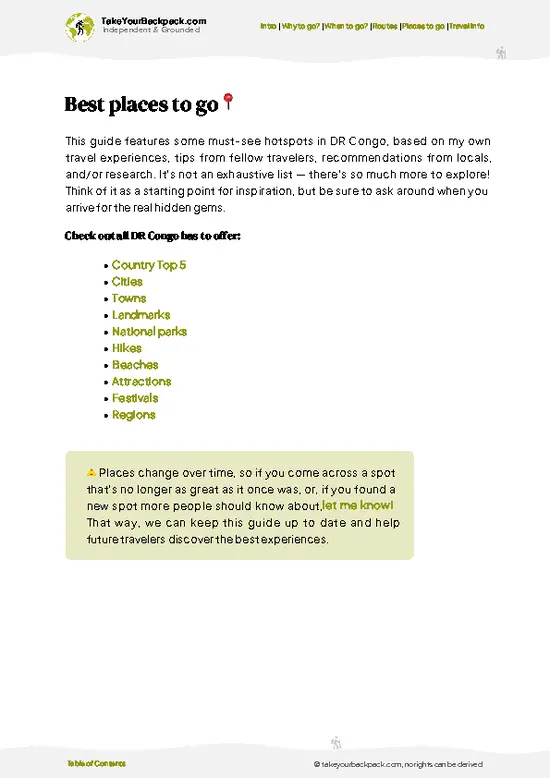
DR Congo🇨🇩 | attractionsLola ya Bonobo Sanctuarybonobo rescue, forest trails, primate observation | things to do and best time to go

Explore Virunga National Park Senkwekwe Gorilla Orphanage CentreExplore Académie des Beaux-Arts de Kinshasa

Backpacking in Lola ya Bonobo Sanctuary
🏆 Top pickattraction ranked #2
By Johan Kruseman 🇳🇱 | Updated September 3, 2026

Here’s what you won’t see on Instagram: at Lola ya Bonobo Sanctuary, you’re not just snapping selfies with rescued apes—you’re stepping into the only place on Earth dedicated solely to orphaned bonobos, and you’ll probably leave with more mud on your boots than you bargained for. Tucked on the outskirts of Kinshasa, DR Congo’s chaotic capital, Lola ya Bonobo is a world away from the sanitized wildlife parks you might expect. The sanctuary is raw, real, and refreshingly unpolished. Yes, it’s pricier than most backpacker stops in DR Congo, and you’ll need to wrangle a taxi or private driver to get there—public transport is a nonstarter. But the payoff? Watching bonobos swing overhead, learning about the brutal realities of bushmeat trafficking, and meeting Congolese staff who are fiercely proud of their work. Forget crowds; most days, you’ll have the forest paths nearly to yourself. Compared to the country’s headline-grabbing volcanoes or gorilla treks, Lola ya Bonobo is quieter, more intimate, and—if you care about impact—arguably more important.

Discover everything you want to know in the 📖 DR Congo Travel Guide.
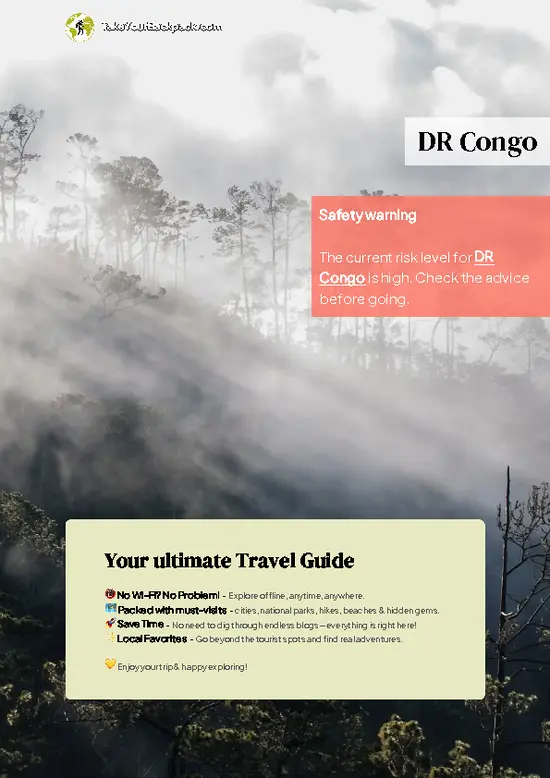
Safety warning

The current risk level for DR Congo is high. Check the advice before going.


Get your DR Congo guide
95 ranked highlights, routes & tips, works offline (372 pages)
Loading the map 🌍
CLICK TO FILTER
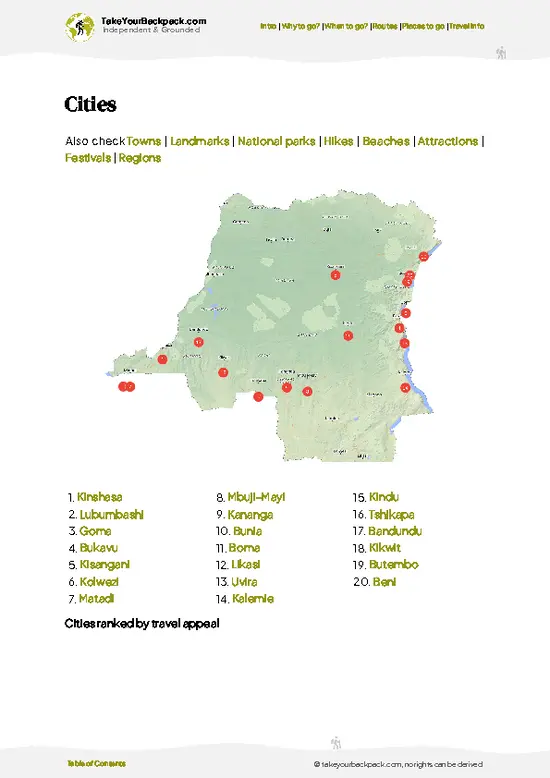
cities
towns
landmarks
national parks
hikes
beaches
attractions
festivals
regions
SHOW COUNTRY’S BESTSHOW ALL

✨ Why go?
Ranked #2 attraction in DR Congo
Why Lola ya Bonobo Sanctuary should be on your travel list

Backpackers who carve out time for the Lola ya Bonobo Sanctuary in DR Congo aren’t just ticking off a box—they’re stepping into a rare, raw encounter with one of the planet’s most endangered primates. Forget the polished, Instagram-ready wildlife parks elsewhere; this sanctuary is gritty, real, and deeply urgent. It’s the last refuge for bonobos, our closest relatives, whose survival is a direct reflection of the country’s tangled history and ongoing struggles. The sanctuary isn’t just about cute apes; it’s a frontline in conservation, education, and healing—both for the animals and the local communities battered by decades of conflict.

Yes, the journey here demands patience and a willingness to embrace unpredictability. The crowds are minimal because this isn’t a tourist trap—it’s a mission. … read more 👉
Backpackers who carve out time for the Lola ya Bonobo Sanctuary in DR Congo aren’t just ticking off a box—they’re stepping into a rare, raw encounter with one of the planet’s most endangered primates. Forget the polished, Instagram-ready wildlife parks elsewhere; this sanctuary is gritty, real, and deeply urgent. It’s the last refuge for bonobos, our closest relatives, whose survival is a direct reflection of the country’s tangled history and ongoing struggles. The sanctuary isn’t just about cute apes; it’s a frontline in conservation, education, and healing—both for the animals and the local communities battered by decades of conflict.

Yes, the journey here demands patience and a willingness to embrace unpredictability. The crowds are minimal because this isn’t a tourist trap—it’s a mission. The cost isn’t just a fee; it’s an investment in a cause that matters. For backpackers, Lola ya Bonobo is a milestone on the DR Congo route, a place where adrenaline meets empathy. You get to witness bonobos rescued from poaching and habitat loss, playing, learning, and sometimes grieving. It’s a humbling, eye-opening experience that redefines what travel can be—more than sightseeing, it’s a chance to connect with a living story of survival and hope.
Want to include Lola ya Bonobo Sanctuary in your DR Congo route?
Create a personalized DR Congo itinerary that includes Lola ya Bonobo Sanctuary and the places that fit your trip — based on your travel style, budget, and available time. Get your route in seconds.

Generate my trip

💡 HighlightsPlaces and moments you shouldn't skip

1. Up-Close Encounters with Bonobos
Forget the glass walls and distant glimpses you get at most zoos. At Lola ya Bonobo, you’re face-to-face (sometimes literally—watch your snacks) with the world’s most enigmatic great ape. Bonobos are only found in DR Congo, and this sanctuary is the best place on earth to actually watch them play, squabble, and solve problems with a level of social finesse that would put most diplomats to shame. You’ll see their personalities—mischievous, gentle, sometimes hilariously stubborn—unfiltered and up close.


2. The Forest Walks
The Instagram crowd might expect a manicured park. What you get is a patch of real Congolese rainforest, alive with the sounds of birds, insects, and the occasional bonobo shriek. The trails are muddy, roots tangle your feet, and the air … read more 👉
1. Up-Close Encounters with Bonobos
Forget the glass walls and distant glimpses you get at most zoos. At Lola ya Bonobo, you’re face-to-face (sometimes literally—watch your snacks) with the world’s most enigmatic great ape. Bonobos are only found in DR Congo, and this sanctuary is the best place on earth to actually watch them play, squabble, and solve problems with a level of social finesse that would put most diplomats to shame. You’ll see their personalities—mischievous, gentle, sometimes hilariously stubborn—unfiltered and up close.


2. The Forest Walks
The Instagram crowd might expect a manicured park. What you get is a patch of real Congolese rainforest, alive with the sounds of birds, insects, and the occasional bonobo shriek. The trails are muddy, roots tangle your feet, and the air is thick. This isn’t a sanitized stroll; it’s a sensory jolt. You’ll feel the humidity, smell the earth, and realize just how wild this place is. It’s not always comfortable, but it’s the real deal.


3. Feeding Time—Controlled Chaos
This is the sanctuary’s version of rush hour. When the keepers arrive with food, bonobos swarm with Olympic-level agility. There’s a pecking order, there’s drama, and there’s always at least one bonobo who tries to outsmart the system. Watching this organized chaos is both hilarious and oddly moving. You see intelligence, cooperation, and the kind of social complexity that makes you rethink what it means to be “human.”


4. The Nursery—Bonobo Kindergarten
If you think baby animals are cute, you haven’t seen a bonobo toddler learning to climb. The nursery is where orphaned infants—rescued from the bushmeat trade—learn how to be bonobos again. Human caretakers act as surrogate mothers, teaching them everything from foraging to social skills. It’s raw, emotional, and sometimes heartbreaking, but it’s also a testament to resilience and second chances.


5. Keeper Talks—No Filter, No Fairy Tales
The staff here don’t sugarcoat the reality. They’ll tell you about the poaching crisis, the challenges of running a sanctuary in DR Congo, and the daily grind of keeping dozens of clever apes healthy and happy. You’ll walk away with a head full of facts and a gut-punch of perspective. This is conservation without the PR gloss—messy, urgent, and absolutely necessary.


6. The “Bonobo Way” in Action
Bonobos are famous for resolving conflict with, let’s say, creative social strategies. You’ll witness behaviors that are both disarmingly peaceful and, at times, surprisingly risqué. It’s a reminder that nature doesn’t always fit our tidy categories. The sanctuary doesn’t hide this; they let you see bonobos as they are—complex, compassionate, and endlessly fascinating.
Spotted a mistake or missing something? Contact us.
🌤️ When to go?When to go for the best experience


  • Weather: The DR Congo’s climate is equatorial, meaning it’s hot and humid year-round, but the dry season from June to September offers a break from relentless rain. This is when the sanctuary is most accessible, with fewer muddy trails and less chance of downpours ruining your day.

  • Temperature: Expect daytime highs between 25-30°C (77-86°F) throughout the year. Nights can dip to around 18-20°C (64-68°F), especially during the dry season, making early mornings and late afternoons more comfortable for trekking and observing bonobos.

  • Daylight Hours: Near the equator, daylight is steady—roughly 12 hours year-round. You won’t lose much time to fading light, but plan your visit to maximize morning hours when bonobos are most active and the sanctuary is quieter.

  • Crowds: The sanctuary is
read more 👉

  • Weather: The DR Congo’s climate is equatorial, meaning it’s hot and humid year-round, but the dry season from June to September offers a break from relentless rain. This is when the sanctuary is most accessible, with fewer muddy trails and less chance of downpours ruining your day.

  • Temperature: Expect daytime highs between 25-30°C (77-86°F) throughout the year. Nights can dip to around 18-20°C (64-68°F), especially during the dry season, making early mornings and late afternoons more comfortable for trekking and observing bonobos.

  • Daylight Hours: Near the equator, daylight is steady—roughly 12 hours year-round. You won’t lose much time to fading light, but plan your visit to maximize morning hours when bonobos are most active and the sanctuary is quieter.

  • Crowds: The sanctuary is off the typical tourist radar, so crowds are minimal regardless of season. However, June to September sees a slight uptick in visitors, mostly researchers and serious wildlife enthusiasts, so expect a more focused, intimate experience.

  • Seasonal Activities: The dry season is prime for guided treks and educational tours. The wet season (October to May) can limit access to some areas, but it’s also when the forest bursts with life—birds, insects, and lush greenery—if you don’t mind slogging through mud.

  • Price Fluctuations: Prices remain relatively stable year-round, but expect slightly higher costs during the dry season due to increased demand and easier logistics. Budget for local guides and transport, which can spike during peak months.


Pro-tip: Visit between June and September for the best balance of weather, wildlife activity, and fewer logistical headaches—just pack good boots and patience for the occasional mud.


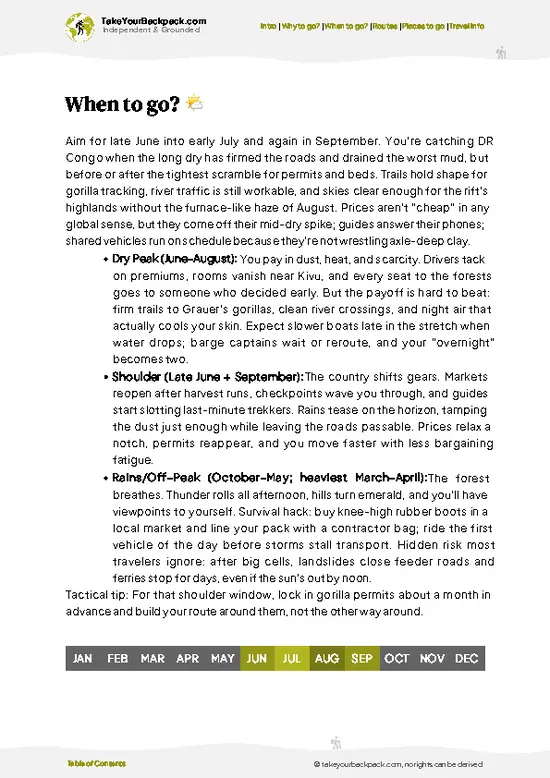
source: climatestotravel.comJANJanuary: fair for travelingFEBFebruary: fair for travelingMARMarch: fair for travelingAPRApril: fair for travelingMAYMay: fair for travelingJUNJune: excellent for travelingJULJuly: excellent for travelingAUGAugust: excellent for travelingSEPSeptember: excellent for travelingOCTOctober: fair for travelingNOVNovember: fair for travelingDECDecember: fair for traveling
when-to-go

✈️ The backpacker research shortcutDR Congo Travel Guide

An offline-friendly backpacking guide with optimized travel routes, ranked highlights, transport advice, and the best areas to stay.
example page 0 from our offline Travel Guide for Democratic Republic of the Congo
example page 1 from our offline Travel Guide for Democratic Republic of the Congo
example page 2 from our offline Travel Guide for Democratic Republic of the Congo
example page 3 from our offline Travel Guide for Democratic Republic of the Congo
example page 4 from our offline Travel Guide for Democratic Republic of the Congo
example page 5 from our offline Travel Guide for Democratic Republic of the Congo
example page 6 from our offline Travel Guide for Democratic Republic of the Congo
example page 7 from our offline Travel Guide for Democratic Republic of the Congo
The digital guide (372 pages) contains:
95 highlights, ranked by travel appeal
Optimized 7, 14 & 21-day travel routes
Cities, national parks, landmarks, beaches
How to get around
Offline-friendly for travel without Wi-Fi
👉 Click to see all 30+ guide features

📅 Plan smarter in minutes, not weeks
Month by month travel advice
Festivals & national holidays
Budget expectations

🗺️ Go to the right places, skip the overrated ones
Honest pros & cons of destinations
Top hikes, parks & viewpoints
Lesser-known places most travelers miss
Clear “worth it vs skip it” guidance

🛏️ Travel smoothly without rookie mistakes
Best areas to stay
Transport systems explained simply
Common scams & safety advice
SIM cards, money & practical tips

🌍 Understand the country, not just visit it
Culture & traditions
52 Essential phrases & customs
Festivals worth planning around
Traveler-friendly historical context
Insights that make places more meaningful

📱 Built for real travel conditions
Fully downloadable PDF
Works completely offline
Optimized for phone use
Useful in remote areas & buses
Everything in one place
Save weeks of stressful planning
Get instant access to your full guide. 30‑day money-back guarantee.
+ Add another guide for just US$7.80

By proceeding you agree to our terms.
Sent to your inbox immediately after payment • 100% Secure Checkout
Best Backpacking Travel Advisor 2025 tourism awardBest Backpacking
Travel Advisor
2025
What others say about Take Your Backpack Guides:
⭐⭐⭐⭐⭐
Fantastic, amazing amount of information!
⭐⭐⭐⭐⭐
My goodness this is amazing, it's what I've been looking for hats off too you!
⭐⭐⭐⭐⭐
I think this is absolutely BRILLIANT
⭐⭐⭐⭐
Very complete and informative. It's still missing places, but I gotta to commend you
⭐⭐⭐⭐⭐
This is truly amazing, thank you, can't wait to explore it with my kids!
⭐⭐⭐⭐⭐
Awesome resource, thank you!
⭐⭐⭐⭐⭐
This is amazing! Can't wait to explore the ones I haven't seen
⭐⭐⭐⭐
I love this! Well done, great idea.
⭐⭐⭐⭐⭐
Thanks for taking the time to make this gem!
⭐⭐⭐⭐⭐
This might be the best website I've ever seen.
⭐⭐⭐⭐⭐
Congratulations, and thank you so much for your work; it's incredibly valuable.
⭐⭐⭐⭐
In all seriousness I think you did a great job pointing out the important spots
⭐⭐⭐⭐⭐
10/10 very good
⭐⭐⭐⭐⭐
As someone who's only just starting to visit regularly this is awesome, thank you.
⭐⭐⭐⭐
Thank you very much! I'm going to visit my dad, it's going to be very useful!
⭐⭐⭐⭐⭐
This is really cool! We'll be travelling for the first time and this definitely come in handy.
⭐⭐⭐⭐⭐
You are now our minister of culture, congratulations 👨‍💼
⭐⭐⭐⭐⭐
Just wanted to tell you that this is a pearl! Going to follow your recommendations.
⭐⭐⭐⭐⭐
This is so cool. I'll definitely be using the resource for my travels soon.
⭐⭐⭐⭐⭐
This is very impressive! Good work.
⭐⭐⭐⭐⭐
This is an amazing and informative site. Very well done!

🛏️ Where to stay?Where staying makes the most sense

If you’re heading to the Lola ya Bonobo Sanctuary in DR Congo, brace yourself: this isn’t your typical backpacker’s paradise with polished hostels and Instagram-ready cafés. The sanctuary itself is a rare jewel, but the surrounding area is rough around the edges, so where you stay matters more than you might expect.

The best bet is to base yourself in Kinshasa’s central neighborhoods—specifically somewhere like Gombe or Lingwala. These areas are the city’s heartbeat for travelers who want safety without sacrificing social vibes. Gombe, in particular, is the diplomatic and business district, meaning … read more 👉
If you’re heading to the Lola ya Bonobo Sanctuary in DR Congo, brace yourself: this isn’t your typical backpacker’s paradise with polished hostels and Instagram-ready cafés. The sanctuary itself is a rare jewel, but the surrounding area is rough around the edges, so where you stay matters more than you might expect.

The best bet is to base yourself in Kinshasa’s central neighborhoods—specifically somewhere like Gombe or Lingwala. These areas are the city’s heartbeat for travelers who want safety without sacrificing social vibes. Gombe, in particular, is the diplomatic and business district, meaning it’s cleaner, better patrolled, and has a handful of guesthouses where you can meet other budget travelers and expats. It’s not luxury, but it’s a solid balance between security and accessibility. Plus, you’ll find some decent local eateries and markets to soak in the city’s pulse without getting overwhelmed.

Lingwala offers a grittier, more authentic slice of Kinshasa life. It’s less polished but more vibrant and social, perfect if you want to dive into local culture and connect with Congolese people. Both areas are within a reasonable taxi ride to the sanctuary, which is crucial because public transport is unreliable and often unsafe.

Forget the fantasy of backpacker bubbles here. The real magic is in navigating these neighborhoods with eyes wide open, soaking up the city’s chaotic energy, and knowing you’re supporting a cause that’s genuinely changing lives. That’s the kind of experience that sticks with you long after the trip ends.

👛 Costs (as of 3 September 2026)Travel costs and budget guide for Lola ya Bonobo Sanctuary

As of the most recent estimates, visiting the Lola ya Bonobo Sanctuary in the Democratic Republic of the Congo involves the following costs:

- Entrance Fees:
- Adults: €9
- Youth (12-17): €4.50
- Children (0-11): Free

- Lunch Package: €45 per person (includes one meal, two drinks, and the entrance fee)

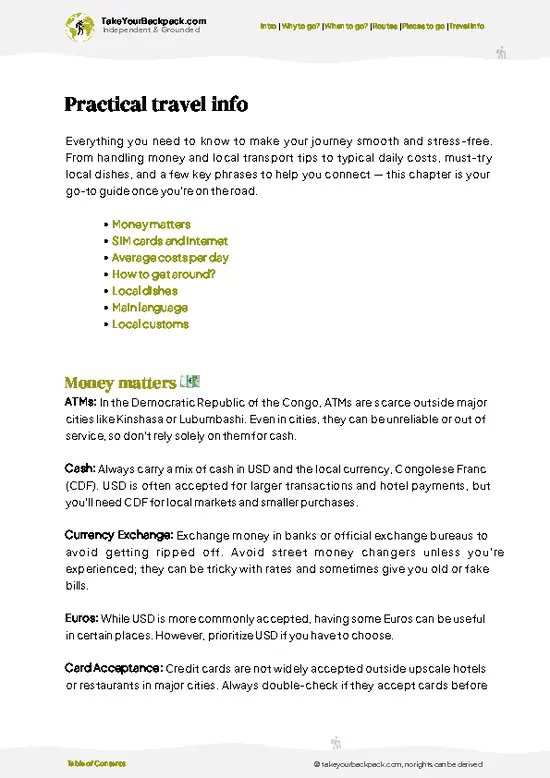
- Round Trip Transportation: €135 (between central Kinshasa and Lola ya Bonobo; vehicles can accommodate up to three individuals per trip)

*Note: The sanctuary is open for day tours Tuesday through Sunday, closed on Mondays. Tours depart at 10:00, 11:30, 13:00, and 14:30, each lasting about one hour. It's recommended to arrive 15 minutes before your scheduled tour.*

source: bonobos.org
⚠️ Prices can change and everyone travels differently, so take this as a rough guide. Hope it helps you plan your adventure!

FAQTraveler FAQ

2 to 3 hours is sufficient to visit Lola ya Bonobo Sanctuary. This allows time to see the bonobos, learn about their rehabilitation, and explore the educational exhibits. Guided tours are typically available and recommended for a fuller experience.
Yes, Lola ya Bonobo Sanctuary is worth the entrance fee, which is around $10 USD for foreigners. The fee supports conservation efforts and the care of rescued bonobos, making it a meaningful contribution to wildlife protection. Visitors gain unique insight into an endangered species rarely seen elsewhere.
Lola ya Bonobo Sanctuary is located about 25 kilometers south of Kinshasa, the capital of the Democratic Republic of the Congo. The most common way to get there is by car or taxi from Kinshasa, which takes roughly 45 minutes to 1 hour depending on traffic. It is advisable to arrange transportation in advance through your accommodation or a local guide.
⚠️ Things can change over time, so always validate details locally before you go.

Other Congolese attractions near Lola ya Bonobo Sanctuary

Explore more nearby:


💡 Not sure where to go next?
Create a personalized itinerary for DR Congo including Lola ya Bonobo Sanctuary and the places that fit your trip.

Generate my itinerary

👉 Discover all attractions

Or checkout all DR Congo has to offer (think cities, towns, villages, national parks, hikes, beaches, festivals)
Country photo of DR Congo

We 💚 feedbackWhat to keep in mind

Lola ya Bonobo isn’t your typical wildlife stop with crowds snapping selfies. It’s raw, sometimes messy, and deeply moving. The real magic hits when you see these gentle creatures—rescued from chaos—slowly reclaiming trust in humans. Don’t expect polished tourist traps or easy access; DR Congo’s infrastructure means getting here takes patience and grit. But once you’re inside, the vibe is quietly powerful, a mix of hope and heartbreak that sticks with you long after. If you want a travel story that’s more than just pretty pictures, this is it.

✍️ Help improve this page!
The information on this page is based on in-depth research, insights shared by experienced travelers, and feedback from the local travel community in DR Congo. While every effort is made to keep the information accurate and current, conditions can change — so if you spot anything incorrect or outdated, please get in touch.


🙋‍♂️ Give feedback

👋 Meet the founderWho’s Behind Take Your Backpack?

Johan, backpacker and founder of TakeYourBackpackHi, I’m Johan (Netherlands 🇳🇱), the creator of TakeYourBackpack. Over the past decade, I’ve backpacked through 80+ countries across six continents, gaining extensive experience with independent travel, long-term trips, and overland routes.

This site is built on a combination of firsthand travel experience and carefully curated insights from other backpackers. Many guides are based on places I’ve personally visited, while others bring together tips, observations, and practical advice shared by trusted travelers I’ve met along the way.

The goal is to provide realistic, experience-driven guidance — not generic itineraries — so you can explore destinations with better context, clearer expectations, and more confidence.

Get full DR Congo guide •
Instant download • 95 highlights • Full Offline guide