×

DR Congo🇨🇩 | townsLueboKasai River crossing, mission station, rural hub | things to do and best time to go

Explore KasumbalesaExplore Mweka

Backpacking in Luebo
👌 Worth visitingtown ranked #10
By Johan Kruseman 🇳🇱 | Updated September 3, 2026

The trick with Luebo—what most travelers only realize after the dust settles in their boots—is that its slow pace is a tactical advantage, not a drawback. Set in the heart of central DR Congo, Luebo is less a destination than a crossroads: a place where the river’s humidity clings to your skin and the red earth stains your shoes, but the chaos of bigger towns fades. It’s not built for sightseeing, but for regrouping—catching your breath between the long, rattling bus rides that define this region. The market is lively but practical, the food is basic, and the evenings are quiet enough to hear your own thoughts. You won’t find hostels or a backpacker scene; you’ll find a handful of guesthouses and locals curious about your journey. Costs are low, but so are amenities. Compared to Tshikapa or Kananga, Luebo is more relaxed, less crowded, and far less touristic—a place to plan your next move, not to linger for nightlife or creature comforts. Transport is patchy; you’ll need patience and a willingness to improvise. But if you want to see the DR Congo between the lines, Luebo is where the real journey starts to feel real.

Discover everything you want to know in the 📖 DR Congo Travel Guide.
Safety warning

The current risk level for DR Congo is high. Check the advice before going.


Get your DR Congo guide
95 ranked highlights, routes & tips, works offline (372 pages)
Loading the map 🌍
CLICK TO FILTER
cities
towns
landmarks
national parks
hikes
beaches
attractions
festivals
regions
SHOW COUNTRY’S BESTSHOW ALL

✨ Why go?
Ranked #10 town in DR Congo
Why Luebo should be on your travel list

Luebo serves as a gateway for backpackers exploring the natural beauty of the DR Congo. Its proximity to stunning hikes and the Lualaba River makes it a strategic stop. You can easily access trails that lead to breathtaking views, while the river offers spots for a refreshing dip after a long trek. The local guesthouses provide a cozy atmosphere, where you can share stories over home-cooked meals that burst with flavor. The streets are walkable, encouraging you to soak in the local vibe, and you’ll find the community welcoming, making it easy to connect with fellow travelers. Most visitors stay a few days, enjoying the laid-back pace and the chance to recharge. This town is perfect for slow travelers and hikers who appreciate a blend of adventure and cultural immersion, rather than those seeking nightlife or urban excitement.
Want to include Luebo in your DR Congo route?
Create a personalized DR Congo itinerary that includes Luebo and the places that fit your trip — based on your travel style, budget, and available time. Get your route in seconds.

Generate my trip

💡 HighlightsDon't-miss highlights and experiences

  • Lulua riverfront and port — Where most of Luebo’s life meets the water: pirogues, riverside traders, sunrise/sunset scenes and the best way to watch daily commerce and fishing up close.
  • Marché central de Luebo (the central market) — A chaotic, colorful hub for food, fabrics, second-hand clothes and small household goods; perfect for people-watching and finding locally made crafts.
  • Diocesan compound and cathedral — The Catholic diocese is a real focal point in town; the compound (church, mission buildings, sometimes a clinic or school) carries a lot of local history and community rhythms.
  • Missionary/health centre compound — Many visitors find the old mission facilities worth seeing for their architecture and because they’re still community anchors (ask before entering; staff are usually
read more 👉
  • Lulua riverfront and port — Where most of Luebo’s life meets the water: pirogues, riverside traders, sunrise/sunset scenes and the best way to watch daily commerce and fishing up close.
  • Marché central de Luebo (the central market) — A chaotic, colorful hub for food, fabrics, second-hand clothes and small household goods; perfect for people-watching and finding locally made crafts.
  • Diocesan compound and cathedral — The Catholic diocese is a real focal point in town; the compound (church, mission buildings, sometimes a clinic or school) carries a lot of local history and community rhythms.
  • Missionary/health centre compound — Many visitors find the old mission facilities worth seeing for their architecture and because they’re still community anchors (ask before entering; staff are usually willing to explain the site’s role).
  • Chefferie (traditional chief’s quarter) — The seat of local customary authority; a visit (with permission) reveals traditional governance, ceremonies, and storytelling that don’t show up on tourist maps.
  • Artisan quarter and workshop lanes — Small workshops where woodcarvers, basket weavers and textile-makers work; you can watch the process, chat with makers and buy direct for modest prices.
  • Colonial-era administrative buildings and main avenue — Modest but tangible reminders of the colonial period; wandering the main streets shows older masonry and municipal buildings that anchor Luebo’s civic history.
  • Stade communal (local football field) — Catching a local match is one of the quickest ways to feel welcome and see daily life; games are loud, friendly and community-driven.
  • Community radio station and market square gatherings — The radio station might feel humble, but it’s where local news, music and debates happen; market-square announcements and public performances spring from the same civic life.
  • Riverside fish and canoe landing at dawn — A distinct early-morning experience: fish being landed, buyers haggling, and the pirogue crews preparing to head out — raw, local and very photogenic if you ask first.
A few worthwhile day-trip options just outside Luebo: boat trips and visits to the small Lulua-river villages for pirogue rides and fishing, nearby artisan villages in the surrounding chiefdoms to see weaving and carving at scale, and the larger market towns and mission stations a short road journey away for provincial museums, bigger markets and administrative history.
Spotted a mistake or missing something? Contact us.

🏘️ NeighborhoodsNeighborhood guide to Luebo

Luebo is a vibrant hub in the heart of DR Congo, offering a unique blend of local culture and practical amenities for backpackers. Here’s how to navigate its neighborhoods:

Centre Ville: This is the beating heart of Luebo. The vibe is bustling, with street vendors selling everything from grilled plantains to handmade crafts. It’s walkable, but keep your wits about you. Costs are moderate, making it suitable for both short and longer stays. Nightlife is low-key, with a few bars where locals gather, but don’t expect wild parties.

Quartier Kasaï: A quieter area, perfect for those seeking a more laid-back experience. The atmosphere is relaxed, with tree-lined streets and small cafés. It’s a bit further from the main transport hubs, so plan your outings accordingly. Costs are lower here, making … read more 👉
Luebo is a vibrant hub in the heart of DR Congo, offering a unique blend of local culture and practical amenities for backpackers. Here’s how to navigate its neighborhoods:

Centre Ville: This is the beating heart of Luebo. The vibe is bustling, with street vendors selling everything from grilled plantains to handmade crafts. It’s walkable, but keep your wits about you. Costs are moderate, making it suitable for both short and longer stays. Nightlife is low-key, with a few bars where locals gather, but don’t expect wild parties.

Quartier Kasaï: A quieter area, perfect for those seeking a more laid-back experience. The atmosphere is relaxed, with tree-lined streets and small cafés. It’s a bit further from the main transport hubs, so plan your outings accordingly. Costs are lower here, making it ideal for budget travelers. This neighborhood is better for longer stays, allowing you to soak in the local rhythm.

Quartier Mbandaka: Known for its vibrant markets, this area is a sensory overload. The scents of spices and fresh produce fill the air. While it’s less walkable, public transport is accessible. Costs are reasonable, and it’s a great spot for short stays if you want to dive into local life. The nightlife is minimal, but the daytime energy is infectious.

⌛️ 1 dayA smart one-day plan

Luebo, a small town in the heart of DR Congo, pulses with a raw, unfiltered energy. It’s a place where the vibrant local culture meets the lush landscape, making it a canvas for authentic experiences. Start your day early, as the sun rises over the palm trees, casting a warm glow on the bustling market in the center of town. The air is thick with the scent of fresh cassava and ripe mangoes. Dive into the market scene; chat with vendors, sample local snacks, and soak in the lively atmosphere. This is where you’ll feel the heartbeat of Luebo.

As the morning unfolds, head to the nearby Luebo River. The gentle flow of water and the sounds of birds create a serene backdrop. Take a moment to breathe in the earthy scent of the riverbank. If you’re feeling adventurous, consider a short canoe ride … read more 👉
Luebo, a small town in the heart of DR Congo, pulses with a raw, unfiltered energy. It’s a place where the vibrant local culture meets the lush landscape, making it a canvas for authentic experiences. Start your day early, as the sun rises over the palm trees, casting a warm glow on the bustling market in the center of town. The air is thick with the scent of fresh cassava and ripe mangoes. Dive into the market scene; chat with vendors, sample local snacks, and soak in the lively atmosphere. This is where you’ll feel the heartbeat of Luebo.

As the morning unfolds, head to the nearby Luebo River. The gentle flow of water and the sounds of birds create a serene backdrop. Take a moment to breathe in the earthy scent of the riverbank. If you’re feeling adventurous, consider a short canoe ride with local fishermen. It’s a chance to connect with the community and witness their daily life, a side of Luebo often overlooked by tourists.

In the afternoon, explore the vibrant neighborhoods like Kasaï and Mbuji-Mayi. Visit the local artisans who craft beautiful textiles and woodwork. Their passion is palpable, and you might even pick up a unique souvenir. As evening approaches, find a spot at a local eatery. Enjoy a plate of saka-saka, a traditional dish made from cassava leaves, while the sun sets, painting the sky in hues of orange and pink. This day in Luebo isn’t just about sights; it’s about immersing yourself in the rhythm of life here, making every moment count.
Turn your Luebo visit into an DR Congo adventure
Build a complete DR Congo route with Luebo, hidden gems, must-see destinations, and realistic travel times included.

Generate my trip

🌤️ When to go?Weather, crowds, and seasonal trade-offs


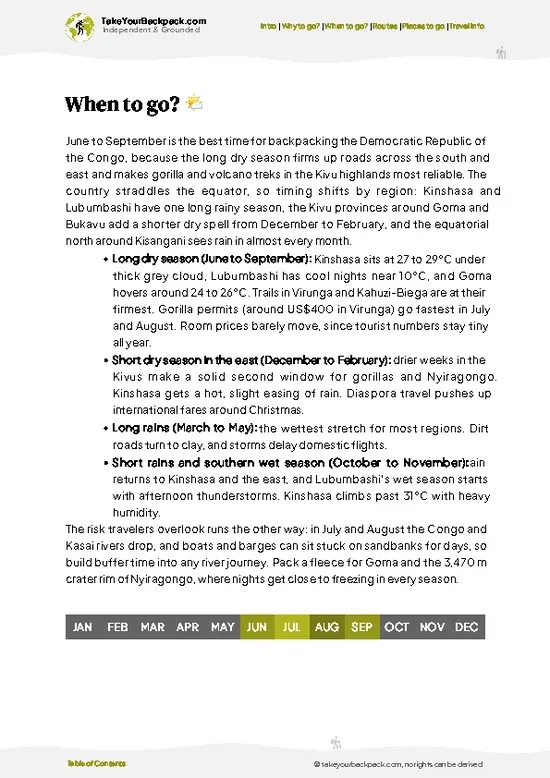
  • Topic: Weather – Luebo’s tropical climate means heavy rains from October to May, turning trails into mud baths and rivers into barriers. The dry season, June to September, offers clearer skies and easier hiking conditions.

  • Topic: Temperature – Expect steady warmth year-round, around 24-28°C (75-82°F). Nights cool slightly in the dry season, making campfires more enjoyable and sleep more comfortable.

  • Topic: Daylight Hours – Daylight stays consistent, roughly 12 hours daily, but the dry season’s clearer skies mean brighter mornings and longer-lasting sunsets, perfect for photography and early starts.

  • Topic: Crowds – Luebo sees few tourists year-round, but the dry season attracts more local visitors and traders, adding lively market scenes without overwhelming the town’s calm.

  • Topic:
read more 👉

  • Topic: Weather – Luebo’s tropical climate means heavy rains from October to May, turning trails into mud baths and rivers into barriers. The dry season, June to September, offers clearer skies and easier hiking conditions.

  • Topic: Temperature – Expect steady warmth year-round, around 24-28°C (75-82°F). Nights cool slightly in the dry season, making campfires more enjoyable and sleep more comfortable.

  • Topic: Daylight Hours – Daylight stays consistent, roughly 12 hours daily, but the dry season’s clearer skies mean brighter mornings and longer-lasting sunsets, perfect for photography and early starts.

  • Topic: Crowds – Luebo sees few tourists year-round, but the dry season attracts more local visitors and traders, adding lively market scenes without overwhelming the town’s calm.

  • Topic: Seasonal Activities – Dry months are best for trekking and river crossings; wet months limit access but bring lush greenery and vibrant birdlife for patient nature lovers.

  • Topic: Price Fluctuations – Prices for lodging and guides dip slightly in the rainy season due to lower demand, but expect to pay a premium for reliable transport and gear rentals then.


Pro-tip: Aim for July or August to catch dry trails, cool nights, and lively local markets—this combo turns Luebo’s raw beauty into an accessible adventure.


source: climatestotravel.comJANJanuary: fair for travelingFEBFebruary: fair for travelingMARMarch: fair for travelingAPRApril: fair for travelingMAYMay: fair for travelingJUNJune: highly recommended for travelingJULJuly: excellent for travelingAUGAugust: excellent for travelingSEPSeptember: highly recommended for travelingOCTOctober: fair for travelingNOVNovember: fair for travelingDECDecember: fair for traveling
democratic-republic-of-the-congo-city-luebo v1
© Google |

✈️ The backpacker research shortcutDR Congo Travel Guide

An offline-friendly backpacking guide with optimized travel routes, ranked highlights, transport advice, and the best areas to stay.
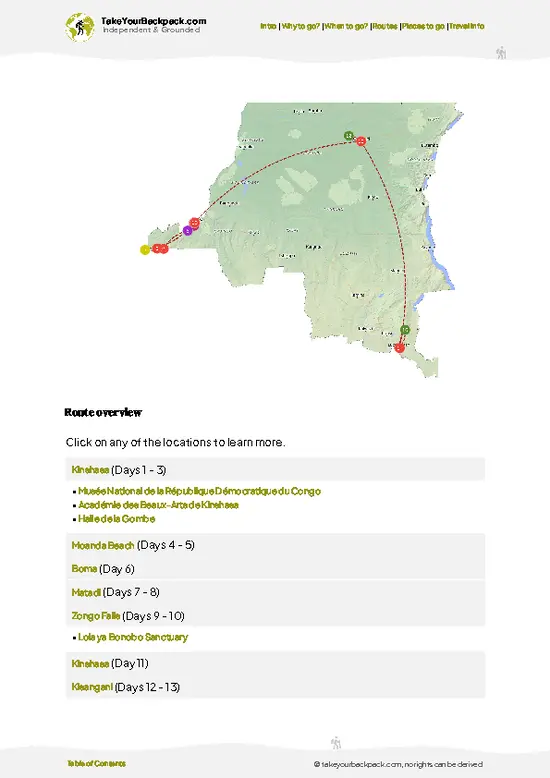
example page 0 from our offline Travel Guide for Democratic Republic of the Congo
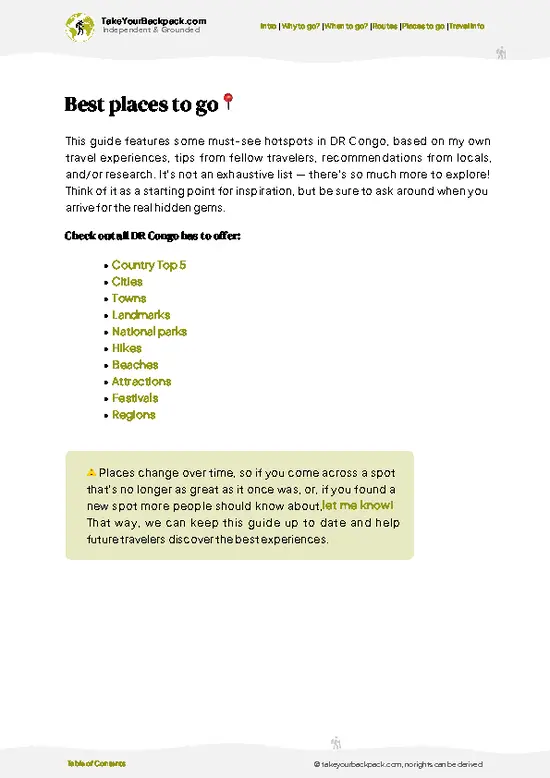
example page 1 from our offline Travel Guide for Democratic Republic of the Congo
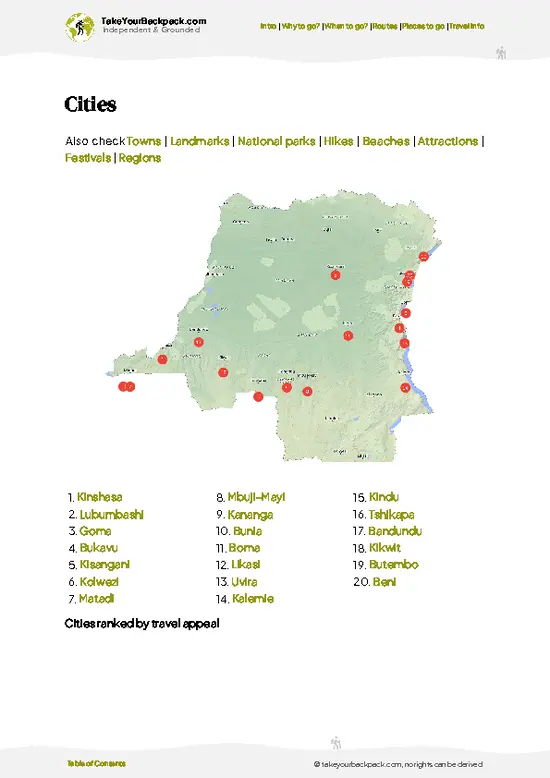
example page 2 from our offline Travel Guide for Democratic Republic of the Congo
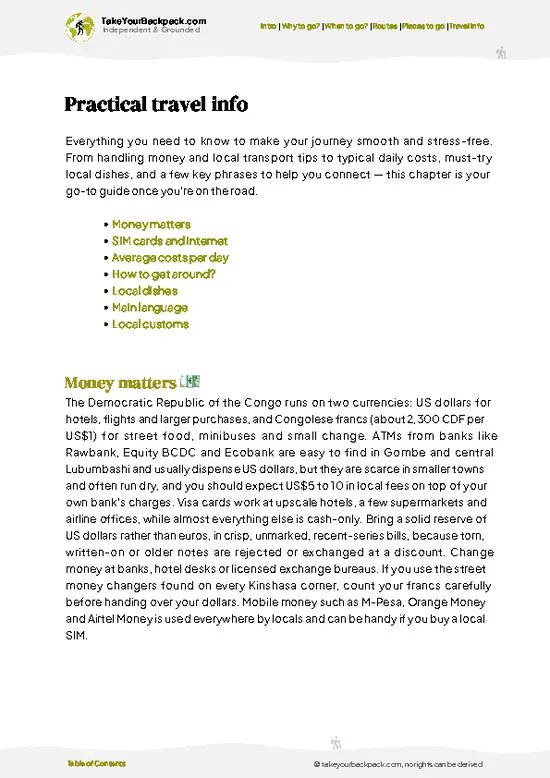
example page 3 from our offline Travel Guide for Democratic Republic of the Congo
example page 4 from our offline Travel Guide for Democratic Republic of the Congo
example page 5 from our offline Travel Guide for Democratic Republic of the Congo
example page 6 from our offline Travel Guide for Democratic Republic of the Congo
example page 7 from our offline Travel Guide for Democratic Republic of the Congo
The digital guide (372 pages) contains:
95 highlights, ranked by travel appeal
Optimized 7, 14 & 21-day travel routes
Cities, national parks, landmarks, beaches
How to get around
Offline-friendly for travel without Wi-Fi
👉 Click to see all 30+ guide features

📅 Plan smarter in minutes, not weeks
Month by month travel advice
Festivals & national holidays
Budget expectations

🗺️ Go to the right places, skip the overrated ones
Honest pros & cons of destinations
Top hikes, parks & viewpoints
Lesser-known places most travelers miss
Clear “worth it vs skip it” guidance

🛏️ Travel smoothly without rookie mistakes
Best areas to stay
Transport systems explained simply
Common scams & safety advice
SIM cards, money & practical tips

🌍 Understand the country, not just visit it
Culture & traditions
52 Essential phrases & customs
Festivals worth planning around
Traveler-friendly historical context
Insights that make places more meaningful

📱 Built for real travel conditions
Fully downloadable PDF
Works completely offline
Optimized for phone use
Useful in remote areas & buses
Everything in one place
Save weeks of stressful planning
Get instant access to your full guide. 30‑day money-back guarantee.
+ Add another guide for just CHF 6.80

By proceeding you agree to our terms.
Sent to your inbox immediately after payment • 100% Secure Checkout
Best Backpacking Travel Advisor 2025 tourism awardBest Backpacking
Travel Advisor
2025
What others say about Take Your Backpack Guides:
⭐⭐⭐⭐⭐
Fantastic, amazing amount of information!
⭐⭐⭐⭐⭐
My goodness this is amazing, it's what I've been looking for hats off too you!
⭐⭐⭐⭐⭐
I think this is absolutely BRILLIANT
⭐⭐⭐⭐
Very complete and informative. It's still missing places, but I gotta to commend you
⭐⭐⭐⭐⭐
This is truly amazing, thank you, can't wait to explore it with my kids!
⭐⭐⭐⭐⭐
Awesome resource, thank you!
⭐⭐⭐⭐⭐
This is amazing! Can't wait to explore the ones I haven't seen
⭐⭐⭐⭐
I love this! Well done, great idea.
⭐⭐⭐⭐⭐
Thanks for taking the time to make this gem!
⭐⭐⭐⭐⭐
This might be the best website I've ever seen.
⭐⭐⭐⭐⭐
Congratulations, and thank you so much for your work; it's incredibly valuable.
⭐⭐⭐⭐
In all seriousness I think you did a great job pointing out the important spots
⭐⭐⭐⭐⭐
10/10 very good
⭐⭐⭐⭐⭐
As someone who's only just starting to visit regularly this is awesome, thank you.
⭐⭐⭐⭐
Thank you very much! I'm going to visit my dad, it's going to be very useful!
⭐⭐⭐⭐⭐
This is really cool! We'll be travelling for the first time and this definitely come in handy.
⭐⭐⭐⭐⭐
You are now our minister of culture, congratulations 👨‍💼
⭐⭐⭐⭐⭐
Just wanted to tell you that this is a pearl! Going to follow your recommendations.
⭐⭐⭐⭐⭐
This is so cool. I'll definitely be using the resource for my travels soon.
⭐⭐⭐⭐⭐
This is very impressive! Good work.
⭐⭐⭐⭐⭐
This is an amazing and informative site. Very well done!

🛏️ Where to stay?How to pick the right area

In Luebo, the best spot for backpackers is the town center near the main market. It’s where the pulse of daily life beats strongest—vendors shouting, the scent of fresh cassava frying, and locals weaving through narrow streets. This area feels alive but manageable, with a handful of budget guesthouses that attract solo travelers and small groups. Staying here means you’re steps from social hubs and street food stalls, making it easy to connect without venturing into sketchier, quieter neighborhoods where safety and amenities drop off. The vibe is raw and real—no frills, just the authentic rhythm of DR Congo’s small-town life.

🚌 Getting aroundHow to get from A to B

Luebo moves at its own rhythm—less a clockwork town, more a pulse you feel in the dust and chatter. The sun slants low in the afternoon, casting long shadows over the cracked pavement where locals negotiate rides with a mix of patience and urgency. It’s not about strict timetables here; it’s about reading the moment, catching the right ride before it slips away. The air carries the scent of earth and cooking fires, grounding you in a place where transit is as much social exchange as it is movement.


  • Walking: The best way to soak in Luebo’s texture. Streets are compact and lively, so walking is free, flexible, and perfect for spontaneous stops at markets or street vendors.

  • Shared Minibuses (Taxi-Brousse): These are the backbone of local travel, running from early morning around 6 AM until
read more 👉
Luebo moves at its own rhythm—less a clockwork town, more a pulse you feel in the dust and chatter. The sun slants low in the afternoon, casting long shadows over the cracked pavement where locals negotiate rides with a mix of patience and urgency. It’s not about strict timetables here; it’s about reading the moment, catching the right ride before it slips away. The air carries the scent of earth and cooking fires, grounding you in a place where transit is as much social exchange as it is movement.


  • Walking: The best way to soak in Luebo’s texture. Streets are compact and lively, so walking is free, flexible, and perfect for spontaneous stops at markets or street vendors.

  • Shared Minibuses (Taxi-Brousse): These are the backbone of local travel, running from early morning around 6 AM until dusk near 6 PM. Fares are cheap, but expect crowded, bumpy rides with frequent stops to pick up passengers.

  • Motorcycle Taxis (Boda-Boda): Quick and nimble, these dart through traffic and narrow alleys. They operate all day but negotiate prices upfront—usually a few hundred Congolese francs for short hops. Great for tight schedules or reaching spots minibuses don’t.

  • Private Car Hire: More expensive but offers comfort and speed, especially if you’re heading outside town or carrying heavy gear. Best to arrange through a trusted local contact to avoid inflated tourist rates.

👛 Costs (as of 3 September 2026)Money, prices, and spending tips

Backpacking in Luebo, DR Congo, means embracing a raw, off-the-beaten-path vibe where costs stay low but the experience is rich in local color and challenge. Here’s what you’re looking at day-to-day:
  • Dorm Accommodation: Options are limited and basic, often guesthouses or small hostels with shared rooms. Expect to pay around $5 to $10 per night. The rooms are simple—think mosquito nets, a fan if you’re lucky, and a hard mattress. It’s not luxury, but it’s enough to recharge.
  • Meals: Street food and local eateries dominate. A filling meal of rice, beans, and grilled fish or chicken will run you about $2 to $4. Fresh fruit and snacks are cheap but watch for hygiene. Bottled water is essential and costs about $0.50 to $1 per liter.
  • Local Transport: Transport is mostly by shared taxis or minibuses.
read more 👉
Backpacking in Luebo, DR Congo, means embracing a raw, off-the-beaten-path vibe where costs stay low but the experience is rich in local color and challenge. Here’s what you’re looking at day-to-day:
  • Dorm Accommodation: Options are limited and basic, often guesthouses or small hostels with shared rooms. Expect to pay around $5 to $10 per night. The rooms are simple—think mosquito nets, a fan if you’re lucky, and a hard mattress. It’s not luxury, but it’s enough to recharge.
  • Meals: Street food and local eateries dominate. A filling meal of rice, beans, and grilled fish or chicken will run you about $2 to $4. Fresh fruit and snacks are cheap but watch for hygiene. Bottled water is essential and costs about $0.50 to $1 per liter.
  • Local Transport: Transport is mostly by shared taxis or minibuses. Short rides within town cost roughly $0.50 to $1. For longer trips or private hires, budget around $5 to $10 depending on distance. Roads can be rough, so travel times stretch out.
  • Basic Activities/Entry Fees: Luebo isn’t a tourist hotspot, so formal entry fees are rare. Visiting local markets, churches, or natural spots is mostly free or costs a nominal fee under $1. Guided tours are uncommon and usually arranged informally, expect to negotiate prices.
  • Miscellaneous Expenses: This covers essentials like SIM cards and data (about $5 for a basic package), toiletries, and occasional tips. Budget around $2 to $4 daily to cover these small but necessary extras.

All told, you’re looking at roughly $10 to $20 per day to cover the essentials in Luebo. It’s a lean budget, but it buys you a genuine slice of life in DR Congo’s heartland, where every dollar stretches into a deeper connection with the place.


source: congotourisme.org
⚠️ Prices can change and everyone travels differently, so take this as a rough guide. Hope it helps you plan your adventure!

🚌 Day tripsBest day trips from Luebo

Luebo is a fantastic base for exploring the heart of the DR Congo, offering a blend of adventure and cultural immersion. Here are some day trips that pack a punch.

Trip to Kasaï River
A journey to the Kasaï River is a must. The river’s banks are alive with the sounds of nature, and the sunsets paint the sky in hues of orange and pink. It’s about a 30-minute ride from Luebo, costing around $5 for transport. Bring a packed lunch and enjoy it by the water, where you might spot local fishermen casting their nets. The best time to go is during the dry season, from May to September, when the river is calm. First-timers often underestimate the power of the sun; don’t forget your hat and sunscreen.


Trip to the Village of Luebo
Exploring the village itself is a rewarding experience. Just a … read more 👉
Luebo is a fantastic base for exploring the heart of the DR Congo, offering a blend of adventure and cultural immersion. Here are some day trips that pack a punch.

Trip to Kasaï River
A journey to the Kasaï River is a must. The river’s banks are alive with the sounds of nature, and the sunsets paint the sky in hues of orange and pink. It’s about a 30-minute ride from Luebo, costing around $5 for transport. Bring a packed lunch and enjoy it by the water, where you might spot local fishermen casting their nets. The best time to go is during the dry season, from May to September, when the river is calm. First-timers often underestimate the power of the sun; don’t forget your hat and sunscreen.


Trip to the Village of Luebo
Exploring the village itself is a rewarding experience. Just a short walk from the center, you’ll find vibrant markets filled with local produce and crafts. The atmosphere buzzes with laughter and chatter, giving you a real taste of daily life. Allocate a few hours to wander and interact with locals; they’re often eager to share stories. This trip is free, aside from what you might spend on snacks or souvenirs. Early mornings are best, as the village is most lively then. A common mistake is sticking to the main roads; venture into the alleys for hidden treasures.


Trip to the Forest of Luebo
A trek into the nearby forest offers a refreshing escape. It takes about an hour to reach the trailhead, and you can hire a local guide for around $10. The forest is rich with wildlife sounds, and you might catch a glimpse of monkeys swinging through the trees. Plan for a half-day trip, ideally in the cooler morning hours. Many newcomers overlook the importance of sturdy footwear; the trails can be muddy and uneven.


Trip to the Local Artisan Workshops
Visiting local artisan workshops is a fantastic way to connect with the culture. Just a short walk from Luebo, you can see craftsmen at work, creating beautiful textiles and carvings. The experience is free, but consider buying a piece to support the artists. Late afternoons are ideal, as you can chat with artisans while they’re winding down. A common mistake is rushing through; take your time to appreciate the craftsmanship.
Want to know what more DR Congo offers?
The DR Congo Travel Guide describes 95 highlights, from cities to national parks, from beaches to hikes

Get the Travel Guide -

🛡️ SafetyTraveler Safety Guide

Luebo is generally safe, but staying aware enhances your experience. The bustling market is vibrant, but keep an eye on your belongings; pickpockets can blend in with the crowd. Solo travelers should avoid wandering alone after dark. The streets can feel different at night, with fewer people around and limited lighting.

Common scams are rare, but always negotiate prices upfront, especially for taxis or local guides. Some might inflate costs for newcomers. Carry yourself confidently; a relaxed demeanor can deter unwanted attention.

Embrace the local culture, but trust your instincts. If something feels off, it probably is. By staying alert and engaged, you’ll unlock the true essence of Luebo without unnecessary hassle.

FAQTraveler FAQ

Luebo is primarily a stopover rather than a destination for extended visits due to limited tourist infrastructure and attractions. It serves as a transit point for travelers moving through the Kasai region. The town offers basic amenities but few cultural or natural sites to explore.
One day is sufficient to experience Luebo, mainly for rest and resupply. There are no major tourist activities requiring multiple days, so a short stay of 24 hours is typical for most travelers.
No, Luebo is not practical as a day trip from nearby cities because transport options are limited and travel times are long. For example, from Kananga, the nearest larger city, the journey can take several hours each way on rough roads, making a day trip inefficient.
⚠️ Things can change over time, so always validate details locally before you go.

Other Congolese towns near Luebo

Explore more nearby:

  • Mweka—rail stop, agricultural market, forest fringe| 57 km away
  • Mushie—Kasai River port, riverine villages, canoe traffic| 563 km away
  • Wamba—Okapi Reserve access, research station, forest villages| 612 km away

💡 Not sure where to go next?
Create a personalized itinerary for DR Congo including Luebo and the places that fit your trip.

Generate my itinerary

👉 Discover all towns

Or checkout all DR Congo has to offer (think cities, towns, villages, national parks, hikes, beaches, festivals)
Country photo of DR Congo

We 💚 feedbackKey takeaways before you go

Luebo has a raw, unfiltered vibe that pulses with life. The scent of earth after rain mixes with the distant hum of laughter and music. You might be surprised by the warmth of the locals; they’ll share stories that make you feel at home. Just be ready for the heat—stay hydrated and pace yourself. Embrace the chaos; it’s where the real magic happens.

✍️ Help improve this page!
The information on this page is based on in-depth research, insights shared by experienced travelers, and feedback from the local travel community in DR Congo. While every effort is made to keep the information accurate and current, conditions can change — so if you spot anything incorrect or outdated, please get in touch.


🙋‍♂️ Give feedback

👋 Meet the founderWho’s Behind Take Your Backpack?

Johan, backpacker and founder of TakeYourBackpackHi, I’m Johan (Netherlands 🇳🇱), the creator of TakeYourBackpack. Over the past decade, I’ve backpacked through 80+ countries across six continents, gaining extensive experience with independent travel, long-term trips, and overland routes.

This site is built on a combination of firsthand travel experience and carefully curated insights from other backpackers. Many guides are based on places I’ve personally visited, while others bring together tips, observations, and practical advice shared by trusted travelers I’ve met along the way.

The goal is to provide realistic, experience-driven guidance — not generic itineraries — so you can explore destinations with better context, clearer expectations, and more confidence.

Get full DR Congo guide •
Instant download • 95 highlights • Full Offline guide