v2.webp)
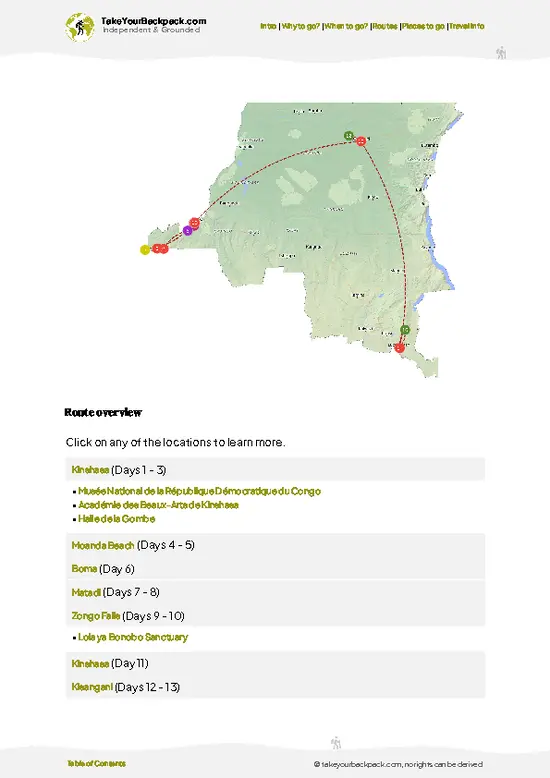
- Watsa Central Market: The best place to understand the town. Stalls sell cassava, beans, palm oil, dried fish, secondhand clothes and mining basics, and the pace is fastest in the morning. Go before 10:00, when it is cooler and the stock is fresh. Entry is free and an hour is enough. Ask before taking photographs of people.
- Gold trading counters: Small licensed buyers around the center weigh and trade gold from artisanal diggers. You can watch from outside, and a polite greeting usually leads to conversation. Mornings are busiest. It is free to look, takes about 30 minutes, and you should never photograph transactions or scales without permission.
- Kilo-Moto colonial-era quarter: Older brick offices and residences from the mining company era stand along some of the quieter streets, a reminder
- Watsa Central Market: The best place to understand the town. Stalls sell cassava, beans, palm oil, dried fish, secondhand clothes and mining basics, and the pace is fastest in the morning. Go before 10:00, when it is cooler and the stock is fresh. Entry is free and an hour is enough. Ask before taking photographs of people.
- Gold trading counters: Small licensed buyers around the center weigh and trade gold from artisanal diggers. You can watch from outside, and a polite greeting usually leads to conversation. Mornings are busiest. It is free to look, takes about 30 minutes, and you should never photograph transactions or scales without permission.
- Kilo-Moto colonial-era quarter: Older brick offices and residences from the mining company era stand along some of the quieter streets, a reminder that Watsa grew as a company town. They are worth a slow walk in the cool of early morning or late afternoon, and cost nothing. Allow about an hour, and keep cameras discreet around active offices.
- Catholic mission and church services: Mission life has long shaped the town. A Sunday service, with choirs singing in local languages, is the warmest way to meet residents. It is free to attend, runs one to two hours, and modest dress and a quiet seat at the back are expected.
- Evening walk along the main road: As the day cools, the main road fills with football games, grilled corn and motorbikes loaded high. It costs nothing and an hour is plenty. Stay in the center and be home before full dark.
Spotted a mistake or missing something? Contact us.

 Best Backpacking
.jpg) Hi, I’m Johan (Netherlands 🇳🇱), the creator of TakeYourBackpack. Over the past 3 decades, I’ve backpacked through 90+ countries across six continents, gaining extensive experience with independent travel, long-term trips, and overland routes.
Hi, I’m Johan (Netherlands 🇳🇱), the creator of TakeYourBackpack. Over the past 3 decades, I’ve backpacked through 90+ countries across six continents, gaining extensive experience with independent travel, long-term trips, and overland routes.