×

DR Congo🇨🇩 | townsDunguUele confluence, Azande market, Garamba gateway, park office | things to do and best time to go

Explore SakaniaExplore Watsa

Backpacking in Dungu
🏆 Top picktown ranked #2
By Johan Kruseman 🇳🇱 | Updated October 22, 2026

Garamba National Park is why anyone comes to Dungu, and the town is the only realistic gateway to it. What gets overlooked is that Dungu itself is a working Azande river town with a lively market and almost no tourist infrastructure. It sits in the north of the Democratic Republic of the Congo, northeast of Isiro, where the Dungu and Kibali rivers meet to form the Uele. Few foreigners pass through, so lodging is basic and hostels do not exist. Park access runs through the managed park operator, so arrange it before you arrive instead of turning up and hoping. Security in Haut-Uele has been unstable because of past armed-group raids, so check the current situation with the park, NGOs and local authorities and register with officials on arrival. Do not come for sightseeing, because the town has little to see. Come for the park. Wildlife-minded, self-sufficient, patient travelers will like it. Anyone wanting nightlife, easy company or fixed schedules will not.

Discover everything you want to know in the 📖 DR Congo Travel Guide.
Safety warning

The current risk level for DR Congo is high. Check the advice before going.


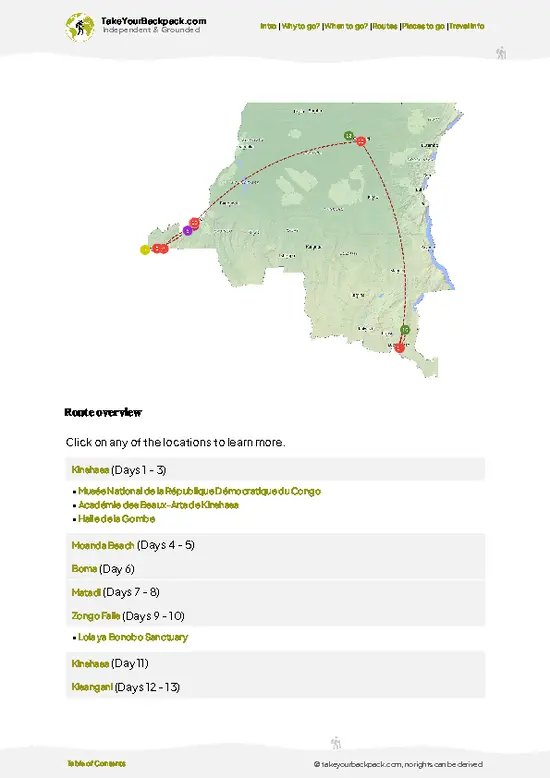
example page 0 from our offline Travel Guide for Democratic Republic of the Congo
example page 1 from our offline Travel Guide for Democratic Republic of the Congo
example page 2 from our offline Travel Guide for Democratic Republic of the Congo
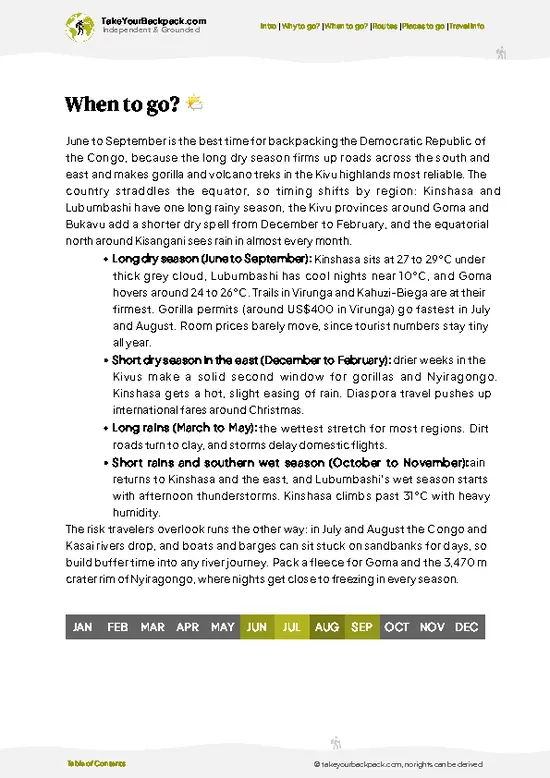
example page 3 from our offline Travel Guide for Democratic Republic of the Congo
example page 4 from our offline Travel Guide for Democratic Republic of the Congo
example page 5 from our offline Travel Guide for Democratic Republic of the Congo
example page 6 from our offline Travel Guide for Democratic Republic of the Congo
example page 7 from our offline Travel Guide for Democratic Republic of the Congo
Loading the map 🌍
CLICK TO FILTER
cities
towns
landmarks
national parks
hikes
beaches
attractions
festivals
regions
SHOW COUNTRY’S BESTSHOW ALL

✨ Why go?
Ranked #2 town in DR Congo
The unique appeal for travelers

Dungu works as a launch point, not a destination, and that is exactly how most people use it. You come to arrange a trip into Garamba National Park, a UNESCO World Heritage site with savanna elephants and Kordofan giraffes, and you spend a day or two sorting permits, supplies and transport on the ground. The town rewards that wait more than you would expect. The Uele confluence gives you a quiet riverside to walk, and the market is where you will meet Azande farmers, fishermen and traders without any tour group in the way. Evenings are slow and quiet, and you will mostly meet aid workers, park staff and the occasional researcher rather than other backpackers. That suits solo travelers who like talking to locals and are comfortable improvising in French or a little Lingala. It does not suit … read more 👉
Dungu works as a launch point, not a destination, and that is exactly how most people use it. You come to arrange a trip into Garamba National Park, a UNESCO World Heritage site with savanna elephants and Kordofan giraffes, and you spend a day or two sorting permits, supplies and transport on the ground. The town rewards that wait more than you would expect. The Uele confluence gives you a quiet riverside to walk, and the market is where you will meet Azande farmers, fishermen and traders without any tour group in the way. Evenings are slow and quiet, and you will mostly meet aid workers, park staff and the occasional researcher rather than other backpackers. That suits solo travelers who like talking to locals and are comfortable improvising in French or a little Lingala. It does not suit anyone who needs a hostel scene, reliable internet or a packed list of sights. Plan Dungu as the practical start of a wildlife trip, not as a stop in itself.

💡 HighlightsKey sights and experiences for travelers

  1. Confluence of the Dungu and Kibali Rivers. This is the point where the Uele begins, and it is the best known feature of the town. Watch pirogues cross and women washing clothes on the banks. Go early morning or late afternoon, when it is cooler and people are active. Free, 30 to 60 minutes.
  2. Dungu Central Market. Cassava, smoked fish, peanuts, bushmeat stalls and bright cloth fill the stalls. It is the clearest view of daily Azande life and the place to stock up on basics. Mornings are busiest. Entry is free and you will spend US$1 to 5 if you buy snacks or supplies, 1 hour.
  3. Cathedral and Catholic Mission. The Catholic Church has long shaped Dungu, and the mission grounds hold the cathedral of the Diocese of Dungu-Doruma. Visit on a Sunday morning if you want to hear the choir. Be respectful
… read more 👉
  1. Confluence of the Dungu and Kibali Rivers. This is the point where the Uele begins, and it is the best known feature of the town. Watch pirogues cross and women washing clothes on the banks. Go early morning or late afternoon, when it is cooler and people are active. Free, 30 to 60 minutes.
  2. Dungu Central Market. Cassava, smoked fish, peanuts, bushmeat stalls and bright cloth fill the stalls. It is the clearest view of daily Azande life and the place to stock up on basics. Mornings are busiest. Entry is free and you will spend US$1 to 5 if you buy snacks or supplies, 1 hour.
  3. Cathedral and Catholic Mission. The Catholic Church has long shaped Dungu, and the mission grounds hold the cathedral of the Diocese of Dungu-Doruma. Visit on a Sunday morning if you want to hear the choir. Be respectful and ask before taking photographs. Free, 30 to 45 minutes.
  4. Riverbank Fishing Landings. Away from the main crossing, local fishermen haul nets and sell their catch directly. It is a good place to talk with locals and see how the river supports the town. Early morning is best. Free, about 45 minutes.
  5. Garamba Park Office. The park operator coordinates visits from here. Stopping by is the way to get current advice on access, guides and conditions before heading out. Weekday mornings are best. There is no charge to ask, but park fees and guides are paid separately and vary, so expect roughly US$50 to 200 per day for a guided visit. Allow 1 hour.
The Dungu riverbank walk is free, and so are the market stroll and the mission grounds, while the park office only costs you your time. From Dungu, the best day trips are into Garamba National Park for elephants, giraffes and buffalo, and out to the Azande villages along the Uele and Dungu rivers.
Spotted a mistake or missing something? Contact us.

🏘️ NeighborhoodsHow different areas shape the experience

Dungu is a small riverside town, and you can cover all of it on foot in an afternoon, which matters because there is little formal sightseeing and the areas differ mostly in how useful they are to you.
  • Central market and main road: This is where the town works. Stalls sell cassava, fish from the Dungu and Kibali rivers, smoked bush meat, peanuts and phone credit. Go in the morning, since trading thins out by mid-afternoon. Eat at the small stands nearby, where grilled fish with rice or fufu is the standard plate. It is flat and walkable, but ask before photographing people or stalls, as locals can be wary of cameras.
  • Riverbank: Quiet and rewarding at dusk, with pirogues, women washing clothes and kids swimming. It is worth an hour. Avoid photographing bridges, officials or anything military.
… read more 👉
Dungu is a small riverside town, and you can cover all of it on foot in an afternoon, which matters because there is little formal sightseeing and the areas differ mostly in how useful they are to you.
  • Central market and main road: This is where the town works. Stalls sell cassava, fish from the Dungu and Kibali rivers, smoked bush meat, peanuts and phone credit. Go in the morning, since trading thins out by mid-afternoon. Eat at the small stands nearby, where grilled fish with rice or fufu is the standard plate. It is flat and walkable, but ask before photographing people or stalls, as locals can be wary of cameras.
  • Riverbank: Quiet and rewarding at dusk, with pirogues, women washing clothes and kids swimming. It is worth an hour. Avoid photographing bridges, officials or anything military.
  • Mission and church quarter: Older, greener and calmer, with Catholic institutions that act as informal information hubs. If you need local advice or a contact, this is the sensible place to start. Nothing to tour, so do not budget time for sightseeing.
  • Airstrip and NGO area: Functional rather than interesting. Humanitarian agencies and transport arrangements cluster here. Visit only if you need flight or convoy information.
Nightlife is a few open-air bars with beer and music near the center. They close early and the unlit streets are not pleasant to wander after dark, so walk back with others.

⌛️ 1 dayA smart one-day plan

This is a river and market day, slow on purpose, with plenty of time to talk to people.
7:30 AM: Riverbank Fishing Landings. Start where the fishermen bring in the night’s catch. Walk the bank, watch the nets and say hello in French. Locals are usually happy to explain what species they catch. Then walk upstream toward the confluence.
9:00 AM: Confluence of the Dungu and Kibali Rivers. This is where the Uele begins. Stand on the bank for a while and watch the pirogues. The light is soft and the heat has not built up yet. Then head into town on foot.
10:30 AM: Dungu Central Market. Browse the stalls for smoked fish, groundnuts and fabric. Buy water and snacks for the afternoon and eat a simple plate at one of the nearby food stands. Go slowly and ask before taking photos.
1:00 PM: Midday Rest. … read more 👉
This is a river and market day, slow on purpose, with plenty of time to talk to people.
7:30 AM: Riverbank Fishing Landings. Start where the fishermen bring in the night’s catch. Walk the bank, watch the nets and say hello in French. Locals are usually happy to explain what species they catch. Then walk upstream toward the confluence.
9:00 AM: Confluence of the Dungu and Kibali Rivers. This is where the Uele begins. Stand on the bank for a while and watch the pirogues. The light is soft and the heat has not built up yet. Then head into town on foot.
10:30 AM: Dungu Central Market. Browse the stalls for smoked fish, groundnuts and fabric. Buy water and snacks for the afternoon and eat a simple plate at one of the nearby food stands. Go slowly and ask before taking photos.
1:00 PM: Midday Rest. Take a break in the shade at your guesthouse during the hottest hours. It is the best time to write notes, charge devices and plan your next move.
3:00 PM: Catholic Mission and Cathedral. Walk through the mission grounds, which are quiet in the afternoon. Greet whoever is around and take a look at the church. It shows how long the mission has been part of Dungu life.
4:30 PM: Garamba Park Office. Off the usual visitor circuit, this is worth a stop to ask about current access, guides and conditions. Even if you do not go into the park, the staff know the region well.
6:00 PM: Riverside Evening. Finish back by the water as people bathe, cook and chat. Eat early, drink plenty of water and keep to well-known areas after dark.

🌤️ When to go?Choosing the right time of year

Dungu has two rainy seasons and a short drier break, so timing mostly decides whether the roads are passable.
  • Dry Season (December to February): The most reliable window for overland travel. Days reach 30 to 33°C (86 to 91°F), nights around 19 to 21°C (66 to 70°F). Dusty roads, but fewer washouts and easier river crossings.
  • Wet Season (March to May): Heavy storms, mud and slow trucks. Highs of 28 to 31°C (82 to 88°F), with humidity that makes it feel heavier. Transport prices rise as journeys take longer.
  • Short Break (June to August): Rain eases but does not stop. Cloudy skies, 26 to 30°C (79 to 86°F), and greener countryside. A workable second choice.
  • Second Rains (September to November): Frequent downpours, often in the afternoon. Roads deteriorate again, and delays are common.
Daylight stays … read more 👉
Dungu has two rainy seasons and a short drier break, so timing mostly decides whether the roads are passable.
  • Dry Season (December to February): The most reliable window for overland travel. Days reach 30 to 33°C (86 to 91°F), nights around 19 to 21°C (66 to 70°F). Dusty roads, but fewer washouts and easier river crossings.
  • Wet Season (March to May): Heavy storms, mud and slow trucks. Highs of 28 to 31°C (82 to 88°F), with humidity that makes it feel heavier. Transport prices rise as journeys take longer.
  • Short Break (June to August): Rain eases but does not stop. Cloudy skies, 26 to 30°C (79 to 86°F), and greener countryside. A workable second choice.
  • Second Rains (September to November): Frequent downpours, often in the afternoon. Roads deteriorate again, and delays are common.
Daylight stays close to twelve hours all year, so plan travel for the morning and allow a spare day for delays.


source: climatestotravel.comJANJanuary: highly recommended for travelingFEBFebruary: highly recommended for travelingMARMarch: highly recommended for travelingAPRApril: fair for travelingMAYMay: fair for travelingJUNJune: fair for travelingJULJuly: fair for travelingAUGAugust: fair for travelingSEPSeptember: excellent for travelingOCTOctober: excellent for travelingNOVNovember: excellent for travelingDECDecember: highly recommended for traveling
when-to-go

✈️ The backpacker research shortcutDR Congo Travel Guide

An offline-friendly backpacking guide with optimized travel routes, ranked highlights, transport advice, and the best areas to stay.
example page 0 from our offline Travel Guide for Democratic Republic of the Congo
example page 1 from our offline Travel Guide for Democratic Republic of the Congo
example page 2 from our offline Travel Guide for Democratic Republic of the Congo
example page 3 from our offline Travel Guide for Democratic Republic of the Congo
example page 4 from our offline Travel Guide for Democratic Republic of the Congo
example page 5 from our offline Travel Guide for Democratic Republic of the Congo
example page 6 from our offline Travel Guide for Democratic Republic of the Congo
example page 7 from our offline Travel Guide for Democratic Republic of the Congo
The digital guide (330 pages) contains:
✅ 76 highlights, ranked by travel appeal
✅ Optimized 7, 14 & 21-day travel routes
✅ Cities, national parks, landmarks, beaches
✅ How to get around
✅ Offline-friendly for travel without Wi-Fi
👉 Click to see all 30+ guide features

📅 Plan smarter in minutes, not weeks
✅ Month by month travel advice
✅ Festivals & national holidays
✅ Budget expectations

🗺️ Go to the right places, skip the overrated ones
✅ Honest pros & cons of destinations
✅ Top hikes, parks & viewpoints
✅ Lesser-known places most travelers miss
✅ Clear “worth it vs skip it” guidance

🛏️ Travel smoothly without rookie mistakes
✅ Best areas to stay
✅ Transport systems explained simply
✅ Common scams & safety advice
✅ SIM cards, money & practical tips

🌍 Understand the country, not just visit it
✅ Culture & traditions
✅ 52 Essential phrases & customs
✅ Festivals worth planning around
✅ Traveler-friendly historical context
✅ Insights that make places more meaningful

📱 Built for real travel conditions
✅ Fully downloadable PDF
✅ Works completely offline
✅ Optimized for phone use
✅ Useful in remote areas & buses
✅ Everything in one place
Stop searching, start planning
Get instant access to your full guide. 30‑day money-back guarantee.
+ Add another guide for just

By proceeding you agree to our terms.
Sent to your inbox immediately after payment • 100% Secure Checkout
Best Backpacking Travel Advisor 2025 tourism awardBest Backpacking
Travel Advisor
2025
What others say about Take Your Backpack Guides:
⭐⭐⭐⭐⭐
Fantastic, amazing amount of information!
⭐⭐⭐⭐⭐
My goodness this is amazing, it's what I've been looking for hats off too you!
⭐⭐⭐⭐⭐
I think this is absolutely BRILLIANT
⭐⭐⭐⭐
Very complete and informative. It's still missing places, but I gotta to commend you
⭐⭐⭐⭐⭐
This is truly amazing, thank you, can't wait to explore it with my kids!
⭐⭐⭐⭐⭐
Awesome resource, thank you!
⭐⭐⭐⭐⭐
This is amazing! Can't wait to explore the ones I haven't seen
⭐⭐⭐⭐
I love this! Well done, great idea.
⭐⭐⭐⭐⭐
Thanks for taking the time to make this gem!
⭐⭐⭐⭐⭐
This might be the best website I've ever seen.
⭐⭐⭐⭐⭐
Congratulations, and thank you so much for your work; it's incredibly valuable.
⭐⭐⭐⭐
In all seriousness I think you did a great job pointing out the important spots
⭐⭐⭐⭐⭐
10/10 very good
⭐⭐⭐⭐⭐
As someone who's only just starting to visit regularly this is awesome, thank you.
⭐⭐⭐⭐
Thank you very much! I'm going to visit my dad, it's going to be very useful!
⭐⭐⭐⭐⭐
This is really cool! We'll be travelling for the first time and this definitely come in handy.
⭐⭐⭐⭐⭐
You are now our minister of culture, congratulations 👨‍💼
⭐⭐⭐⭐⭐
Just wanted to tell you that this is a pearl! Going to follow your recommendations.
⭐⭐⭐⭐⭐
This is so cool. I'll definitely be using the resource for my travels soon.
⭐⭐⭐⭐⭐
This is very impressive! Good work.
⭐⭐⭐⭐⭐
This is an amazing and informative site. Very well done!

🛏️ Where to stay?Where staying makes the most sense

Stay near the central market and main road in Dungu, because that is where the few guesthouses, small hotels and mission-run lodgings that accept independent travelers are concentrated. True hostels with dorms do not exist here. Expect simple private rooms with a fan or none, a bucket shower, and electricity that depends on a generator for part of the evening. Rooms are usually in the US$10 to 30 range, and a mission guesthouse is often the cheapest and quietest option.
The center gives you walkable access to food stalls, money changers and the places where trucks and bikes gather, which matters … read more 👉
Stay near the central market and main road in Dungu, because that is where the few guesthouses, small hotels and mission-run lodgings that accept independent travelers are concentrated. True hostels with dorms do not exist here. Expect simple private rooms with a fan or none, a bucket shower, and electricity that depends on a generator for part of the evening. Rooms are usually in the US$10 to 30 range, and a mission guesthouse is often the cheapest and quietest option.
The center gives you walkable access to food stalls, money changers and the places where trucks and bikes gather, which matters when you leave before dawn. It is also lit and populated into the evening, so the walk back is shorter and easier than from outlying districts. The trade is noise: generators, music from bars and early market activity start the day around 5 am. Bring earplugs.
A second option is the quieter mission quarter, where guesthouses attached to church institutions are calmer and generally well regarded for security. Availability is limited, so write ahead or ask a local contact. Because the choice is small, arrive in daylight with a room already in mind, carry cash in US dollars since cards are not accepted, and confirm that the room has a lockable door and a safe place for your bag.

🚌 Getting aroundHow to get around Dungu

Your own two feet cover everything inside Dungu, and for anything beyond that a motorbike taxi is the easiest way to move because the roads are rough, vehicles are scarce and a bike gets through where a car stalls.
  • Walking: The town is small and flat. Market, riverbank and mission are all within about 20 to 30 minutes of each other. Go by day, because streets are unlit at night. Free.
  • Motorbike taxi (boda-boda): The standard local transport. A short ride in town costs about US$0.50 to 1, and longer rides to outlying villages run US$2 to 6 depending on mud and distance. Agree the price before you get on, and ask the rider to slow down on wet laterite, which is slick. Carry small US dollar bills and Congolese francs, since drivers rarely have change.
  • Shared trucks and pickups: Long-distance travel
… read more 👉
Your own two feet cover everything inside Dungu, and for anything beyond that a motorbike taxi is the easiest way to move because the roads are rough, vehicles are scarce and a bike gets through where a car stalls.
  • Walking: The town is small and flat. Market, riverbank and mission are all within about 20 to 30 minutes of each other. Go by day, because streets are unlit at night. Free.
  • Motorbike taxi (boda-boda): The standard local transport. A short ride in town costs about US$0.50 to 1, and longer rides to outlying villages run US$2 to 6 depending on mud and distance. Agree the price before you get on, and ask the rider to slow down on wet laterite, which is slick. Carry small US dollar bills and Congolese francs, since drivers rarely have change.
  • Shared trucks and pickups: Long-distance travel is by cargo trucks and occasional minibuses heading toward Isiro, Bangadi or the Ugandan border area. They leave when full, usually early morning, so be at the loading point by about 6 am. Fares vary widely, roughly US$10 to 40 depending on destination and season, and trips can take a day or several in the rains. Sit near the front for a less bruising ride and bring water and food.
  • Humanitarian and charter flights: The airstrip is served by irregular flights, mostly for aid and mission staff. Seats are not something you can count on and are not worth planning around unless you have a contact. Where available, they save days compared with the road but cost far more, often US$100 or more.
  • River crossings: Pirogues and small ferries cross rivers where bridges are absent. Expect US$0.30 to 2 per person. Do not overload boats and avoid crossing at dusk.
Security checkpoints are common on roads out of town. Keep your passport, visa and any travel authorization accessible, be polite and patient, and carry photocopies. Official permission to travel is worth confirming locally before you head out, since conditions in this region change.

👛 Costs (as of 22 October 2026)Money, prices, and spending tips

Dungu costs roughly US$40 to 65 a day for a backpacker, with lodging and transport making up most of that because there are few budget options and everything is trucked in.
CategoryBudget RangeLocal Reality
Dorm accommodationUS$10 to 25No dorms exist. Simple private rooms in guesthouses or mission lodgings, with bucket showers.
MealsUS$5 to 10Street stands serve fish, rice, beans and fufu. Bottled drinks and beer cost extra.
Local transportUS$3 to 10Motorbike taxis for short rides, with higher prices in the rains.
Basic activities/entry feesUS$5 to 15Mostly free town walks. Guides and park permits cost more.
Miscellaneous expensesUS$5 to 10Water, phone credit, small tips and bribes avoided with correct papers.
Total Daily BudgetUS$48Based on high season spending at the middle of the ranges.
Carry … read more 👉
Dungu costs roughly US$40 to 65 a day for a backpacker, with lodging and transport making up most of that because there are few budget options and everything is trucked in.
CategoryBudget RangeLocal Reality
Dorm accommodationUS$10 to 25No dorms exist. Simple private rooms in guesthouses or mission lodgings, with bucket showers.
MealsUS$5 to 10Street stands serve fish, rice, beans and fufu. Bottled drinks and beer cost extra.
Local transportUS$3 to 10Motorbike taxis for short rides, with higher prices in the rains.
Basic activities/entry feesUS$5 to 15Mostly free town walks. Guides and park permits cost more.
Miscellaneous expensesUS$5 to 10Water, phone credit, small tips and bribes avoided with correct papers.
Total Daily BudgetUS$48Based on high season spending at the middle of the ranges.
Carry plenty of small US dollar bills in good condition, since cards do not work and torn or old notes are often refused.


source: worldbank.org
⚠️ Prices can change and everyone travels differently, so take this as a rough guide. Hope it helps you plan your adventure!

🚌 Day tripsEasy escapes and nearby places

Dungu works as a base for short rural outings, but transport is thin and conditions change with the rains, so keep trips modest and always return the same day.
Garamba National Park edge:
Garamba lies to the north and is known for elephants, giraffes and a long conservation history. Access for independent travelers is restricted and usually arranged through the park administration, so contact them before setting out. The park headquarters is at Nagero, roughly 2 to 4 hours away by road depending on conditions, and a visit generally requires official permission and guide fees, often US$50 or more. Dry months from December to February are the most practical. First-timers often arrive without permission and are turned back.
👉 Explore Garamba National Park
Dungu River and Kibali riverside villages: … read more 👉
Dungu works as a base for short rural outings, but transport is thin and conditions change with the rains, so keep trips modest and always return the same day.
Garamba National Park edge:
Garamba lies to the north and is known for elephants, giraffes and a long conservation history. Access for independent travelers is restricted and usually arranged through the park administration, so contact them before setting out. The park headquarters is at Nagero, roughly 2 to 4 hours away by road depending on conditions, and a visit generally requires official permission and guide fees, often US$50 or more. Dry months from December to February are the most practical. First-timers often arrive without permission and are turned back.
👉 Explore Garamba National Park
Dungu River and Kibali riverside villages:
A motorbike ride along the river takes you to fishing communities where pirogues, drying fish and manioc fields give you a look at daily life. It is a half-day outing, costing US$5 to 12 with a bike and driver, and morning is the best time for activity. Ask permission before photographing people.

Faradje:
Faradje is a smaller town east of Dungu with a long mission history and old colonial-era buildings. The road is rough, so allow most of a day and expect to pay US$10 to 25 for a shared vehicle or hired bike. Go in the dry season only, and leave early to be back before dark.

🛡️ SafetyTraveler Safety Guide

Dungu is calm in daily life, but the wider region has seen armed group activity, so local advice matters more here than any checklist. Before you travel, ask the mission, a humanitarian agency or local authorities about the current situation on the roads, and avoid travel outside town if they advise against it. Keep your movements in daylight, since unlit streets and checkpoints at night are the main practical problems. Solo travelers, especially women, are better off moving with a local contact or driver. Petty theft is uncommon but possible in the market, so carry only what you need. Officials may ask for papers or small payments at checkpoints. Stay polite, keep photocopies and an authorization letter handy, and do not photograph soldiers, bridges or government buildings. Drink treated … read more 👉
Dungu is calm in daily life, but the wider region has seen armed group activity, so local advice matters more here than any checklist. Before you travel, ask the mission, a humanitarian agency or local authorities about the current situation on the roads, and avoid travel outside town if they advise against it. Keep your movements in daylight, since unlit streets and checkpoints at night are the main practical problems. Solo travelers, especially women, are better off moving with a local contact or driver. Petty theft is uncommon but possible in the market, so carry only what you need. Officials may ask for papers or small payments at checkpoints. Stay polite, keep photocopies and an authorization letter handy, and do not photograph soldiers, bridges or government buildings. Drink treated water, since malaria and waterborne illness are bigger everyday risks than crime.

FAQFrequently asked questions about Dungu

Dungu is worth visiting only if you are heading toward Garamba National Park or want a look at the far northeast of the country, since the town itself has little to see. You can cover the market, riverbank and mission in half a day. Reaching it takes real effort on rough roads, and a Garamba visit needs permission and fees of roughly US$50 or more.
Dungu needs about 2 to 3 days, which is enough for the town and one outing. Add extra buffer days for delays, because trucks leave when full and rain can stall roads for a day or more. A Garamba trip would add at least one more day.
Dungu is not realistic as a day trip from a nearby city, because the nearest large towns such as Isiro are a long, rough drive away that can take a full day or more. Flights are irregular and mostly for aid and mission staff. Plan to sleep in Dungu, where simple rooms cost about US$10 to 30.
⚠️ Things can change over time, so always validate details locally before you go.

Other Congolese towns near Dungu

Explore more nearby:

  • Watsa—Kilo-Moto gold, bullion counters, company-town brick, northern uplands| 126 km away
  • Wamba—Equatorial forest, Mongo country, smoked fish, plantain trails| 777 km away
  • Basankusu—Lulonga landing, pirogue cargo, caterpillar market, mission cathedral| 1009 km away

💡 Not sure where to go next?
Create a personalized itinerary for DR Congo including Dungu and the places that fit your trip.

Generate my itinerary

👉 Discover all towns

Or checkout all DR Congo has to offer (think cities, towns, villages, national parks, hikes, beaches, festivals)
Country photo of DR Congo

We 💚 feedbackParting advice and final tips

Dungu deserves two nights, three if you are heading into Garamba and need time for paperwork and supplies. One night leaves you rushing the park arrangements, and more than three means you have run out of town. Bring cash in small bills, a good book and patience, and say hello to everyone you pass.

✍️ Help improve this page!
The information on this page is based on in-depth research, insights shared by experienced travelers, and feedback from the local travel community in DR Congo. While every effort is made to keep the information accurate and current, conditions can change — so if you spot anything incorrect or outdated, please get in touch.


🙋‍♂️ Give feedback

👋 Meet the founderWho’s Behind Take Your Backpack?

Johan, backpacker and founder of TakeYourBackpackHi, I’m Johan (Netherlands 🇳🇱), the creator of TakeYourBackpack. Over the past 3 decades, I’ve backpacked through 90+ countries across six continents, gaining extensive experience with independent travel, long-term trips, and overland routes.

This site is built on a combination of firsthand travel experience and carefully curated insights from other backpackers. Many guides are based on places I’ve personally visited, while others bring together tips, observations, and practical advice shared by trusted travelers I’ve met along the way.

The goal is to provide realistic, experience-driven guidance — not generic itineraries — so you can explore destinations with better context, clearer expectations, and more confidence.