×

Djibouti🇩🇯 | regionsAli Sabieh PlateauGranite hills, Ali Adde rock art, railway town, khat market | things to do and best time to go

Explore Moucha Island National ParkExplore Gulf of Tadjoura

Backpacking in Ali Sabieh Plateau
👍 Recommendedregion ranked #2
By Johan Kruseman 🇳🇱 | Updated October 22, 2026

Ali Sabieh Plateau is a cooler base than the coast, with nights that let you sleep without a fan blasting. It sits in the southeast of Djibouti, south-southwest of Djibouti City, against the Ethiopian border. Granite hills, dry acacia plains and a railway town with a Friday-to-Sunday rhythm of khat chewing define it. Nature is quiet rather than dramatic, and the rock shelters near Ali Adde are the main draw for anyone interested in the past. Nothing here is polished, which means little tourist infrastructure and plenty of real local life. For getting around, shared minibuses cost little but leave when full, so you trade time for savings. A hired car with a driver saves hours and gives comfort, but costs several times more. For most backpackers, minibuses to town plus a short private hire for the rock shelters give the best return. Travelers who like slow, dusty, low-key places will enjoy it most. Anyone wanting beaches, resorts or a packed itinerary will not.

Discover everything you want to know in the 📖 Djibouti Travel Guide.


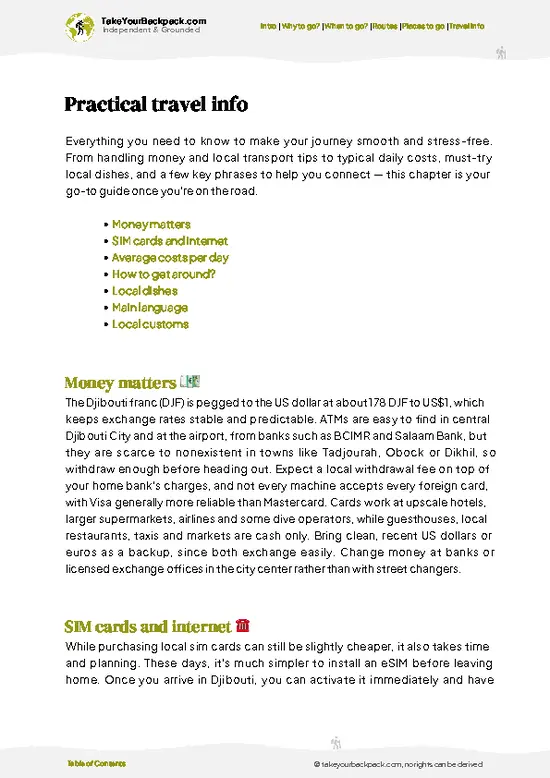
example page 0 from our offline Travel Guide for Djibouti
example page 1 from our offline Travel Guide for Djibouti
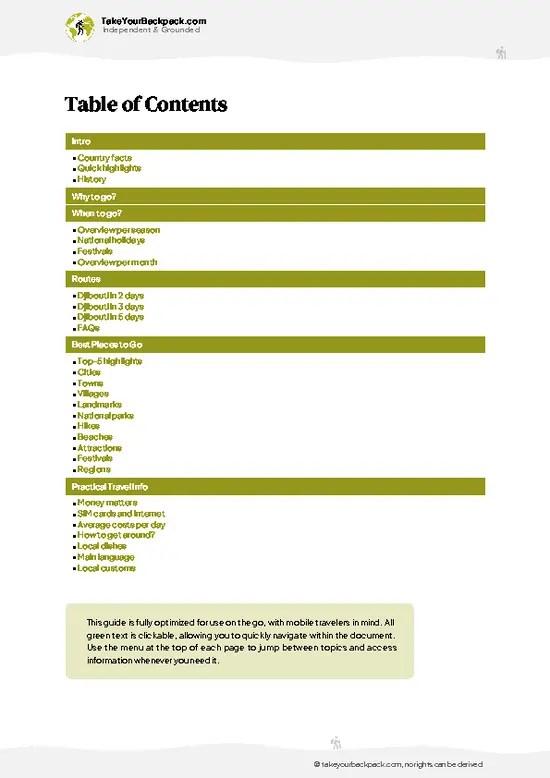
example page 2 from our offline Travel Guide for Djibouti
example page 3 from our offline Travel Guide for Djibouti
example page 4 from our offline Travel Guide for Djibouti
example page 5 from our offline Travel Guide for Djibouti
example page 6 from our offline Travel Guide for Djibouti
example page 7 from our offline Travel Guide for Djibouti
Loading the map 🌍
CLICK TO FILTER
cities
towns
villages
landmarks
national parks
hikes
beaches
attractions
festivals
regions
SHOW COUNTRY’S BESTSHOW ALL

✨ Why go?
Ranked #2 region in Djibouti
Why Ali Sabieh Plateau should be on your travel list

Ali Sabieh Plateau gives you a different Djibouti from the salt flats and the coast, and you can see it without constant relocation. The first reason is altitude. The town and its granite-ringed hills sit noticeably higher than the capital, so walking at dusk is comfortable and the dry air feels lighter. The second is the Ali Adde rock shelters, one of the few places in the country where you can stand under prehistoric paintings with nobody selling you anything. The third is the Djibouti-Ethiopia railway line, whose stations at Ali Sabieh, Holl Holl and Assamo mark the old trade route to Dire Dawa. Trains no longer make this a casual hop, but the stations and the truck traffic still show how the region works. You can base yourself in one town and cover the surroundings with short hires. Culture … read more 👉
Ali Sabieh Plateau gives you a different Djibouti from the salt flats and the coast, and you can see it without constant relocation. The first reason is altitude. The town and its granite-ringed hills sit noticeably higher than the capital, so walking at dusk is comfortable and the dry air feels lighter. The second is the Ali Adde rock shelters, one of the few places in the country where you can stand under prehistoric paintings with nobody selling you anything. The third is the Djibouti-Ethiopia railway line, whose stations at Ali Sabieh, Holl Holl and Assamo mark the old trade route to Dire Dawa. Trains no longer make this a casual hop, but the stations and the truck traffic still show how the region works. You can base yourself in one town and cover the surroundings with short hires. Culture comes from market streets, tea stalls and conversation in Somali and Afar, not from ticketed attractions. It suits slow travel, and a few days is enough to feel settled.

💡 HighlightsWhat this place is best known for

  1. Ali Adde rock shelters: Granite overhangs with ancient paintings, mainly of cattle and animal figures. Go with a local guide, because the sites are hard to find alone.
  2. Ali Sabieh town center: A compact grid of shops, tea houses and small guesthouses below rocky hills. Walk it in an hour to understand the town.
  3. Ali Sabieh railway station: The old colonial-era station on the Djibouti-Ethiopia line. Its platforms and warehouses show how the town grew around trade.
  4. Ali Sabieh market: Fruit, grain, cloth and mounds of fresh khat arriving from Ethiopia. The afternoon rush is when the town is most alive.
  5. Granite hills above Ali Sabieh: Rounded boulders and scrub slopes you can scramble up for views across the plateau and toward the Ethiopian escarpment. Little-visited and easy without equipment.
  6. Holl
… read more 👉
  1. Ali Adde rock shelters: Granite overhangs with ancient paintings, mainly of cattle and animal figures. Go with a local guide, because the sites are hard to find alone.
  2. Ali Sabieh town center: A compact grid of shops, tea houses and small guesthouses below rocky hills. Walk it in an hour to understand the town.
  3. Ali Sabieh railway station: The old colonial-era station on the Djibouti-Ethiopia line. Its platforms and warehouses show how the town grew around trade.
  4. Ali Sabieh market: Fruit, grain, cloth and mounds of fresh khat arriving from Ethiopia. The afternoon rush is when the town is most alive.
  5. Granite hills above Ali Sabieh: Rounded boulders and scrub slopes you can scramble up for views across the plateau and toward the Ethiopian escarpment. Little-visited and easy without equipment.
  6. Holl Holl: A small railway settlement among dry hills. Locals love it for its quiet and for the stopping-point feel of an old station.
  7. Assamo: A border-side railway village in open country. It is a place to watch the trade route at work, with caravans of trucks and goat herds.
  8. Dewele border post area: The truck stop on the road to Ethiopia, where drivers eat, repair and rest. It shows the working side of the corridor.
  9. Ali Adde village: A plain Somali-Issa settlement near the rock art, where you can drink tea and ask about the paintings. Few visitors stop.
Ali Sabieh Plateau is best started with the rock shelters at Ali Adde, because the light and temperature are gentlest before the day heats up and the rest of the region makes more sense once you have seen how long people have lived here.
Spotted a mistake or missing something? Contact us.

Things to do near Ali Sabieh Plateau

Ratings based on Tripadvisor reviews. When you book through this link, you support our work at no extra cost to you.

⌛️ 5 daysHow to make the most of Ali Sabieh Plateau

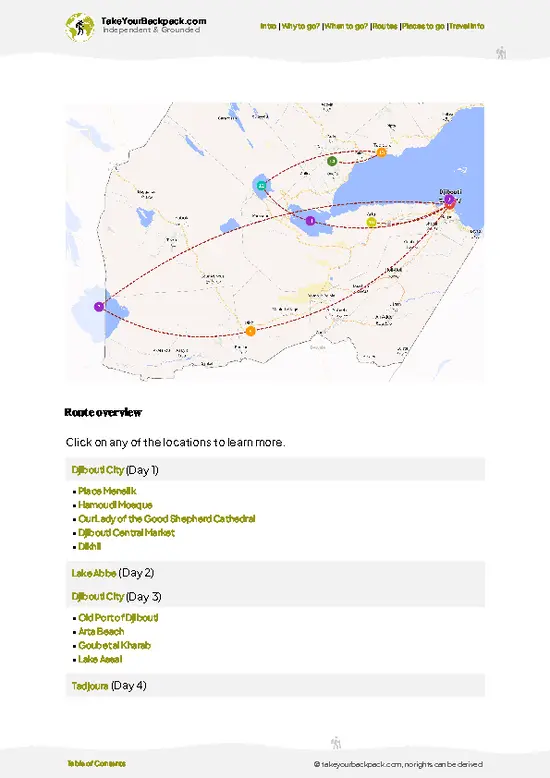
Day 1: Ali Adde: Do not skip the rock shelters. Transport is the pace-setter on the plateau: minibuses run when they fill, taxis are scarce and the places worth seeing sit on dirt tracks. Hiring a driver and local guide for one morning makes Ali Adde manageable and avoids hours of waiting on the roadside. Afterward, tea in the village gives context that no sign board does.Day 2: Ali Sabieh: Settle into town. Walk the center, the market and the railway station, then climb one of the granite hills for the view. Because services are limited, treat Ali Sabieh as your base rather than moving every night. It is the one place with guesthouses and reliable food.Day 3: Holl Holl: Take the road along the old rail corridor to this small station settlement. A short hired ride beats waiting for a minibus … read more 👉
Day 1: Ali Adde: Do not skip the rock shelters. Transport is the pace-setter on the plateau: minibuses run when they fill, taxis are scarce and the places worth seeing sit on dirt tracks. Hiring a driver and local guide for one morning makes Ali Adde manageable and avoids hours of waiting on the roadside. Afterward, tea in the village gives context that no sign board does.Day 2: Ali Sabieh: Settle into town. Walk the center, the market and the railway station, then climb one of the granite hills for the view. Because services are limited, treat Ali Sabieh as your base rather than moving every night. It is the one place with guesthouses and reliable food.Day 3: Holl Holl: Take the road along the old rail corridor to this small station settlement. A short hired ride beats waiting for a minibus that may not come back the same day. Stay a few hours, eat simply and return before dusk, when vehicles become harder to find.Day 4: Assamo: The detour: continue toward the border country for open plains and the sight of trucks and herds sharing the same landscape. It adds a lot because it shows why the plateau matters, and it costs little because you use the same road and driver.Day 5: Ali Sabieh: Slow morning in the market and tea houses before heading back toward the capital. If you only have one day for the whole trip, make it Day 1. Ali Adde is the experience you cannot get anywhere else in Djibouti.

🌤️ When to go?Weather, crowds, and seasonal trade-offs

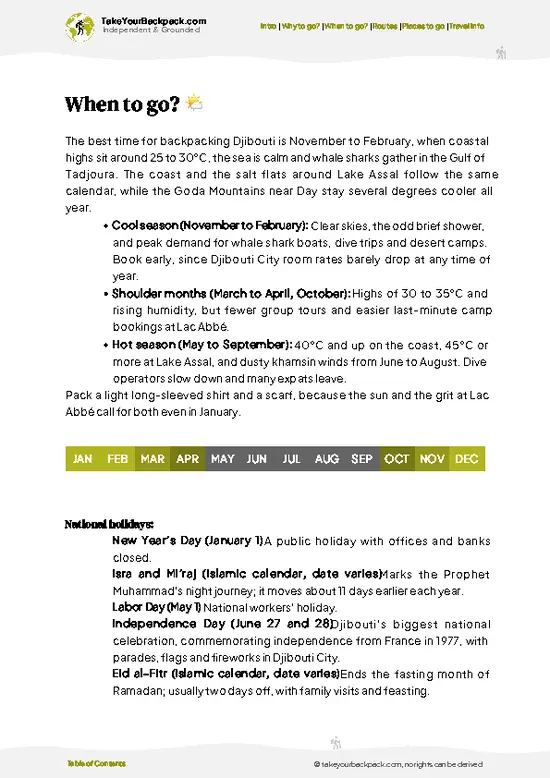
  • Cool Season (November to March): Days reach 27 to 32°C (81 to 90°F) and nights fall to 19 to 23°C (66 to 73°F), so hiking the rocky hills is comfortable. This is also the busiest and priciest stretch, though Ali Sabieh Plateau never gets crowded and rooms stay easy to find.
  • Hot Season (May to September): Highs sit at 37 to 43°C (99 to 109°F), with hot, dusty winds and little shade. Walking is realistic only at dawn, and guides and drivers often charge less because demand is thin.
  • Short Rains (March to April): Brief, patchy showers turn the thorn scrub a faint green and settle the dust. Dry riverbeds can run for an hour or two, so avoid camping in them.
  • Shoulder Weeks (October and early April): Temperatures of 30 to 35°C (86 to 95°F) are bearable, and prices have not yet risen.
Daylight shifts … read more 👉
  • Cool Season (November to March): Days reach 27 to 32°C (81 to 90°F) and nights fall to 19 to 23°C (66 to 73°F), so hiking the rocky hills is comfortable. This is also the busiest and priciest stretch, though Ali Sabieh Plateau never gets crowded and rooms stay easy to find.
  • Hot Season (May to September): Highs sit at 37 to 43°C (99 to 109°F), with hot, dusty winds and little shade. Walking is realistic only at dawn, and guides and drivers often charge less because demand is thin.
  • Short Rains (March to April): Brief, patchy showers turn the thorn scrub a faint green and settle the dust. Dry riverbeds can run for an hour or two, so avoid camping in them.
  • Shoulder Weeks (October and early April): Temperatures of 30 to 35°C (86 to 95°F) are bearable, and prices have not yet risen.
Daylight shifts by only about an hour across the year, so plan around heat, not light. Book a driver for a mid-December to February trip a few days ahead.


source: climatestotravel.comJANJanuary: excellent for travelingFEBFebruary: excellent for travelingMARMarch: good for travelingAPRApril: fair for travelingMAYMay: fair for travelingJUNJune: below average for travelingJULJuly: below average for travelingAUGAugust: below average for travelingSEPSeptember: fair for travelingOCTOctober: good for travelingNOVNovember: highly recommended for travelingDECDecember: excellent for traveling
when-to-go

✈️ The backpacker research shortcutDjibouti Travel Guide

An offline-friendly backpacking guide with optimized travel routes, ranked highlights, transport advice, and the best areas to stay.
example page 0 from our offline Travel Guide for Djibouti
example page 1 from our offline Travel Guide for Djibouti
example page 2 from our offline Travel Guide for Djibouti
example page 3 from our offline Travel Guide for Djibouti
example page 4 from our offline Travel Guide for Djibouti
example page 5 from our offline Travel Guide for Djibouti
example page 6 from our offline Travel Guide for Djibouti
example page 7 from our offline Travel Guide for Djibouti
The digital guide (186 pages) contains:
✅ 44 highlights, ranked by travel appeal
✅ Optimized 2, 3 & 5-day travel routes
✅ Cities, national parks, landmarks, beaches
✅ How to get around
✅ Offline-friendly for travel without Wi-Fi
👉 Click to see all 30+ guide features

📅 Plan smarter in minutes, not weeks
✅ Month by month travel advice
✅ Festivals & national holidays
✅ Budget expectations

🗺️ Go to the right places, skip the overrated ones
✅ Honest pros & cons of destinations
✅ Top hikes, parks & viewpoints
✅ Lesser-known places most travelers miss
✅ Clear “worth it vs skip it” guidance

🛏️ Travel smoothly without rookie mistakes
✅ Best areas to stay
✅ Transport systems explained simply
✅ Common scams & safety advice
✅ SIM cards, money & practical tips

🌍 Understand the country, not just visit it
✅ Culture & traditions
✅ 52 Essential phrases & customs
✅ Festivals worth planning around
✅ Traveler-friendly historical context
✅ Insights that make places more meaningful

📱 Built for real travel conditions
✅ Fully downloadable PDF
✅ Works completely offline
✅ Optimized for phone use
✅ Useful in remote areas & buses
✅ Everything in one place
Stop searching, start planning
Get instant access to your full guide. 30‑day money-back guarantee.
+ Add another guide for just

By proceeding you agree to our terms.
Sent to your inbox immediately after payment • 100% Secure Checkout
Best Backpacking Travel Advisor 2025 tourism awardBest Backpacking
Travel Advisor
2025
What others say about Take Your Backpack Guides:
⭐⭐⭐⭐⭐
Fantastic, amazing amount of information!
⭐⭐⭐⭐⭐
My goodness this is amazing, it's what I've been looking for hats off too you!
⭐⭐⭐⭐⭐
I think this is absolutely BRILLIANT
⭐⭐⭐⭐
Very complete and informative. It's still missing places, but I gotta to commend you
⭐⭐⭐⭐⭐
This is truly amazing, thank you, can't wait to explore it with my kids!
⭐⭐⭐⭐⭐
Awesome resource, thank you!
⭐⭐⭐⭐⭐
This is amazing! Can't wait to explore the ones I haven't seen
⭐⭐⭐⭐
I love this! Well done, great idea.
⭐⭐⭐⭐⭐
Thanks for taking the time to make this gem!
⭐⭐⭐⭐⭐
This might be the best website I've ever seen.
⭐⭐⭐⭐⭐
Congratulations, and thank you so much for your work; it's incredibly valuable.
⭐⭐⭐⭐
In all seriousness I think you did a great job pointing out the important spots
⭐⭐⭐⭐⭐
10/10 very good
⭐⭐⭐⭐⭐
As someone who's only just starting to visit regularly this is awesome, thank you.
⭐⭐⭐⭐
Thank you very much! I'm going to visit my dad, it's going to be very useful!
⭐⭐⭐⭐⭐
This is really cool! We'll be travelling for the first time and this definitely come in handy.
⭐⭐⭐⭐⭐
You are now our minister of culture, congratulations 👨‍💼
⭐⭐⭐⭐⭐
Just wanted to tell you that this is a pearl! Going to follow your recommendations.
⭐⭐⭐⭐⭐
This is so cool. I'll definitely be using the resource for my travels soon.
⭐⭐⭐⭐⭐
This is very impressive! Good work.
⭐⭐⭐⭐⭐
This is an amazing and informative site. Very well done!

🛏️ Where to stay?Best areas and accommodation options

Ali Sabieh town is the one place on the plateau where a backpacker can comfortably base for several nights. It sits about 100 km from Djibouti City, and rooms here run roughly US$15 to 40 a night, well below the capital. The town is small, safe to walk by day, and calm after dark, with a market street, a few tea houses and a railway station that gives it a slightly faded, frontier character.
Expect a quiet social scene. You will meet few other foreigners, but local conversation comes easily, especially in tea shops where men gather in the evening. Solo travelers, women included, generally report … read more 👉
Ali Sabieh town is the one place on the plateau where a backpacker can comfortably base for several nights. It sits about 100 km from Djibouti City, and rooms here run roughly US$15 to 40 a night, well below the capital. The town is small, safe to walk by day, and calm after dark, with a market street, a few tea houses and a railway station that gives it a slightly faded, frontier character.
Expect a quiet social scene. You will meet few other foreigners, but local conversation comes easily, especially in tea shops where men gather in the evening. Solo travelers, women included, generally report being treated with courtesy, though modest dress (covered shoulders and knees) is wise. Staying here puts you within reach of the surrounding hills, dry valleys and viewpoints by hired 4x4 in a few hours.
Djibouti City is the alternative base if you want hostels, a wider choice of restaurants and other travelers. The Ali Sabieh trip then becomes a long day out, with an early start and a return by mid-afternoon. Most visitors to the plateau choose one night in Ali Sabieh town to catch the cool dawn light.
Smaller villages around the plateau have no tourist lodging, so plan to return to town each evening.

🚌 Getting aroundGetting around like a local

Ali Sabieh Plateau trips go wrong most often when travelers reach the Djibouti City minibus stands after midday and find the vehicles already gone, then take a private taxi at a price three or four times the shared fare. Shared minibuses leave when full, and departures thin out through the afternoon. Plan to leave the capital by mid-morning and the road, about 100 km of paved highway toward the Ethiopian border, is straightforward. Inside the plateau, nothing is scheduled, and you arrange everything locally.
  • Shared minibus from Djibouti City: The fare is roughly US$3 to 5 for a ride of 1.5 to 2 hours, and the seats are cramped and the wait for a full vehicle can run 30 to 60 minutes. For the money, nothing else comes close, so this is the best choice for most backpackers.
  • Shared taxi (Toyota
… read more 👉
Ali Sabieh Plateau trips go wrong most often when travelers reach the Djibouti City minibus stands after midday and find the vehicles already gone, then take a private taxi at a price three or four times the shared fare. Shared minibuses leave when full, and departures thin out through the afternoon. Plan to leave the capital by mid-morning and the road, about 100 km of paved highway toward the Ethiopian border, is straightforward. Inside the plateau, nothing is scheduled, and you arrange everything locally.
  • Shared minibus from Djibouti City: The fare is roughly US$3 to 5 for a ride of 1.5 to 2 hours, and the seats are cramped and the wait for a full vehicle can run 30 to 60 minutes. For the money, nothing else comes close, so this is the best choice for most backpackers.
  • Shared taxi (Toyota estate or sedan): It costs about US$5 to 8 a seat and runs a little faster, with slightly more legroom, though the driver still waits to fill the car. It suits anyone who dislikes standing around in the heat, and the extra few dollars buy a noticeably calmer ride.
  • Hired 4x4 with driver: Expect US$100 to 160 a day, split among passengers. This is the only practical way to reach rocky tracks and remote viewpoints on the plateau, and it also saves hours of waiting. With three or four people sharing, it becomes reasonable value and clearly the best use of a day.
  • Private taxi, city to plateau: A one-way charter runs about US$30 to 50 and takes under two hours. It is comfortable and fast but expensive for one person, so it makes sense only when arriving late or traveling in a group.
  • Walking: Within Ali Sabieh town, everything is a short walk, free and slow. Outside town, shade is scarce and distances deceive, so it is sensible only in cooler months and before the sun is high.
Agree the fare before getting in, carry small notes, and arrange your return seat or driver the evening before you leave.

🍲 FoodWhat to Eat & Drink

Ali Sabieh Plateau eats like the rest of southern Djibouti, with Somali and Afar roots and a little Yemeni and French influence. The dish to order is skoudehkaris, spiced rice with cloves, cardamom and cinnamon, topped with lamb or goat, usually for US$3 to 6. Fahfah, a peppery boiled meat soup, comes with a squeeze of lime and arrives steaming, and it is surprisingly welcome on a cool morning. Lahoh, a spongy, sour pancake, is eaten at breakfast with honey, ghee or a spoonful of sugar and a cup of tea.
The drink to know is shaah, black tea boiled with cardamom, ginger and plenty of sugar, served in small glasses for under US$1. Camel milk is sold fresh and slightly salty, and local herders drink it warm. Fruit juices with mango or papaya are also common, and fresh ones are thick and cold.
In … read more 👉
Ali Sabieh Plateau eats like the rest of southern Djibouti, with Somali and Afar roots and a little Yemeni and French influence. The dish to order is skoudehkaris, spiced rice with cloves, cardamom and cinnamon, topped with lamb or goat, usually for US$3 to 6. Fahfah, a peppery boiled meat soup, comes with a squeeze of lime and arrives steaming, and it is surprisingly welcome on a cool morning. Lahoh, a spongy, sour pancake, is eaten at breakfast with honey, ghee or a spoonful of sugar and a cup of tea.
The drink to know is shaah, black tea boiled with cardamom, ginger and plenty of sugar, served in small glasses for under US$1. Camel milk is sold fresh and slightly salty, and local herders drink it warm. Fruit juices with mango or papaya are also common, and fresh ones are thick and cold.
In town, eat at the market stalls and small family canteens near the station, where meals come from one or two big pots. Grilled goat and fresh bread are cheap and reliable. Menus, if any, are short, and the food that is ready is the food you get.
Eat with your right hand when sharing dishes, and wash before and after. During Ramadan, most places close by day, so buy snacks the evening before. Alcohol is hard to find, and drinking it in public is frowned upon.

FAQFrequently asked questions about Ali Sabieh Plateau

Two days are enough for Ali Sabieh Plateau, with one night in Ali Sabieh town. The town lies about 100 km from Djibouti City, a 1.5 to 2 hour ride by minibus for US$3 to 5. A full day with a hired 4x4 (US$100 to 160, shared) covers the hills and dry valleys, and a second morning adds a cool, quiet walk and tea in town before heading back.
Shared minibuses and shared taxis connect Djibouti City with Ali Sabieh Plateau for about US$3 to 8 per seat, leaving when full, mostly before midday. Once there, Ali Sabieh town is small enough to walk, but outlying viewpoints and tracks need a hired 4x4 with driver at roughly US$100 to 160 a day. Arrange your return seat the evening before, because afternoon departures thin out.
Ali Sabieh Plateau is known for its cooler air compared with the coast, its rocky hills and dry valleys, and its position on the road and railway line toward Ethiopia. Ali Sabieh town, about 100 km from Djibouti City, is the region’s main center, with a market and tea houses. Daytime highs are about 27 to 32°C (81 to 90°F) from November to March, which makes it one of the more comfortable corners of Djibouti for walking.
⚠️ Things can change over time, so always validate details locally before you go.

Other destinations worth considering

Ali Sabieh Plateau isn’t the only highlight in Djibouti. Explore all what Djibouti has to offer.
Country photo of Djibouti

We 💚 feedbackSumming up the experience

Ali Sabieh Plateau suits travelers who like dry hills, tea-house conversations and places that ask you to slow down. It disappoints anyone who needs a checklist of sights. I would arrange a local guide for the rock shelters in advance and carry small bills for tea and minibus fares. Skip the midday heat and plan around it.

✍️ Help improve this page!
The information on this page is based on in-depth research, insights shared by experienced travelers, and feedback from the local travel community in Djibouti. While every effort is made to keep the information accurate and current, conditions can change — so if you spot anything incorrect or outdated, please get in touch.


🙋‍♂️ Give feedback

👋 Meet the founderWho’s Behind Take Your Backpack?

Johan, backpacker and founder of TakeYourBackpackHi, I’m Johan (Netherlands 🇳🇱), the creator of TakeYourBackpack. Over the past 3 decades, I’ve backpacked through 90+ countries across six continents, gaining extensive experience with independent travel, long-term trips, and overland routes.

This site is built on a combination of firsthand travel experience and carefully curated insights from other backpackers. Many guides are based on places I’ve personally visited, while others bring together tips, observations, and practical advice shared by trusted travelers I’ve met along the way.

The goal is to provide realistic, experience-driven guidance — not generic itineraries — so you can explore destinations with better context, clearer expectations, and more confidence.