×

Djibouti🇩🇯 | attractionsDjibouti Central MarketQat bundles, frankincense lanes, bolts of cotton, fresh-caught fish | things to do and best time to go

Explore Our Lady of the Good Shepherd CathedralExplore Place Menelik

Backpacking in Djibouti Central Market
🌟 Highlightattraction ranked #3
By Johan Kruseman 🇳🇱 | Updated October 22, 2026

Most people come to Djibouti Central Market for the qat, the leafy stimulant that empties offices by early afternoon and fills the stalls with bundles wrapped in banana leaves. Just as useful for a traveler is the setting: this is where the city actually shops, so you see how Djiboutians eat, dress and haggle without a tour layer on top. The market sits in Djibouti’s capital, Djibouti City, just south of Place Mahmoud Harbi. Crowds are thick by midday and the heat inside the covered lanes is heavy, but nobody herds you anywhere and entry costs nothing. Prices are fair if you bargain calmly, though anything aimed at foreigners starts high. Look for the spice sacks, frankincense and myrrh, bolts of bright cloth and fresh fish. Unlike the quieter souks of Tadjoura, this is a working urban hub, loud and dense, with far more choice and far less polish.

Discover everything you want to know in the 📖 Djibouti Travel Guide.


example page 0 from our offline Travel Guide for Djibouti
example page 1 from our offline Travel Guide for Djibouti
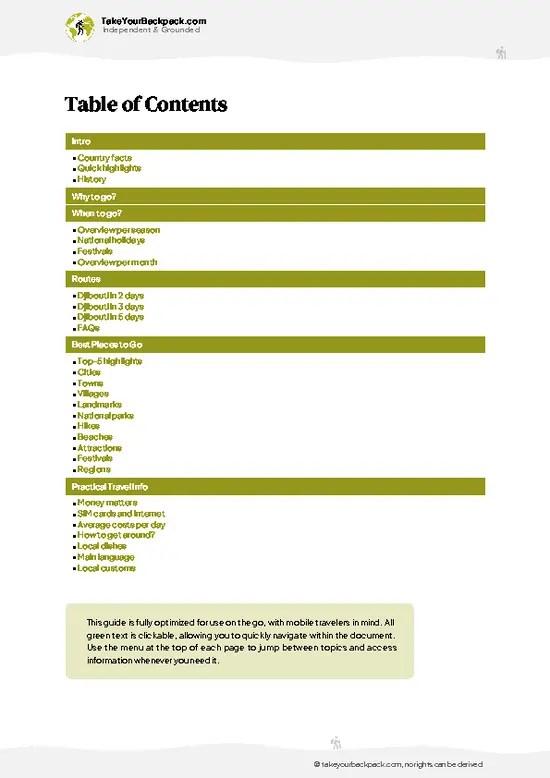
example page 2 from our offline Travel Guide for Djibouti
example page 3 from our offline Travel Guide for Djibouti
example page 4 from our offline Travel Guide for Djibouti
example page 5 from our offline Travel Guide for Djibouti
example page 6 from our offline Travel Guide for Djibouti
example page 7 from our offline Travel Guide for Djibouti
Loading the map 🌍
CLICK TO FILTER
cities
towns
villages
landmarks
national parks
hikes
beaches
attractions
festivals
regions
SHOW COUNTRY’S BESTSHOW ALL

✨ Why go?
Ranked #3 attraction in Djibouti
Reasons people choose to visit here

Djibouti Central Market gives you the fastest read on the country’s mix of Afar, Somali, Yemeni and French influence, all within a few blocks. The stalls sell incense resin, camel-milk products, dried fish, bright cotton wraps and imported goods from across the Red Sea, so the trade routes that shaped Djibouti’s port economy are visible on the tables. You can see it, smell it and taste it.
It also works as a practical stop. This is the place to buy cloth, sandals, spices and snacks before heading to the lakes or the Gulf of Tadjoura, and to get a feel for prices before you negotiate elsewhere. The daily qat rush, when trucks arrive and buyers crowd the sellers, is a scene you will not find in most other capitals. Watching it tells you more about the rhythm of local life than any museum label. … read more 👉
Djibouti Central Market gives you the fastest read on the country’s mix of Afar, Somali, Yemeni and French influence, all within a few blocks. The stalls sell incense resin, camel-milk products, dried fish, bright cotton wraps and imported goods from across the Red Sea, so the trade routes that shaped Djibouti’s port economy are visible on the tables. You can see it, smell it and taste it.
It also works as a practical stop. This is the place to buy cloth, sandals, spices and snacks before heading to the lakes or the Gulf of Tadjoura, and to get a feel for prices before you negotiate elsewhere. The daily qat rush, when trucks arrive and buyers crowd the sellers, is a scene you will not find in most other capitals. Watching it tells you more about the rhythm of local life than any museum label. If you only have a day in the city, this is a sensible place to spend a good part of it.

💡 HighlightsDon't-miss highlights and experiences

  1. Qat stalls: The market’s best-known trade. Fresh bundles arrive from Ethiopia, and the buying frenzy around the sellers is a lesson in local routine. Watch rather than join.
  2. Spice and incense lanes: Sacks of cumin, cardamom and chili sit beside lumps of frankincense and myrrh, sold by weight and worth sniffing before you haggle.
  3. Fabric and clothing stalls: Rolls of colorful cotton, women’s wraps and men’s macawiis (sarongs) hang overhead. Tailors nearby can sew simple items on the spot.
  4. Fish and meat section: A working corner supplying the city’s kitchens, with catch from the Gulf. It is raw and loud, so go if you want the unfiltered view.
  5. Fruit and vegetable vendors: Bananas, papayas, mangoes, tomatoes and limes arrive in sacks and crates, and sellers will let you taste before buying.
  6. Handicraft
… read more 👉
  1. Qat stalls: The market’s best-known trade. Fresh bundles arrive from Ethiopia, and the buying frenzy around the sellers is a lesson in local routine. Watch rather than join.
  2. Spice and incense lanes: Sacks of cumin, cardamom and chili sit beside lumps of frankincense and myrrh, sold by weight and worth sniffing before you haggle.
  3. Fabric and clothing stalls: Rolls of colorful cotton, women’s wraps and men’s macawiis (sarongs) hang overhead. Tailors nearby can sew simple items on the spot.
  4. Fish and meat section: A working corner supplying the city’s kitchens, with catch from the Gulf. It is raw and loud, so go if you want the unfiltered view.
  5. Fruit and vegetable vendors: Bananas, papayas, mangoes, tomatoes and limes arrive in sacks and crates, and sellers will let you taste before buying.
  6. Handicraft sellers: Woven baskets, wooden headrests, silver jewelry and Afar-style knives turn up here, with prices that drop sharply after friendly bargaining.
  7. Street tea and snack stands: Sweet spiced tea, fried dough and sambusas are sold at the edges, a good place to sit and watch the crowd.
Djibouti Central Market takes about one to two hours to cover properly, longer if you stop for tea or bargain at length.
Spotted a mistake or missing something? Contact us.

Things to do near Djibouti Central Market

Ratings based on Tripadvisor reviews. When you book through this link, you support our work at no extra cost to you.

🌤️ When to go?Seasonal considerations and timing

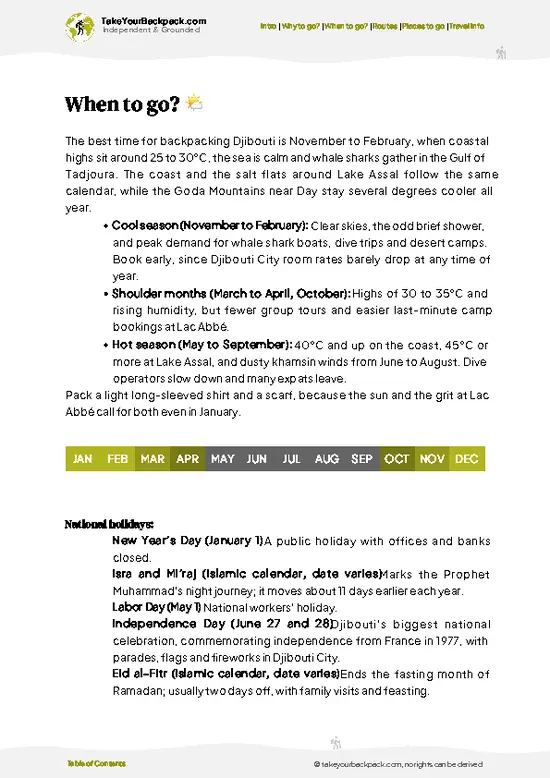
  • Cool Season (November to February): Djibouti Central Market is most comfortable now, with highs of 28 to 32°C (82 to 90°F) and nights around 22 to 25°C (72 to 77°F). Crowds of stallholders and shoppers are at their peak, and so are hotel prices in the capital.
  • Shoulder Months (March to April and October): Highs of 33 to 37°C (91 to 99°F) make midday browsing sticky but doable. Rooms are easier to get and bargaining is looser.
  • Hot Season (May to September): Expect 38 to 45°C (100 to 113°F) with heavy humidity and a hot wind off the desert. Many traders close their shutters from about noon to mid-afternoon, and covered lanes feel like ovens. Prices for beds drop, but sightseeing hours shrink.
  • Ramadan: Trading starts late and picks up after sunset, with food stalls busy at dusk. Daytime opening
… read more 👉
  • Cool Season (November to February): Djibouti Central Market is most comfortable now, with highs of 28 to 32°C (82 to 90°F) and nights around 22 to 25°C (72 to 77°F). Crowds of stallholders and shoppers are at their peak, and so are hotel prices in the capital.
  • Shoulder Months (March to April and October): Highs of 33 to 37°C (91 to 99°F) make midday browsing sticky but doable. Rooms are easier to get and bargaining is looser.
  • Hot Season (May to September): Expect 38 to 45°C (100 to 113°F) with heavy humidity and a hot wind off the desert. Many traders close their shutters from about noon to mid-afternoon, and covered lanes feel like ovens. Prices for beds drop, but sightseeing hours shrink.
  • Ramadan: Trading starts late and picks up after sunset, with food stalls busy at dusk. Daytime opening is patchy, and you should not eat or drink openly.
Daylight stays close to 12 hours all year, so plan your market loop for the first hours after the shutters go up, before the heat settles in.


source: climatestotravel.comJANJanuary: excellent for travelingFEBFebruary: excellent for travelingMARMarch: good for travelingAPRApril: good for travelingMAYMay: fair for travelingJUNJune: below average for travelingJULJuly: below average for travelingAUGAugust: below average for travelingSEPSeptember: below average for travelingOCTOctober: good for travelingNOVNovember: excellent for travelingDECDecember: highly recommended for traveling
djibouti-attraction-djibouti-central-market
© Google |

✈️ The backpacker research shortcutDjibouti Travel Guide

An offline-friendly backpacking guide with optimized travel routes, ranked highlights, transport advice, and the best areas to stay.
example page 0 from our offline Travel Guide for Djibouti
example page 1 from our offline Travel Guide for Djibouti
example page 2 from our offline Travel Guide for Djibouti
example page 3 from our offline Travel Guide for Djibouti
example page 4 from our offline Travel Guide for Djibouti
example page 5 from our offline Travel Guide for Djibouti
example page 6 from our offline Travel Guide for Djibouti
example page 7 from our offline Travel Guide for Djibouti
The digital guide (186 pages) contains:
✅ 44 highlights, ranked by travel appeal
✅ Optimized 2, 3 & 5-day travel routes
✅ Cities, national parks, landmarks, beaches
✅ How to get around
✅ Offline-friendly for travel without Wi-Fi
👉 Click to see all 30+ guide features

📅 Plan smarter in minutes, not weeks
✅ Month by month travel advice
✅ Festivals & national holidays
✅ Budget expectations

🗺️ Go to the right places, skip the overrated ones
✅ Honest pros & cons of destinations
✅ Top hikes, parks & viewpoints
✅ Lesser-known places most travelers miss
✅ Clear “worth it vs skip it” guidance

🛏️ Travel smoothly without rookie mistakes
✅ Best areas to stay
✅ Transport systems explained simply
✅ Common scams & safety advice
✅ SIM cards, money & practical tips

🌍 Understand the country, not just visit it
✅ Culture & traditions
✅ 52 Essential phrases & customs
✅ Festivals worth planning around
✅ Traveler-friendly historical context
✅ Insights that make places more meaningful

📱 Built for real travel conditions
✅ Fully downloadable PDF
✅ Works completely offline
✅ Optimized for phone use
✅ Useful in remote areas & buses
✅ Everything in one place
Stop searching, start planning
Get instant access to your full guide. 30‑day money-back guarantee.
+ Add another guide for just

By proceeding you agree to our terms.
Sent to your inbox immediately after payment • 100% Secure Checkout
Best Backpacking Travel Advisor 2025 tourism awardBest Backpacking
Travel Advisor
2025
What others say about Take Your Backpack Guides:
⭐⭐⭐⭐⭐
Fantastic, amazing amount of information!
⭐⭐⭐⭐⭐
My goodness this is amazing, it's what I've been looking for hats off too you!
⭐⭐⭐⭐⭐
I think this is absolutely BRILLIANT
⭐⭐⭐⭐
Very complete and informative. It's still missing places, but I gotta to commend you
⭐⭐⭐⭐⭐
This is truly amazing, thank you, can't wait to explore it with my kids!
⭐⭐⭐⭐⭐
Awesome resource, thank you!
⭐⭐⭐⭐⭐
This is amazing! Can't wait to explore the ones I haven't seen
⭐⭐⭐⭐
I love this! Well done, great idea.
⭐⭐⭐⭐⭐
Thanks for taking the time to make this gem!
⭐⭐⭐⭐⭐
This might be the best website I've ever seen.
⭐⭐⭐⭐⭐
Congratulations, and thank you so much for your work; it's incredibly valuable.
⭐⭐⭐⭐
In all seriousness I think you did a great job pointing out the important spots
⭐⭐⭐⭐⭐
10/10 very good
⭐⭐⭐⭐⭐
As someone who's only just starting to visit regularly this is awesome, thank you.
⭐⭐⭐⭐
Thank you very much! I'm going to visit my dad, it's going to be very useful!
⭐⭐⭐⭐⭐
This is really cool! We'll be travelling for the first time and this definitely come in handy.
⭐⭐⭐⭐⭐
You are now our minister of culture, congratulations 👨‍💼
⭐⭐⭐⭐⭐
Just wanted to tell you that this is a pearl! Going to follow your recommendations.
⭐⭐⭐⭐⭐
This is so cool. I'll definitely be using the resource for my travels soon.
⭐⭐⭐⭐⭐
This is very impressive! Good work.
⭐⭐⭐⭐⭐
This is an amazing and informative site. Very well done!

🛏️ Where to stay?Choosing the right base

The most practical area is the city center around Place Menelik and Place Mahmoud Harbi, where the market is a short walk away and you can reach the main sights on foot. Rooms here are mostly small guesthouses and budget hotels, and the streets stay busy with cafes and street-food vendors well into the evening, which makes walking back after dark feel comfortable. Backpackers often meet over coffee and fresh juice at the terraces on the square, and it is the easiest place to find other travelers to split a taxi or a day trip with.

The European Quarter, just north of the center near the old colonial … read more 👉
The most practical area is the city center around Place Menelik and Place Mahmoud Harbi, where the market is a short walk away and you can reach the main sights on foot. Rooms here are mostly small guesthouses and budget hotels, and the streets stay busy with cafes and street-food vendors well into the evening, which makes walking back after dark feel comfortable. Backpackers often meet over coffee and fresh juice at the terraces on the square, and it is the easiest place to find other travelers to split a taxi or a day trip with.

The European Quarter, just north of the center near the old colonial buildings and the Place du 27 Juin, is a quieter alternative. Streets are wider, with more tree shade and a calmer feel at night, and you remain within a 10 to 15 minute walk of the market stalls.

The Ambouli road toward the airport has some mid-range options with air-conditioning. They are less social and need a taxi into town, so they suit only late flights or early departures. Wherever you sleep, check that the room has working air-conditioning, since nights stay warm and humid for most of the year.

👛 Costs (as of 22 October 2026)Typical daily expenses

Djibouti Central Market costs nothing to enter, and a realistic day of backpacking around it runs about US$62 including a bed, meals and local rides. Prices in the capital run high by regional standards because most food is imported, and travelers pay in Djiboutian francs, though US dollars and euros are widely accepted.
CategoryBudget RangeLocal Reality
EntryUS$0Open public market, no ticket. Browsing is free.
Accommodation (high season)US$25 to 40Basic guesthouse rooms with air-conditioning near the center. Low season, roughly US$20 to 30.
Street food and cafe mealsUS$6 to 12Grilled fish, skoudehkaris (spiced rice with meat), and fresh bread with tea or coffee.
Fresh produce and khat area snacksUS$1 to 4Fruit, juices and dates from market stalls. Khat is sold widely and is a local habit.
Local
… read more 👉
Djibouti Central Market costs nothing to enter, and a realistic day of backpacking around it runs about US$62 including a bed, meals and local rides. Prices in the capital run high by regional standards because most food is imported, and travelers pay in Djiboutian francs, though US dollars and euros are widely accepted.
CategoryBudget RangeLocal Reality
EntryUS$0Open public market, no ticket. Browsing is free.
Accommodation (high season)US$25 to 40Basic guesthouse rooms with air-conditioning near the center. Low season, roughly US$20 to 30.
Street food and cafe mealsUS$6 to 12Grilled fish, skoudehkaris (spiced rice with meat), and fresh bread with tea or coffee.
Fresh produce and khat area snacksUS$1 to 4Fruit, juices and dates from market stalls. Khat is sold widely and is a local habit.
Local transportUS$2 to 6Shared minibuses cost little, taxis within the center run about US$3 to 6 per ride. Agree the fare first.
Souvenirs and textilesUS$5 to 15Fabrics, spices, baskets and incense. Bargaining is expected and usually brings the price down 20 to 30 percent.
Water and extrasUS$2 to 4Bottled water and cold drinks are priced higher in the afternoon heat.
Total Daily BudgetUS$62Based on a high-season bed and typical daily spending.
⚠️ Prices can change and everyone travels differently, so take this as a rough guide. Hope it helps you plan your adventure!

FAQCommon questions from travelers

Plan on 1.5 to 3 hours at Djibouti Central Market. That is enough for one slow loop through the covered lanes, the spice and fabric stalls and a tea stop. Go in the morning while stalls are fully open, and add an hour if you want to bargain for textiles or eat at the food stalls.
Yes, since Djibouti Central Market has no entrance fee at all, only what you choose to buy or eat. A full visit costs little, roughly US$5 to 20 for snacks, juice or a souvenir. It is one of the cheapest and most local activities in the capital.
Djibouti Central Market sits in the middle of Djibouti City, about 6 to 8 km (4 to 5 miles) from Ambouli International Airport, a 15 to 25 minute taxi ride costing roughly US$10 to 15. From the center you can walk from Place Menelik in around 5 to 10 minutes. Shared minibuses run along the main streets for under US$1, and taxis within town usually cost US$3 to 6.
⚠️ Things can change over time, so always validate details locally before you go.

Other Djiboutian attractions near Djibouti Central Market

Explore more nearby:


💡 Not sure where to go next?
Create a personalized itinerary for Djibouti including Djibouti Central Market and the places that fit your trip.

Generate my itinerary

👉 Discover all attractions

Or checkout all Djibouti has to offer (think cities, towns, villages, national parks, hikes, beaches, festivals)
Country photo of Djibouti

We 💚 feedbackKey takeaways before you go

Djibouti Central Market catches many travelers out when they arrive after lunch, just as qat chewing starts and half the vendors slow down or close. I would go in the morning, when produce is fresh and sellers are still negotiating. Carry small bills, keep your phone in a front pocket, and ask before photographing anyone.

✍️ Help improve this page!
The information on this page is based on in-depth research, insights shared by experienced travelers, and feedback from the local travel community in Djibouti. While every effort is made to keep the information accurate and current, conditions can change — so if you spot anything incorrect or outdated, please get in touch.


🙋‍♂️ Give feedback

👋 Meet the founderWho’s Behind Take Your Backpack?

Johan, backpacker and founder of TakeYourBackpackHi, I’m Johan (Netherlands 🇳🇱), the creator of TakeYourBackpack. Over the past 3 decades, I’ve backpacked through 90+ countries across six continents, gaining extensive experience with independent travel, long-term trips, and overland routes.

This site is built on a combination of firsthand travel experience and carefully curated insights from other backpackers. Many guides are based on places I’ve personally visited, while others bring together tips, observations, and practical advice shared by trusted travelers I’ve met along the way.

The goal is to provide realistic, experience-driven guidance — not generic itineraries — so you can explore destinations with better context, clearer expectations, and more confidence.