×

Djibouti🇩🇯 | festivalsEid al-AdhaBalbala livestock pens, Eid prayer grounds, shared roast meat | things to do and best time to go

Explore Djibouti CityExplore Djibouti Independence Day

Backpacking in Eid al-Adha
👍 Recommendedfestival ranked #4
By Johan Kruseman 🇳🇱 | Updated October 22, 2026

Years ago, Eid al-Adha in Djibouti was a family affair with little for outsiders to see: a sheep bought in the neighborhood, a prayer, a shared meal behind closed doors. Today a visitor can walk through it, though the holiday remains a religious one and not a festival with a program. It is observed across Djibouti, and the clearest picture comes from Djibouti City, the capital, where the days before the feast fill the streets with livestock sellers and shoppers. Roadside pens appear in Balbala and around the markets, and you get a lesson in how a household chooses and haggles for an animal. On the morning itself, men and boys in fresh clothes walk to open-air prayer grounds and mosques, and you get the rhythm of a country pausing together. Meat is shared with neighbors and the poor. The audience is almost entirely local, so you attend as a respectful guest. It lasts about three days, and the heat sits heavy over everything.

Discover everything you want to know in the 📖 Djibouti Travel Guide.


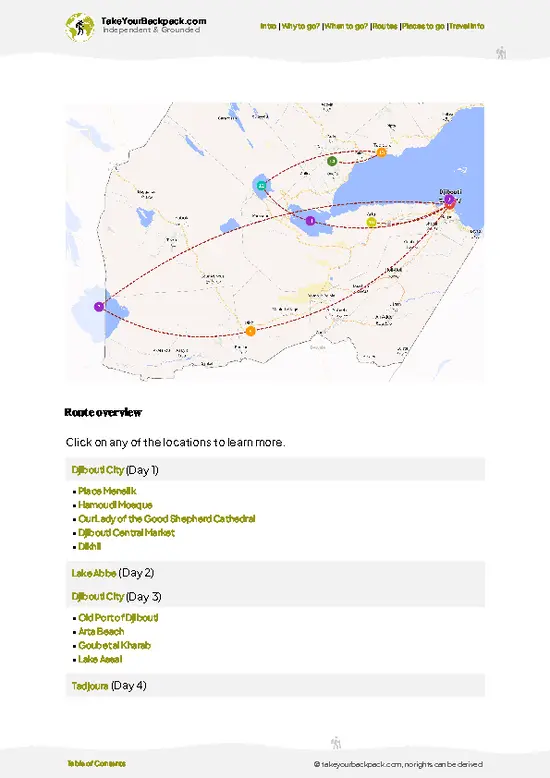
example page 0 from our offline Travel Guide for Djibouti
example page 1 from our offline Travel Guide for Djibouti
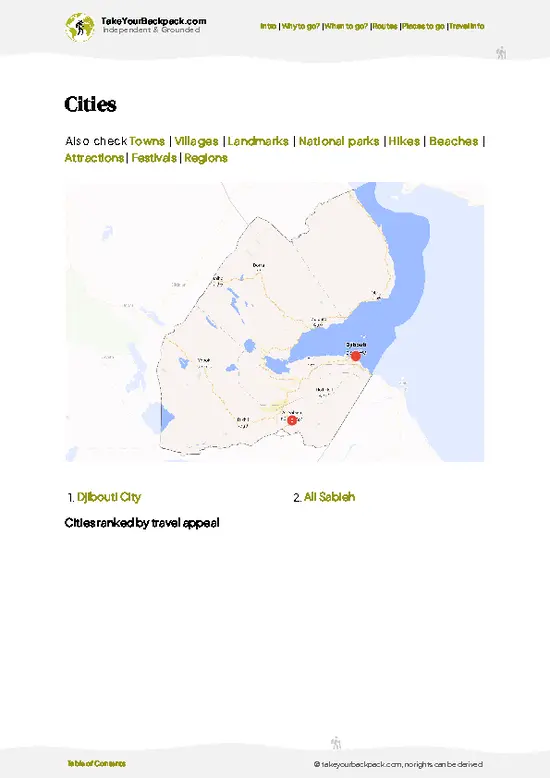
example page 2 from our offline Travel Guide for Djibouti
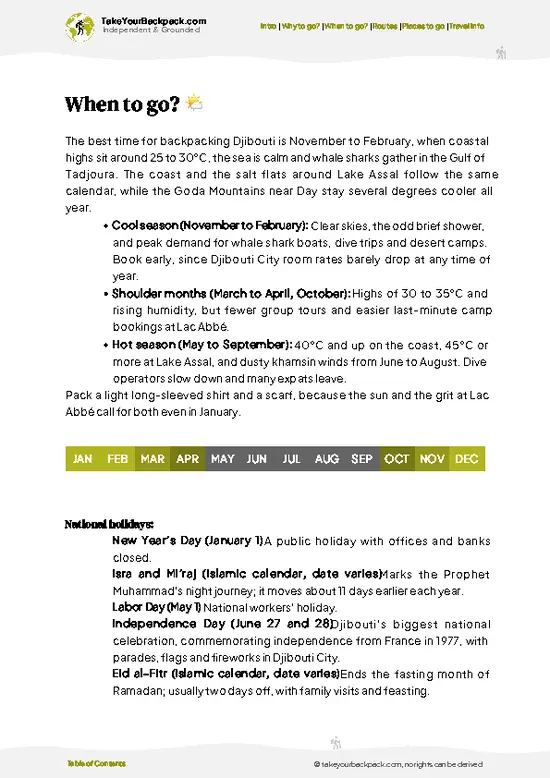
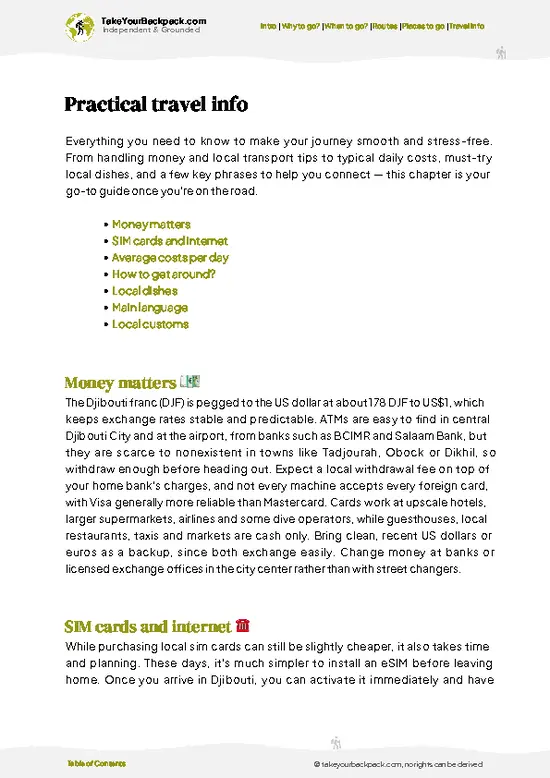
example page 3 from our offline Travel Guide for Djibouti
example page 4 from our offline Travel Guide for Djibouti
example page 5 from our offline Travel Guide for Djibouti
example page 6 from our offline Travel Guide for Djibouti
example page 7 from our offline Travel Guide for Djibouti
Loading the map 🌍
CLICK TO FILTER
cities
towns
villages
landmarks
national parks
hikes
beaches
attractions
festivals
regions
SHOW COUNTRY’S BESTSHOW ALL

✨ Why go?
Ranked #4 festival in Djibouti
Reasons people choose to celebrate the here

Eid al-Adha gives you something a normal week in Djibouti does not: a view into family life during the country’s most important Muslim holiday. Backpackers who plan around it are usually already traveling through the Horn of Africa and want to see how Somali, Afar and Arab traditions meet in a small, mostly Muslim nation.
The draw is access. Families who would otherwise keep a distance often invite a polite visitor to a shared plate of roasted goat or lamb, and a greeting in Arabic or Somali opens doors fast. You will see the livestock markets around Balbala at their busiest in the days leading up, which is the best free lesson in local trade you can get.
It also changes your plans in a practical way. Shops and offices close for several days, so the holiday works best as a pause in a longer … read more 👉
Eid al-Adha gives you something a normal week in Djibouti does not: a view into family life during the country’s most important Muslim holiday. Backpackers who plan around it are usually already traveling through the Horn of Africa and want to see how Somali, Afar and Arab traditions meet in a small, mostly Muslim nation.
The draw is access. Families who would otherwise keep a distance often invite a polite visitor to a shared plate of roasted goat or lamb, and a greeting in Arabic or Somali opens doors fast. You will see the livestock markets around Balbala at their busiest in the days leading up, which is the best free lesson in local trade you can get.
It also changes your plans in a practical way. Shops and offices close for several days, so the holiday works best as a pause in a longer route toward Lac Assal, Lake Abbe or the whale shark waters of the Gulf of Tadjoura, not as a stop with a packed schedule.

💡 HighlightsEssential experiences to have while celebrating the Eid al-Adha

  1. Eid prayer gatherings: On the first morning, worshippers fill mosques and open prayer grounds in Djibouti City in new clothes. The prayer is short, the mood is warm, and you can watch respectfully from the edge.
  2. Livestock markets in Balbala: In the days before the feast, sheep and goats are sold from roadside pens on the capital’s edge. Bargaining is loud and quick, and the animals are often brought in from the interior.
  3. The family sacrifice and meat sharing: After prayers, households slaughter an animal at home, and portions are divided for relatives, neighbors and people in need. It is a private rite, so watch only when invited.
  4. The holiday meal: Roasted or stewed meat comes with rice, flatbread and sweet spiced tea. Being offered a seat is the highest compliment a traveler can receive here.
… read more 👉
  1. Eid prayer gatherings: On the first morning, worshippers fill mosques and open prayer grounds in Djibouti City in new clothes. The prayer is short, the mood is warm, and you can watch respectfully from the edge.
  2. Livestock markets in Balbala: In the days before the feast, sheep and goats are sold from roadside pens on the capital’s edge. Bargaining is loud and quick, and the animals are often brought in from the interior.
  3. The family sacrifice and meat sharing: After prayers, households slaughter an animal at home, and portions are divided for relatives, neighbors and people in need. It is a private rite, so watch only when invited.
  4. The holiday meal: Roasted or stewed meat comes with rice, flatbread and sweet spiced tea. Being offered a seat is the highest compliment a traveler can receive here.
  5. Evening visits and strolls in Place Mahamoud Harbi: In the capital’s main square area, families dressed up for the holiday gather as the heat eases. Street snacks and conversation make it the easiest place to meet people.
For a first visit, start with the Eid prayer gatherings, since they are public, easy to find and set the tone for the whole holiday.
Spotted a mistake or missing something? Contact us.

🌤️ When to go?When is the celebration of Eid al-Adha?

Eid al-Adha is celebrated across Djibouti on the 10th of Dhu al-Hijjah, a date that shifts about 11 days earlier each year and is confirmed by moon sighting, with the main observance lasting 3 to 4 days and centered on Djibouti City.
  • Best day: The first morning is the one to catch, when crowds gather for prayer at mosques and open prayer grounds, then the sacrifice and family feasts follow. Days two and three are quieter and easier for meeting people.
  • Weather: Expect heat and humidity on the coast, typically 30 to 41°C (86 to 106°F), depending on the season the holiday falls in. Bring a light cotton layer that covers shoulders and knees, a hat, and a refillable bottle.
  • Booking: Reserve beds and onward tickets 3 to 4 weeks ahead. Rooms in the capital can cost 20 to 40 percent more, and many shops
… read more 👉
Eid al-Adha is celebrated across Djibouti on the 10th of Dhu al-Hijjah, a date that shifts about 11 days earlier each year and is confirmed by moon sighting, with the main observance lasting 3 to 4 days and centered on Djibouti City.
  • Best day: The first morning is the one to catch, when crowds gather for prayer at mosques and open prayer grounds, then the sacrifice and family feasts follow. Days two and three are quieter and easier for meeting people.
  • Weather: Expect heat and humidity on the coast, typically 30 to 41°C (86 to 106°F), depending on the season the holiday falls in. Bring a light cotton layer that covers shoulders and knees, a hat, and a refillable bottle.
  • Booking: Reserve beds and onward tickets 3 to 4 weeks ahead. Rooms in the capital can cost 20 to 40 percent more, and many shops and restaurants close for the first two days.
  • Travel timing: Buses and shared taxis to Tadjoura, Ali Sabieh and Dikhil fill the day before the holiday. Leave a day early or wait until day three.
Withdraw cash and stock up on groceries before the eve, because many places shut.


source: climatestotravel.comJANJanuary: not recommended for travelingFEBFebruary: not recommended for travelingMARMarch: not recommended for travelingAPRApril: not recommended for travelingMAYMay: not recommended for travelingJUNJune: not recommended for travelingJULJuly: highly recommended for travelingAUGAugust: highly recommended for travelingSEPSeptember: highly recommended for travelingOCTOctober: not recommended for travelingNOVNovember: not recommended for travelingDECDecember: not recommended for traveling

✈️ The backpacker research shortcutDjibouti Travel Guide

An offline-friendly backpacking guide with optimized travel routes, ranked highlights, transport advice, and the best areas to stay.
example page 0 from our offline Travel Guide for Djibouti
example page 1 from our offline Travel Guide for Djibouti
example page 2 from our offline Travel Guide for Djibouti
example page 3 from our offline Travel Guide for Djibouti
example page 4 from our offline Travel Guide for Djibouti
example page 5 from our offline Travel Guide for Djibouti
example page 6 from our offline Travel Guide for Djibouti
example page 7 from our offline Travel Guide for Djibouti
The digital guide (186 pages) contains:
✅ 44 highlights, ranked by travel appeal
✅ Optimized 2, 3 & 5-day travel routes
✅ Cities, national parks, landmarks, beaches
✅ How to get around
✅ Offline-friendly for travel without Wi-Fi
👉 Click to see all 30+ guide features

📅 Plan smarter in minutes, not weeks
✅ Month by month travel advice
✅ Festivals & national holidays
✅ Budget expectations

🗺️ Go to the right places, skip the overrated ones
✅ Honest pros & cons of destinations
✅ Top hikes, parks & viewpoints
✅ Lesser-known places most travelers miss
✅ Clear “worth it vs skip it” guidance

🛏️ Travel smoothly without rookie mistakes
✅ Best areas to stay
✅ Transport systems explained simply
✅ Common scams & safety advice
✅ SIM cards, money & practical tips

🌍 Understand the country, not just visit it
✅ Culture & traditions
✅ 52 Essential phrases & customs
✅ Festivals worth planning around
✅ Traveler-friendly historical context
✅ Insights that make places more meaningful

📱 Built for real travel conditions
✅ Fully downloadable PDF
✅ Works completely offline
✅ Optimized for phone use
✅ Useful in remote areas & buses
✅ Everything in one place
Stop searching, start planning
Get instant access to your full guide. 30‑day money-back guarantee.
+ Add another guide for just

By proceeding you agree to our terms.
Sent to your inbox immediately after payment • 100% Secure Checkout
Best Backpacking Travel Advisor 2025 tourism awardBest Backpacking
Travel Advisor
2025
What others say about Take Your Backpack Guides:
⭐⭐⭐⭐⭐
Fantastic, amazing amount of information!
⭐⭐⭐⭐⭐
My goodness this is amazing, it's what I've been looking for hats off too you!
⭐⭐⭐⭐⭐
I think this is absolutely BRILLIANT
⭐⭐⭐⭐
Very complete and informative. It's still missing places, but I gotta to commend you
⭐⭐⭐⭐⭐
This is truly amazing, thank you, can't wait to explore it with my kids!
⭐⭐⭐⭐⭐
Awesome resource, thank you!
⭐⭐⭐⭐⭐
This is amazing! Can't wait to explore the ones I haven't seen
⭐⭐⭐⭐
I love this! Well done, great idea.
⭐⭐⭐⭐⭐
Thanks for taking the time to make this gem!
⭐⭐⭐⭐⭐
This might be the best website I've ever seen.
⭐⭐⭐⭐⭐
Congratulations, and thank you so much for your work; it's incredibly valuable.
⭐⭐⭐⭐
In all seriousness I think you did a great job pointing out the important spots
⭐⭐⭐⭐⭐
10/10 very good
⭐⭐⭐⭐⭐
As someone who's only just starting to visit regularly this is awesome, thank you.
⭐⭐⭐⭐
Thank you very much! I'm going to visit my dad, it's going to be very useful!
⭐⭐⭐⭐⭐
This is really cool! We'll be travelling for the first time and this definitely come in handy.
⭐⭐⭐⭐⭐
You are now our minister of culture, congratulations 👨‍💼
⭐⭐⭐⭐⭐
Just wanted to tell you that this is a pearl! Going to follow your recommendations.
⭐⭐⭐⭐⭐
This is so cool. I'll definitely be using the resource for my travels soon.
⭐⭐⭐⭐⭐
This is very impressive! Good work.
⭐⭐⭐⭐⭐
This is an amazing and informative site. Very well done!

🛏️ Where to stay?Choosing the right base

Djibouti City’s central district around Place Mahmoud Harbi is the most practical area to stay for Eid al-Adha, because the main mosques, markets, cafes and taxi stands are all within walking distance. It is flat, busy with families on holiday mornings, and feels safe in daylight. After dark, take a taxi rather than walking, especially on quiet side streets.
The Ambouli and Balbala fringes have cheaper rooms and strong local atmosphere during the holiday, but they sit farther from the center and suit travelers who are comfortable with taxis and basic surroundings. Heron and Haramous, toward the … read more 👉
Djibouti City’s central district around Place Mahmoud Harbi is the most practical area to stay for Eid al-Adha, because the main mosques, markets, cafes and taxi stands are all within walking distance. It is flat, busy with families on holiday mornings, and feels safe in daylight. After dark, take a taxi rather than walking, especially on quiet side streets.
The Ambouli and Balbala fringes have cheaper rooms and strong local atmosphere during the holiday, but they sit farther from the center and suit travelers who are comfortable with taxis and basic surroundings. Heron and Haramous, toward the coast, are quieter and calmer, with more guesthouses and a better chance of meeting other travelers and expats at cafes and seafront restaurants.
If you want the festival feel in a smaller place, Tadjoura across the gulf is relaxed and friendly, with families gathering in the open on the holiday. Ferries run from the capital, though schedules thin out around Eid.
Social options are limited in Djibouti, so expect to meet people at communal tables, in shared taxis and at the mosque courtyards rather than in big hostel scenes. Book early, because demand rises sharply when diaspora families return home.

👛 Costs (as of 22 October 2026)Money, prices, and spending tips

Eid al-Adha in Djibouti costs roughly US$50 to 125 per day for an independent traveler, with the capital pushing prices up during the holiday. There is no ticket, since the celebration is communal.
CategoryBudget RangeLocal Reality
Festival ticketsUS$0Prayers and street celebrations are free to watch. Dress modestly and ask before photographing people.
AccommodationUS$30 to 60 a night (high season)Simple guesthouses in the capital charge more around the holiday. Mid-range rooms can reach US$80 or more.
Local transportUS$5 to 20Shared minibuses cost under US$1 a ride, taxis in town about US$3 to 8. Intercity fares rise on the eve.
Food & drinksUS$10 to 30Street plates and home hospitality keep costs low, while restaurants that open charge US$8 to 20 a meal.
MiscellaneousUS$5 to 15Water, SIM data,
… read more 👉
Eid al-Adha in Djibouti costs roughly US$50 to 125 per day for an independent traveler, with the capital pushing prices up during the holiday. There is no ticket, since the celebration is communal.
CategoryBudget RangeLocal Reality
Festival ticketsUS$0Prayers and street celebrations are free to watch. Dress modestly and ask before photographing people.
AccommodationUS$30 to 60 a night (high season)Simple guesthouses in the capital charge more around the holiday. Mid-range rooms can reach US$80 or more.
Local transportUS$5 to 20Shared minibuses cost under US$1 a ride, taxis in town about US$3 to 8. Intercity fares rise on the eve.
Food & drinksUS$10 to 30Street plates and home hospitality keep costs low, while restaurants that open charge US$8 to 20 a meal.
MiscellaneousUS$5 to 15Water, SIM data, small gifts for hosts and tips for drivers. Cash in Djiboutian francs is most useful.
Total Daily BudgetUS$50 to 125About US$85 on a mid-level plan, with cash on hand for closed ATMs.
⚠️ Prices can change and everyone travels differently, so take this as a rough guide. Hope it helps you plan your adventure!

🍲 FoodLocal Cuisine & Drinks

Eid al-Adha in Djibouti is a meat holiday, and the first day revolves around freshly sacrificed goat or sheep, roasted over charcoal or simmered with rice. Families often invite visitors in, so accept a plate if offered.
The dish to look for is skoudehkaris, a spiced rice and lamb stew scented with cardamom and cloves, usually eaten with a banana on the side. You may also find fahfah, a hearty spicy meat soup, and lahoh or canjeero, spongy pancakes eaten for breakfast with honey, ghee or tea. Sweet halwa and dates appear on trays when guests arrive.
For drinks, expect spiced shaah tea with cinnamon and cloves, strong coffee, fresh mango and papaya juice, and cold bottled soda. Alcohol is hard to find and not part of the celebration.
Etiquette is simple. Eat with your right hand, take your share … read more 👉
Eid al-Adha in Djibouti is a meat holiday, and the first day revolves around freshly sacrificed goat or sheep, roasted over charcoal or simmered with rice. Families often invite visitors in, so accept a plate if offered.
The dish to look for is skoudehkaris, a spiced rice and lamb stew scented with cardamom and cloves, usually eaten with a banana on the side. You may also find fahfah, a hearty spicy meat soup, and lahoh or canjeero, spongy pancakes eaten for breakfast with honey, ghee or tea. Sweet halwa and dates appear on trays when guests arrive.
For drinks, expect spiced shaah tea with cinnamon and cloves, strong coffee, fresh mango and papaya juice, and cold bottled soda. Alcohol is hard to find and not part of the celebration.
Etiquette is simple. Eat with your right hand, take your share from the common platter in front of you, and say thanks after the meal. Portions are generous and refusing a second helping can take some effort.
Restaurants are mostly shut for the first day or two, so street vendors and family kitchens fill the gap. Carry small cash, because cards are rarely used outside upscale places.

FAQTraveler FAQ

Eid al-Adha falls on the 10th of Dhu al-Hijjah, which moves roughly 11 days earlier each year and is confirmed by moon sighting. Celebrations in Djibouti run for about 3 to 4 days, with the first morning the main event. Public offices and many shops close for 2 to 3 days.
Attending Eid al-Adha in Djibouti costs nothing for entry, since prayers and street gatherings are open to everyone. A typical day for a budget traveler runs about US$50 to 125, mostly for a room at US$30 to 60 and meals at US$10 to 30. Taxi and intercity fares rise around the holiday.
Eid al-Adha in Djibouti needs no tickets, because it is a religious and family holiday rather than a ticketed event. What you should reserve ahead is a bed, ideally 3 to 4 weeks before, and any bus or ferry seat if traveling to Tadjoura or Ali Sabieh. Carry cash, as many shops and ATMs are unreliable on the first two days.
⚠️ Things can change over time, so always validate details locally before you go.

Other Djiboutian festivals near Eid al-Adha

Explore more nearby:


💡 Not sure where to go next?
Create a personalized itinerary for Djibouti including Eid al-Adha and the places that fit your trip.

Generate my itinerary

👉 Discover all festivals

Or checkout all Djibouti has to offer (think cities, towns, villages, national parks, hikes, beaches, festivals)
Country photo of Djibouti

We 💚 feedbackFinal thoughts on celebrating the Eid al-Adha

Eid al-Adha is best met on the first morning, when the prayer ends and the streets of the capital turn quiet and festive at once. I would arrive two days early to catch the livestock markets, then keep the afternoon free for invitations. Dress modestly, carry small bills for tips and snacks, and stock up on supplies before shops close.

✍️ Help improve this page!
The information on this page is based on in-depth research, insights shared by experienced travelers, and feedback from the local travel community in Djibouti. While every effort is made to keep the information accurate and current, conditions can change — so if you spot anything incorrect or outdated, please get in touch.


🙋‍♂️ Give feedback

👋 Meet the founderWho’s Behind Take Your Backpack?

Johan, backpacker and founder of TakeYourBackpackHi, I’m Johan (Netherlands 🇳🇱), the creator of TakeYourBackpack. Over the past 3 decades, I’ve backpacked through 90+ countries across six continents, gaining extensive experience with independent travel, long-term trips, and overland routes.

This site is built on a combination of firsthand travel experience and carefully curated insights from other backpackers. Many guides are based on places I’ve personally visited, while others bring together tips, observations, and practical advice shared by trusted travelers I’ve met along the way.

The goal is to provide realistic, experience-driven guidance — not generic itineraries — so you can explore destinations with better context, clearer expectations, and more confidence.