×

Djibouti🇩🇯 | festivalsEid al-FitrDawn prayer, Ramadan's end, halwa and sambusa, family calls | things to do and best time to go

Explore Djibouti Independence DayExplore Mawlid al-Nabi

Backpacking in Eid al-Fitr
👌 Worth visitingfestival ranked #5
By Johan Kruseman 🇳🇱 | Updated October 22, 2026

The date of Eid al-Fitr is set by the sighting of the new moon, so it can shift by a day and is often confirmed only the evening before, which makes booking fixed bus or flight dates risky. It is observed across Djibouti, with the liveliest scenes in Djibouti City, where the prayer grounds, Place Mahamoud Harbi and the Ambouli and Balbala neighborhoods fill up. The festival marks the end of Ramadan and lasts about three days as a public holiday. Expect Somali, Afar and Arab families in new clothes, prayers at dawn, sweet pastries, camel-meat meals and visits between relatives. Music is modest, and the mood is domestic and devout rather than a party. Shops and many restaurants close for the first day. Travelers who like quiet, observed ritual and invitations to eat will enjoy it. Those wanting nightlife, crowds or organized events will be disappointed.

Discover everything you want to know in the 📖 Djibouti Travel Guide.


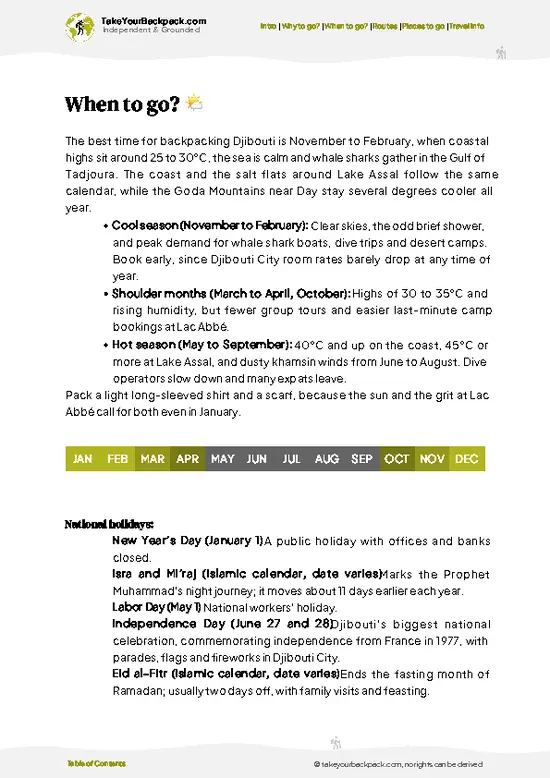
example page 0 from our offline Travel Guide for Djibouti
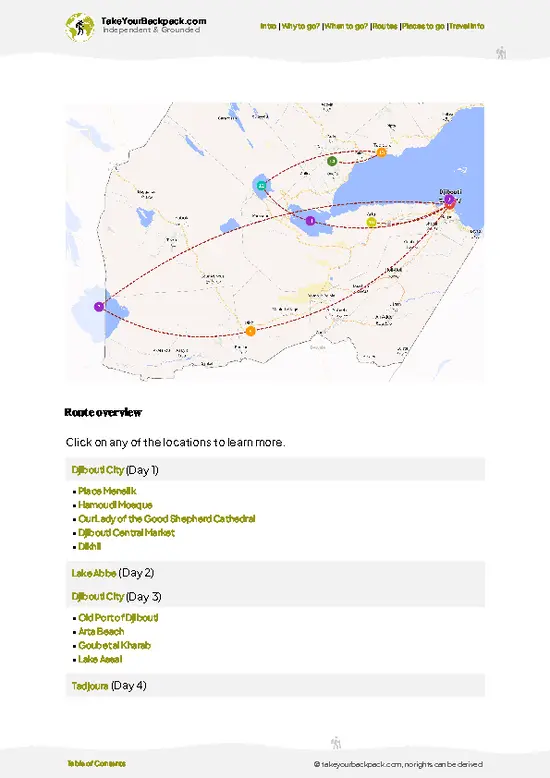
example page 1 from our offline Travel Guide for Djibouti
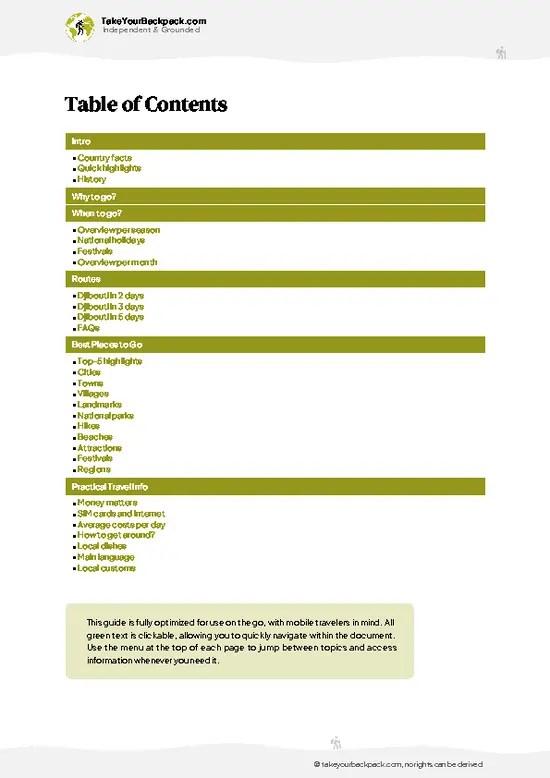
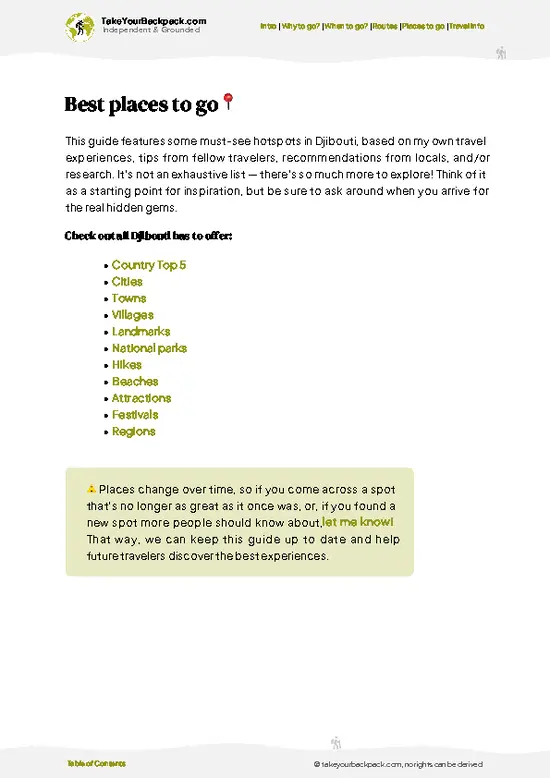
example page 2 from our offline Travel Guide for Djibouti
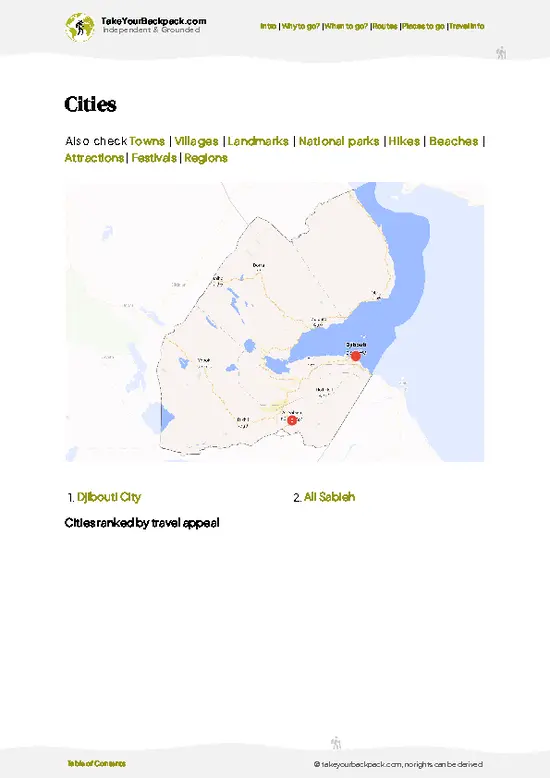
example page 3 from our offline Travel Guide for Djibouti
example page 4 from our offline Travel Guide for Djibouti
example page 5 from our offline Travel Guide for Djibouti
example page 6 from our offline Travel Guide for Djibouti
example page 7 from our offline Travel Guide for Djibouti
Loading the map 🌍
CLICK TO FILTER
cities
towns
villages
landmarks
national parks
hikes
beaches
attractions
festivals
regions
SHOW COUNTRY’S BESTSHOW ALL

✨ Why go?
Ranked #5 festival in Djibouti
Why Eid al-Fitr should be on your travel list

Eid al-Fitr in Djibouti gives you something a regular week does not: access to the country at its most hospitable. After a month of daytime fasting, families open their doors, and a polite traveler in modest dress is often offered tea, dates or a plate of rice and meat. That is the main reason to plan around it. The second is the three-day public holiday, when the capital empties of office traffic and the Place Mahamoud Harbi area fills with children in new outfits and families photographing each other. It is a rare chance to see Djiboutian life without the port-city rush. It also fits neatly into a longer trip through the Horn of Africa, since Ethiopia, Somaliland and Eritrea keep the same calendar and similar customs. Come with modest clothing, patience for closed shops, and no expectation of a programmed festival.

💡 HighlightsDon't-miss highlights and experiences

  1. Eid Prayer at Dawn: Thousands gather at open prayer grounds and mosques in the capital for the special congregational prayer. Men, women and children arrive in their best clothes, and the sermon follows. Stand well back, ask before photographing, and dress modestly.
  2. Hamoudi Mosque and Old Center: The Hamoudi Mosque near Place Mahamoud Harbi is one of the best-known mosques in Djibouti City, and the streets around it fill with worshippers on the morning of the holiday. Nonmuslim visitors should watch from outside.
  3. Place Mahamoud Harbi: The main square becomes a family promenade once the prayers end. Children in new outfits, vendors selling sweets and balloons, and groups taking portraits make it the easiest place to feel the day without intruding.
  4. Holiday Meals and Sweets: Eid tables carry rice
… read more 👉
  1. Eid Prayer at Dawn: Thousands gather at open prayer grounds and mosques in the capital for the special congregational prayer. Men, women and children arrive in their best clothes, and the sermon follows. Stand well back, ask before photographing, and dress modestly.
  2. Hamoudi Mosque and Old Center: The Hamoudi Mosque near Place Mahamoud Harbi is one of the best-known mosques in Djibouti City, and the streets around it fill with worshippers on the morning of the holiday. Nonmuslim visitors should watch from outside.
  3. Place Mahamoud Harbi: The main square becomes a family promenade once the prayers end. Children in new outfits, vendors selling sweets and balloons, and groups taking portraits make it the easiest place to feel the day without intruding.
  4. Holiday Meals and Sweets: Eid tables carry rice with goat or camel meat, sambusa pastries, dates, and sweet halwa spiced with cardamom, often served with sweet tea or spiced coffee. If invited into a home, accept a little of everything and eat with the right hand.
  5. Family Visits in Balbala and Ambouli: These residential districts are where Eid is most lived. Relatives call on one another, children collect small gifts of money, and neighbors greet each other in the street. Go only if invited or with a local guide.
Allow a full morning for the prayers and square, plus an afternoon if you are invited to a meal, so one day covers the essentials and three days suits the full holiday.
Spotted a mistake or missing something? Contact us.

🌤️ When to go?When is the celebration of Eid al-Fitr?

Eid al-Fitr in Djibouti falls on the first day of Shawwal, the morning after Ramadan ends, and celebrations run about three days in Djibouti City, with the date set by moon sighting and shifting roughly 11 days earlier each year.
  • Best day: The first morning is the one to catch, when crowds in new clothes head to prayer grounds and then to family visits. Days two and three are looser, with beach outings and café crowds.
  • Weather: Heat depends on the season the date lands in. Summer Eids bring 35 to 42°C (95 to 108°F) with heavy humidity, while winter ones sit near 25 to 31°C (77 to 88°F). Rain is rare. Bring light cotton that covers shoulders and knees, a hat and a scarf.
  • Booking: Reserve beds one to two weeks ahead, since diaspora families fill guesthouses. Expect rates 20 to 40 percent higher.
… read more 👉
Eid al-Fitr in Djibouti falls on the first day of Shawwal, the morning after Ramadan ends, and celebrations run about three days in Djibouti City, with the date set by moon sighting and shifting roughly 11 days earlier each year.
  • Best day: The first morning is the one to catch, when crowds in new clothes head to prayer grounds and then to family visits. Days two and three are looser, with beach outings and café crowds.
  • Weather: Heat depends on the season the date lands in. Summer Eids bring 35 to 42°C (95 to 108°F) with heavy humidity, while winter ones sit near 25 to 31°C (77 to 88°F). Rain is rare. Bring light cotton that covers shoulders and knees, a hat and a scarf.
  • Booking: Reserve beds one to two weeks ahead, since diaspora families fill guesthouses. Expect rates 20 to 40 percent higher.
  • Crowds: Many shops and the buses to Tadjoura and Ali Sabieh run thinly on day one. Arrive the day before and leave on day three or four.
Confirm the date with the moon sighting announcement two days before.


source: climatestotravel.comJANJanuary: not recommended for travelingFEBFebruary: not recommended for travelingMARMarch: highly recommended for travelingAPRApril: highly recommended for travelingMAYMay: highly recommended for travelingJUNJune: not recommended for travelingJULJuly: not recommended for travelingAUGAugust: not recommended for travelingSEPSeptember: not recommended for travelingOCTOctober: not recommended for travelingNOVNovember: not recommended for travelingDECDecember: not recommended for traveling

✈️ The backpacker research shortcutDjibouti Travel Guide

An offline-friendly backpacking guide with optimized travel routes, ranked highlights, transport advice, and the best areas to stay.
example page 0 from our offline Travel Guide for Djibouti
example page 1 from our offline Travel Guide for Djibouti
example page 2 from our offline Travel Guide for Djibouti
example page 3 from our offline Travel Guide for Djibouti
example page 4 from our offline Travel Guide for Djibouti
example page 5 from our offline Travel Guide for Djibouti
example page 6 from our offline Travel Guide for Djibouti
example page 7 from our offline Travel Guide for Djibouti
The digital guide (186 pages) contains:
✅ 44 highlights, ranked by travel appeal
✅ Optimized 2, 3 & 5-day travel routes
✅ Cities, national parks, landmarks, beaches
✅ How to get around
✅ Offline-friendly for travel without Wi-Fi
👉 Click to see all 30+ guide features

📅 Plan smarter in minutes, not weeks
✅ Month by month travel advice
✅ Festivals & national holidays
✅ Budget expectations

🗺️ Go to the right places, skip the overrated ones
✅ Honest pros & cons of destinations
✅ Top hikes, parks & viewpoints
✅ Lesser-known places most travelers miss
✅ Clear “worth it vs skip it” guidance

🛏️ Travel smoothly without rookie mistakes
✅ Best areas to stay
✅ Transport systems explained simply
✅ Common scams & safety advice
✅ SIM cards, money & practical tips

🌍 Understand the country, not just visit it
✅ Culture & traditions
✅ 52 Essential phrases & customs
✅ Festivals worth planning around
✅ Traveler-friendly historical context
✅ Insights that make places more meaningful

📱 Built for real travel conditions
✅ Fully downloadable PDF
✅ Works completely offline
✅ Optimized for phone use
✅ Useful in remote areas & buses
✅ Everything in one place
Stop searching, start planning
Get instant access to your full guide. 30‑day money-back guarantee.
+ Add another guide for just

By proceeding you agree to our terms.
Sent to your inbox immediately after payment • 100% Secure Checkout
Best Backpacking Travel Advisor 2025 tourism awardBest Backpacking
Travel Advisor
2025
What others say about Take Your Backpack Guides:
⭐⭐⭐⭐⭐
Fantastic, amazing amount of information!
⭐⭐⭐⭐⭐
My goodness this is amazing, it's what I've been looking for hats off too you!
⭐⭐⭐⭐⭐
I think this is absolutely BRILLIANT
⭐⭐⭐⭐
Very complete and informative. It's still missing places, but I gotta to commend you
⭐⭐⭐⭐⭐
This is truly amazing, thank you, can't wait to explore it with my kids!
⭐⭐⭐⭐⭐
Awesome resource, thank you!
⭐⭐⭐⭐⭐
This is amazing! Can't wait to explore the ones I haven't seen
⭐⭐⭐⭐
I love this! Well done, great idea.
⭐⭐⭐⭐⭐
Thanks for taking the time to make this gem!
⭐⭐⭐⭐⭐
This might be the best website I've ever seen.
⭐⭐⭐⭐⭐
Congratulations, and thank you so much for your work; it's incredibly valuable.
⭐⭐⭐⭐
In all seriousness I think you did a great job pointing out the important spots
⭐⭐⭐⭐⭐
10/10 very good
⭐⭐⭐⭐⭐
As someone who's only just starting to visit regularly this is awesome, thank you.
⭐⭐⭐⭐
Thank you very much! I'm going to visit my dad, it's going to be very useful!
⭐⭐⭐⭐⭐
This is really cool! We'll be travelling for the first time and this definitely come in handy.
⭐⭐⭐⭐⭐
You are now our minister of culture, congratulations 👨‍💼
⭐⭐⭐⭐⭐
Just wanted to tell you that this is a pearl! Going to follow your recommendations.
⭐⭐⭐⭐⭐
This is so cool. I'll definitely be using the resource for my travels soon.
⭐⭐⭐⭐⭐
This is very impressive! Good work.
⭐⭐⭐⭐⭐
This is an amazing and informative site. Very well done!

🛏️ Where to stay?Choosing the right base

Djibouti City’s Ville Européenne and the streets around Place Mahamoud Harbi are the most practical areas to sleep during Eid al-Fitr. Both sit within walking distance of the main mosques, the Central Market area and the cafés where people gather after prayers. Cheap guesthouses and basic rooms cluster here, you can usually find other foreign travelers at them, and a short taxi ride covers anything farther.

The Ville Européenne is the quieter, more orderly choice. Streets are lit at night, restaurants stay open late during the holiday, and solo travelers, including women, find it the easiest … read more 👉
Djibouti City’s Ville Européenne and the streets around Place Mahamoud Harbi are the most practical areas to sleep during Eid al-Fitr. Both sit within walking distance of the main mosques, the Central Market area and the cafés where people gather after prayers. Cheap guesthouses and basic rooms cluster here, you can usually find other foreign travelers at them, and a short taxi ride covers anything farther.

The Ville Européenne is the quieter, more orderly choice. Streets are lit at night, restaurants stay open late during the holiday, and solo travelers, including women, find it the easiest to walk around. Dress modestly and avoid wandering far from main roads after dark.

Place Mahamoud Harbi and the nearby Quartier 1 and Quartier 2 are livelier. You get the crowds, street snacks and family gatherings right outside the door, though noise runs late. Book here if you want to see the celebrations without needing transport.

For beach outings on the holiday, the Gulf of Tadjoura coast and Haramous area have a handful of mid-range options, but they cost more and need taxis. Backpackers are generally better off in the center and making day trips.

👛 Costs (as of 22 October 2026)How expensive it really is

Eid al-Fitr in Djibouti costs most independent travelers about US$90 to 130 a day, since the festival itself is free and the spending goes on beds and food in Djibouti City.
CategoryBudget RangeLocal Reality
Festival ticketsUS$0Prayers, family visits and street gatherings are open to all. Nothing is ticketed.
AccommodationUS$30 to 60 (low season); US$40 to 75 (high season)Basic guesthouse rooms in the center. Holiday rates climb and rooms fill early.
Local transportUS$5 to 15Short taxi rides cost US$2 to 5 and fares go up on the holiday. Buses run thinly.
Food & drinksUS$10 to 25Street snacks, cafés and simple restaurants. Home invitations are common.
Miscellaneous expensesUS$5 to 15Small gifts for hosts, sweets, water and SIM data. Carry cash.
Total Daily BudgetUS$90 to 130Based on high season rates.
⚠️ Prices can change and everyone travels differently, so take this as a rough guide. Hope it helps you plan your adventure!

🍲 FoodLocal Flavors for Backpackers

Eid al-Fitr in Djibouti is a table-first holiday, and the first meal after a month of fasting is the one to chase. Families prepare skoudehkaris, a spiced rice and lamb dish with cinnamon and cloves, and lahoh or canjeero, spongy pancakes eaten with sesame oil, sugar or stew. Sweet fried mandazi and halwo, a gelatinous cardamom sweet, show up everywhere.

If you are invited to a home, say yes. Guests are fed repeatedly, and refusing the first offer is thin etiquette, so pace yourself. Eat with your right hand, and expect shared platters.

In the city, street vendors and small restaurants reopen after Ramadan, selling grilled fish, fah-fah (spicy meat soup) and samosas. Drinks are tea spiced with ginger and cloves, fresh mango and papaya juices, and sweet camel milk in some neighborhoods. Alcohol … read more 👉
Eid al-Fitr in Djibouti is a table-first holiday, and the first meal after a month of fasting is the one to chase. Families prepare skoudehkaris, a spiced rice and lamb dish with cinnamon and cloves, and lahoh or canjeero, spongy pancakes eaten with sesame oil, sugar or stew. Sweet fried mandazi and halwo, a gelatinous cardamom sweet, show up everywhere.

If you are invited to a home, say yes. Guests are fed repeatedly, and refusing the first offer is thin etiquette, so pace yourself. Eat with your right hand, and expect shared platters.

In the city, street vendors and small restaurants reopen after Ramadan, selling grilled fish, fah-fah (spicy meat soup) and samosas. Drinks are tea spiced with ginger and cloves, fresh mango and papaya juices, and sweet camel milk in some neighborhoods. Alcohol is hard to find during the holiday.

Pay in cash. Portions are generous, and many stalls take a day off, so buy food before day one ends. Lines form at bakeries early.

FAQTraveler FAQ

Eid al-Fitr takes place on the first day of Shawwal, right after Ramadan ends, and the date is confirmed by moon sighting. It shifts about 11 days earlier each year on the Western calendar. Celebrations in Djibouti City last roughly three days, so plan to arrive the day before.
Attending Eid al-Fitr in Djibouti costs nothing in entry fees, since prayers and street gatherings are open to everyone. Expect to spend about US$75 to 130 a day, mostly on a guesthouse room at US$40 to 75 and meals at US$10 to 25. Taxis cost US$2 to 5 per short ride.
Eid al-Fitr in Djibouti has no tickets at all, because the celebrations are public prayers, family visits and street gatherings. What you do need in advance is a bed, ideally booked one to two weeks ahead in Djibouti City. Arrive the day before, since transport and shops run thinly on the first day.
⚠️ Things can change over time, so always validate details locally before you go.

Other Djiboutian festivals near Eid al-Fitr

Explore more nearby:


💡 Not sure where to go next?
Create a personalized itinerary for Djibouti including Eid al-Fitr and the places that fit your trip.

Generate my itinerary

👉 Discover all festivals

Or checkout all Djibouti has to offer (think cities, towns, villages, national parks, hikes, beaches, festivals)
Country photo of Djibouti

We 💚 feedbackIs it worth it?

Eid al-Fitr is best on the first morning, when the prayer crowds spill into the streets and the whole city looks freshly pressed. I would arrive in Djibouti City the day before, keep a loose plan, and carry small notes for children’s gifts. Skip anything that needs a booked restaurant or office open that day.

✍️ Help improve this page!
The information on this page is based on in-depth research, insights shared by experienced travelers, and feedback from the local travel community in Djibouti. While every effort is made to keep the information accurate and current, conditions can change — so if you spot anything incorrect or outdated, please get in touch.


🙋‍♂️ Give feedback

👋 Meet the founderWho’s Behind Take Your Backpack?

Johan, backpacker and founder of TakeYourBackpackHi, I’m Johan (Netherlands 🇳🇱), the creator of TakeYourBackpack. Over the past 3 decades, I’ve backpacked through 90+ countries across six continents, gaining extensive experience with independent travel, long-term trips, and overland routes.

This site is built on a combination of firsthand travel experience and carefully curated insights from other backpackers. Many guides are based on places I’ve personally visited, while others bring together tips, observations, and practical advice shared by trusted travelers I’ve met along the way.

The goal is to provide realistic, experience-driven guidance — not generic itineraries — so you can explore destinations with better context, clearer expectations, and more confidence.