×

Djibouti🇩🇯 | festivalsMawlid al-NabiMadih chanting, qasida recitation, Hamoudi Mosque, Quartier 1 | things to do and best time to go

Explore Eid al-FitrExplore Fête de la Musique

Backpacking in Mawlid al-Nabi
👀 For curious travelersfestival ranked #6
By Johan Kruseman 🇳🇱 | Updated October 22, 2026

Mawlid al-Nabi marks the birthday of the Prophet Muhammad on the 12th of Rabi al-Awwal, and in Djibouti it is a public holiday built around the chanting of qasidas and Sufi-style praise songs (madih) in mosques and neighborhood gatherings. It is a religious observance, not a ticketed festival. Djibouti City, on the Gulf of Tadjoura, is where most of it is easiest to see, especially in the older districts around the Hamoudi Mosque and Quartier 1. Expect devotional recitation, sermons, communal meals and families dressed in their best, with a quiet, reverent mood and no stage or camping. It lasts a day, with gatherings the evening before. The date shifts about eleven days earlier each year on the Gregorian calendar. It suits travelers who want to observe Somali and Afar Muslim religious life respectfully, and those already in the country. It will disappoint anyone after music, nightlife or spectacle.

Discover everything you want to know in the 📖 Djibouti Travel Guide.


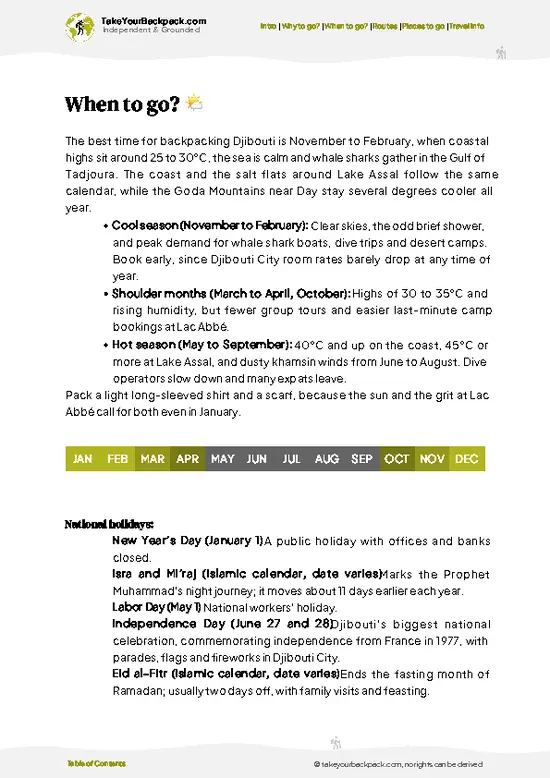
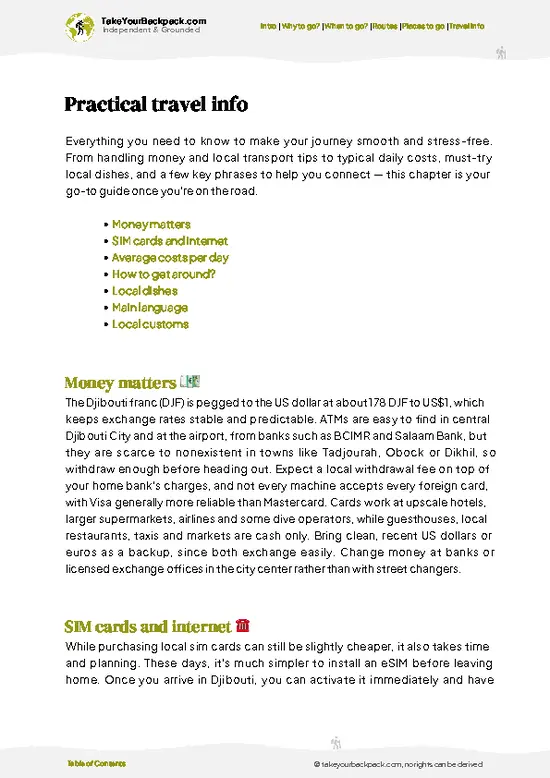
example page 0 from our offline Travel Guide for Djibouti
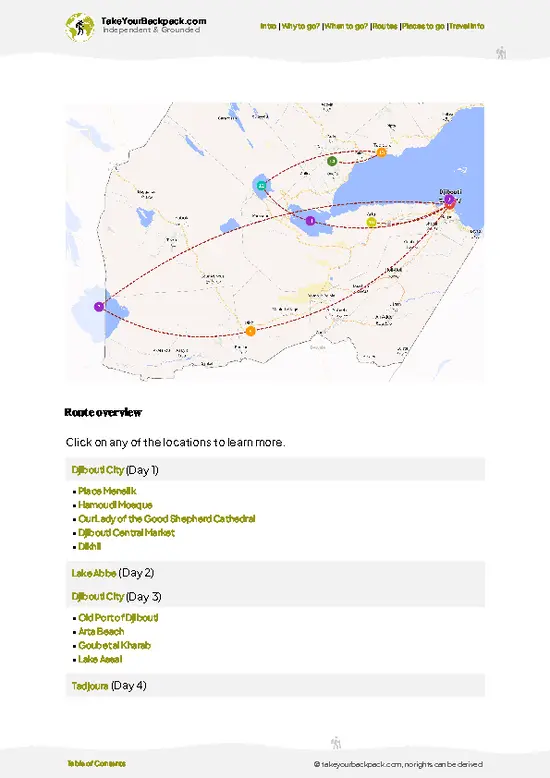
example page 1 from our offline Travel Guide for Djibouti
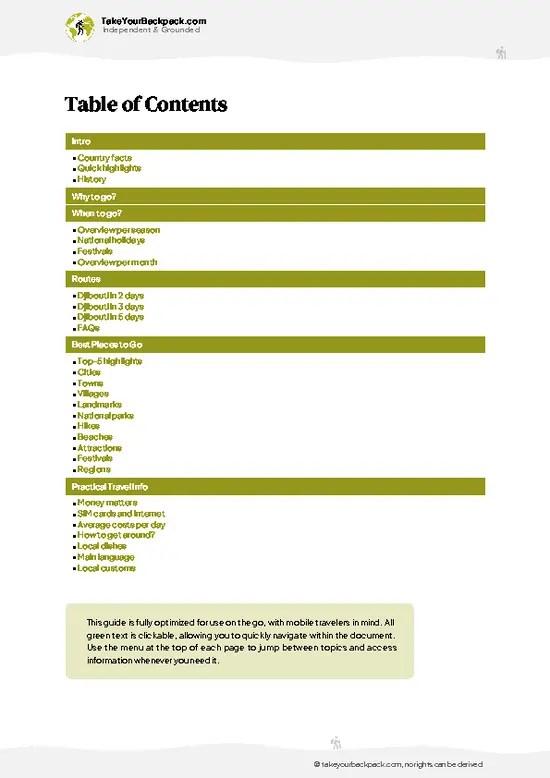
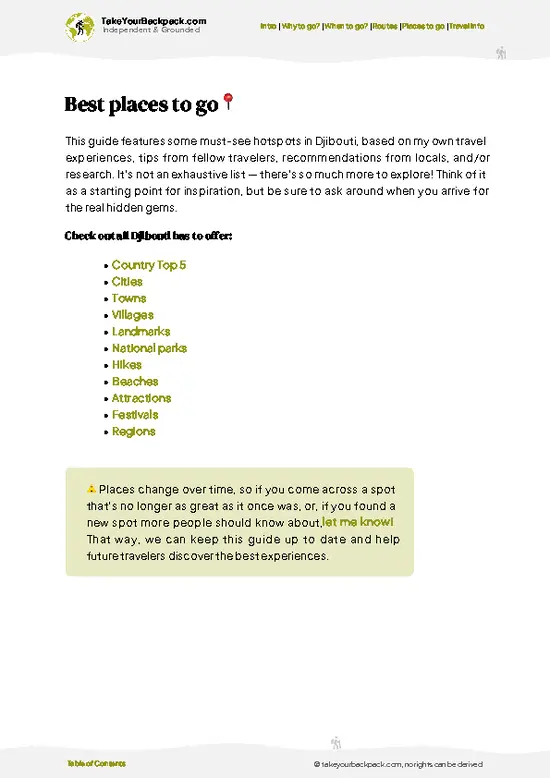
example page 2 from our offline Travel Guide for Djibouti
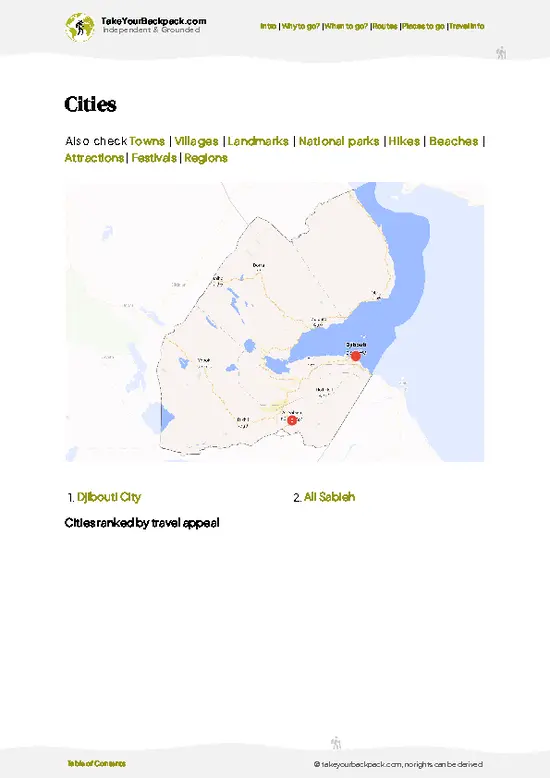
example page 3 from our offline Travel Guide for Djibouti
example page 4 from our offline Travel Guide for Djibouti
example page 5 from our offline Travel Guide for Djibouti
example page 6 from our offline Travel Guide for Djibouti
example page 7 from our offline Travel Guide for Djibouti
Loading the map 🌍
CLICK TO FILTER
cities
towns
villages
landmarks
national parks
hikes
beaches
attractions
festivals
regions
SHOW COUNTRY’S BESTSHOW ALL

✨ Why go?
Ranked #6 festival in Djibouti
What makes it a must-see festival

Mawlid al-Nabi gives you something Djibouti rarely offers on a normal day: an invitation into neighborhood life in Djibouti City when the pace changes. Businesses close, families gather, and you can hear madih chanting drifting from mosques and courtyards, often in Arabic and Somali. For a backpacker, the value is the access. Nobody is selling a ticket, so the cost of taking part is mostly your time and modest dress. People tend to be welcoming to respectful visitors, and a shared plate of food is a common gesture. It also fits easily into a longer route. Djibouti is a short hop between Ethiopia, Somaliland and Eritrea-bound itineraries, and a holiday morning lets you walk the quiet streets of the center before heading to Lake Assal or Tadjoura. Dates move each year, so check the lunar calendar when planning your crossing.

💡 HighlightsMust-see experiences and standout moments

  1. Madih and qasida recitation: The devotional poetry praising the Prophet is the heart of the day. Groups sing in Arabic and Somali, often in mosques or courtyards, and standing quietly at the edge is welcome.
  2. Hamoudi Mosque: The best-known mosque in the capital, with a tall minaret on Place Mahmoud Harbi. Worshippers fill it for the holiday prayers, so visit from outside and dress modestly.
  3. Sermons and Prophet’s biography readings: Imams recount the life of Muhammad, and even if you do not follow the language, the cadence and the attentive crowds tell you plenty.
  4. Communal meals: Families cook rice, lamb or goat and share with neighbors and the poor. Accept tea or a plate if offered, and eat with your right hand.
  5. Quartier 1 and the old center on a holiday: With shops shuttered and children in new
… read more 👉
  1. Madih and qasida recitation: The devotional poetry praising the Prophet is the heart of the day. Groups sing in Arabic and Somali, often in mosques or courtyards, and standing quietly at the edge is welcome.
  2. Hamoudi Mosque: The best-known mosque in the capital, with a tall minaret on Place Mahmoud Harbi. Worshippers fill it for the holiday prayers, so visit from outside and dress modestly.
  3. Sermons and Prophet’s biography readings: Imams recount the life of Muhammad, and even if you do not follow the language, the cadence and the attentive crowds tell you plenty.
  4. Communal meals: Families cook rice, lamb or goat and share with neighbors and the poor. Accept tea or a plate if offered, and eat with your right hand.
  5. Quartier 1 and the old center on a holiday: With shops shuttered and children in new clothes, the Place Menelik area and the surrounding lanes are calm enough to walk and photograph respectfully, with permission for portraits.
Mawlid al-Nabi can be covered in one day, or a morning and an evening if you want to catch the preceding night’s gatherings.
Spotted a mistake or missing something? Contact us.

🌤️ When to go?When is the celebration of Mawlid al-Nabi?

Mawlid al-Nabi is observed in Djibouti City on the 12th of Rabi al-Awwal in the Islamic lunar calendar, which shifts about 11 days earlier each year, and it is a one-day public holiday centered on the mosques and streets around Place Mahamoud Harbi and the Hamoudi Mosque.
  • Best day: The eve and the day itself. Evening recitations and chanting of praise poems (qasidas) are the heart of it, and the morning is calm.
  • Weather: Depends on the season the date lands in. Cool-season dates mean about 25 to 30°C (77 to 86°F). Hot-season dates push past 35°C (95°F) with heavy humidity, so bring a light long-sleeved shirt, a scarf for covering up and a refillable bottle.
  • Booking: Reserve a bed one to two weeks ahead. Prices barely rise, but central rooms are limited.
  • Crowds: Shops and many buses close on the
… read more 👉
Mawlid al-Nabi is observed in Djibouti City on the 12th of Rabi al-Awwal in the Islamic lunar calendar, which shifts about 11 days earlier each year, and it is a one-day public holiday centered on the mosques and streets around Place Mahamoud Harbi and the Hamoudi Mosque.
  • Best day: The eve and the day itself. Evening recitations and chanting of praise poems (qasidas) are the heart of it, and the morning is calm.
  • Weather: Depends on the season the date lands in. Cool-season dates mean about 25 to 30°C (77 to 86°F). Hot-season dates push past 35°C (95°F) with heavy humidity, so bring a light long-sleeved shirt, a scarf for covering up and a refillable bottle.
  • Booking: Reserve a bed one to two weeks ahead. Prices barely rise, but central rooms are limited.
  • Crowds: Shops and many buses close on the holiday, so arrive the day before and leave the day after.
Check the moon-sighting announcement, since the exact date can move by a day.


source: climatestotravel.comJANJanuary: not recommended for travelingFEBFebruary: not recommended for travelingMARMarch: not recommended for travelingAPRApril: not recommended for travelingMAYMay: not recommended for travelingJUNJune: not recommended for travelingJULJuly: not recommended for travelingAUGAugust: not recommended for travelingSEPSeptember: highly recommended for travelingOCTOctober: highly recommended for travelingNOVNovember: highly recommended for travelingDECDecember: highly recommended for traveling

✈️ The backpacker research shortcutDjibouti Travel Guide

An offline-friendly backpacking guide with optimized travel routes, ranked highlights, transport advice, and the best areas to stay.
example page 0 from our offline Travel Guide for Djibouti
example page 1 from our offline Travel Guide for Djibouti
example page 2 from our offline Travel Guide for Djibouti
example page 3 from our offline Travel Guide for Djibouti
example page 4 from our offline Travel Guide for Djibouti
example page 5 from our offline Travel Guide for Djibouti
example page 6 from our offline Travel Guide for Djibouti
example page 7 from our offline Travel Guide for Djibouti
The digital guide (186 pages) contains:
✅ 44 highlights, ranked by travel appeal
✅ Optimized 2, 3 & 5-day travel routes
✅ Cities, national parks, landmarks, beaches
✅ How to get around
✅ Offline-friendly for travel without Wi-Fi
👉 Click to see all 30+ guide features

📅 Plan smarter in minutes, not weeks
✅ Month by month travel advice
✅ Festivals & national holidays
✅ Budget expectations

🗺️ Go to the right places, skip the overrated ones
✅ Honest pros & cons of destinations
✅ Top hikes, parks & viewpoints
✅ Lesser-known places most travelers miss
✅ Clear “worth it vs skip it” guidance

🛏️ Travel smoothly without rookie mistakes
✅ Best areas to stay
✅ Transport systems explained simply
✅ Common scams & safety advice
✅ SIM cards, money & practical tips

🌍 Understand the country, not just visit it
✅ Culture & traditions
✅ 52 Essential phrases & customs
✅ Festivals worth planning around
✅ Traveler-friendly historical context
✅ Insights that make places more meaningful

📱 Built for real travel conditions
✅ Fully downloadable PDF
✅ Works completely offline
✅ Optimized for phone use
✅ Useful in remote areas & buses
✅ Everything in one place
Stop searching, start planning
Get instant access to your full guide. 30‑day money-back guarantee.
+ Add another guide for just

By proceeding you agree to our terms.
Sent to your inbox immediately after payment • 100% Secure Checkout
Best Backpacking Travel Advisor 2025 tourism awardBest Backpacking
Travel Advisor
2025
What others say about Take Your Backpack Guides:
⭐⭐⭐⭐⭐
Fantastic, amazing amount of information!
⭐⭐⭐⭐⭐
My goodness this is amazing, it's what I've been looking for hats off too you!
⭐⭐⭐⭐⭐
I think this is absolutely BRILLIANT
⭐⭐⭐⭐
Very complete and informative. It's still missing places, but I gotta to commend you
⭐⭐⭐⭐⭐
This is truly amazing, thank you, can't wait to explore it with my kids!
⭐⭐⭐⭐⭐
Awesome resource, thank you!
⭐⭐⭐⭐⭐
This is amazing! Can't wait to explore the ones I haven't seen
⭐⭐⭐⭐
I love this! Well done, great idea.
⭐⭐⭐⭐⭐
Thanks for taking the time to make this gem!
⭐⭐⭐⭐⭐
This might be the best website I've ever seen.
⭐⭐⭐⭐⭐
Congratulations, and thank you so much for your work; it's incredibly valuable.
⭐⭐⭐⭐
In all seriousness I think you did a great job pointing out the important spots
⭐⭐⭐⭐⭐
10/10 very good
⭐⭐⭐⭐⭐
As someone who's only just starting to visit regularly this is awesome, thank you.
⭐⭐⭐⭐
Thank you very much! I'm going to visit my dad, it's going to be very useful!
⭐⭐⭐⭐⭐
This is really cool! We'll be travelling for the first time and this definitely come in handy.
⭐⭐⭐⭐⭐
You are now our minister of culture, congratulations 👨‍💼
⭐⭐⭐⭐⭐
Just wanted to tell you that this is a pearl! Going to follow your recommendations.
⭐⭐⭐⭐⭐
This is so cool. I'll definitely be using the resource for my travels soon.
⭐⭐⭐⭐⭐
This is very impressive! Good work.
⭐⭐⭐⭐⭐
This is an amazing and informative site. Very well done!

🛏️ Where to stay?How to pick the right area

Djibouti City’s central district around Place Mahamoud Harbi is where I would stay for Mawlid al-Nabi, because the main mosques, the market and the evening gatherings are all within walking distance. Rooms here run roughly US$25 to 60 a night, and the area has the densest cluster of small guesthouses and budget hotels in the country.

The European Quarter near Place Menelik is a calmer alternative, with tree-lined streets, cafés and a more relaxed feel after dark. It is a short walk or a cheap taxi ride from the festivities, and solo travelers often feel comfortable here since restaurants stay … read more 👉
Djibouti City’s central district around Place Mahamoud Harbi is where I would stay for Mawlid al-Nabi, because the main mosques, the market and the evening gatherings are all within walking distance. Rooms here run roughly US$25 to 60 a night, and the area has the densest cluster of small guesthouses and budget hotels in the country.

The European Quarter near Place Menelik is a calmer alternative, with tree-lined streets, cafés and a more relaxed feel after dark. It is a short walk or a cheap taxi ride from the festivities, and solo travelers often feel comfortable here since restaurants stay open late and the streets are reasonably well lit.

The Heron and Plateau du Serpent areas are quieter and more upscale, with more expensive rooms and fewer social spaces, so they suit people who want sleep over company. Staying central also lets you meet other travelers over meals, which is how most backpackers here swap news on onward transport to Lake Assal, Tadjoura or Ethiopia.

Avoid wandering the outskirts alone at night. Take licensed taxis after dark and agree the fare before you get in.

👛 Costs (as of 22 October 2026)Typical daily expenses

Mawlid al-Nabi costs a backpacker about US$45 to 83 a day in Djibouti City, one of the pricier countries in East Africa, because the celebration itself is free and most spending goes to a bed and food.
CategoryBudget RangeLocal Reality
Festival ticketsUS$0Prayers, recitations and street gatherings are open to everyone with no entry fee.
AccommodationUS$25 to 45 (high season); US$20 to 35 (low season)Simple private rooms in the center. Dorm beds are scarce, so most travelers take a basic double.
Local transportUS$3 to 8Shared minibuses cost little. Taxis within the city usually run US$3 to 6 per ride, and fares should be agreed first.
Food & drinksUS$12 to 20Rice and meat plates or fish at local restaurants, plus tea and juice. Imported items are pricey.
MiscellaneousUS$5 to 10Water, SIM data, small
… read more 👉
Mawlid al-Nabi costs a backpacker about US$45 to 83 a day in Djibouti City, one of the pricier countries in East Africa, because the celebration itself is free and most spending goes to a bed and food.
CategoryBudget RangeLocal Reality
Festival ticketsUS$0Prayers, recitations and street gatherings are open to everyone with no entry fee.
AccommodationUS$25 to 45 (high season); US$20 to 35 (low season)Simple private rooms in the center. Dorm beds are scarce, so most travelers take a basic double.
Local transportUS$3 to 8Shared minibuses cost little. Taxis within the city usually run US$3 to 6 per ride, and fares should be agreed first.
Food & drinksUS$12 to 20Rice and meat plates or fish at local restaurants, plus tea and juice. Imported items are pricey.
MiscellaneousUS$5 to 10Water, SIM data, small gifts of sweets and modest tips.
Total Daily BudgetUS$45 to 83About US$64 a day for most independent travelers.
⚠️ Prices can change and everyone travels differently, so take this as a rough guide. Hope it helps you plan your adventure!

🍲 FoodLocal Flavors for Backpackers

The holiday brings out the sweet side of Djibouti. Families prepare halwa and sticky pastries, and you will see trays of dates and sweet tea changing hands outside the mosques. Accept anything offered, since refusing a glass of spiced shaah, black tea with cardamom and ginger, can seem curt.

For something hearty, look for skoudehkaris, the national spiced rice and lamb dish, and fahfah, a thick, peppery meat soup eaten with flatbread. Grilled fish and lahoh, the spongy Somali-style pancake, turn up at breakfast stalls near the central market. Fresh fruit juices, especially mango and papaya, are the usual cold drink. Alcohol is not part of the celebration and is hard to find on the day.

Expect cash only, in Djibouti francs, though small US dollar bills are sometimes accepted. Portions are … read more 👉
The holiday brings out the sweet side of Djibouti. Families prepare halwa and sticky pastries, and you will see trays of dates and sweet tea changing hands outside the mosques. Accept anything offered, since refusing a glass of spiced shaah, black tea with cardamom and ginger, can seem curt.

For something hearty, look for skoudehkaris, the national spiced rice and lamb dish, and fahfah, a thick, peppery meat soup eaten with flatbread. Grilled fish and lahoh, the spongy Somali-style pancake, turn up at breakfast stalls near the central market. Fresh fruit juices, especially mango and papaya, are the usual cold drink. Alcohol is not part of the celebration and is hard to find on the day.

Expect cash only, in Djibouti francs, though small US dollar bills are sometimes accepted. Portions are generous and meant for sharing, so ordering one big plate between two people is normal. Eat with your right hand when dishes are communal. Many restaurants close during the main prayers, so eat early or buy snacks from street vendors, and carry small change because vendors rarely have much.

FAQCommon questions from travelers

Mawlid al-Nabi falls on the 12th of Rabi al-Awwal in the Islamic calendar, so the Gregorian date moves about 11 days earlier each year. It is a one-day public holiday, with celebrations starting the evening before in Djibouti City. The exact day depends on the moon sighting, so confirm it a few days ahead.
Attending Mawlid al-Nabi costs nothing, since prayers and street gatherings in Djibouti City are free. Your real spending is a room at roughly US$25 to 45 a night and food at around US$12 to 20 a day. A realistic daily budget is US$55 to 70 including taxis.
No tickets are needed for Mawlid al-Nabi, because the observance is religious and public, centered on mosques such as Hamoudi in Djibouti City. What you should book ahead is a bed, ideally one to two weeks earlier, as central rooms are limited. Shops and buses mostly close on the day, so arrange transport the day before.
⚠️ Things can change over time, so always validate details locally before you go.

Other Djiboutian festivals near Mawlid al-Nabi

Explore more nearby:


💡 Not sure where to go next?
Create a personalized itinerary for Djibouti including Mawlid al-Nabi and the places that fit your trip.

Generate my itinerary

👉 Discover all festivals

Or checkout all Djibouti has to offer (think cities, towns, villages, national parks, hikes, beaches, festivals)
Country photo of Djibouti

We 💚 feedbackSumming up the experience

Mawlid al-Nabi is easy to miss because it has no program, so ask your guesthouse host which mosque or family gathering is nearest the night before. The evening recitations are often quieter and more moving than the daytime crowds. I would dress covered, bring small bills for tea or a donation, and keep the camera down.

✍️ Help improve this page!
The information on this page is based on in-depth research, insights shared by experienced travelers, and feedback from the local travel community in Djibouti. While every effort is made to keep the information accurate and current, conditions can change — so if you spot anything incorrect or outdated, please get in touch.


🙋‍♂️ Give feedback

👋 Meet the founderWho’s Behind Take Your Backpack?

Johan, backpacker and founder of TakeYourBackpackHi, I’m Johan (Netherlands 🇳🇱), the creator of TakeYourBackpack. Over the past 3 decades, I’ve backpacked through 90+ countries across six continents, gaining extensive experience with independent travel, long-term trips, and overland routes.

This site is built on a combination of firsthand travel experience and carefully curated insights from other backpackers. Many guides are based on places I’ve personally visited, while others bring together tips, observations, and practical advice shared by trusted travelers I’ve met along the way.

The goal is to provide realistic, experience-driven guidance — not generic itineraries — so you can explore destinations with better context, clearer expectations, and more confidence.