×

Djibouti🇩🇯 | unique sitesRas Siyyan
coral reefs, sand spit, migratory birds, Gulf of Tadjoura | things to do and best time to go

Explore Rainbow MountainsExplore Lake Abhe

Backpacking in Ras Siyyan
👌 Worth visitingunique site ranked #4
By Johan Kruseman 🇳🇱 | Updated May 3, 2026

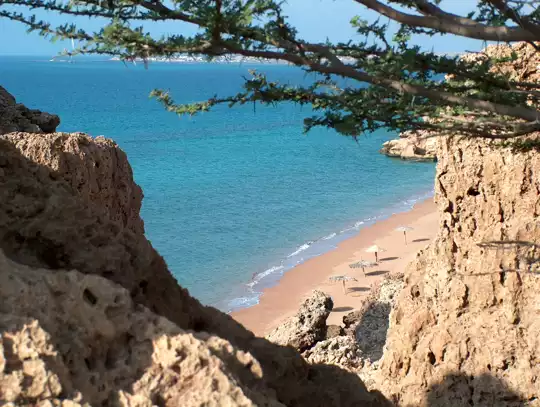
Here’s what nobody tells you until you’re ankle-deep in sand: Ras Siyyan’s real gift is how easy it is to have the entire place to yourself—if you time it right. Forget the Instagram mirage of crowds jostling for the same sunset shot. Ras Siyyan sits at the northern tip of Djibouti, jutting into the Gulf of Tadjoura, and it’s so remote that most travelers skip it for the more hyped Lake Assal or the capital’s French Quarter. The landscape is otherworldly: a volcanic peninsula, black lava fields, and a surreal, shallow lagoon that glows turquoise against the desert. There’s no ticket booth, no snack bar, and no Wi-Fi—just raw, elemental beauty and the occasional camel. Getting here is a logistical puzzle (think 4x4s and local guides), and costs can spike if you don’t share transport. But the payoff? Silence, wild geology, and a sense of discovery that no filter can fake.

Discover everything you want to know in the 📖 Djibouti Travel Guide.
Loading the map 🌍
CLICK TO FILTER
city
town
village
unique site
national park
hike
beach
attraction
festival
region
SHOW COUNTRY‘S BESTSHOW ALL

✨ Why go?
Ranked #4 unique site in Djibouti
What makes it a must-see unique site

Ras Siyyan isn’t just another pretty spot for your Instagram feed; it’s a raw, rugged beauty that demands your attention. Yes, it can get crowded, especially during peak season, but that’s part of the experience. You’ll find yourself surrounded by fellow adventurers, all drawn to the stunning cliffs and the crashing waves below.

The cost? Minimal. You can explore this iconic site without breaking the bank, making it a perfect pit stop on your journey through Djibouti. It fits seamlessly into a broader route, allowing you to easily combine it with other highlights like Lake Assal or the otherworldly landscapes of the Danakil Depression.

What sets Ras Siyyan apart is its uniqueness. The stark contrast of the blue sea against the rugged terrain is mesmerizing. Plus, the local culture adds … read more 👉
Ras Siyyan isn’t just another pretty spot for your Instagram feed; it’s a raw, rugged beauty that demands your attention. Yes, it can get crowded, especially during peak season, but that’s part of the experience. You’ll find yourself surrounded by fellow adventurers, all drawn to the stunning cliffs and the crashing waves below.

The cost? Minimal. You can explore this iconic site without breaking the bank, making it a perfect pit stop on your journey through Djibouti. It fits seamlessly into a broader route, allowing you to easily combine it with other highlights like Lake Assal or the otherworldly landscapes of the Danakil Depression.

What sets Ras Siyyan apart is its uniqueness. The stark contrast of the blue sea against the rugged terrain is mesmerizing. Plus, the local culture adds depth to your visit. Engage with fishermen or sample fresh seafood from nearby stalls. This isn’t just a landmark; it’s a gateway to authentic experiences that enrich your travels. Make time for Ras Siyyan, and you’ll leave with more than just photos—you’ll carry stories that resonate.
Get the complete Travel Guide for Djibouti
Everything organized for offline planning — routes, highlights, costs & tips

See what’s inside 👉

Get the Travel Guide -

💡 HighlightsDon't-miss highlights and experiences

  • Volcanic headland and black-lava cliffs — A compact, rugged promontory of ancient lava flows that give the coastline an arresting, raw look; great for poking around rock formations and seeing how the land meets the sea in a way you don’t get on sandy beaches.
  • Clear-water snorkeling and coral outcrops — Shallow reefs and ledges just offshore hold colorful fish and hard corals; bring a mask and you can snorkel straight from a small boat or a rocky shore for surprisingly good underwater life without the crowds.
  • Coastal flats and salt-tolerant vegetation — Tidal flats, salt bushes and pockets of mangrove-like growth make for an uncommon coastal habitat in Djibouti; it’s a nice contrast to the arid hinterland and supports small marine creatures and crustaceans.
  • Seabirds and shorebird spotting
read more 👉
  • Volcanic headland and black-lava cliffs — A compact, rugged promontory of ancient lava flows that give the coastline an arresting, raw look; great for poking around rock formations and seeing how the land meets the sea in a way you don’t get on sandy beaches.
  • Clear-water snorkeling and coral outcrops — Shallow reefs and ledges just offshore hold colorful fish and hard corals; bring a mask and you can snorkel straight from a small boat or a rocky shore for surprisingly good underwater life without the crowds.
  • Coastal flats and salt-tolerant vegetation — Tidal flats, salt bushes and pockets of mangrove-like growth make for an uncommon coastal habitat in Djibouti; it’s a nice contrast to the arid hinterland and supports small marine creatures and crustaceans.
  • Seabirds and shorebird spotting — The area attracts a variety of gulls, terns and waders; if you’re into birding, low tide walks and quiet vantage points near the rocks are prime for seeing feeding flocks and migratory visitors.
  • Big, empty vistas and dramatic sunsets — One of the best things is simply the view: wide, panoramic scenes across the Gulf of Tadjoura and the Red Sea approaches that feel very remote. Sunset here is cinematic — bring a jacket, the wind can be sharp.
  • Traditional fishing activity and local boats — Small fishing boats still operate from nearby coves; watching nets hauled or chatting with fishermen (if you can) gives a small glimpse into coastal livelihoods that haven’t changed much.
Spotted a mistake or missing something? Contact us.

🌤️ When to go?When to go for the best experience


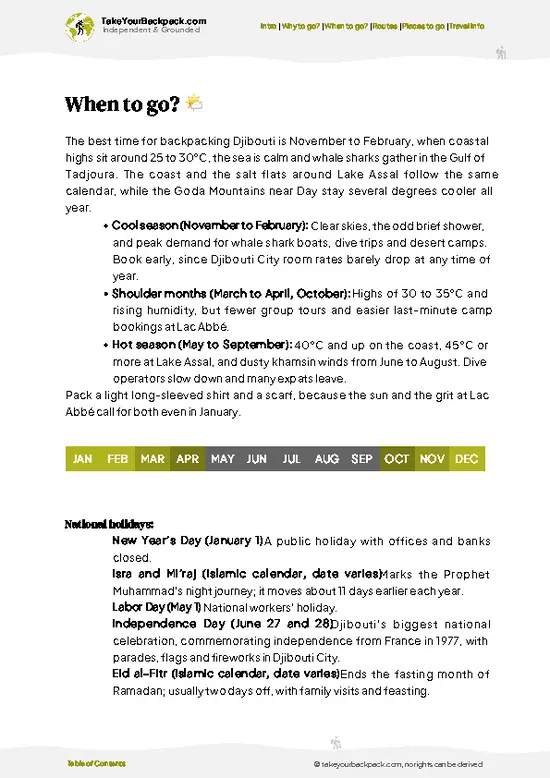
  • Weather: Ras Siyyan bakes under a desert sun most of the year. The best window is between November and March when temperatures drop to a bearable 25-30°C (77-86°F). Outside this, expect relentless heat that can fry your spirit and gear.

  • Temperature: Daytime highs in summer soar past 40°C (104°F), making hiking or exploring a sweaty slog. Nights cool off but not enough to call it refreshing. Winter months offer a more forgiving climate, perfect for long days outdoors.

  • Daylight Hours: Djibouti sits near the equator, so daylight is steady year-round—about 12 hours. No drastic shifts, which means you can plan your days without worrying about early sunsets or late sunrises.

  • Crowds: Ras Siyyan isn’t a tourist hotspot, so expect solitude almost anytime. The only crowd factor is local fishermen
read more 👉

  • Weather: Ras Siyyan bakes under a desert sun most of the year. The best window is between November and March when temperatures drop to a bearable 25-30°C (77-86°F). Outside this, expect relentless heat that can fry your spirit and gear.

  • Temperature: Daytime highs in summer soar past 40°C (104°F), making hiking or exploring a sweaty slog. Nights cool off but not enough to call it refreshing. Winter months offer a more forgiving climate, perfect for long days outdoors.

  • Daylight Hours: Djibouti sits near the equator, so daylight is steady year-round—about 12 hours. No drastic shifts, which means you can plan your days without worrying about early sunsets or late sunrises.

  • Crowds: Ras Siyyan isn’t a tourist hotspot, so expect solitude almost anytime. The only crowd factor is local fishermen and occasional researchers, which adds authenticity rather than hassle.

  • Seasonal Activities: The dry season (Nov-Mar) is prime for snorkeling and diving in the nearby coral reefs. The wet season is brief and unpredictable, often muddying trails and limiting water activities.

  • Price Fluctuations: Djibouti’s tourism is low-volume, so prices don’t spike dramatically. Still, expect slightly higher costs during the cooler months when more international visitors trickle in.


Pro-tip: Aim for the shoulder months—November or March—to dodge both the heat and the small uptick in visitors, scoring the best balance of comfort and quiet.


source: climatestotravel.comJANJanuary: excellent for travelingFEBFebruary: excellent for travelingMARMarch: highly recommended for travelingAPRApril: fair for travelingMAYMay: below average for travelingJUNJune: below average for travelingJULJuly: below average for travelingAUGAugust: below average for travelingSEPSeptember: fair for travelingOCTOctober: good for travelingNOVNovember: highly recommended for travelingDECDecember: excellent for traveling
djibouti-unique-site-ras-siyyan v1
© Google |

✈️ The backpacker research shortcutDjibouti Travel Guide

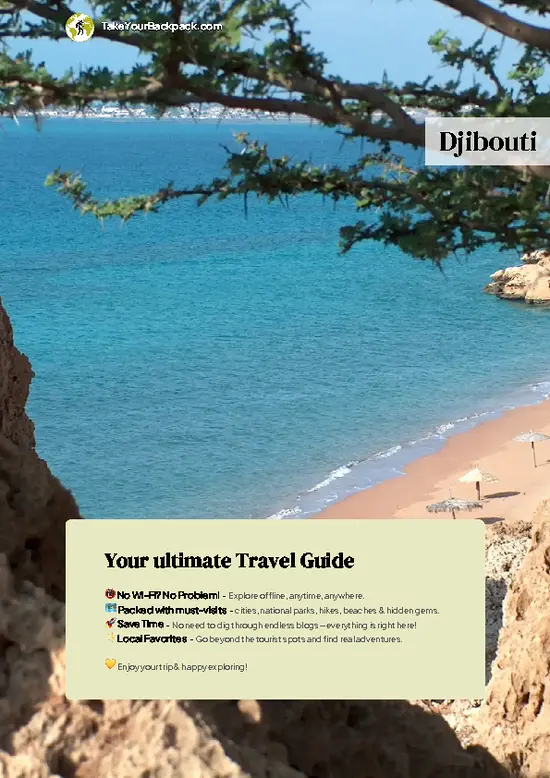
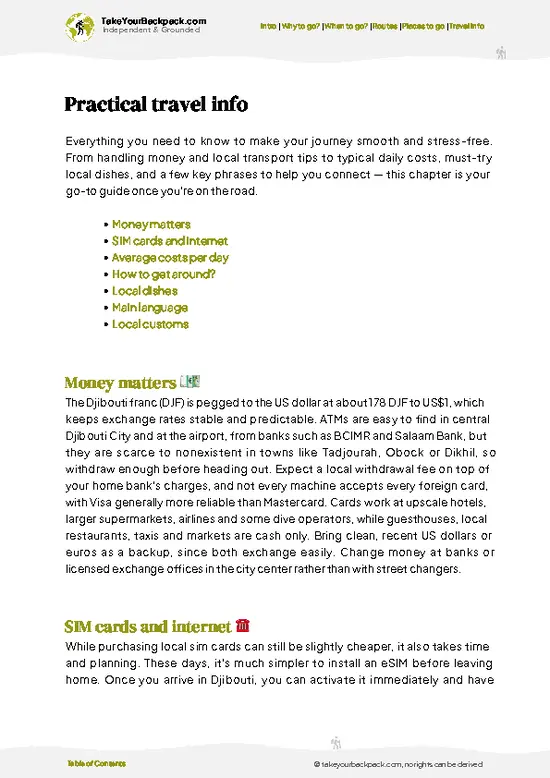
An offline-friendly backpacking guide with optimized travel routes, ranked highlights, transport advice, and the best areas to stay.
example page 0 from our offline Travel Guide for Djiboutiexample page 1 from our offline Travel Guide for Djiboutiexample page 2 from our offline Travel Guide for Djiboutiexample page 3 from our offline Travel Guide for Djiboutiexample page 4 from our offline Travel Guide for Djiboutiexample page 5 from our offline Travel Guide for Djibouti
The digital guide (179 pages) contains:
48 highlights, ranked by travel appeal
Optimized 2, 3 & 5-day travel routes
Best neighborhoods to stay
How to get around
Offline-friendly for travel without Wi-Fi
👉 See all 30+ guide features

📅 Plan smarter in minutes, not weeks
Month by month travel advice
Festivals & national holidays
Budget expectations

🗺️ Go to the right places, skip the overrated ones
Honest pros & cons of destinations
Top hikes, parks & viewpoints
Lesser-known places most travelers miss
Clear “worth it vs skip it” guidance

🛏️ Travel smoothly without rookie mistakes
Best areas to stay
Transport systems explained simply
Common scams & safety advice
SIM cards, money & practical tips

🌍 Understand the country, not just visit it
Culture & traditions
52 Essential phrases & customs
Festivals worth planning around
Traveler-friendly historical context
Insights that make places more meaningful

📱 Built for real travel conditions
Fully downloadable PDF
Works completely offline
Optimized for phone use
Useful in remote areas & buses
Everything in one place
Save weeks of stressful planning
Get instant access to the full guide directly. 30-day money-back guarantee.


Sent to your inbox immediately after payment • 100% Secure Checkout
Best Backpacking Travel Advisor 2025 tourism awardBest Backpacking
Travel Advisor
2025
What others say about Take Your Backpack Guides:
⭐⭐⭐⭐⭐
Fantastic, amazing amount of information!
⭐⭐⭐⭐⭐
My goodness this is amazing, it's what I've been looking for hats off too you!
⭐⭐⭐⭐⭐
I think this is absolutely BRILLIANT
⭐⭐⭐⭐
Very complete and informative. It's still missing places, but I gotta to commend you
⭐⭐⭐⭐⭐
This is truly amazing, thank you, can't wait to explore it with my kids!
⭐⭐⭐⭐⭐
Awesome resource, thank you!
⭐⭐⭐⭐⭐
This is amazing! Can't wait to explore the ones I haven't seen
⭐⭐⭐⭐
I love this! Well done, great idea.
⭐⭐⭐⭐⭐
Thanks for taking the time to make this gem!
⭐⭐⭐⭐⭐
This might be the best website I've ever seen.
⭐⭐⭐⭐⭐
Congratulations, and thank you so much for your work; it's incredibly valuable.
⭐⭐⭐⭐
In all seriousness I think you did a great job pointing out the important spots
⭐⭐⭐⭐⭐
10/10 very good
⭐⭐⭐⭐⭐
As someone who's only just starting to visit regularly this is awesome, thank you.
⭐⭐⭐⭐
Thank you very much! I'm going to visit my dad, it's going to be very useful!
⭐⭐⭐⭐⭐
This is really cool! We'll be travelling for the first time and this definitely come in handy.
⭐⭐⭐⭐⭐
You are now our minister of culture, congratulations 👨‍💼
⭐⭐⭐⭐⭐
Just wanted to tell you that this is a pearl! Going to follow your recommendations.
⭐⭐⭐⭐⭐
This is so cool. I'll definitely be using the resource for my travels soon.
⭐⭐⭐⭐⭐
This is very impressive! Good work.
⭐⭐⭐⭐⭐
This is an amazing and informative site. Very well done!

🛏️ Where to stay?Best areas to stay in Djibouti

Staying near Ras Siyyan in Djibouti is all about finding that sweet spot between adventure and comfort. The area around the port city is buzzing with energy, making it a prime choice for backpackers.

Head to the neighborhoods near the waterfront. You’ll find a mix of budget-friendly accommodations that cater to solo travelers and groups alike. The vibe here is social; you can easily strike up conversations with fellow adventurers over a cup of strong coffee or a plate of local fare.

Another solid option is the area around Place Menelik. It’s a bit more laid-back but still close enough to the … read more 👉
Staying near Ras Siyyan in Djibouti is all about finding that sweet spot between adventure and comfort. The area around the port city is buzzing with energy, making it a prime choice for backpackers.

Head to the neighborhoods near the waterfront. You’ll find a mix of budget-friendly accommodations that cater to solo travelers and groups alike. The vibe here is social; you can easily strike up conversations with fellow adventurers over a cup of strong coffee or a plate of local fare.

Another solid option is the area around Place Menelik. It’s a bit more laid-back but still close enough to the action. You’ll find small guesthouses and shared spaces where you can swap stories with other travelers. Safety is generally good, but keep your wits about you, especially at night.

Don’t overlook the local markets. Staying near these bustling hubs not only gives you access to affordable eats but also immerses you in the culture. You’ll experience the real Djibouti, away from the polished tourist spots.

In short, choose areas that are lively, safe, and filled with opportunities to connect. That’s where the real magic happens.

👛 Costs (as of 9 July 2025)Money, prices, and spending tips

Visiting Ras Siyyan in Djibouti is an experience that comes with its own set of costs, and it’s essential to know what you’re getting into. Here’s a breakdown of what to expect:
  • Entry Fees: Expect to pay around €10 to €20 for access to the site. This fee helps maintain the area and ensures that you can enjoy its natural beauty without excessive commercialization.
  • Transportation: Getting to Ras Siyyan can be a bit of a trek. If you’re hiring a taxi or a private driver, budget between €30 to €50 for a round trip. Public transport options are cheaper but less reliable, so plan accordingly.
  • Guided Tours: If you want a deeper understanding of the area, consider a guided tour. Prices range from €50 to €100, depending on the length and inclusions. This can be worth it for the insights and local knowledge
read more 👉
Visiting Ras Siyyan in Djibouti is an experience that comes with its own set of costs, and it’s essential to know what you’re getting into. Here’s a breakdown of what to expect:
  • Entry Fees: Expect to pay around €10 to €20 for access to the site. This fee helps maintain the area and ensures that you can enjoy its natural beauty without excessive commercialization.
  • Transportation: Getting to Ras Siyyan can be a bit of a trek. If you’re hiring a taxi or a private driver, budget between €30 to €50 for a round trip. Public transport options are cheaper but less reliable, so plan accordingly.
  • Guided Tours: If you want a deeper understanding of the area, consider a guided tour. Prices range from €50 to €100, depending on the length and inclusions. This can be worth it for the insights and local knowledge you’ll gain.
  • Food and Drink: There are limited options nearby, so pack snacks or a meal. If you choose to eat out, expect to spend around €5 to €15 per meal. Bring plenty of water, as it can get hot.
  • Accommodation: If you plan to stay overnight, budget around €30 to €70 for basic lodging. Options vary from guesthouses to more upscale places, but don’t expect luxury.

These costs can add up, but the real magic of Ras Siyyan lies in its raw beauty and the chance to connect with nature away from the tourist traps.
⚠️ Prices can change and everyone travels differently, so take this as a rough guide. Hope it helps you plan your adventure!

Other Djiboutian unique sites near Ras Siyyan

Explore more nearby:

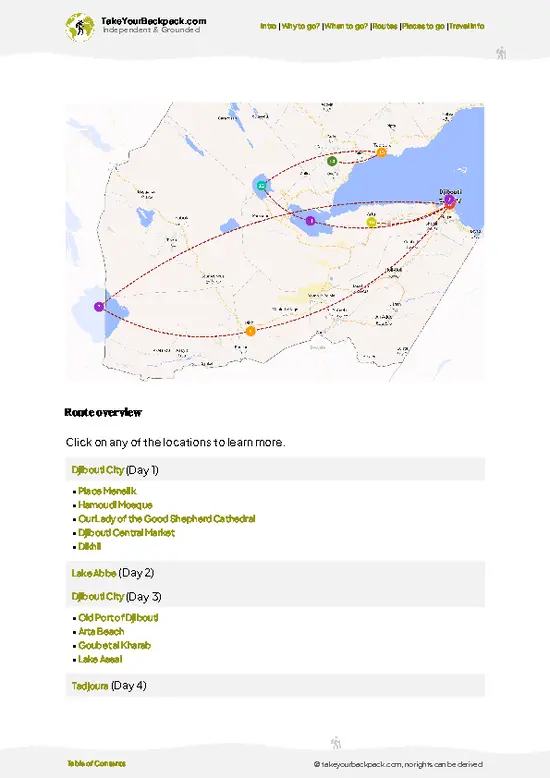
  • Old Port of Djibouti—colonial warehouses, fishing boats, bustling docks, maritime relics| 97 km away
  • Djibouti Railway—colonial-era stations, cross-border route, vintage carriages, urban-rural transition| 107 km away
  • Goubet al Kharab—rift valley cliffs, deep blue waters, tidal whirlpools, volcanic terrain| 130 km away

👉 Discover all unique sites

Or checkout all Djibouti has to offer (think cities, towns, villages, national parks, hikes, beaches, festivals)
Country photo of Djibouti

We 💚 feedbackWhat to keep in mind

Ras Siyyan isn’t just another pretty spot; it’s a raw slice of Djibouti’s soul. Expect crowds, especially at sunset, but don’t let that deter you. The real magic lies in the local fishermen’s tales and the salty breeze that carries whispers of the sea. The best surprise? Stumbling upon a small café where you can sip strong coffee and watch the world go by. Just be ready for the heat—it’s relentless. Embrace it, and you’ll find a connection that’s worth every drop of sweat.

✍️ Help improve this page!
The information on this page is based on in-depth research, insights shared by experienced travelers, and feedback from the local travel community in Djibouti. While every effort is made to keep the information accurate and current, conditions can change — so if you spot anything incorrect or outdated, please get in touch.


🙋‍♂️ Give feedback

👋 Meet the founderWho’s Behind Take Your Backpack?

Johan, backpacker and founder of TakeYourBackpackHi, I’m Johan (Netherlands 🇳🇱), the creator of TakeYourBackpack. Over the past decade, I’ve backpacked through 80+ countries across six continents, gaining extensive experience with independent travel, long-term trips, and overland routes.

This site is built on a combination of firsthand travel experience and carefully curated insights from other backpackers. Many guides are based on places I’ve personally visited, while others bring together tips, observations, and practical advice shared by trusted travelers I’ve met along the way.

The goal is to provide realistic, experience-driven guidance — not generic itineraries — so you can explore destinations with better context, clearer expectations, and more confidence.

Get Full Country Guide |
Instant download • 48 highlights • Full Offline guide