×

Djibouti🇩🇯 | landmarksDjibouti Railwaycolonial-era stations, cross-border route, vintage carriages, urban-rural transition | things to do and best time to go

Explore DamerjogExplore Goubet al Kharab

Backpacking in Djibouti Railway
👀 For curious travelersunique site ranked #5
By Johan Kruseman 🇳🇱 | Updated September 3, 2026

Here’s what nobody tells you: the Djibouti Railway is one of the cheapest ways to see the real backbone of the Horn of Africa, but you’ll only realize this after you’ve already blown your budget on taxis and private drivers. The main station sits in the heart of Djibouti City, a dusty, chaotic hub that feels more like a crossroads than a capital. Forget the Instagram fantasy of gleaming trains and empty platforms—this is a living, breathing artery of trade and migration, not a photo op. The wow-factor isn’t in the architecture (which is battered and functional), but in the raw, unfiltered energy: locals hauling sacks, vendors hawking tea, the constant shuffle of travelers heading to Ethiopia. It’s not cheap by local standards, but for what you get—front-row seats to daily life, history in motion—it’s a bargain. Crowds are real, comfort is negotiable, but the authenticity is absolute.

Discover everything you want to know in the 📖 Djibouti Travel Guide.


Get your Djibouti guide
47 ranked highlights, routes & tips, works offline (200 pages)
Loading the map 🌍
CLICK TO FILTER
cities
towns
villages
landmarks
national parks
hikes
beaches
attractions
festivals
regions
SHOW COUNTRY’S BESTSHOW ALL

✨ Why go?
Ranked #5 unique site in Djibouti
Reasons people choose to visit here

The Djibouti Railway isn’t just a train ride; it’s a journey through the heart of a country that’s often overlooked. Sure, you’ll encounter crowds—especially at the main stations—but that’s part of the experience. The vibrancy of local life unfolds around you, with vendors selling everything from spicy sambusas to colorful fabrics.

This railway connects Djibouti City to the Ethiopian border, making it a crucial link for backpackers exploring the region. The cost is low, often less than a meal in a fancy restaurant, and the views? They’re a feast for the eyes. You’ll glide past stunning landscapes, from arid deserts to bustling towns, all while meeting fellow travelers and locals.

Incorporate this ride into a broader route—maybe after visiting the Lac Assal or before heading to Lake Abbe. … read more 👉
The Djibouti Railway isn’t just a train ride; it’s a journey through the heart of a country that’s often overlooked. Sure, you’ll encounter crowds—especially at the main stations—but that’s part of the experience. The vibrancy of local life unfolds around you, with vendors selling everything from spicy sambusas to colorful fabrics.

This railway connects Djibouti City to the Ethiopian border, making it a crucial link for backpackers exploring the region. The cost is low, often less than a meal in a fancy restaurant, and the views? They’re a feast for the eyes. You’ll glide past stunning landscapes, from arid deserts to bustling towns, all while meeting fellow travelers and locals.

Incorporate this ride into a broader route—maybe after visiting the Lac Assal or before heading to Lake Abbe. It’s not just about the destination; it’s about the stories you collect along the way. The Djibouti Railway is a slice of authentic life, and that’s what makes it worth every moment.
Want to include Djibouti Railway in your Djibouti route?
Create a personalized Djibouti itinerary that includes Djibouti Railway and the places that fit your trip — based on your travel style, budget, and available time. Get your route in seconds.

Generate my trip

💡 HighlightsDon't-miss highlights and experiences

  1. Old Djibouti-Ville Station — A compact colonial-era station that still wears its French-built bones: ironwork, ticket counters and that slightly faded grandeur. It’s the clearest physical link to the railway’s role as the lifeline between the Gulf and the Ethiopian interior, and great for photos and imagining steam-era arrivals.
  2. Rusting steam locomotives and carriages — Scattered in the yards are old locomotives and rolling stock, half-mothballed, half-open-air relics. They’re atmospheric, tactile pieces of industrial heritage — perfect for close-up shots and for fans of mechanical history.
  3. Railyards and workshops (industrial archaeology) — The maintenance sheds, cranes and toolrooms tell the practical story of keeping a railway alive in a harsh climate. Walk around (from public vantage
read more 👉
  1. Old Djibouti-Ville Station — A compact colonial-era station that still wears its French-built bones: ironwork, ticket counters and that slightly faded grandeur. It’s the clearest physical link to the railway’s role as the lifeline between the Gulf and the Ethiopian interior, and great for photos and imagining steam-era arrivals.
  2. Rusting steam locomotives and carriages — Scattered in the yards are old locomotives and rolling stock, half-mothballed, half-open-air relics. They’re atmospheric, tactile pieces of industrial heritage — perfect for close-up shots and for fans of mechanical history.
  3. Railyards and workshops (industrial archaeology) — The maintenance sheds, cranes and toolrooms tell the practical story of keeping a railway alive in a harsh climate. Walk around (from public vantage points) and you’ll see the human-scale evidence of how the line operated: workshops, bolted rails and heavy machinery.
  4. Coastal tracklines and port views — Where the old tracks run close to the Gulf of Tadjoura and the port you get a rare mix of sea, shipping and rail infrastructure in one frame. Sunrises/sunsets here cast great light on rusted metal and busy harbor activity.
  5. Bridges, embankments and engineering traces — Look for surviving bridges, culverts and raised embankments — small but clever feats of engineering given the terrain and saline environment. They’re quieter reminders of the logistical challenges the builders solved a century ago.
  6. Local stories and rail culture — The site isn’t just metal and stone: older Djiboutians, former workers and port folk hold stories about the railway’s heyday. Spend a little time listening — the oral history gives the physical remains real context and often better memories than any plaque.
  7. Contrast with the new Addis-Djibouti line — Nearby you can see the shadow of modern infrastructure ambitions compared to the old metre-gauge relics. That contrast — new high-speed freight corridors beside fallen steam-era equipment — makes for a powerful lesson in changing trade and technology.
Spotted a mistake or missing something? Contact us.

Things to do near Djibouti Railway

Ratings based on Tripadvisor reviews. When you book through this link, you support our work at no extra cost to you.

🌤️ When to go?Weather, crowds, and seasonal trade-offs


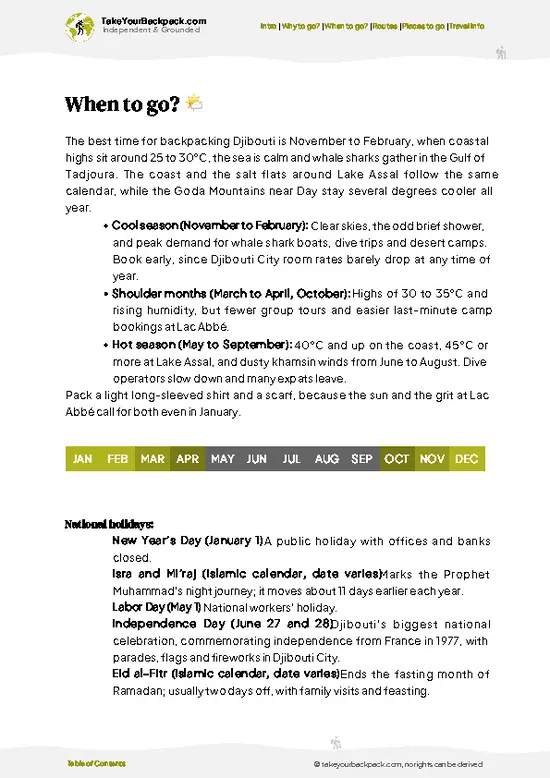
  • Weather: Djibouti is brutally hot most of the year. The best window is between November and February when temperatures drop to a bearable 20-30°C (68-86°F). Outside this, expect relentless heat that saps your energy and makes exploring the railway a slog.

  • Temperature: Daytime highs in peak summer can soar above 40°C (104°F), making midday treks near impossible. Nights cool off but not enough to fully recover. Winter months offer a rare, comfortable break from the furnace.

  • Daylight Hours: Djibouti enjoys roughly 11-12 hours of daylight year-round. This consistency means you can plan your excursions without worrying about early sunsets cutting your time short.

  • Crowds: The railway is off the beaten path, so don’t expect hordes. However, the cooler months attract more adventurous travelers,
read more 👉

  • Weather: Djibouti is brutally hot most of the year. The best window is between November and February when temperatures drop to a bearable 20-30°C (68-86°F). Outside this, expect relentless heat that saps your energy and makes exploring the railway a slog.

  • Temperature: Daytime highs in peak summer can soar above 40°C (104°F), making midday treks near impossible. Nights cool off but not enough to fully recover. Winter months offer a rare, comfortable break from the furnace.

  • Daylight Hours: Djibouti enjoys roughly 11-12 hours of daylight year-round. This consistency means you can plan your excursions without worrying about early sunsets cutting your time short.

  • Crowds: The railway is off the beaten path, so don’t expect hordes. However, the cooler months attract more adventurous travelers, slightly bumping up foot traffic but never to overwhelming levels.

  • Seasonal Activities: Cooler months coincide with local festivals and better conditions for hiking and photography along the railway. Summer’s heat kills any chance of outdoor enjoyment beyond a quick snapshot.

  • Price Fluctuations: Expect higher accommodation and transport costs during the cooler, peak tourist season. Off-season prices drop but so does your comfort and safety margin.


Pro-tip: Aim for late November to early February—your best shot at enjoying the Djibouti Railway without melting or paying a premium for the privilege.


source: climatestotravel.comJANJanuary: excellent for travelingFEBFebruary: excellent for travelingMARMarch: good for travelingAPRApril: fair for travelingMAYMay: fair for travelingJUNJune: below average for travelingJULJuly: below average for travelingAUGAugust: below average for travelingSEPSeptember: fair for travelingOCTOctober: good for travelingNOVNovember: highly recommended for travelingDECDecember: excellent for traveling
when-to-go

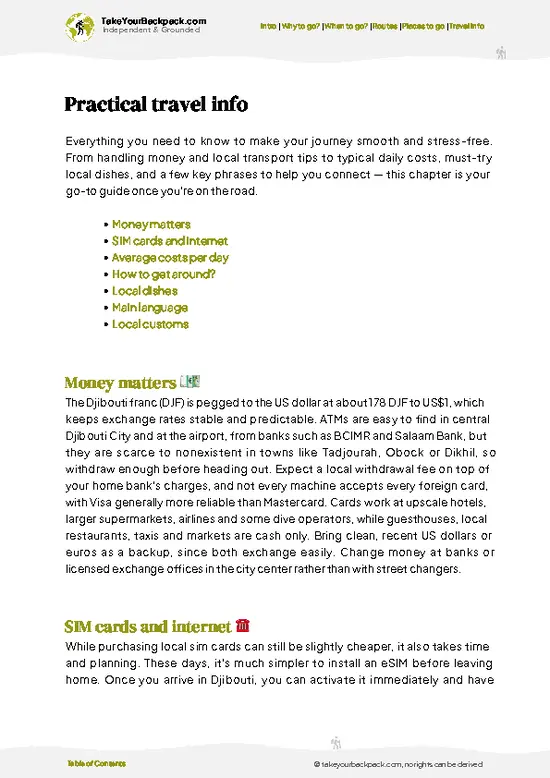
✈️ The backpacker research shortcutDjibouti Travel Guide

An offline-friendly backpacking guide with optimized travel routes, ranked highlights, transport advice, and the best areas to stay.
example page 0 from our offline Travel Guide for Djibouti
example page 1 from our offline Travel Guide for Djibouti
example page 2 from our offline Travel Guide for Djibouti
example page 3 from our offline Travel Guide for Djibouti
example page 4 from our offline Travel Guide for Djibouti
example page 5 from our offline Travel Guide for Djibouti
example page 6 from our offline Travel Guide for Djibouti
example page 7 from our offline Travel Guide for Djibouti
The digital guide (200 pages) contains:
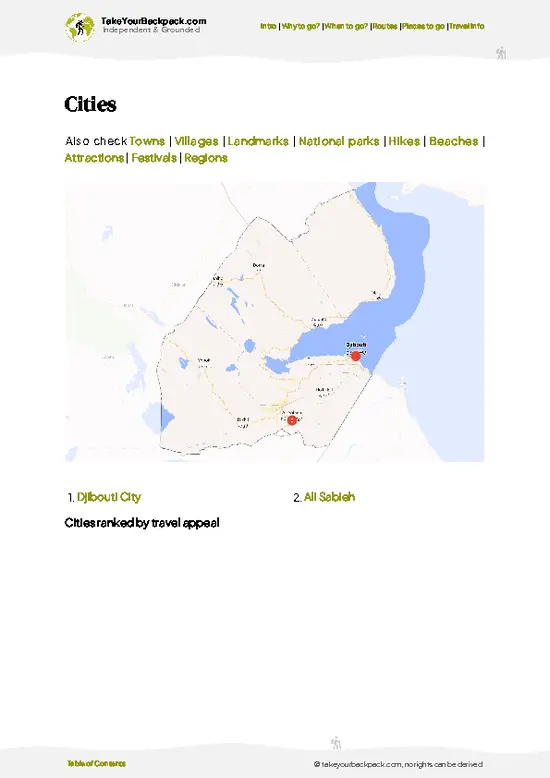
47 highlights, ranked by travel appeal
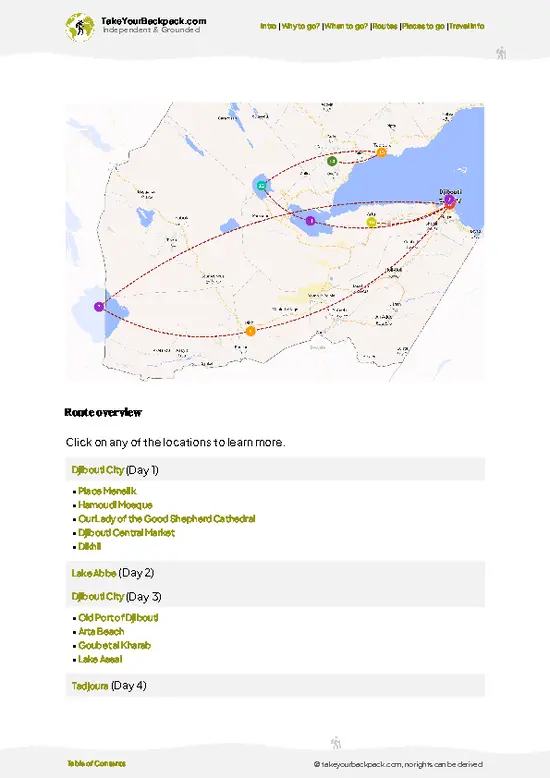
Optimized 2, 3 & 5-day travel routes
Cities, national parks, landmarks, beaches
How to get around
Offline-friendly for travel without Wi-Fi
👉 Click to see all 30+ guide features

📅 Plan smarter in minutes, not weeks
Month by month travel advice
Festivals & national holidays
Budget expectations

🗺️ Go to the right places, skip the overrated ones
Honest pros & cons of destinations
Top hikes, parks & viewpoints
Lesser-known places most travelers miss
Clear “worth it vs skip it” guidance

🛏️ Travel smoothly without rookie mistakes
Best areas to stay
Transport systems explained simply
Common scams & safety advice
SIM cards, money & practical tips

🌍 Understand the country, not just visit it
Culture & traditions
52 Essential phrases & customs
Festivals worth planning around
Traveler-friendly historical context
Insights that make places more meaningful

📱 Built for real travel conditions
Fully downloadable PDF
Works completely offline
Optimized for phone use
Useful in remote areas & buses
Everything in one place
Save weeks of stressful planning
Get instant access to your full guide. 30‑day money-back guarantee.
+ Add another guide for just US$7.80

By proceeding you agree to our terms.
Sent to your inbox immediately after payment • 100% Secure Checkout
Best Backpacking Travel Advisor 2025 tourism awardBest Backpacking
Travel Advisor
2025
What others say about Take Your Backpack Guides:
⭐⭐⭐⭐⭐
Fantastic, amazing amount of information!
⭐⭐⭐⭐⭐
My goodness this is amazing, it's what I've been looking for hats off too you!
⭐⭐⭐⭐⭐
I think this is absolutely BRILLIANT
⭐⭐⭐⭐
Very complete and informative. It's still missing places, but I gotta to commend you
⭐⭐⭐⭐⭐
This is truly amazing, thank you, can't wait to explore it with my kids!
⭐⭐⭐⭐⭐
Awesome resource, thank you!
⭐⭐⭐⭐⭐
This is amazing! Can't wait to explore the ones I haven't seen
⭐⭐⭐⭐
I love this! Well done, great idea.
⭐⭐⭐⭐⭐
Thanks for taking the time to make this gem!
⭐⭐⭐⭐⭐
This might be the best website I've ever seen.
⭐⭐⭐⭐⭐
Congratulations, and thank you so much for your work; it's incredibly valuable.
⭐⭐⭐⭐
In all seriousness I think you did a great job pointing out the important spots
⭐⭐⭐⭐⭐
10/10 very good
⭐⭐⭐⭐⭐
As someone who's only just starting to visit regularly this is awesome, thank you.
⭐⭐⭐⭐
Thank you very much! I'm going to visit my dad, it's going to be very useful!
⭐⭐⭐⭐⭐
This is really cool! We'll be travelling for the first time and this definitely come in handy.
⭐⭐⭐⭐⭐
You are now our minister of culture, congratulations 👨‍💼
⭐⭐⭐⭐⭐
Just wanted to tell you that this is a pearl! Going to follow your recommendations.
⭐⭐⭐⭐⭐
This is so cool. I'll definitely be using the resource for my travels soon.
⭐⭐⭐⭐⭐
This is very impressive! Good work.
⭐⭐⭐⭐⭐
This is an amazing and informative site. Very well done!

🛏️ Where to stay?How to pick the right area

Staying near the Djibouti Railway means diving into a blend of history and local life. The area around the railway station is buzzing with energy, but don’t expect a serene escape. Crowds can be intense, especially during peak hours. That said, the vibrant atmosphere is part of the charm.

Look for accommodations in the Balbala district. It’s a hub for backpackers, offering a mix of budget-friendly options. You’ll find a community of travelers eager to share stories and tips. The local eateries serve up authentic Djiboutian cuisine at prices that won’t break the bank.

Another option is the … read more 👉
Staying near the Djibouti Railway means diving into a blend of history and local life. The area around the railway station is buzzing with energy, but don’t expect a serene escape. Crowds can be intense, especially during peak hours. That said, the vibrant atmosphere is part of the charm.

Look for accommodations in the Balbala district. It’s a hub for backpackers, offering a mix of budget-friendly options. You’ll find a community of travelers eager to share stories and tips. The local eateries serve up authentic Djiboutian cuisine at prices that won’t break the bank.

Another option is the city center, where you can soak in the hustle and bustle. It’s a bit more touristy, but you’ll have easy access to markets and cultural sites. Just be mindful of your belongings; pickpockets can be a concern in crowded areas.

Ultimately, the real magic lies in the connections you make. Engage with locals, explore the markets, and let the rhythm of Djibouti sweep you off your feet. This isn’t just a stopover; it’s an experience waiting to unfold.

👛 Costs (as of 3 September 2026)Typical daily expenses

Visiting the Djibouti Railway isn’t just about hopping on a train; it’s about experiencing a slice of history and culture. Here’s what you can expect in terms of costs:
  • Train Tickets: Prices for a one-way ticket range from €10 to €30. The journey offers a glimpse into the landscape, but be prepared for delays and a less-than-luxurious ride. It’s not just about the destination; it’s the experience of traveling through Djibouti’s unique terrain.
  • Food: Budget around €5 to €15 per meal. Local eateries serve up delicious dishes like injera and grilled meats. Street food is also a great option, but choose wisely to avoid any stomach issues. Eating where the locals eat is part of the adventure.
  • Accommodation: Expect to pay between €20 and €60 per night for budget to mid-range hotels. Options vary from
read more 👉
Visiting the Djibouti Railway isn’t just about hopping on a train; it’s about experiencing a slice of history and culture. Here’s what you can expect in terms of costs:
  • Train Tickets: Prices for a one-way ticket range from €10 to €30. The journey offers a glimpse into the landscape, but be prepared for delays and a less-than-luxurious ride. It’s not just about the destination; it’s the experience of traveling through Djibouti’s unique terrain.
  • Food: Budget around €5 to €15 per meal. Local eateries serve up delicious dishes like injera and grilled meats. Street food is also a great option, but choose wisely to avoid any stomach issues. Eating where the locals eat is part of the adventure.
  • Accommodation: Expect to pay between €20 and €60 per night for budget to mid-range hotels. Options vary from basic guesthouses to slightly more upscale hotels. The key is to find a place that feels authentic and offers a taste of local hospitality.
  • Transportation: Local transport costs are low, typically around €1 to €5 for a taxi ride within the city. However, be ready to negotiate. Public transport is available but can be crowded and unpredictable.
  • Activities: While the railway itself is the main attraction, consider budgeting €10 to €50 for additional experiences like guided tours or visits to nearby sites. These can enhance your understanding of the region’s rich history and culture.

The Djibouti Railway is more than just a ride; it’s a chance to connect with the heart of Djibouti. Embrace the quirks, and you’ll find the real magic in the journey.
⚠️ Prices can change and everyone travels differently, so take this as a rough guide. Hope it helps you plan your adventure!

FAQTraveler FAQ

Djibouti Railway is a historic narrow-gauge railway that connected Djibouti City to Addis Ababa, Ethiopia, originally built in the early 20th century. It played a crucial role in trade and transport but is now mostly non-operational and serves as a cultural heritage site.
Visiting the Djibouti Railway site typically requires about half a day to a full day, depending on your interest in exploring the old stations and railway artifacts. Guided tours or self-exploration can be done within 4 to 6 hours.
You can get to the Djibouti Railway site from Djibouti City by taxi or local transport; it is located near the city center, making it accessible within 15 to 30 minutes. Confirm the exact location with locals or your accommodation, as signage may be limited.
⚠️ Things can change over time, so always validate details locally before you go.

Other Djiboutian landmarks near Djibouti Railway

Explore more nearby:

  • Old Port of Djibouti—colonial warehouses, fishing boats, bustling docks, maritime relics| 10 km away
  • Goubet al Kharab—rift valley cliffs, deep blue waters, tidal whirlpools, volcanic terrain| 57 km away
  • Ras Siyyan—coral reefs, sand spit, migratory birds, Gulf of Tadjoura| 107 km away

💡 Not sure where to go next?
Create a personalized itinerary for Djibouti including Djibouti Railway and the places that fit your trip.

Generate my itinerary

👉 Discover all landmarks

Or checkout all Djibouti has to offer (think cities, towns, villages, national parks, hikes, beaches, festivals)
Country photo of Djibouti

We 💚 feedbackKey takeaways before you go

Riding the Djibouti Railway isn’t just about the destination; it’s the journey that hits you. Expect crowds and a bit of chaos, but that’s part of the charm. The best surprise? The locals’ warmth and their stories—they’ll make you feel like family. Just be ready for delays; patience is key here. Embrace the vibe, soak in the scenery, and let the rhythm of the train take you deeper into this unique corner of the world.

✍️ Help improve this page!
The information on this page is based on in-depth research, insights shared by experienced travelers, and feedback from the local travel community in Djibouti. While every effort is made to keep the information accurate and current, conditions can change — so if you spot anything incorrect or outdated, please get in touch.


🙋‍♂️ Give feedback

👋 Meet the founderWho’s Behind Take Your Backpack?

Johan, backpacker and founder of TakeYourBackpackHi, I’m Johan (Netherlands 🇳🇱), the creator of TakeYourBackpack. Over the past decade, I’ve backpacked through 80+ countries across six continents, gaining extensive experience with independent travel, long-term trips, and overland routes.

This site is built on a combination of firsthand travel experience and carefully curated insights from other backpackers. Many guides are based on places I’ve personally visited, while others bring together tips, observations, and practical advice shared by trusted travelers I’ve met along the way.

The goal is to provide realistic, experience-driven guidance — not generic itineraries — so you can explore destinations with better context, clearer expectations, and more confidence.

Get full Djibouti guide •
Instant download • 47 highlights • Full Offline guide