×

Dominica🇩🇲 | regionsKalinago TerritoryKalinago karbets, cassava bakers, canoe-shaped altar, Atlantic cliffs | things to do and best time to go

Explore Syndicate Nature ReserveExplore Marigot

Backpacking in Kalinago Territory
🏆 Top pickregion ranked #1
By Johan Kruseman 🇳🇱 | Updated October 22, 2026

The choice that shapes a visit to Kalinago Territory is whether to pass through for a few hours or sleep here, and sleeping here wins if you want the place without the tour-bus rhythm. The territory sits on the Atlantic coast in the east of Dominica, a strip of steep ridges, banana plots and gommier trees where roughly 3,000 Kalinago people live. Mornings smell of woodsmoke and baking cassava, and the surf booms below cliffs while rain slides in sideways. It isn’t polished. Roads twist, signs are few, and some craft stalls open only when someone feels like it. That is precisely why it feels lived in rather than staged. Standouts are the cultural village at Crayfish River, the canoe-shaped altar in Salybia church and a waterfall reached on foot with a local guide. Buses are rare, so experienced travelers arrange a driver or a guesthouse pickup, and carry small bills for stalls and guides.

Discover everything you want to know in the 📖 Dominica Travel Guide.


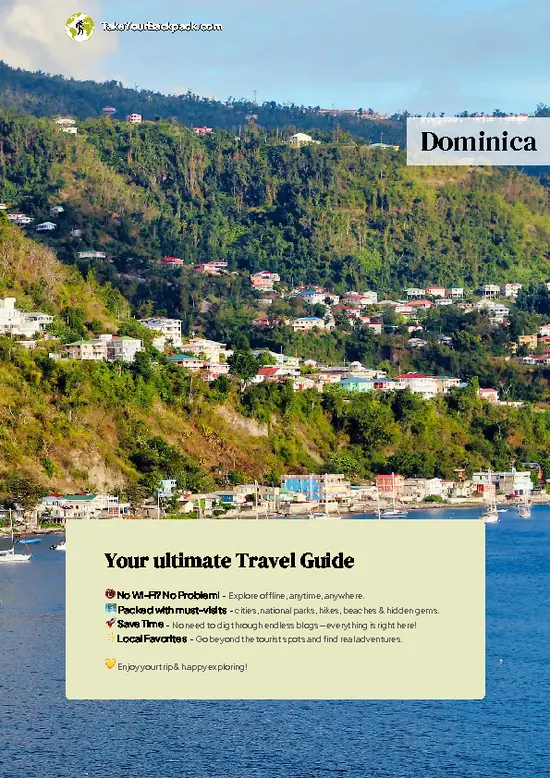
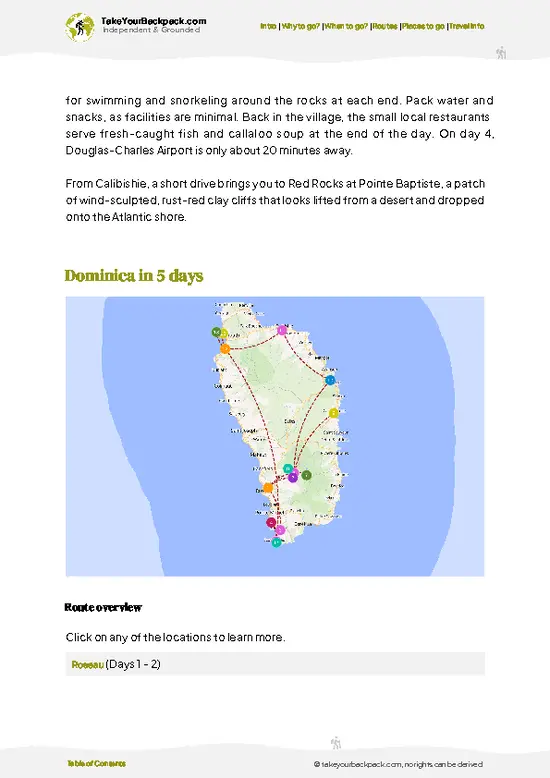
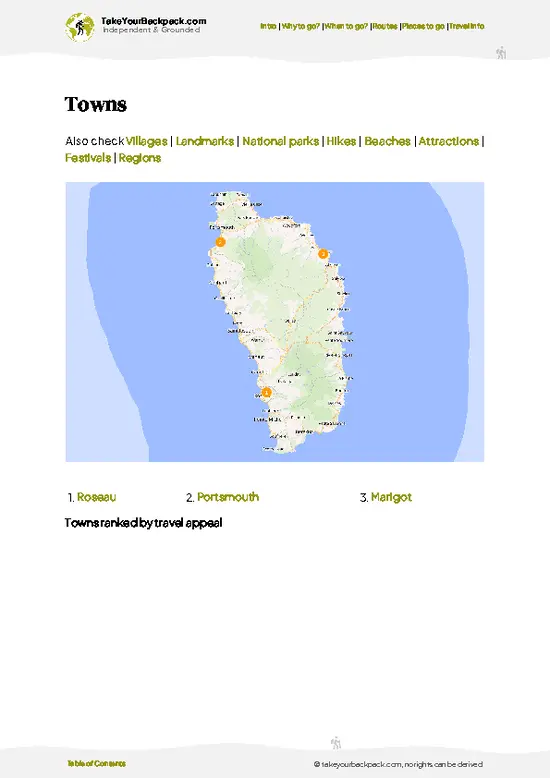
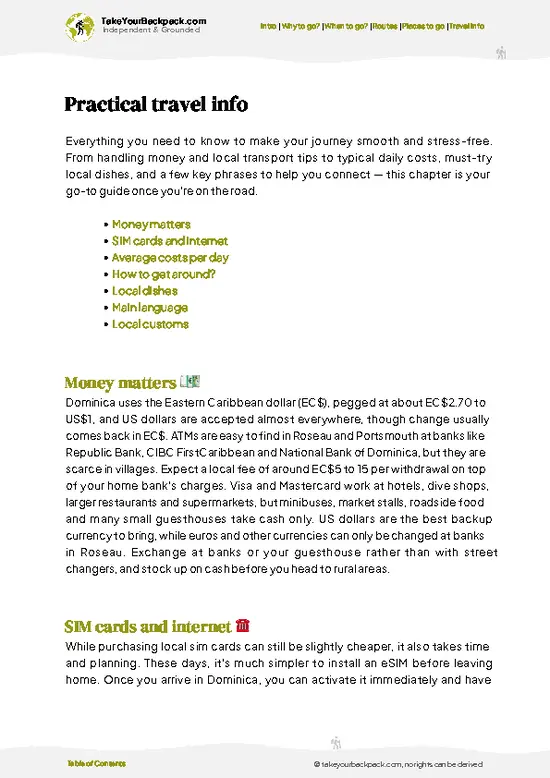
example page 0 from our offline Travel Guide for Dominica
example page 1 from our offline Travel Guide for Dominica
example page 2 from our offline Travel Guide for Dominica
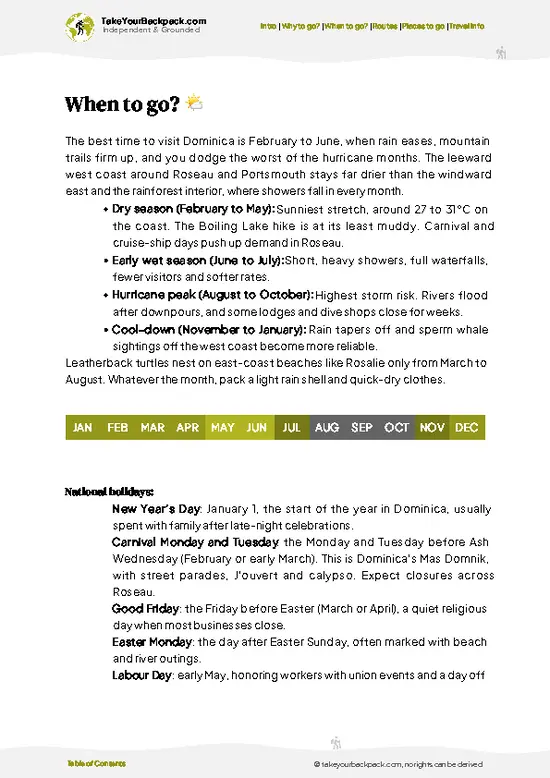
example page 3 from our offline Travel Guide for Dominica
example page 4 from our offline Travel Guide for Dominica
example page 5 from our offline Travel Guide for Dominica
example page 6 from our offline Travel Guide for Dominica
example page 7 from our offline Travel Guide for Dominica
Loading the map 🌍
CLICK TO FILTER
towns
villages
landmarks
national parks
hikes
beaches
attractions
festivals
regions
SHOW COUNTRY’S BESTSHOW ALL

✨ Why go?
Ranked #1 region in Dominica
Why Kalinago Territory should be on your travel list

Kalinago Territory gives you a culture you can only meet here, on the land where it continues. The Kalinago are the Indigenous people of the Eastern Caribbean, and the territory holds communal title to its land, so a guide, basket weaver or baker is usually a resident rather than a hired performer. Spend a night and you see more: cassava being grated and pressed, larouma reed baskets drying by doorways, canoes taking shape from a felled gommier trunk. The second reason is how much fits in a small area. The Atlantic coast, forested river valleys and a stretch of the Waitukubuli National Trail sit within walking distance of each other, so you can hike in the morning, swim in a river by midday and eat cassava bread by afternoon without changing base. The slow pace suits the place, since conversations … read more 👉
Kalinago Territory gives you a culture you can only meet here, on the land where it continues. The Kalinago are the Indigenous people of the Eastern Caribbean, and the territory holds communal title to its land, so a guide, basket weaver or baker is usually a resident rather than a hired performer. Spend a night and you see more: cassava being grated and pressed, larouma reed baskets drying by doorways, canoes taking shape from a felled gommier trunk. The second reason is how much fits in a small area. The Atlantic coast, forested river valleys and a stretch of the Waitukubuli National Trail sit within walking distance of each other, so you can hike in the morning, swim in a river by midday and eat cassava bread by afternoon without changing base. The slow pace suits the place, since conversations here are half the point and rarely rushed. Add the Isulukati Falls walk and you have a few days of varied, low-key travel.

💡 HighlightsEssential experiences to have while visiting Kalinago Territory

  1. Kalinago Barana Autê: the cultural village above Crayfish River, with thatched karbets, a cassava-making demonstration, a craft shop and trails down to the sea. Entry is roughly US$10, and a guided visit takes about 1 to 2 hours.
  2. Isulukati Falls: a waterfall reached on a guided walk through gardens and forest, ending at a cool plunge pool. Guides are local residents and charge a small fee.
  3. Salybia Catholic Church: the altar is shaped like a canoe and the murals show Kalinago life, a rare case of Indigenous design inside a parish church.
  4. L’Escalier Tête Chien: a lava ridge stepping into the Atlantic, linked in local legend to a boa constrictor. Surf crashes hard here, so keep well back from the edge.
  5. Crayfish River mouth: a rocky, wild stretch where the river meets the sea, quiet and good for watching
… read more 👉
  1. Kalinago Barana Autê: the cultural village above Crayfish River, with thatched karbets, a cassava-making demonstration, a craft shop and trails down to the sea. Entry is roughly US$10, and a guided visit takes about 1 to 2 hours.
  2. Isulukati Falls: a waterfall reached on a guided walk through gardens and forest, ending at a cool plunge pool. Guides are local residents and charge a small fee.
  3. Salybia Catholic Church: the altar is shaped like a canoe and the murals show Kalinago life, a rare case of Indigenous design inside a parish church.
  4. L’Escalier Tête Chien: a lava ridge stepping into the Atlantic, linked in local legend to a boa constrictor. Surf crashes hard here, so keep well back from the edge.
  5. Crayfish River mouth: a rocky, wild stretch where the river meets the sea, quiet and good for watching waves roll in. Less visited than the village above it.
  6. Larouma basket stalls: roadside sellers weave tightly patterned baskets from reed, and buying directly from the weaver is the best way to spend money here.
  7. Cassava bread bakers: small home bakeries turn out hot, flat kasav at the roadside. It’s chewy, faintly sweet and best eaten the same morning. Lesser known, and loved by locals.
  8. Waitukubuli National Trail section: a walk through the territory’s ridges and villages, with ocean views opening between banana groves. Few hikers come this way, so expect to share it with farmers.
  9. Gommier canoe carving: watch craftspeople shape dugout canoes from a single trunk, a technique used here for generations. Ask at the cultural village or locally to find a carver at work.
  10. Salybia Bay lookout: a quiet bend in the coast road where you can watch fishing boats and Atlantic swells below green hillsides. Unsigned and rarely crowded.
Kalinago Territory is best started at Kalinago Barana Autê, because its guides explain the land and customs you will then see everywhere else.
Spotted a mistake or missing something? Contact us.

Things to do near Kalinago Territory

Ratings based on Tripadvisor reviews. When you book through this link, you support our work at no extra cost to you.

⌛️ 5 daysA smart one-week plan

Walking is the real pace here, with a taxi or arranged driver covering the gaps between settlements, since buses are infrequent and slow. Do the heavy lifting early and rest through the hot, humid middle of the day.

Day 1: Salybia: Arrive, drop your bag and walk to the village church to see the canoe altar while the light is soft. Salybia is the territory’s core, so shops, bakers and people willing to talk are close together. Spend the afternoon at the nearby craft stalls, buying from weavers directly.

Day 2: Crayfish River: Go early to Kalinago Barana Autê, before tour groups arrive. Walk the trails down to the river mouth afterward, then break in the shade when the heat peaks. Evenings are for cassava bread and a long dinner at your guesthouse.

Day 3: Isulukati Falls: Hire a local guide for … read more 👉
Walking is the real pace here, with a taxi or arranged driver covering the gaps between settlements, since buses are infrequent and slow. Do the heavy lifting early and rest through the hot, humid middle of the day.

Day 1: Salybia: Arrive, drop your bag and walk to the village church to see the canoe altar while the light is soft. Salybia is the territory’s core, so shops, bakers and people willing to talk are close together. Spend the afternoon at the nearby craft stalls, buying from weavers directly.

Day 2: Crayfish River: Go early to Kalinago Barana Autê, before tour groups arrive. Walk the trails down to the river mouth afterward, then break in the shade when the heat peaks. Evenings are for cassava bread and a long dinner at your guesthouse.

Day 3: Isulukati Falls: Hire a local guide for the waterfall walk. It’s a half-day outing, with wet rocks and a cold swim at the end, so wear shoes with grip. Spend the rest of the day resting or carving-watching with a gommier craftsperson.

Day 4: Waitukubuli Trail: Take a section of the national trail through ridge villages, with a driver collecting you at the end. The detour this day is L’Escalier Tête Chien on the coast, a short drive off the main road, where lava ledges meet heavy surf. It adds drama without upsetting the schedule.

Day 5: Back to Salybia: Slow morning, last baskets and bread, then your onward ride. The day that justifies the whole trip is Day 3: the falls walk, with a resident guide sharing plants and stories along the way, shows the territory at its best.

🌤️ When to go?Choosing the right time of year

  • Dry Season (February to May): Kalinago Territory sees the least rain now, with daytime highs of 28 to 31°C (82 to 88°F) and breezy Atlantic mornings. Roads and the Isulukati Falls trail are firmest, and daylight runs about 11.5 to 12.5 hours.
  • Wet Season (June to November): Expect heavy, fast showers on the windward coast, highs of 30 to 32°C (86 to 90°F), and slick paths. This is also hurricane season, with the highest risk from August to October. Guesthouses are quiet and rates can soften.
  • Cooler Months (December to January): Highs of 27 to 29°C (81 to 84°F), lows near 21°C (70°F), and a mix of sun and passing squalls. Holiday visitors lift prices on the island a little, but the Territory itself stays uncrowded.
  • Cultural Calendar: Kalinago Week in mid to late September and the Independence period
… read more 👉
  • Dry Season (February to May): Kalinago Territory sees the least rain now, with daytime highs of 28 to 31°C (82 to 88°F) and breezy Atlantic mornings. Roads and the Isulukati Falls trail are firmest, and daylight runs about 11.5 to 12.5 hours.
  • Wet Season (June to November): Expect heavy, fast showers on the windward coast, highs of 30 to 32°C (86 to 90°F), and slick paths. This is also hurricane season, with the highest risk from August to October. Guesthouses are quiet and rates can soften.
  • Cooler Months (December to January): Highs of 27 to 29°C (81 to 84°F), lows near 21°C (70°F), and a mix of sun and passing squalls. Holiday visitors lift prices on the island a little, but the Territory itself stays uncrowded.
  • Cultural Calendar: Kalinago Week in mid to late September and the Independence period in late October to early November bring dance, craft displays and basket-weaving demonstrations, so book a bed ahead.
Plan a weekday visit and arrive by mid-morning, when the craft stalls and cultural village are fully open.


source: climatestotravel.comJANJanuary: excellent for travelingFEBFebruary: excellent for travelingMARMarch: excellent for travelingAPRApril: highly recommended for travelingMAYMay: highly recommended for travelingJUNJune: good for travelingJULJuly: fair for travelingAUGAugust: fair for travelingSEPSeptember: fair for travelingOCTOctober: fair for travelingNOVNovember: good for travelingDECDecember: excellent for traveling
when-to-go

✈️ The backpacker research shortcutDominica Travel Guide

An offline-friendly backpacking guide with optimized travel routes, ranked highlights, transport advice, and the best areas to stay.
example page 0 from our offline Travel Guide for Dominica
example page 1 from our offline Travel Guide for Dominica
example page 2 from our offline Travel Guide for Dominica
example page 3 from our offline Travel Guide for Dominica
example page 4 from our offline Travel Guide for Dominica
example page 5 from our offline Travel Guide for Dominica
example page 6 from our offline Travel Guide for Dominica
example page 7 from our offline Travel Guide for Dominica
The digital guide (132 pages) contains:
✅ 33 highlights, ranked by travel appeal
✅ Optimized 2, 3 & 5-day travel routes
✅ Cities, national parks, landmarks, beaches
✅ How to get around
✅ Offline-friendly for travel without Wi-Fi
👉 Click to see all 30+ guide features

📅 Plan smarter in minutes, not weeks
✅ Month by month travel advice
✅ Festivals & national holidays
✅ Budget expectations

🗺️ Go to the right places, skip the overrated ones
✅ Honest pros & cons of destinations
✅ Top hikes, parks & viewpoints
✅ Lesser-known places most travelers miss
✅ Clear “worth it vs skip it” guidance

🛏️ Travel smoothly without rookie mistakes
✅ Best areas to stay
✅ Transport systems explained simply
✅ Common scams & safety advice
✅ SIM cards, money & practical tips

🌍 Understand the country, not just visit it
✅ Culture & traditions
✅ Local customs
✅ Festivals worth planning around
✅ Traveler-friendly historical context
✅ Insights that make places more meaningful

📱 Built for real travel conditions
✅ Fully downloadable PDF
✅ Works completely offline
✅ Optimized for phone use
✅ Useful in remote areas & buses
✅ Everything in one place
Stop searching, start planning
Get instant access to your full guide. 30‑day money-back guarantee.
+ Add another guide for just

By proceeding you agree to our terms.
Sent to your inbox immediately after payment • 100% Secure Checkout
Best Backpacking Travel Advisor 2025 tourism awardBest Backpacking
Travel Advisor
2025
What others say about Take Your Backpack Guides:
⭐⭐⭐⭐⭐
Fantastic, amazing amount of information!
⭐⭐⭐⭐⭐
My goodness this is amazing, it's what I've been looking for hats off too you!
⭐⭐⭐⭐⭐
I think this is absolutely BRILLIANT
⭐⭐⭐⭐
Very complete and informative. It's still missing places, but I gotta to commend you
⭐⭐⭐⭐⭐
This is truly amazing, thank you, can't wait to explore it with my kids!
⭐⭐⭐⭐⭐
Awesome resource, thank you!
⭐⭐⭐⭐⭐
This is amazing! Can't wait to explore the ones I haven't seen
⭐⭐⭐⭐
I love this! Well done, great idea.
⭐⭐⭐⭐⭐
Thanks for taking the time to make this gem!
⭐⭐⭐⭐⭐
This might be the best website I've ever seen.
⭐⭐⭐⭐⭐
Congratulations, and thank you so much for your work; it's incredibly valuable.
⭐⭐⭐⭐
In all seriousness I think you did a great job pointing out the important spots
⭐⭐⭐⭐⭐
10/10 very good
⭐⭐⭐⭐⭐
As someone who's only just starting to visit regularly this is awesome, thank you.
⭐⭐⭐⭐
Thank you very much! I'm going to visit my dad, it's going to be very useful!
⭐⭐⭐⭐⭐
This is really cool! We'll be travelling for the first time and this definitely come in handy.
⭐⭐⭐⭐⭐
You are now our minister of culture, congratulations 👨‍💼
⭐⭐⭐⭐⭐
Just wanted to tell you that this is a pearl! Going to follow your recommendations.
⭐⭐⭐⭐⭐
This is so cool. I'll definitely be using the resource for my travels soon.
⭐⭐⭐⭐⭐
This is very impressive! Good work.
⭐⭐⭐⭐⭐
This is an amazing and informative site. Very well done!

🛏️ Where to stay?Best areas and accommodation options

Salybia is the best base in Kalinago Territory, with the densest cluster of guesthouses, the Kalinago Barana Autê cultural village within walking distance, and the easiest minibus links. Expect small, family-run rooms and a few eco-style cabins, mostly US$40 to 90 a night, with home cooking often available on request.

Crayfish River and Bataka sit a short walk or hitch apart and suit travelers who want quieter evenings, with the sound of the Atlantic surf at night and craft vendors working in front of their houses by day. Social life is low-key and tends to happen over shared dinners, conversations … read more 👉
Salybia is the best base in Kalinago Territory, with the densest cluster of guesthouses, the Kalinago Barana Autê cultural village within walking distance, and the easiest minibus links. Expect small, family-run rooms and a few eco-style cabins, mostly US$40 to 90 a night, with home cooking often available on request.

Crayfish River and Bataka sit a short walk or hitch apart and suit travelers who want quieter evenings, with the sound of the Atlantic surf at night and craft vendors working in front of their houses by day. Social life is low-key and tends to happen over shared dinners, conversations with hosts and visits to basket weavers rather than in bars.

Solo travelers feel safe here because everyone knows everyone and hosts keep a close eye on guests, but the Territory has no real nightlife and few evening transport options. If you want hostel dorms and a group to swap stories with, sleep in Roseau or Portsmouth and treat Kalinago Territory as a long day out. If you want the community itself, stay at least one night in Salybia.

🚌 Getting aroundHow to get around Kalinago Territory

A shared minibus ride along the Territory’s main road costs about US$1 to 3, and you pay the driver in cash (Eastern Caribbean dollars, though small US bills are often accepted). Buses run between Roseau, Portsmouth and the east coast through Salybia and Crayfish River, but they thin out sharply after mid-afternoon and are scarce on Sundays. The road twists along the Atlantic side, so rides are slower than the distances suggest.
  • Public minibus: White vans with “H” plates leave Roseau’s bus stations when full, taking 1.5 to 2 hours for roughly US$3 to 5. They rattle with soca and smell of diesel and wet bags. Ask the driver where the last return is, then plan to catch it by about 3 pm.
  • Hitchhiking: Locals flag down passing vehicles between hamlets, and a lift is usually free or a small tip. Do
… read more 👉
A shared minibus ride along the Territory’s main road costs about US$1 to 3, and you pay the driver in cash (Eastern Caribbean dollars, though small US bills are often accepted). Buses run between Roseau, Portsmouth and the east coast through Salybia and Crayfish River, but they thin out sharply after mid-afternoon and are scarce on Sundays. The road twists along the Atlantic side, so rides are slower than the distances suggest.
  • Public minibus: White vans with “H” plates leave Roseau’s bus stations when full, taking 1.5 to 2 hours for roughly US$3 to 5. They rattle with soca and smell of diesel and wet bags. Ask the driver where the last return is, then plan to catch it by about 3 pm.
  • Hitchhiking: Locals flag down passing vehicles between hamlets, and a lift is usually free or a small tip. Do it in daylight and carry small change.
  • Taxi or private driver: A taxi from Roseau runs roughly US$60 to 90 each way, but a driver who will wait while you visit Kalinago Barana Autê, the waterfalls and Salybia costs less than two separate fares. Agree the price before you get in.
  • Walking: Between Salybia, Crayfish River and Bataka the road is short enough to walk in 20 to 40 minutes per stretch, with sea spray, wood smoke and roadside breadfruit trees along the way. Carry a rain layer, because showers arrive in minutes.
A smarter plan is to take a morning minibus out, spend the day on foot, and fix your return with a driver as you leave, since flagging a van in late light on an empty bend is hit or miss.

🍲 FoodWhat to Eat & Drink

Cassava is the heart of the table in Kalinago Territory. Look for warm, thin cassava bread pressed on a flat griddle, nutty and slightly smoky, often eaten with smoked fish or a spoon of pepper sauce. Bakes, fried dough pockets stuffed with saltfish or cheese, make a cheap breakfast around US$1 to 3.

Try crayfish from the river, smoked or stewed fish, dasheen, breadfruit and plantain, usually served as a plate lunch for around US$8 to 15 in small roadside kitchens and cultural-site cafés. The smell of woodsmoke and coconut milk drifts out of home kitchens by late morning. Drink fresh coconut water cut with a machete, bush tea, passion fruit or soursop juice, and the local rum punch if offered.

Most eating happens at small family-run spots, craft-stall snack tables and the cafés near Salybia, … read more 👉
Cassava is the heart of the table in Kalinago Territory. Look for warm, thin cassava bread pressed on a flat griddle, nutty and slightly smoky, often eaten with smoked fish or a spoon of pepper sauce. Bakes, fried dough pockets stuffed with saltfish or cheese, make a cheap breakfast around US$1 to 3.

Try crayfish from the river, smoked or stewed fish, dasheen, breadfruit and plantain, usually served as a plate lunch for around US$8 to 15 in small roadside kitchens and cultural-site cafés. The smell of woodsmoke and coconut milk drifts out of home kitchens by late morning. Drink fresh coconut water cut with a machete, bush tea, passion fruit or soursop juice, and the local rum punch if offered.

Most eating happens at small family-run spots, craft-stall snack tables and the cafés near Salybia, so carry small cash because cards are rare. Order ahead if you want river crayfish, since cooks prepare it only when they have it. Meals are slow and unhurried, so greet people, ask what is cooked that day, and let the pace settle. Many places close by mid-afternoon, so eat lunch rather than saving it for dusk.

FAQFrequently asked questions about Kalinago Territory

One full day covers the main sights in Kalinago Territory, while two days with a night in Salybia gives you time to relax. A day is enough for the Kalinago Barana Autê cultural village, Isulukati Falls, a craft stop and a coastal walk. Add a second day for a basket-weaving workshop, a guided trail or Atlantic coast viewpoints.
Without a car in Kalinago Territory, take a minibus from Roseau or Portsmouth for about US$3 to 5, 1.5 to 2 hours depending on your start. Buses thin out after mid-afternoon and are rare on Sundays, so plan your return early. Between villages such as Salybia, Crayfish River and Bataka you can walk 20 to 40 minutes or hitch a lift, and a taxi from Roseau costs roughly US$60 to 90 each way.
Kalinago Territory is known as home to the Kalinago, the Caribbean’s last indigenous community, living on about 3,700 acres on Dominica’s east coast. Visitors come for the Kalinago Barana Autê cultural village, cassava bread, hand-woven larouma baskets and carved canoes. The Isulukati Falls, the rugged Atlantic shoreline and the community’s Kalinago Day events are the other draws.
⚠️ Things can change over time, so always validate details locally before you go.

More places to explore across Dominica

Kalinago Territory isn’t the only highlight in Dominica. Explore all what Dominica has to offer.
Country photo of Dominica

We 💚 feedbackIs it worth it?

Kalinago Territory looks quiet, but mornings are when it’s alive, as bakers press and toast cassava before the heat arrives. Most first-timers sleep late and miss it. I’d set an early alarm, walk to a roadside bakery, and carry cash in small bills, since cards mean nothing at a weaver’s stall.

✍️ Help improve this page!
The information on this page is based on in-depth research, insights shared by experienced travelers, and feedback from the local travel community in Dominica. While every effort is made to keep the information accurate and current, conditions can change — so if you spot anything incorrect or outdated, please get in touch.


🙋‍♂️ Give feedback

👋 Meet the founderWho’s Behind Take Your Backpack?

Johan, backpacker and founder of TakeYourBackpackHi, I’m Johan (Netherlands 🇳🇱), the creator of TakeYourBackpack. Over the past 3 decades, I’ve backpacked through 90+ countries across six continents, gaining extensive experience with independent travel, long-term trips, and overland routes.

This site is built on a combination of firsthand travel experience and carefully curated insights from other backpackers. Many guides are based on places I’ve personally visited, while others bring together tips, observations, and practical advice shared by trusted travelers I’ve met along the way.

The goal is to provide realistic, experience-driven guidance — not generic itineraries — so you can explore destinations with better context, clearer expectations, and more confidence.