×

Dominica🇩🇲 | best regionsDiscover the Best regions Across Dominica

Dominica splits into a wet, green interior and a drier, quieter coast, and that split shapes every trip. Roseau and the south have the most buses, guesthouses and tours, while the north and east are emptier, with longer waits for rides and fewer places to eat. Trails turn to mud after rain, and the air smells of wet soil and bay leaf. Independent travelers manage well here, but distance costs time.

By Johan Kruseman 🇳🇱 | Updated October 23, 2026
Explore the best towns in Dominica

Why go?Understanding Their Importance

Dominica is a young volcanic island, and steep mountains, rainforest and hot springs pack into a country only about 47 km long. Rain falls on the high interior almost daily, which feeds rivers, waterfalls and thick green ridges, but it also means slick trails, muddy boots and landslide-prone roads. There are no large resorts or mass-tourism infrastructure, so the country feels local: small guesthouses, roadside stalls and drivers who wave at everyone. Its Kalinago Territory on the east coast is a living Indigenous community, a rarity in the Caribbean. Before choosing Dominica, know that beaches are limited, public buses thin out after mid-afternoon and stop on Sundays, and a guide is required for several major trails. Roads are narrow, winding and slow, so distances that look short on a map take far longer.
Evaluating the Top Choices
The list of best regions in Dominica is created based on landscapes, local culture, attractions, vibes, and overall appeal. If you feel a region is missing in this list, please let us know.

When to go?Optimal Periods for Travel

Best months: The best months for Dominica are February to May, when it is driest and the trails are firmest, with daytime highs around 28 to 31°C. Even then the interior gets brief, warm showers, and the air smells of wet leaves.
Shoulder and wet seasons: June to November is the wet season, with heavier rain, higher humidity and hurricane risk, peaking from August to October. Rivers run brown, trails get slick, and some roads and sites can close after storms. Prices drop, and guesthouses often offer lower rates, but travel plans need flexibility. December to January is peak season, with cooler evenings near 22 to 24°C on the coast and colder in the highlands. Carnival in February and early March fills rooms in Roseau, so book ahead then. The Atlantic east coast is windier and wetter year-round … read more 👉
Best months: The best months for Dominica are February to May, when it is driest and the trails are firmest, with daytime highs around 28 to 31°C. Even then the interior gets brief, warm showers, and the air smells of wet leaves.
Shoulder and wet seasons: June to November is the wet season, with heavier rain, higher humidity and hurricane risk, peaking from August to October. Rivers run brown, trails get slick, and some roads and sites can close after storms. Prices drop, and guesthouses often offer lower rates, but travel plans need flexibility. December to January is peak season, with cooler evenings near 22 to 24°C on the coast and colder in the highlands. Carnival in February and early March fills rooms in Roseau, so book ahead then. The Atlantic east coast is windier and wetter year-round than the sheltered, calmer Caribbean west coast.

region hoppingHow to Combine regions Into One Trip

How many days: A trip combining several regions in Dominica needs 7 to 10 days, because the roads are narrow and winding. Even 30 km can take 1 to 1.5 hours by bus or taxi.
Direction and pacing: Start in Roseau, where the main bus routes and the ferry and airport connections are easiest to sort out. Then work outward in a loop, with the west coast and south as one cluster and the north and east as another. Give each stop 2 to 3 nights, which leaves one full day for hiking and one for recovery when rain washes out the trail. Public buses are minibuses with no timetable. They run mostly in the morning and early afternoon, and rarely on Sundays, so hire a taxi or driver for cross-island legs.
Planning mistakes: Travelers often squeeze in too many stops and spend the day in a minibus. They also … read more 👉
How many days: A trip combining several regions in Dominica needs 7 to 10 days, because the roads are narrow and winding. Even 30 km can take 1 to 1.5 hours by bus or taxi.
Direction and pacing: Start in Roseau, where the main bus routes and the ferry and airport connections are easiest to sort out. Then work outward in a loop, with the west coast and south as one cluster and the north and east as another. Give each stop 2 to 3 nights, which leaves one full day for hiking and one for recovery when rain washes out the trail. Public buses are minibuses with no timetable. They run mostly in the morning and early afternoon, and rarely on Sundays, so hire a taxi or driver for cross-island legs.
Planning mistakes: Travelers often squeeze in too many stops and spend the day in a minibus. They also book an early flight out without allowing for rain delays or road closures. Build in a buffer day before departure, and keep the longest transfers for dry mornings.

The ListHighly Recommended regions of Dominica

1 Kalinago Territory

Kalinago karbets, cassava bakers, canoe-shaped altar, Atlantic cliffs

Visit Kalinago families on Dominica’s east coast, watch cassava bread and dugout canoes take shape, and finish with a guided walk to a waterfall plunge pool.

Loading the map 🌍

Expert viewPro Tips for Exploring the Best

How many regions: I advise three regions for a trip of a week to ten days. The roads are slow, the buses are sparse, and every transfer eats half a day. Three gives you time for the long, muddy hikes, the cold river swims and the hot springs afterward, without constant packing.
Prioritizing by travel style: Hikers should put the interior and volcanic areas first, since the rainforest trails, crater lakes and waterfalls are the island’s main draw. Divers and snorkelers should favor the sheltered west coast, where the water is calm and clear. Culture seekers should add a stop in the Kalinago Territory, where basket weaving and cassava bread are sold directly by the makers. Beach lovers should adjust expectations, because most sand is dark volcanic grit.
Budget: Plan US$60 to 110 a day for a backpacker … read more 👉
How many regions: I advise three regions for a trip of a week to ten days. The roads are slow, the buses are sparse, and every transfer eats half a day. Three gives you time for the long, muddy hikes, the cold river swims and the hot springs afterward, without constant packing.
Prioritizing by travel style: Hikers should put the interior and volcanic areas first, since the rainforest trails, crater lakes and waterfalls are the island’s main draw. Divers and snorkelers should favor the sheltered west coast, where the water is calm and clear. Culture seekers should add a stop in the Kalinago Territory, where basket weaving and cassava bread are sold directly by the makers. Beach lovers should adjust expectations, because most sand is dark volcanic grit.
Budget: Plan US$60 to 110 a day for a backpacker on a budget: US$25 to 60 for a guesthouse room or a dorm bed where available, US$15 to 25 for local meals, and US$10 to 25 for transport. Dominica uses the Eastern Caribbean dollar (about EC$2.70 to US$1), though US dollars are widely accepted. Site passes cost roughly US$5 to 10 and cover several parks for a week. Guides for hard trails cost about US$50 to 100 a group. Dive trips run around US$90 to 130.
Safety and culture: Dominica is among the safer Caribbean islands, with low crime. The main risks are nature: flash floods in river canyons, slippery rock and rapidly changing weather. Check conditions before any gorge or waterfall trail, and turn back if the water rises or turns brown. Greet people with a “good morning” or “good afternoon” before asking anything, because it is expected and opens doors. Dress modestly away from beaches, ask before photographing people, and carry cash, since many small places do not take cards. Carry a rain jacket and dry socks in a waterproof bag, since a warm meal and dry feet are the best end to a wet day.

✈️ The backpacker research shortcutDominica Travel Guide

An offline-friendly backpacking guide with optimized travel routes, ranked highlights, transport advice, and the best areas to stay.
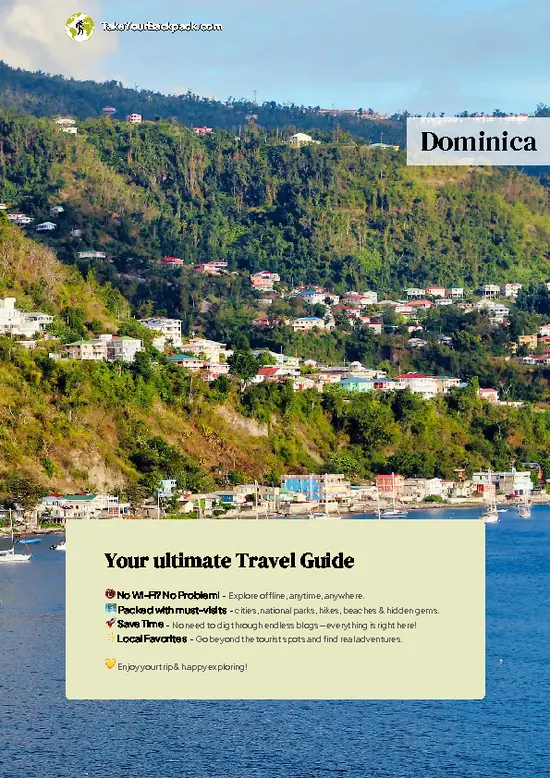
example page 0 from our offline Travel Guide for Dominica
example page 1 from our offline Travel Guide for Dominica
example page 2 from our offline Travel Guide for Dominica
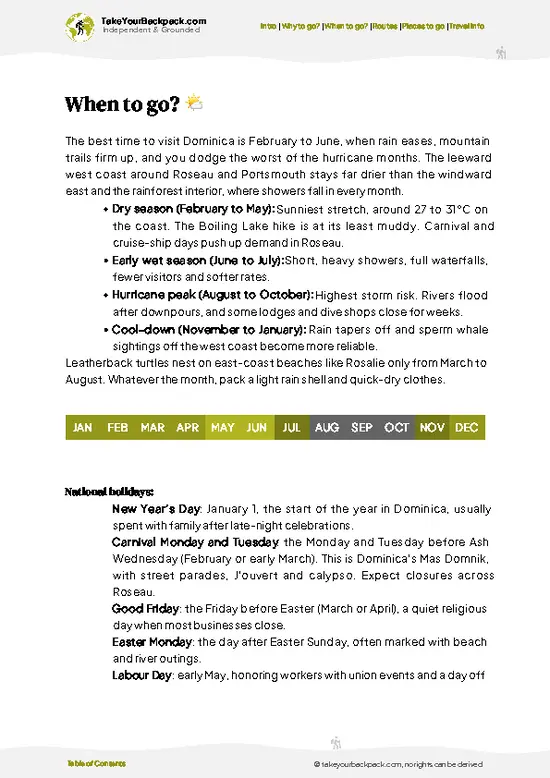
example page 3 from our offline Travel Guide for Dominica
example page 4 from our offline Travel Guide for Dominica
example page 5 from our offline Travel Guide for Dominica
example page 6 from our offline Travel Guide for Dominica
example page 7 from our offline Travel Guide for Dominica
The digital guide (132 pages) contains:
✅ 33 highlights, ranked by travel appeal
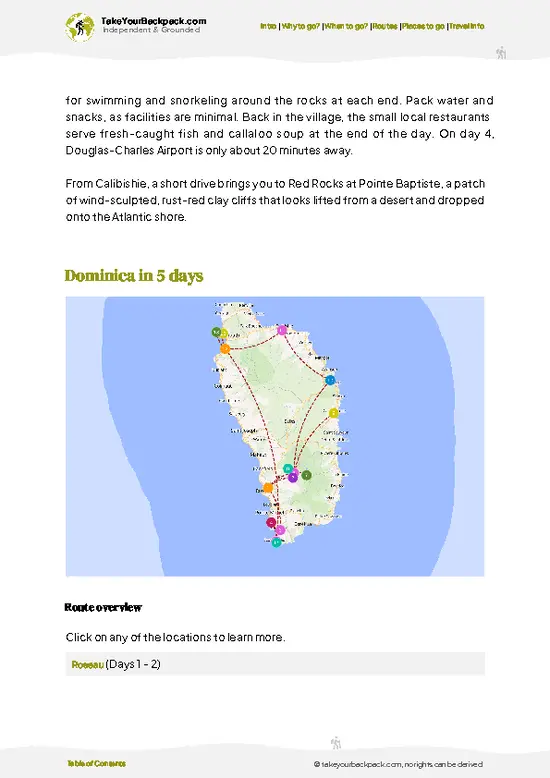
✅ Optimized 2, 3 & 5-day travel routes
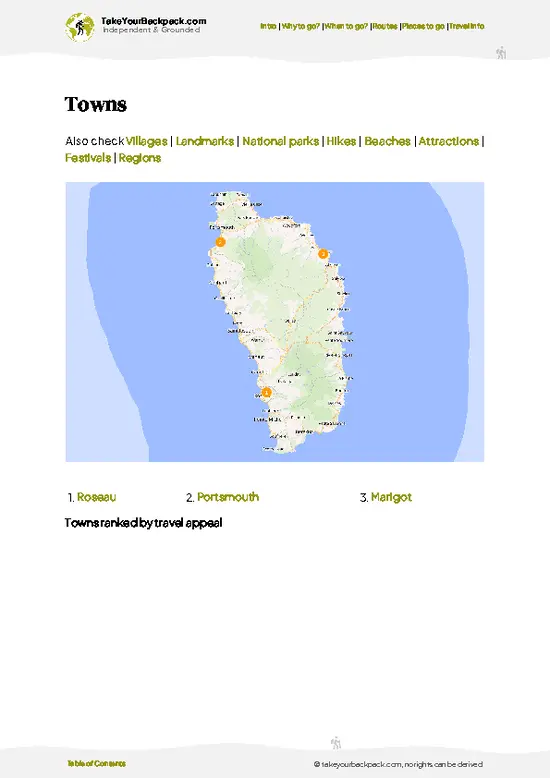
✅ Cities, national parks, landmarks, beaches
✅ How to get around
✅ Offline-friendly for travel without Wi-Fi
👉 Click to see all 30+ guide features

📅 Plan smarter in minutes, not weeks
✅ Month by month travel advice
✅ Festivals & national holidays
✅ Budget expectations

🗺️ Go to the right places, skip the overrated ones
✅ Honest pros & cons of destinations
✅ Top hikes, parks & viewpoints
✅ Lesser-known places most travelers miss
✅ Clear “worth it vs skip it” guidance

🛏️ Travel smoothly without rookie mistakes
✅ Best areas to stay
✅ Transport systems explained simply
✅ Common scams & safety advice
✅ SIM cards, money & practical tips

🌍 Understand the country, not just visit it
✅ Culture & traditions
✅ Local customs
✅ Festivals worth planning around
✅ Traveler-friendly historical context
✅ Insights that make places more meaningful

📱 Built for real travel conditions
✅ Fully downloadable PDF
✅ Works completely offline
✅ Optimized for phone use
✅ Useful in remote areas & buses
✅ Everything in one place
Stop searching, start planning
Get instant access to your full guide. 30‑day money-back guarantee.
+ Add another guide for just

By proceeding you agree to our terms.
Sent to your inbox immediately after payment • 100% Secure Checkout
Best Backpacking Travel Advisor 2025 tourism awardBest Backpacking
Travel Advisor
2025
What others say about Take Your Backpack Guides:
⭐⭐⭐⭐⭐
Fantastic, amazing amount of information!
⭐⭐⭐⭐⭐
My goodness this is amazing, it's what I've been looking for hats off too you!
⭐⭐⭐⭐⭐
I think this is absolutely BRILLIANT
⭐⭐⭐⭐
Very complete and informative. It's still missing places, but I gotta to commend you
⭐⭐⭐⭐⭐
This is truly amazing, thank you, can't wait to explore it with my kids!
⭐⭐⭐⭐⭐
Awesome resource, thank you!
⭐⭐⭐⭐⭐
This is amazing! Can't wait to explore the ones I haven't seen
⭐⭐⭐⭐
I love this! Well done, great idea.
⭐⭐⭐⭐⭐
Thanks for taking the time to make this gem!
⭐⭐⭐⭐⭐
This might be the best website I've ever seen.
⭐⭐⭐⭐⭐
Congratulations, and thank you so much for your work; it's incredibly valuable.
⭐⭐⭐⭐
In all seriousness I think you did a great job pointing out the important spots
⭐⭐⭐⭐⭐
10/10 very good
⭐⭐⭐⭐⭐
As someone who's only just starting to visit regularly this is awesome, thank you.
⭐⭐⭐⭐
Thank you very much! I'm going to visit my dad, it's going to be very useful!
⭐⭐⭐⭐⭐
This is really cool! We'll be travelling for the first time and this definitely come in handy.
⭐⭐⭐⭐⭐
You are now our minister of culture, congratulations 👨‍💼
⭐⭐⭐⭐⭐
Just wanted to tell you that this is a pearl! Going to follow your recommendations.
⭐⭐⭐⭐⭐
This is so cool. I'll definitely be using the resource for my travels soon.
⭐⭐⭐⭐⭐
This is very impressive! Good work.
⭐⭐⭐⭐⭐
This is an amazing and informative site. Very well done!

🛏️ Where to stay?Where to Base Yourself

Dominica has very few dorm-style hostels, so budget travelers here mostly sleep in family-run guesthouses, rooms for rent and simple eco-lodge cabins, typically EC$110 to 190 (US$40 to 70) a night for a double. Roseau has the widest choice and is the minibus hub for the whole island, with the most bars and street food, though it gets loud on weekends and goes quiet after dark. The Roseau Valley villages of Trafalgar and Wotten Waven put you near the waterfalls and sulfur hot springs in cool, quiet hills, while Portsmouth in the north is cheaper and calmer for Indian River and Cabrits, and Calibishie on the northeast coast offers beaches and the shortest airport transfer but little nightlife … read more 👉
Dominica has very few dorm-style hostels, so budget travelers here mostly sleep in family-run guesthouses, rooms for rent and simple eco-lodge cabins, typically EC$110 to 190 (US$40 to 70) a night for a double. Roseau has the widest choice and is the minibus hub for the whole island, with the most bars and street food, though it gets loud on weekends and goes quiet after dark. The Roseau Valley villages of Trafalgar and Wotten Waven put you near the waterfalls and sulfur hot springs in cool, quiet hills, while Portsmouth in the north is cheaper and calmer for Indian River and Cabrits, and Calibishie on the northeast coast offers beaches and the shortest airport transfer but little nightlife and sparse buses.

If you enjoy meeting fellow travelers, consider choosing hostels with high ratings for atmosphere. On the other hand, if you prefer having your own space, a hotel might be a better option.

DominicaExpand Your Journey

👋 Meet the founderWho’s Behind Take Your Backpack?

Johan, backpacker and founder of TakeYourBackpackHi, I’m Johan (Netherlands 🇳🇱), the creator of TakeYourBackpack. Over the past 3 decades, I’ve backpacked through 90+ countries across six continents, gaining extensive experience with independent travel, long-term trips, and overland routes.

This site is built on a combination of firsthand travel experience and carefully curated insights from other backpackers. Many guides are based on places I’ve personally visited, while others bring together tips, observations, and practical advice shared by trusted travelers I’ve met along the way.

The goal is to provide realistic, experience-driven guidance — not generic itineraries — so you can explore destinations with better context, clearer expectations, and more confidence.