×

Dominican Republic🇩🇴 | townsJarabacoaWhitewater rafting, Jimenoa falls, coffee farms, mountain trails | things to do and best time to go

Explore Las TerrenasExplore Constanza

Backpacking in Jarabacoa
🏆 Top picktown ranked #1
By Johan Kruseman 🇳🇱 | Updated October 20, 2026

Jarabacoa sits at roughly 525 meters in the Cordillera Central, which means the nights are cool enough that you may actually reach for the sweatshirt you hauled across the Caribbean for no reason. It’s in the central highlands of Dominican Republic, southwest of Santiago, and it works best as an adventure base rather than a sightseeing stop. The town itself is a grid of motorbikes, pharmacies and fried-chicken counters, so don’t come for the architecture. Come for the waterfalls, the Yaque del Norte river rafting, canyoning and the trails toward Pico Duarte country. Getting here is easy by bus from Santiago or La Vega, with a short final ride up through pine-scented hills. The social scene is small: a few hostels, a handful of cafés, and evenings that end early. You will meet other travelers on tours rather than at bars. Adrenaline seekers, hikers and slow travelers will love it. Anyone chasing beaches, nightlife or colonial streets will be bored within a day.

Discover everything you want to know in the 📖 Dominican Republic Travel Guide.


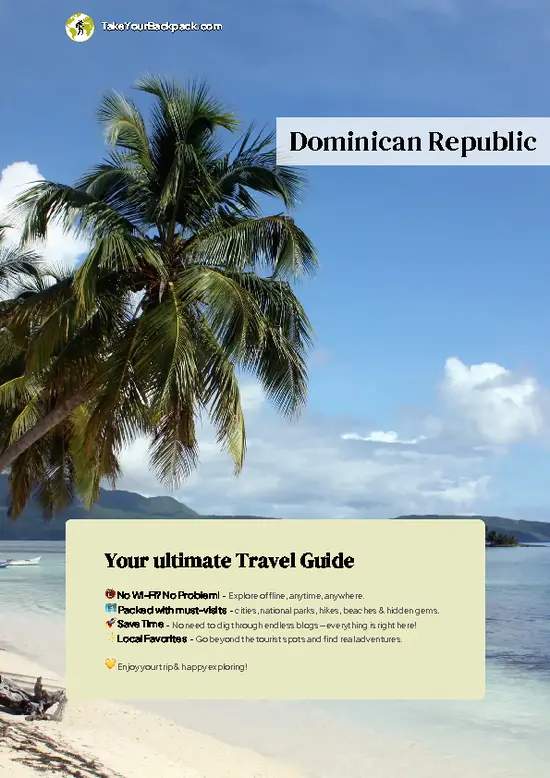
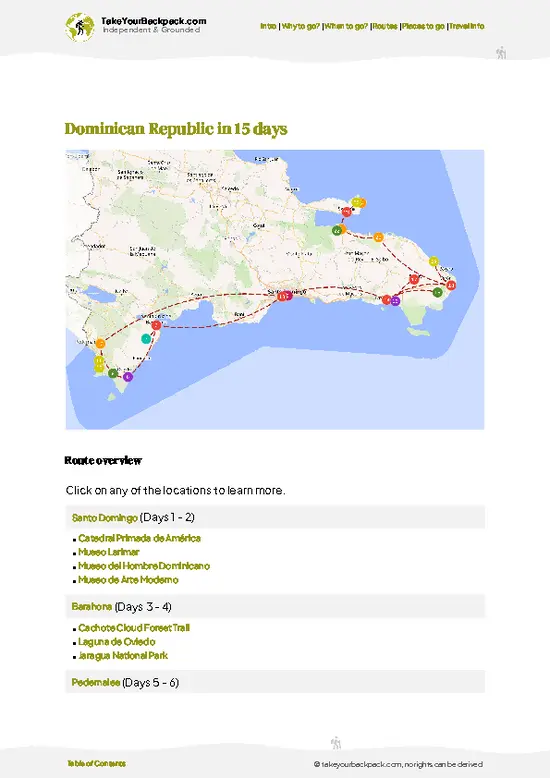
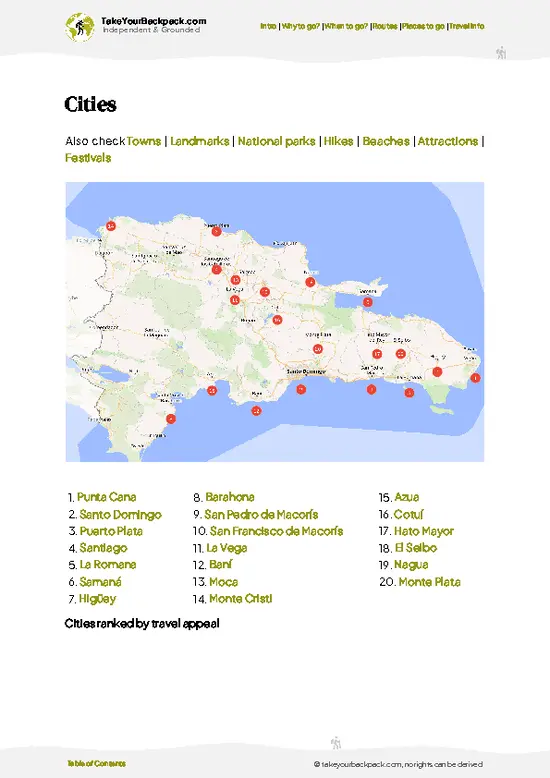
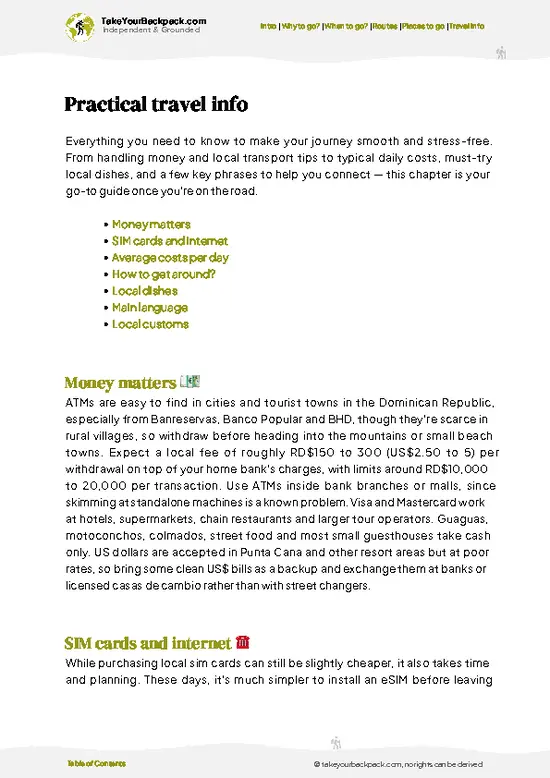
example page 0 from our offline Travel Guide for Dominican Republic
example page 1 from our offline Travel Guide for Dominican Republic
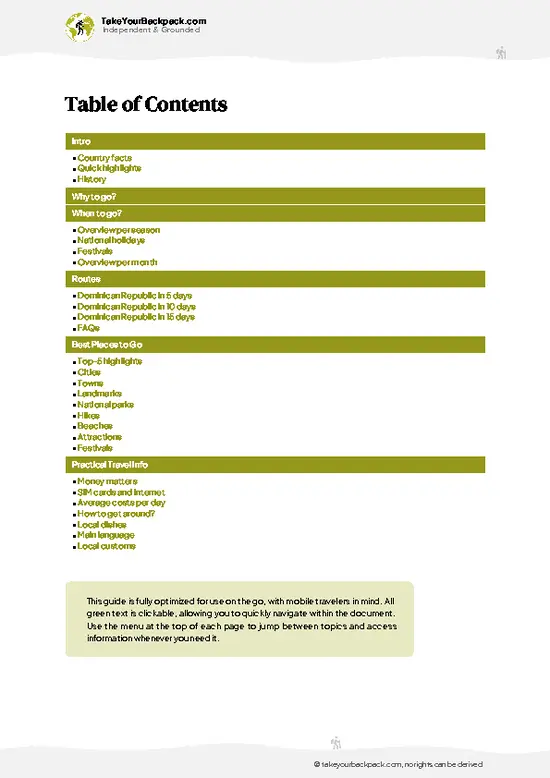
example page 2 from our offline Travel Guide for Dominican Republic
example page 3 from our offline Travel Guide for Dominican Republic
example page 4 from our offline Travel Guide for Dominican Republic
example page 5 from our offline Travel Guide for Dominican Republic
example page 6 from our offline Travel Guide for Dominican Republic
example page 7 from our offline Travel Guide for Dominican Republic
Loading the map 🌍
CLICK TO FILTER
cities
towns
landmarks
national parks
hikes
beaches
attractions
festivals
SHOW COUNTRY’S BESTSHOW ALL

✨ Why go?
Ranked #1 town in Dominican Republic
What sets this place apart

Jarabacoa earns its place on a route because it gives you a mountain break from the coast without demanding a full expedition. In one stay you can raft the Yaque del Norte, hike to the Salto de Jimenoa falls, and fill the gaps with strong local coffee and roadside grilled meat. Most backpackers stay two or three nights, and those who get hooked on canyoning or mountain biking stretch it to four. The atmosphere is relaxed rather than lively. Guesthouses and small hostels are run by families and tour operators, so you’ll find yourself sharing a pickup truck to a trailhead with strangers who become dinner company. That makes it good for solo travelers, who can join group outings easily, and for couples or small groups who want outdoor days with a cold evening beer. Hikers aiming for the high … read more 👉
Jarabacoa earns its place on a route because it gives you a mountain break from the coast without demanding a full expedition. In one stay you can raft the Yaque del Norte, hike to the Salto de Jimenoa falls, and fill the gaps with strong local coffee and roadside grilled meat. Most backpackers stay two or three nights, and those who get hooked on canyoning or mountain biking stretch it to four. The atmosphere is relaxed rather than lively. Guesthouses and small hostels are run by families and tour operators, so you’ll find yourself sharing a pickup truck to a trailhead with strangers who become dinner company. That makes it good for solo travelers, who can join group outings easily, and for couples or small groups who want outdoor days with a cold evening beer. Hikers aiming for the high peaks nearby will also use it as a staging point, since guides and gear are easy to arrange. If your idea of a good trip is a hammock and a beach bar, skip it. If you want hills, rivers and fresh air, give it a few days.

💡 HighlightsWhat this place is best known for

  1. Salto de Jimenoa Uno and Dos: The town’s signature waterfalls drop into a forested gorge, and the second one is reached by a suspension bridge. Go in the morning for fewer groups and softer light. Entry is roughly US$3 to 5 per fall, and you should allow 2 to 3 hours for both.
  2. Rafting on the Yaque del Norte: The country’s main whitewater run, with rapids rated mostly class II to III. Operators in town run half-day trips from around US$35 to 60 with gear and a guide. Water is best after rain, and the outing takes 3 to 4 hours.
  3. Salto de Baiguate: A short walk from the road leads to a waterfall with a natural pool, ideal for a swim. Local guides help with the slick rocks. Expect a small fee of about US$2 to 4 and 1 to 2 hours. Mornings are quieter.
  4. Parque Central and the Catedral Nuestra Señora
… read more 👉
  1. Salto de Jimenoa Uno and Dos: The town’s signature waterfalls drop into a forested gorge, and the second one is reached by a suspension bridge. Go in the morning for fewer groups and softer light. Entry is roughly US$3 to 5 per fall, and you should allow 2 to 3 hours for both.
  2. Rafting on the Yaque del Norte: The country’s main whitewater run, with rapids rated mostly class II to III. Operators in town run half-day trips from around US$35 to 60 with gear and a guide. Water is best after rain, and the outing takes 3 to 4 hours.
  3. Salto de Baiguate: A short walk from the road leads to a waterfall with a natural pool, ideal for a swim. Local guides help with the slick rocks. Expect a small fee of about US$2 to 4 and 1 to 2 hours. Mornings are quieter.
  4. Parque Central and the Catedral Nuestra Señora del Pilar area: The plaza is where townspeople gather in the evening, with food stands and kids on bikes. It’s free and a pleasant 30 to 60 minutes around sunset when the air cools.
  5. Coffee and cacao farm visits: Several family-run farms in the hills around town let you see beans picked, dried and roasted, then taste the result. Tours run about US$10 to 25 for 1 to 2 hours. Harvest months bring the most activity.
Day trips from Jarabacoa include the hiking base of Pico Duarte via La Ciénaga, the Constanza valley with its high-altitude farms, and Monumento a los Héroes in Santiago. Rafting and the Baiguate falls combine well in one day, with the river in the morning and a swim afterward.
Spotted a mistake or missing something? Contact us.

Things to do near Jarabacoa

Ratings based on Tripadvisor reviews. When you book through this link, you support our work at no extra cost to you.

🏘️ NeighborhoodsWhere things are and how it's laid out

Jarabacoa is small enough that you can sort it into four areas in one coffee, and only some of them deserve your afternoon.
  • Parque Central and the town center: The church, the plaza and the grid of streets around it are where motoconchos idle, grilled chicken smokes on the corner and everyone seems to know everyone. Spend a morning here, no more. It is flat and walkable, and the bakeries and fruit stands do the real work. Evenings are loud with bachata from parked cars, which is its own kind of nightlife.
  • Calle Mario Nelson Galán and the main drag: This is the strip of pharmacies, ATMs, minimarkets and comedores (cheap lunch counters) that you will cross ten times a day. Worth it for the lunch plates of rice, beans and stewed meat. Skip it for sightseeing, because there is none.
  • La Confluencia
… read more 👉
Jarabacoa is small enough that you can sort it into four areas in one coffee, and only some of them deserve your afternoon.
  • Parque Central and the town center: The church, the plaza and the grid of streets around it are where motoconchos idle, grilled chicken smokes on the corner and everyone seems to know everyone. Spend a morning here, no more. It is flat and walkable, and the bakeries and fruit stands do the real work. Evenings are loud with bachata from parked cars, which is its own kind of nightlife.
  • Calle Mario Nelson Galán and the main drag: This is the strip of pharmacies, ATMs, minimarkets and comedores (cheap lunch counters) that you will cross ten times a day. Worth it for the lunch plates of rice, beans and stewed meat. Skip it for sightseeing, because there is none.
  • La Confluencia and the river road: A short ride out, where the Yaque del Norte and Jimenoa rivers meet. It is the adventure district, with rafting outfitters, canyoning operators and roadside fry stands. Walking there is possible but dusty and dull, so take a motoconcho.
  • Jarabacoa’s hillside barrios and the road toward Constanza: Pine-covered slopes, coffee farms and strawberry stands. It is cooler, quiet at night and spread out, so you need a ride or a very stubborn pair of legs. Come for the views and a farm lunch, not for a stroll.

⌛️ 1 daySeeing the highlights in 24 hours

Jarabacoa is a town you cover by motoconcho (motorbike taxi) and on foot, with a long midday break when the sun sits hard on the valley. Start early, because the mornings are cool and the afternoon is for a river or a nap.
7:30 AM: Panadería and Parque Duarte
Grab a fresh pastelito and a strong cup of coffee near the central park, then walk a lap around the square and the Catedral Nuestra Señora del Carmen. It is flat, shaded and takes 30 minutes, and you see locals starting their day before the tour touts wake up.
9:00 AM: Salto de Jimenoa Uno
Take a motoconcho or taxi out to the waterfall, a short ride from the center. Entry costs roughly US$3 to 5, and the path winds down through ferns and over a hanging bridge to a 60-meter drop. Allow about 90 minutes, swim only where the guards allow it, … read more 👉
Jarabacoa is a town you cover by motoconcho (motorbike taxi) and on foot, with a long midday break when the sun sits hard on the valley. Start early, because the mornings are cool and the afternoon is for a river or a nap.
7:30 AM: Panadería and Parque Duarte
Grab a fresh pastelito and a strong cup of coffee near the central park, then walk a lap around the square and the Catedral Nuestra Señora del Carmen. It is flat, shaded and takes 30 minutes, and you see locals starting their day before the tour touts wake up.
9:00 AM: Salto de Jimenoa Uno
Take a motoconcho or taxi out to the waterfall, a short ride from the center. Entry costs roughly US$3 to 5, and the path winds down through ferns and over a hanging bridge to a 60-meter drop. Allow about 90 minutes, swim only where the guards allow it, and bring a dry shirt.
11:30 AM: Salto de Baiguate
This is the easier waterfall, close to town, reached by a short scramble over rocks from the road. The pool is small, cold and usually quiet, and it is a good place to swim and eat the snack you carried. Budget an hour, and a guide at the gate is optional but useful for the slippery stretch.
1:00 PM: Lunch on the Río Jimenoa road
Head back toward town and sit down at a family comedor for chicken or pork with rice and beans. Take your time here, since the heat peaks and nothing else is worth doing. Rest at your hostel afterward if you need it.
3:30 PM: Barrio La Lomita and the Ebano Verde side lanes
This is off the standard tour circuit. Walk or ride up into the residential hillside streets, where small farms, coffee drying in yards and neighbors on porches give you a view of daily life, plus open views of the Cordillera Central. It takes about an hour and nobody will try to sell you a tour.
5:30 PM: Sunset beers at the river
Finish by the Yaque del Norte at a casual riverside spot, where cold Presidente is the standard order. The air cools quickly, and dinner is a short walk back to town.

🌤️ When to go?Seasonal considerations and timing

Jarabacoa is pleasant almost all year because its altitude of roughly 500 meters keeps it cooler than the coast, but timing still changes your trip.
  • Winter (December to February): Days reach 24 to 28°C (75 to 82°F), and nights can fall to 12 to 15°C (54 to 59°F), so pack a jacket. Rivers run lower and clearer, hiking is at its best, and prices peak around Christmas and Semana Santa.
  • Spring (March to May): Warm and green, 26 to 30°C (79 to 86°F), with afternoon showers building from May. Crowds thin out after Easter.
  • Summer (June to September): Hotter, 28 to 32°C (82 to 90°F), with regular afternoon downpours. Dominican holidaymakers fill weekends, but weekday rates soften.
  • Hurricane season peak (August to October): Heavy rain can muddy trails and cancel rafting. Rivers run high and fast, which
… read more 👉
Jarabacoa is pleasant almost all year because its altitude of roughly 500 meters keeps it cooler than the coast, but timing still changes your trip.
  • Winter (December to February): Days reach 24 to 28°C (75 to 82°F), and nights can fall to 12 to 15°C (54 to 59°F), so pack a jacket. Rivers run lower and clearer, hiking is at its best, and prices peak around Christmas and Semana Santa.
  • Spring (March to May): Warm and green, 26 to 30°C (79 to 86°F), with afternoon showers building from May. Crowds thin out after Easter.
  • Summer (June to September): Hotter, 28 to 32°C (82 to 90°F), with regular afternoon downpours. Dominican holidaymakers fill weekends, but weekday rates soften.
  • Hurricane season peak (August to October): Heavy rain can muddy trails and cancel rafting. Rivers run high and fast, which suits experienced rafters.
Visit midweek and book rafting in the morning, since cloud usually builds after lunch.


source: climatestotravel.comJANJanuary: excellent for travelingFEBFebruary: excellent for travelingMARMarch: excellent for travelingAPRApril: highly recommended for travelingMAYMay: good for travelingJUNJune: fair for travelingJULJuly: fair for travelingAUGAugust: fair for travelingSEPSeptember: fair for travelingOCTOctober: fair for travelingNOVNovember: good for travelingDECDecember: excellent for traveling
when-to-go

✈️ The backpacker research shortcutDominican Republic Travel Guide

An offline-friendly backpacking guide with optimized travel routes, ranked highlights, transport advice, and the best areas to stay.
example page 0 from our offline Travel Guide for Dominican Republic
example page 1 from our offline Travel Guide for Dominican Republic
example page 2 from our offline Travel Guide for Dominican Republic
example page 3 from our offline Travel Guide for Dominican Republic
example page 4 from our offline Travel Guide for Dominican Republic
example page 5 from our offline Travel Guide for Dominican Republic
example page 6 from our offline Travel Guide for Dominican Republic
example page 7 from our offline Travel Guide for Dominican Republic
The digital guide (336 pages) contains:
✅ 112 highlights, ranked by travel appeal
✅ Optimized 5, 10 & 15-day travel routes
✅ Cities, national parks, landmarks, beaches
✅ How to get around
✅ Offline-friendly for travel without Wi-Fi
👉 Click to see all 30+ guide features

📅 Plan smarter in minutes, not weeks
✅ Month by month travel advice
✅ Festivals & national holidays
✅ Budget expectations

🗺️ Go to the right places, skip the overrated ones
✅ Honest pros & cons of destinations
✅ Top hikes, parks & viewpoints
✅ Lesser-known places most travelers miss
✅ Clear “worth it vs skip it” guidance

🛏️ Travel smoothly without rookie mistakes
✅ Best areas to stay
✅ Transport systems explained simply
✅ Common scams & safety advice
✅ SIM cards, money & practical tips

🌍 Understand the country, not just visit it
✅ Culture & traditions
✅ 52 Essential phrases & customs
✅ Festivals worth planning around
✅ Traveler-friendly historical context
✅ Insights that make places more meaningful

📱 Built for real travel conditions
✅ Fully downloadable PDF
✅ Works completely offline
✅ Optimized for phone use
✅ Useful in remote areas & buses
✅ Everything in one place
Stop searching, start planning
Get instant access to your full guide. 30‑day money-back guarantee.
+ Add another guide for just

By proceeding you agree to our terms.
Sent to your inbox immediately after payment • 100% Secure Checkout
Best Backpacking Travel Advisor 2025 tourism awardBest Backpacking
Travel Advisor
2025
What others say about Take Your Backpack Guides:
⭐⭐⭐⭐⭐
Fantastic, amazing amount of information!
⭐⭐⭐⭐⭐
My goodness this is amazing, it's what I've been looking for hats off too you!
⭐⭐⭐⭐⭐
I think this is absolutely BRILLIANT
⭐⭐⭐⭐
Very complete and informative. It's still missing places, but I gotta to commend you
⭐⭐⭐⭐⭐
This is truly amazing, thank you, can't wait to explore it with my kids!
⭐⭐⭐⭐⭐
Awesome resource, thank you!
⭐⭐⭐⭐⭐
This is amazing! Can't wait to explore the ones I haven't seen
⭐⭐⭐⭐
I love this! Well done, great idea.
⭐⭐⭐⭐⭐
Thanks for taking the time to make this gem!
⭐⭐⭐⭐⭐
This might be the best website I've ever seen.
⭐⭐⭐⭐⭐
Congratulations, and thank you so much for your work; it's incredibly valuable.
⭐⭐⭐⭐
In all seriousness I think you did a great job pointing out the important spots
⭐⭐⭐⭐⭐
10/10 very good
⭐⭐⭐⭐⭐
As someone who's only just starting to visit regularly this is awesome, thank you.
⭐⭐⭐⭐
Thank you very much! I'm going to visit my dad, it's going to be very useful!
⭐⭐⭐⭐⭐
This is really cool! We'll be travelling for the first time and this definitely come in handy.
⭐⭐⭐⭐⭐
You are now our minister of culture, congratulations 👨‍💼
⭐⭐⭐⭐⭐
Just wanted to tell you that this is a pearl! Going to follow your recommendations.
⭐⭐⭐⭐⭐
This is so cool. I'll definitely be using the resource for my travels soon.
⭐⭐⭐⭐⭐
This is very impressive! Good work.
⭐⭐⭐⭐⭐
This is an amazing and informative site. Very well done!

🛏️ Where to stay?Choosing the right base

The best budget base in Jarabacoa is the area within a few blocks of Parque Central, where hostels and guesthouses cluster and you can walk to supermarkets, ATMs and the bus stops. Beds are easiest to find here and prices stay lowest, with dorms and simple private rooms generally available outside holiday weeks. It is lively in the evening and quiet by about 11 p.m., though motorbikes and music can start early on weekends, so earplugs are cheap insurance. Streets are lit and busy enough that walking back after dinner feels fine, and motoconchos wait around the plaza for short rides to the rivers. … read more 👉
The best budget base in Jarabacoa is the area within a few blocks of Parque Central, where hostels and guesthouses cluster and you can walk to supermarkets, ATMs and the bus stops. Beds are easiest to find here and prices stay lowest, with dorms and simple private rooms generally available outside holiday weeks. It is lively in the evening and quiet by about 11 p.m., though motorbikes and music can start early on weekends, so earplugs are cheap insurance. Streets are lit and busy enough that walking back after dinner feels fine, and motoconchos wait around the plaza for short rides to the rivers.

The second option is the road toward La Confluencia and the river outskirts. Guesthouses and a few hostels sit among trees and farms, which means birdsong, cooler nights and real quiet. The compromise is distance. You will depend on motoconchos or taxis for dinner and anything else, and rides after dark are fewer and cost a bit more, so you are best arriving before sunset. This side suits people who plan to raft or canyon early, since many operators are only minutes away.

Book ahead for Christmas, Semana Santa and long weekends, when Dominican families fill the town. Outside those dates, walking in is usually fine.

🚌 Getting aroundHow to get from A to B

The center of Jarabacoa is flat enough and small enough to cross on foot in 15 to 20 minutes, and that is where walking stops being a good idea. The waterfalls, the river-rafting put-in points and the mountain lodges sit 3 to 15 kilometers out on roads that swing between fast pickup trucks and slow motorbikes, with patchy shoulders. Public transport exists, but it runs on its own logic. Expect to mix feet, motorbikes and the occasional shared ride.
  • Walking covers the central park, the church, the bakeries, the supermarkets and most restaurants along the main streets. It costs nothing, and the town’s gentle slopes make it comfortable in the morning and a little sweaty by midday. Skip walking to Salto de Jimenoa Uno or Baiguate. The roads have no sidewalks and the distances are longer than they
… read more 👉
The center of Jarabacoa is flat enough and small enough to cross on foot in 15 to 20 minutes, and that is where walking stops being a good idea. The waterfalls, the river-rafting put-in points and the mountain lodges sit 3 to 15 kilometers out on roads that swing between fast pickup trucks and slow motorbikes, with patchy shoulders. Public transport exists, but it runs on its own logic. Expect to mix feet, motorbikes and the occasional shared ride.
  • Walking covers the central park, the church, the bakeries, the supermarkets and most restaurants along the main streets. It costs nothing, and the town’s gentle slopes make it comfortable in the morning and a little sweaty by midday. Skip walking to Salto de Jimenoa Uno or Baiguate. The roads have no sidewalks and the distances are longer than they look on the map.
  • Motoconchos (motorbike taxis) are the default local transport and the cheapest way out of the center. Rides inside town run US$0.50 to 1.50, and trips to the waterfalls or the river typically cost US$2 to 6 each way. Agree on the price before you climb on, and ask the driver for a second helmet. They are quick, a little hair-raising, and the best value in town for solo travelers.
  • Private taxis and pickups suit groups and anyone carrying a pack. A ride to a trailhead or a waterfall usually costs US$8 to 20 depending on distance, and many drivers will wait and bring you back for a modest extra fee, often US$5 to 10 for an hour or two. Split among three or four people, this beats motoconchos for comfort and for the muddy rainy-season tracks.
  • Intercity buses and minibuses connect Jarabacoa with La Vega, Santiago and Santo Domingo. Fares run roughly US$2 to 4 to La Vega or Santiago (1 to 1.5 hours) and US$5 to 8 to Santo Domingo (about 2.5 to 3 hours), with departures starting early in the morning and thinning out by late afternoon. Buses leave when they fill, so arriving early is smarter than trusting any printed schedule. Plan on being back at the stop before dark.
  • Rental scooters and 4x4s are available in town for those who want freedom. Scooters run about US$20 to 35 a day and 4x4s considerably more. I would rent a scooter only if you are experienced, since wet pavement, potholes and enthusiastic overtaking add up quickly. For most backpackers the motoconcho is the better call and leaves your nerves intact.

A practical rhythm works well: walk the center, take a motoconcho to the sights in the morning when roads are dry, and book a pickup for any longer outing. Carry small bills, since drivers rarely have change for large notes, and agree on a return pickup time at remote spots where phone signal and passing rides are scarce.

👛 Costs (as of 20 October 2026)How expensive it really is

Jarabacoa costs most backpackers about US$48 to 75 a day, and the table below totals US$62 at high-season rates.
CategoryBudget RangeLocal Reality
Dorm accommodationUS$10 to 18 (high season)Dorms are few, so many travelers take a simple private room at US$20 to 35. Low season runs about US$8 to 14.
MealsUS$12 to 20Lunch plates of rice, beans and meat cost US$3 to 5 at comedores. Dinner at a casual restaurant runs US$6 to 10.
Local transportUS$4 to 8Motoconchos cost US$1 to 2 in town, and more to waterfalls and the river.
Basic activities/entry feesUS$10 to 25Waterfall entries are about US$3 to 6, and rafting costs US$30 to 50 when you do it.
Miscellaneous expensesUS$4 to 8Water, coffee, snacks and the odd tip. ATMs in town charge fees.
Total Daily BudgetUS$62Based on high-season dorm pricing and
… read more 👉
Jarabacoa costs most backpackers about US$48 to 75 a day, and the table below totals US$62 at high-season rates.
CategoryBudget RangeLocal Reality
Dorm accommodationUS$10 to 18 (high season)Dorms are few, so many travelers take a simple private room at US$20 to 35. Low season runs about US$8 to 14.
MealsUS$12 to 20Lunch plates of rice, beans and meat cost US$3 to 5 at comedores. Dinner at a casual restaurant runs US$6 to 10.
Local transportUS$4 to 8Motoconchos cost US$1 to 2 in town, and more to waterfalls and the river.
Basic activities/entry feesUS$10 to 25Waterfall entries are about US$3 to 6, and rafting costs US$30 to 50 when you do it.
Miscellaneous expensesUS$4 to 8Water, coffee, snacks and the odd tip. ATMs in town charge fees.
Total Daily BudgetUS$62Based on high-season dorm pricing and mid-range spending in each category.
To save money, eat your main meal at a comedes at lunch, when set plates are cheapest, and share taxis to waterfalls among three or four people. Pay in pesos where you can, since local places often prefer it.
⚠️ Prices can change and everyone travels differently, so take this as a rough guide. Hope it helps you plan your adventure!

🚌 Day tripsEasy escapes and nearby places

Jarabacoa works well as a base because the main sights are 15 to 90 minutes away, and you can get back for dinner on every trip below.
Salto de Jimenoa Uno and Dos:
Two big waterfalls in a forested canyon, about 20 to 30 minutes from town by taxi or motoconcho. Expect US$2 to 5 for the ride each way plus an entrance fee of roughly US$3 to 6, and a suspension bridge to cross. Go early and in the dry months, December to April, when the pools are calmer. First-timers often arrive at midday and find the light flat and the crowds thick.

Rafting on the Yaque del Norte:
The river runs mostly class II to III, which makes it beginner friendly and still fun. Half-day trips cost about US$30 to 50, leave from La Confluencia and include gear and a guide. Water is best from November to April, and heavy … read more 👉
Jarabacoa works well as a base because the main sights are 15 to 90 minutes away, and you can get back for dinner on every trip below.
Salto de Jimenoa Uno and Dos:
Two big waterfalls in a forested canyon, about 20 to 30 minutes from town by taxi or motoconcho. Expect US$2 to 5 for the ride each way plus an entrance fee of roughly US$3 to 6, and a suspension bridge to cross. Go early and in the dry months, December to April, when the pools are calmer. First-timers often arrive at midday and find the light flat and the crowds thick.

Rafting on the Yaque del Norte:
The river runs mostly class II to III, which makes it beginner friendly and still fun. Half-day trips cost about US$30 to 50, leave from La Confluencia and include gear and a guide. Water is best from November to April, and heavy rain from August can push it beyond the beginner level. Pick an operator that provides helmets and a real briefing, not the cheapest one.

Salto de Baiguate:
A short, steep walk leads to a waterfall with a swimming pool at its base, 10 to 15 minutes from the center by motoconcho for about US$2 to 3. A local guide at the entrance is optional but worth about US$5 to 10 for the slippery bits. Mornings are quieter, and wet-season rain makes the path muddy. Bring shoes with grip, not flip-flops.

Constanza:
High valley farmland 45 to 60 minutes up winding mountain roads, with cool air, strawberry stands and vegetable terraces. Shared transport costs about US$3 to 6 each way, and you should leave early to be back before the last departures. A common mistake is arriving with only a T-shirt, since the temperature drops sharply.
👉 Explore Constanza

🍲 FoodLocal Flavors for Backpackers

In Jarabacoa, food is a celebration of local flavors and vibrant culture. Start your culinary adventure with sancocho, a hearty stew that’s a staple here. Made with various meats and root vegetables, it’s the kind of dish that warms you from the inside out. Pair it with mangú, mashed plantains that are creamy and comforting, often served at breakfast.

For a true local experience, hit the markets. The bustling atmosphere is intoxicating, filled with the aroma of fresh fruits and spices. Grab a patties from a street vendor—these flaky pastries stuffed with meat or cheese are perfect for a quick snack. Don’t miss out on mangú con los tres golpes, a breakfast classic featuring fried eggs, cheese, and salami.

When it comes to drinks, try a glass of mamajuana, a local concoction of rum, red wine, … read more 👉
In Jarabacoa, food is a celebration of local flavors and vibrant culture. Start your culinary adventure with sancocho, a hearty stew that’s a staple here. Made with various meats and root vegetables, it’s the kind of dish that warms you from the inside out. Pair it with mangú, mashed plantains that are creamy and comforting, often served at breakfast.

For a true local experience, hit the markets. The bustling atmosphere is intoxicating, filled with the aroma of fresh fruits and spices. Grab a patties from a street vendor—these flaky pastries stuffed with meat or cheese are perfect for a quick snack. Don’t miss out on mangú con los tres golpes, a breakfast classic featuring fried eggs, cheese, and salami.

When it comes to drinks, try a glass of mamajuana, a local concoction of rum, red wine, and honey infused with herbs. It’s said to be an aphrodisiac, so sip it slowly and enjoy the company.

Dining here is casual and communal. Expect to share tables, and don’t be surprised if your neighbors invite you to join their conversation. Remember, it’s all about the experience, so embrace the lively chatter and the clinking of glasses. This is where you’ll find the heart of Jarabacoa—right in the flavors and the friendships.

🛡️ SafetyTraveler Safety Guide

Jarabacoa is a relaxed mountain town where most problems are small ones. Walk the center after dark as you would any town: keep your phone in your pocket on quiet streets, and use a motoconcho for the outskirts, where roads are unlit and dogs roam. Solo travelers, including women, generally report few issues, but expect attention and catcalls, which a firm no and moving on usually ends. The real hazards are practical. Motorbikes are the main way to get hurt, so ask for a helmet and ride slowly on wet roads. River activities carry real risk after heavy rain, so use licensed operators and skip the river when it runs brown and fast. Agree prices for rides and guides before you start, as some quote inflated figures to foreigners. Carry a little cash, since some small places do not take cards, … read more 👉
Jarabacoa is a relaxed mountain town where most problems are small ones. Walk the center after dark as you would any town: keep your phone in your pocket on quiet streets, and use a motoconcho for the outskirts, where roads are unlit and dogs roam. Solo travelers, including women, generally report few issues, but expect attention and catcalls, which a firm no and moving on usually ends. The real hazards are practical. Motorbikes are the main way to get hurt, so ask for a helmet and ride slowly on wet roads. River activities carry real risk after heavy rain, so use licensed operators and skip the river when it runs brown and fast. Agree prices for rides and guides before you start, as some quote inflated figures to foreigners. Carry a little cash, since some small places do not take cards, and leave your passport locked up, carrying a copy instead.

FAQFrequently asked questions about Jarabacoa

Jarabacoa is a destination in its own right, and not a place to pass through on the way somewhere else. The town sits at roughly 500 meters in the Cordillera Central, with waterfalls such as Salto de Jimenoa Uno and Salto de Baiguate, river rafting on the Yaque del Norte, and cooler air than the coast. Most activities cost between US$10 and 60, and a motoconcho to the nearest falls runs only a few dollars.
Three days gives Jarabacoa enough room for a rafting or canyoning outing, a waterfall day and a slower day for coffee, cycling or hiking. Backpackers who want a trek toward Pico Duarte, a multi-day route starting from the Jarabacoa area, should plan 4 to 5 days in the region. Two days works if you only want the main falls and a river trip, though the pace will be quick.
Yes, Jarabacoa works as a day trip from Santiago, which is about 1 to 1.5 hours away by bus or minibus for roughly US$2 to 4 each way. From Santo Domingo the trip takes 2.5 to 3 hours each way, so a same-day return leaves only a few hours on the ground. Buses thin out by late afternoon, so leave early and plan to be heading back before dusk.
⚠️ Things can change over time, so always validate details locally before you go.

Other Dominican towns near Jarabacoa

Explore more nearby:

  • Constanza—Pine valley, frost mornings, strawberry stands, cold-water falls| 25 km away
  • Salcedo—Mirabal sisters, Cibao Valley, fried cheese, market mornings| 37 km away
  • San José de Ocoa—Pine-ridged valley, coffee hills, river picnics, steep lanes| 65 km away

💡 Not sure where to go next?
Create a personalized itinerary for Dominican Republic including Jarabacoa and the places that fit your trip.

Generate my itinerary

👉 Discover all towns

Or checkout all Dominican Republic has to offer (think cities, towns, villages, national parks, hikes, beaches, festivals)
Country photo of Dominican Republic

We 💚 feedbackParting advice and final tips

Jarabacoa is best in the early morning, when mist sits in the valleys, the rivers are quiet and the waterfalls have no crowds. Aim for the drier months for hiking and rafting, but pack a rain jacket whatever the season, since afternoon showers roll in fast. I would book river trips for your first morning and keep a spare day for weather.

✍️ Help improve this page!
The information on this page is based on in-depth research, insights shared by experienced travelers, and feedback from the local travel community in Dominican Republic. While every effort is made to keep the information accurate and current, conditions can change — so if you spot anything incorrect or outdated, please get in touch.


🙋‍♂️ Give feedback

👋 Meet the founderWho’s Behind Take Your Backpack?

Johan, backpacker and founder of TakeYourBackpackHi, I’m Johan (Netherlands 🇳🇱), the creator of TakeYourBackpack. Over the past 3 decades, I’ve backpacked through 90+ countries across six continents, gaining extensive experience with independent travel, long-term trips, and overland routes.

This site is built on a combination of firsthand travel experience and carefully curated insights from other backpackers. Many guides are based on places I’ve personally visited, while others bring together tips, observations, and practical advice shared by trusted travelers I’ve met along the way.

The goal is to provide realistic, experience-driven guidance — not generic itineraries — so you can explore destinations with better context, clearer expectations, and more confidence.