×

Dominican Republic🇩🇴 | best townsDiscover the 10 Best towns Across Dominican Republic

Dominican Republic towns come in three flavors, and the Caribbean postcard is only one of them. The north coast has surf and kitesurf villages with hostels and easy buses. The southwest is quieter, cheaper and slower, where a bus timetable is more of a suggestion. The Cordillera Central brings cool mountain air and river-fed farming towns. Independent travel here works because guaguas (minibuses) reach nearly everywhere for a few dollars. Resort belts in the east and the colonial capital draw the crowds, so the further you drift from them, the lower the prices and the louder the roosters.

By Johan Kruseman 🇳🇱 | Updated October 20, 2026
Explore the best landmarks in Dominican Republic

Why go?Key Factors That Shape the Experience

The Dominican Republic shares the island of Hispaniola with Haiti and packs an unusual amount of range into a country roughly the size of Vermont and New Hampshire combined. The Caribbean’s highest peak, Pico Duarte at about 3,100 meters, sits within a few hours of beaches, desert scrub and rainforest. That compression means towns differ sharply in climate and mood without long transfers.

History adds another layer. Columbus’s settlements make this the oldest European foothold in the Americas, so a colonial core sits alongside tobacco, coffee and sugar towns shaped by farming rather than tourism. Spanish-speaking daily life, baseball obsession and merengue from a colmado speaker at all hours are part of the deal.

Before choosing the country for its towns, know that all-inclusive resorts … read more 👉
The Dominican Republic shares the island of Hispaniola with Haiti and packs an unusual amount of range into a country roughly the size of Vermont and New Hampshire combined. The Caribbean’s highest peak, Pico Duarte at about 3,100 meters, sits within a few hours of beaches, desert scrub and rainforest. That compression means towns differ sharply in climate and mood without long transfers.

History adds another layer. Columbus’s settlements make this the oldest European foothold in the Americas, so a colonial core sits alongside tobacco, coffee and sugar towns shaped by farming rather than tourism. Spanish-speaking daily life, baseball obsession and merengue from a colmado speaker at all hours are part of the deal.

Before choosing the country for its towns, know that all-inclusive resorts dominate the image and much of the infrastructure, especially in the east. Independent travelers must look away from that. Public transport is cheap but chaotic, with guaguas that leave when full and motoconchos (motorbike taxis) covering the last stretch. Basic Spanish helps far more here than in many Caribbean countries, because English fades quickly outside tourist zones. Power cuts and patchy water are normal in smaller places, so patience counts as a packing item.
Why These Made the Cut
The list of best towns in Dominican Republic is created based on charm, local culture, atmosphere, hidden gems, and visitor appeal. If you feel a town is missing in this list, please let us know.

When to go?Timing Your Visit for the Best Experience

Best months and weather: The best months for towns in the Dominican Republic are December to April, when days sit around 27 to 30°C, humidity drops and rain is light. Coastal towns stay hot year-round, while mountain towns can fall to 5 to 12°C at night in winter, so a fleece is not a joke.
Shoulder seasons and peak periods: May to June and November are good shoulder months, with fewer visitors and lower prices, though rain arrives in afternoon bursts. From July to October it is hot (often 32 to 35°C), humid and wet, and this is the hurricane season, with the highest risk from August to October. Buses still run, but landslides and flooded roads can slow you down in the mountains.
Regional differences and prices: The southwest is the driest part of the country, so it copes better with the rainy … read more 👉
Best months and weather: The best months for towns in the Dominican Republic are December to April, when days sit around 27 to 30°C, humidity drops and rain is light. Coastal towns stay hot year-round, while mountain towns can fall to 5 to 12°C at night in winter, so a fleece is not a joke.
Shoulder seasons and peak periods: May to June and November are good shoulder months, with fewer visitors and lower prices, though rain arrives in afternoon bursts. From July to October it is hot (often 32 to 35°C), humid and wet, and this is the hurricane season, with the highest risk from August to October. Buses still run, but landslides and flooded roads can slow you down in the mountains.
Regional differences and prices: The southwest is the driest part of the country, so it copes better with the rainy months. The north coast sees more rain from November to January, a quirk of the island that surprises people who assume winter means sun everywhere. Expect peak pricing from mid-December to early January and around Easter week (Semana Santa), when locals also travel and buses fill. Lodging can run 30 to 50 percent higher in those windows. Carnival in February fills certain towns, and accommodation there disappears early.

town hoppingSuggested Travel Strategies

How long and in what order: A trip combining several towns in the Dominican Republic needs 10 to 14 days to feel relaxed, and 7 days if you keep to two regions. The country is small, but roads are slow, so distances in kilometers lie.
Grouping regions: The north coast and the Cordillera Central pair well, with Santiago acting as the main transport hub between them. The southwest links to the capital, Santo Domingo, the other major hub, with long but direct buses. The east sits apart and is easiest to reach from the capital. A loop that starts in Santo Domingo, heads up to the mountains, drops to the north coast and returns by express bus avoids backtracking.
Time per stop and transfers: Give each stop 2 to 3 nights, with an extra night in places that need a day trip to be worthwhile. Transfers … read more 👉
How long and in what order: A trip combining several towns in the Dominican Republic needs 10 to 14 days to feel relaxed, and 7 days if you keep to two regions. The country is small, but roads are slow, so distances in kilometers lie.
Grouping regions: The north coast and the Cordillera Central pair well, with Santiago acting as the main transport hub between them. The southwest links to the capital, Santo Domingo, the other major hub, with long but direct buses. The east sits apart and is easiest to reach from the capital. A loop that starts in Santo Domingo, heads up to the mountains, drops to the north coast and returns by express bus avoids backtracking.
Time per stop and transfers: Give each stop 2 to 3 nights, with an extra night in places that need a day trip to be worthwhile. Transfers between regions typically take 3 to 5 hours on express coaches (Caribe Tours, Metro) and up to 6 to 7 hours by guagua with changes. Santo Domingo to Santiago is roughly 2.5 to 3 hours on a good day.
Planning mistakes: The classic error is trying to see every coast in a week, which turns a vacation into a seating chart. Another is trusting a map’s drive time, since traffic and roadwork can add an hour or two. Book long transfers in the morning, leave a buffer before any flight, and accept that a slow day is part of the schedule.

The ListMust-Visit towns in Dominican Republic

1 Las Terrenas

French bakeries, palm-lined sand, Limón waterfall, fishermen's quarter

Ride horseback to the 40-meter Salto del Limón, then sample bakeries and seafood grills along the beach where fishing boats come in.

dominican-republic-city-las-terrenas
© Google | Antti Taivassalo

2 Jarabacoa

Whitewater rafting, Jimenoa falls, coffee farms, mountain trails

Raft the Yaque del Norte, hike to twin waterfalls over a suspension bridge and taste coffee and cacao on family farms in the hills.

3 Cabarete

Afternoon wind, kite launches, lagoon paddling, beachfront bars

Book a kite or windsurf lesson on the bay, then paddle the calm lagoon and finish with fresh fish at open-air tables on the sand.

4 Las Galeras

Road's end, cove snorkeling, Rincón by boat, grilled fish

Hike rocky trails to small coves for clear-water snorkeling, ride a boat to long Playa Rincón and end the day with grilled fish.

dominican-republic-city-las-galeras
© Google | Loic Le Bris

5 Sosúa

Calm crescent bay, reef snorkeling, Jewish settler museum, Charamicos fish shacks

Snorkel the shallow reef off the bay, spend an hour at the refugee-history museum and eat fried red snapper at Los Charamicos.

6 Pedernales

Far southwest, Bahía de las Águilas, limestone escarpment, flamingo lagoon

Take a boat from Cabo Rojo to a long, building-free beach, then look over the Hoyo de Pelempito drop and the flamingos of Oviedo lagoon.

7 Constanza

Pine valley, frost mornings, strawberry stands, cold-water falls

Walk to a two-tier waterfall in the pines, drive up to high grassland at Valle Nuevo and buy strawberries straight from roadside farm stands.

8 Río San Juan

Gri-Gri lagoon, swallow cave, tidal pools, fishing port

Board a boat through mangrove channels, duck into a sea cave full of swallows and swim in rocky Atlantic pools at Caletón.

9 Sabana de la Mar

Los Haitises gateway, bay ferry, Taíno caves, port fish lunch

Join a morning boat into Los Haitises for mangroves, bird islands and cave pictographs, then eat grilled fish by the port.

10 Luperón

Yacht harbor, mangrove bay, cruisers' bars, waterfront fish

Stroll the malecón past yachts anchored among mangroves, eat the day's catch at waterfront comedores and trade anchorage stories with sailors.

dominican-republic-city-luperon
© Google |

11 Miches

Empty beaches, freshwater lagoons, ranch country, sunset malecón

Head out by guide or motorbike to Playa Esmeralda, paddle Laguna Limón and watch the bay turn pink from the town promenade.

12 Dajabón

Border market, Monday and Friday, Massacre River bank

Arrive early on a market day to watch vendors haul goods across the bridge, then walk the river bank and eat at plaza comedores.

dominican-republic-city-dajabon
© Google |

13 Jimaní

Below sea level, crocodile lake, Taíno carvings, Friday market

Take a morning boat on Lake Enriquillo for crocodiles and flamingos, climb to the carved faces at Las Caritas and browse the border market.

14 Neiba

Plantain fields, cactus foothills, goat stew, dusk paseo

Browse the produce market, ride a motoconcho to a foothill viewpoint over the plain and eat lake fish or goat stew at roadside comedores.

15 San José de Ocoa

Pine-ridged valley, coffee hills, river picnics, steep lanes

Visit small coffee growers in the surrounding hills, walk the Río Ocoa banks and climb to viewpoints over the rooftops and green ridgelines.

16 Salcedo

Mirabal sisters, Cibao Valley, fried cheese, market mornings

Tour the restored Mirabal family home with its letters and furniture, then graze the municipal market and evening stalls for fried cheese and yuca.

17 Sabaneta

Cane and cattle valley, colmado nights, frituras, farm roads

Wander market streets and farm edges at dawn, then sit outside a corner colmado with cold beer and fried yaniqueques as the town winds down.

18 Villa Vásquez

Sugar-era roots, Masacre riverside, domino colmados, mango vendors

Walk or ride out to the border river and farmland in the cool morning, then spend the evening on colmado chairs with beer and dominoes.

Think you know Dominican Republic?

Prove you’re a true local — uncover 8 lesser-known towns in Dominican Republic that locals tend to keep to themselves.
Loading the map 🌍

Expert viewInsights from Locals and Experts

How many towns to visit: Plan on three to five towns for a trip of two weeks. Fewer than three and you miss how different the regions feel. More than five and you spend half your holiday in transit, waiting for a guagua to fill. Each stop is worth 2 to 3 nights, which is enough to settle, find the good colmado and still leave before the novelty wears off.
Which kind to prioritize: Choose by travel style. Beach and watersports towns on the north coast suit social travelers and anyone who wants hostels, surf lessons and easy company. They are also the most expensive and the most likely to feel like a stage set. Mountain towns are the best value for hikers and coffee drinkers, with cool air, waterfalls and far fewer foreigners. Colonial and city-edge towns are worth a night or two for architecture … read more 👉
How many towns to visit: Plan on three to five towns for a trip of two weeks. Fewer than three and you miss how different the regions feel. More than five and you spend half your holiday in transit, waiting for a guagua to fill. Each stop is worth 2 to 3 nights, which is enough to settle, find the good colmado and still leave before the novelty wears off.
Which kind to prioritize: Choose by travel style. Beach and watersports towns on the north coast suit social travelers and anyone who wants hostels, surf lessons and easy company. They are also the most expensive and the most likely to feel like a stage set. Mountain towns are the best value for hikers and coffee drinkers, with cool air, waterfalls and far fewer foreigners. Colonial and city-edge towns are worth a night or two for architecture and food, but not more. Resort-belt towns in the east are the weakest choice for an independent trip, because the best of the area is reachable only on a package or an expensive taxi.
What it costs: A budget backpacker can manage on US$35 to 55 a day, covering a dorm bed at US$12 to 20, street food and comedor meals at US$4 to 8, and local transport. Midrange travelers with private rooms and the occasional tour should expect US$70 to 110. Dominican pesos are the local currency (roughly 58 to 62 pesos per US dollar), and many places quote tourist prices in dollars, so check which one you are being charged. Per visit, guides for waterfalls or hikes run US$25 to 60, entry fees to parks and attractions typically US$3 to 15, and short guagua rides US$1 to 4. Motoconchos cost a few dollars per ride, and agreeing on the price before you climb on saves an argument later.
Safety and culture: Small towns are generally relaxed, but petty theft exists, so keep phones out of sight on motoconchos and carry only the cash you need after dark. Use licensed taxis or app rides in larger cities at night. Tap water is not drinkable, so buy bottled or refilled jugs. Greeting people with “buenas” when you enter a shop or a bus is expected and earns noticeably better service. Dress modestly away from the beach, as swimwear in town draws stares. Tip around 10 percent where service is not already added, and expect to bargain politely for excursions. Finally, guaguas and power cuts run on island time, so build slack into anything with a deadline.

✈️ The backpacker research shortcutDominican Republic Travel Guide

An offline-friendly backpacking guide with optimized travel routes, ranked highlights, transport advice, and the best areas to stay.
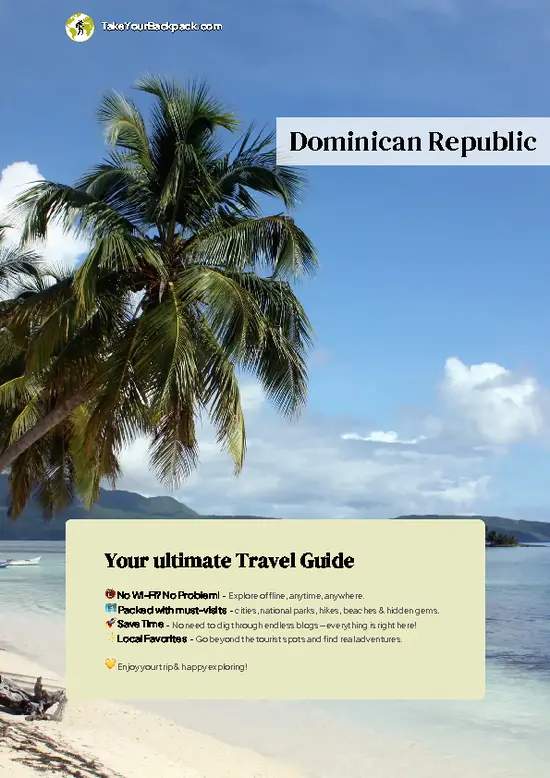
example page 0 from our offline Travel Guide for Dominican Republic
example page 1 from our offline Travel Guide for Dominican Republic
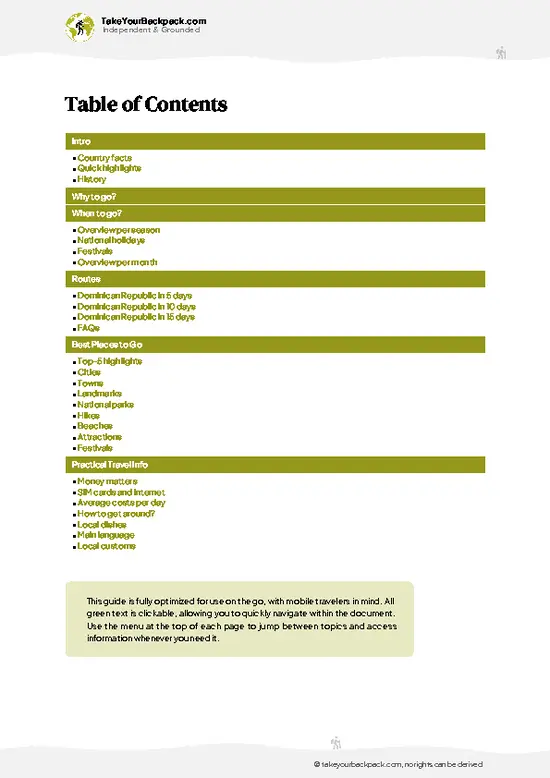
example page 2 from our offline Travel Guide for Dominican Republic
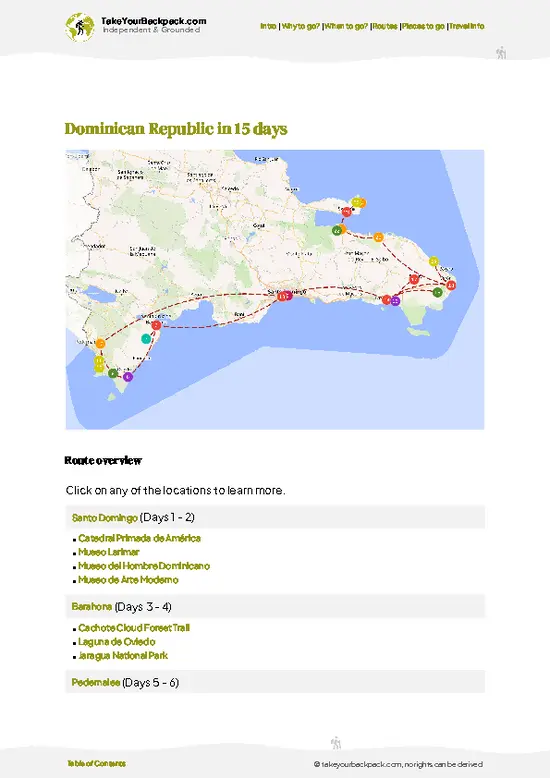
example page 3 from our offline Travel Guide for Dominican Republic
example page 4 from our offline Travel Guide for Dominican Republic
example page 5 from our offline Travel Guide for Dominican Republic
example page 6 from our offline Travel Guide for Dominican Republic
example page 7 from our offline Travel Guide for Dominican Republic
The digital guide (336 pages) contains:
✅ 112 highlights, ranked by travel appeal
✅ Optimized 5, 10 & 15-day travel routes
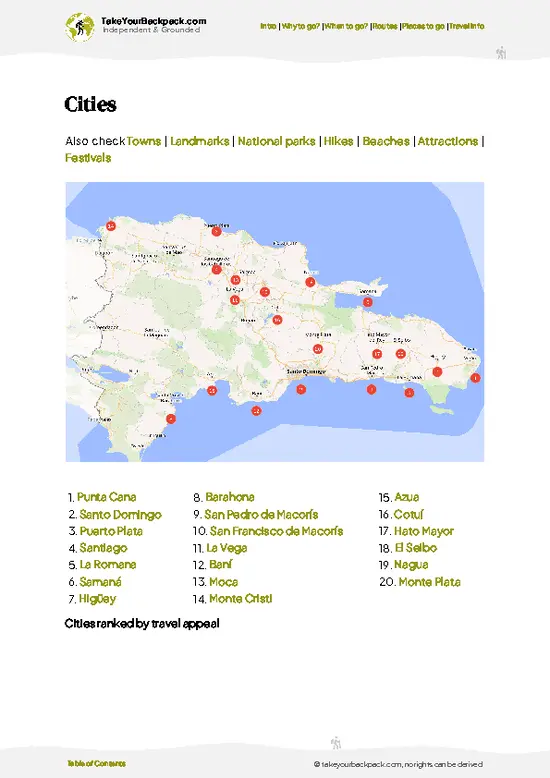
✅ Cities, national parks, landmarks, beaches
✅ How to get around
✅ Offline-friendly for travel without Wi-Fi
👉 Click to see all 30+ guide features

📅 Plan smarter in minutes, not weeks
✅ Month by month travel advice
✅ Festivals & national holidays
✅ Budget expectations

🗺️ Go to the right places, skip the overrated ones
✅ Honest pros & cons of destinations
✅ Top hikes, parks & viewpoints
✅ Lesser-known places most travelers miss
✅ Clear “worth it vs skip it” guidance

🛏️ Travel smoothly without rookie mistakes
✅ Best areas to stay
✅ Transport systems explained simply
✅ Common scams & safety advice
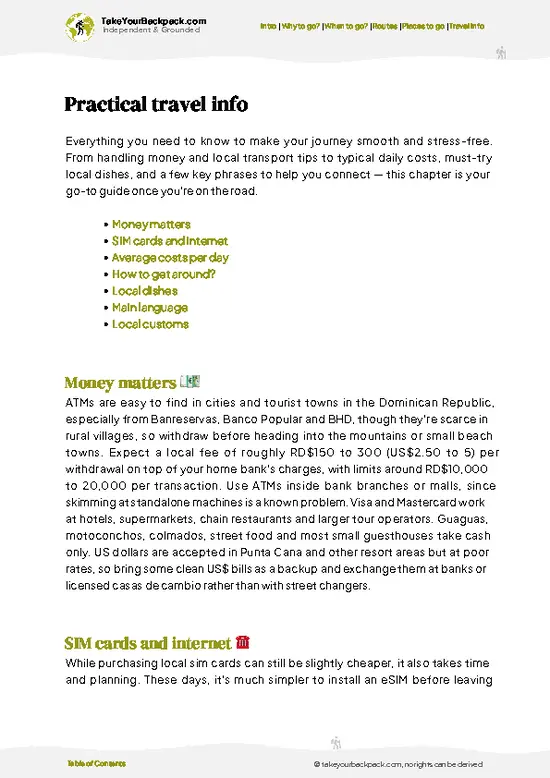
✅ SIM cards, money & practical tips

🌍 Understand the country, not just visit it
✅ Culture & traditions
✅ 52 Essential phrases & customs
✅ Festivals worth planning around
✅ Traveler-friendly historical context
✅ Insights that make places more meaningful

📱 Built for real travel conditions
✅ Fully downloadable PDF
✅ Works completely offline
✅ Optimized for phone use
✅ Useful in remote areas & buses
✅ Everything in one place
Stop searching, start planning
Get instant access to your full guide. 30‑day money-back guarantee.
+ Add another guide for just

By proceeding you agree to our terms.
Sent to your inbox immediately after payment • 100% Secure Checkout
Best Backpacking Travel Advisor 2025 tourism awardBest Backpacking
Travel Advisor
2025
What others say about Take Your Backpack Guides:
⭐⭐⭐⭐⭐
Fantastic, amazing amount of information!
⭐⭐⭐⭐⭐
My goodness this is amazing, it's what I've been looking for hats off too you!
⭐⭐⭐⭐⭐
I think this is absolutely BRILLIANT
⭐⭐⭐⭐
Very complete and informative. It's still missing places, but I gotta to commend you
⭐⭐⭐⭐⭐
This is truly amazing, thank you, can't wait to explore it with my kids!
⭐⭐⭐⭐⭐
Awesome resource, thank you!
⭐⭐⭐⭐⭐
This is amazing! Can't wait to explore the ones I haven't seen
⭐⭐⭐⭐
I love this! Well done, great idea.
⭐⭐⭐⭐⭐
Thanks for taking the time to make this gem!
⭐⭐⭐⭐⭐
This might be the best website I've ever seen.
⭐⭐⭐⭐⭐
Congratulations, and thank you so much for your work; it's incredibly valuable.
⭐⭐⭐⭐
In all seriousness I think you did a great job pointing out the important spots
⭐⭐⭐⭐⭐
10/10 very good
⭐⭐⭐⭐⭐
As someone who's only just starting to visit regularly this is awesome, thank you.
⭐⭐⭐⭐
Thank you very much! I'm going to visit my dad, it's going to be very useful!
⭐⭐⭐⭐⭐
This is really cool! We'll be travelling for the first time and this definitely come in handy.
⭐⭐⭐⭐⭐
You are now our minister of culture, congratulations 👨‍💼
⭐⭐⭐⭐⭐
Just wanted to tell you that this is a pearl! Going to follow your recommendations.
⭐⭐⭐⭐⭐
This is so cool. I'll definitely be using the resource for my travels soon.
⭐⭐⭐⭐⭐
This is very impressive! Good work.
⭐⭐⭐⭐⭐
This is an amazing and informative site. Very well done!

🛏️ Where to stay?Top Areas to Stay

Hostels and budget guesthouses exist across the Dominican Republic, with dorm beds typically running RD$700 to 1,500 (US$12 to 25) and simple private rooms from about RD$1,800 (US$30). The densest cluster is in Santo Domingo’s Zona Colonial, where you can walk to the main historic sights and weekend bars but should expect street noise and take care on quieter side streets after dark. Elsewhere, Cabarete has surfer and kiter hostels in a lively beach-bar strip, Las Terrenas is calmer with good guesthouse value, Jarabacoa suits quiet mountain stays, and Bávaro’s Los Corales area offers the few budget beds near Punta Cana’s resort beaches.

If you enjoy meeting fellow travelers, consider choosing … read more 👉
Hostels and budget guesthouses exist across the Dominican Republic, with dorm beds typically running RD$700 to 1,500 (US$12 to 25) and simple private rooms from about RD$1,800 (US$30). The densest cluster is in Santo Domingo’s Zona Colonial, where you can walk to the main historic sights and weekend bars but should expect street noise and take care on quieter side streets after dark. Elsewhere, Cabarete has surfer and kiter hostels in a lively beach-bar strip, Las Terrenas is calmer with good guesthouse value, Jarabacoa suits quiet mountain stays, and Bávaro’s Los Corales area offers the few budget beds near Punta Cana’s resort beaches.

If you enjoy meeting fellow travelers, consider choosing hostels with high ratings for atmosphere. On the other hand, if you prefer having your own space, a hotel might be a better option.

Dominican RepublicDiscover the Country

👋 Meet the founderWho’s Behind Take Your Backpack?

Johan, backpacker and founder of TakeYourBackpackHi, I’m Johan (Netherlands 🇳🇱), the creator of TakeYourBackpack. Over the past 3 decades, I’ve backpacked through 90+ countries across six continents, gaining extensive experience with independent travel, long-term trips, and overland routes.

This site is built on a combination of firsthand travel experience and carefully curated insights from other backpackers. Many guides are based on places I’ve personally visited, while others bring together tips, observations, and practical advice shared by trusted travelers I’ve met along the way.

The goal is to provide realistic, experience-driven guidance — not generic itineraries — so you can explore destinations with better context, clearer expectations, and more confidence.