
×

Dominican Republic🇩🇴 | landmarksLaguna de OviedoFlamingo shallows, iguana islets, mangrove channels, dry-forest trails | things to do and best time to go

Explore Altos de ChavónExplore Cueva de las Maravillas

Backpacking in Laguna de Oviedo
👍 Recommendedunique site ranked #4
By Johan Kruseman 🇳🇱 | Updated October 20, 2026

Laguna de Oviedo is a saltwater lake that is saltier than the sea at times, and its water level swings with the rain, so the island shorelines you see on a photo may not match the day you arrive. It sits in the southwest of Dominican Republic, inside Jaragua National Park, on the road between Barahona and Pedernales. The wow-factor is real: flamingos wade the shallows, iguanas stare from cactus islands, and mangroves wall in the water. Crowds are close to zero, which is lovely and also means nobody to split a boat with. A guided boat trip costs more than you would expect for a puddle with birds, and the visitor center lies down a bumpy approach, with the hot sun doing the rest. Photographers and birders will adore it. Anyone who needs nightlife, shade or a quick checklist stop should skip it.

Discover everything you want to know in the 📖 Dominican Republic Travel Guide.


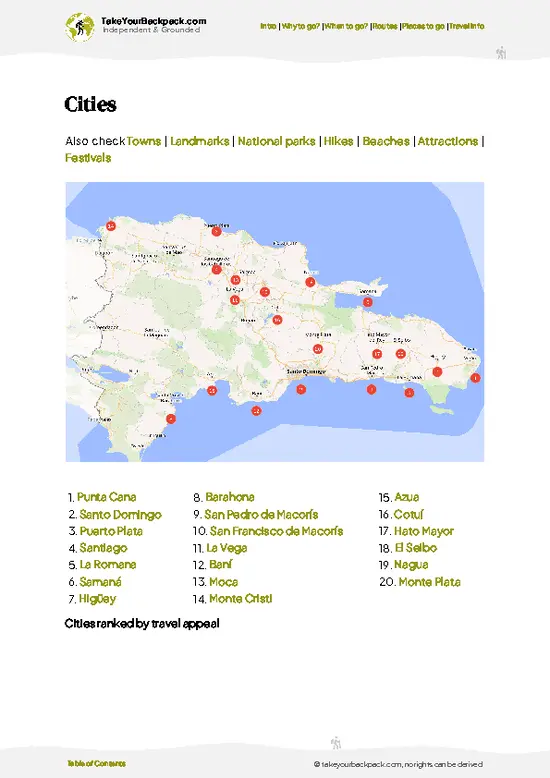
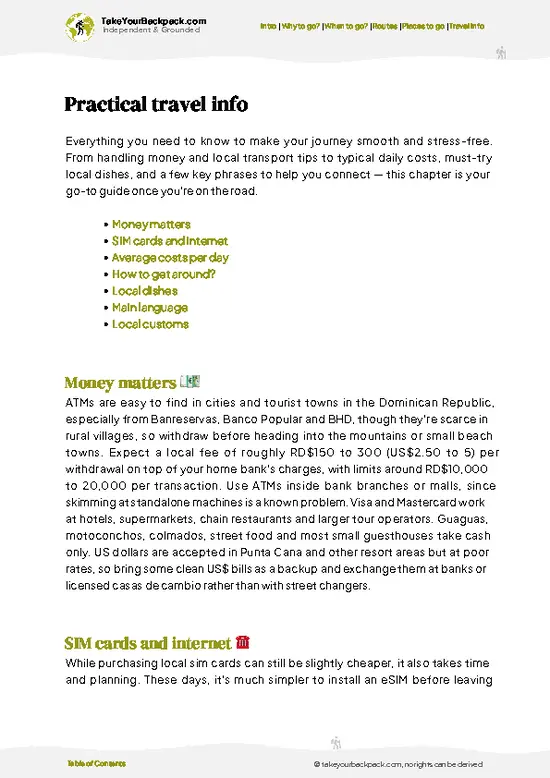
example page 0 from our offline Travel Guide for Dominican Republic
example page 1 from our offline Travel Guide for Dominican Republic
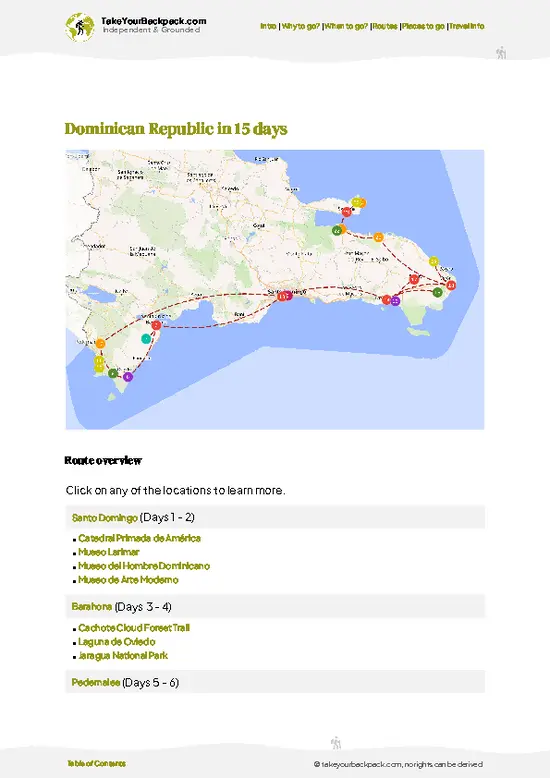
example page 2 from our offline Travel Guide for Dominican Republic
example page 3 from our offline Travel Guide for Dominican Republic
example page 4 from our offline Travel Guide for Dominican Republic
example page 5 from our offline Travel Guide for Dominican Republic
example page 6 from our offline Travel Guide for Dominican Republic
example page 7 from our offline Travel Guide for Dominican Republic
Loading the map 🌍
CLICK TO FILTER
cities
towns
landmarks
national parks
hikes
beaches
attractions
festivals
SHOW COUNTRY’S BESTSHOW ALL

✨ Why go?
Ranked #4 unique site in Dominican Republic
Why Laguna de Oviedo should be on your travel list

Laguna de Oviedo is worth the detour because it is one of the few places in the country where you can watch American flamingos feeding in a wild setting from a small boat, not behind a fence. The lake also holds Cabo Rojo-side mangroves and islets where rhinoceros and Ricord’s iguanas live, so one trip covers birds, reptiles and a dry-forest landscape that looks nothing like the resort coast. Getting here takes effort, and that is part of the appeal: you leave the packed tourist trail and share the water with fishermen and a guide. The lagoon sits neatly on the southwestern loop, between the cooler hills near Barahona and the beaches around Pedernales and Bahía de las Águilas. Pair it with the rest of Jaragua National Park and it turns into a satisfying half-day inside a longer trip, instead of a long drive for one view.

💡 HighlightsTop highlights of Laguna de Oviedo

  1. Boat Tour of the Lagoon: The main event. A local guide steers you through the shallow, salty water past mangroves and low islets, and you pay for the boat, so the price depends on group size.
  2. Flamingo Watching: Pink flocks feed in the shallows, usually at a distance. Bring binoculars or a zoom lens, because the birds keep their space.
  3. Iguana Island: Rhinoceros and Ricord’s iguanas sunbathe on rocky, cactus-covered islets. They are endemic to Hispaniola, and you can see them from the boat.
  4. Mangrove Channels: Narrow passages between mangrove roots where herons and egrets hunt. The boat slows, and the mood goes quiet.
  5. Visitor Center and Park Entrance: The Jaragua National Park post sets the entry fee, signs the trails and arranges guides. Stop here first for current water conditions.
  6. Dry Forest Trails:
… read more 👉
  1. Boat Tour of the Lagoon: The main event. A local guide steers you through the shallow, salty water past mangroves and low islets, and you pay for the boat, so the price depends on group size.
  2. Flamingo Watching: Pink flocks feed in the shallows, usually at a distance. Bring binoculars or a zoom lens, because the birds keep their space.
  3. Iguana Island: Rhinoceros and Ricord’s iguanas sunbathe on rocky, cactus-covered islets. They are endemic to Hispaniola, and you can see them from the boat.
  4. Mangrove Channels: Narrow passages between mangrove roots where herons and egrets hunt. The boat slows, and the mood goes quiet.
  5. Visitor Center and Park Entrance: The Jaragua National Park post sets the entry fee, signs the trails and arranges guides. Stop here first for current water conditions.
  6. Dry Forest Trails: Cacti, thorny scrub and low trees cover the shore, and the walk gives you a look at the species that live around the lake, including birds such as the Hispaniolan palm crow.
  7. Birdwatching for Endemics: Beyond flamingos, the lake and its edges draw pelicans, ibises, stilts and other waterbirds. Early morning is the busiest and coolest.
Laguna de Oviedo pairs well with a morning boat tour and flamingo watching, since the birds are most active early and both happen from the same boat.
Spotted a mistake or missing something? Contact us.

Things to do near Laguna de Oviedo

Ratings based on Tripadvisor reviews. When you book through this link, you support our work at no extra cost to you.

🌤️ When to go?Best time to visit Laguna de Oviedo

  • Dry Season (December to April): Laguna de Oviedo is easiest to visit now, with little rain, daytime highs of 30 to 33°C (86 to 91°F) and nights near 21 to 23°C (70 to 73°F). Boat trips run reliably and the dirt tracks are firm. Daylight lasts about 11 to 12 hours.
  • Shoulder Months (May to June): Showers arrive mostly in the afternoon, and mornings stay clear. Heat builds to 33 to 35°C (91 to 95°F). Crowds are thin and boat captains bargain more readily.
  • Wet and Hurricane Season (July to November): Humidity is heavy, downpours can turn tracks to mud, and storms can cancel boats. Birdlife is active, but flamingo sightings are less predictable. Prices barely move, since this is a local-day-trip spot.
  • Weekends and Holidays: Dominican families come on Saturdays, Sundays and during Semana Santa, so
… read more 👉
  • Dry Season (December to April): Laguna de Oviedo is easiest to visit now, with little rain, daytime highs of 30 to 33°C (86 to 91°F) and nights near 21 to 23°C (70 to 73°F). Boat trips run reliably and the dirt tracks are firm. Daylight lasts about 11 to 12 hours.
  • Shoulder Months (May to June): Showers arrive mostly in the afternoon, and mornings stay clear. Heat builds to 33 to 35°C (91 to 95°F). Crowds are thin and boat captains bargain more readily.
  • Wet and Hurricane Season (July to November): Humidity is heavy, downpours can turn tracks to mud, and storms can cancel boats. Birdlife is active, but flamingo sightings are less predictable. Prices barely move, since this is a local-day-trip spot.
  • Weekends and Holidays: Dominican families come on Saturdays, Sundays and during Semana Santa, so expect more boats and noise.
Go on a weekday morning before 9 a.m., when the air is cooler and the birds are most active.


source: climatestotravel.comJANJanuary: highly recommended for travelingFEBFebruary: excellent for travelingMARMarch: excellent for travelingAPRApril: excellent for travelingMAYMay: fair for travelingJUNJune: fair for travelingJULJuly: fair for travelingAUGAugust: fair for travelingSEPSeptember: below average for travelingOCTOctober: fair for travelingNOVNovember: fair for travelingDECDecember: highly recommended for traveling
dominican-republic-unique-site-laguna-de-oviedo
© Google | Andrea Monti

✈️ The backpacker research shortcutDominican Republic Travel Guide

An offline-friendly backpacking guide with optimized travel routes, ranked highlights, transport advice, and the best areas to stay.
example page 0 from our offline Travel Guide for Dominican Republic
example page 1 from our offline Travel Guide for Dominican Republic
example page 2 from our offline Travel Guide for Dominican Republic
example page 3 from our offline Travel Guide for Dominican Republic
example page 4 from our offline Travel Guide for Dominican Republic
example page 5 from our offline Travel Guide for Dominican Republic
example page 6 from our offline Travel Guide for Dominican Republic
example page 7 from our offline Travel Guide for Dominican Republic
The digital guide (336 pages) contains:
✅ 112 highlights, ranked by travel appeal
✅ Optimized 5, 10 & 15-day travel routes
✅ Cities, national parks, landmarks, beaches
✅ How to get around
✅ Offline-friendly for travel without Wi-Fi
👉 Click to see all 30+ guide features

📅 Plan smarter in minutes, not weeks
✅ Month by month travel advice
✅ Festivals & national holidays
✅ Budget expectations

🗺️ Go to the right places, skip the overrated ones
✅ Honest pros & cons of destinations
✅ Top hikes, parks & viewpoints
✅ Lesser-known places most travelers miss
✅ Clear “worth it vs skip it” guidance

🛏️ Travel smoothly without rookie mistakes
✅ Best areas to stay
✅ Transport systems explained simply
✅ Common scams & safety advice
✅ SIM cards, money & practical tips

🌍 Understand the country, not just visit it
✅ Culture & traditions
✅ 52 Essential phrases & customs
✅ Festivals worth planning around
✅ Traveler-friendly historical context
✅ Insights that make places more meaningful

📱 Built for real travel conditions
✅ Fully downloadable PDF
✅ Works completely offline
✅ Optimized for phone use
✅ Useful in remote areas & buses
✅ Everything in one place
Stop searching, start planning
Get instant access to your full guide. 30‑day money-back guarantee.
+ Add another guide for just

By proceeding you agree to our terms.
Sent to your inbox immediately after payment • 100% Secure Checkout
Best Backpacking Travel Advisor 2025 tourism awardBest Backpacking
Travel Advisor
2025
What others say about Take Your Backpack Guides:
⭐⭐⭐⭐⭐
Fantastic, amazing amount of information!
⭐⭐⭐⭐⭐
My goodness this is amazing, it's what I've been looking for hats off too you!
⭐⭐⭐⭐⭐
I think this is absolutely BRILLIANT
⭐⭐⭐⭐
Very complete and informative. It's still missing places, but I gotta to commend you
⭐⭐⭐⭐⭐
This is truly amazing, thank you, can't wait to explore it with my kids!
⭐⭐⭐⭐⭐
Awesome resource, thank you!
⭐⭐⭐⭐⭐
This is amazing! Can't wait to explore the ones I haven't seen
⭐⭐⭐⭐
I love this! Well done, great idea.
⭐⭐⭐⭐⭐
Thanks for taking the time to make this gem!
⭐⭐⭐⭐⭐
This might be the best website I've ever seen.
⭐⭐⭐⭐⭐
Congratulations, and thank you so much for your work; it's incredibly valuable.
⭐⭐⭐⭐
In all seriousness I think you did a great job pointing out the important spots
⭐⭐⭐⭐⭐
10/10 very good
⭐⭐⭐⭐⭐
As someone who's only just starting to visit regularly this is awesome, thank you.
⭐⭐⭐⭐
Thank you very much! I'm going to visit my dad, it's going to be very useful!
⭐⭐⭐⭐⭐
This is really cool! We'll be travelling for the first time and this definitely come in handy.
⭐⭐⭐⭐⭐
You are now our minister of culture, congratulations 👨‍💼
⭐⭐⭐⭐⭐
Just wanted to tell you that this is a pearl! Going to follow your recommendations.
⭐⭐⭐⭐⭐
This is so cool. I'll definitely be using the resource for my travels soon.
⭐⭐⭐⭐⭐
This is very impressive! Good work.
⭐⭐⭐⭐⭐
This is an amazing and informative site. Very well done!

🛏️ Where to stay?Best areas to stay in Dominican Republic

Pedernales town is the best base for backpackers, since it sits roughly 25 to 30 km from Laguna de Oviedo, has the most beds, and connects by road to the park entrance. Expect simple guesthouses and small family-run hotels clustered around the main street and the central park, where you can eat cheaply, change money and find motoconcho drivers who will take you to the park gate. Rooms usually run US$20 to 45 a night. The scene is quiet rather than social, but the few foreign travelers who come through tend to share rides and boat costs, so ask around at breakfast.

Cabo Rojo, a few kilometers … read more 👉
Pedernales town is the best base for backpackers, since it sits roughly 25 to 30 km from Laguna de Oviedo, has the most beds, and connects by road to the park entrance. Expect simple guesthouses and small family-run hotels clustered around the main street and the central park, where you can eat cheaply, change money and find motoconcho drivers who will take you to the park gate. Rooms usually run US$20 to 45 a night. The scene is quiet rather than social, but the few foreign travelers who come through tend to share rides and boat costs, so ask around at breakfast.

Cabo Rojo, a few kilometers from Pedernales, is the beach alternative. It feels more spread out and mostly serves visitors heading to Bahía de las Águilas, so tours often depart from here. Lodging there is basic and sometimes pricier.

On the other side, Barahona is a larger town with more hostels and better restaurants, but it is a long drive, about 3 to 4 hours, so it works only if you are touring the southwest and not targeting the lagoon alone. Staying in Pedernales is safer and simpler, with lights, shops and people around after dark.

👛 Costs (as of 20 October 2026)Travel costs and budget guide for Laguna de Oviedo

Laguna de Oviedo costs roughly US$53 to 134 per day for a backpacker based in Pedernales, including park entry, a boat and local transport.
CategoryBudget RangeLocal Reality
Park EntranceUS$2 to 4Paid at the Jaragua National Park gate, in pesos. Foreigners pay more than Dominicans.
Boat TripUS$15 to 30Boats take several passengers to the islands and flamingo areas, so sharing cuts the cost per person.
GuideUS$0 to 15Often bundled with the boat. Tipping is welcome.
TransportUS$6 to 20Guagua from Pedernales to the junction, then a motoconcho or a shared taxi to the gate. A private taxi costs more.
Accommodation (High Season)US$20 to 45Basic guesthouse in Pedernales. Low season runs about US$15 to 35.
FoodUS$8 to 15Fried fish, rice and beans, and chicken plates at comedores cost US$4 to 7. Bring snacks,
… read more 👉
Laguna de Oviedo costs roughly US$53 to 134 per day for a backpacker based in Pedernales, including park entry, a boat and local transport.
CategoryBudget RangeLocal Reality
Park EntranceUS$2 to 4Paid at the Jaragua National Park gate, in pesos. Foreigners pay more than Dominicans.
Boat TripUS$15 to 30Boats take several passengers to the islands and flamingo areas, so sharing cuts the cost per person.
GuideUS$0 to 15Often bundled with the boat. Tipping is welcome.
TransportUS$6 to 20Guagua from Pedernales to the junction, then a motoconcho or a shared taxi to the gate. A private taxi costs more.
Accommodation (High Season)US$20 to 45Basic guesthouse in Pedernales. Low season runs about US$15 to 35.
FoodUS$8 to 15Fried fish, rice and beans, and chicken plates at comedores cost US$4 to 7. Bring snacks, as there is little near the lagoon.
Water and ExtrasUS$2 to 5Bottled water, sunscreen and insect repellent are needed, since there is little shade.
Total Daily BudgetUS$53 to 134A typical day with shared transport and boat lands near US$60.
⚠️ Prices can change and everyone travels differently, so take this as a rough guide. Hope it helps you plan your adventure!

FAQTraveler FAQ

Laguna de Oviedo is a saltwater lagoon inside Jaragua National Park in the far southwest, with mangrove shores and small islands. It is known for American flamingos, iguanas and other waterbirds, and the lagoon lies a short drive from the Caribbean coast. Boat tours of the lagoon are the usual way to see it, and the park covers dry forest as well.
Laguna de Oviedo needs about half a day, roughly 3 to 5 hours, including the drive, the entrance and a boat tour of 1 to 2 hours. If you start from Pedernales you can do it as a morning trip and return by lunch. Pair it with Bahía de las Águilas for a full day, or add a second day if you want to visit the other parts of Jaragua.
Laguna de Oviedo is about 25 to 30 km from Pedernales, a drive of roughly 30 to 45 minutes by taxi, motoconcho or rental car. From Santo Domingo, plan on about 5 to 6 hours by road via Barahona, and from Barahona about 2.5 to 3 hours. Public guaguas go to Pedernales, and then you need a local ride to the park entrance, which costs roughly US$6 to 20.
⚠️ Things can change over time, so always validate details locally before you go.

Other Dominican landmarks near Laguna de Oviedo

Explore more nearby:

  • Cascadas de Damajagua—Limestone slides, canyon jumps, cooperative guides, helmet and life jacket| 227 km away
  • La Isabela—Columbus’s house foundations, first-church site, cemetery digs, fishing-village coast| 239 km away
  • Cueva de las Maravillas—Taíno cave art, elevator descent, lit stalactites, cane-country drive| 245 km away

💡 Not sure where to go next?
Create a personalized itinerary for Dominican Republic including Laguna de Oviedo and the places that fit your trip.

Generate my itinerary

👉 Discover all landmarks

Or checkout all Dominican Republic has to offer (think cities, towns, villages, national parks, hikes, beaches, festivals)
Country photo of Dominican Republic

We 💚 feedbackIs it worth it?

Laguna de Oviedo trips go wrong when people arrive at midday, skip the guide and wonder why the flamingos are specks. Go early, hire the boat, and bring water, a hat and binoculars. I would also confirm conditions at the visitor center, since the lake changes and so do the birds.

✍️ Help improve this page!
The information on this page is based on in-depth research, insights shared by experienced travelers, and feedback from the local travel community in Dominican Republic. While every effort is made to keep the information accurate and current, conditions can change — so if you spot anything incorrect or outdated, please get in touch.


🙋‍♂️ Give feedback

👋 Meet the founderWho’s Behind Take Your Backpack?

Johan, backpacker and founder of TakeYourBackpackHi, I’m Johan (Netherlands 🇳🇱), the creator of TakeYourBackpack. Over the past 3 decades, I’ve backpacked through 90+ countries across six continents, gaining extensive experience with independent travel, long-term trips, and overland routes.

This site is built on a combination of firsthand travel experience and carefully curated insights from other backpackers. Many guides are based on places I’ve personally visited, while others bring together tips, observations, and practical advice shared by trusted travelers I’ve met along the way.

The goal is to provide realistic, experience-driven guidance — not generic itineraries — so you can explore destinations with better context, clearer expectations, and more confidence.