×

Dominican Republic🇩🇴 | best landmarksDiscover the 5 Best landmarks Across Dominican Republic

In the Dominican Republic, unique sites are defined by their cultural, historical, or natural significance, offering a glimpse into the island’s rich tapestry beyond the all-inclusive resorts. From the bustling streets of Santo Domingo to the serene beaches of Samaná, each region presents distinct experiences that cater to different travel styles and budgets.

Choosing the right site can dramatically affect your vibe—some spots are teeming with tourists, while others offer a more intimate connection with local life. Seasonal nuances, like the influx of visitors during winter, can impact accessibility and safety, making it crucial for backpackers and independent travelers to plan wisely. Embrace the grind; the rewards are worth it.

By Johan Kruseman 🇳🇱 | Updated June 1, 2026
Explore the best national parks in Dominican Republic

Why go?Key Factors That Shape the Experience

The unique sites in the Dominican Republic matter because they offer a rich tapestry of cultural and historical significance that sets them apart from other destinations. This country is a crossroads of Taino, Spanish, and African influences, creating a vibrant cultural landscape. Unlike many Caribbean islands, the Dominican Republic boasts the oldest European settlement in the Americas, which adds layers of historical depth to its attractions.

Geographically, the Dominican Republic is a mix of mountains, beaches, and lush valleys, making it a natural wonderland. However, this diversity comes with trade-offs. Many unique sites are tucked away in remote areas, requiring a commitment to travel time that can be frustrating. The payoff is often a more immersive experience, but it demands patience … read more 👉
The unique sites in the Dominican Republic matter because they offer a rich tapestry of cultural and historical significance that sets them apart from other destinations. This country is a crossroads of Taino, Spanish, and African influences, creating a vibrant cultural landscape. Unlike many Caribbean islands, the Dominican Republic boasts the oldest European settlement in the Americas, which adds layers of historical depth to its attractions.

Geographically, the Dominican Republic is a mix of mountains, beaches, and lush valleys, making it a natural wonderland. However, this diversity comes with trade-offs. Many unique sites are tucked away in remote areas, requiring a commitment to travel time that can be frustrating. The payoff is often a more immersive experience, but it demands patience and planning.

Climatically, the country’s tropical weather can be a double-edged sword. While it invites year-round exploration, the peak tourist seasons can lead to overcrowding at popular sites, diluting the experience. Travelers should consider timing their visits to avoid the rush, which can enhance the sense of discovery.

Infrastructurally, while major roads are improving, some areas remain challenging to access. This can deter casual tourists but rewards those willing to venture off the beaten path. Ultimately, the Dominican Republic’s unique sites offer a compelling blend of history, culture, and nature, but they require a thoughtful approach to truly appreciate their significance.
How the List Was Created
The list of best unique sites in Dominican Republic is created based on history or culture, wow factor, atmosphere, quirks, and memorability. If you feel a unique site is missing in this list, please let us know.

When to go?Timing Your Visit for the Best Experience

Seasonality plays a significant role in the Dominican Republic, affecting everything from weather to crowd levels at unique sites. The country generally enjoys a tropical climate, with warm temperatures year-round. However, the rainy season, typically from May to November, can bring heavy downpours and occasional hurricanes. This period may limit access to certain areas, especially those prone to flooding or landslides.

Optimal months for visiting are usually December through April. During this time, the weather is drier and cooler, making it ideal for exploring unique sites. Expect larger crowds, especially around holidays, as tourists flock to escape winter. Prices for accommodations and activities can spike, so booking in advance is wise.

Shoulder seasons, like late April and early December, … read more 👉
Seasonality plays a significant role in the Dominican Republic, affecting everything from weather to crowd levels at unique sites. The country generally enjoys a tropical climate, with warm temperatures year-round. However, the rainy season, typically from May to November, can bring heavy downpours and occasional hurricanes. This period may limit access to certain areas, especially those prone to flooding or landslides.

Optimal months for visiting are usually December through April. During this time, the weather is drier and cooler, making it ideal for exploring unique sites. Expect larger crowds, especially around holidays, as tourists flock to escape winter. Prices for accommodations and activities can spike, so booking in advance is wise.

Shoulder seasons, like late April and early December, offer a sweet spot. Fewer tourists mean less congestion, and prices may drop slightly. However, weather can be unpredictable, with lingering rain from the wet season or the onset of early showers.

Peak periods around major holidays can lead to overcrowding at popular sites, making it difficult to fully appreciate their uniqueness. Planning visits during off-peak times can enhance the experience, allowing for a more intimate connection with the culture and environment.

unique site hoppingSuggested Travel Strategies

Regional Clustering
To make the most of the Dominican Republic’s unique sites, think regionally. Start in the north with Puerto Plata, where you can explore the historic Fort San Felipe and the stunning Amber Museum. Then, head south to Santiago for a taste of local culture and history. This route saves time and keeps the travel grind to a minimum.

Optimal Sequencing
After Santiago, swing east to the lush landscapes of Jarabacoa. Here, you can hike to waterfalls or simply enjoy the cooler mountain air. Finally, wrap up your trip in the capital, Santo Domingo, where colonial architecture and vibrant street life await. This sequence flows naturally, allowing for a mix of adventure and relaxation.

Time Management
Plan for at least two to three hours at each major stop. This pacing allows … read more 👉
Regional Clustering
To make the most of the Dominican Republic’s unique sites, think regionally. Start in the north with Puerto Plata, where you can explore the historic Fort San Felipe and the stunning Amber Museum. Then, head south to Santiago for a taste of local culture and history. This route saves time and keeps the travel grind to a minimum.

Optimal Sequencing
After Santiago, swing east to the lush landscapes of Jarabacoa. Here, you can hike to waterfalls or simply enjoy the cooler mountain air. Finally, wrap up your trip in the capital, Santo Domingo, where colonial architecture and vibrant street life await. This sequence flows naturally, allowing for a mix of adventure and relaxation.

Time Management
Plan for at least two to three hours at each major stop. This pacing allows for exploration without feeling rushed. Avoid the common mistake of trying to cram too many sites into one day. It’s tempting to chase every Instagrammable moment, but depth often trumps speed.

Trade-offs and Constraints
Consider the balance between comfort and budget. Local transport can be a mixed bag, so renting a car might be worth the splurge for flexibility. Embrace the absurdities of travel—like unexpected roadblocks or local festivals that slow you down. These moments often lead to the best stories.

The ListMust-Visit landmarks in Dominican Republic

1 Cascadas de Damajagua

limestone canyons, natural slides, guided descent

Climb and slide through a series of stepped waterfalls, navigating narrow rock chutes and emerald pools with local guides.

dominican-republic-unique-site-cascadas-de-damajagua
© Google | Dondeir Pop

2 Cascada El Limón

jungle trail, tall waterfall, horseback approach

Follow a forested path or ride horseback to reach a dramatic cascade, where cool water plunges into a deep natural pool.

3 La Romana’s Altos de Chavón

Mediterranean-style village, artists’ workshops, amphitheater

Stroll cobblestone lanes lined with galleries and studios, then pause at a riverside amphitheater carved above the Chavón valley.

dominican-republic-unique-site-la-romanas-altos-de-chavon
© Google | Julien Cedano

4 Laguna de Oviedo

saltwater lagoon, mangrove islands, birdwatching

Board a small boat to cross shallow green waters, spotting flamingos and iguanas among isolated islets and tangled mangroves.

dominican-republic-unique-site-laguna-de-oviedo
© Google | Andrea Monti

5 La Isabela

archaeological ruins, early colonial site, coastal settlement

Walk among the remains of the first European town in the Americas, where stone foundations overlook a quiet stretch of Atlantic coast.

dominican-republic-unique-site-la-isabela
© Google | Joseline Hiche
Loading the map 🌍

Expert viewInsights from Locals and Experts


The Dominican Republic is a treasure trove of unique sites, but navigating this landscape requires a bit of strategy. You can realistically tackle about three to five standout locations in a week, depending on your pace and appetite for adventure. The key is to prioritize wisely, balancing the must-see spots with the hidden treasures that offer a taste of local culture.

The Dominican Republic is rich in history, culture, and natural beauty. Think of it as a buffet where some dishes are essential, while others are just there to fill the plate. The colonial architecture of Santo Domingo, for instance, is a UNESCO World Heritage site that’s worth your time. It’s not just about the buildings; it’s the stories they tell. But don’t get too comfortable; the crowds can be overwhelming, especially
read more 👉


The Dominican Republic is a treasure trove of unique sites, but navigating this landscape requires a bit of strategy. You can realistically tackle about three to five standout locations in a week, depending on your pace and appetite for adventure. The key is to prioritize wisely, balancing the must-see spots with the hidden treasures that offer a taste of local culture.

The Dominican Republic is rich in history, culture, and natural beauty. Think of it as a buffet where some dishes are essential, while others are just there to fill the plate. The colonial architecture of Santo Domingo, for instance, is a UNESCO World Heritage site that’s worth your time. It’s not just about the buildings; it’s the stories they tell. But don’t get too comfortable; the crowds can be overwhelming, especially on weekends. Aim for early morning visits to beat the rush and soak in the atmosphere without the selfie sticks swinging around.

Transportation can be a bit of a puzzle. While major sites are generally accessible, the roads can be a mixed bag. Some areas are well-paved, while others feel like a rollercoaster ride. If you’re planning to visit remote locations, be prepared for longer travel times and possibly hiring a local guide. This isn’t just about getting from point A to B; it’s about the journey itself. The scenic routes can be stunning, but they also eat into your time. Factor in a buffer for unexpected delays—because they will happen.

Timing is everything. If you’re visiting popular spots, weekdays are your best bet. The locals know the weekends are prime time for tourists, so you’ll want to avoid the masses if you can. For example, if you’re keen on exploring natural wonders like waterfalls or beaches, early mornings or late afternoons can offer a more serene experience. Plus, the lighting is often better for photos—just don’t forget your sunscreen.

When planning your itinerary, think about geographical clusters. You can easily combine a couple of sites in a single day if they’re close enough. For instance, if you’re near a national park, check out nearby attractions that complement the experience. This not only saves time but also enriches your understanding of the local ecosystem and culture. Just don’t try to cram too much into one day; you’ll end up exhausted and missing the magic of each place.

Safety is generally not a major concern, but it’s wise to stay aware of your surroundings, especially in crowded areas. Engage with locals; they can offer insights that guidebooks can’t. Plus, you’ll often find that a friendly chat can lead to unexpected adventures. Just remember, cultural norms can vary, so be respectful and open-minded. A little patience goes a long way, especially when language barriers pop up.

The biggest trade-off is often between time and depth of experience. You can rush through a dozen sites, but you’ll miss the nuances that make each one special. Alternatively, you can slow down and truly absorb a few key locations, but that means fewer stamps in your passport. Choose wisely based on what you value more: breadth or depth.

In the end, the Dominican Republic offers a rich tapestry of experiences, but it’s up to you to navigate the absurdities of travel with a sense of humor and a spirit of adventure. Embrace the grind; the gold is waiting just around the corner.

✈️ The backpacker research shortcutDominican Republic Travel Guide

An offline-friendly backpacking guide with optimized travel routes, ranked highlights, transport advice, and the best areas to stay.
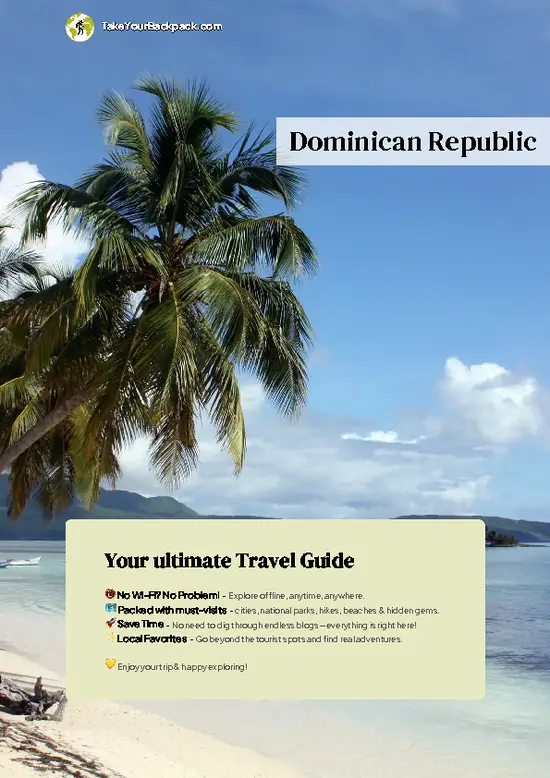
example page 0 from our offline Travel Guide for Dominican Republic
example page 1 from our offline Travel Guide for Dominican Republic
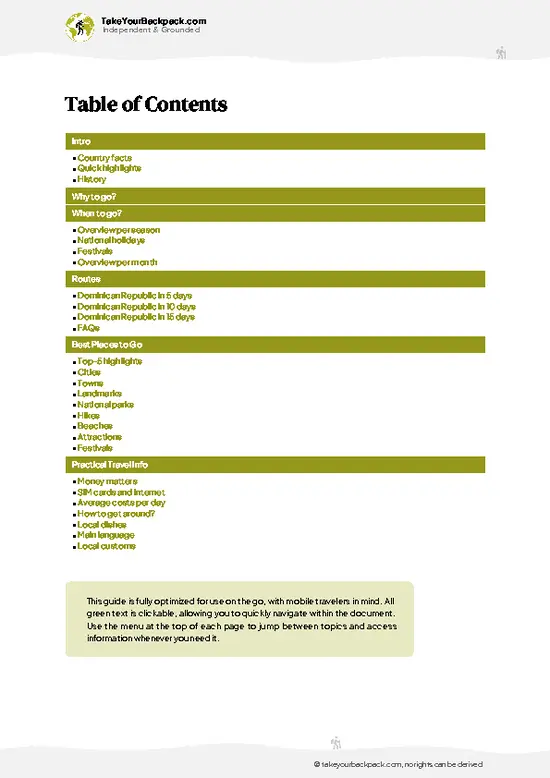
example page 2 from our offline Travel Guide for Dominican Republic
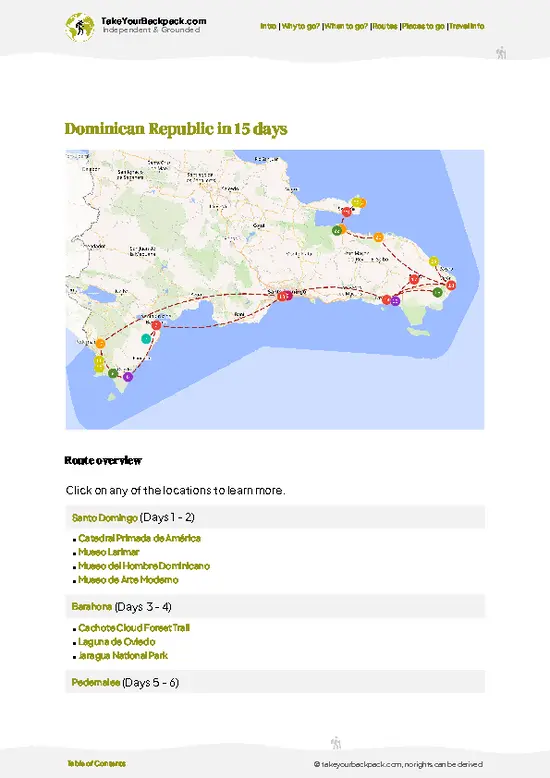
example page 3 from our offline Travel Guide for Dominican Republic
example page 4 from our offline Travel Guide for Dominican Republic
example page 5 from our offline Travel Guide for Dominican Republic
example page 6 from our offline Travel Guide for Dominican Republic
example page 7 from our offline Travel Guide for Dominican Republic
The digital guide (431 pages) contains:
119 highlights, ranked by travel appeal
Optimized 5, 10 & 15-day travel routes
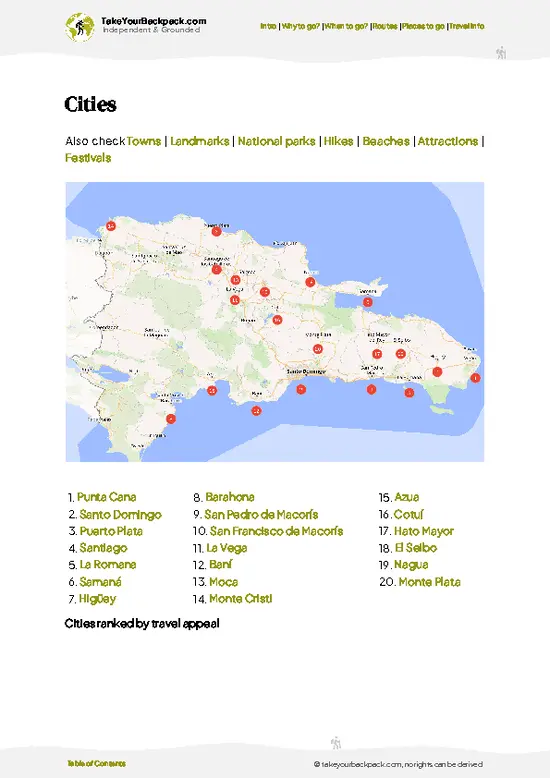
Cities, national parks, landmarks, beaches
How to get around
Offline-friendly for travel without Wi-Fi
👉 Click to see all 30+ guide features

📅 Plan smarter in minutes, not weeks
Month by month travel advice
Festivals & national holidays
Budget expectations

🗺️ Go to the right places, skip the overrated ones
Honest pros & cons of destinations
Top hikes, parks & viewpoints
Lesser-known places most travelers miss
Clear “worth it vs skip it” guidance

🛏️ Travel smoothly without rookie mistakes
Best areas to stay
Transport systems explained simply
Common scams & safety advice
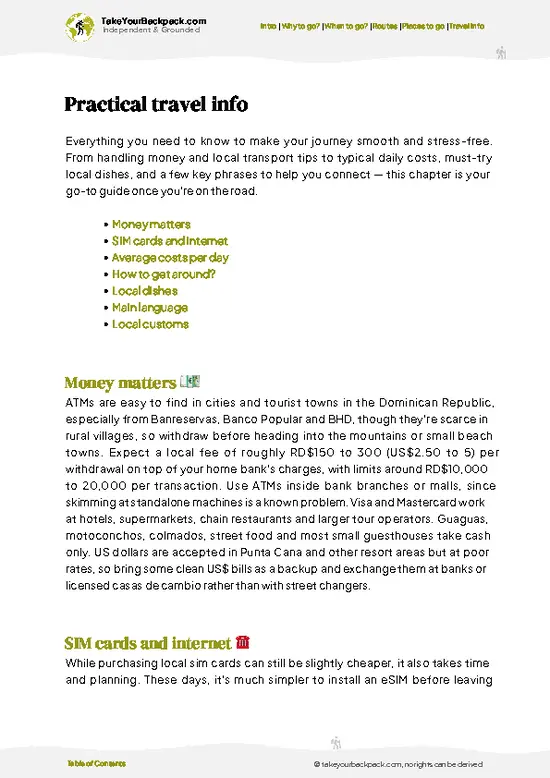
SIM cards, money & practical tips

🌍 Understand the country, not just visit it
Culture & traditions
52 Essential phrases & customs
Festivals worth planning around
Traveler-friendly historical context
Insights that make places more meaningful

📱 Built for real travel conditions
Fully downloadable PDF
Works completely offline
Optimized for phone use
Useful in remote areas & buses
Everything in one place
Save weeks of stressful planning
Get instant access to your full guide. 30‑day money-back guarantee.


By proceeding you agree to our terms.
Sent to your inbox immediately after payment • 100% Secure Checkout
Best Backpacking Travel Advisor 2025 tourism awardBest Backpacking
Travel Advisor
2025
What others say about Take Your Backpack Guides:
⭐⭐⭐⭐⭐
Fantastic, amazing amount of information!
⭐⭐⭐⭐⭐
My goodness this is amazing, it's what I've been looking for hats off too you!
⭐⭐⭐⭐⭐
I think this is absolutely BRILLIANT
⭐⭐⭐⭐
Very complete and informative. It's still missing places, but I gotta to commend you
⭐⭐⭐⭐⭐
This is truly amazing, thank you, can't wait to explore it with my kids!
⭐⭐⭐⭐⭐
Awesome resource, thank you!
⭐⭐⭐⭐⭐
This is amazing! Can't wait to explore the ones I haven't seen
⭐⭐⭐⭐
I love this! Well done, great idea.
⭐⭐⭐⭐⭐
Thanks for taking the time to make this gem!
⭐⭐⭐⭐⭐
This might be the best website I've ever seen.
⭐⭐⭐⭐⭐
Congratulations, and thank you so much for your work; it's incredibly valuable.
⭐⭐⭐⭐
In all seriousness I think you did a great job pointing out the important spots
⭐⭐⭐⭐⭐
10/10 very good
⭐⭐⭐⭐⭐
As someone who's only just starting to visit regularly this is awesome, thank you.
⭐⭐⭐⭐
Thank you very much! I'm going to visit my dad, it's going to be very useful!
⭐⭐⭐⭐⭐
This is really cool! We'll be travelling for the first time and this definitely come in handy.
⭐⭐⭐⭐⭐
You are now our minister of culture, congratulations 👨‍💼
⭐⭐⭐⭐⭐
Just wanted to tell you that this is a pearl! Going to follow your recommendations.
⭐⭐⭐⭐⭐
This is so cool. I'll definitely be using the resource for my travels soon.
⭐⭐⭐⭐⭐
This is very impressive! Good work.
⭐⭐⭐⭐⭐
This is an amazing and informative site. Very well done!

🛏️ Where to stay?Best Places to Stay in Dominican Republic

Yes — hostels and budget accommodation are common in the Dominican Republic, concentrated in major hubs and beach towns: Santo Domingo (Zona Colonial), Punta Cana/Bávaro, Puerto Plata region (Sosua/Cabarete), Samaná (Las Terrenas) and Bayahibe.

Santo Domingo gives best access to historic sights and transit but is busy and noisier; Punta Cana/Bávaro offers easy beach access and many budget rooms near resorts but tends to be pricier and poorly served by public transport; Cabarete is ideal for watersports and nightlife but can be touristy and boisterous at night while Sosua has very cheap stays but mixed safety after dark; Las Terrenas is quieter with chill beaches and some affordable guesthouses … read more 👉
Yes — hostels and budget accommodation are common in the Dominican Republic, concentrated in major hubs and beach towns: Santo Domingo (Zona Colonial), Punta Cana/Bávaro, Puerto Plata region (Sosua/Cabarete), Samaná (Las Terrenas) and Bayahibe.

Santo Domingo gives best access to historic sights and transit but is busy and noisier; Punta Cana/Bávaro offers easy beach access and many budget rooms near resorts but tends to be pricier and poorly served by public transport; Cabarete is ideal for watersports and nightlife but can be touristy and boisterous at night while Sosua has very cheap stays but mixed safety after dark; Las Terrenas is quieter with chill beaches and some affordable guesthouses but fewer dorm-style hostels; Bayahibe is small, cheap for Saona Island trips but has limited services and little nightlife.

If you enjoy meeting fellow travelers, consider choosing hostels with high ratings for atmosphere. On the other hand, if you prefer having your own space, a hotel might be a better option.

Dominican RepublicExplore Dominican Republic

👋 Meet the founderWho’s Behind Take Your Backpack?

Johan, backpacker and founder of TakeYourBackpackHi, I’m Johan (Netherlands 🇳🇱), the creator of TakeYourBackpack. Over the past decade, I’ve backpacked through 80+ countries across six continents, gaining extensive experience with independent travel, long-term trips, and overland routes.

This site is built on a combination of firsthand travel experience and carefully curated insights from other backpackers. Many guides are based on places I’ve personally visited, while others bring together tips, observations, and practical advice shared by trusted travelers I’ve met along the way.

The goal is to provide realistic, experience-driven guidance — not generic itineraries — so you can explore destinations with better context, clearer expectations, and more confidence.

Get full country guide •
Instant download • 119 highlights • Full Offline guide