×

Dominican Republic🇩🇴 | townsRío San JuanGri-Gri lagoon, swallow cave, tidal pools, fishing port | things to do and best time to go

Explore MichesExplore Luperón

Backpacking in Río San Juan
🌟 Highlighttown ranked #7
By Johan Kruseman 🇳🇱 | Updated October 20, 2026

Río San Juan sits on the Atlantic coast, and it has nothing to do with the inland city of San Juan de la Maguana, a fact that has sent more than one traveler to the wrong bus terminal. The town is in the north of Dominican Republic, a small fishing port with a plain central park, a short waterfront and mototaxis buzzing past every pastel shop front. Nightlife is a few colmados and a cold Presidente on a plastic chair. The reward is mangrove water, a swallow cave and rocky tidal pools you can often have to yourself. Getting here takes patience, since public buses stop on the highway and you finish the hop by motoconcho. Hostels are scarce and backpackers are few, so bring cash, because ATMs are thin.

Discover everything you want to know in the 📖 Dominican Republic Travel Guide.


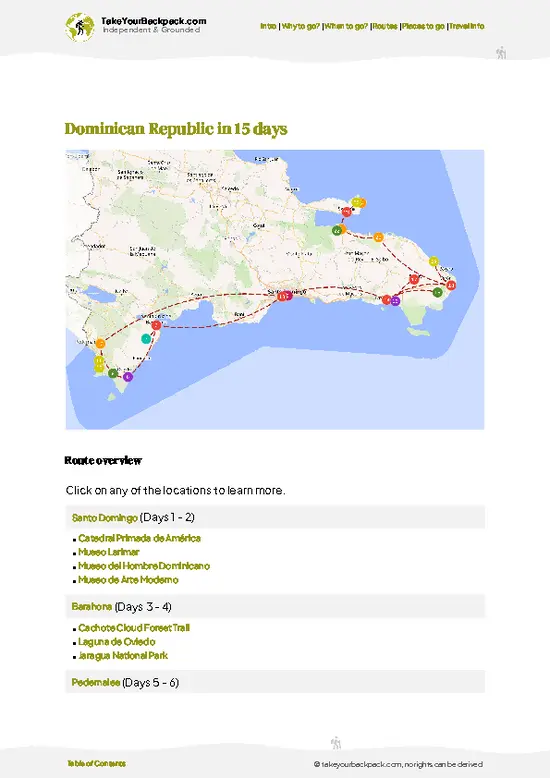
example page 0 from our offline Travel Guide for Dominican Republic
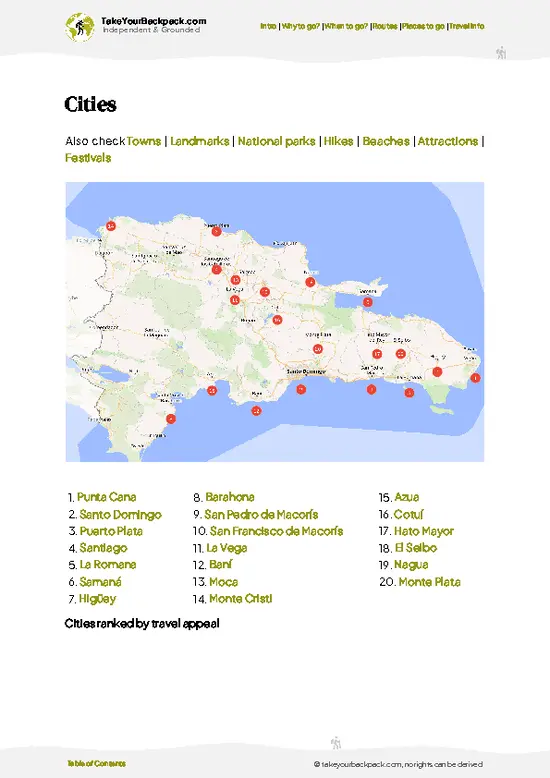
example page 1 from our offline Travel Guide for Dominican Republic
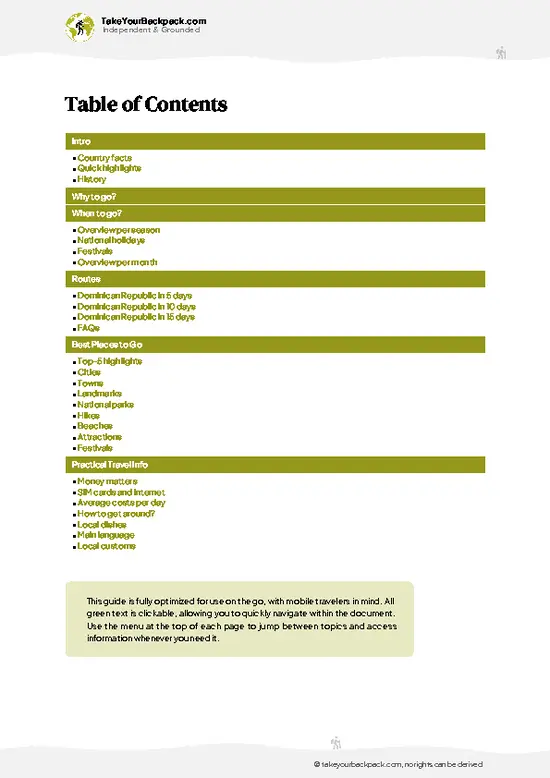
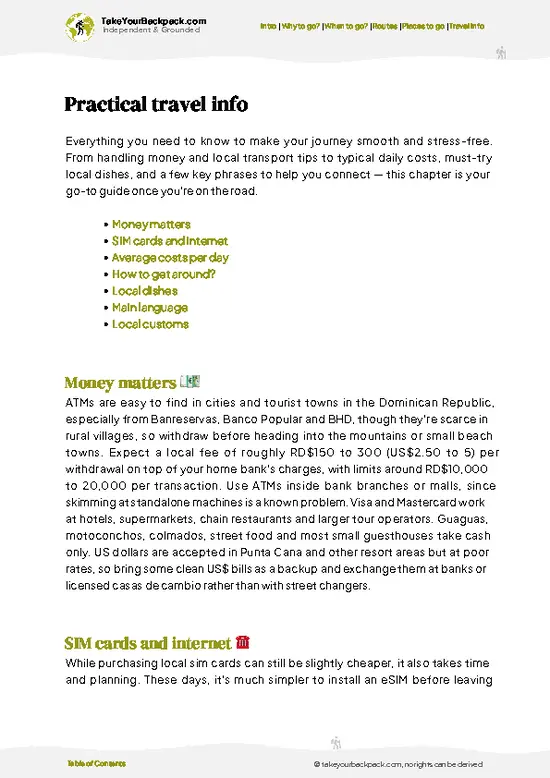
example page 2 from our offline Travel Guide for Dominican Republic
example page 3 from our offline Travel Guide for Dominican Republic
example page 4 from our offline Travel Guide for Dominican Republic
example page 5 from our offline Travel Guide for Dominican Republic
example page 6 from our offline Travel Guide for Dominican Republic
example page 7 from our offline Travel Guide for Dominican Republic
Loading the map 🌍
CLICK TO FILTER
cities
towns
landmarks
national parks
hikes
beaches
attractions
festivals
SHOW COUNTRY’S BESTSHOW ALL

✨ Why go?
Ranked #7 town in Dominican Republic
Why Río San Juan should be on your travel list

Río San Juan works for travelers who like their coast unpolished. The draw is the Laguna Gri-Gri mangrove channel, where a wooden boat glides under roots to the open sea, and the nearby Playa Caletón, where lava-rock pools fill with clear water at the right tide. Both sit minutes from the town center, so you spend little time on logistics and more on swimming. Most people stay one night, two if they add the beaches toward Playa Grande. Guesthouses are small and family-run, and fried fish with tostones on the waterfront costs very little. Evenings are quiet, with domino tables and music from open doorways, so this suits slow travelers, couples and solo travelers who are happy to make conversation with owners and boat captains rather than a hostel crowd. Skip it if you need nightlife or a packed sightseeing list.

💡 HighlightsTop highlights of Río San Juan

  1. Laguna Gri-Gri: The town’s signature outing is a boat ride through a mangrove lagoon, with herons and pelicans overhead and roots tangling at the waterline. Boats leave from the dock at the edge of town and run about 1 to 1.5 hours. Expect roughly US$10 to 15 per person, more for a private boat. Go in the morning, when the water is calm and the light is soft.
  2. Cueva de las Golondrinas: A sea cave on the lagoon tour where swallows swirl overhead. Your boat captain noses in close, and the echo of wings is the show. It is usually included in the lagoon ticket and takes 15 to 20 minutes. Late morning and afternoon suit it best.
  3. Playa Caletón: Natural rock pools by the Atlantic, sheltered enough for a swim when the sea is calm. Entry is free or a small tip to a caretaker, and you can spend 1 to 2
… read more 👉
  1. Laguna Gri-Gri: The town’s signature outing is a boat ride through a mangrove lagoon, with herons and pelicans overhead and roots tangling at the waterline. Boats leave from the dock at the edge of town and run about 1 to 1.5 hours. Expect roughly US$10 to 15 per person, more for a private boat. Go in the morning, when the water is calm and the light is soft.
  2. Cueva de las Golondrinas: A sea cave on the lagoon tour where swallows swirl overhead. Your boat captain noses in close, and the echo of wings is the show. It is usually included in the lagoon ticket and takes 15 to 20 minutes. Late morning and afternoon suit it best.
  3. Playa Caletón: Natural rock pools by the Atlantic, sheltered enough for a swim when the sea is calm. Entry is free or a small tip to a caretaker, and you can spend 1 to 2 hours here. Midmorning on a calm day is best, and shoes with grip help on the wet rock.
  4. Malecón de Río San Juan: The short seafront promenade, where fishing boats pull in and locals gather to talk at sunset. It is free and takes 30 to 45 minutes. Late afternoon is best, with a fried fish plate in a nearby open-air restaurant.
  5. Parque Central: The shaded main square and its church, the place to watch town life: schoolkids, motorbikes, vendors selling fruit. It is free and 20 to 30 minutes is plenty. Go early evening, when benches fill.
Río San Juan also makes a base for day trips to Playa Grande, Laguna Dudú, the town of Cabrera and the beaches around Nagua. The whole list fits comfortably into one relaxed day, or a day and a half if you linger in the pools.
Spotted a mistake or missing something? Contact us.

Things to do near Río San Juan

Ratings based on Tripadvisor reviews. When you book through this link, you support our work at no extra cost to you.

🏘️ NeighborhoodsWhere things are and how it's laid out

Río San Juan is small enough that you can see all of it before your coffee goes cold, so the useful question is which stretch suits your mood.
  • Town center and Parque Central: A tidy grid of low concrete houses, colmados and motoconcho stands around the main square. Everything is a few minutes on foot, and the reward is a plate of fried fish or chicharrón with tostones eaten at a plastic table while the evening crowd gathers.
  • The seafront and Playa Grande side: Head toward the coast and the air turns salty and the roads turn bumpy. Walking is possible but hot, so most people hop on a motoconcho. You end up at open stretches of sand and cliffs, with the Atlantic doing its dramatic best.
  • Laguna Gri-Gri and the river mouth: The mangrove lagoon sits just outside town, a short ride away. Boat guides
… read more 👉
Río San Juan is small enough that you can see all of it before your coffee goes cold, so the useful question is which stretch suits your mood.
  • Town center and Parque Central: A tidy grid of low concrete houses, colmados and motoconcho stands around the main square. Everything is a few minutes on foot, and the reward is a plate of fried fish or chicharrón with tostones eaten at a plastic table while the evening crowd gathers.
  • The seafront and Playa Grande side: Head toward the coast and the air turns salty and the roads turn bumpy. Walking is possible but hot, so most people hop on a motoconcho. You end up at open stretches of sand and cliffs, with the Atlantic doing its dramatic best.
  • Laguna Gri-Gri and the river mouth: The mangrove lagoon sits just outside town, a short ride away. Boat guides hover patiently, and the payoff is a slow paddle through mangrove tunnels with herons overhead and a cold Presidente afterward.
  • Nightlife strip: Nightlife here means a few bars with speakers set to heroic volume, bachata and dembow trading places. It is lively on weekends, sleepy midweek, and you get a front-row seat to how locals unwind, no dress code involved.

⌛️ 1 daySeeing the highlights in 24 hours

A water-and-beach day, easy on the legs and heavy on salt air.

8:00 AM, Parque Central: Start with coffee and a fried-egg breakfast at a cafeteria near the square. Watch the town wake up: school uniforms, motorbikes, vendors setting up. It is a gentle warm-up before the boats.

9:30 AM, Laguna Gri-Gri dock: Walk or take a short mototaxi ride to the dock and bargain for a boat. Morning water is calm and the mangrove channel is quiet. Ask the captain to stop in the shade of the roots for photos.

10:45 AM, Cueva de las Golondrinas: The boat continues to the swallow cave. Sit still for a few minutes and listen to the echo, then ride out to the sea mouth of the lagoon.

12:00 PM, Playa Caletón: Get dropped here or head over by mototaxi. Wade into the rock pools while the tide is gentle, and keep your … read more 👉
A water-and-beach day, easy on the legs and heavy on salt air.

8:00 AM, Parque Central: Start with coffee and a fried-egg breakfast at a cafeteria near the square. Watch the town wake up: school uniforms, motorbikes, vendors setting up. It is a gentle warm-up before the boats.

9:30 AM, Laguna Gri-Gri dock: Walk or take a short mototaxi ride to the dock and bargain for a boat. Morning water is calm and the mangrove channel is quiet. Ask the captain to stop in the shade of the roots for photos.

10:45 AM, Cueva de las Golondrinas: The boat continues to the swallow cave. Sit still for a few minutes and listen to the echo, then ride out to the sea mouth of the lagoon.

12:00 PM, Playa Caletón: Get dropped here or head over by mototaxi. Wade into the rock pools while the tide is gentle, and keep your shoes on for the slick stones.

2:00 PM, Waterfront fish lunch: Take a seat at a seaside restaurant for fried fish, tostones and a cold drink. Lunches stretch long here, and that is the point.

4:00 PM, Fishermen’s landing, off the beaten path: Wander past the main tourist stretch to where small boats are hauled in and nets are mended. Locals will chat if you smile, and you will see where your dinner came from.

6:00 PM, Malecón: End on the promenade for the sunset, then grab a drink at a colmado and watch the town settle in.

🌤️ When to go?Weather, crowds, and seasonal trade-offs

Late December to April gives the driest, most walkable weather on this stretch of the north coast.
  • Dry Season (December to April): Days run 26 to 30°C (79 to 86°F), nights 19 to 22°C (66 to 72°F), with sunshine and calmer seas for Laguna Gri-Gri and the beaches. Daylight lasts roughly 11 to 13 hours. Prices peak around Christmas and Semana Santa.
  • Shoulder Months (May to June, November): Warm at 28 to 32°C (82 to 90°F) with short afternoon showers. Crowds thin and rooms get cheaper.
  • Wet and Hurricane Season (July to October): Humid, 30 to 33°C (86 to 91°F), with heavy downpours and a real chance of storms. Roads can flood, but you will have the beaches nearly to yourself.
Book ahead only for Carnival in February and Holy Week, when Dominicans fill every bed.

source: climatestotravel.comJANJanuary: excellent for travelingFEBFebruary: excellent for travelingMARMarch: excellent for travelingAPRApril: highly recommended for travelingMAYMay: fair for travelingJUNJune: fair for travelingJULJuly: fair for travelingAUGAugust: fair for travelingSEPSeptember: fair for travelingOCTOctober: fair for travelingNOVNovember: good for travelingDECDecember: highly recommended for traveling
when-to-go

✈️ The backpacker research shortcutDominican Republic Travel Guide

An offline-friendly backpacking guide with optimized travel routes, ranked highlights, transport advice, and the best areas to stay.
example page 0 from our offline Travel Guide for Dominican Republic
example page 1 from our offline Travel Guide for Dominican Republic
example page 2 from our offline Travel Guide for Dominican Republic
example page 3 from our offline Travel Guide for Dominican Republic
example page 4 from our offline Travel Guide for Dominican Republic
example page 5 from our offline Travel Guide for Dominican Republic
example page 6 from our offline Travel Guide for Dominican Republic
example page 7 from our offline Travel Guide for Dominican Republic
The digital guide (336 pages) contains:
✅ 112 highlights, ranked by travel appeal
✅ Optimized 5, 10 & 15-day travel routes
✅ Cities, national parks, landmarks, beaches
✅ How to get around
✅ Offline-friendly for travel without Wi-Fi
👉 Click to see all 30+ guide features

📅 Plan smarter in minutes, not weeks
✅ Month by month travel advice
✅ Festivals & national holidays
✅ Budget expectations

🗺️ Go to the right places, skip the overrated ones
✅ Honest pros & cons of destinations
✅ Top hikes, parks & viewpoints
✅ Lesser-known places most travelers miss
✅ Clear “worth it vs skip it” guidance

🛏️ Travel smoothly without rookie mistakes
✅ Best areas to stay
✅ Transport systems explained simply
✅ Common scams & safety advice
✅ SIM cards, money & practical tips

🌍 Understand the country, not just visit it
✅ Culture & traditions
✅ 52 Essential phrases & customs
✅ Festivals worth planning around
✅ Traveler-friendly historical context
✅ Insights that make places more meaningful

📱 Built for real travel conditions
✅ Fully downloadable PDF
✅ Works completely offline
✅ Optimized for phone use
✅ Useful in remote areas & buses
✅ Everything in one place
Stop searching, start planning
Get instant access to your full guide. 30‑day money-back guarantee.
+ Add another guide for just

By proceeding you agree to our terms.
Sent to your inbox immediately after payment • 100% Secure Checkout
Best Backpacking Travel Advisor 2025 tourism awardBest Backpacking
Travel Advisor
2025
What others say about Take Your Backpack Guides:
⭐⭐⭐⭐⭐
Fantastic, amazing amount of information!
⭐⭐⭐⭐⭐
My goodness this is amazing, it's what I've been looking for hats off too you!
⭐⭐⭐⭐⭐
I think this is absolutely BRILLIANT
⭐⭐⭐⭐
Very complete and informative. It's still missing places, but I gotta to commend you
⭐⭐⭐⭐⭐
This is truly amazing, thank you, can't wait to explore it with my kids!
⭐⭐⭐⭐⭐
Awesome resource, thank you!
⭐⭐⭐⭐⭐
This is amazing! Can't wait to explore the ones I haven't seen
⭐⭐⭐⭐
I love this! Well done, great idea.
⭐⭐⭐⭐⭐
Thanks for taking the time to make this gem!
⭐⭐⭐⭐⭐
This might be the best website I've ever seen.
⭐⭐⭐⭐⭐
Congratulations, and thank you so much for your work; it's incredibly valuable.
⭐⭐⭐⭐
In all seriousness I think you did a great job pointing out the important spots
⭐⭐⭐⭐⭐
10/10 very good
⭐⭐⭐⭐⭐
As someone who's only just starting to visit regularly this is awesome, thank you.
⭐⭐⭐⭐
Thank you very much! I'm going to visit my dad, it's going to be very useful!
⭐⭐⭐⭐⭐
This is really cool! We'll be travelling for the first time and this definitely come in handy.
⭐⭐⭐⭐⭐
You are now our minister of culture, congratulations 👨‍💼
⭐⭐⭐⭐⭐
Just wanted to tell you that this is a pearl! Going to follow your recommendations.
⭐⭐⭐⭐⭐
This is so cool. I'll definitely be using the resource for my travels soon.
⭐⭐⭐⭐⭐
This is very impressive! Good work.
⭐⭐⭐⭐⭐
This is an amazing and informative site. Very well done!

🛏️ Where to stay?Best areas and accommodation options

The town center around Parque Central is the best base for a budget bed, with a handful of small guesthouses and family-run rooms at roughly US$15 to 35 a night. True dorm hostels are scarce here, so private rooms are the norm and splitting between two keeps costs low. Streets stay active until late evening, shops and eateries are on foot, and motoconcho stands sit right on the square, so getting around at night is easy. Expect some noise from bars and early roosters in equal measure.
The second option is the coastal side toward Playa Grande and Gri-Gri, where rooms and small eco-style stays run … read more 👉
The town center around Parque Central is the best base for a budget bed, with a handful of small guesthouses and family-run rooms at roughly US$15 to 35 a night. True dorm hostels are scarce here, so private rooms are the norm and splitting between two keeps costs low. Streets stay active until late evening, shops and eateries are on foot, and motoconcho stands sit right on the square, so getting around at night is easy. Expect some noise from bars and early roosters in equal measure.
The second option is the coastal side toward Playa Grande and Gri-Gri, where rooms and small eco-style stays run US$25 to 50. It is quieter and breezier, but dark after sunset and a motoconcho ride from restaurants, so it suits travelers who like to settle in. Transport links are thinner there, with fewer rides after about 9 pm.

🚌 Getting aroundHow to get around Río San Juan

Río San Juan has no big terminal, so buses from Puerto Plata, Sosúa or Santiago drop you along the main road, and a motoconcho gets you to the central square in about five minutes for US$0.50 to 1. The town is flat and compact, traffic is mostly motorbikes, and public transport is informal but frequent in daylight.
  • Walking: Free and perfectly fine within the center. Midday heat is the only enemy, and you will cover the main streets in 15 minutes, ending at a corner colmado with a cold drink.
  • Motoconcho: The default taxi. Rides in town cost US$0.50 to 1.50, and to Playa Grande or Gri-Gri around US$2 to 4. Agree the price first, hold on, and enjoy a ride with a view of everyone’s business.
  • Guagua and minibuses: Shared vans and buses run along the coastal highway toward Cabrera, Nagua and Puerto
… read more 👉
Río San Juan has no big terminal, so buses from Puerto Plata, Sosúa or Santiago drop you along the main road, and a motoconcho gets you to the central square in about five minutes for US$0.50 to 1. The town is flat and compact, traffic is mostly motorbikes, and public transport is informal but frequent in daylight.
  • Walking: Free and perfectly fine within the center. Midday heat is the only enemy, and you will cover the main streets in 15 minutes, ending at a corner colmado with a cold drink.
  • Motoconcho: The default taxi. Rides in town cost US$0.50 to 1.50, and to Playa Grande or Gri-Gri around US$2 to 4. Agree the price first, hold on, and enjoy a ride with a view of everyone’s business.
  • Guagua and minibuses: Shared vans and buses run along the coastal highway toward Cabrera, Nagua and Puerto Plata for roughly US$1.50 to 4. They leave when full, run from early morning to late afternoon, and the music is free.
  • Private taxi or hired driver: Useful for beaches or night returns, about US$10 to 25 per trip. It is the comfortable option and it saves you from a wet-season soaking.

👛 Costs (as of 20 October 2026)Typical daily expenses

Río San Juan costs about US$49 a day for a backpacker in high season, which keeps you comfortable without cutting every corner.
CategoryBudget RangeLocal Reality
Dorm accommodationUS$15 to 25Dorms are rare, so a simple private room is typical. Costs drop if two share. High-season figure used: US$20.
MealsUS$10 to 18Fried fish, rice and beans, or chicken at local comedores cost US$4 to 7, with fresh juice and street snacks filling the gaps. Used: US$13.
Local transportUS$2 to 6Motoconcho rides at US$0.50 to 2 and the odd minibus along the coast. Used: US$4.
Basic activities/entry feesUS$5 to 15Lagoon boat trip around US$8 to 15 in a group, while beaches are free. Used: US$8.
MiscellaneousUS$3 to 6Water, a Presidente beer at US$1.50 to 2.50, sunscreen and tips. Used: US$4.
Total Daily BudgetUS$35 to
… read more 👉
Río San Juan costs about US$49 a day for a backpacker in high season, which keeps you comfortable without cutting every corner.
CategoryBudget RangeLocal Reality
Dorm accommodationUS$15 to 25Dorms are rare, so a simple private room is typical. Costs drop if two share. High-season figure used: US$20.
MealsUS$10 to 18Fried fish, rice and beans, or chicken at local comedores cost US$4 to 7, with fresh juice and street snacks filling the gaps. Used: US$13.
Local transportUS$2 to 6Motoconcho rides at US$0.50 to 2 and the odd minibus along the coast. Used: US$4.
Basic activities/entry feesUS$5 to 15Lagoon boat trip around US$8 to 15 in a group, while beaches are free. Used: US$8.
MiscellaneousUS$3 to 6Water, a Presidente beer at US$1.50 to 2.50, sunscreen and tips. Used: US$4.
Total Daily BudgetUS$35 to 70High-season estimate: US$49
Eat your biggest meal at lunch, when comedores serve a set plate for a few dollars less than dinner menus.
⚠️ Prices can change and everyone travels differently, so take this as a rough guide. Hope it helps you plan your adventure!

🚌 Day tripsWhere to go beyond the main area

Río San Juan works well as a base because the coast is full of sights within an hour or so, and the main road carries frequent minibuses until late afternoon.Laguna Gri-Gri: A mangrove lagoon just outside town, explored by boat for about US$8 to 15 per person in a shared group, 45 minutes to an hour. Go in the morning for birds and calmer water. First-timers often skip a hat, then regret it on the open stretches.

Playa Grande: A long beach framed by cliffs, about 15 minutes by motoconcho (US$2 to 4 each way). Dry months give the best swimming, but watch the strong currents and stay near the shore. Bring food, since options are limited.
👉 Explore Playa Grande
Cabrera: A coastal town reached by minibus in roughly 30 to 45 minutes for about US$2 to 3. It has the Dudu Blue Lagoon and ocean pools … read more 👉
Río San Juan works well as a base because the coast is full of sights within an hour or so, and the main road carries frequent minibuses until late afternoon.Laguna Gri-Gri: A mangrove lagoon just outside town, explored by boat for about US$8 to 15 per person in a shared group, 45 minutes to an hour. Go in the morning for birds and calmer water. First-timers often skip a hat, then regret it on the open stretches.

Playa Grande: A long beach framed by cliffs, about 15 minutes by motoconcho (US$2 to 4 each way). Dry months give the best swimming, but watch the strong currents and stay near the shore. Bring food, since options are limited.
👉 Explore Playa Grande
Cabrera: A coastal town reached by minibus in roughly 30 to 45 minutes for about US$2 to 3. It has the Dudu Blue Lagoon and ocean pools nearby, and a total day cost of US$15 to 25. Go on weekdays to avoid crowds.

Sosúa: A beach town with a long sandy bay and snorkeling, about 1 to 1.5 hours by guagua and bus for US$4 to 7. It is easy to do in a day, and the last ride back leaves in late afternoon, so check times.
👉 Explore Sosúa

🛡️ SafetyStaying Safe: What Travelers Should Know

Río San Juan is broadly relaxed, and most problems are petty. Keep your phone and wallet out of sight in crowded spots and on the back of motoconchos, where bags can be grabbed by passing riders. After dark, take a motoconcho or taxi rather than walking the unlit road to the beach or lagoon, and solo travelers, women especially, should tell someone where they are headed. Agree on a price before any ride or boat trip, because rates for foreigners can drift upward. Persistent touts at the lagoon are annoying but harmless, and a polite no works. Currents at Playa Grande are strong, so swim near others and skip drinking before going in. Carry small bills and a photo of your passport.

FAQCommon questions from travelers

Río San Juan is worth a stop of a day or two rather than a pure stopover, mainly for the mangrove boat ride at Laguna Gri-Gri (about US$8 to 15) and the cliff-backed sands of Playa Grande. It is quiet, cheap and low on crowds, with beds from roughly US$15 to 35. If you want nightlife or big resorts, the nearby towns of Sosúa and Cabrera fit better.
Two days is enough to cover Río San Juan, with one for the lagoon and the town and one for Playa Grande and a nearby beach. Add a third day for Cabrera, which is about 30 to 45 minutes by minibus. Longer stays suit those who simply want a slow coastal base.
Río San Juan can be visited as a day trip from Puerto Plata or Sosúa, since the road takes roughly 1.5 to 2 hours each way by guagua and bus for US$4 to 8. That leaves enough time for a lagoon boat trip and a beach lunch if you leave early. The last minibuses back go in late afternoon, so staying one night is more relaxed.
⚠️ Things can change over time, so always validate details locally before you go.

Other Dominican towns near Río San Juan

Explore more nearby:

  • Cabarete—Afternoon wind, kite launches, lagoon paddling, beachfront bars| 37 km away
  • Salcedo—Mirabal sisters, Cibao Valley, fried cheese, market mornings| 46 km away
  • Sosúa—Calm crescent bay, reef snorkeling, Jewish settler museum, Charamicos fish shacks| 48 km away

💡 Not sure where to go next?
Create a personalized itinerary for Dominican Republic including Río San Juan and the places that fit your trip.

Generate my itinerary

👉 Discover all towns

Or checkout all Dominican Republic has to offer (think cities, towns, villages, national parks, hikes, beaches, festivals)
Country photo of Dominican Republic

We 💚 feedbackWhat to keep in mind

Two nights is the right length for Río San Juan: one day for the lagoon and cave, one for the beaches and doing nothing. Anything shorter feels like a transit stop, anything longer needs a plan. I would bring cash and a pair of water shoes, and ask your boat captain about the tide before heading to the rock pools.

✍️ Help improve this page!
The information on this page is based on in-depth research, insights shared by experienced travelers, and feedback from the local travel community in Dominican Republic. While every effort is made to keep the information accurate and current, conditions can change — so if you spot anything incorrect or outdated, please get in touch.


🙋‍♂️ Give feedback

👋 Meet the founderWho’s Behind Take Your Backpack?

Johan, backpacker and founder of TakeYourBackpackHi, I’m Johan (Netherlands 🇳🇱), the creator of TakeYourBackpack. Over the past 3 decades, I’ve backpacked through 90+ countries across six continents, gaining extensive experience with independent travel, long-term trips, and overland routes.

This site is built on a combination of firsthand travel experience and carefully curated insights from other backpackers. Many guides are based on places I’ve personally visited, while others bring together tips, observations, and practical advice shared by trusted travelers I’ve met along the way.

The goal is to provide realistic, experience-driven guidance — not generic itineraries — so you can explore destinations with better context, clearer expectations, and more confidence.