

×

Ecuador🇪🇨 | landmarksIngapircaElliptical Inca temple, Cañari foundations, sun-aligned doorway, grassy ridge | things to do and best time to go

Explore Pailón del DiabloExplore Mitad del Mundo

Backpacking in Ingapirca
👀 For curious travelersunique site ranked #9
By Johan Kruseman 🇳🇱 | Updated October 19, 2026

Ingapirca is famous for the Temple of the Sun, an elliptical Inca stone structure with seamless masonry that sits on a grassy ridge. Just as important, and easy to overlook, is that the Cañari built here first, so you can read two cultures in one walk. You will find Ingapirca in the southern highlands of Ecuador, in Cañar province, north of Cuenca. The site is compact, the paths are easy, and the stonework rewards close looking. I always hire a guide at the gate and ask them to show the sun-aligned doorway, because the explanation turns gray rocks into a story. Then I circle the oval wall slowly, running a hand along the tight joints. Carry cash for the entrance, and book the guide at the ticket desk before you wander off.

Discover everything you want to know in the 📖 Ecuador Travel Guide.
Best time to go: June - September
Daily cost: US$38 to 45
Duration: 1 day
Distance: 12 kilometers
Total ascent: 600 meters


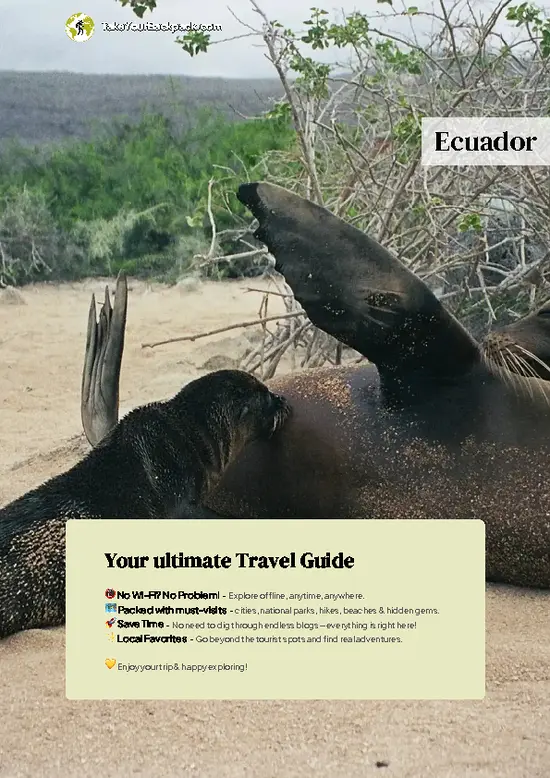
example page 0 from our offline Travel Guide for Ecuador
example page 1 from our offline Travel Guide for Ecuador
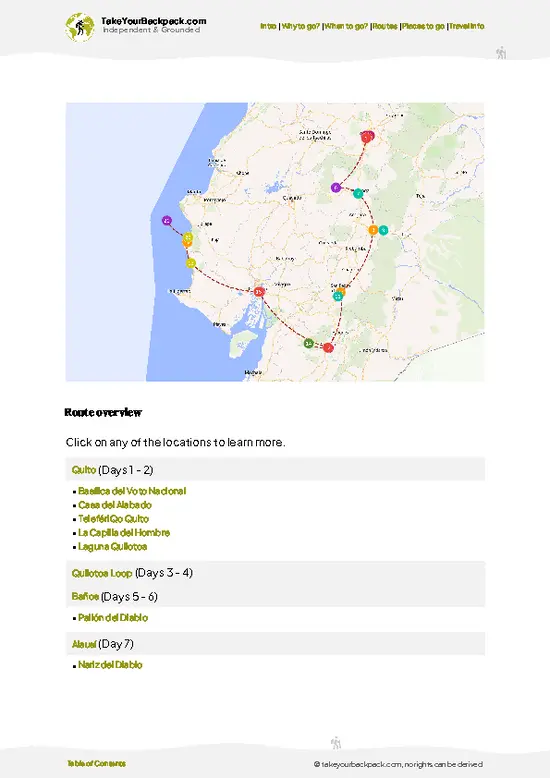
example page 2 from our offline Travel Guide for Ecuador
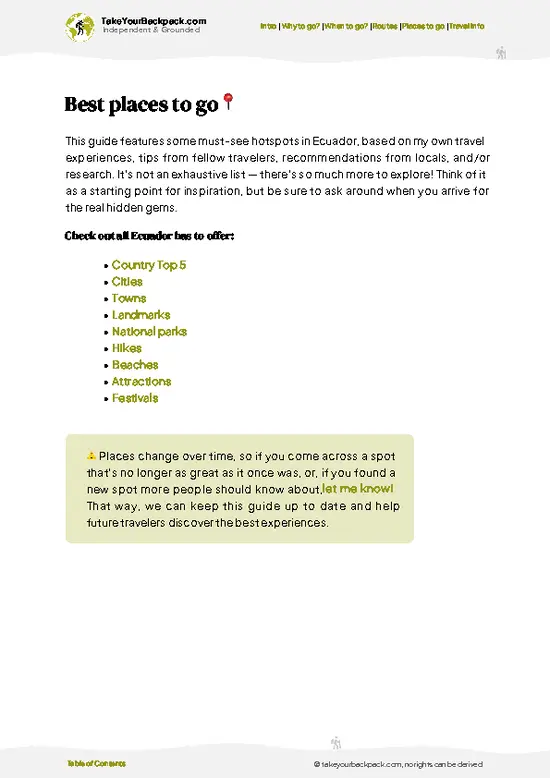
example page 3 from our offline Travel Guide for Ecuador
example page 4 from our offline Travel Guide for Ecuador
example page 5 from our offline Travel Guide for Ecuador
example page 6 from our offline Travel Guide for Ecuador
example page 7 from our offline Travel Guide for Ecuador
Loading the map 🌍
CLICK TO FILTER
cities
towns
landmarks
national parks
hikes
beaches
attractions
festivals
SHOW COUNTRY’S BESTSHOW ALL

✨ Why go?
Ranked #9 unique site in Ecuador
What makes this unique site worth visiting

Ingapirca is the largest known Inca site in Ecuador, and that alone makes the trip worthwhile for anyone tracing the empire north from Peru. Few other places show how the Inca layered their rule over a local culture. Here the Cañari ceremonial ground and the Inca Temple of the Sun sit within steps of each other, so one short loop covers two civilizations. The ruins are small enough to see in a morning, which makes Ingapirca easy to fit between bigger stops. It slots well on the road between Cuenca and the Andean highlands further north, and the village around it is a calm place to eat a hot lunch before moving on. If you care about the Inca Trail network, a nearby walking route from Achupallas gives you a taste of the old road.

💡 HighlightsEssential experiences to have while visiting Ingapirca

  1. Temple of the Sun (El Castillo): the elliptical Inca building the site is known for, built of tightly fitted stone with trapezoid doorways. Its shape is rare in Inca architecture.
  2. Cañari Ruins: the earlier foundations, where the Cañari honored the moon, are visible beside the Inca work and show how the two cultures overlapped.
  3. Ingachungana: a carved rock outcrop with channels and seats, often explained as a ritual or astronomical spot, and worth a pause with a guide.
  4. Face of the Inca: a natural rock formation on a nearby hillside that resembles a human profile, a short walk from the main complex.
  5. Site Museum: it displays ceramics, tools and burial finds from the Cañari and Inca periods and gives context before you walk the ruins.
  6. Cañari Garden and Medicinal Plants Trail: a short path with native
… read more 👉
  1. Temple of the Sun (El Castillo): the elliptical Inca building the site is known for, built of tightly fitted stone with trapezoid doorways. Its shape is rare in Inca architecture.
  2. Cañari Ruins: the earlier foundations, where the Cañari honored the moon, are visible beside the Inca work and show how the two cultures overlapped.
  3. Ingachungana: a carved rock outcrop with channels and seats, often explained as a ritual or astronomical spot, and worth a pause with a guide.
  4. Face of the Inca: a natural rock formation on a nearby hillside that resembles a human profile, a short walk from the main complex.
  5. Site Museum: it displays ceramics, tools and burial finds from the Cañari and Inca periods and gives context before you walk the ruins.
  6. Cañari Garden and Medicinal Plants Trail: a short path with native plants used in traditional healing, handy for a quiet extra loop.
  7. Inca Trail Segment: a stretch of the old royal road, part of the Qhapaq Ñan network, which connects the site to wider Inca routes.
If time is short, skip the garden trail and go straight to the Temple of the Sun and the museum.
Spotted a mistake or missing something? Contact us.

Things to do near Ingapirca

Ratings based on Tripadvisor reviews. When you book through this link, you support our work at no extra cost to you.

🌤️ When to go?Choosing the right time of year

June to September is the driest stretch at Ingapirca, with the clearest views of the Inca Sun Temple and the surrounding highland ridges.
  • Dry Season (June to September): Days run roughly 14 to 20°C (57 to 68°F), nights drop to 3 to 7°C (37 to 45°F). Expect the busiest weekends, with Ecuadorian school groups and Cuenca day-trippers, and Inti Raymi around the June solstice.
  • Wet Season (October to May): Afternoon drizzle and fog are common, especially March to May. Temperatures sit around 10 to 18°C (50 to 64°F). Ruins are quiet, though muddy paths slow the Inca Trail walk to Culebrillas.
  • Daylight: Light stays near twelve hours all year, and the site closes by late afternoon, so start mid-morning.
  • Prices: Lodging barely moves, but Cuenca beds rise around late June and festival weekends.
Bring a warm … read more 👉
June to September is the driest stretch at Ingapirca, with the clearest views of the Inca Sun Temple and the surrounding highland ridges.
  • Dry Season (June to September): Days run roughly 14 to 20°C (57 to 68°F), nights drop to 3 to 7°C (37 to 45°F). Expect the busiest weekends, with Ecuadorian school groups and Cuenca day-trippers, and Inti Raymi around the June solstice.
  • Wet Season (October to May): Afternoon drizzle and fog are common, especially March to May. Temperatures sit around 10 to 18°C (50 to 64°F). Ruins are quiet, though muddy paths slow the Inca Trail walk to Culebrillas.
  • Daylight: Light stays near twelve hours all year, and the site closes by late afternoon, so start mid-morning.
  • Prices: Lodging barely moves, but Cuenca beds rise around late June and festival weekends.
Bring a warm layer and rain shell in any month, since the site sits at about 3,100 m (10,170 ft).


source: climatestotravel.comJANJanuary: fair for travelingFEBFebruary: fair for travelingMARMarch: fair for travelingAPRApril: fair for travelingMAYMay: fair for travelingJUNJune: highly recommended for travelingJULJuly: excellent for travelingAUGAugust: excellent for travelingSEPSeptember: highly recommended for travelingOCTOctober: fair for travelingNOVNovember: fair for travelingDECDecember: fair for traveling
when-to-go

✈️ The backpacker research shortcutEcuador Travel Guide

An offline-friendly backpacking guide with optimized travel routes, ranked highlights, transport advice, and the best areas to stay.
example page 0 from our offline Travel Guide for Ecuador
example page 1 from our offline Travel Guide for Ecuador
example page 2 from our offline Travel Guide for Ecuador
example page 3 from our offline Travel Guide for Ecuador
example page 4 from our offline Travel Guide for Ecuador
example page 5 from our offline Travel Guide for Ecuador
example page 6 from our offline Travel Guide for Ecuador
example page 7 from our offline Travel Guide for Ecuador
The digital guide (274 pages) contains:
✅ 87 highlights, ranked by travel appeal
✅ Optimized 5, 10 & 15-day travel routes
✅ Cities, national parks, landmarks, beaches
✅ How to get around
✅ Offline-friendly for travel without Wi-Fi
👉 Click to see all 30+ guide features

📅 Plan smarter in minutes, not weeks
✅ Month by month travel advice
✅ Festivals & national holidays
✅ Budget expectations

🗺️ Go to the right places, skip the overrated ones
✅ Honest pros & cons of destinations
✅ Top hikes, parks & viewpoints
✅ Lesser-known places most travelers miss
✅ Clear “worth it vs skip it” guidance

🛏️ Travel smoothly without rookie mistakes
✅ Best areas to stay
✅ Transport systems explained simply
✅ Common scams & safety advice
✅ SIM cards, money & practical tips

🌍 Understand the country, not just visit it
✅ Culture & traditions
✅ 52 Essential phrases & customs
✅ Festivals worth planning around
✅ Traveler-friendly historical context
✅ Insights that make places more meaningful

📱 Built for real travel conditions
✅ Fully downloadable PDF
✅ Works completely offline
✅ Optimized for phone use
✅ Useful in remote areas & buses
✅ Everything in one place
Stop searching, start planning
Get instant access to your full guide. 30‑day money-back guarantee.
+ Add another guide for just

By proceeding you agree to our terms.
Sent to your inbox immediately after payment • 100% Secure Checkout
Best Backpacking Travel Advisor 2025 tourism awardBest Backpacking
Travel Advisor
2025
What others say about Take Your Backpack Guides:
⭐⭐⭐⭐⭐
Fantastic, amazing amount of information!
⭐⭐⭐⭐⭐
My goodness this is amazing, it's what I've been looking for hats off too you!
⭐⭐⭐⭐⭐
I think this is absolutely BRILLIANT
⭐⭐⭐⭐
Very complete and informative. It's still missing places, but I gotta to commend you
⭐⭐⭐⭐⭐
This is truly amazing, thank you, can't wait to explore it with my kids!
⭐⭐⭐⭐⭐
Awesome resource, thank you!
⭐⭐⭐⭐⭐
This is amazing! Can't wait to explore the ones I haven't seen
⭐⭐⭐⭐
I love this! Well done, great idea.
⭐⭐⭐⭐⭐
Thanks for taking the time to make this gem!
⭐⭐⭐⭐⭐
This might be the best website I've ever seen.
⭐⭐⭐⭐⭐
Congratulations, and thank you so much for your work; it's incredibly valuable.
⭐⭐⭐⭐
In all seriousness I think you did a great job pointing out the important spots
⭐⭐⭐⭐⭐
10/10 very good
⭐⭐⭐⭐⭐
As someone who's only just starting to visit regularly this is awesome, thank you.
⭐⭐⭐⭐
Thank you very much! I'm going to visit my dad, it's going to be very useful!
⭐⭐⭐⭐⭐
This is really cool! We'll be travelling for the first time and this definitely come in handy.
⭐⭐⭐⭐⭐
You are now our minister of culture, congratulations 👨‍💼
⭐⭐⭐⭐⭐
Just wanted to tell you that this is a pearl! Going to follow your recommendations.
⭐⭐⭐⭐⭐
This is so cool. I'll definitely be using the resource for my travels soon.
⭐⭐⭐⭐⭐
This is very impressive! Good work.
⭐⭐⭐⭐⭐
This is an amazing and informative site. Very well done!

🛏️ Where to stay?Choosing the right base

Stay in Cuenca if you want a social hostel scene, or in Ingapirca village if you want quiet and an early start at the ruins.
Cuenca, about two hours away by bus, is the base for most backpackers. The historic center has the densest cluster of dorms and guesthouses in southern Ecuador, plus cafes, cheap set lunches and plenty of other travelers to split taxis or tours with. It is safe to walk at night in the central streets. The El Batán and Calle Larga areas are livelier after dark.
Ingapirca village is tiny, with a handful of family guesthouses around the plaza, a few simple restaurants and almost … read more 👉
Stay in Cuenca if you want a social hostel scene, or in Ingapirca village if you want quiet and an early start at the ruins.
Cuenca, about two hours away by bus, is the base for most backpackers. The historic center has the densest cluster of dorms and guesthouses in southern Ecuador, plus cafes, cheap set lunches and plenty of other travelers to split taxis or tours with. It is safe to walk at night in the central streets. The El Batán and Calle Larga areas are livelier after dark.
Ingapirca village is tiny, with a handful of family guesthouses around the plaza, a few simple restaurants and almost no nightlife. Sleeping here lets you reach the ruins when the gates open, before tour groups arrive, and gives you a cold, starry night. It suits solo travelers who like peace and want to hike toward Culebrillas the next morning.
Cañar, a short ride away, is a small market town with basic budget rooms and fewer foreigners.

👛 Costs (as of 19 October 2026)How expensive it really is

Expect to spend about US$38 to 45 per day at Ingapirca if you sleep in Cuenca and visit by public bus; the table totals US$41 for high season.
CategoryBudget RangeLocal Reality
Accommodation (high season)US$10 to 18Cuenca dorm or basic private room; village guesthouses run US$12 to 20. Low season is a few dollars less.
Site EntryUS$2 to 6Ticket for the ruins and museum; guided tours are usually included in the price.
TransportUS$6 to 10Round trip bus from Cuenca costs about US$3 to 5 each way, often with a change at Cañar.
FoodUS$8 to 12Set lunch (almuerzo) costs US$3 to 5; dinner at a simple cafe about US$5 to 7.
ExtrasUS$2 to 4Snacks, water, a hot drink, and small tips. Travelers pay in US dollars.
Total Daily BudgetUS$38 to 45Roughly US$41 using midrange figures with the high season bed.
⚠️ Prices can change and everyone travels differently, so take this as a rough guide. Hope it helps you plan your adventure!

🛡️ SafetyScams, Hazards, and Annoyances

Ingapirca is an easy visit on short paths around a compact site. Expect variable weather; the sun can blaze, then clouds roll in, so layers are key. The trail itself is well-marked, but some sections are steep and rocky. Watch your footing, especially after rain, since mud can turn a solid path into a slip-and-slide.

Altitude can sneak up on you, so pace yourself. Take breaks to soak in the views of the Andean landscape; they’re worth every step. Wildlife is generally shy, but keep an eye out for the occasional condor soaring overhead. Respect their space and enjoy the moment.

Pack enough water and snacks. Timing is crucial—start early to avoid the afternoon heat and catch the ruins in the soft morning light.

FAQFrequently asked questions about Ingapirca

Ingapirca is Ecuador’s largest known Inca site, built in the late 15th century on top of a Cañari ceremonial place in Cañar province. Its centerpiece is the elliptical Sun Temple, made of tightly fitted stone blocks without mortar. A small site museum and the ruins can be seen on one ticket of roughly US$2 to 6, and the area sits at about 3,100 m.
Plan on 2 to 3 hours for the ruins, museum and a guided walk, which fits comfortably in a half day. If you add the Inca Trail hike to Culebrillas lake, allow a full day, about 6 to 8 hours round trip. Staying overnight in the village lets you reach the gate before the tour groups arrive.
Ingapirca lies roughly 80 km north of Cuenca, and a bus takes about 2 to 2.5 hours for US$3 to 5. Buses usually run via Cañar, where you may need to change to a local bus for the final stretch. A private taxi from Cuenca costs about US$60 to 90 one way, and many agencies sell day tours for US$25 to 40.
⚠️ Things can change over time, so always validate details locally before you go.

Other Ecuadorian landmarks near Ingapirca

Explore more nearby:

  • Nariz del Diablo—Railway switchbacks, Alausí station, Sibambe turnaround, Chanchán gorge| 34 km away
  • Mirador Luz del Atardecer—Western sunset, layered ridges, farm patchwork, night sky| 94 km away
  • Pailón del Diablo—Pastaza plunge, tunnel window, gorge stairs, Baños waterfall road| 142 km away

💡 Not sure where to go next?
Create a personalized itinerary for Ecuador including Ingapirca and the places that fit your trip.

Generate my itinerary

👉 Discover all landmarks

Or checkout all Ecuador has to offer (think cities, towns, villages, national parks, hikes, beaches, festivals)
Country photo of Ecuador

We 💚 feedbackParting advice and final tips

Ingapirca pairs best with Cuenca and the road through the Andes: do the ruins in the morning, then continue to Alausí for the Devil’s Nose train. Expect a short visit rather than a full day. I would add the Achupallas hike if you have time.

✈️ When did I visit Ecuador?
Ecuador I visited during my half year trip through South and Central America back in 2003

✍️ Help improve this page!
The information on this page is based on my own backpacking experience in Ecuador, supplemented with up-to-date research and feedback from other travelers. Travel details can change, so if you notice anything outdated or incomplete, feel free to let me know.


🙋‍♂️ Give feedback

👋 Meet the founderWho’s Behind Take Your Backpack?

Johan, backpacker and founder of TakeYourBackpackHi, I’m Johan (Netherlands 🇳🇱), the creator of TakeYourBackpack. Over the past 3 decades, I’ve backpacked through 90+ countries across six continents, gaining extensive experience with independent travel, long-term trips, and overland routes.

This site is built on a combination of firsthand travel experience and carefully curated insights from other backpackers. Many guides are based on places I’ve personally visited, while others bring together tips, observations, and practical advice shared by trusted travelers I’ve met along the way.

The goal is to provide realistic, experience-driven guidance — not generic itineraries — so you can explore destinations with better context, clearer expectations, and more confidence.