
×

Ecuador🇪🇨 | landmarksLaguna Quilotoacrater lake, volcanic rim, Andean altitude | things to do and best time to go

Explore Isla de la PlataExplore Mirador Luz del Atardecer

Backpacking in Laguna Quilotoa
🏆 Top pickunique site ranked #1
By Johan Kruseman 🇳🇱 | Updated June 2, 2026

Your boots slide half a step on the dusty switchback, lungs burning in the thin air, while a donkey loaded with water jugs trudges past you like it’s a flat sidewalk. The wind tastes dry and metallic, and when you finally look up, the crater rim drops away into a bowl of impossible turquoise that looks fake even when you’re staring right at it. This is Laguna Quilotoa, high in the Ecuadorian Andes, a collapsed volcano turned acid-green lake a few hours from Latacunga on the Quilotoa Loop.

For backpackers, it’s both jaw-drop and reality check. The wow-factor is real; the first view from the rim hits harder than most “famous” lakes you’ve seen online. But it’s no secret anymore: day-trippers, tour vans, and selfie tripods cluster near the mirador, and prices around the rim are inflated for what you get. The hike down is easy, the hike up is a grind, and yes, people pay for horses when pride loses to altitude. Culturally, it’s still a Kichwa community first and a tourist spot second, which you feel in the language, the textiles, the quiet once you walk five minutes away from the main viewpoint. Photos are absurdly good, but the real magic is when the clouds roll in, the wind cuts through your jacket, and you realize you’re standing on the lip of a volcano that could swallow every bus tour in one gulp.

Discover everything you want to know in the 📖 Ecuador Travel Guide.


Get your Ecuador guide
94 ranked highlights, routes & tips, works offline (362 pages)
Loading the map 🌍
CLICK TO FILTER
cities
towns
landmarks
national parks
hikes
beaches
attractions
festivals
regions
SHOW COUNTRY’S BESTSHOW ALL

✨ Why go?
Ranked #1 unique site in Ecuador
Why visitors keep coming back

Laguna Quilotoa isn’t just another pretty picture for your Instagram feed; it’s a life-changing experience that demands your attention. Yes, it’s popular, and yes, you’ll share the view with a crowd, but the real magic lies in the intense colors of the crater lake and the rugged beauty of the surrounding Andes.

Getting there isn’t a cakewalk, but that’s part of the charm. You’ll navigate winding roads and maybe even hop on a local bus, which adds to the adventure. The effort-to-reward ratio is off the charts. Once you arrive, the sight of that turquoise water framed by steep cliffs will make you forget the hassle.

Costs are low, especially compared to other iconic sites. A small entrance fee and a few bucks for food and transport make it accessible for backpackers. Plus, it fits perfectly … read more 👉
Laguna Quilotoa isn’t just another pretty picture for your Instagram feed; it’s a life-changing experience that demands your attention. Yes, it’s popular, and yes, you’ll share the view with a crowd, but the real magic lies in the intense colors of the crater lake and the rugged beauty of the surrounding Andes.

Getting there isn’t a cakewalk, but that’s part of the charm. You’ll navigate winding roads and maybe even hop on a local bus, which adds to the adventure. The effort-to-reward ratio is off the charts. Once you arrive, the sight of that turquoise water framed by steep cliffs will make you forget the hassle.

Costs are low, especially compared to other iconic sites. A small entrance fee and a few bucks for food and transport make it accessible for backpackers. Plus, it fits perfectly into a broader route through the Avenue of the Volcanoes. You can easily combine it with other stunning spots like Cotopaxi or Baños.

So, while the crowds might be there, the authenticity of the experience is undeniable. Make time for Quilotoa; it’s worth every step.
Want to include Laguna Quilotoa in your Ecuador route?
Create a personalized Ecuador itinerary that includes Laguna Quilotoa and the places that fit your trip — based on your travel style, budget, and available time. Get your route in seconds.

Generate my trip

💡 HighlightsKey sights and experiences for travelers

  • The turquoise crater lake: The reason you came — a vivid, almost unreal blue-green lake sitting inside a collapsed volcanic caldera. Its color comes from dissolved minerals and the way light plays off the depths, and it changes with weather, making every visit feel different.
  • The dramatic rim viewpoints: Walkable, cliff-edge panoramas that frame the whole caldera. From the rim you get sweeping mountain vistas, distant volcanoes, and those perfect photo lines; the viewpoints make the scale of the collapse obvious in a way pictures rarely capture.
  • Steep descent to the crater shore: A short but sharp hike (or horseback ride) down to the water’s edge — slippery in places, windy at the top, quietly otherworldly at the bottom. It’s a visceral way to experience the scale and geology up close;
read more 👉
  • The turquoise crater lake: The reason you came — a vivid, almost unreal blue-green lake sitting inside a collapsed volcanic caldera. Its color comes from dissolved minerals and the way light plays off the depths, and it changes with weather, making every visit feel different.
  • The dramatic rim viewpoints: Walkable, cliff-edge panoramas that frame the whole caldera. From the rim you get sweeping mountain vistas, distant volcanoes, and those perfect photo lines; the viewpoints make the scale of the collapse obvious in a way pictures rarely capture.
  • Steep descent to the crater shore: A short but sharp hike (or horseback ride) down to the water’s edge — slippery in places, windy at the top, quietly otherworldly at the bottom. It’s a visceral way to experience the scale and geology up close; bring boots and take it steady.
  • The Quilotoa Loop villages: The region isn’t just scenery — the trekking route connects Andean villages where indigenous communities sell crafts, offer homestays, and keep traditional lifestyles visible. The cultural contrast between rugged landscape and everyday mountain life is a big part of the place’s charm.
  • Sunrise and sunset color shifts: The lake and caldera light up at dawn and dusk, shifting from deep teal to milky aqua and gold. It’s a short, high-impact show — my personal favorite is catching sunrise from the rim when the whole crater slowly wakes up.
  • Stargazing and rim camping: Far from city lights, the rim is excellent for stars. If you’re into quiet nights, spend an evening on the edge — the Milky Way and cold, clear air make it a memorable backpacker camp (wrap up warm; altitude bites).
Spotted a mistake or missing something? Contact us.

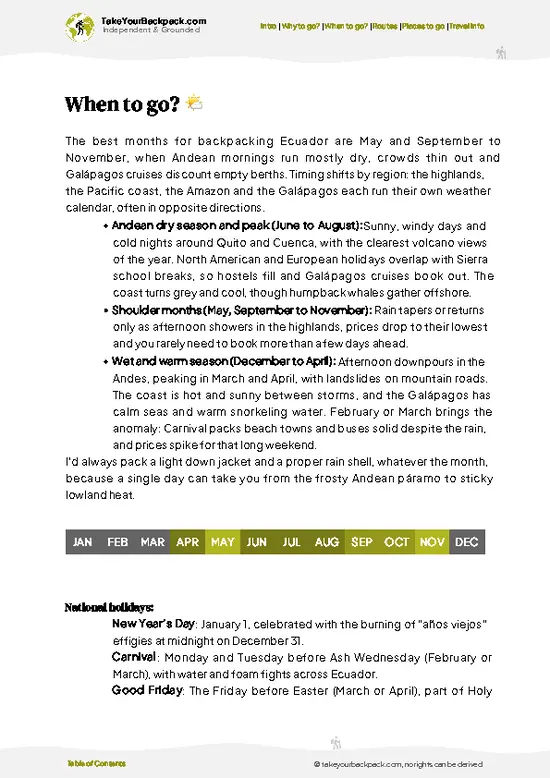
🌤️ When to go?When to go for the best experience


  • Weather: The dry season from June to September offers clearer skies and less mud, making the crater rim trails easier to navigate. The wet season (October to May) brings frequent rain, turning paths slippery and the lake’s color murkier, but it also means fewer tourists.

  • Temperature: Expect chilly mornings and evenings year-round, hovering around 5°C to 10°C (41°F to 50°F). Daytime highs can reach 15°C to 20°C (59°F to 68°F), but the wind can make it feel colder, so pack layers.

  • Daylight Hours: Roughly 11 to 12 hours of daylight year-round, with sunrise around 6:00 AM and sunset near 6:00 PM. This gives you enough time for hikes but plan to start early to avoid afternoon clouds rolling in.

  • Crowds: Peak months (June to August) bring a steady stream of tourists, especially on weekends.
read more 👉

  • Weather: The dry season from June to September offers clearer skies and less mud, making the crater rim trails easier to navigate. The wet season (October to May) brings frequent rain, turning paths slippery and the lake’s color murkier, but it also means fewer tourists.

  • Temperature: Expect chilly mornings and evenings year-round, hovering around 5°C to 10°C (41°F to 50°F). Daytime highs can reach 15°C to 20°C (59°F to 68°F), but the wind can make it feel colder, so pack layers.

  • Daylight Hours: Roughly 11 to 12 hours of daylight year-round, with sunrise around 6:00 AM and sunset near 6:00 PM. This gives you enough time for hikes but plan to start early to avoid afternoon clouds rolling in.

  • Crowds: Peak months (June to August) bring a steady stream of tourists, especially on weekends. Visiting midweek or during shoulder months like May or September means more breathing room on the trails and at local spots.

  • Seasonal Activities: Dry months favor hiking and kayaking on the lake, while the wet season offers lush greenery and fewer visitors but less predictable weather. Local markets and village life remain consistent year-round.

  • Price Fluctuations: Accommodation and tours spike in the dry season due to demand. Budget travelers can find cheaper stays and better deals in the rainy months, but be ready for some weather-related trade-offs.


Pro-tip: Aim for late May or early September—dry enough to hike comfortably, light crowds, and wallet-friendly prices. You’ll get the best of both worlds without the Instagram mob.


source: climatestotravel.comJANJanuary: fair for travelingFEBFebruary: fair for travelingMARMarch: fair for travelingAPRApril: fair for travelingMAYMay: highly recommended for travelingJUNJune: excellent for travelingJULJuly: excellent for travelingAUGAugust: excellent for travelingSEPSeptember: highly recommended for travelingOCTOctober: fair for travelingNOVNovember: fair for travelingDECDecember: fair for traveling
ecuador-unique-site-laguna-quilotoa
© Google | Rafael Machado

✈️ The backpacker research shortcutEcuador Travel Guide

An offline-friendly backpacking guide with optimized travel routes, ranked highlights, transport advice, and the best areas to stay.
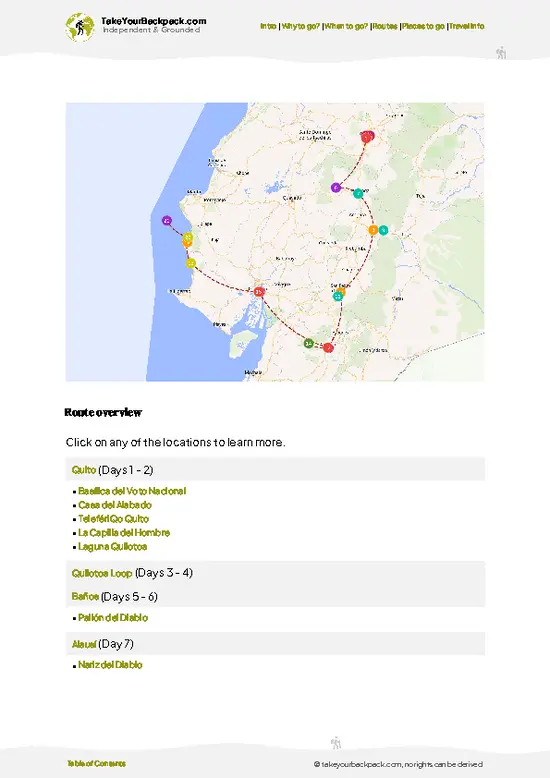
example page 0 from our offline Travel Guide for Ecuador
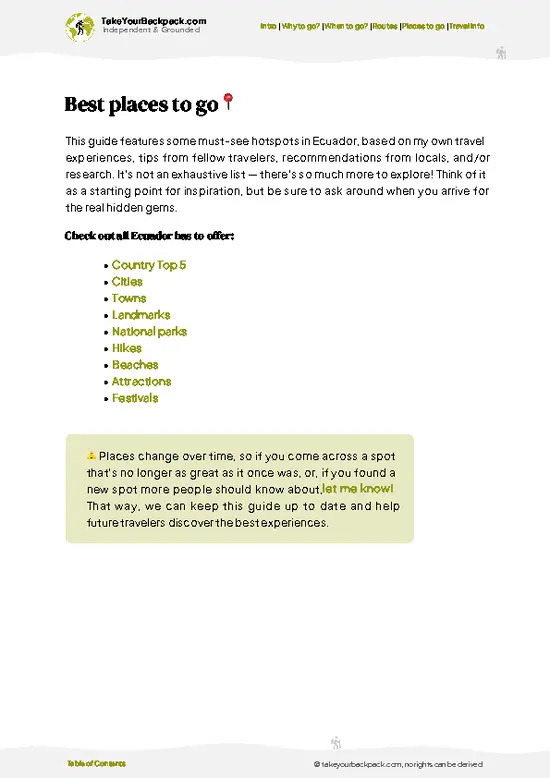
example page 1 from our offline Travel Guide for Ecuador
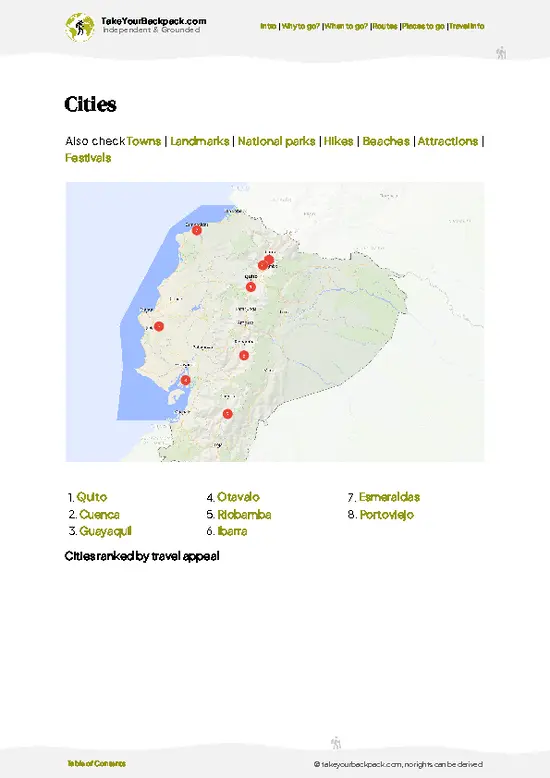
example page 2 from our offline Travel Guide for Ecuador
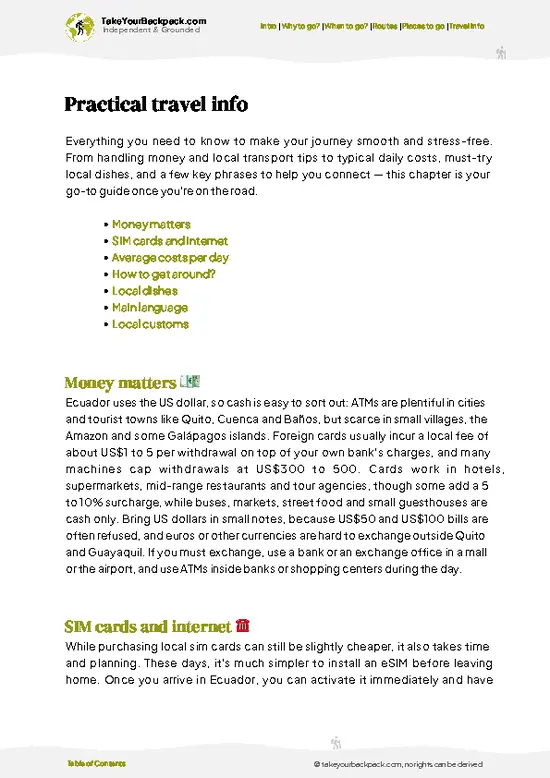
example page 3 from our offline Travel Guide for Ecuador
example page 4 from our offline Travel Guide for Ecuador
example page 5 from our offline Travel Guide for Ecuador
example page 6 from our offline Travel Guide for Ecuador
example page 7 from our offline Travel Guide for Ecuador
The digital guide (362 pages) contains:
94 highlights, ranked by travel appeal
Optimized 5, 10 & 15-day travel routes
Cities, national parks, landmarks, beaches
How to get around
Offline-friendly for travel without Wi-Fi
👉 Click to see all 30+ guide features

📅 Plan smarter in minutes, not weeks
Month by month travel advice
Festivals & national holidays
Budget expectations

🗺️ Go to the right places, skip the overrated ones
Honest pros & cons of destinations
Top hikes, parks & viewpoints
Lesser-known places most travelers miss
Clear “worth it vs skip it” guidance

🛏️ Travel smoothly without rookie mistakes
Best areas to stay
Transport systems explained simply
Common scams & safety advice
SIM cards, money & practical tips

🌍 Understand the country, not just visit it
Culture & traditions
52 Essential phrases & customs
Festivals worth planning around
Traveler-friendly historical context
Insights that make places more meaningful

📱 Built for real travel conditions
Fully downloadable PDF
Works completely offline
Optimized for phone use
Useful in remote areas & buses
Everything in one place
Save weeks of stressful planning
Get instant access to your full guide. 30‑day money-back guarantee.


By proceeding you agree to our terms.
Sent to your inbox immediately after payment • 100% Secure Checkout
Best Backpacking Travel Advisor 2025 tourism awardBest Backpacking
Travel Advisor
2025
What others say about Take Your Backpack Guides:
⭐⭐⭐⭐⭐
Fantastic, amazing amount of information!
⭐⭐⭐⭐⭐
My goodness this is amazing, it's what I've been looking for hats off too you!
⭐⭐⭐⭐⭐
I think this is absolutely BRILLIANT
⭐⭐⭐⭐
Very complete and informative. It's still missing places, but I gotta to commend you
⭐⭐⭐⭐⭐
This is truly amazing, thank you, can't wait to explore it with my kids!
⭐⭐⭐⭐⭐
Awesome resource, thank you!
⭐⭐⭐⭐⭐
This is amazing! Can't wait to explore the ones I haven't seen
⭐⭐⭐⭐
I love this! Well done, great idea.
⭐⭐⭐⭐⭐
Thanks for taking the time to make this gem!
⭐⭐⭐⭐⭐
This might be the best website I've ever seen.
⭐⭐⭐⭐⭐
Congratulations, and thank you so much for your work; it's incredibly valuable.
⭐⭐⭐⭐
In all seriousness I think you did a great job pointing out the important spots
⭐⭐⭐⭐⭐
10/10 very good
⭐⭐⭐⭐⭐
As someone who's only just starting to visit regularly this is awesome, thank you.
⭐⭐⭐⭐
Thank you very much! I'm going to visit my dad, it's going to be very useful!
⭐⭐⭐⭐⭐
This is really cool! We'll be travelling for the first time and this definitely come in handy.
⭐⭐⭐⭐⭐
You are now our minister of culture, congratulations 👨‍💼
⭐⭐⭐⭐⭐
Just wanted to tell you that this is a pearl! Going to follow your recommendations.
⭐⭐⭐⭐⭐
This is so cool. I'll definitely be using the resource for my travels soon.
⭐⭐⭐⭐⭐
This is very impressive! Good work.
⭐⭐⭐⭐⭐
This is an amazing and informative site. Very well done!

🛏️ Where to stay?Choosing the right base

Laguna Quilotoa is a breathtaking crater lake that draws crowds, but let’s cut through the Instagram haze. The reality? It’s often packed with tourists, and prices can spike during peak seasons. But don’t let that deter you; there are still authentic experiences waiting just off the beaten path.

Stay in the nearby town of Quilotoa itself. It’s a small, welcoming community where you can find budget-friendly accommodations. Here, you’ll meet fellow backpackers and locals who can share stories and tips. The vibe is relaxed, and the scenery is nothing short of stunning.

Another option is the town … read more 👉
Laguna Quilotoa is a breathtaking crater lake that draws crowds, but let’s cut through the Instagram haze. The reality? It’s often packed with tourists, and prices can spike during peak seasons. But don’t let that deter you; there are still authentic experiences waiting just off the beaten path.

Stay in the nearby town of Quilotoa itself. It’s a small, welcoming community where you can find budget-friendly accommodations. Here, you’ll meet fellow backpackers and locals who can share stories and tips. The vibe is relaxed, and the scenery is nothing short of stunning.

Another option is the town of Chugchilan, about an hour away. It’s a bit quieter and offers a more intimate feel. You’ll find cozy lodges and hostels that cater to backpackers, often with communal spaces perfect for swapping tales over a cup of local coffee. Plus, the hikes around Chugchilan are less crowded, allowing you to soak in the beauty without the hustle.

Both areas provide easy access to the lake and surrounding trails. Embrace the local culture, enjoy hearty meals, and connect with fellow travelers. The real magic lies in these interactions and the stunning landscapes that surround you.

👛 Costs (as of 24 December 2025)What things cost and how to budget

Visiting Laguna Quilotoa can be a breathtaking experience, but it’s essential to know what you’re getting into financially. Here’s a breakdown of typical costs to help you plan without any surprises.
  • Transportation: Expect to pay around $2 to $5 for a bus ride from Latacunga to Quilotoa. The journey takes about 2 to 3 hours. If you’re coming from Quito, it’ll cost you about $10 to $15. Private transport can skyrocket to $50 or more, depending on your negotiation skills.
  • Entrance Fee: The entrance fee to Laguna Quilotoa is about $1. This small fee helps maintain the area and is a steal for the views you’ll get.
  • Accommodation: Options range from basic hostels at $10 to $15 per night to cozy lodges that can go up to $50. If you want a more luxurious stay, expect to pay around $80 or more. Booking
read more 👉
Visiting Laguna Quilotoa can be a breathtaking experience, but it’s essential to know what you’re getting into financially. Here’s a breakdown of typical costs to help you plan without any surprises.
  • Transportation: Expect to pay around $2 to $5 for a bus ride from Latacunga to Quilotoa. The journey takes about 2 to 3 hours. If you’re coming from Quito, it’ll cost you about $10 to $15. Private transport can skyrocket to $50 or more, depending on your negotiation skills.
  • Entrance Fee: The entrance fee to Laguna Quilotoa is about $1. This small fee helps maintain the area and is a steal for the views you’ll get.
  • Accommodation: Options range from basic hostels at $10 to $15 per night to cozy lodges that can go up to $50. If you want a more luxurious stay, expect to pay around $80 or more. Booking in advance can save you some cash.
  • Food: Meals can be quite affordable. Street food or local eateries will set you back about $3 to $7 per meal. If you opt for a sit-down restaurant, budget around $10 to $15. Don’t miss trying the local trout!
  • Activities: Hiking around the crater is free, but guided tours can cost between $10 and $30, depending on the length and inclusions. If you want to rent a kayak on the lake, expect to pay around $5 to $10.

Keep these costs in mind, and you’ll be well-prepared to enjoy the real magic of Laguna Quilotoa without breaking the bank.


source: ecuador.travel
⚠️ Prices can change and everyone travels differently, so take this as a rough guide. Hope it helps you plan your adventure!

Other Ecuadorian landmarks near Laguna Quilotoa

Explore more nearby:


💡 Not sure where to go next?
Create a personalized itinerary for Ecuador including Laguna Quilotoa and the places that fit your trip.

Generate my itinerary

👉 Discover all landmarks

Or checkout all Ecuador has to offer (think cities, towns, villages, national parks, hikes, beaches, festivals)
Country photo of Ecuador

We 💚 feedbackWhat to keep in mind

Laguna Quilotoa is a spectacle that’ll leave you breathless—not just from the views but from the altitude. The vibrant turquoise water is a sight to behold, especially at sunrise. But let’s be real: the crowds can be overwhelming, especially on weekends. If you want the magic without the masses, aim for a weekday visit. It’s worth the trek, but don’t underestimate the altitude; it’ll hit you harder than you expect.

✈️ When did I visit Ecuador?
Ecuador I visited during my half year trip through South and Central America back in 2003

✍️ Help improve this page!
The information on this page is based on my own backpacking experience in Ecuador, supplemented with up-to-date research and feedback from other travelers. Travel details can change, so if you notice anything outdated or incomplete, feel free to let me know.


🙋‍♂️ Give feedback

👋 Meet the founderWho’s Behind Take Your Backpack?

Johan, backpacker and founder of TakeYourBackpackHi, I’m Johan (Netherlands 🇳🇱), the creator of TakeYourBackpack. Over the past decade, I’ve backpacked through 80+ countries across six continents, gaining extensive experience with independent travel, long-term trips, and overland routes.

This site is built on a combination of firsthand travel experience and carefully curated insights from other backpackers. Many guides are based on places I’ve personally visited, while others bring together tips, observations, and practical advice shared by trusted travelers I’ve met along the way.

The goal is to provide realistic, experience-driven guidance — not generic itineraries — so you can explore destinations with better context, clearer expectations, and more confidence.

Get full Ecuador guide •
Instant download • 94 highlights • Full Offline guide