


×

Ecuador🇪🇨 | national parksLos IllinizasTwin summits, ridge scramble, Nuevos Horizontes hut, La Virgen trailhead | things to do and best time to go

Explore Galápagos IslandsExplore Machalilla National Park

Backpacking in Los Illinizas
👌 Worth visitingnational park ranked #11
By Johan Kruseman 🇳🇱 | Updated October 19, 2026

Two summits share one saddle: Illiniza Norte (5,126 m) and Illiniza Sur (5,248 m), with a glacier-draped south peak that shows from Quito’s southern valleys on clear mornings. Los Illinizas Ecological Reserve lies southwest of Quito in the Andes of Ecuador, around the town of Machachi. Trails here are steep, rocky and often wrapped in cloud, and the weather turns fast. Wildlife is thin at altitude, though Andean condors and páramo foxes are possible. Crowds stay small outside weekends. I stepped out of the truck at the La Virgen parking lot and a wall of wind-bent páramo grass rippled toward a ridge that vanished into fog, then split open on a rock tooth. The refuge sits at the end of a ridge trail.

Discover everything you want to know in the 📖 Ecuador Travel Guide.


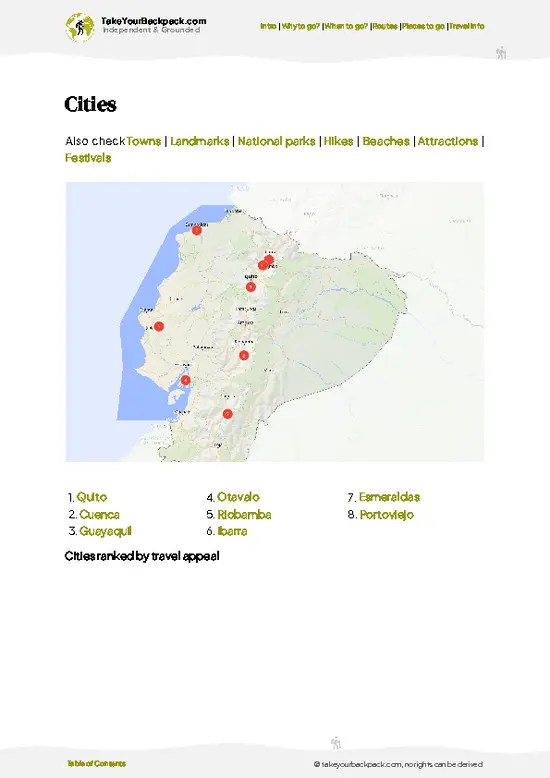
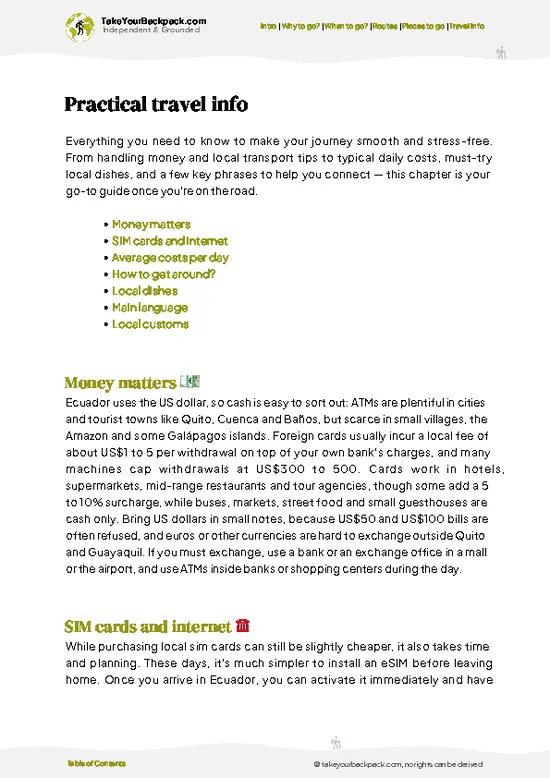
example page 0 from our offline Travel Guide for Ecuador
example page 1 from our offline Travel Guide for Ecuador
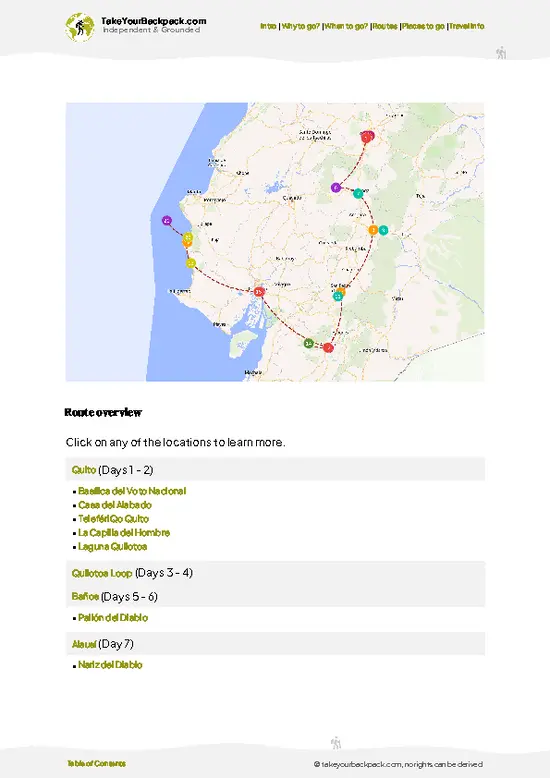
example page 2 from our offline Travel Guide for Ecuador
example page 3 from our offline Travel Guide for Ecuador
example page 4 from our offline Travel Guide for Ecuador
example page 5 from our offline Travel Guide for Ecuador
example page 6 from our offline Travel Guide for Ecuador
example page 7 from our offline Travel Guide for Ecuador
Loading the map 🌍
CLICK TO FILTER
cities
towns
landmarks
national parks
hikes
beaches
attractions
festivals
SHOW COUNTRY’S BESTSHOW ALL

✨ Why go?
Ranked #11 national park in Ecuador
Why Los Illinizas should be on your travel list

Los Illinizas draws backpackers who want high-altitude mountaineering without the circus of Cotopaxi. The pair of peaks makes a tidy ladder: Illiniza Norte is a non-technical scramble for fit hikers with a guide or solid experience, while Illiniza Sur demands ice axes, crampons and rope. That progression suits anyone using the park to acclimatize before bigger Ecuadorian volcanoes. You can also go fully independent. The approach is a trail you follow on your own, and the Nuevos Horizontes refuge at about 4,700 m gives a bunk-and-stove base near the saddle, so camping gear is optional. Everything is self-guided until the Sur summit, where hiring a certified guide becomes the sensible move.

💡 HighlightsWhat this place is best known for

  1. Illiniza Norte summit: the signature climb, a scramble along a ridge of loose volcanic rock with exposed sections and a view toward Cotopaxi and Cayambe on clear days.
  2. Nuevos Horizontes refuge: a mountain hut at roughly 4,700 m beneath the twin peaks, with bunks, kitchen access and a front porch looking over cloud-filled valleys.
  3. Illiniza Sur summit: the higher, glaciated peak, a technical climb with crampons and rope, reserved for experienced mountaineers or those with a guide.
  4. La Virgen trailhead and the ridge walk: the starting point of the hike, where the path climbs over open páramo of tussock grass and cushion plants.
  5. The saddle between the peaks: a rocky col where both summits loom close, ideal for photos and a quiet look at the glacier face of Sur.
  6. Páramo wildlife: a chance to see Andean
… read more 👉
  1. Illiniza Norte summit: the signature climb, a scramble along a ridge of loose volcanic rock with exposed sections and a view toward Cotopaxi and Cayambe on clear days.
  2. Nuevos Horizontes refuge: a mountain hut at roughly 4,700 m beneath the twin peaks, with bunks, kitchen access and a front porch looking over cloud-filled valleys.
  3. Illiniza Sur summit: the higher, glaciated peak, a technical climb with crampons and rope, reserved for experienced mountaineers or those with a guide.
  4. La Virgen trailhead and the ridge walk: the starting point of the hike, where the path climbs over open páramo of tussock grass and cushion plants.
  5. The saddle between the peaks: a rocky col where both summits loom close, ideal for photos and a quiet look at the glacier face of Sur.
  6. Páramo wildlife: a chance to see Andean condors overhead, plus páramo foxes, hummingbirds and wild horses on lower slopes.
Start with the hike up to Nuevos Horizontes, because sleeping at altitude before any summit attempt makes the climb far more comfortable.
Spotted a mistake or missing something? Contact us.

Things to do near Los Illinizas

Ratings based on Tripadvisor reviews. When you book through this link, you support our work at no extra cost to you.

🌤️ When to go?Best time to explore Los Illinizas

  • Dry Season (June to September): Your best odds for summit views of Illiniza Norte (5,126 m / 16,818 ft) and Sur (5,248 m / 17,218 ft). Mornings start near 0°C (32°F) at the refuges, with valley days of 12 to 18°C (54 to 64°F). Weekends fill the huts.
  • Short Dry Spell (December to January): Another good climbing window, with similar cold nights and fewer foreign visitors. Ecuadorian holiday crowds raise lodge prices around Christmas and New Year.
  • Wet Months (February to May, October to November): Cloud builds by midday, trails turn muddy and snow cover on Sur gets unreliable. Beds are easy to find and rates are lowest.
  • Daylight: About 12 hours all year, so start hiking before 6 am to beat afternoon cloud.
Book your refuge bed for a weekday and you get quiet trails and the same view.

source: climatestotravel.comJANJanuary: fair for travelingFEBFebruary: fair for travelingMARMarch: fair for travelingAPRApril: good for travelingMAYMay: highly recommended for travelingJUNJune: excellent for travelingJULJuly: excellent for travelingAUGAugust: excellent for travelingSEPSeptember: excellent for travelingOCTOctober: highly recommended for travelingNOVNovember: fair for travelingDECDecember: fair for traveling
ecuador-national-park-los-illinizas
© Google | Marcelo Solís

✈️ The backpacker research shortcutEcuador Travel Guide

An offline-friendly backpacking guide with optimized travel routes, ranked highlights, transport advice, and the best areas to stay.
example page 0 from our offline Travel Guide for Ecuador
example page 1 from our offline Travel Guide for Ecuador
example page 2 from our offline Travel Guide for Ecuador
example page 3 from our offline Travel Guide for Ecuador
example page 4 from our offline Travel Guide for Ecuador
example page 5 from our offline Travel Guide for Ecuador
example page 6 from our offline Travel Guide for Ecuador
example page 7 from our offline Travel Guide for Ecuador
The digital guide (274 pages) contains:
✅ 87 highlights, ranked by travel appeal
✅ Optimized 5, 10 & 15-day travel routes
✅ Cities, national parks, landmarks, beaches
✅ How to get around
✅ Offline-friendly for travel without Wi-Fi
👉 Click to see all 30+ guide features

📅 Plan smarter in minutes, not weeks
✅ Month by month travel advice
✅ Festivals & national holidays
✅ Budget expectations

🗺️ Go to the right places, skip the overrated ones
✅ Honest pros & cons of destinations
✅ Top hikes, parks & viewpoints
✅ Lesser-known places most travelers miss
✅ Clear “worth it vs skip it” guidance

🛏️ Travel smoothly without rookie mistakes
✅ Best areas to stay
✅ Transport systems explained simply
✅ Common scams & safety advice
✅ SIM cards, money & practical tips

🌍 Understand the country, not just visit it
✅ Culture & traditions
✅ 52 Essential phrases & customs
✅ Festivals worth planning around
✅ Traveler-friendly historical context
✅ Insights that make places more meaningful

📱 Built for real travel conditions
✅ Fully downloadable PDF
✅ Works completely offline
✅ Optimized for phone use
✅ Useful in remote areas & buses
✅ Everything in one place
Stop searching, start planning
Get instant access to your full guide. 30‑day money-back guarantee.
+ Add another guide for just

By proceeding you agree to our terms.
Sent to your inbox immediately after payment • 100% Secure Checkout
Best Backpacking Travel Advisor 2025 tourism awardBest Backpacking
Travel Advisor
2025
What others say about Take Your Backpack Guides:
⭐⭐⭐⭐⭐
Fantastic, amazing amount of information!
⭐⭐⭐⭐⭐
My goodness this is amazing, it's what I've been looking for hats off too you!
⭐⭐⭐⭐⭐
I think this is absolutely BRILLIANT
⭐⭐⭐⭐
Very complete and informative. It's still missing places, but I gotta to commend you
⭐⭐⭐⭐⭐
This is truly amazing, thank you, can't wait to explore it with my kids!
⭐⭐⭐⭐⭐
Awesome resource, thank you!
⭐⭐⭐⭐⭐
This is amazing! Can't wait to explore the ones I haven't seen
⭐⭐⭐⭐
I love this! Well done, great idea.
⭐⭐⭐⭐⭐
Thanks for taking the time to make this gem!
⭐⭐⭐⭐⭐
This might be the best website I've ever seen.
⭐⭐⭐⭐⭐
Congratulations, and thank you so much for your work; it's incredibly valuable.
⭐⭐⭐⭐
In all seriousness I think you did a great job pointing out the important spots
⭐⭐⭐⭐⭐
10/10 very good
⭐⭐⭐⭐⭐
As someone who's only just starting to visit regularly this is awesome, thank you.
⭐⭐⭐⭐
Thank you very much! I'm going to visit my dad, it's going to be very useful!
⭐⭐⭐⭐⭐
This is really cool! We'll be travelling for the first time and this definitely come in handy.
⭐⭐⭐⭐⭐
You are now our minister of culture, congratulations 👨‍💼
⭐⭐⭐⭐⭐
Just wanted to tell you that this is a pearl! Going to follow your recommendations.
⭐⭐⭐⭐⭐
This is so cool. I'll definitely be using the resource for my travels soon.
⭐⭐⭐⭐⭐
This is very impressive! Good work.
⭐⭐⭐⭐⭐
This is an amazing and informative site. Very well done!

🛏️ Where to stay?Best areas to stay in Ecuador

One refuge sits inside the park, and it puts you within an hour or two of the Norte summit trail. El Chaupi has the cheapest and most convenient beds outside it.
The Nuevos Horizontes refuge (about 4,700 m) has about a dozen bunks and cooking facilities but no running water, for roughly US$15 to 20 a night. Bring a warm sleeping bag anyway, since huts are unheated.
Outside the park, the village of El Chaupi has hostels and guesthouses at US$12 to 25 a night, plus pickup trucks to the trailhead. Machachi, about 30 minutes further by bus, offers more restaurants, hot springs and hotels at US$20 to … read more 👉
One refuge sits inside the park, and it puts you within an hour or two of the Norte summit trail. El Chaupi has the cheapest and most convenient beds outside it.
The Nuevos Horizontes refuge (about 4,700 m) has about a dozen bunks and cooking facilities but no running water, for roughly US$15 to 20 a night. Bring a warm sleeping bag anyway, since huts are unheated.
Outside the park, the village of El Chaupi has hostels and guesthouses at US$12 to 25 a night, plus pickup trucks to the trailhead. Machachi, about 30 minutes further by bus, offers more restaurants, hot springs and hotels at US$20 to 45. Quito is roughly two hours away and works if you prefer a city base, though early starts become painful. Reserve refuge beds ahead for weekends.

👛 Costs (as of 19 October 2026)How expensive it really is

Expect to spend about US$58 a day at Los Illinizas in high season, covering a hut bed, simple food and local transport.
CategoryBudget RangeLocal Reality
Entrance FeeUS$0 to 2Entry to the Ecuadorian reserve is generally free or very low, payable at the ranger post.
Accommodation (high season)US$15 to 25Refuge bunks run US$15 to 20; hostels in El Chaupi cost US$12 to 25.
Local TransportUS$8 to 20Bus from Quito to Machachi is about US$1.50 to 2.50. A pickup from El Chaupi to the trailhead costs US$10 to 15 per vehicle, split by group.
Food and SuppliesUS$12 to 20Refuge meals cost US$5 to 8. Stock snacks and water in Machachi.
Guide (optional)US$0 to 10 per dayNorte is doable alone; a Sur guide costs US$100 to 180 per group, shared across the party.
Total Daily BudgetUS$58Based on one day of hut accommodation,
… read more 👉
Expect to spend about US$58 a day at Los Illinizas in high season, covering a hut bed, simple food and local transport.
CategoryBudget RangeLocal Reality
Entrance FeeUS$0 to 2Entry to the Ecuadorian reserve is generally free or very low, payable at the ranger post.
Accommodation (high season)US$15 to 25Refuge bunks run US$15 to 20; hostels in El Chaupi cost US$12 to 25.
Local TransportUS$8 to 20Bus from Quito to Machachi is about US$1.50 to 2.50. A pickup from El Chaupi to the trailhead costs US$10 to 15 per vehicle, split by group.
Food and SuppliesUS$12 to 20Refuge meals cost US$5 to 8. Stock snacks and water in Machachi.
Guide (optional)US$0 to 10 per dayNorte is doable alone; a Sur guide costs US$100 to 180 per group, shared across the party.
Total Daily BudgetUS$58Based on one day of hut accommodation, food and transport, with guides excluded.


source: ecuador.travel
⚠️ Prices can change and everyone travels differently, so take this as a rough guide. Hope it helps you plan your adventure!

🥾 TrailsTrail guide for Los Illinizas national park

Los Illinizas offers high-altitude trekking on a compact network of paths, mostly climbing from the La Virgen trailhead at about 3,900 m. Terrain moves from grassy páramo to loose gravel and, higher up, scree and rocky ridgeline.
  • La Virgen to Nuevos Horizontes refuge: roughly 7 km one way, about 2 to 3 hours up, moderate to hard because of altitude, with steady switchbacks and wide views.
  • Refuge to Illiniza Norte summit: about 2 to 3 hours up from the hut, hard, with scrambling, loose rock and short exposed stretches. Start before dawn for clearer views.
  • Illiniza Sur: a full day from the refuge,
… read more 👉
Los Illinizas offers high-altitude trekking on a compact network of paths, mostly climbing from the La Virgen trailhead at about 3,900 m. Terrain moves from grassy páramo to loose gravel and, higher up, scree and rocky ridgeline.
  • La Virgen to Nuevos Horizontes refuge: roughly 7 km one way, about 2 to 3 hours up, moderate to hard because of altitude, with steady switchbacks and wide views.
  • Refuge to Illiniza Norte summit: about 2 to 3 hours up from the hut, hard, with scrambling, loose rock and short exposed stretches. Start before dawn for clearer views.
  • Illiniza Sur: a full day from the refuge, very hard, requiring glacier gear, rope skills and a guide for most climbers.
Public transport is limited. Buses run from Quito to Machachi, and from there most travelers hire a pickup to the trailhead, since the access road is rough. Weekends bring the most hikers, while weekdays can feel nearly empty. An entrance fee applies at the reserve gate, and refuge beds are paid separately. Carry layers, water and sun protection, because weather swings quickly.
⚠️ Hiking info can sometimes be outdated or inaccurate. Before you hit the trail, check the latest conditions with locals. If you do spot anything that's off, I'd love to hear from you, so I can update it for fellow travelers.

🛡️ SafetyScams, Hazards, and Annoyances

Los Illinizas is straightforward for fit hikers, but altitude is the real issue. Trailheads start above 3,800 m, so spend a couple of days acclimatizing in Quito or Machachi before sleeping at the refuges, and climb slowly. Headaches are normal; worsening nausea or confusion means descending.
Weather shifts fast. Mornings are usually clear, then cloud and wind arrive by midday, so leave before dawn and turn back if visibility drops. Trails over volcanic sand and scree are slippery, and Norte has an exposed ridge section where scrambling is needed. Sur requires crampons, an ice axe and usually a guide.
There is little dangerous wildlife, though Andean foxes may raid food at the huts. Carry layers, rain gear, sun protection and enough water.

FAQCommon questions from travelers

Plan on 2 to 3 days for Los Illinizas. One day is enough to climb Illiniza Norte from the Nuevos Horizontes refuge if you are acclimatized, but a night at the hut (about 4,700 m) makes the 4 to 5 hour ascent more comfortable. Add a second night and a third day if you want to attempt Illiniza Sur at 5,248 m.
Yes, Los Illinizas is reachable without a car, though the last stretch needs a pickup truck. Take a bus from Quito’s Quitumbe terminal to Machachi (about 1 hour), then another to El Chaupi (about 30 minutes). Trucks from El Chaupi to the trailhead cost roughly US$10 to 15 per vehicle and take about 30 minutes.
Entry to Los Illinizas is generally free or very low, at most a couple of dollars, and is handled at the ranger post. No special permit is normally needed for Illiniza Norte, so you can walk it independently. Refuge beds cost about US$15 to 20 a night, and Illiniza Sur is usually climbed with a guide because it needs crampons and an ice axe.
⚠️ Things can change over time, so always validate details locally before you go.

Other Ecuadorian national parks near Los Illinizas

Explore more nearby:


💡 Not sure where to go next?
Create a personalized itinerary for Ecuador including Los Illinizas and the places that fit your trip.

Generate my itinerary

👉 Discover all national parks

Or checkout all Ecuador has to offer (think cities, towns, villages, national parks, hikes, beaches, festivals)
Country photo of Ecuador

We 💚 feedbackWhat to keep in mind

Most first-timers rush to the summit and overlook the quiet saddle between the peaks, where the wind drops and both glaciers fill the view. I would carry a thermos and spend an extra hour there, since the clouds often part just after midday.

✈️ When did I visit Ecuador?
Ecuador I visited during my half year trip through South and Central America back in 2003

✍️ Help improve this page!
The information on this page is based on my own backpacking experience in Ecuador, supplemented with up-to-date research and feedback from other travelers. Travel details can change, so if you notice anything outdated or incomplete, feel free to let me know.


🙋‍♂️ Give feedback

👋 Meet the founderWho’s Behind Take Your Backpack?

Johan, backpacker and founder of TakeYourBackpackHi, I’m Johan (Netherlands 🇳🇱), the creator of TakeYourBackpack. Over the past 3 decades, I’ve backpacked through 90+ countries across six continents, gaining extensive experience with independent travel, long-term trips, and overland routes.

This site is built on a combination of firsthand travel experience and carefully curated insights from other backpackers. Many guides are based on places I’ve personally visited, while others bring together tips, observations, and practical advice shared by trusted travelers I’ve met along the way.

The goal is to provide realistic, experience-driven guidance — not generic itineraries — so you can explore destinations with better context, clearer expectations, and more confidence.