×

Ecuador🇪🇨 | best national parksBest 10 national parks in Ecuador

Ecuador’s national parks are a breathtaking showcase of biodiversity and adventure, each offering unique landscapes and wildlife that cater to various travel styles. Defined by their rich ecosystems, these parks range from the lush Amazon rainforest to the rugged Andes mountains. Your choice of park significantly influences your backpacking experience, affecting everything from vibe and season to budget and safety. For instance, exploring Cajas National Park offers high-altitude trekking, while Yasuni National Park immerses you in the heart of the Amazon. Understanding these nuances is crucial for independent travelers seeking authentic cultural immersion and unforgettable adventures.

By Johan Kruseman 🇳🇱 | Updated June 3, 2026
Explore the best hikes in Ecuador

Why go?What Makes Them Special

Ecuador’s national parks are a microcosm of biodiversity, showcasing ecosystems that range from the Amazon rainforest to the Andes mountains. This small country packs a punch, offering unique landscapes that few places on Earth can match. The Galápagos Islands are a prime example, where evolution unfolds before your eyes, but they come with a price: accessibility can be limited, and costs can soar.

Travelers face a trade-off between time and depth of exploration. While some parks are easily accessible from major cities, venturing deeper into the wilderness often requires more travel time. This can mean sacrificing comfort for a richer experience. The infrastructure in Ecuador varies; some parks have well-maintained trails and facilities, while others demand a rugged spirit and a willingness … read more 👉
Ecuador’s national parks are a microcosm of biodiversity, showcasing ecosystems that range from the Amazon rainforest to the Andes mountains. This small country packs a punch, offering unique landscapes that few places on Earth can match. The Galápagos Islands are a prime example, where evolution unfolds before your eyes, but they come with a price: accessibility can be limited, and costs can soar.

Travelers face a trade-off between time and depth of exploration. While some parks are easily accessible from major cities, venturing deeper into the wilderness often requires more travel time. This can mean sacrificing comfort for a richer experience. The infrastructure in Ecuador varies; some parks have well-maintained trails and facilities, while others demand a rugged spirit and a willingness to embrace the wild.

Ecuador’s climatic diversity also plays a role. The high-altitude parks can be chilly and unpredictable, while the lowland areas are humid and teeming with life. Understanding these conditions is crucial for planning.

Ultimately, the reward lies in the immersive experiences that come from navigating these landscapes. The choice between accessibility and authenticity is yours, but the journey through Ecuador’s national parks promises a profound connection to nature that transcends mere sightseeing.
Why These Made the Cut
The list of best national parks in Ecuador is created based on landscapes, wildlife, adventure opportunities, facilities, and overall experience. If you feel a national park is missing in this list, please let us know.

When to go?Optimal Periods for Travel

Seasonality and National Parks in Ecuador


Ecuador’s national parks offer a dynamic experience shaped by distinct seasons. The country’s varied geography leads to diverse weather patterns, impacting wildlife visibility and trail conditions.

The dry season, typically from June to September, presents optimal conditions for exploration. Trails are less muddy, and wildlife is more active, making it easier to spot animals. However, this peak season attracts more visitors, leading to crowded trails and higher costs.

In contrast, the wet season, from December to May, brings lush landscapes and vibrant flora. Rainfall can be heavy, especially in the Amazon and cloud forests, which may hinder visibility and make trails slippery. Yet, this is also when many species are breeding, offering unique … read more 👉

Seasonality and National Parks in Ecuador


Ecuador’s national parks offer a dynamic experience shaped by distinct seasons. The country’s varied geography leads to diverse weather patterns, impacting wildlife visibility and trail conditions.

The dry season, typically from June to September, presents optimal conditions for exploration. Trails are less muddy, and wildlife is more active, making it easier to spot animals. However, this peak season attracts more visitors, leading to crowded trails and higher costs.

In contrast, the wet season, from December to May, brings lush landscapes and vibrant flora. Rainfall can be heavy, especially in the Amazon and cloud forests, which may hinder visibility and make trails slippery. Yet, this is also when many species are breeding, offering unique wildlife sightings.

Shoulder seasons, like late September to November and early May, present a mixed bag. Expect fewer crowds and lower prices, but be prepared for unpredictable weather. Conditions can vary widely, with some trails still muddy and wildlife less visible.

Understanding these seasonal trade-offs allows for informed decisions. Prioritize comfort and experience over peak scenery when planning visits. Choose the right time to balance wildlife encounters, trail conditions, and personal preferences for solitude or social interaction.

national park hoppingOptimizing Your Multi-Stop Itinerary

Combining national parks in Ecuador requires strategic planning and an understanding of regional clusters. Start in the Andes, where parks like Cotopaxi and Chimborazo offer breathtaking landscapes and diverse ecosystems. From there, head east to the Amazon basin, exploring Yasuni and Cuyabeno, where the lush rainforest teems with wildlife. This routing not only minimizes travel time but also maximizes exposure to distinct environments.

Each park demands a different investment of time. Plan for at least two days in Cotopaxi for hiking and acclimatization, while a quick visit to Yasuni can be done in a day if you focus on a guided tour. However, rushing through parks sacrifices depth of experience. The trade-off between speed and immersion is crucial; a longer stay allows for deeper exploration read more 👉
Combining national parks in Ecuador requires strategic planning and an understanding of regional clusters. Start in the Andes, where parks like Cotopaxi and Chimborazo offer breathtaking landscapes and diverse ecosystems. From there, head east to the Amazon basin, exploring Yasuni and Cuyabeno, where the lush rainforest teems with wildlife. This routing not only minimizes travel time but also maximizes exposure to distinct environments.

Each park demands a different investment of time. Plan for at least two days in Cotopaxi for hiking and acclimatization, while a quick visit to Yasuni can be done in a day if you focus on a guided tour. However, rushing through parks sacrifices depth of experience. The trade-off between speed and immersion is crucial; a longer stay allows for deeper exploration and connection with nature.

Common mistakes include underestimating travel times between parks and over-scheduling activities. Flexibility is key; weather can change plans, and wildlife sightings are unpredictable. Budget considerations also play a role. While some parks offer basic facilities, others may require splurging on guided tours for a richer experience. Balancing comfort with adventure is essential for a fulfilling trip.

Ultimately, the goal is to create a journey that resonates. Prioritize what matters most: whether it’s the thrill of a summit or the tranquility of the rainforest, make choices that enhance the adventure.

The ListHighly Recommended national parks of Ecuador

1 Galapagos

volcanic islands, endemic wildlife, marine reserves

Walk among fearless animals on stark lava fields, snorkel with sea lions, and witness evolutionary adaptation in real time across isolated islands.

Ecuador - Galapagos

2 Cotopaxi

snow-capped volcano, pine forests, open plains

Hike beneath the looming cone of Cotopaxi, crossing open grasslands and pine woods where condors and wild horses roam freely.

ecuador-national-park-cotopaxi
© Google | Miguel Anchaluisa

3 Cuyabeno Wildlife Reserve

flooded rainforest, blackwater lagoons, river dolphins

Navigate labyrinthine waterways through dense Amazonian forest, spotting pink dolphins and rare monkeys in a landscape shaped by seasonal floods.

ecuador-national-park-cuyabeno-wildlife-reserve
© Google | Yoram Kaiser

4 Sangay National Park

active volcanoes, remote wilderness, cloud forest valleys

Venture into a vast, rugged landscape where erupting peaks, deep valleys, and elusive wildlife challenge even experienced trekkers.

ecuador-national-park-sangay-national-park
© Google | Wilmer Ll. (ato)

5 Cajas National Park

high-altitude lakes, rugged páramo, misty trails

Traverse a patchwork of glacial lagoons and windswept grasslands, where unpredictable weather and altitude shape every step of the journey.

ecuador-national-park-cajas-national-park
© Google | Christian Gonzalez

6 Machalilla

coastal dry forest, archaeological sites, Isla de la Plata

Experience dry tropical forest, pre-Columbian ruins, and offshore islands where migrating whales and nesting seabirds define the rhythm of the coast.

ecuador-national-park-machalilla
© Google | Diego Salas Cba

7 Mindo Cloud Forest

orchid diversity, hummingbird hotspots, canopy walks

Immerse yourself in lush cloud forest alive with birdsong, rare butterflies, and suspended walkways that reveal the forest’s vertical complexity.

ecuador-national-park-mindo-cloud-forest
© Google |

8 Chimborazo National Park

Andean peaks, wild vicuñas, volcanic slopes

Climb toward the highest point from Earth’s center, passing herds of vicuñas and stark volcanic plains under a thin, crisp sky.

ecuador-national-park-chimborazo-national-park
© Google | Turismo Riobamba

9 Cayambe-Coca National Park

glaciers, hot springs, Andean wetlands

Cross high passes and peat bogs, soak in thermal pools, and watch for spectacled bears in a park defined by water and altitude.

ecuador-national-park-cayambe-coca-national-park
© Google |

10 Antisana Ecological Reserve

glacial plateau, condor nesting cliffs, páramo grasslands

Scan open grasslands for condors, trek across volcanic plateaus, and witness dramatic weather shifts in a stark, high-altitude environment.

11 Sumaco Napo-Galeras National Park

isolated volcano, Amazon foothills, diverse habitats

Descend from cloud forest to lowland jungle, encountering dramatic elevation changes and a patchwork of ecosystems rarely visited by outsiders.

12 Los Illinizas

twin summits, cloud forest edges, steep ascents

Ascend challenging slopes between two distinct peaks, where shifting weather and changing vegetation demand careful preparation and respect.

ecuador-national-park-los-illinizas
© Google | Marcelo Solís

13 Pululahua Geobotanical Reserve

inhabited crater, volcanic soil, patchwork farms

Descend into a volcanic caldera where mist drifts over cultivated fields and rural life unfolds within ancient crater walls.

14 Pasochoa Wildlife Refuge

extinct volcano, native forest, birdwatching trails

Wander through restored Andean forest on the slopes of an ancient volcano, where clear trails offer close encounters with endemic birds.

Think you know Ecuador?

Prove you’re a true local — uncover 4 lesser-known national parks in Ecuador that locals tend to keep to themselves.
Loading the map 🌍

Expert viewTips and Advice from Travelers

Trade-Off Map


Ecuador’s national parks offer a wild tapestry of ecosystems, from the Amazon rainforest to the Andes mountains. Each park has its own flavor, and the choices you make will shape your experience. The key is to balance time, money, and comfort while diving into this natural wonderland.

Terrain


Ecuador’s diverse terrain means you can hike through cloud forests, scale volcanic peaks, or navigate lush jungles. If you’re drawn to the high-altitude trails of Chimborazo or the vibrant biodiversity of Yasuni, you’ll need to consider how much time you want to invest. Each park demands a different level of physical effort. For instance, Chimborazo requires acclimatization and a solid fitness level, while Cajas National Park offers gentler trails that still reward you with stunning vistas. … read more 👉

Trade-Off Map


Ecuador’s national parks offer a wild tapestry of ecosystems, from the Amazon rainforest to the Andes mountains. Each park has its own flavor, and the choices you make will shape your experience. The key is to balance time, money, and comfort while diving into this natural wonderland.

Terrain


Ecuador’s diverse terrain means you can hike through cloud forests, scale volcanic peaks, or navigate lush jungles. If you’re drawn to the high-altitude trails of Chimborazo or the vibrant biodiversity of Yasuni, you’ll need to consider how much time you want to invest. Each park demands a different level of physical effort. For instance, Chimborazo requires acclimatization and a solid fitness level, while Cajas National Park offers gentler trails that still reward you with stunning vistas.

The trade-off here is clear: if you spend more time in one park, you’ll miss out on others. Prioritize based on your interests. If wildlife spotting is your goal, Yasuni is a must, but it’s remote and requires more travel time. If you want a taste of everything, consider visiting three to four parks, allowing for a mix of experiences without feeling rushed.

Park Infrastructure


Ecuador’s national parks vary significantly in infrastructure. Some, like Cotopaxi, are well-equipped with visitor centers and established trails, making navigation easier. Others, such as Sangay, are more rugged and less developed, offering a raw experience but demanding more from you in terms of preparation and self-sufficiency.

This disparity affects your comfort level. If you prefer a more structured experience with amenities, stick to the parks with better facilities. However, if you crave adventure and don’t mind roughing it, the less-traveled parks can yield unforgettable encounters with nature. Just be prepared for longer travel times and potentially higher costs for guides and supplies in remote areas.

Wildlife Activity


Wildlife encounters can be a highlight of your park experience, but they come with their own set of trade-offs. Parks like Yasuni and Cuyabeno are teeming with life, but they require time to explore effectively. Expect to spend several days to truly appreciate the biodiversity. Conversely, parks like Cotopaxi may offer fewer wildlife sightings but reward you with breathtaking landscapes and easier access.

Consider your priorities: if you’re keen on spotting unique species, allocate more time to the Amazon parks. If you’re more interested in dramatic scenery and hiking, you might opt for the Andes. The choice between wildlife and landscape can dictate your travel pace and budget, as guided tours in the Amazon can be pricier.

Planning and Prioritizing


When planning your itinerary, think about how much time you can realistically dedicate to each park. A week might allow you to explore two to three parks, while a longer trip opens up more possibilities. Factor in travel time between parks, which can be significant due to road conditions and distances.

Cultural considerations also play a role. Engaging with local communities can enrich your experience, but it requires time and respect for their customs. Be mindful of safety, especially in remote areas. Always check local advice and travel with a guide if you’re venturing into less populated regions.

In the end, the best approach is to choose parks that resonate with your interests while being realistic about what you can achieve in your timeframe. Embrace the journey, and let the landscapes and wildlife shape your adventure. Each choice you make will lead to a unique experience, so weigh your options carefully and dive into the beauty of Ecuador’s national parks.

✈️ The backpacker research shortcutEcuador Travel Guide

An offline-friendly backpacking guide with optimized travel routes, ranked highlights, transport advice, and the best areas to stay.
example page 0 from our offline Travel Guide for Ecuador
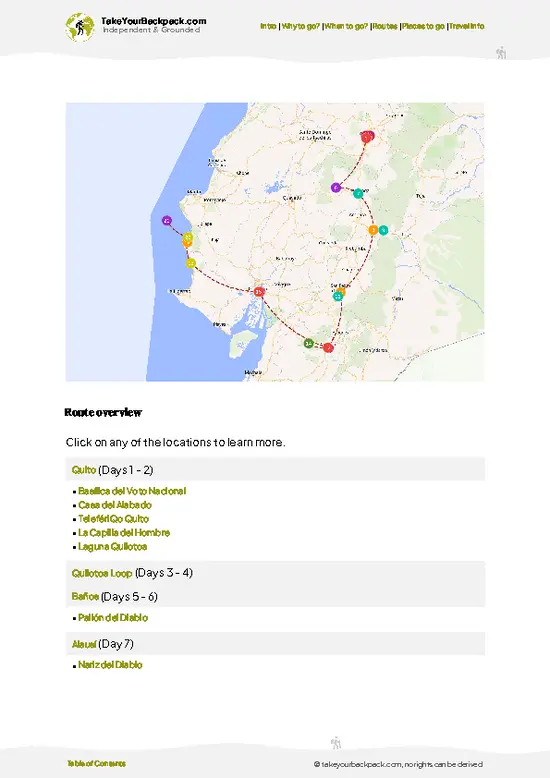
example page 1 from our offline Travel Guide for Ecuador
example page 2 from our offline Travel Guide for Ecuador
example page 3 from our offline Travel Guide for Ecuador
example page 4 from our offline Travel Guide for Ecuador
example page 5 from our offline Travel Guide for Ecuador
example page 6 from our offline Travel Guide for Ecuador
example page 7 from our offline Travel Guide for Ecuador
The digital guide (362 pages) contains:
94 highlights, ranked by travel appeal
Optimized 5, 10 & 15-day travel routes
Cities, national parks, landmarks, beaches
How to get around
Offline-friendly for travel without Wi-Fi
👉 Click to see all 30+ guide features

📅 Plan smarter in minutes, not weeks
Month by month travel advice
Festivals & national holidays
Budget expectations

🗺️ Go to the right places, skip the overrated ones
Honest pros & cons of destinations
Top hikes, parks & viewpoints
Lesser-known places most travelers miss
Clear “worth it vs skip it” guidance

🛏️ Travel smoothly without rookie mistakes
Best areas to stay
Transport systems explained simply
Common scams & safety advice
SIM cards, money & practical tips

🌍 Understand the country, not just visit it
Culture & traditions
52 Essential phrases & customs
Festivals worth planning around
Traveler-friendly historical context
Insights that make places more meaningful

📱 Built for real travel conditions
Fully downloadable PDF
Works completely offline
Optimized for phone use
Useful in remote areas & buses
Everything in one place
Save weeks of stressful planning
Get instant access to your full guide. 30‑day money-back guarantee.


By proceeding you agree to our terms.
Sent to your inbox immediately after payment • 100% Secure Checkout
Best Backpacking Travel Advisor 2025 tourism awardBest Backpacking
Travel Advisor
2025
What others say about Take Your Backpack Guides:
⭐⭐⭐⭐⭐
Fantastic, amazing amount of information!
⭐⭐⭐⭐⭐
My goodness this is amazing, it's what I've been looking for hats off too you!
⭐⭐⭐⭐⭐
I think this is absolutely BRILLIANT
⭐⭐⭐⭐
Very complete and informative. It's still missing places, but I gotta to commend you
⭐⭐⭐⭐⭐
This is truly amazing, thank you, can't wait to explore it with my kids!
⭐⭐⭐⭐⭐
Awesome resource, thank you!
⭐⭐⭐⭐⭐
This is amazing! Can't wait to explore the ones I haven't seen
⭐⭐⭐⭐
I love this! Well done, great idea.
⭐⭐⭐⭐⭐
Thanks for taking the time to make this gem!
⭐⭐⭐⭐⭐
This might be the best website I've ever seen.
⭐⭐⭐⭐⭐
Congratulations, and thank you so much for your work; it's incredibly valuable.
⭐⭐⭐⭐
In all seriousness I think you did a great job pointing out the important spots
⭐⭐⭐⭐⭐
10/10 very good
⭐⭐⭐⭐⭐
As someone who's only just starting to visit regularly this is awesome, thank you.
⭐⭐⭐⭐
Thank you very much! I'm going to visit my dad, it's going to be very useful!
⭐⭐⭐⭐⭐
This is really cool! We'll be travelling for the first time and this definitely come in handy.
⭐⭐⭐⭐⭐
You are now our minister of culture, congratulations 👨‍💼
⭐⭐⭐⭐⭐
Just wanted to tell you that this is a pearl! Going to follow your recommendations.
⭐⭐⭐⭐⭐
This is so cool. I'll definitely be using the resource for my travels soon.
⭐⭐⭐⭐⭐
This is very impressive! Good work.
⭐⭐⭐⭐⭐
This is an amazing and informative site. Very well done!

🛏️ Where to stay?Best Places to Stay in Ecuador

Yes — hostels and budget accommodation are widespread across Ecuador, with the best concentration in Quito, Cuenca, Guayaquil, Baños, Montañita and Puerto Ayora (Galápagos).
In Quito choose La Mariscal for nightlife and traveler services but expect noise, Centro Histórico for the cheapest options and direct access to sights but avoid late-night streets, and La Floresta for cafés and quieter blocks; in Cuenca stay near Parque Calderón for safe walking and colonial charm; in Guayaquil look at the Malecón/Las Peñas waterfront for convenience with mixed safety perceptions; in Baños the downtown strip puts you near hot springs and activities but is busy, while Montañita’s town center is party-focused … read more 👉
Yes — hostels and budget accommodation are widespread across Ecuador, with the best concentration in Quito, Cuenca, Guayaquil, Baños, Montañita and Puerto Ayora (Galápagos).
In Quito choose La Mariscal for nightlife and traveler services but expect noise, Centro Histórico for the cheapest options and direct access to sights but avoid late-night streets, and La Floresta for cafés and quieter blocks; in Cuenca stay near Parque Calderón for safe walking and colonial charm; in Guayaquil look at the Malecón/Las Peñas waterfront for convenience with mixed safety perceptions; in Baños the downtown strip puts you near hot springs and activities but is busy, while Montañita’s town center is party-focused and the outskirts are quieter and better for surfing.
Expect dorms to be the cheapest and often basic with shared bathrooms, anticipate higher prices and fewer beds in the Galápagos, book ahead in high season, and pick accommodations on side streets or near main tourist hubs if you prioritize quiet and safety.

If you enjoy meeting fellow travelers, consider choosing hostels with high ratings for atmosphere. On the other hand, if you prefer having your own space, a hotel might be a better option.

EcuadorExplore Ecuador

👋 Meet the founderWho’s Behind Take Your Backpack?

Johan, backpacker and founder of TakeYourBackpackHi, I’m Johan (Netherlands 🇳🇱), the creator of TakeYourBackpack. Over the past decade, I’ve backpacked through 80+ countries across six continents, gaining extensive experience with independent travel, long-term trips, and overland routes.

This site is built on a combination of firsthand travel experience and carefully curated insights from other backpackers. Many guides are based on places I’ve personally visited, while others bring together tips, observations, and practical advice shared by trusted travelers I’ve met along the way.

The goal is to provide realistic, experience-driven guidance — not generic itineraries — so you can explore destinations with better context, clearer expectations, and more confidence.

Get full Ecuador guide •
Instant download • 94 highlights • Full Offline guide