×

Ecuador🇪🇨 | attractionsParque Histórico GuayaquilWildlife enclosures, recreated town, riverside boardwalk | things to do and best time to go

Explore Museo de Sitio IntiñánExplore Canoa

Backpacking in Parque Histórico Guayaquil
👌 Worth visitingattraction ranked #12
By Johan Kruseman 🇳🇱 | Updated May 22, 2026

Here’s what nobody tells you until you’re standing under the ceibo trees: Parque Histórico Guayaquil is the rare Ecuadorian attraction where you can actually slow down—shade, benches, and a pace that doesn’t punish your feet or your wallet. It’s tucked away in Samborondón, just across the river from Guayaquil’s chaotic downtown, but it feels like a world apart. For backpackers, this isn’t the place for volcano selfies or Amazon mud. Instead, you get a living museum: rescued wildlife, colonial-era buildings, and actors who actually seem to enjoy their jobs. The entry fee is a fraction of what you’ll pay for the Galápagos or Cotopaxi, and you won’t be elbowing through Instagrammers for a shot of a tapir. Yes, it gets school groups and families on weekends, but the vibe is more picnic than parade. If you want Ecuador’s soul without the altitude or the hype, this is where you catch your breath and actually learn something.

Discover everything you want to know in the 📖 Ecuador Travel Guide.


Get your Ecuador guide
94 ranked highlights, routes & tips, works offline (362 pages)
Loading the map 🌍
CLICK TO FILTER
cities
towns
landmarks
national parks
hikes
beaches
attractions
festivals
regions
SHOW COUNTRY’S BESTSHOW ALL

✨ Why go?
Ranked #12 attraction in Ecuador
What makes this attraction worth visiting

Parque Histórico Guayaquil isn’t just another green space to tick off your list—it’s a concentrated dose of Ecuador’s soul, packed into one sprawling site. Sure, it draws crowds, especially on weekends, and the entrance fee isn’t dirt cheap by local standards. But here’s the kicker: this place is a living museum that smashes the usual tourist fluff. You get a raw, unfiltered look at Guayaquil’s evolution—from its colonial roots to its modern hustle—without the usual sanitized gloss. The recreated traditional houses and wildlife enclosures aren’t just for show; they’re a hands-on history lesson that hits harder than any textbook.

For backpackers threading through Ecuador, it’s a major milestone because it bridges the gap between city life and the country’s rich biodiversity and culture. You’re … read more 👉
Parque Histórico Guayaquil isn’t just another green space to tick off your list—it’s a concentrated dose of Ecuador’s soul, packed into one sprawling site. Sure, it draws crowds, especially on weekends, and the entrance fee isn’t dirt cheap by local standards. But here’s the kicker: this place is a living museum that smashes the usual tourist fluff. You get a raw, unfiltered look at Guayaquil’s evolution—from its colonial roots to its modern hustle—without the usual sanitized gloss. The recreated traditional houses and wildlife enclosures aren’t just for show; they’re a hands-on history lesson that hits harder than any textbook.

For backpackers threading through Ecuador, it’s a major milestone because it bridges the gap between city life and the country’s rich biodiversity and culture. You’re not just seeing animals or old buildings; you’re stepping into the story of how Guayaquil shaped the nation. The adrenaline? It’s subtle but real—wandering through the mangroves, spotting native species, and feeling the pulse of local heritage all in one place. If you want a snapshot of Ecuador that’s more than a postcard, Parque Histórico Guayaquil delivers with grit and authenticity.
Want to include Parque Histórico Guayaquil in your Ecuador route?
Create a personalized Ecuador itinerary that includes Parque Histórico Guayaquil and the places that fit your trip — based on your travel style, budget, and available time. Get your route in seconds.

Generate my trip

💡 HighlightsKey sights and experiences for travelers

1. The Wildlife Zone
Let’s cut through the brochure fog: this isn’t a zoo with bored animals and sad cages. The Wildlife Zone at Parque Histórico Guayaquil is a living, breathing chunk of Ecuador’s coastal ecosystem. You’ll walk raised wooden boardwalks through mangroves, face-to-face with howler monkeys, sloths, and parrots that actually belong here. The air smells like wet earth and river. No glass walls. No piped-in jungle sounds. Just the real, humid, squawking, leaf-rustling deal. If you’ve ever wanted to see a tapir up close without feeling like you’re intruding, this is your shot. It’s not a safari, but it’s as close as you’ll get to wild Ecuador without a machete and a guide.


2. The Urban Architecture Zone
Instagram will show you the pastel facades and call it “charming.” Here’s the … read more 👉
1. The Wildlife Zone
Let’s cut through the brochure fog: this isn’t a zoo with bored animals and sad cages. The Wildlife Zone at Parque Histórico Guayaquil is a living, breathing chunk of Ecuador’s coastal ecosystem. You’ll walk raised wooden boardwalks through mangroves, face-to-face with howler monkeys, sloths, and parrots that actually belong here. The air smells like wet earth and river. No glass walls. No piped-in jungle sounds. Just the real, humid, squawking, leaf-rustling deal. If you’ve ever wanted to see a tapir up close without feeling like you’re intruding, this is your shot. It’s not a safari, but it’s as close as you’ll get to wild Ecuador without a machete and a guide.


2. The Urban Architecture Zone
Instagram will show you the pastel facades and call it “charming.” Here’s the truth: these are full-scale reconstructions of Guayaquil’s golden-age buildings, rescued from demolition and rebuilt plank by plank. You can walk into a 19th-century pharmacy, peek into a colonial-era home, and see the kind of woodwork that would bankrupt a modern contractor. It’s not a theme park. It’s a time machine, minus the hokey costumes. The best part? You can actually touch the walls, feel the grooves in the wood, and imagine the city before the skyscrapers and traffic. This is where Guayaquil’s soul lingers.


3. The Traditional Hacienda
This isn’t some sanitized “farm experience” with hayrides and petting zoos. The Hacienda area is a working demonstration of how the region’s plantations operated—cacao, coffee, and sugarcane, all grown right there. You’ll see oxen plodding through the mud, taste roasted cacao beans, and watch artisans press sugarcane juice the old way. The smells—earth, smoke, fermenting fruit—are the real deal. If you want to understand why Ecuadorians are so fiercely proud of their chocolate and coffee, this is where it clicks. My personal favorite, hands down. There’s something about watching a machete split open a cacao pod that makes you rethink every candy bar you’ve ever eaten.


4. Live Cultural Performances
Forget the awkward tourist shows. Here, you’ll catch local musicians, dancers, and storytellers who actually live and breathe these traditions. The performances aren’t on a rigid schedule, so you might stumble onto a marimba band or a folk dance troupe mid-afternoon. The energy is contagious, and nobody’s phoning it in. If you want to feel the pulse of coastal Ecuador, stand in the crowd and let the rhythms hit you in the chest.


5. The Riverside Boardwalk
Yes, it gets crowded on weekends. Yes, you’ll dodge selfie sticks. But the riverside boardwalk is where Guayaquil’s families come to breathe, snack, and gossip. Grab a coconut ice cream, lean on the railing, and watch the lazy brown river drift by. The people-watching is world-class, and the sunset over the Daule River is the kind of scene that makes you forget about your phone for a minute. This is the city’s living room—messy, loud, and absolutely worth your time.
Spotted a mistake or missing something? Contact us.

Things to do around Parque Histórico Guayaquil

Ratings based on Tripadvisor reviews. When you book through this link, you support our work at no extra cost to you.

🌤️ When to go?Choosing the right time of year


  • Weather: Parque Histórico Guayaquil sits in a tropical climate, so expect hot and humid conditions most of the year. The dry season from June to September offers less rain and more comfortable humidity, making it the best window for exploring without getting drenched or sticky.

  • Temperature: Temperatures hover between 24°C and 32°C (75°F to 90°F) year-round. The dry season tends to feel a bit cooler, especially in the mornings and evenings, which can be a relief after the intense midday sun.

  • Daylight Hours: Near the equator, daylight is consistent—roughly 12 hours daily. Sunrise around 6 AM and sunset near 6 PM means you get a solid chunk of daylight for hiking and wildlife spotting without worrying about early darkness.

  • Crowds: The park sees its highest visitor numbers during the
read more 👉

  • Weather: Parque Histórico Guayaquil sits in a tropical climate, so expect hot and humid conditions most of the year. The dry season from June to September offers less rain and more comfortable humidity, making it the best window for exploring without getting drenched or sticky.

  • Temperature: Temperatures hover between 24°C and 32°C (75°F to 90°F) year-round. The dry season tends to feel a bit cooler, especially in the mornings and evenings, which can be a relief after the intense midday sun.

  • Daylight Hours: Near the equator, daylight is consistent—roughly 12 hours daily. Sunrise around 6 AM and sunset near 6 PM means you get a solid chunk of daylight for hiking and wildlife spotting without worrying about early darkness.

  • Crowds: The park sees its highest visitor numbers during the dry season and local holidays, especially July and August. If you want to dodge the weekend family groups and school trips, aim for weekdays or the shoulder months of May and October.

  • Seasonal Activities: Wildlife is more active and visible during the dry months, which is crucial for a place that’s part zoo, part ecological reserve. Some cultural events and guided tours ramp up in July, coinciding with Ecuador’s Independence celebrations.

  • Price Fluctuations: Entrance fees remain fairly stable year-round, but expect local vendors and tour guides to hike prices during peak tourist months. Booking tours in advance during June to September can save you some cash and hassle.


Pro-tip: Visit in late May or early October—weather’s decent, crowds thin, and you’ll catch wildlife at their most lively without paying a premium or fighting for space.


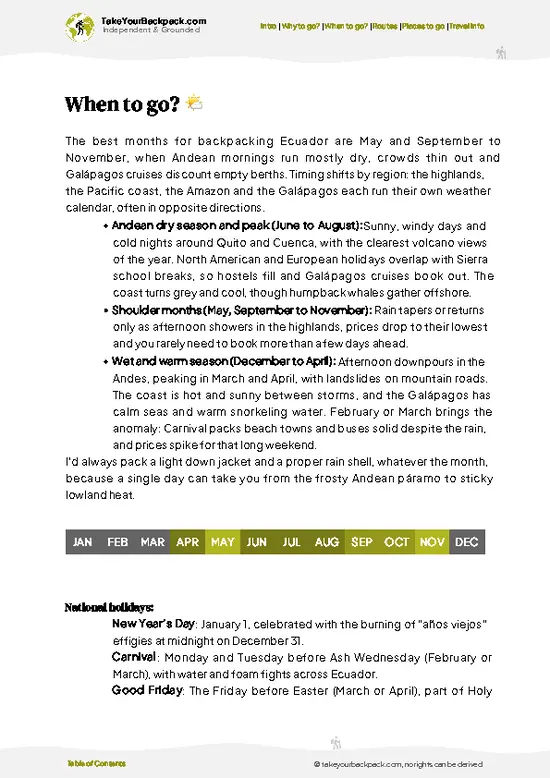
source: climatestotravel.comJANJanuary: good for travelingFEBFebruary: good for travelingMARMarch: good for travelingAPRApril: good for travelingMAYMay: highly recommended for travelingJUNJune: excellent for travelingJULJuly: highly recommended for travelingAUGAugust: highly recommended for travelingSEPSeptember: excellent for travelingOCTOctober: highly recommended for travelingNOVNovember: good for travelingDECDecember: good for traveling
when-to-go

✈️ The backpacker research shortcutEcuador Travel Guide

An offline-friendly backpacking guide with optimized travel routes, ranked highlights, transport advice, and the best areas to stay.
example page 0 from our offline Travel Guide for Ecuador
example page 1 from our offline Travel Guide for Ecuador
example page 2 from our offline Travel Guide for Ecuador
example page 3 from our offline Travel Guide for Ecuador
example page 4 from our offline Travel Guide for Ecuador
example page 5 from our offline Travel Guide for Ecuador
example page 6 from our offline Travel Guide for Ecuador
example page 7 from our offline Travel Guide for Ecuador
The digital guide (362 pages) contains:
94 highlights, ranked by travel appeal
Optimized 5, 10 & 15-day travel routes
Cities, national parks, landmarks, beaches
How to get around
Offline-friendly for travel without Wi-Fi
👉 Click to see all 30+ guide features

📅 Plan smarter in minutes, not weeks
Month by month travel advice
Festivals & national holidays
Budget expectations

🗺️ Go to the right places, skip the overrated ones
Honest pros & cons of destinations
Top hikes, parks & viewpoints
Lesser-known places most travelers miss
Clear “worth it vs skip it” guidance

🛏️ Travel smoothly without rookie mistakes
Best areas to stay
Transport systems explained simply
Common scams & safety advice
SIM cards, money & practical tips

🌍 Understand the country, not just visit it
Culture & traditions
52 Essential phrases & customs
Festivals worth planning around
Traveler-friendly historical context
Insights that make places more meaningful

📱 Built for real travel conditions
Fully downloadable PDF
Works completely offline
Optimized for phone use
Useful in remote areas & buses
Everything in one place
Save weeks of stressful planning
Get instant access to your full guide. 30‑day money-back guarantee.


By proceeding you agree to our terms.
Sent to your inbox immediately after payment • 100% Secure Checkout
Best Backpacking Travel Advisor 2025 tourism awardBest Backpacking
Travel Advisor
2025
What others say about Take Your Backpack Guides:
⭐⭐⭐⭐⭐
Fantastic, amazing amount of information!
⭐⭐⭐⭐⭐
My goodness this is amazing, it's what I've been looking for hats off too you!
⭐⭐⭐⭐⭐
I think this is absolutely BRILLIANT
⭐⭐⭐⭐
Very complete and informative. It's still missing places, but I gotta to commend you
⭐⭐⭐⭐⭐
This is truly amazing, thank you, can't wait to explore it with my kids!
⭐⭐⭐⭐⭐
Awesome resource, thank you!
⭐⭐⭐⭐⭐
This is amazing! Can't wait to explore the ones I haven't seen
⭐⭐⭐⭐
I love this! Well done, great idea.
⭐⭐⭐⭐⭐
Thanks for taking the time to make this gem!
⭐⭐⭐⭐⭐
This might be the best website I've ever seen.
⭐⭐⭐⭐⭐
Congratulations, and thank you so much for your work; it's incredibly valuable.
⭐⭐⭐⭐
In all seriousness I think you did a great job pointing out the important spots
⭐⭐⭐⭐⭐
10/10 very good
⭐⭐⭐⭐⭐
As someone who's only just starting to visit regularly this is awesome, thank you.
⭐⭐⭐⭐
Thank you very much! I'm going to visit my dad, it's going to be very useful!
⭐⭐⭐⭐⭐
This is really cool! We'll be travelling for the first time and this definitely come in handy.
⭐⭐⭐⭐⭐
You are now our minister of culture, congratulations 👨‍💼
⭐⭐⭐⭐⭐
Just wanted to tell you that this is a pearl! Going to follow your recommendations.
⭐⭐⭐⭐⭐
This is so cool. I'll definitely be using the resource for my travels soon.
⭐⭐⭐⭐⭐
This is very impressive! Good work.
⭐⭐⭐⭐⭐
This is an amazing and informative site. Very well done!

🛏️ Where to stay?Best areas to stay in Ecuador

If you’re hitting up Parque Histórico Guayaquil, don’t expect to stumble into a backpacker’s paradise right on its doorstep. The park sits a bit outside the city’s main backpacker hubs, so you’ll want to base yourself in neighborhoods that balance safety, social vibes, and easy transit. The best bets are the areas around Urdesa and Las Peñas. Urdesa is a lively, middle-class neighborhood with plenty of budget guesthouses and a local feel that’s miles away from tourist traps. It’s safe enough to wander after dark and has bars and cafés where you can meet other travelers without the forced hostel … read more 👉
If you’re hitting up Parque Histórico Guayaquil, don’t expect to stumble into a backpacker’s paradise right on its doorstep. The park sits a bit outside the city’s main backpacker hubs, so you’ll want to base yourself in neighborhoods that balance safety, social vibes, and easy transit. The best bets are the areas around Urdesa and Las Peñas. Urdesa is a lively, middle-class neighborhood with plenty of budget guesthouses and a local feel that’s miles away from tourist traps. It’s safe enough to wander after dark and has bars and cafés where you can meet other travelers without the forced hostel party scene. Las Peñas, on the other hand, is the historic heart of Guayaquil with colorful streets and a bohemian pulse. It’s a bit pricier but worth it if you want to soak in culture and art while staying close enough to catch a quick taxi to the park. Both areas offer a genuine slice of Guayaquil life, which is what you really want after the polished Instagram shots of the park itself.

👛 Costs (as of 13 December 2025)Travel costs and budget guide for Parque Histórico Guayaquil

As of March 2026, the entrance fee for Parque Histórico Guayaquil is USD5 per adult. The park is open from Tuesday to Sunday, including holidays, from 9:00 AM to 4:30 PM. No additional fees are mentioned for activities or services within the park. ([repositorio.uide.edu.ec](https://repositorio.uide.edu.ec/bitstream/37000/1561/1/T-UIDE-095.pdf?utm_source=openai))
⚠️ Prices can change and everyone travels differently, so take this as a rough guide. Hope it helps you plan your adventure!

Other Ecuadorian attractions near Parque Histórico Guayaquil

Explore more nearby:


💡 Not sure where to go next?
Create a personalized itinerary for Ecuador including Parque Histórico Guayaquil and the places that fit your trip.

Generate my itinerary

👉 Discover all attractions

Or checkout all Ecuador has to offer (think cities, towns, villages, national parks, hikes, beaches, festivals)
Country photo of Ecuador

We 💚 feedbackSumming up the experience

Parque Histórico Guayaquil isn’t some polished postcard spot—it’s a sprawling dive into Ecuador’s roots, with real people, animals, and stories that don’t get airbrushed for tourists. The downside? It can feel a bit crowded on weekends, and some areas show their age, which might throw off those chasing pristine. But if you want a raw, layered look at Guayaquil’s past and present in one place, this park delivers in a way no slick museum can.

✈️ When did I visit Ecuador?
Ecuador I visited during my half year trip through South and Central America back in 2003

✍️ Help improve this page!
The information on this page is based on my own backpacking experience in Ecuador, supplemented with up-to-date research and feedback from other travelers. Travel details can change, so if you notice anything outdated or incomplete, feel free to let me know.


🙋‍♂️ Give feedback

👋 Meet the founderWho’s Behind Take Your Backpack?

Johan, backpacker and founder of TakeYourBackpackHi, I’m Johan (Netherlands 🇳🇱), the creator of TakeYourBackpack. Over the past decade, I’ve backpacked through 80+ countries across six continents, gaining extensive experience with independent travel, long-term trips, and overland routes.

This site is built on a combination of firsthand travel experience and carefully curated insights from other backpackers. Many guides are based on places I’ve personally visited, while others bring together tips, observations, and practical advice shared by trusted travelers I’ve met along the way.

The goal is to provide realistic, experience-driven guidance — not generic itineraries — so you can explore destinations with better context, clearer expectations, and more confidence.

Get full Ecuador guide •
Instant download • 94 highlights • Full Offline guide