

×

Ecuador🇪🇨 | national parksPululahua Geobotanical Reserveinhabited crater, volcanic soil, patchwork farms | things to do and best time to go

Explore Antisana Ecological ReserveExplore Pasochoa Wildlife Refuge

Backpacking in Pululahua Geobotanical Reserve
👀 For curious travelersnational park ranked #13
By Johan Kruseman 🇳🇱 | Updated May 17, 2026

Your boots crunch on pale dust while clouds slide over the crater rim, dropping the temperature ten degrees in a minute; somewhere below, a donkey bell clinks and the smell of damp earth and cornfields cuts through the sulfur hint from distant vents. Pululahua Geobotanical Reserve sits just north of Quito, inside a massive inhabited volcanic crater, and it’s one of Ecuador’s quieter, cheaper alternatives to the big-name parks. Trails are mellow to moderate, scenery is more pastoral caldera than dramatic alpine, and wildlife is subtle—hawks, hummingbirds, the odd fox if you’re lucky. Access is easy by road, entrance is low-cost or free depending on the year, and you can camp or stay in simple hostales on the crater floor, but afternoon fog and limited services mean you need to plan food and layers. Compared with Cotopaxi or Cayambe-Coca, Pululahua feels humbler and more lived-in than wild; it’s better for slow walks and budget overnights than for high-altitude epics, which is exactly why I use it as an acclimatization and “no-stress” day before tackling the bigger parks.

Discover everything you want to know in the 📖 Ecuador Travel Guide.


Get your Ecuador guide
94 ranked highlights, routes & tips, works offline (362 pages)
Loading the map 🌍
CLICK TO FILTER
cities
towns
landmarks
national parks
hikes
beaches
attractions
festivals
regions
SHOW COUNTRY’S BESTSHOW ALL

✨ Why go?
Ranked #13 national park in Ecuador
What makes it a must-see national park

Backpackers flock to Pululahua Geobotanical Reserve for its unique blend of independent exploration and budget-friendly options. With campsites and hostels nearby, you can stretch your dollars while enjoying the stunning landscapes. The variety of trails caters to all levels, from casual walkers to seasoned hikers, allowing you to tailor your adventure.

What sets Pululahua apart is its suitability for self-guided travelers. You can navigate the park at your own pace, soaking in the diverse flora and fauna without the constraints of a tour. Just be mindful of the weather; it can change quickly. This freedom to roam makes Pululahua a top choice for those seeking authentic experiences without breaking the bank.
Want to include Pululahua Geobotanical Reserve in your Ecuador route?
Create a personalized Ecuador itinerary that includes Pululahua Geobotanical Reserve and the places that fit your trip — based on your travel style, budget, and available time. Get your route in seconds.

Generate my trip

💡 HighlightsWhat this place is best known for

  • Caldera viewpoints and rim trails: Sweeping panoramas into the bowl-shaped crater — the best places to appreciate the scale of Pululahua and, on a clear day, the surrounding Andean peaks. Short rim walks make for easy photo ops and big-sky moments.
  • Crater-floor farms and hamlets: A living, cultivated landscape inside a volcano — patchwork fields, grazing llamas or sheep, and tiny villages carved into the caldera floor. It’s surprisingly peaceful and (personal favorite) the kind of place where you can sit on a low stone wall, watch clouds fill the bowl, and feel properly tiny.
  • Cloud-forest pockets and microclimates: Pululahua’s bowl traps moisture, creating lush pockets of cloud forest, mossy trees, and ferns. Those sharp microclimate shifts mean plant diversity that’s oddly concentrated
read more 👉
  • Caldera viewpoints and rim trails: Sweeping panoramas into the bowl-shaped crater — the best places to appreciate the scale of Pululahua and, on a clear day, the surrounding Andean peaks. Short rim walks make for easy photo ops and big-sky moments.
  • Crater-floor farms and hamlets: A living, cultivated landscape inside a volcano — patchwork fields, grazing llamas or sheep, and tiny villages carved into the caldera floor. It’s surprisingly peaceful and (personal favorite) the kind of place where you can sit on a low stone wall, watch clouds fill the bowl, and feel properly tiny.
  • Cloud-forest pockets and microclimates: Pululahua’s bowl traps moisture, creating lush pockets of cloud forest, mossy trees, and ferns. Those sharp microclimate shifts mean plant diversity that’s oddly concentrated and photogenic.
  • Birdwatching and hummingbirds: Expect steady bird activity — hummingbirds zipping through flowering shrubs, colorful tanagers, and other Andean species. Bring binoculars; even short walks can reward you with good sightings.
  • Crater-descent hikes: Trails that drop from the rim to the floor are short but satisfying — steep in places, scenic the whole way. They’re great for a morning walk, giving different perspectives as you move from high rim to cultivated valley.
  • Volcanic geology and crater walls: The exposed walls, terraces and volcanic soils are a neat natural classroom — you can literally see eruption history in the layers and the way the landscape was shaped. Geology nerd or not, it’s dramatic.
  • Golden hour and low-cloud photography: Late afternoon light, drifting clouds and strong contrasts make Pululahua a photographer’s playground. Sunrise and sunset can turn the crater into a moody, cinematic scene — bring a windproof jacket.
Spotted a mistake or missing something? Contact us.

🌤️ When to go?Best time to explore Pululahua Geobotanical Reserve


  • Weather: The dry season from June to September offers the clearest skies and minimal rain, making trails safer and views sharper. The wet season (October to May) brings frequent showers that can turn paths muddy and slippery.

  • Temperature: Expect mild temperatures year-round, averaging 12-18°C (54-64°F). Nights can dip to 8°C (46°F), so pack layers. The dry season tends to feel cooler and crisper, while the wet season is more humid.

  • Daylight Hours: Daylight remains fairly consistent, around 11-12 hours daily. Early starts are key to avoid afternoon clouds and maximize hiking time.

  • Crowds: The dry season attracts more visitors, especially weekends. Weekdays during this period are quieter. The wet season sees fewer tourists, offering solitude but at the cost of less predictable conditions.
read more 👉

  • Weather: The dry season from June to September offers the clearest skies and minimal rain, making trails safer and views sharper. The wet season (October to May) brings frequent showers that can turn paths muddy and slippery.

  • Temperature: Expect mild temperatures year-round, averaging 12-18°C (54-64°F). Nights can dip to 8°C (46°F), so pack layers. The dry season tends to feel cooler and crisper, while the wet season is more humid.

  • Daylight Hours: Daylight remains fairly consistent, around 11-12 hours daily. Early starts are key to avoid afternoon clouds and maximize hiking time.

  • Crowds: The dry season attracts more visitors, especially weekends. Weekdays during this period are quieter. The wet season sees fewer tourists, offering solitude but at the cost of less predictable conditions.

  • Seasonal Activities: Birdwatching peaks in the dry months when species are more active and visible. Wet months bring lush vegetation but can limit wildlife sightings and trail access.

  • Price Fluctuations: Accommodation and guided tours tend to be pricier in the dry season due to demand. Booking ahead can secure better rates. The wet season offers lower prices but fewer service options.


Pro-tip: Aim for late June or early July—dry enough for solid hiking, fewer crowds than peak July-August, and better prices than the high season.


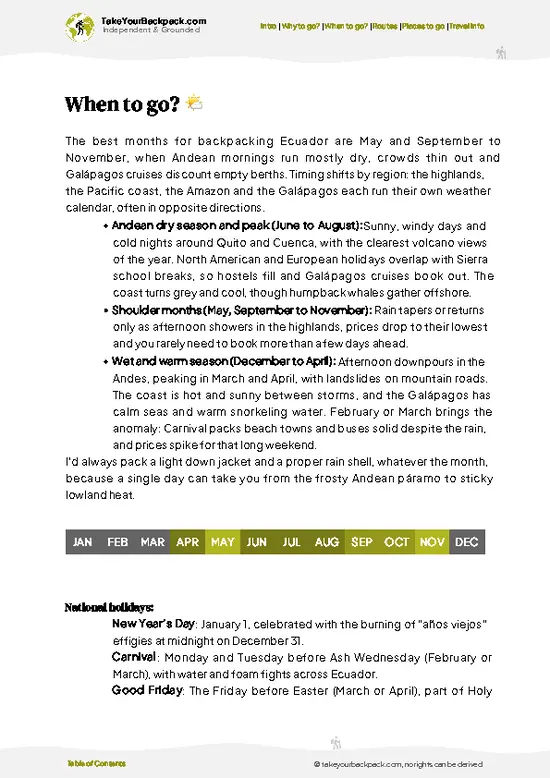
source: climatestotravel.comJANJanuary: fair for travelingFEBFebruary: fair for travelingMARMarch: fair for travelingAPRApril: fair for travelingMAYMay: fair for travelingJUNJune: highly recommended for travelingJULJuly: excellent for travelingAUGAugust: excellent for travelingSEPSeptember: excellent for travelingOCTOctober: fair for travelingNOVNovember: fair for travelingDECDecember: fair for traveling
when-to-go

✈️ The backpacker research shortcutEcuador Travel Guide

An offline-friendly backpacking guide with optimized travel routes, ranked highlights, transport advice, and the best areas to stay.
example page 0 from our offline Travel Guide for Ecuador
example page 1 from our offline Travel Guide for Ecuador
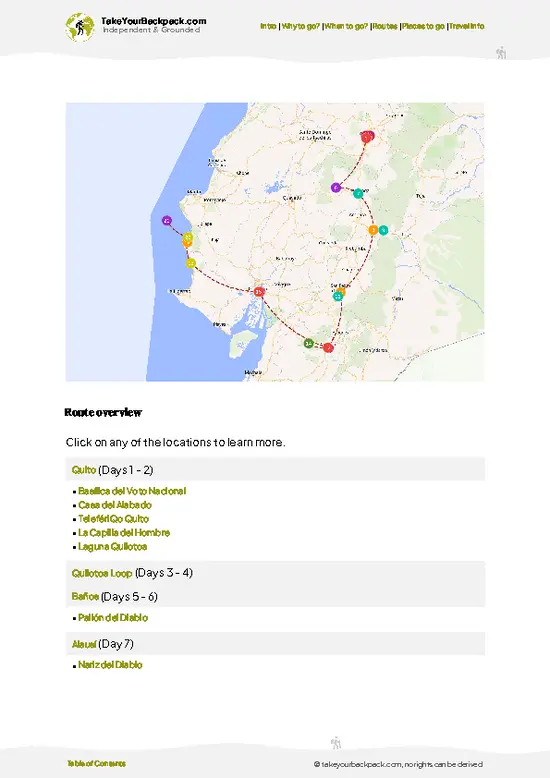
example page 2 from our offline Travel Guide for Ecuador
example page 3 from our offline Travel Guide for Ecuador
example page 4 from our offline Travel Guide for Ecuador
example page 5 from our offline Travel Guide for Ecuador
example page 6 from our offline Travel Guide for Ecuador
example page 7 from our offline Travel Guide for Ecuador
The digital guide (362 pages) contains:
94 highlights, ranked by travel appeal
Optimized 5, 10 & 15-day travel routes
Cities, national parks, landmarks, beaches
How to get around
Offline-friendly for travel without Wi-Fi
👉 Click to see all 30+ guide features

📅 Plan smarter in minutes, not weeks
Month by month travel advice
Festivals & national holidays
Budget expectations

🗺️ Go to the right places, skip the overrated ones
Honest pros & cons of destinations
Top hikes, parks & viewpoints
Lesser-known places most travelers miss
Clear “worth it vs skip it” guidance

🛏️ Travel smoothly without rookie mistakes
Best areas to stay
Transport systems explained simply
Common scams & safety advice
SIM cards, money & practical tips

🌍 Understand the country, not just visit it
Culture & traditions
52 Essential phrases & customs
Festivals worth planning around
Traveler-friendly historical context
Insights that make places more meaningful

📱 Built for real travel conditions
Fully downloadable PDF
Works completely offline
Optimized for phone use
Useful in remote areas & buses
Everything in one place
Save weeks of stressful planning
Get instant access to your full guide. 30‑day money-back guarantee.


By proceeding you agree to our terms.
Sent to your inbox immediately after payment • 100% Secure Checkout
Best Backpacking Travel Advisor 2025 tourism awardBest Backpacking
Travel Advisor
2025
What others say about Take Your Backpack Guides:
⭐⭐⭐⭐⭐
Fantastic, amazing amount of information!
⭐⭐⭐⭐⭐
My goodness this is amazing, it's what I've been looking for hats off too you!
⭐⭐⭐⭐⭐
I think this is absolutely BRILLIANT
⭐⭐⭐⭐
Very complete and informative. It's still missing places, but I gotta to commend you
⭐⭐⭐⭐⭐
This is truly amazing, thank you, can't wait to explore it with my kids!
⭐⭐⭐⭐⭐
Awesome resource, thank you!
⭐⭐⭐⭐⭐
This is amazing! Can't wait to explore the ones I haven't seen
⭐⭐⭐⭐
I love this! Well done, great idea.
⭐⭐⭐⭐⭐
Thanks for taking the time to make this gem!
⭐⭐⭐⭐⭐
This might be the best website I've ever seen.
⭐⭐⭐⭐⭐
Congratulations, and thank you so much for your work; it's incredibly valuable.
⭐⭐⭐⭐
In all seriousness I think you did a great job pointing out the important spots
⭐⭐⭐⭐⭐
10/10 very good
⭐⭐⭐⭐⭐
As someone who's only just starting to visit regularly this is awesome, thank you.
⭐⭐⭐⭐
Thank you very much! I'm going to visit my dad, it's going to be very useful!
⭐⭐⭐⭐⭐
This is really cool! We'll be travelling for the first time and this definitely come in handy.
⭐⭐⭐⭐⭐
You are now our minister of culture, congratulations 👨‍💼
⭐⭐⭐⭐⭐
Just wanted to tell you that this is a pearl! Going to follow your recommendations.
⭐⭐⭐⭐⭐
This is so cool. I'll definitely be using the resource for my travels soon.
⭐⭐⭐⭐⭐
This is very impressive! Good work.
⭐⭐⭐⭐⭐
This is an amazing and informative site. Very well done!

🛏️ Where to stay?Choosing the right base

For backpackers heading to Pululahua Geobotanical Reserve, options are limited but solid. There aren’t accommodations within the park itself, but nearby options in the town of Sangolquí or the larger city of Quito offer a range of choices.

In Sangolquí, look for budget hostels or guesthouses that cater to travelers. They provide a cozy base and often have local insights. Quito, about an hour away, has more variety, from hostels to budget hotels.

Keep in mind that public transport can be a bit tricky. Buses to the reserve are infrequent, so plan your trips carefully. Bring snacks and water; … read more 👉
For backpackers heading to Pululahua Geobotanical Reserve, options are limited but solid. There aren’t accommodations within the park itself, but nearby options in the town of Sangolquí or the larger city of Quito offer a range of choices.

In Sangolquí, look for budget hostels or guesthouses that cater to travelers. They provide a cozy base and often have local insights. Quito, about an hour away, has more variety, from hostels to budget hotels.

Keep in mind that public transport can be a bit tricky. Buses to the reserve are infrequent, so plan your trips carefully. Bring snacks and water; the park’s beauty can easily distract you from time. Prioritize your energy and budget for the experiences that truly matter—like hiking those stunning trails.

👛 Costs (as of 9 December 2025)What things cost and how to budget

Visiting Pululahua Geobotanical Reserve in Ecuador is an experience worth planning for, but be aware of the costs involved to avoid surprises.

Entry fees are typically around $2 to $5 USD per person. This nominal fee grants you access to the park’s stunning landscapes and diverse ecosystems.

If you’re considering guided tours, expect to pay between $15 and $50 USD, depending on the length and depth of the experience. Some tours include transportation, which can save you the hassle of navigating public transport.

Food options within the reserve are limited. Budget around $5 to $10 USD for a meal if you plan to eat on-site. Bringing your own snacks can stretch your budget further and keep your energy up for hiking.

Transportation to the reserve can vary. If you’re taking a bus from Quito, … read more 👉
Visiting Pululahua Geobotanical Reserve in Ecuador is an experience worth planning for, but be aware of the costs involved to avoid surprises.

Entry fees are typically around $2 to $5 USD per person. This nominal fee grants you access to the park’s stunning landscapes and diverse ecosystems.

If you’re considering guided tours, expect to pay between $15 and $50 USD, depending on the length and depth of the experience. Some tours include transportation, which can save you the hassle of navigating public transport.

Food options within the reserve are limited. Budget around $5 to $10 USD for a meal if you plan to eat on-site. Bringing your own snacks can stretch your budget further and keep your energy up for hiking.

Transportation to the reserve can vary. If you’re taking a bus from Quito, the fare is about $1 to $2 USD. A taxi or rideshare will cost significantly more, often ranging from $25 to $40 USD, depending on your starting point.

Plan for additional costs if you want to rent equipment, like hiking poles or binoculars. Rentals can add another $5 to $15 USD to your day.

Keep these figures in mind as you prepare. They’ll help you allocate your budget wisely, ensuring you have the funds for the experiences that truly matter.


source: ecuador.travel
⚠️ Prices can change and everyone travels differently, so take this as a rough guide. Hope it helps you plan your adventure!

🥾 TrailsBest hikes in Pululahua Geobotanical Reserve national park

The Pululahua Geobotanical Reserve is a hidden gem just outside of Quito, Ecuador, offering some stunning hiking opportunities. The reserve is set in a volcanic crater and boasts breathtaking views of lush landscapes, dramatic cloud forests, and unique flora and fauna. You might spot colorful birds, butterflies, and even the occasional llama as you wander through this diverse ecosystem.

One of the popular trails is the Rumiñahui Trail, which gives you a solid taste of the area’s beauty. Here are the details:
  • Length: 10 km
  • Estimated Duration: 4-5 hours
  • Difficulty Level: Moderate
  • Key Features: Panoramic
read more 👉
The Pululahua Geobotanical Reserve is a hidden gem just outside of Quito, Ecuador, offering some stunning hiking opportunities. The reserve is set in a volcanic crater and boasts breathtaking views of lush landscapes, dramatic cloud forests, and unique flora and fauna. You might spot colorful birds, butterflies, and even the occasional llama as you wander through this diverse ecosystem.

One of the popular trails is the Rumiñahui Trail, which gives you a solid taste of the area’s beauty. Here are the details:
  • Length: 10 km
  • Estimated Duration: 4-5 hours
  • Difficulty Level: Moderate
  • Key Features: Panoramic views of the crater, diverse plant life, and potential wildlife sightings
  • Terrain: Varied, with some steep sections and rocky paths

Getting to the park is pretty straightforward. You can catch a bus from Quito to the nearby town of Calacalí and then hop on a short taxi ride to the entrance. It’s generally not too crowded, especially if you go during the week, which means you can enjoy the tranquility of nature without feeling rushed. There is a small entrance fee, but it’s worth it for the experience. Just pack some water and snacks, and you’re set for a day of adventure!
⚠️ Hiking info can sometimes be outdated or inaccurate. Before you hit the trail, check the latest conditions with locals. If you do spot anything that's off, I'd love to hear from you, so I can update it for fellow travelers.

🛡️ SafetySafety Tips and Common Scams in Pululahua Geobotanical Reserve

Pululahua Geobotanical Reserve offers a manageable hiking experience, but a few realities can catch you off guard. Weather can shift quickly; pack layers to adapt. The trails are generally well-marked, yet some sections can be steep and muddy, so sturdy footwear is essential.

Altitude may affect some hikers, so take it slow and hydrate. Wildlife encounters are rare, but if you spot a snake or other critters, give them space. Respect the environment by sticking to trails and packing out what you bring in. With a bit of preparation, you’ll navigate this stunning reserve smoothly and enjoy every moment.

Other Ecuadorian national parks near Pululahua Geobotanical Reserve

Explore more nearby:


💡 Not sure where to go next?
Create a personalized itinerary for Ecuador including Pululahua Geobotanical Reserve and the places that fit your trip.

Generate my itinerary

👉 Discover all national parks

Or checkout all Ecuador has to offer (think cities, towns, villages, national parks, hikes, beaches, festivals)
Country photo of Ecuador

We 💚 feedbackParting advice and final tips

Pululahua Geobotanical Reserve is a treasure for nature lovers. The unique volcanic landscape and diverse ecosystems are genuinely captivating. However, be prepared for the altitude; it can sap your energy faster than you think. Pace yourself, and you’ll enjoy every moment without burning out. Trust me, it’s worth the effort.

✈️ When did I visit Ecuador?
Ecuador I visited during my half year trip through South and Central America back in 2003

✍️ Help improve this page!
The information on this page is based on my own backpacking experience in Ecuador, supplemented with up-to-date research and feedback from other travelers. Travel details can change, so if you notice anything outdated or incomplete, feel free to let me know.


🙋‍♂️ Give feedback

👋 Meet the founderWho’s Behind Take Your Backpack?

Johan, backpacker and founder of TakeYourBackpackHi, I’m Johan (Netherlands 🇳🇱), the creator of TakeYourBackpack. Over the past decade, I’ve backpacked through 80+ countries across six continents, gaining extensive experience with independent travel, long-term trips, and overland routes.

This site is built on a combination of firsthand travel experience and carefully curated insights from other backpackers. Many guides are based on places I’ve personally visited, while others bring together tips, observations, and practical advice shared by trusted travelers I’ve met along the way.

The goal is to provide realistic, experience-driven guidance — not generic itineraries — so you can explore destinations with better context, clearer expectations, and more confidence.

Get full Ecuador guide •
Instant download • 94 highlights • Full Offline guide