×

Egypt🇪🇬 | landmarksKarnak Templehypostyle hall, carved obelisks, sacred lake | things to do and best time to go

Explore Great Pyramid of GizaExplore Orthodox Monastery of St Catherine

Backpacking in Karnak Temple
🌟 Highlightunique site ranked #4
By Johan Kruseman 🇳🇱 | Updated June 4, 2026

Everyone comes to Karnak Temple for that “epic” Instagram shot—columns rising like a petrified forest, sunlight slicing through ancient stone. But here’s the truth: the real magic isn’t in the photos, it’s in the scale and sweat of history you feel under your boots. Karnak sits just north of Luxor, in the heart of Upper Egypt, and it’s not just a temple—it’s a sprawling, centuries-old construction site where pharaohs tried to outdo each other for two thousand years. Yes, the crowds are thick, especially after 9 a.m., and ticket prices have crept up, but you’re not here for solitude or bargains. You’re here to walk through a place that rewired the meaning of “grand.” Accessibility is solid—Luxor is easy to reach—but don’t expect a spiritual awakening in silence. Expect awe, a little chaos, and the kind of photo ops that make you wish you’d brought a wide-angle lens.

Discover everything you want to know in the 📖 Egypt Travel Guide.


Get your Egypt guide
116 ranked highlights, routes & tips, works offline (438 pages)
Loading the map 🌍
CLICK TO FILTER
cities
towns
landmarks
national parks
hikes
beaches
attractions
festivals
regions
SHOW COUNTRY’S BESTSHOW ALL

✨ Why go?
Ranked #4 unique site in Egypt
Why visitors keep coming back

Karnak Temple isn’t just another stop on the tourist trail; it’s a living testament to ancient Egyptian civilization. Yes, it can get crowded, especially during peak season, but the sheer scale of this site makes it worth the hustle. You’ll find towering columns, intricate hieroglyphs, and a sense of history that’s palpable.

The cost to enter is low compared to other world wonders, making it accessible for backpackers on a budget. Plus, it fits seamlessly into a broader route through Luxor, allowing you to explore the Valley of the Kings and other nearby sites without feeling rushed.

What sets Karnak apart is its uniqueness. Unlike many landmarks, it’s not just about the visuals; it’s about the stories embedded in every stone. Take time to wander through the Sacred Lake or the Avenue of … read more 👉
Karnak Temple isn’t just another stop on the tourist trail; it’s a living testament to ancient Egyptian civilization. Yes, it can get crowded, especially during peak season, but the sheer scale of this site makes it worth the hustle. You’ll find towering columns, intricate hieroglyphs, and a sense of history that’s palpable.

The cost to enter is low compared to other world wonders, making it accessible for backpackers on a budget. Plus, it fits seamlessly into a broader route through Luxor, allowing you to explore the Valley of the Kings and other nearby sites without feeling rushed.

What sets Karnak apart is its uniqueness. Unlike many landmarks, it’s not just about the visuals; it’s about the stories embedded in every stone. Take time to wander through the Sacred Lake or the Avenue of Sphinxes. These quieter spots offer a chance to reflect and soak in the atmosphere, away from the throngs.

In short, Karnak Temple is a must-see not just for its grandeur, but for the authentic connection it offers to a civilization that shaped the world.
Want to include Karnak Temple in your Egypt route?
Create a personalized Egypt itinerary that includes Karnak Temple and the places that fit your trip — based on your travel style, budget, and available time. Get your route in seconds.

Generate my trip

💡 HighlightsWhat this place is best known for

  • Great Hypostyle Hall — A forest of 134 giant columns with carved capitals and a raised central aisle that once held a roof — seeing it in person gives the scale and claustrophobic grandeur photos can’t. The walls and columns are packed with deep reliefs and cartouches from successive pharaohs, so you’re basically standing inside a giant history book.
  • Precinct of Amun-Ra — The beating heart of Karnak, where building campaigns piled up over 1,500+ years. It’s special because you can read the site’s timeline in stone: layers of architecture, additions and reused blocks that tell stories of religion, politics and ancient ego-management.
  • Avenue of Sphinxes and the Sacred Lake — The long processional route lined with sphinxes linking Karnak toward Luxor, and the quiet rectangular sacred lake
read more 👉
  • Great Hypostyle Hall — A forest of 134 giant columns with carved capitals and a raised central aisle that once held a roof — seeing it in person gives the scale and claustrophobic grandeur photos can’t. The walls and columns are packed with deep reliefs and cartouches from successive pharaohs, so you’re basically standing inside a giant history book.
  • Precinct of Amun-Ra — The beating heart of Karnak, where building campaigns piled up over 1,500+ years. It’s special because you can read the site’s timeline in stone: layers of architecture, additions and reused blocks that tell stories of religion, politics and ancient ego-management.
  • Avenue of Sphinxes and the Sacred Lake — The long processional route lined with sphinxes linking Karnak toward Luxor, and the quiet rectangular sacred lake used for ritual purification. It’s atmospheric at dawn or dusk and a nice contrast to the overwhelming temple interiors.
  • Obelisks (especially Hatshepsut’s) — Tall, finely inscribed stone needles that were power gestures as much as monuments. Hatshepsut’s obelisk(s) are a rare look at a woman pharaoh asserting presence in a male-dominated craft — and the inscriptions are excellent close-up reading material.
  • Ram-headed sphinxes and colossal statues — Rows of ram (Amun) sphinxes and huge seated/standing pharaonic statues give you scale and spectacle. The faces, chipped or re-cut over centuries, show how rulers reworked earlier art to claim history.
  • Hieroglyphs, reliefs and votive inscriptions — Everywhere you look there are carved stories: religious rituals, kingly victories, donor graffiti and everyday offerings. Up close you’ll catch details that explain what life and worship looked like in ancient Thebes.
  • Sound & Light show / Night visit — Seeing Karnak lit and narrated after dark turns the ruins cinematic — shadows deepen those carvings and the history feels performative. If you’re on a budget, go at sunset for the cooler light and fewer tourists instead of the paid show.
Spotted a mistake or missing something? Contact us.

Things to do around Karnak Temple

Ratings based on Tripadvisor reviews. When you book through this link, you support our work at no extra cost to you.

🌤️ When to go?When to go for the best experience


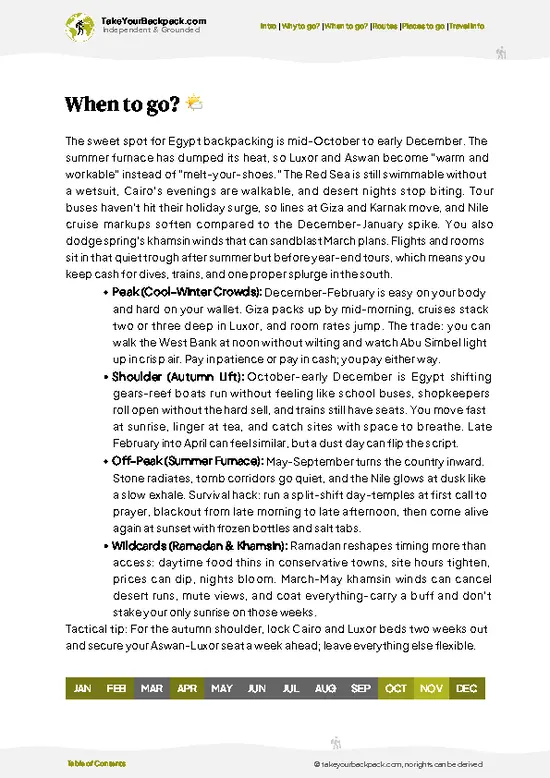
  • Weather: The best time to visit Karnak Temple is between October and April when Egypt’s desert heat mellows out. Expect daytime highs around 22-28°C (72-82°F), which is far more bearable than the brutal 40°C+ (104°F+) summer scorchers.

  • Temperature: Nights can get chilly, dipping to 10-15°C (50-59°F) in winter, so pack layers. The contrast between hot days and cool nights is real, and it affects how much ground you can cover comfortably.

  • Daylight Hours: Winter days are shorter, with about 10 hours of daylight, meaning less time to explore. Summer offers longer days but at the cost of punishing heat and sun exposure.

  • Crowds: Peak tourist season (December to February) means hordes of tour groups and inflated prices. Shoulder seasons (October-November and March-April) strike a better
read more 👉

  • Weather: The best time to visit Karnak Temple is between October and April when Egypt’s desert heat mellows out. Expect daytime highs around 22-28°C (72-82°F), which is far more bearable than the brutal 40°C+ (104°F+) summer scorchers.

  • Temperature: Nights can get chilly, dipping to 10-15°C (50-59°F) in winter, so pack layers. The contrast between hot days and cool nights is real, and it affects how much ground you can cover comfortably.

  • Daylight Hours: Winter days are shorter, with about 10 hours of daylight, meaning less time to explore. Summer offers longer days but at the cost of punishing heat and sun exposure.

  • Crowds: Peak tourist season (December to February) means hordes of tour groups and inflated prices. Shoulder seasons (October-November and March-April) strike a better balance—fewer crowds, cooler temps, and more breathing room to soak in the ruins.

  • Seasonal Activities: The Sound and Light Show runs year-round but is more enjoyable in cooler months. Avoid Ramadan if you want full access and fewer restrictions around local services.

  • Price Fluctuations: Expect higher accommodation and tour prices in peak winter months. Booking in shoulder seasons can save you a decent chunk without sacrificing comfort.


Pro-tip: Aim for late October or early April—cool enough to wander freely, light crowds, and prices that won’t punch your wallet.


source: climatestotravel.comJANJanuary: good for travelingFEBFebruary: good for travelingMARMarch: highly recommended for travelingAPRApril: highly recommended for travelingMAYMay: fair for travelingJUNJune: below average for travelingJULJuly: below average for travelingAUGAugust: below average for travelingSEPSeptember: fair for travelingOCTOctober: highly recommended for travelingNOVNovember: highly recommended for travelingDECDecember: good for traveling
egypt-unique-site-karnak-temple
© Google |

✈️ The backpacker research shortcutEgypt Travel Guide

An offline-friendly backpacking guide with optimized travel routes, ranked highlights, transport advice, and the best areas to stay.
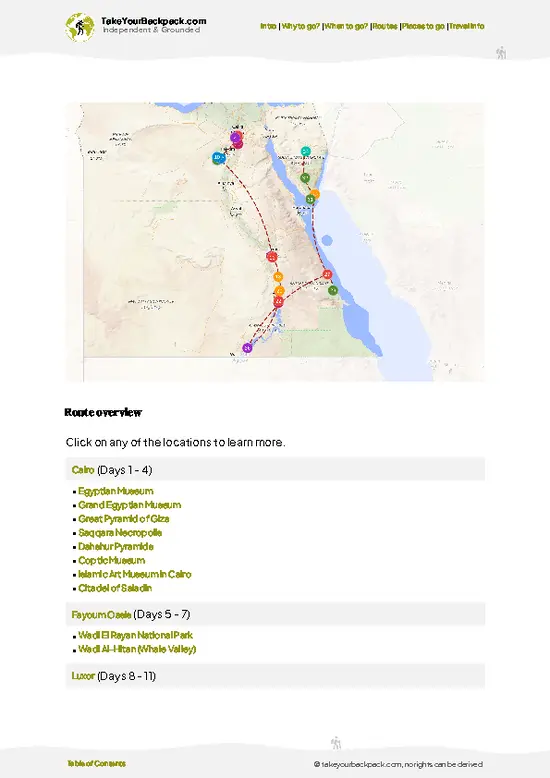
example page 0 from our offline Travel Guide for Egypt
example page 1 from our offline Travel Guide for Egypt
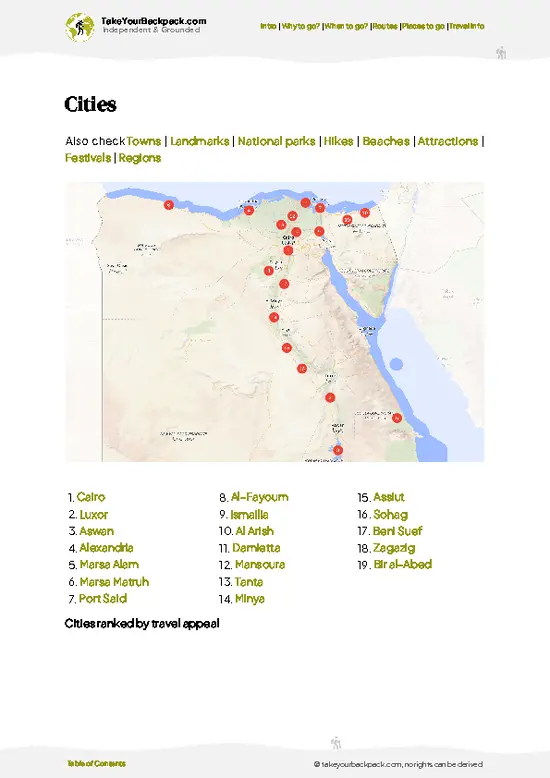
example page 2 from our offline Travel Guide for Egypt
example page 3 from our offline Travel Guide for Egypt
example page 4 from our offline Travel Guide for Egypt
example page 5 from our offline Travel Guide for Egypt
example page 6 from our offline Travel Guide for Egypt
example page 7 from our offline Travel Guide for Egypt
The digital guide (438 pages) contains:
116 highlights, ranked by travel appeal
Optimized 7, 14 & 21-day travel routes
Cities, national parks, landmarks, beaches
How to get around
Offline-friendly for travel without Wi-Fi
👉 Click to see all 30+ guide features

📅 Plan smarter in minutes, not weeks
Month by month travel advice
Festivals & national holidays
Budget expectations

🗺️ Go to the right places, skip the overrated ones
Honest pros & cons of destinations
Top hikes, parks & viewpoints
Lesser-known places most travelers miss
Clear “worth it vs skip it” guidance

🛏️ Travel smoothly without rookie mistakes
Best areas to stay
Transport systems explained simply
Common scams & safety advice
SIM cards, money & practical tips

🌍 Understand the country, not just visit it
Culture & traditions
52 Essential phrases & customs
Festivals worth planning around
Traveler-friendly historical context
Insights that make places more meaningful

📱 Built for real travel conditions
Fully downloadable PDF
Works completely offline
Optimized for phone use
Useful in remote areas & buses
Everything in one place
Save weeks of stressful planning
Get instant access to your full guide. 30‑day money-back guarantee.


By proceeding you agree to our terms.
Sent to your inbox immediately after payment • 100% Secure Checkout
Best Backpacking Travel Advisor 2025 tourism awardBest Backpacking
Travel Advisor
2025
What others say about Take Your Backpack Guides:
⭐⭐⭐⭐⭐
Fantastic, amazing amount of information!
⭐⭐⭐⭐⭐
My goodness this is amazing, it's what I've been looking for hats off too you!
⭐⭐⭐⭐⭐
I think this is absolutely BRILLIANT
⭐⭐⭐⭐
Very complete and informative. It's still missing places, but I gotta to commend you
⭐⭐⭐⭐⭐
This is truly amazing, thank you, can't wait to explore it with my kids!
⭐⭐⭐⭐⭐
Awesome resource, thank you!
⭐⭐⭐⭐⭐
This is amazing! Can't wait to explore the ones I haven't seen
⭐⭐⭐⭐
I love this! Well done, great idea.
⭐⭐⭐⭐⭐
Thanks for taking the time to make this gem!
⭐⭐⭐⭐⭐
This might be the best website I've ever seen.
⭐⭐⭐⭐⭐
Congratulations, and thank you so much for your work; it's incredibly valuable.
⭐⭐⭐⭐
In all seriousness I think you did a great job pointing out the important spots
⭐⭐⭐⭐⭐
10/10 very good
⭐⭐⭐⭐⭐
As someone who's only just starting to visit regularly this is awesome, thank you.
⭐⭐⭐⭐
Thank you very much! I'm going to visit my dad, it's going to be very useful!
⭐⭐⭐⭐⭐
This is really cool! We'll be travelling for the first time and this definitely come in handy.
⭐⭐⭐⭐⭐
You are now our minister of culture, congratulations 👨‍💼
⭐⭐⭐⭐⭐
Just wanted to tell you that this is a pearl! Going to follow your recommendations.
⭐⭐⭐⭐⭐
This is so cool. I'll definitely be using the resource for my travels soon.
⭐⭐⭐⭐⭐
This is very impressive! Good work.
⭐⭐⭐⭐⭐
This is an amazing and informative site. Very well done!

🛏️ Where to stay?How to pick the right area

Staying near Karnak Temple? You’ve got options, but let’s cut through the fluff. Luxor is the main hub, and it’s where the action is. Yes, it can get crowded with tourists, especially during peak season, but that’s part of the experience. You’ll find a mix of budget-friendly hostels and guesthouses that cater to backpackers.

Head to the East Bank for a lively atmosphere. Here, you can mingle with fellow travelers over a cheap meal or a cold drink. The vibe is social, and you’ll find plenty of opportunities to swap stories or team up for excursions.

If you prefer a quieter scene, consider the … read more 👉
Staying near Karnak Temple? You’ve got options, but let’s cut through the fluff. Luxor is the main hub, and it’s where the action is. Yes, it can get crowded with tourists, especially during peak season, but that’s part of the experience. You’ll find a mix of budget-friendly hostels and guesthouses that cater to backpackers.

Head to the East Bank for a lively atmosphere. Here, you can mingle with fellow travelers over a cheap meal or a cold drink. The vibe is social, and you’ll find plenty of opportunities to swap stories or team up for excursions.

If you prefer a quieter scene, consider the West Bank. It’s a bit more laid-back, with fewer tourists and a more local feel. You’ll still be close enough to Karnak, but you can escape the hustle when you need to. Plus, the sunsets over the Nile from this side are something else.

Safety is generally good in these areas, but always trust your instincts. Stick to well-lit streets at night and keep your belongings secure. The real magic of Luxor isn’t just the temples; it’s the connections you make and the stories you gather along the way.

👛 Costs (as of 28 January 2026)Money, prices, and spending tips

Visiting Karnak Temple is a journey into the heart of ancient Egypt, but it comes with its own set of costs. Here’s the real breakdown:
  • Entrance Fee: Expect to pay around €10-€15 (or $12-$18). This grants you access to the sprawling complex. Keep in mind, prices can fluctuate based on the season or any special events.
  • Guided Tours: If you want to dive deeper, guided tours range from €30-€100 ($35-$120), depending on the length and depth of the experience. A knowledgeable guide can transform your visit, shedding light on the history and significance of the site.
  • Transportation: Getting to Karnak can vary. A taxi from Luxor might cost you around €5-€10 ($6-$12) one way. If you’re feeling adventurous, local buses are cheaper but less comfortable, usually around €1 ($1.20).
  • Food and Drink: Inside
read more 👉
Visiting Karnak Temple is a journey into the heart of ancient Egypt, but it comes with its own set of costs. Here’s the real breakdown:
  • Entrance Fee: Expect to pay around €10-€15 (or $12-$18). This grants you access to the sprawling complex. Keep in mind, prices can fluctuate based on the season or any special events.
  • Guided Tours: If you want to dive deeper, guided tours range from €30-€100 ($35-$120), depending on the length and depth of the experience. A knowledgeable guide can transform your visit, shedding light on the history and significance of the site.
  • Transportation: Getting to Karnak can vary. A taxi from Luxor might cost you around €5-€10 ($6-$12) one way. If you’re feeling adventurous, local buses are cheaper but less comfortable, usually around €1 ($1.20).
  • Food and Drink: Inside the temple complex, prices for snacks and drinks can be inflated. Budget about €5-€10 ($6-$12) for a meal. If you venture outside, you can find local eateries offering meals for as low as €3 ($4).
  • Souvenirs: If you’re looking to take a piece of Egypt home, set aside €5-€20 ($6-$24) for trinkets. Bargaining is expected, so don’t shy away from negotiating.

These costs can add up, but the experience of walking through history at Karnak Temple is worth every penny.


source: egymonuments.gov.eg
⚠️ Prices can change and everyone travels differently, so take this as a rough guide. Hope it helps you plan your adventure!

Other Egyptian landmarks near Karnak Temple

Explore more nearby:


💡 Not sure where to go next?
Create a personalized itinerary for Egypt including Karnak Temple and the places that fit your trip.

Generate my itinerary

👉 Discover all landmarks

Or checkout all Egypt has to offer (think cities, towns, villages, national parks, hikes, beaches, festivals)
Country photo of Egypt

We 💚 feedbackSumming up the experience

Karnak Temple can feel like a tourist circus, especially at peak times. But if you wander beyond the main halls, you’ll find pockets of serenity. The best surprise? The sound and light show at dusk. It’s cheesy, but it captures the temple’s spirit in a way that daytime crowds can’t. Just be ready for the heat; it’s relentless. Bring water and a sense of adventure. Explore the nooks, and you’ll discover a deeper connection to ancient Egypt that Instagram just can’t capture.

✍️ Help improve this page!
The information on this page is based on in-depth research, insights shared by experienced travelers, and feedback from the local travel community in Egypt. While every effort is made to keep the information accurate and current, conditions can change — so if you spot anything incorrect or outdated, please get in touch.


🙋‍♂️ Give feedback

👋 Meet the founderWho’s Behind Take Your Backpack?

Johan, backpacker and founder of TakeYourBackpackHi, I’m Johan (Netherlands 🇳🇱), the creator of TakeYourBackpack. Over the past decade, I’ve backpacked through 80+ countries across six continents, gaining extensive experience with independent travel, long-term trips, and overland routes.

This site is built on a combination of firsthand travel experience and carefully curated insights from other backpackers. Many guides are based on places I’ve personally visited, while others bring together tips, observations, and practical advice shared by trusted travelers I’ve met along the way.

The goal is to provide realistic, experience-driven guidance — not generic itineraries — so you can explore destinations with better context, clearer expectations, and more confidence.

Get full Egypt guide •
Instant download • 116 highlights • Full Offline guide