×

Egypt🇪🇬 | regionsRed Sea Mountainsrugged granite peaks, Bedouin camps, remote wadis, arid plateaus | things to do and best time to go

Explore Fayoum OasisExplore Wadi Al-Hitan (Whale Valley)

Backpacking in Red Sea Mountains
👌 Worth visitingregion ranked #3
By Johan Kruseman 🇳🇱 | Updated June 3, 2026

Most people think the Red Sea Mountains are just a backdrop for Hurghada’s beach resorts, but here’s the twist: you can hike for days without seeing another soul, and the Bedouin-run trails are older than most European cities. The Red Sea Mountains run parallel to Egypt’s eastern coastline, stretching from Suez all the way down past Marsa Alam, slicing between the Nile Valley and the Red Sea itself.

For backpackers, this region is a paradox—raw, wild, and cheap if you know where to look, but also a logistical puzzle. The scenery is lunar: jagged granite peaks, canyons that swallow sound, and the kind of silence you only get far from highways. You’ll find real Bedouin culture here, not the staged stuff, especially around towns like Quseir and Safaga. But don’t expect easy public transport or a party scene—this is Egypt’s anti-Sinai, with fewer hostels and almost no crowds. Compared to the Sinai or Luxor, the Red Sea Mountains are less polished, more authentic, and—if you’re willing to trade comfort for experience—absolutely worth the detour.

Discover everything you want to know in the 📖 Egypt Travel Guide.


Get your Egypt guide
116 ranked highlights, routes & tips, works offline (438 pages)
Loading the map 🌍
CLICK TO FILTER
cities
towns
landmarks
national parks
hikes
beaches
attractions
festivals
regions
SHOW COUNTRY’S BESTSHOW ALL

✨ Why go?
Ranked #3 region in Egypt
What makes this region worth visiting

In the Red Sea Mountains, backpackers find a treasure trove of experiences that blend nature and culture seamlessly. The variety of landscapes is staggering. You can hike rugged mountains, explore desert canyons, and chill by the coast—all without the hassle of constant relocation. This region allows you to dive into multiple adventures while setting up camp in one spot.

Transport is flexible here. You can rent a bike or hitch a ride with locals, making it easy to explore at your own pace. This freedom lets you soak in the authenticity of the area, from bustling markets in Hurghada to the serene beauty of Wadi Gemal National Park.

Slow travel is the name of the game. You can spend days wandering through ancient ruins or lounging on a beach, absorbing the local vibe. This isn’t just about … read more 👉
In the Red Sea Mountains, backpackers find a treasure trove of experiences that blend nature and culture seamlessly. The variety of landscapes is staggering. You can hike rugged mountains, explore desert canyons, and chill by the coast—all without the hassle of constant relocation. This region allows you to dive into multiple adventures while setting up camp in one spot.

Transport is flexible here. You can rent a bike or hitch a ride with locals, making it easy to explore at your own pace. This freedom lets you soak in the authenticity of the area, from bustling markets in Hurghada to the serene beauty of Wadi Gemal National Park.

Slow travel is the name of the game. You can spend days wandering through ancient ruins or lounging on a beach, absorbing the local vibe. This isn’t just about ticking boxes; it’s about savoring every moment.

So, if you’re after a trip that balances adventure and relaxation, the Red Sea Mountains are calling. You’ll leave feeling like a local, not just another tourist.
Want to include Red Sea Mountains in your Egypt route?
Create a personalized Egypt itinerary that includes Red Sea Mountains and the places that fit your trip — based on your travel style, budget, and available time. Get your route in seconds.

Generate my trip

💡 HighlightsThe experiences that define the visit

  1. Gebel Elba (Jabal Elba) — A lonely, green mountain massif at Egypt’s southeastern tip where mist-fed springs and pockets of acacia woodland create a tiny, unexpected oasis in the Red Sea Hills. It’s a bird-migration hotspot with endemic plants and dramatic granite ridges you climb for panoramic views that you won’t find on the busy Red Sea coast. Reachable only by 4x4 and local guides, the sense of remoteness is the point.
  2. Wadi El Gemal (Wadi Gimal) National Park — A huge mix of desert wadis, rugged mountain outcrops, coastal mangroves and offshore islands near Marsa Alam. The park combines Bedouin settlements, ancient quarries and plentiful wildlife (sea turtles, migratory birds, and sometimes dugongs) — it’s where the Red Sea mountains meet the sea, so you get mountain hikes, coastal
read more 👉
  1. Gebel Elba (Jabal Elba) — A lonely, green mountain massif at Egypt’s southeastern tip where mist-fed springs and pockets of acacia woodland create a tiny, unexpected oasis in the Red Sea Hills. It’s a bird-migration hotspot with endemic plants and dramatic granite ridges you climb for panoramic views that you won’t find on the busy Red Sea coast. Reachable only by 4x4 and local guides, the sense of remoteness is the point.
  2. Wadi El Gemal (Wadi Gimal) National Park — A huge mix of desert wadis, rugged mountain outcrops, coastal mangroves and offshore islands near Marsa Alam. The park combines Bedouin settlements, ancient quarries and plentiful wildlife (sea turtles, migratory birds, and sometimes dugongs) — it’s where the Red Sea mountains meet the sea, so you get mountain hikes, coastal walks and authentic local camping in one trip.
  3. Wadi Hammamat — One of the Eastern Desert’s classic drives: a long, stony wadi crisscrossed with ancient petroglyphs, Pharaonic quarrying marks and polished rock surfaces. This corridor was the overland link between the Nile and the Red Sea for millennia; the carved scenes, fossil-rich slabs and dramatic black-hued mountains are unique to this stretch of the Red Sea Hills.
  4. El Quseir Old Town and Fort — A working Red Sea port town with an atmospheric Ottoman-era fort, coral-stone houses and a twisting old souk that preserves the feel of Red Sea trade long before mass tourism. It’s the best place in the region to mix culture with mountain-side day trips and nearby off-shore reefs without the resort crowds.
  5. Mersa Gawasis (archaeological harbour) — Hidden gem: a small, low-profile coastal site south of Safaga where archaeologists uncovered a Middle Kingdom shipyard and embarkation inscriptions used by ancient Egyptian sea expeditions to Punt. It’s an unusually tangible link between the desert mountains and Egypt’s maritime history — quiet, fenced and easily walkable from the shore, and very few tourists make the detour.
  6. Bedouin mountain camps in the Red Sea Hills — Hidden gem: genuine overnight stays with local Bedouin families tucked into wadis and foothills around Marsa Alam and Quseir. These camps offer tea, storytelling, simple mountain hikes and sunrise views over the ridges — a far more authentic, grounded experience than the coastal resorts.
  7. Rock-art panels and minor quarries off the Quseir-Qift route — Hidden gem: a scatter of lesser-known petroglyph sites and small ancient quarry workings on the foothills approaching the Red Sea that locals know and visit but most guidebooks skip. These roadside panels and worked stone faces let you see the same desert archaeology as the big sites, minus the crowds.
Spotted a mistake or missing something? Contact us.

Things to do around Red Sea Mountains

Ratings based on Tripadvisor reviews. When you book through this link, you support our work at no extra cost to you.

⌛️ 5 daysSeeing the highlights in 5 days

Day 1: Sharm El-Sheikh
You’re diving into the heart of the Red Sea Mountains from Sharm El-Sheikh, a bustling hub that’s your gateway. The transport here is straightforward—taxis and buses are plentiful. Grab a local bus to Dahab; it’s cheap and gives you a taste of the local vibe. The drive along the coast is stunning, with the mountains rising dramatically behind you. This sets the tone for your adventure.

Day 2: Dahab
Dahab is where you slow down. Spend the day exploring the Blue Hole, a world-renowned diving spot. The local dive shops are friendly and affordable, making it easy to jump in. You’ll feel the pulse of the town as you sip mint tea at a beach café. The pace here is relaxed, allowing you to recharge for the next leg.

Day 3: Wadi Rum
From Dahab, it’s a bit of a trek … read more 👉
Day 1: Sharm El-Sheikh
You’re diving into the heart of the Red Sea Mountains from Sharm El-Sheikh, a bustling hub that’s your gateway. The transport here is straightforward—taxis and buses are plentiful. Grab a local bus to Dahab; it’s cheap and gives you a taste of the local vibe. The drive along the coast is stunning, with the mountains rising dramatically behind you. This sets the tone for your adventure.

Day 2: Dahab
Dahab is where you slow down. Spend the day exploring the Blue Hole, a world-renowned diving spot. The local dive shops are friendly and affordable, making it easy to jump in. You’ll feel the pulse of the town as you sip mint tea at a beach café. The pace here is relaxed, allowing you to recharge for the next leg.

Day 3: Wadi Rum
From Dahab, it’s a bit of a trek to Wadi Rum, but it’s worth it. Take a bus to Aqaba, then a taxi to the desert. The transport is a bit more fragmented, but the views of the mountains are breathtaking. Once in Wadi Rum, you’ll be enveloped by the vastness of the desert. Spend the night in a Bedouin camp; it’s an experience that connects you to the land.

Day 4: Petra (Off-Path Reward)
This is your detour, but it’s a game-changer. From Wadi Rum, a short taxi ride takes you to Petra. Spend the day wandering through the ancient city. The transport is seamless, and the reward is immense. The history and architecture will leave you in awe.

Day 5: Back to Sharm El-Sheikh
Return to Sharm El-Sheikh for your last day. The bus ride back is a chance to reflect on your journey. Spend the day at the beach or explore local markets. This is your time to soak in the last bits of the Red Sea vibe.

The must-do day? Day 4 in Petra. It’s the highlight that justifies the entire trip, blending history, adventure, and the thrill of discovery.
Turn your Red Sea Mountains visit into an Egypt adventure
Build a complete Egypt route with Red Sea Mountains, hidden gems, must-see destinations, and realistic travel times included.

Generate my trip

🌤️ When to go?Seasonal considerations and timing


  • Topic: Weather – The Red Sea Mountains bake under a desert sun most of the year, but the sweet spot is from October to April. Expect daytime highs around 22-28°C (72-82°F), perfect for hiking without frying your skin off. Summer? Think 40°C+ (104°F+), which is brutal unless you’re a lizard.

  • Topic: Temperature Swings – Nights can get surprisingly chilly, especially in winter, dropping to 5-10°C (41-50°F). Pack layers. You’ll want that warmth when the sun dips behind the rugged peaks.

  • Topic: Daylight Hours – From late fall to early spring, you get about 10-11 hours of daylight. It’s enough to start early, finish your trek, and still have time to savor a sunset with fewer crowds.

  • Topic: Crowds – Peak season means more tourists and higher prices, especially around December and January
read more 👉

  • Topic: Weather – The Red Sea Mountains bake under a desert sun most of the year, but the sweet spot is from October to April. Expect daytime highs around 22-28°C (72-82°F), perfect for hiking without frying your skin off. Summer? Think 40°C+ (104°F+), which is brutal unless you’re a lizard.

  • Topic: Temperature Swings – Nights can get surprisingly chilly, especially in winter, dropping to 5-10°C (41-50°F). Pack layers. You’ll want that warmth when the sun dips behind the rugged peaks.

  • Topic: Daylight Hours – From late fall to early spring, you get about 10-11 hours of daylight. It’s enough to start early, finish your trek, and still have time to savor a sunset with fewer crowds.

  • Topic: Crowds – Peak season means more tourists and higher prices, especially around December and January holidays. Shoulder months like October and March offer a quieter trail and a more authentic vibe.

  • Topic: Seasonal Activities – Winter months bring cooler temps ideal for multi-day treks and rock climbing. Spring’s wildflowers are a rare treat, but don’t expect lush greenery—this is desert terrain, after all.

  • Topic: Price Fluctuations – Expect accommodation and tour prices to spike during winter holidays and spring break. Booking just outside these windows scores you better deals without sacrificing comfort.


Pro-tip: Arrive just before peak season kicks in—late September or early October—to snag the best weather, fewer crowds, and wallet-friendly rates. You’ll feel like you’ve hacked the system.


source: climatestotravel.comJANJanuary: highly recommended for travelingFEBFebruary: highly recommended for travelingMARMarch: highly recommended for travelingAPRApril: good for travelingMAYMay: fair for travelingJUNJune: below average for travelingJULJuly: below average for travelingAUGAugust: below average for travelingSEPSeptember: good for travelingOCTOctober: excellent for travelingNOVNovember: excellent for travelingDECDecember: highly recommended for traveling
when-to-go

✈️ The backpacker research shortcutEgypt Travel Guide

An offline-friendly backpacking guide with optimized travel routes, ranked highlights, transport advice, and the best areas to stay.
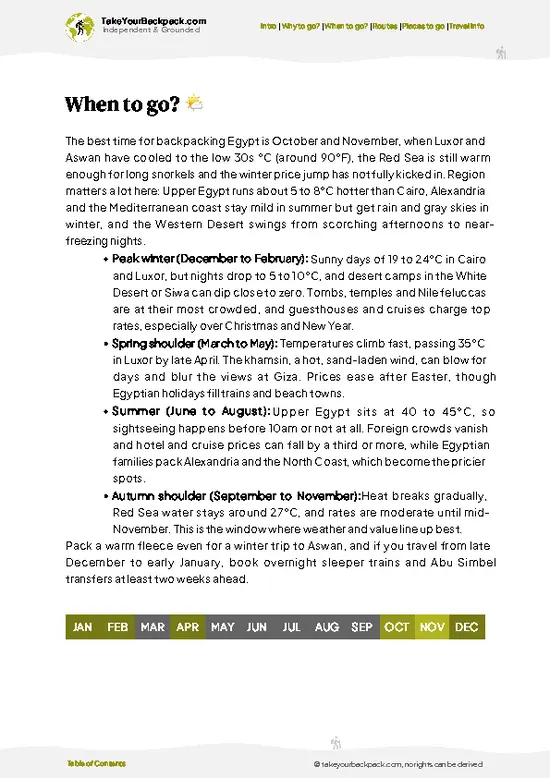
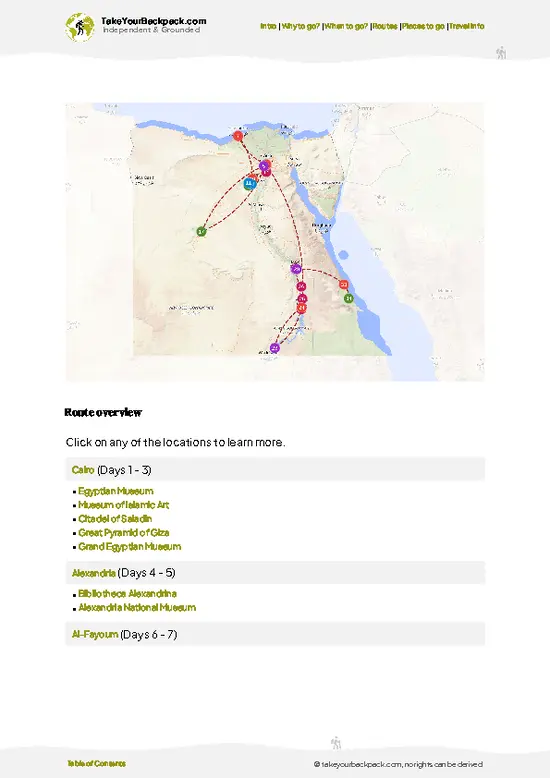
example page 0 from our offline Travel Guide for Egypt
example page 1 from our offline Travel Guide for Egypt
example page 2 from our offline Travel Guide for Egypt
example page 3 from our offline Travel Guide for Egypt
example page 4 from our offline Travel Guide for Egypt
example page 5 from our offline Travel Guide for Egypt
example page 6 from our offline Travel Guide for Egypt
example page 7 from our offline Travel Guide for Egypt
The digital guide (438 pages) contains:
116 highlights, ranked by travel appeal
Optimized 7, 14 & 21-day travel routes
Cities, national parks, landmarks, beaches
How to get around
Offline-friendly for travel without Wi-Fi
👉 Click to see all 30+ guide features

📅 Plan smarter in minutes, not weeks
Month by month travel advice
Festivals & national holidays
Budget expectations

🗺️ Go to the right places, skip the overrated ones
Honest pros & cons of destinations
Top hikes, parks & viewpoints
Lesser-known places most travelers miss
Clear “worth it vs skip it” guidance

🛏️ Travel smoothly without rookie mistakes
Best areas to stay
Transport systems explained simply
Common scams & safety advice
SIM cards, money & practical tips

🌍 Understand the country, not just visit it
Culture & traditions
52 Essential phrases & customs
Festivals worth planning around
Traveler-friendly historical context
Insights that make places more meaningful

📱 Built for real travel conditions
Fully downloadable PDF
Works completely offline
Optimized for phone use
Useful in remote areas & buses
Everything in one place
Save weeks of stressful planning
Get instant access to your full guide. 30‑day money-back guarantee.


By proceeding you agree to our terms.
Sent to your inbox immediately after payment • 100% Secure Checkout
Best Backpacking Travel Advisor 2025 tourism awardBest Backpacking
Travel Advisor
2025
What others say about Take Your Backpack Guides:
⭐⭐⭐⭐⭐
Fantastic, amazing amount of information!
⭐⭐⭐⭐⭐
My goodness this is amazing, it's what I've been looking for hats off too you!
⭐⭐⭐⭐⭐
I think this is absolutely BRILLIANT
⭐⭐⭐⭐
Very complete and informative. It's still missing places, but I gotta to commend you
⭐⭐⭐⭐⭐
This is truly amazing, thank you, can't wait to explore it with my kids!
⭐⭐⭐⭐⭐
Awesome resource, thank you!
⭐⭐⭐⭐⭐
This is amazing! Can't wait to explore the ones I haven't seen
⭐⭐⭐⭐
I love this! Well done, great idea.
⭐⭐⭐⭐⭐
Thanks for taking the time to make this gem!
⭐⭐⭐⭐⭐
This might be the best website I've ever seen.
⭐⭐⭐⭐⭐
Congratulations, and thank you so much for your work; it's incredibly valuable.
⭐⭐⭐⭐
In all seriousness I think you did a great job pointing out the important spots
⭐⭐⭐⭐⭐
10/10 very good
⭐⭐⭐⭐⭐
As someone who's only just starting to visit regularly this is awesome, thank you.
⭐⭐⭐⭐
Thank you very much! I'm going to visit my dad, it's going to be very useful!
⭐⭐⭐⭐⭐
This is really cool! We'll be travelling for the first time and this definitely come in handy.
⭐⭐⭐⭐⭐
You are now our minister of culture, congratulations 👨‍💼
⭐⭐⭐⭐⭐
Just wanted to tell you that this is a pearl! Going to follow your recommendations.
⭐⭐⭐⭐⭐
This is so cool. I'll definitely be using the resource for my travels soon.
⭐⭐⭐⭐⭐
This is very impressive! Good work.
⭐⭐⭐⭐⭐
This is an amazing and informative site. Very well done!

🛏️ Where to stay?How to pick the right area

When you’re roaming the Red Sea Mountains, the right base can make all the difference. Let’s break down the best spots for backpackers, where safety, social vibes, and budget-friendly options collide.

Start with Dahab. This laid-back town is a haven for solo travelers. Picture sipping mint tea while watching the sun dip into the sea. The vibe is relaxed, and the community is welcoming. You’ll find plenty of fellow backpackers to swap stories with. Plus, the diving and snorkeling? Top-notch.

Next up is Nuweiba. It’s less crowded than Dahab but offers a similar charm. The beaches are pristine, … read more 👉
When you’re roaming the Red Sea Mountains, the right base can make all the difference. Let’s break down the best spots for backpackers, where safety, social vibes, and budget-friendly options collide.

Start with Dahab. This laid-back town is a haven for solo travelers. Picture sipping mint tea while watching the sun dip into the sea. The vibe is relaxed, and the community is welcoming. You’ll find plenty of fellow backpackers to swap stories with. Plus, the diving and snorkeling? Top-notch.

Next up is Nuweiba. It’s less crowded than Dahab but offers a similar charm. The beaches are pristine, and the atmosphere is chill. You can camp right on the beach or find budget-friendly accommodations. It’s a great spot for those who want to unwind and connect with nature.

Then there’s Saint Catherine. Nestled near Mount Sinai, it’s perfect for the adventurous spirit. The town is small, but the hiking opportunities are massive. You’ll meet other trekkers, and the local Bedouin culture adds a unique flavor.

Each of these spots offers a different slice of the Red Sea experience. Choose wisely, and you’ll find the right balance of time, money, and comfort.

🚌 Getting aroundMoving around without the hassle

The Red Sea Mountains pulse with a rhythm all their own. Here, the landscape shifts from rugged peaks to shimmering coastlines, and the transport options reflect that wild spirit. Forget about rigid schedules; this region thrives on a blend of chaotic intuition and local know-how. You’ll find that getting around is less about sticking to a timetable and more about embracing the moment. Whether you’re hopping from a bustling market to a serene beach or navigating the winding roads to a hidden oasis, the journey is as much a part of the experience as the destination itself.


  • Microbuses: These colorful, cramped vehicles are the lifeblood of local transport. They run frequently, often from dawn until late evening, and cost around 10-30 EGP depending on the distance. Expect a bumpy ride, but you’ll
read more 👉
The Red Sea Mountains pulse with a rhythm all their own. Here, the landscape shifts from rugged peaks to shimmering coastlines, and the transport options reflect that wild spirit. Forget about rigid schedules; this region thrives on a blend of chaotic intuition and local know-how. You’ll find that getting around is less about sticking to a timetable and more about embracing the moment. Whether you’re hopping from a bustling market to a serene beach or navigating the winding roads to a hidden oasis, the journey is as much a part of the experience as the destination itself.


  • Microbuses: These colorful, cramped vehicles are the lifeblood of local transport. They run frequently, often from dawn until late evening, and cost around 10-30 EGP depending on the distance. Expect a bumpy ride, but you’ll soak in the local vibe and maybe even make a few friends along the way.


  • Private Taxis: For a bit more comfort, grab a private taxi. Fares are negotiable, typically starting around 50 EGP for short trips. While they can be pricier than microbuses, they offer a direct route and the luxury of air conditioning—perfect for those hot desert days.


  • Rental Cars: If you’re feeling adventurous, consider renting a car. Prices start around 400 EGP per day, and while it gives you the freedom to explore at your own pace, be prepared for some less-than-ideal road conditions. Just make sure you have a good map or GPS; the signage can be a bit sparse.


  • Shared Vans: These are a great middle ground. They’re slightly more comfortable than microbuses and can be found at major hubs. Prices range from 20-50 EGP, and they usually run until the last passenger is picked up. It’s a fun way to meet fellow travelers and locals.


  • Walking: Don’t underestimate the power of your own two feet. Many towns and attractions are close enough to explore on foot. It’s free, and you’ll discover hidden spots that you’d miss from a vehicle.


For a smooth ride across the Red Sea Mountains, always negotiate your taxi fare before you hop in. This simple hack can save you from unexpected surprises and ensure you get where you need to go without breaking the bank. Embrace the chaos, and let the journey unfold!

🍲 FoodLocal Cuisine & Drinks

In the Red Sea Mountains, food is a vibrant tapestry of flavors that tells the story of the land and its people. You can’t miss trying koshari, a hearty mix of rice, lentils, and pasta topped with a zesty tomato sauce and crispy onions. It’s the ultimate comfort food, often served from bustling street vendors. Pair it with a refreshing glass of sugarcane juice—it’s sweet, energizing, and perfect after a long hike.

For a true local experience, head to the markets. The air is thick with the scent of spices—cumin, coriander, and cardamom wafting through the stalls. Grab some falafel or shawarma from a casual eatery; they’re crispy, flavorful, and a steal for your wallet. Don’t shy away from the tea stalls either; the locals sip on strong, mint-infused tea that’s as much about the ritual as the … read more 👉
In the Red Sea Mountains, food is a vibrant tapestry of flavors that tells the story of the land and its people. You can’t miss trying koshari, a hearty mix of rice, lentils, and pasta topped with a zesty tomato sauce and crispy onions. It’s the ultimate comfort food, often served from bustling street vendors. Pair it with a refreshing glass of sugarcane juice—it’s sweet, energizing, and perfect after a long hike.

For a true local experience, head to the markets. The air is thick with the scent of spices—cumin, coriander, and cardamom wafting through the stalls. Grab some falafel or shawarma from a casual eatery; they’re crispy, flavorful, and a steal for your wallet. Don’t shy away from the tea stalls either; the locals sip on strong, mint-infused tea that’s as much about the ritual as the taste.

Dining customs here are relaxed. Expect to share plates, and don’t be surprised if someone insists you try their food. It’s all part of the warmth. Just remember to eat with your right hand—it’s a sign of respect. Embrace the chaos, savor the flavors, and you’ll feel like you’ve truly stepped into the heart of Egyptian culture.

Other Egyptian regions near Red Sea Mountains

Explore more nearby:

  • Wadi Al-Hitan (Whale Valley)—prehistoric fossils, open desert basin, wind-carved rock, UNESCO site| 364 km away
  • Fayoum Oasis—saltwater lakes, ancient waterwheels, rural villages, desert escarpments| 380 km away

💡 Not sure where to go next?
Create a personalized itinerary for Egypt including Red Sea Mountains and the places that fit your trip.

Generate my itinerary

👉 Discover all regions

Or checkout all Egypt has to offer (think cities, towns, villages, national parks, hikes, beaches, festivals)
Country photo of Egypt

We 💚 feedbackWhat to keep in mind

The Red Sea Mountains are a wild card. You’ll find stunning landscapes, but it’s the quiet moments that hit hardest—like sipping tea with locals who share stories of the desert. The best surprise? The vibrant colors at sunset; they’ll make you forget every ounce of fatigue. Just a heads-up: the trails can be tricky, so don’t rush. Embrace the pace. You’re not just hiking; you’re diving into a world that feels untouched. Trust me, it’s worth every step.

✍️ Help improve this page!
The information on this page is based on in-depth research, insights shared by experienced travelers, and feedback from the local travel community in Egypt. While every effort is made to keep the information accurate and current, conditions can change — so if you spot anything incorrect or outdated, please get in touch.


🙋‍♂️ Give feedback

👋 Meet the founderWho’s Behind Take Your Backpack?

Johan, backpacker and founder of TakeYourBackpackHi, I’m Johan (Netherlands 🇳🇱), the creator of TakeYourBackpack. Over the past decade, I’ve backpacked through 80+ countries across six continents, gaining extensive experience with independent travel, long-term trips, and overland routes.

This site is built on a combination of firsthand travel experience and carefully curated insights from other backpackers. Many guides are based on places I’ve personally visited, while others bring together tips, observations, and practical advice shared by trusted travelers I’ve met along the way.

The goal is to provide realistic, experience-driven guidance — not generic itineraries — so you can explore destinations with better context, clearer expectations, and more confidence.

Get full Egypt guide •
Instant download • 116 highlights • Full Offline guide