×

Equatorial Guinea🇬🇶 | citiesBataAtlantic seafront, urban sprawl, nightlife spots, port activity | things to do and best time to go

Explore Sipopo BeachExplore Malabo

Backpacking in Bata
👍 Recommendedcity ranked #2
By Johan Kruseman 🇳🇱 | Updated September 23, 2026

Bata’s surprise isn’t its size—it’s the pulse. For a city that headlines most Equatorial Guinea itineraries as a “port town,” Bata is unexpectedly alive after dark, with open-air bars humming along the palm-lined seafront and the scent of grilled fish drifting from roadside stalls. You’ll find Bata on the mainland, facing the Gulf of Guinea, a world away from the volcanic drama of Bioko Island. For backpackers, Bata is less a destination than a crossroads: a practical launchpad for bush taxis to Rio Campo’s wild beaches or the rainforest trails near Monte Alen, but rarely the main event. The old colonial center is walkable, but the real action is in the markets—dusty, loud, and honest. Hostels are rare, so expect basic guesthouses and a quieter, more local vibe than Malabo. Costs are higher than you’d guess for West Africa, and solo travelers may find evenings slow unless they lean into the rhythm of street life. Safety is generally solid, but the city feels more functional than festive. Compared to the capital, Bata is less polished, more real—useful for logistics, but not a place to linger unless you’re chasing the mainland’s raw edge.

Discover everything you want to know in the 📖 Equatorial Guinea Travel Guide.


Loading the map 🌍
CLICK TO FILTER
cities
towns
villages
landmarks
national parks
hikes
beaches
attractions
festivals
regions
SHOW COUNTRY’S BESTSHOW ALL

✨ Why go?
Ranked #2 city in Equatorial Guinea
What makes it a must-see city

Bata, the bustling hub of Equatorial Guinea, serves as a gateway for backpackers seeking both adventure and cultural immersion. Its proximity to stunning beaches like Playa de Arena and the lush trails of Monte Alén National Park makes it a strategic stop for those eager to explore. You can easily hop on a local bus or rent a bike to reach these natural wonders, making your journey feel seamless.

The atmosphere here is relaxed yet vibrant, with walkable streets that invite you to wander. Small-scale hostels and guesthouses offer cozy, affordable stays, often run by friendly locals who are eager to share their culture. You’ll find yourself enjoying local dishes like pepper soup or grilled fish at nearby eateries, where the aroma of spices fills the air.

Backpackers tend to linger for a few … read more 👉
Bata, the bustling hub of Equatorial Guinea, serves as a gateway for backpackers seeking both adventure and cultural immersion. Its proximity to stunning beaches like Playa de Arena and the lush trails of Monte Alén National Park makes it a strategic stop for those eager to explore. You can easily hop on a local bus or rent a bike to reach these natural wonders, making your journey feel seamless.

The atmosphere here is relaxed yet vibrant, with walkable streets that invite you to wander. Small-scale hostels and guesthouses offer cozy, affordable stays, often run by friendly locals who are eager to share their culture. You’ll find yourself enjoying local dishes like pepper soup or grilled fish at nearby eateries, where the aroma of spices fills the air.

Backpackers tend to linger for a few days, soaking in the laid-back vibe and connecting with fellow travelers. This is a place for slow travelers and solo adventurers who appreciate a friendly social scene without the chaos of nightlife. If you’re looking for a blend of nature and culture, Bata is more than just a stop; it’s a chance to recharge before your next adventure.

💡 HighlightsThe experiences that define the visit

  • Paseo Marítimo (the seafront promenade) — Bata’s most immediate and social stretch of coastline: people-watching, evening breezes, vendors selling snacks, and a good place to feel the city’s rhythm without spending a lot.
  • Bata Central Market (Mercado Central) — A chaotic, colorful market where you can buy fresh produce, spices, textiles and see daily life up close; brilliant for photos and real, cheap street food if you’re adventurous.
  • Port of Bata and the fish market — Watching the fishing boats come in and buying super-fresh fish off the docks is a proper local experience; early morning is when the action’s best.
  • Estadio de Bata — The city’s big stadium (used in the 2012 Africa Cup of Nations); even if there’s no match, the scale and the surrounding neighborhoods give a sense of contemporary
… read more 👉
  • Paseo Marítimo (the seafront promenade) — Bata’s most immediate and social stretch of coastline: people-watching, evening breezes, vendors selling snacks, and a good place to feel the city’s rhythm without spending a lot.
  • Bata Central Market (Mercado Central) — A chaotic, colorful market where you can buy fresh produce, spices, textiles and see daily life up close; brilliant for photos and real, cheap street food if you’re adventurous.
  • Port of Bata and the fish market — Watching the fishing boats come in and buying super-fresh fish off the docks is a proper local experience; early morning is when the action’s best.
  • Estadio de Bata — The city’s big stadium (used in the 2012 Africa Cup of Nations); even if there’s no match, the scale and the surrounding neighborhoods give a sense of contemporary Bata life and civic pride.
  • Bata Cathedral (the city’s main Catholic church) — A focal point for community gatherings and a good spot to observe local religious culture and colonial-era architecture in everyday use.
  • Casa de la Cultura / Cultural Centre — Where you’ll find local performances, small exhibitions and community events — useful for catching live music, dance or crafts that show local traditions.
  • The city beaches along the coastline — Small, practical beaches within the city limits where locals hang out; not tropical postcards but authentic spots to swim, relax, and meet people from Bata.
  • Colonial-era streets and architecture — Walk the older avenues off the main drag to see faded colonial buildings, shutters and street life; it’s an inexpensive way to feel the layered history of the place.
  • Plaza/Independence Square area — The civic heart where people gather, vendors set up and you get a sense of public life—good for photography and understanding local rhythms.
  • Waterfront cafés and seafood stalls — Small family-run places along the seafront serve up grilled fish and local dishes; cheap, tasty and a direct route into local conversation and flavors.
A few reachable day-trip highlights outside Bata worth planning for: Corisco Island for beaches and village life, Mbini (Río Muni) for a coastal town feel, and Monte Alén National Park if you want real rainforest and wildlife (plan logistics in advance).
Spotted a mistake or missing something? Contact us.

Things to do near Bata

Ratings based on Tripadvisor reviews. When you book through this link, you support our work at no extra cost to you.

🏘️ NeighborhoodsKey areas and districts to know

Bata, the bustling heart of Equatorial Guinea, offers a mix of coastal charm and urban energy. Each neighborhood has its own flavor, making it essential to choose wisely for your backpacking adventure.

Centro: This is the pulse of Bata. You’ll find local markets, street vendors, and a lively atmosphere. It’s walkable, with plenty of affordable eateries. The nightlife here is vibrant, especially on weekends, but it quiets down during the week. Perfect for short stays where you want to soak in the local culture without straying too far from amenities.

Malabo Road: A bit more upscale, this area features hotels and restaurants catering to business travelers. While it’s not as lively as Centro, it’s well-connected by public transport. The vibe is more relaxed, making it suitable for longer stays … read more 👉
Bata, the bustling heart of Equatorial Guinea, offers a mix of coastal charm and urban energy. Each neighborhood has its own flavor, making it essential to choose wisely for your backpacking adventure.

Centro: This is the pulse of Bata. You’ll find local markets, street vendors, and a lively atmosphere. It’s walkable, with plenty of affordable eateries. The nightlife here is vibrant, especially on weekends, but it quiets down during the week. Perfect for short stays where you want to soak in the local culture without straying too far from amenities.

Malabo Road: A bit more upscale, this area features hotels and restaurants catering to business travelers. While it’s not as lively as Centro, it’s well-connected by public transport. The vibe is more relaxed, making it suitable for longer stays if you prefer a quieter environment. Expect higher prices, but the trade-off is comfort and convenience.

Playa de Bata: If you’re craving sun and sand, this is your spot. The beach is a short walk from the main areas, offering a laid-back vibe. It’s less developed, so expect fewer amenities, but the sunsets are worth it. Ideal for those looking to unwind after a day of exploring. Perfect for short visits, especially if you want to mix beach time with city life.

Niefang: A bit off the beaten path, this neighborhood offers a glimpse into local life. It’s less touristy, which means lower costs and a more authentic experience. However, transport can be tricky, so it’s better suited for longer stays where you can immerse yourself in the community. The atmosphere is peaceful, making it a great escape from the hustle.

Choose your neighborhood wisely, and you’ll unlock the true essence of Bata.

⌛️ 1 dayWhat you can realistically do in a day

Bata, the bustling port town of Equatorial Guinea, is a vibrant blend of coastal charm and local culture. The air is thick with the scent of the ocean and the hum of daily life, making it a perfect spot to dive into authentic experiences.

Start your day at the lively Mercado Central. The market is a sensory overload—colors pop from fresh fruits, and the chatter of vendors fills the air. Grab a breakfast of *bocadillos*, local sandwiches stuffed with savory fillings. This is where you’ll feel the pulse of the town, surrounded by locals haggling and laughing.

After breakfast, stroll along the waterfront promenade. The sun glints off the water, and the salty breeze is refreshing. Head towards the Playa de Bata, where you can dip your toes in the warm sand. This beach isn’t just for sunbathing; … read more 👉
Bata, the bustling port town of Equatorial Guinea, is a vibrant blend of coastal charm and local culture. The air is thick with the scent of the ocean and the hum of daily life, making it a perfect spot to dive into authentic experiences.

Start your day at the lively Mercado Central. The market is a sensory overload—colors pop from fresh fruits, and the chatter of vendors fills the air. Grab a breakfast of *bocadillos*, local sandwiches stuffed with savory fillings. This is where you’ll feel the pulse of the town, surrounded by locals haggling and laughing.

After breakfast, stroll along the waterfront promenade. The sun glints off the water, and the salty breeze is refreshing. Head towards the Playa de Bata, where you can dip your toes in the warm sand. This beach isn’t just for sunbathing; it’s a gathering place for families and fishermen. Watch as they haul in their catch, a scene that captures the essence of daily life here.

In the afternoon, venture into the neighborhood of Nkoantoma. This area is often overlooked by tourists but offers a glimpse into the local way of life. Visit the small art galleries showcasing the work of local artists. The vibrant colors and unique styles reflect the spirit of the community. Don’t miss the chance to chat with the artists; their stories add depth to the experience.

As evening approaches, return to the waterfront for dinner. Try a local restaurant serving *sopa de pescado*, a fish soup bursting with flavors. The sun sets, casting a golden hue over the water, and you can savor the moment as the day winds down.

Bata may not be on every traveler’s radar, but its charm lies in the everyday moments. Embrace the rhythm of life here, and you’ll leave with a richer understanding of this unique corner of the world.

🌤️ When to go?Best time to visit Bata

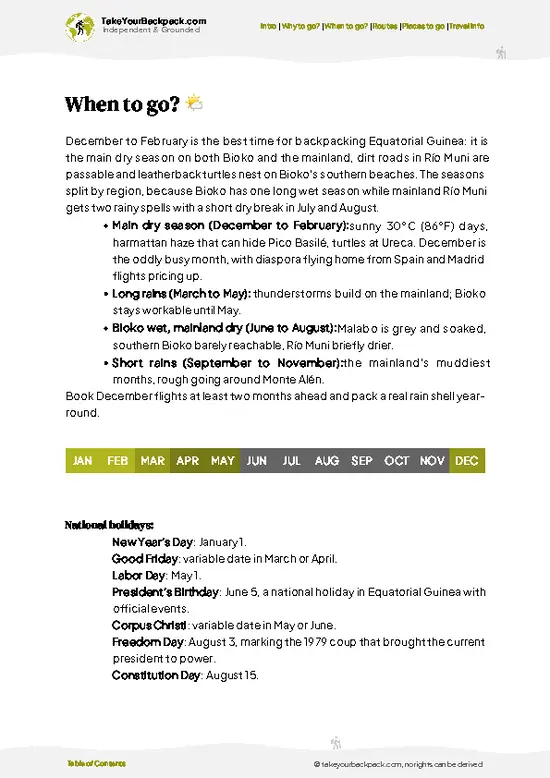
  • Topic: Weather and Rainfall Bata’s climate is equatorial—hot and humid year-round, but the real game-changer is the rainy season from March to June. Expect heavy, persistent downpours that can turn dirt roads into mud traps and make outdoor plans a slog. The dry season, from July to February, offers clearer skies and more reliable hiking conditions.
  • Topic: Temperature Temperatures hover between 24°C (75°F) at night and 31°C (88°F) during the day. The dry season feels less oppressive because the humidity drops slightly, making the heat more bearable for trekking and exploring the coast.
  • Topic: Daylight Hours Near the equator, daylight stays steady—roughly 12 hours year-round. This means you don’t have to rush; mornings and evenings have a soft, golden light perfect for photography and cooling
… read more 👉
  • Topic: Weather and Rainfall Bata’s climate is equatorial—hot and humid year-round, but the real game-changer is the rainy season from March to June. Expect heavy, persistent downpours that can turn dirt roads into mud traps and make outdoor plans a slog. The dry season, from July to February, offers clearer skies and more reliable hiking conditions.
  • Topic: Temperature Temperatures hover between 24°C (75°F) at night and 31°C (88°F) during the day. The dry season feels less oppressive because the humidity drops slightly, making the heat more bearable for trekking and exploring the coast.
  • Topic: Daylight Hours Near the equator, daylight stays steady—roughly 12 hours year-round. This means you don’t have to rush; mornings and evenings have a soft, golden light perfect for photography and cooling down after midday heat.
  • Topic: Crowds and Local Life Bata isn’t a tourist hotspot, so crowds are minimal anytime. However, local festivals and market days peak during the dry season, offering a vibrant window into daily life without overwhelming the scene.
  • Topic: Seasonal Activities The dry season is prime for beach visits, forest hikes, and boat trips. The rainy season limits outdoor options but brings lush greenery and fewer visitors, which might appeal if you want solitude and intense nature vibes.
  • Topic: Price Fluctuations Accommodation and transport costs dip slightly in the rainy season due to lower demand. If you’re flexible and prepared for wet conditions, you can snag better deals, but expect to pay a premium during the dry months when conditions are ideal.
Pro-tip: Aim for the shoulder months of July and February—when the rains ease but the landscape still feels fresh, crowds are low, and prices haven’t peaked. It’s the sweet spot where Bata’s raw charm meets practical comfort.


source: climatestotravel.comJANJanuary: highly recommended for travelingFEBFebruary: excellent for travelingMARMarch: fair for travelingAPRApril: fair for travelingMAYMay: fair for travelingJUNJune: fair for travelingJULJuly: excellent for travelingAUGAugust: highly recommended for travelingSEPSeptember: highly recommended for travelingOCTOctober: highly recommended for travelingNOVNovember: highly recommended for travelingDECDecember: highly recommended for traveling
when-to-go

✈️ The backpacker research shortcutEquatorial Guinea Travel Guide

An offline-friendly backpacking guide with optimized travel routes, ranked highlights, transport advice, and the best areas to stay.
example page 0 from our offline Travel Guide for Equatorial Guinea
example page 1 from our offline Travel Guide for Equatorial Guinea
example page 2 from our offline Travel Guide for Equatorial Guinea
example page 3 from our offline Travel Guide for Equatorial Guinea
example page 4 from our offline Travel Guide for Equatorial Guinea
example page 5 from our offline Travel Guide for Equatorial Guinea
example page 6 from our offline Travel Guide for Equatorial Guinea
example page 7 from our offline Travel Guide for Equatorial Guinea
The digital guide (199 pages) contains:
✅ 46 highlights, ranked by travel appeal
✅ Optimized 2, 3 & 5-day travel routes
✅ Cities, national parks, landmarks, beaches
✅ How to get around
✅ Offline-friendly for travel without Wi-Fi
👉 Click to see all 30+ guide features

📅 Plan smarter in minutes, not weeks
✅ Month by month travel advice
✅ Festivals & national holidays
✅ Budget expectations

🗺️ Go to the right places, skip the overrated ones
✅ Honest pros & cons of destinations
✅ Top hikes, parks & viewpoints
✅ Lesser-known places most travelers miss
✅ Clear “worth it vs skip it” guidance

🛏️ Travel smoothly without rookie mistakes
✅ Best areas to stay
✅ Transport systems explained simply
✅ Common scams & safety advice
✅ SIM cards, money & practical tips

🌍 Understand the country, not just visit it
✅ Culture & traditions
✅ 52 Essential phrases & customs
✅ Festivals worth planning around
✅ Traveler-friendly historical context
✅ Insights that make places more meaningful

📱 Built for real travel conditions
✅ Fully downloadable PDF
✅ Works completely offline
✅ Optimized for phone use
✅ Useful in remote areas & buses
✅ Everything in one place
Stop searching, start planning
Get instant access to your full guide. 30‑day money-back guarantee.
+ Add another guide for just

By proceeding you agree to our terms.
Sent to your inbox immediately after payment • 100% Secure Checkout
Best Backpacking Travel Advisor 2025 tourism awardBest Backpacking
Travel Advisor
2025
What others say about Take Your Backpack Guides:
⭐⭐⭐⭐⭐
Fantastic, amazing amount of information!
⭐⭐⭐⭐⭐
My goodness this is amazing, it's what I've been looking for hats off too you!
⭐⭐⭐⭐⭐
I think this is absolutely BRILLIANT
⭐⭐⭐⭐
Very complete and informative. It's still missing places, but I gotta to commend you
⭐⭐⭐⭐⭐
This is truly amazing, thank you, can't wait to explore it with my kids!
⭐⭐⭐⭐⭐
Awesome resource, thank you!
⭐⭐⭐⭐⭐
This is amazing! Can't wait to explore the ones I haven't seen
⭐⭐⭐⭐
I love this! Well done, great idea.
⭐⭐⭐⭐⭐
Thanks for taking the time to make this gem!
⭐⭐⭐⭐⭐
This might be the best website I've ever seen.
⭐⭐⭐⭐⭐
Congratulations, and thank you so much for your work; it's incredibly valuable.
⭐⭐⭐⭐
In all seriousness I think you did a great job pointing out the important spots
⭐⭐⭐⭐⭐
10/10 very good
⭐⭐⭐⭐⭐
As someone who's only just starting to visit regularly this is awesome, thank you.
⭐⭐⭐⭐
Thank you very much! I'm going to visit my dad, it's going to be very useful!
⭐⭐⭐⭐⭐
This is really cool! We'll be travelling for the first time and this definitely come in handy.
⭐⭐⭐⭐⭐
You are now our minister of culture, congratulations 👨‍💼
⭐⭐⭐⭐⭐
Just wanted to tell you that this is a pearl! Going to follow your recommendations.
⭐⭐⭐⭐⭐
This is so cool. I'll definitely be using the resource for my travels soon.
⭐⭐⭐⭐⭐
This is very impressive! Good work.
⭐⭐⭐⭐⭐
This is an amazing and informative site. Very well done!

🛏️ Where to stay?Best areas and accommodation options

Bata’s best backpacker turf is the downtown stretch along Avenida Marítima and the nearby neighborhoods just inland. This area hums with local life—the salty breeze from the Atlantic mingles with the scent of grilled fish and fresh fruit stalls. It’s where you’ll find the pulse of the city, with street vendors, small cafés, and a steady flow of people that makes wandering feel safe and engaging, even after dark.

Why here? Because safety in Bata isn’t about locked gates but about blending into the rhythm of daily life. This zone is well-patrolled and busy enough to deter trouble without feeling … read more 👉
Bata’s best backpacker turf is the downtown stretch along Avenida Marítima and the nearby neighborhoods just inland. This area hums with local life—the salty breeze from the Atlantic mingles with the scent of grilled fish and fresh fruit stalls. It’s where you’ll find the pulse of the city, with street vendors, small cafés, and a steady flow of people that makes wandering feel safe and engaging, even after dark.

Why here? Because safety in Bata isn’t about locked gates but about blending into the rhythm of daily life. This zone is well-patrolled and busy enough to deter trouble without feeling overwhelming. It’s also where budget travelers cluster, so you’ll find hostels and guesthouses that cater to solo adventurers and those watching their wallets. The vibe is casual but lively—think local chatter, impromptu music, and the occasional street football game.

Compared to the quieter, more residential outskirts or the industrial zones, downtown Bata offers a social atmosphere that’s hard to beat. You’re steps from markets and eateries, which means you can skip pricey taxis and instead stroll through streets alive with color and sound. This proximity also unlocks a smoother experience: you’re not just passing through; you’re part of the city’s daily beat, making connections easier and your stay richer.

🚌 Getting aroundHow to get from A to B

Bata moves at a rhythm that’s part laid-back coastal town, part bustling commercial hub. The air carries a salty tang from the nearby Atlantic, mixing with the earthy scent of wet pavement and diesel. Streets pulse with a steady hum of activity, but don’t expect strict timetables or polished schedules here. Instead, you’ll find a dance of intuition and local know-how—minibuses and shared taxis appear when they’re ready, not when they’re supposed to. This isn’t a place where you’ll catch a bus by the second; it’s a place where patience rewards you with authentic encounters and a chance to watch daily life unfold in real time. The light shifts quickly, turning the city’s concrete and palm trees golden in late afternoon, a perfect moment to settle into the flow rather than fight it.
  • Walking:
… read more 👉
Bata moves at a rhythm that’s part laid-back coastal town, part bustling commercial hub. The air carries a salty tang from the nearby Atlantic, mixing with the earthy scent of wet pavement and diesel. Streets pulse with a steady hum of activity, but don’t expect strict timetables or polished schedules here. Instead, you’ll find a dance of intuition and local know-how—minibuses and shared taxis appear when they’re ready, not when they’re supposed to. This isn’t a place where you’ll catch a bus by the second; it’s a place where patience rewards you with authentic encounters and a chance to watch daily life unfold in real time. The light shifts quickly, turning the city’s concrete and palm trees golden in late afternoon, a perfect moment to settle into the flow rather than fight it.
  • Walking: Bata’s compact center is best explored on foot. The streets are a patchwork of cracked sidewalks and open-air markets, where every turn reveals a new scent or sound. Walking costs nothing and lets you soak in the city’s textures—from the chatter of vendors to the occasional stray dog weaving through traffic. It’s slow, but it’s the purest way to sync with Bata’s pulse.
  • Shared Minibuses (Colectivos): These are the backbone of local transit. They don’t run on a fixed schedule but start filling up early morning and run until dusk. Fares hover around a few hundred CFA francs, making them the cheapest way to cover longer distances. Expect a tight squeeze and a lively atmosphere—windows down, music blaring, and stops called out by passengers. They’re not fast, but they’re a direct line into the city’s everyday rhythm.
  • Shared Taxis: If you’re looking for something a bit quicker but still budget-friendly, shared taxis are your go-to. They operate on set routes but leave only when full, which means you might wait a bit during off-peak hours. Prices are higher than minibuses but still reasonable. The ride is smoother, and you get the benefit of air conditioning if you’re lucky, a rare luxury in Bata’s heat.
  • Motorcycle Taxis (Motos): For short hops or when time is tight, motos zip through traffic with nimble ease. They’re cheap and fast but come with the usual trade-offs—exposure to the elements and a bumpy ride over uneven roads. Helmets aren’t always guaranteed, so bring your own if safety is a priority. Use motos for quick errands or when you want to feel the city’s pulse at full throttle.
  • Private Car Hire: Not budget-friendly but worth mentioning for groups or those with a flexible wallet. Hiring a car with a driver lets you explore beyond Bata’s limits—think nearby beaches or rural villages—without the hassle of public transit. It’s the smoothest, most comfortable way to see the region, but it comes at a premium price and requires negotiation skills to avoid tourist markups.

👛 Costs (as of 23 September 2026)Typical daily expenses

Backpacking in Bata, Equatorial Guinea, means navigating a mix of modest costs and occasional surprises, all set against the backdrop of a humid, tropical atmosphere where the scent of the ocean mingles with street food spices.
  • Dorm Accommodation: Options are limited and basic, often in guesthouses rather than formal hostels. Expect to pay around €10-€20 per night. These places usually have simple beds, shared bathrooms, and sporadic electricity, so pack a headlamp and patience.
  • Meals: Street food and local eateries dominate. A filling meal of grilled fish or chicken with rice and plantains will run about €2-€5. Western-style or tourist-targeted restaurants can push prices up to €8-€12, but sticking to local joints keeps your wallet happy and your taste buds grounded in the region.
  • Local
… read more 👉
Backpacking in Bata, Equatorial Guinea, means navigating a mix of modest costs and occasional surprises, all set against the backdrop of a humid, tropical atmosphere where the scent of the ocean mingles with street food spices.
  • Dorm Accommodation: Options are limited and basic, often in guesthouses rather than formal hostels. Expect to pay around €10-€20 per night. These places usually have simple beds, shared bathrooms, and sporadic electricity, so pack a headlamp and patience.
  • Meals: Street food and local eateries dominate. A filling meal of grilled fish or chicken with rice and plantains will run about €2-€5. Western-style or tourist-targeted restaurants can push prices up to €8-€12, but sticking to local joints keeps your wallet happy and your taste buds grounded in the region.
  • Local Transport: Public transport is informal—shared taxis or minibuses are the norm. A typical short ride costs around €0.50-€1. For longer trips or private taxis, budget closer to €3-€5. Walking is often the best way to soak in the city’s rhythm, but be ready for heat and humidity.
  • Basic Activities/Entry Fees: Bata doesn’t have a heavy tourist infrastructure, so entry fees are minimal or nonexistent. Visiting local markets or beaches is free, while any guided tours or cultural experiences might cost €5-€10 if you find them. The real value is in exploring the everyday life unfolding around you.
  • Miscellaneous Expenses: Bottled water is essential and costs about €0.50 per liter. SIM cards with data run around €5-€10 depending on the package. Small tips or occasional snacks add a few euros here and there, so keep a buffer of €2-€5 daily for these extras.

All told, a realistic daily budget for backpacking in Bata hovers between €15 and €35. This range covers the basics without cutting corners on safety or comfort, letting you experience the city’s raw, unpolished vibe without the stress of overspending.


source: guineaecuatorialpress.com
⚠️ Prices can change and everyone travels differently, so take this as a rough guide. Hope it helps you plan your adventure!

🚌 Day tripsExploring the surroundings

Bata, Equatorial Guinea, is a backpacker’s dream base for exploring the lush landscapes and vibrant culture of this lesser-known corner of Africa. The town itself buzzes with life, from the scent of grilled fish wafting through the markets to the sound of laughter echoing in the streets. Here are some day trips that will make your adventure truly rewarding.

Rio Muni Adventure
Just a short drive from Bata, the Rio Muni offers a chance to immerse yourself in nature. Picture yourself gliding through mangroves, the air thick with the scent of damp earth and the calls of exotic birds. You can rent a canoe for about $10 and paddle your way through the winding waterways. The best time to visit is during the dry season, from December to February, when the waters are calm. A common mistake is underestimating … read more 👉
Bata, Equatorial Guinea, is a backpacker’s dream base for exploring the lush landscapes and vibrant culture of this lesser-known corner of Africa. The town itself buzzes with life, from the scent of grilled fish wafting through the markets to the sound of laughter echoing in the streets. Here are some day trips that will make your adventure truly rewarding.

Rio Muni Adventure
Just a short drive from Bata, the Rio Muni offers a chance to immerse yourself in nature. Picture yourself gliding through mangroves, the air thick with the scent of damp earth and the calls of exotic birds. You can rent a canoe for about $10 and paddle your way through the winding waterways. The best time to visit is during the dry season, from December to February, when the waters are calm. A common mistake is underestimating the sun; bring plenty of water and sunscreen. Expect to spend around $20 for the day, including transport and snacks.


Luba’s Coastal Charm
A quick bus ride will take you to Luba, where the coastline is dotted with palm trees and the ocean sparkles under the sun. Spend your day lounging on the beach or sampling fresh seafood from local vendors. The journey takes about 30 minutes and costs around $2. The best time to visit is early morning to catch the sunrise, which paints the sky in hues of orange and pink. Many first-timers miss out on the local beach bars, so don’t hesitate to ask for recommendations. Budget around $15 for a full day of food and fun.


Cocoa Plantations of Nsok
For a taste of local agriculture, head to the cocoa plantations near Nsok. The ride takes about an hour and costs around $5. Here, you can learn about the cocoa-making process, from bean to bar, while inhaling the rich, earthy aroma of the cacao pods. The best time to visit is during the harvest season, from October to March, when the plantations are bustling. A common oversight is not arranging a guided tour; local guides can provide insights that enrich your experience. Expect to spend around $25 for the tour and snacks.


Bata’s Cultural Market
Stay local for a day and dive into the vibrant atmosphere of Bata’s cultural market. The market is alive with colors, sounds, and the scent of spices. You can wander through stalls selling handmade crafts, textiles, and local delicacies. This experience is free, but budget around $10 for food and souvenirs. The market is best visited on weekends when it’s at its liveliest. First-timers often miss the chance to engage with local vendors; don’t be shy—ask questions and learn about their crafts.

🍲 FoodWhat to Eat & Drink

In Bata, food is a lively conversation between the Atlantic’s bounty and the rich forest flavors inland. You’ll want to dive into malamba, a fermented palm wine that’s tart, slightly fizzy, and a social glue at local gatherings. It’s not just a drink; it’s a ritual, often shared from a communal calabash, so expect to sip slowly and savor the moment.

The city’s street food scene is where the real pulse beats. Think grilled fish, fresh from the ocean, seasoned with fiery local spices and served with plantains or cassava. These dishes aren’t just fuel; they’re a sensory map of Bata’s coastal identity. Markets are your best bet for this—vibrant, noisy, and packed with vendors offering everything from spicy stews to sweet fried dough balls.

Eating here is casual but communal. Sharing plates … read more 👉
In Bata, food is a lively conversation between the Atlantic’s bounty and the rich forest flavors inland. You’ll want to dive into malamba, a fermented palm wine that’s tart, slightly fizzy, and a social glue at local gatherings. It’s not just a drink; it’s a ritual, often shared from a communal calabash, so expect to sip slowly and savor the moment.

The city’s street food scene is where the real pulse beats. Think grilled fish, fresh from the ocean, seasoned with fiery local spices and served with plantains or cassava. These dishes aren’t just fuel; they’re a sensory map of Bata’s coastal identity. Markets are your best bet for this—vibrant, noisy, and packed with vendors offering everything from spicy stews to sweet fried dough balls.

Eating here is casual but communal. Sharing plates is common, and meals often stretch into long, relaxed affairs. Don’t be surprised if you’re invited to join a group; hospitality is genuine and unpretentious. When it comes to etiquette, a simple nod or “mbote” (hello) goes a long way before digging in.

For a quieter moment, cafés serve strong, dark coffee that cuts through the tropical heat. It’s less about fancy brews and more about the ritual of pause—perfect for watching Bata’s streets hum by. This is food and drink that demands your attention, rewarding you with every bite and sip.

🛡️ SafetyTraveler Safety Guide

Bata, Equatorial Guinea, is generally safe, but a few practical tips can enhance your experience. The bustling market areas, while vibrant, can be crowded. Keep your belongings close and be aware of your surroundings. When wandering solo, especially after dark, stick to well-lit streets and avoid isolated paths.

Nighttime can bring out a different side of the town; the sounds of laughter and music fill the air, but it’s wise to travel in groups if possible.

Scams are rare, but some vendors may inflate prices for tourists. A friendly smile and a bit of negotiation can go a long way. If someone offers unsolicited help, be polite but firm; it’s often a prelude to a request for payment.

Overall, carry yourself with confidence. Engage with locals, and you’ll find that the warmth of the community … read more 👉
Bata, Equatorial Guinea, is generally safe, but a few practical tips can enhance your experience. The bustling market areas, while vibrant, can be crowded. Keep your belongings close and be aware of your surroundings. When wandering solo, especially after dark, stick to well-lit streets and avoid isolated paths.

Nighttime can bring out a different side of the town; the sounds of laughter and music fill the air, but it’s wise to travel in groups if possible.

Scams are rare, but some vendors may inflate prices for tourists. A friendly smile and a bit of negotiation can go a long way. If someone offers unsolicited help, be polite but firm; it’s often a prelude to a request for payment.

Overall, carry yourself with confidence. Engage with locals, and you’ll find that the warmth of the community outweighs any minor annoyances. Embrace the rhythm of Bata, and you’ll unlock its charm.

FAQFrequently asked questions about Bata

2 to 3 days are sufficient to explore Bata. This allows time to visit key sites like the Malabo Market, beaches, and local eateries. Additional days may be needed for day trips outside the city.
Yes, Bata is generally safe for solo backpackers if standard precautions are taken. Avoid walking alone at night and keep valuables secure. Petty crime can occur, so stay alert in crowded areas.
Bata is known for its vibrant port, which is one of the largest in Central Africa. It is also recognized for its cultural diversity and coastal beaches. The city serves as a commercial hub for Equatorial Guinea.
⚠️ Things can change over time, so always validate details locally before you go.

Ideas for continuing your journey

Bata isn’t the only highlight in Equatorial Guinea. Explore all what Equatorial Guinea has to offer.
Country photo of Equatorial Guinea

We 💚 feedbackParting advice and final tips

Bata has a raw, unfiltered vibe that feels like stepping into a different world. The scent of grilled fish wafts through the air, mingling with the sounds of laughter and lively conversations. Don’t miss the local markets; they’re a sensory overload in the best way. But be prepared: the roads can be rough, so don’t rush. Embrace the pace. The best surprise? The warmth of the locals. They’ll share stories that make you feel like you belong. Just keep your wits about you, especially after dark.

✍️ Help improve this page!
The information on this page is based on in-depth research, insights shared by experienced travelers, and feedback from the local travel community in Equatorial Guinea. While every effort is made to keep the information accurate and current, conditions can change — so if you spot anything incorrect or outdated, please get in touch.


🙋‍♂️ Give feedback

👋 Meet the founderWho’s Behind Take Your Backpack?

Johan, backpacker and founder of TakeYourBackpackHi, I’m Johan (Netherlands 🇳🇱), the creator of TakeYourBackpack. Over the past 3 decades, I’ve backpacked through 90+ countries across six continents, gaining extensive experience with independent travel, long-term trips, and overland routes.

This site is built on a combination of firsthand travel experience and carefully curated insights from other backpackers. Many guides are based on places I’ve personally visited, while others bring together tips, observations, and practical advice shared by trusted travelers I’ve met along the way.

The goal is to provide realistic, experience-driven guidance — not generic itineraries — so you can explore destinations with better context, clearer expectations, and more confidence.