×

Equatorial Guinea🇬🇶 | regionsIsla de Bioko
Malabo markets, black sand beaches, rainforest trails | things to do and best time to go

Explore Altos de Nsork National ParkExplore Isla de Corisco

Backpacking in Isla de Bioko
🏆 Top pickregion ranked #1
By Johan Kruseman 🇳🇱 | Updated April 24, 2026

Here’s the trick nobody tells you until you’re already packing up to leave Isla de Bioko: you can hop between black-sand beaches, volcanic peaks, and colonial-era markets in a single day—without ever feeling rushed. That’s the practical magic. Isla de Bioko sits just off the coast of Cameroon, but it’s the beating heart of Equatorial Guinea, floating in the Gulf of Guinea like it’s hiding in plain sight. For backpackers, Bioko is a paradox: it’s wild and lush, with crater lakes and misty rainforests that feel straight out of a lost world, but it’s also got Malabo, a capital city where Spanish architecture and Afrobeat bars collide. You’ll pay more for basics than on the mainland, and public transport is a patchwork of battered minibuses and shared taxis—expect delays, but also spontaneous roadside plantain feasts. It’s not overrun with tourists; you’ll meet oil workers, expats, and locals, not backpacker hordes. Compared to Rio Muni on the mainland, Bioko is pricier and less chaotic, but it’s also more compact, more scenic, and—if you time it for the turtle nesting season or the Malabo Hip Hop Festival—way more memorable.

Discover everything you want to know in the 📖 Equatorial Guinea Travel Guide.
Loading the map 🌍
CLICK TO FILTER
city
town
village
unique site
national park
hike
beach
attraction
festival
region
SHOW COUNTRY‘S BESTSHOW ALL

✨ Why go?
Ranked #1 region in Equatorial Guinea
What sets this place apart

Isla de Bioko is a backpacker’s playground that offers a unique blend of nature and culture. You can explore lush rainforests, volcanic landscapes, and beaches all in one spot. This means you won’t be constantly packing up and moving on; you can settle in and soak up the local vibe.

Transport here is surprisingly flexible. You can hop on a shared taxi or a local bus, making it easy to navigate between towns like Malabo and Luba. This flexibility allows you to dive deeper into the culture without the stress of rigid schedules.

The island’s slow travel ethos encourages you to savor each moment. Spend an afternoon at a local market, tasting fresh seafood and chatting with vendors. Or hike to the Pico Basile, where the views are worth every step.

You’re not just ticking off boxes; you’re … read more 👉
Isla de Bioko is a backpacker’s playground that offers a unique blend of nature and culture. You can explore lush rainforests, volcanic landscapes, and beaches all in one spot. This means you won’t be constantly packing up and moving on; you can settle in and soak up the local vibe.

Transport here is surprisingly flexible. You can hop on a shared taxi or a local bus, making it easy to navigate between towns like Malabo and Luba. This flexibility allows you to dive deeper into the culture without the stress of rigid schedules.

The island’s slow travel ethos encourages you to savor each moment. Spend an afternoon at a local market, tasting fresh seafood and chatting with vendors. Or hike to the Pico Basile, where the views are worth every step.

You’re not just ticking off boxes; you’re creating memories. The trade-off here is clear: invest a bit more time, and you’ll reap the rewards of rich experiences that blend adventure with authenticity. This is where the real magic happens.
Get the complete Travel Guide for Equatorial Guinea
Everything organized for offline planning — routes, highlights, costs & tips

See what’s inside 👉

Get the Travel Guide -

💡 HighlightsPlaces and moments you shouldn't skip

  1. Pico Basilé (Pico Basilé National Park) — The island’s towering volcano and cloud-forest backbone; hike through mossy, misty forest to panoramic views and see endemic birds and plants you won’t find off Bioko.
  2. Malabo Cathedral (Catedral de Santa Isabel) — A striking red-and-white cathedral in Malabo with curious Spanish-colonial/neo-Gothic detail; worthwhile for architecture, the plaza energy, and a look at local religious life.
  3. Malabo Old Quarter (Spanish colonial district) — Tight streets, faded pastel mansions, front-porch life and small cafes; wandering here gives a real feel for Bioko’s layered history in a way a single museum can’t.
  4. Mercado de Malabo (Central Market) — A lively, chaotic market where fishermen sell smoked and fresh catches, women trade spices, tropical fruits, and
read more 👉
  1. Pico Basilé (Pico Basilé National Park) — The island’s towering volcano and cloud-forest backbone; hike through mossy, misty forest to panoramic views and see endemic birds and plants you won’t find off Bioko.
  2. Malabo Cathedral (Catedral de Santa Isabel) — A striking red-and-white cathedral in Malabo with curious Spanish-colonial/neo-Gothic detail; worthwhile for architecture, the plaza energy, and a look at local religious life.
  3. Malabo Old Quarter (Spanish colonial district) — Tight streets, faded pastel mansions, front-porch life and small cafes; wandering here gives a real feel for Bioko’s layered history in a way a single museum can’t.
  4. Mercado de Malabo (Central Market) — A lively, chaotic market where fishermen sell smoked and fresh catches, women trade spices, tropical fruits, and handmade goods; great for tasting street food and picking up local fabrics.
  5. Luba Crater Scientific Reserve — A lesser-trodden rainforest ringed by volcanic craters near Luba; compact trails, rare birds and orchids, and cool understory walks without the crowds you get on bigger islands.
  6. Ureca Turtle Beaches — Remote southern beaches famous for seasonal leatherback and olive-ridley nesting; black sand, tide-sculpted shores and the unforgettable experience of nighttime nesting watches (go with a local guide).
  7. Moka Rainforest and Drill-Viewing Trails — The south-central forests around Moka are one of the best places on the island to spot Bioko’s endemic drills and other primates; small family guides know the trails and where the animals hang out.
  8. Baney cocoa farms and village circuits — Hidden gem: smallholder cocoa plantations, colonial farmhouses and village markets east of Malabo; you can walk the lanes, meet farmers, and see how cacao shapes daily life on Bioko.
  9. Luba coast, snorkeling and boat trips — Clear reefs and deserted coves off Luba; short boat outings offer good snorkeling, dolphin sightings and, in season, humpback whale watching — a marine side of Bioko that feels fresh and local.
  10. Rebola ridge hikes and local waterfalls — Hidden gem: short, steep hikes from Rebola lead to quiet waterfalls, coffee-shade groves and viewpoints over the island’s eastern shore; locals picnic here and it’s often empty of tourists.
Spotted a mistake or missing something? Contact us.

⌛️ 5 daysSeeing the highlights in 5 days

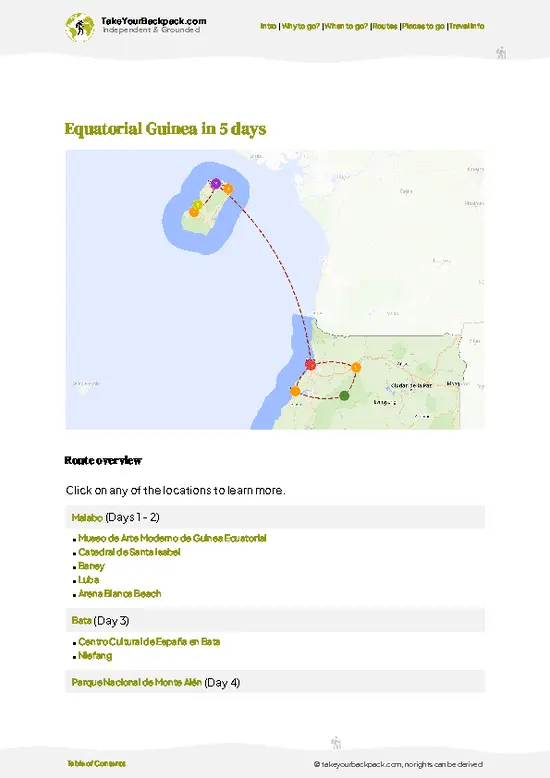
Day 1: Malabo
Your journey begins in Malabo, the capital. This city is your gateway, and it’s where you’ll acclimate to the local vibe. Spend your day wandering the coastal promenade, soaking in the colonial architecture, and sampling street food. The transport system here is a mix of taxis and shared minibuses, but don’t rush. Take your time to enjoy the local scene. This sets the tone for your adventure.

Day 2: Luba
Head to Luba, a short ride from Malabo. This fishing town offers a glimpse into the daily life of locals. The roads are bumpy, but the scenery is lush. You’ll find beautiful beaches and a more relaxed atmosphere. Spend the night here, enjoying fresh seafood and the sound of waves. The slower pace allows you to connect with the culture, which is invaluable.

Day 3: Pico Basilé … read more 👉
Day 1: Malabo
Your journey begins in Malabo, the capital. This city is your gateway, and it’s where you’ll acclimate to the local vibe. Spend your day wandering the coastal promenade, soaking in the colonial architecture, and sampling street food. The transport system here is a mix of taxis and shared minibuses, but don’t rush. Take your time to enjoy the local scene. This sets the tone for your adventure.

Day 2: Luba
Head to Luba, a short ride from Malabo. This fishing town offers a glimpse into the daily life of locals. The roads are bumpy, but the scenery is lush. You’ll find beautiful beaches and a more relaxed atmosphere. Spend the night here, enjoying fresh seafood and the sound of waves. The slower pace allows you to connect with the culture, which is invaluable.

Day 3: Pico Basilé
Now, it’s time for a detour to Pico Basilé. This is your ’Off-Path Reward.’ The hike to the summit is challenging but worth every step. The views are breathtaking, and you’ll feel like you’ve earned your stripes. The transport to the trailhead can be tricky, so leave early. This day will test your limits, but the sense of accomplishment is unmatched.

Day 4: Ureca
Travel to Ureca, a hidden beach paradise. The journey involves a combination of taxis and a bit of walking, but it’s a chance to see the island’s raw beauty. Spend your day lounging on the beach or exploring the nearby rainforest. This is where you can truly unwind and reflect on your journey so far.

Day 5: Return to Malabo
Wrap up your trip by heading back to Malabo. Use this day to revisit your favorite spots or explore anything you missed. The transport back is straightforward, but don’t rush. Enjoy the last moments of your adventure.

The must-do day? Day 3 at Pico Basilé. It’s the highlight that justifies the trip, blending challenge with stunning rewards. Embrace the journey, and you’ll leave with stories worth sharing.
Build the Right Itinerary
Use the Equatorial Guinea Travel Guide’s 2, 3 & 5-day routes as a starting point to plan a trip that actually works on the ground.

Get the Travel Guide -

🌤️ When to go?When to go for the best experience


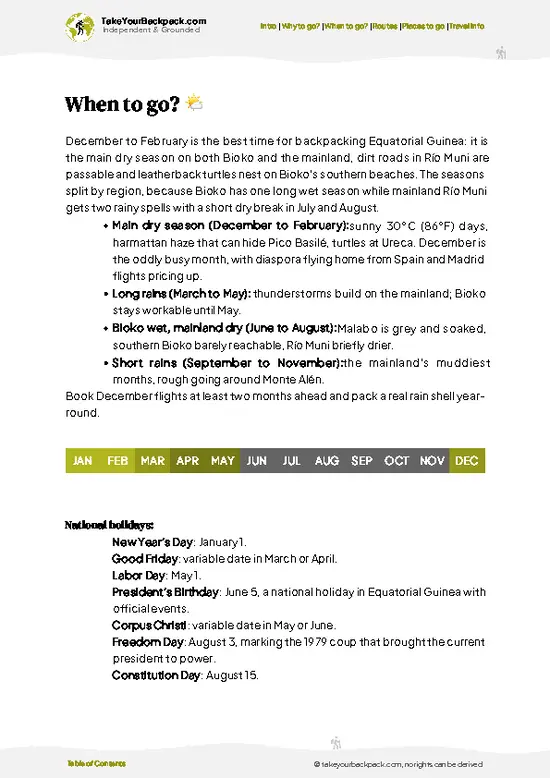
  • Topic: Weather – Isla de Bioko swings between a wet season (March to November) and a dry season (December to February). The dry months offer less humidity and fewer downpours, making trekking and beach days way more enjoyable.

  • Topic: Temperature – Expect a steady 24-30°C (75-86°F) year-round, but the dry season feels cooler and less sticky. The wet season’s humidity can push that heat into “sweat-soaked” territory, so pack accordingly.

  • Topic: Daylight Hours – Near the equator, daylight is pretty consistent, around 12 hours daily. No drastic shifts, so you can plan your hikes and explorations without worrying about early sunsets.

  • Topic: Crowds – Bioko isn’t exactly overrun, but the dry season draws more locals and a handful of adventurous travelers. If you want near solitude, aim for
read more 👉

  • Topic: Weather – Isla de Bioko swings between a wet season (March to November) and a dry season (December to February). The dry months offer less humidity and fewer downpours, making trekking and beach days way more enjoyable.

  • Topic: Temperature – Expect a steady 24-30°C (75-86°F) year-round, but the dry season feels cooler and less sticky. The wet season’s humidity can push that heat into “sweat-soaked” territory, so pack accordingly.

  • Topic: Daylight Hours – Near the equator, daylight is pretty consistent, around 12 hours daily. No drastic shifts, so you can plan your hikes and explorations without worrying about early sunsets.

  • Topic: Crowds – Bioko isn’t exactly overrun, but the dry season draws more locals and a handful of adventurous travelers. If you want near solitude, aim for the shoulder months—late February or early December.

  • Topic: Seasonal Activities – Turtle nesting peaks from November to March. If you’re into wildlife, timing your visit here is a game-changer. Plus, local festivals often align with the dry season, adding cultural spice.

  • Topic: Price Fluctuations – Dry season means higher prices on accommodations and tours. The wet season can save you cash but expect some trade-offs in comfort and accessibility.


Pro-tip: Hit Bioko in late February—weather’s sweet, crowds thin, and you catch the tail end of turtle season without the premium prices. That’s insider timing right there.


source: climatestotravel.comJANJanuary: excellent for travelingFEBFebruary: excellent for travelingMARMarch: good for travelingAPRApril: fair for travelingMAYMay: fair for travelingJUNJune: fair for travelingJULJuly: fair for travelingAUGAugust: fair for travelingSEPSeptember: fair for travelingOCTOctober: fair for travelingNOVNovember: good for travelingDECDecember: highly recommended for traveling
when-to-go

✈️ The backpacker research shortcutEquatorial Guinea Travel Guide

An offline-friendly backpacking guide with optimized travel routes, ranked highlights, transport advice, and the best areas to stay.
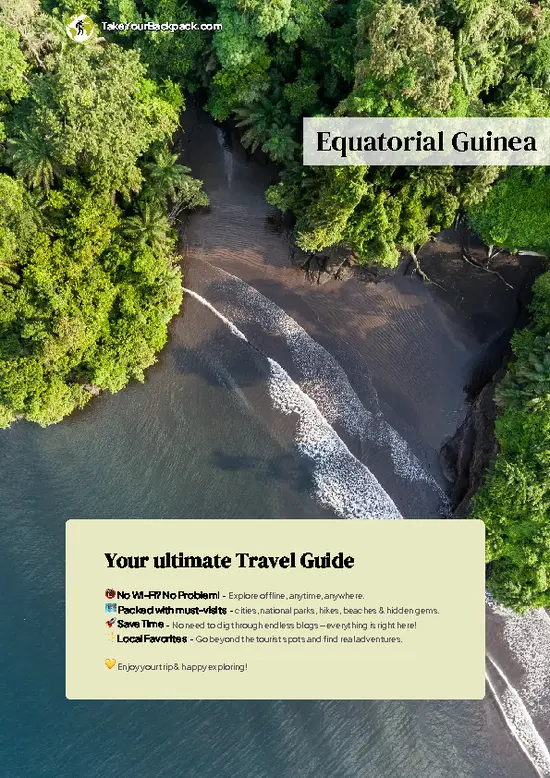
example page 0 from our offline Travel Guide for Equatorial Guineaexample page 1 from our offline Travel Guide for Equatorial Guineaexample page 2 from our offline Travel Guide for Equatorial Guineaexample page 3 from our offline Travel Guide for Equatorial Guineaexample page 4 from our offline Travel Guide for Equatorial Guineaexample page 5 from our offline Travel Guide for Equatorial Guinea
The digital guide (188 pages) contains:
52 highlights, ranked by travel appeal
Optimized 2, 3 & 5-day travel routes
Best neighborhoods to stay
How to get around
Offline-friendly for travel without Wi-Fi
👉 See all 30+ guide features

📅 Plan smarter in minutes, not weeks
Month by month travel advice
Festivals & national holidays
Budget expectations

🗺️ Go to the right places, skip the overrated ones
Honest pros & cons of destinations
Top hikes, parks & viewpoints
Lesser-known places most travelers miss
Clear “worth it vs skip it” guidance

🛏️ Travel smoothly without rookie mistakes
Best areas to stay
Transport systems explained simply
Common scams & safety advice
SIM cards, money & practical tips

🌍 Understand the country, not just visit it
Culture & traditions
52 Essential phrases & customs
Festivals worth planning around
Traveler-friendly historical context
Insights that make places more meaningful

📱 Built for real travel conditions
Fully downloadable PDF
Works completely offline
Optimized for phone use
Useful in remote areas & buses
Everything in one place
Save weeks of stressful planning
Get instant access to the full guide directly. 30-day money-back guarantee.


Sent to your inbox immediately after payment • 100% Secure Checkout
Best Backpacking Travel Advisor 2025 tourism awardBest Backpacking
Travel Advisor
2025
What others say about Take Your Backpack Guides:
⭐⭐⭐⭐⭐
Fantastic, amazing amount of information!
⭐⭐⭐⭐⭐
My goodness this is amazing, it's what I've been looking for hats off too you!
⭐⭐⭐⭐⭐
I think this is absolutely BRILLIANT
⭐⭐⭐⭐
Very complete and informative. It's still missing places, but I gotta to commend you
⭐⭐⭐⭐⭐
This is truly amazing, thank you, can't wait to explore it with my kids!
⭐⭐⭐⭐⭐
Awesome resource, thank you!
⭐⭐⭐⭐⭐
This is amazing! Can't wait to explore the ones I haven't seen
⭐⭐⭐⭐
I love this! Well done, great idea.
⭐⭐⭐⭐⭐
Thanks for taking the time to make this gem!
⭐⭐⭐⭐⭐
This might be the best website I've ever seen.
⭐⭐⭐⭐⭐
Congratulations, and thank you so much for your work; it's incredibly valuable.
⭐⭐⭐⭐
In all seriousness I think you did a great job pointing out the important spots
⭐⭐⭐⭐⭐
10/10 very good
⭐⭐⭐⭐⭐
As someone who's only just starting to visit regularly this is awesome, thank you.
⭐⭐⭐⭐
Thank you very much! I'm going to visit my dad, it's going to be very useful!
⭐⭐⭐⭐⭐
This is really cool! We'll be travelling for the first time and this definitely come in handy.
⭐⭐⭐⭐⭐
You are now our minister of culture, congratulations 👨‍💼
⭐⭐⭐⭐⭐
Just wanted to tell you that this is a pearl! Going to follow your recommendations.
⭐⭐⭐⭐⭐
This is so cool. I'll definitely be using the resource for my travels soon.
⭐⭐⭐⭐⭐
This is very impressive! Good work.
⭐⭐⭐⭐⭐
This is an amazing and informative site. Very well done!

🛏️ Where to stay?Choosing the right base

When you hit Isla de Bioko, you want to land in spots that feel alive and welcoming. Start in Malabo, the capital. It’s buzzing with energy, and you’ll find a mix of locals and travelers. The waterfront area is perfect for evening strolls and grabbing a bite. Plus, you can easily connect with other backpackers at local cafes.

Next up, consider Luba, a charming coastal town. It’s quieter than Malabo but has a laid-back vibe that’s perfect for unwinding. The beaches here are inviting, and you can often find fellow travelers sharing stories over fresh seafood. It’s a great place to soak in the … read more 👉
When you hit Isla de Bioko, you want to land in spots that feel alive and welcoming. Start in Malabo, the capital. It’s buzzing with energy, and you’ll find a mix of locals and travelers. The waterfront area is perfect for evening strolls and grabbing a bite. Plus, you can easily connect with other backpackers at local cafes.

Next up, consider Luba, a charming coastal town. It’s quieter than Malabo but has a laid-back vibe that’s perfect for unwinding. The beaches here are inviting, and you can often find fellow travelers sharing stories over fresh seafood. It’s a great place to soak in the local culture without feeling rushed.

If you’re up for a bit of adventure, check out Bata on the mainland. It’s less frequented by tourists, which means you’ll get a more authentic experience. The markets are lively, and you can find some fantastic local crafts. Just be mindful of your surroundings; it’s all about staying aware.

Each of these areas offers a unique slice of life on the island. You’ll sacrifice some comfort for authenticity, but that’s where the real stories come from. Choose wisely, and you’ll walk away with experiences that stick with you long after the trip ends.

🚌 Getting aroundMoving around without the hassle

Isla de Bioko is a whirlwind of vibrant energy and laid-back chaos. Picture this: you’re standing on the bustling streets of Malabo, where the rhythm of life is dictated more by the ebb and flow of people than by any rigid schedule. Here, time feels fluid; a bus might show up early or late, and the only certainty is that you’ll be sharing your ride with a mix of locals, laughter, and the occasional chicken. This isn’t a place for the uptight traveler; it’s for those who embrace spontaneity and the unexpected. If you’re willing to roll with the punches, you’ll find that the transport options here are not just ways to get from point A to B—they’re gateways to authentic experiences.


  • Taxi: Expect to pay around 1,500 to 3,000 CFA for a ride within Malabo. Taxis are plentiful but negotiate the
read more 👉
Isla de Bioko is a whirlwind of vibrant energy and laid-back chaos. Picture this: you’re standing on the bustling streets of Malabo, where the rhythm of life is dictated more by the ebb and flow of people than by any rigid schedule. Here, time feels fluid; a bus might show up early or late, and the only certainty is that you’ll be sharing your ride with a mix of locals, laughter, and the occasional chicken. This isn’t a place for the uptight traveler; it’s for those who embrace spontaneity and the unexpected. If you’re willing to roll with the punches, you’ll find that the transport options here are not just ways to get from point A to B—they’re gateways to authentic experiences.


  • Taxi: Expect to pay around 1,500 to 3,000 CFA for a ride within Malabo. Taxis are plentiful but negotiate the fare beforehand. They’re comfortable enough for short trips, but don’t expect luxury.

  • Shared Minibus (Mikrolet): This is the lifeblood of local transport. Fares range from 200 to 500 CFA, depending on the distance. They run frequently, but don’t expect a timetable—just hop on when it’s full. It’s a great way to mingle with locals and soak up the atmosphere.

  • Private Car Hire: If you’re looking for comfort and flexibility, consider hiring a car. Prices start around 15,000 CFA per day. This option gives you the freedom to explore at your own pace, but make sure you’re comfortable navigating the roads.

  • Ferry to Bioko Norte: For about 5,000 CFA, you can catch a ferry to the northern part of the island. It’s a scenic ride, taking about an hour. Just check the schedule in advance, as it can be erratic.

  • Motorbike Taxi (Okada): For the adventurous, these are a fun way to zip around. Fares are negotiable, usually around 500 CFA for short distances. Just hold on tight and enjoy the breeze!


Here’s the insider tip: always ask locals for the best transport options and current prices. They’ll steer you clear of tourist traps and help you navigate the chaos like a pro. Embrace the unpredictability, and you’ll find that the journey is just as rewarding as the destination.

🍲 FoodLocal Flavors for Backpackers

In Isla de Bioko, the culinary scene is a vibrant tapestry of flavors that tells the story of its rich culture. Dive into pepper soup, a spicy broth that warms you from the inside out, often featuring fresh fish or chicken. Don’t miss out on fufu, a starchy side made from cassava or plantains, perfect for soaking up those bold flavors. For a real treat, seek out coconut rice, fragrant and slightly sweet, often served with grilled meats or fish.

Street food is where the magic happens. Stroll through local markets and let the aroma of grilled plantains and kebabs draw you in. Vendors whip up snacks right before your eyes, and the energy is infectious. Grab a palm wine or a cold Malta, a non-alcoholic malt beverage that’s a favorite among locals, and you’ll feel like you’re part of the community. … read more 👉
In Isla de Bioko, the culinary scene is a vibrant tapestry of flavors that tells the story of its rich culture. Dive into pepper soup, a spicy broth that warms you from the inside out, often featuring fresh fish or chicken. Don’t miss out on fufu, a starchy side made from cassava or plantains, perfect for soaking up those bold flavors. For a real treat, seek out coconut rice, fragrant and slightly sweet, often served with grilled meats or fish.

Street food is where the magic happens. Stroll through local markets and let the aroma of grilled plantains and kebabs draw you in. Vendors whip up snacks right before your eyes, and the energy is infectious. Grab a palm wine or a cold Malta, a non-alcoholic malt beverage that’s a favorite among locals, and you’ll feel like you’re part of the community.

Dining here is casual and communal. Expect to share tables and dishes, so don’t be shy about passing the fufu. A simple “mangue” (thank you) goes a long way. Remember, meals can be leisurely, so embrace the pace and enjoy the conversations around you. In Bioko, food is not just sustenance; it’s a celebration of life.

Other Equatoguinean regions near Isla de Bioko

Explore more nearby:

  • Isla de Corisco—white sand bays, tidal flats, mangrove forests| 290 km away
  • Annobón—volcanic lake, remote fishing villages, endemic birdlife| 675 km away

👉 Discover all regions

Or checkout all Equatorial Guinea has to offer (think cities, towns, villages, national parks, hikes, beaches, festivals)
Country photo of Equatorial Guinea

We 💚 feedbackIs it worth it?

Isla de Bioko has a vibe that’s raw and real. The locals are warm, and the landscapes are lush, but don’t expect polished tourist traps. The best surprise? The food—try the local dishes at roadside stalls; they’re bursting with flavor. Just a heads-up: transportation can be a bit chaotic. Embrace the unpredictability; it’s part of the charm. If you’re looking for a genuine experience, this island delivers. You’ll leave with stories that are anything but ordinary.

✍️ Help improve this page!
The information on this page is based on in-depth research, insights shared by experienced travelers, and feedback from the local travel community in Equatorial Guinea. While every effort is made to keep the information accurate and current, conditions can change — so if you spot anything incorrect or outdated, please get in touch.


🙋‍♂️ Give feedback

👋 Meet the founderWho’s Behind Take Your Backpack?

Johan, backpacker and founder of TakeYourBackpackHi, I’m Johan (Netherlands 🇳🇱), the creator of TakeYourBackpack. Over the past decade, I’ve backpacked through 80+ countries across six continents, gaining extensive experience with independent travel, long-term trips, and overland routes.

This site is built on a combination of firsthand travel experience and carefully curated insights from other backpackers. Many guides are based on places I’ve personally visited, while others bring together tips, observations, and practical advice shared by trusted travelers I’ve met along the way.

The goal is to provide realistic, experience-driven guidance — not generic itineraries — so you can explore destinations with better context, clearer expectations, and more confidence.

Get Full Country Guide |
Instant download • 52 highlights • Full Offline guide