×

Eritrea🇪🇷 | townsAgordatItalian railway terminus, Monday livestock trade, Baraka riverbed | things to do and best time to go

Explore BarentuExplore Dekemhare

Backpacking in Agordat
🌟 Highlighttown ranked #8
By Johan Kruseman 🇳🇱 | Updated October 22, 2026

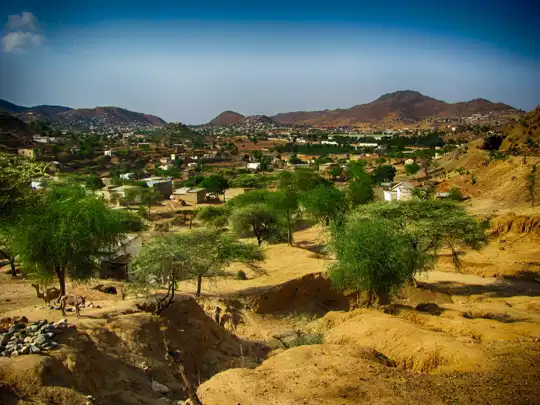
Agordat was once the railway hub of western Eritrea, where the Italian-built line from Massawa ended and cotton and sorghum trade filled the station yard. Today the rails are quiet and the town is a modest market settlement. It sits in the Gash-Barka region in the west of Eritrea, on the Baraka River plain, northwest of Barentu. Streets are wide, dusty and low-rise, and a walk to the old station and the weekly market gives you a clear picture of lowland Tigre and Kunama life. Evenings are slow, with tea and coffee in small cafés and few foreign faces, so meeting other backpackers is rare. Permits and slow transport shape any visit. Unlike Barentu, which is greener and busier as a regional capital, Agordat is smaller, hotter and more railway-minded.

Discover everything you want to know in the 📖 Eritrea Travel Guide.


example page 0 from our offline Travel Guide for Eritrea
example page 1 from our offline Travel Guide for Eritrea
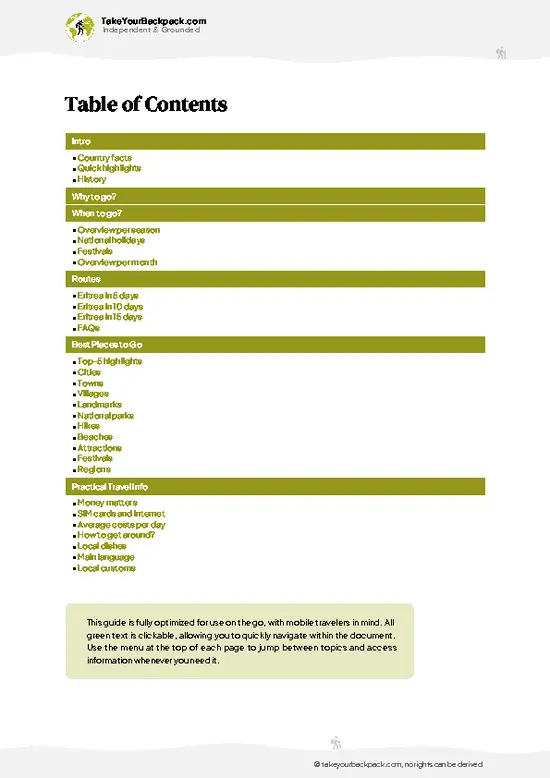
example page 2 from our offline Travel Guide for Eritrea
example page 3 from our offline Travel Guide for Eritrea
example page 4 from our offline Travel Guide for Eritrea
example page 5 from our offline Travel Guide for Eritrea
example page 6 from our offline Travel Guide for Eritrea
example page 7 from our offline Travel Guide for Eritrea
Loading the map 🌍
CLICK TO FILTER
cities
towns
villages
landmarks
national parks
hikes
beaches
attractions
festivals
regions
SHOW COUNTRY’S BESTSHOW ALL

✨ Why go?
Ranked #8 town in Eritrea
Reasons people choose to visit here

Agordat suits the traveler who likes to watch a working lowland town rather than tick off sights. It is a practical overnight on the western road, and most people stay one night, two at most. The reasons to linger are few but real. The Monday market draws Rashaida, Beni Amer and Kunama families from surrounding villages, with livestock, spices and cloth laid out in the sun, which is far more interesting than any museum. The abandoned railway station and the rusting track give you a quiet hour of photography and history together. Guesthouses are small and plain, and people will often start conversations over a glass of sweet tea. Solo travelers and slow travelers who are comfortable with heat, basic rooms and few other foreigners will enjoy it most. Anyone wanting nightlife or hikes should keep moving.

💡 HighlightsThe experiences that define the visit

  1. Agordat Railway Station: The best-known landmark is the Italian-era terminus of the Massawa line. The platform, sheds and rusting track are open to wander and make a calm, atmospheric stop. Go early morning or late afternoon when the heat softens. Free, about 45 minutes.
  2. Monday Market: Livestock, grain, spices, leather goods and cloth are traded by people from the surrounding lowlands, many in traditional dress. Arrive in the morning before the heat peaks. Entry is free, and a small purchase of tea or spices costs US$1 to 3. Allow 1 to 2 hours.
  3. Baraka River Bank: The wide, sandy riverbed on the edge of town is where herders water animals and women wash clothes when there is flow. The light is best late afternoon. Free, 30 to 60 minutes.
  4. Town Center Tea Houses: Small cafés around the main street
… read more 👉
  1. Agordat Railway Station: The best-known landmark is the Italian-era terminus of the Massawa line. The platform, sheds and rusting track are open to wander and make a calm, atmospheric stop. Go early morning or late afternoon when the heat softens. Free, about 45 minutes.
  2. Monday Market: Livestock, grain, spices, leather goods and cloth are traded by people from the surrounding lowlands, many in traditional dress. Arrive in the morning before the heat peaks. Entry is free, and a small purchase of tea or spices costs US$1 to 3. Allow 1 to 2 hours.
  3. Baraka River Bank: The wide, sandy riverbed on the edge of town is where herders water animals and women wash clothes when there is flow. The light is best late afternoon. Free, 30 to 60 minutes.
  4. Town Center Tea Houses: Small cafés around the main street serve sweet tea and strong coffee, often with fried snacks. They are the place to talk with locals. Mornings and evenings are most comfortable. A cup costs under US$1, and an hour passes easily.
  5. Colonial-era Streets and Mosque Area: The older quarter has low Italian-period buildings and a mosque that anchors daily life, best seen on foot at dawn. Dress modestly and ask before photographing people. Free, about an hour.
From Agordat, travelers with permits can reach Keren to the east or Barentu to the south for longer excursions along the western highway.
Do the railway station first, because it is at its coolest and quietest early and sets the town's story before the market gets busy.
Spotted a mistake or missing something? Contact us.

🏘️ NeighborhoodsHow different areas shape the experience

Agordat is small enough to cover on foot in an afternoon, and its areas blend into each other along a few main roads. Expect dust, shade trees and slow afternoons.
  • Town center and main street: Low buildings, small shops, tea stalls and a few simple restaurants sit along the central road. Mornings are busiest, and you can eat injera with spicy stew or ful for a few dollars while watching the town wake up.
  • Market area: The weekly market draws Tigre and Kunama people from surrounding villages, with livestock, grain, cloth and household goods. Streets here are narrow and walkable, and you leave with a clear sense of how the lowlands trade.
  • Mereb-Gash (Gash River) edge: The sandy seasonal riverbed on the town’s edge is flat and open, with doum palms and farmland nearby. A short walk here at dusk gives
… read more 👉
Agordat is small enough to cover on foot in an afternoon, and its areas blend into each other along a few main roads. Expect dust, shade trees and slow afternoons.
  • Town center and main street: Low buildings, small shops, tea stalls and a few simple restaurants sit along the central road. Mornings are busiest, and you can eat injera with spicy stew or ful for a few dollars while watching the town wake up.
  • Market area: The weekly market draws Tigre and Kunama people from surrounding villages, with livestock, grain, cloth and household goods. Streets here are narrow and walkable, and you leave with a clear sense of how the lowlands trade.
  • Mereb-Gash (Gash River) edge: The sandy seasonal riverbed on the town’s edge is flat and open, with doum palms and farmland nearby. A short walk here at dusk gives you wide sky and quiet, when the heat finally eases.
  • Railway station area: The old Italian-built line once ran through here, and the station and rail remnants sit at the quieter edge of town. It is an easy stroll and a good place to see the colonial-era infrastructure that remains.

⌛️ 1 day1-day itinerary for Agordat

7:00 AM, Agordat Railway Station: Begin here while the air is still cool and the platforms are empty. Walk along the old track and look at the sheds, then notice how the town grew around this line. It takes about 45 minutes.
8:00 AM, Tea House on the Main Street: Walk five minutes into the center for sweet tea and a fried snack. Sit near the window and listen to the morning trade begin.
9:30 AM, Monday Market: Stroll to the market ground, which is easy on foot. Look at the livestock area, then the spice and cloth stalls. Buy something small and ask before taking photos. Stay until the heat starts to bite.
12:00 PM, Rest at Your Guesthouse: Midday is for shade, water and a simple lunch of injera with stew or lentils.
3:30 PM, Old Quarter and Mosque Area: Wander the older streets with Italian-era … read more 👉
7:00 AM, Agordat Railway Station: Begin here while the air is still cool and the platforms are empty. Walk along the old track and look at the sheds, then notice how the town grew around this line. It takes about 45 minutes.
8:00 AM, Tea House on the Main Street: Walk five minutes into the center for sweet tea and a fried snack. Sit near the window and listen to the morning trade begin.
9:30 AM, Monday Market: Stroll to the market ground, which is easy on foot. Look at the livestock area, then the spice and cloth stalls. Buy something small and ask before taking photos. Stay until the heat starts to bite.
12:00 PM, Rest at Your Guesthouse: Midday is for shade, water and a simple lunch of injera with stew or lentils.
3:30 PM, Old Quarter and Mosque Area: Wander the older streets with Italian-era facades, away from the main road. Few visitors come here, and residents are often happy to greet you.
5:00 PM, Baraka River Bank: Finish at the wide riverbed as herders bring animals back. The low light and the quiet make it the best end to the day.

🌤️ When to go?Best time to visit Agordat

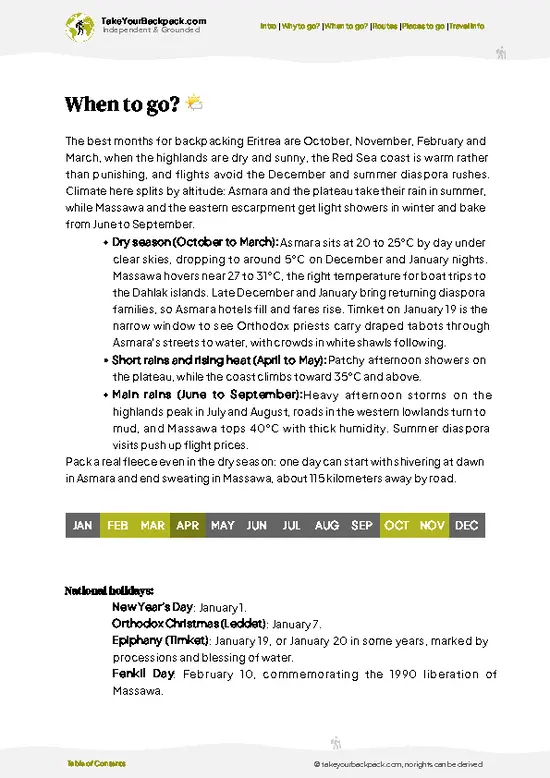
November to February is the easiest window for Agordat, when days reach roughly 30 to 34°C (86 to 93°F) and nights cool to about 17 to 21°C (63 to 70°F).
  • Cool Season (November to February): Comfortable for walking and market visits, with long clear days of about 11 to 12 hours of light. Prices stay low, since few travelers come here.
  • Hot Season (March to June): Highs often pass 38 to 42°C (100 to 108°F). Midday is hard going, so plan activity for early morning and evening.
  • Rainy Season (July to September): Summer rains fill the Gash River, and roads and riverbeds can become hard to cross. Days are hot and humid at 33 to 38°C (91 to 100°F).
  • Market Days: Weekly market mornings bring the most color and movement, whatever the season.
Arrive early in the week to catch market day without rushing, and check river conditions first in the rainy months.

source: climatestotravel.comJANJanuary: excellent for travelingFEBFebruary: excellent for travelingMARMarch: highly recommended for travelingAPRApril: good for travelingMAYMay: fair for travelingJUNJune: below average for travelingJULJuly: below average for travelingAUGAugust: below average for travelingSEPSeptember: fair for travelingOCTOctober: good for travelingNOVNovember: excellent for travelingDECDecember: excellent for traveling
when-to-go

✈️ The backpacker research shortcutEritrea Travel Guide

An offline-friendly backpacking guide with optimized travel routes, ranked highlights, transport advice, and the best areas to stay.
example page 0 from our offline Travel Guide for Eritrea
example page 1 from our offline Travel Guide for Eritrea
example page 2 from our offline Travel Guide for Eritrea
example page 3 from our offline Travel Guide for Eritrea
example page 4 from our offline Travel Guide for Eritrea
example page 5 from our offline Travel Guide for Eritrea
example page 6 from our offline Travel Guide for Eritrea
example page 7 from our offline Travel Guide for Eritrea
The digital guide (245 pages) contains:
✅ 56 highlights, ranked by travel appeal
✅ Optimized 5, 10 & 15-day travel routes
✅ Cities, national parks, landmarks, beaches
✅ How to get around
✅ Offline-friendly for travel without Wi-Fi
👉 Click to see all 30+ guide features

📅 Plan smarter in minutes, not weeks
✅ Month by month travel advice
✅ Festivals & national holidays
✅ Budget expectations

🗺️ Go to the right places, skip the overrated ones
✅ Honest pros & cons of destinations
✅ Top hikes, parks & viewpoints
✅ Lesser-known places most travelers miss
✅ Clear “worth it vs skip it” guidance

🛏️ Travel smoothly without rookie mistakes
✅ Best areas to stay
✅ Transport systems explained simply
✅ Common scams & safety advice
✅ SIM cards, money & practical tips

🌍 Understand the country, not just visit it
✅ Culture & traditions
✅ 52 Essential phrases & customs
✅ Festivals worth planning around
✅ Traveler-friendly historical context
✅ Insights that make places more meaningful

📱 Built for real travel conditions
✅ Fully downloadable PDF
✅ Works completely offline
✅ Optimized for phone use
✅ Useful in remote areas & buses
✅ Everything in one place
Stop searching, start planning
Get instant access to your full guide. 30‑day money-back guarantee.
+ Add another guide for just

By proceeding you agree to our terms.
Sent to your inbox immediately after payment • 100% Secure Checkout
Best Backpacking Travel Advisor 2025 tourism awardBest Backpacking
Travel Advisor
2025
What others say about Take Your Backpack Guides:
⭐⭐⭐⭐⭐
Fantastic, amazing amount of information!
⭐⭐⭐⭐⭐
My goodness this is amazing, it's what I've been looking for hats off too you!
⭐⭐⭐⭐⭐
I think this is absolutely BRILLIANT
⭐⭐⭐⭐
Very complete and informative. It's still missing places, but I gotta to commend you
⭐⭐⭐⭐⭐
This is truly amazing, thank you, can't wait to explore it with my kids!
⭐⭐⭐⭐⭐
Awesome resource, thank you!
⭐⭐⭐⭐⭐
This is amazing! Can't wait to explore the ones I haven't seen
⭐⭐⭐⭐
I love this! Well done, great idea.
⭐⭐⭐⭐⭐
Thanks for taking the time to make this gem!
⭐⭐⭐⭐⭐
This might be the best website I've ever seen.
⭐⭐⭐⭐⭐
Congratulations, and thank you so much for your work; it's incredibly valuable.
⭐⭐⭐⭐
In all seriousness I think you did a great job pointing out the important spots
⭐⭐⭐⭐⭐
10/10 very good
⭐⭐⭐⭐⭐
As someone who's only just starting to visit regularly this is awesome, thank you.
⭐⭐⭐⭐
Thank you very much! I'm going to visit my dad, it's going to be very useful!
⭐⭐⭐⭐⭐
This is really cool! We'll be travelling for the first time and this definitely come in handy.
⭐⭐⭐⭐⭐
You are now our minister of culture, congratulations 👨‍💼
⭐⭐⭐⭐⭐
Just wanted to tell you that this is a pearl! Going to follow your recommendations.
⭐⭐⭐⭐⭐
This is so cool. I'll definitely be using the resource for my travels soon.
⭐⭐⭐⭐⭐
This is very impressive! Good work.
⭐⭐⭐⭐⭐
This is an amazing and informative site. Very well done!

🛏️ Where to stay?Best areas to stay in Eritrea

Stay in the center of Agordat near the main road, where the few basic guesthouses and small hotels are concentrated and everything is walkable. Dedicated hostels do not exist here, so budget travelers use simple rooms, often with shared bathrooms, at roughly US$10 to 25 a night. Booking ahead is difficult, so arrive by early afternoon and ask around.

The area near the market and bus stop is the second option. It is handy for early departures to Asmara or Barentu, though mornings start loud with vehicles, livestock and traders. Rooms are as simple as elsewhere.

At night the center is quiet and … read more 👉
Stay in the center of Agordat near the main road, where the few basic guesthouses and small hotels are concentrated and everything is walkable. Dedicated hostels do not exist here, so budget travelers use simple rooms, often with shared bathrooms, at roughly US$10 to 25 a night. Booking ahead is difficult, so arrive by early afternoon and ask around.

The area near the market and bus stop is the second option. It is handy for early departures to Asmara or Barentu, though mornings start loud with vehicles, livestock and traders. Rooms are as simple as elsewhere.

At night the center is quiet and calm, with little street life after dark, and the walk back from a late tea is short and straightforward. Power cuts and water interruptions happen, so keep a flashlight and a bottle of water handy. Fans are valuable in hot months, so check that the room has one working before you pay.

🚌 Getting aroundMoving around without the hassle

Assuming you can leave Agordat by a flexible bus or hitch on the day you want is the costliest error, since services are infrequent and fill early, and travel outside Asmara usually needs a valid permit. Sort out your travel permit in Asmara before leaving, and book your seat a day ahead. Inside town, everything is within a short walk, traffic is light, and the dust is the main nuisance.
  • Walking: The whole center, market and station area can be covered in under an hour, and you pass shaded tea stalls where locals will happily chat. Go early to avoid the heat.
  • Intercity bus from Asmara: Buses run roughly 4 to 6 hours by road, descending through dramatic highland scenery into the hot western lowlands, for around US$4 to 8. Departures are in the early morning, so arrive at the station by dawn.
  • Minibus
… read more 👉
Assuming you can leave Agordat by a flexible bus or hitch on the day you want is the costliest error, since services are infrequent and fill early, and travel outside Asmara usually needs a valid permit. Sort out your travel permit in Asmara before leaving, and book your seat a day ahead. Inside town, everything is within a short walk, traffic is light, and the dust is the main nuisance.
  • Walking: The whole center, market and station area can be covered in under an hour, and you pass shaded tea stalls where locals will happily chat. Go early to avoid the heat.
  • Intercity bus from Asmara: Buses run roughly 4 to 6 hours by road, descending through dramatic highland scenery into the hot western lowlands, for around US$4 to 8. Departures are in the early morning, so arrive at the station by dawn.
  • Minibus and shared transport: Shared minibuses link Agordat with Barentu, Keren and nearby villages for roughly US$2 to 6 depending on distance. They leave when full, so expect a wait but also plenty of conversation on board.
  • Hired vehicle or taxi: A private car for the day to nearby villages or the riverbed costs around US$30 to 70 depending on distance and fuel. It is the practical choice if you want to reach places the buses skip, and your driver doubles as a local guide.

👛 Costs (as of 22 October 2026)What things cost and how to budget

Agordat costs roughly US$10 to 25 a day for a backpacker, with a Total Daily Budget of US$46 based on high season. Prices are low, but choices are limited and cash is essential, as there are few ATMs and cards are rarely accepted.
CategoryBudget RangeLocal Reality
Dorm accommodationUS$10 to 25 (high season), US$8 to 18 (low season)No hostels, so simple private rooms with fans, often shared bathrooms.
MealsUS$6 to 12Injera with stew, ful, eggs and bread, plus tea and coffee at stalls.
Local transportUS$2 to 6Mostly walking, with shared minibuses for longer hops.
Basic activities/entry feesUS$0 to 5Market visits and riverbed walks are free.
Miscellaneous expensesUS$3 to 8Water, SIM or data, small tips and snacks.
Total Daily BudgetUS$46Excludes the bus from Asmara and permit costs.
Carry enough cash … read more 👉
Agordat costs roughly US$10 to 25 a day for a backpacker, with a Total Daily Budget of US$46 based on high season. Prices are low, but choices are limited and cash is essential, as there are few ATMs and cards are rarely accepted.
CategoryBudget RangeLocal Reality
Dorm accommodationUS$10 to 25 (high season), US$8 to 18 (low season)No hostels, so simple private rooms with fans, often shared bathrooms.
MealsUS$6 to 12Injera with stew, ful, eggs and bread, plus tea and coffee at stalls.
Local transportUS$2 to 6Mostly walking, with shared minibuses for longer hops.
Basic activities/entry feesUS$0 to 5Market visits and riverbed walks are free.
Miscellaneous expensesUS$3 to 8Water, SIM or data, small tips and snacks.
Total Daily BudgetUS$46Excludes the bus from Asmara and permit costs.
Carry enough cash from Asmara and eat where locals do, as a plate of injera costs much less than at any place catering to visitors.
⚠️ Prices can change and everyone travels differently, so take this as a rough guide. Hope it helps you plan your adventure!

🚌 Day tripsShort trips worth adding

Agordat works as a base for short lowland excursions, though transport is thin and early starts matter.
Keren:
This highland town sits on the road back toward Asmara and is known for its Monday livestock market, with camels and cattle sold in the open and a mix of Bilen people. Allow 2 to 3 hours each way by minibus, costing about US$3 to 6 each way. Go on Monday, and leave by early morning to be back before dark.
👉 Explore Keren
Barentu:
The main town of the Gash-Barka region lies to the south and is a good look at lowland farming country, with a busy market and a regional museum feel in daily life. The trip takes around 1.5 to 2.5 hours each way for roughly US$2 to 5. Plan for a quick return, as afternoon transport thins out.
👉 Explore Barentu
Gash River and Doum Palm Groves:
A walk or short … read more 👉
Agordat works as a base for short lowland excursions, though transport is thin and early starts matter.
Keren:
This highland town sits on the road back toward Asmara and is known for its Monday livestock market, with camels and cattle sold in the open and a mix of Bilen people. Allow 2 to 3 hours each way by minibus, costing about US$3 to 6 each way. Go on Monday, and leave by early morning to be back before dark.
👉 Explore Keren
Barentu:
The main town of the Gash-Barka region lies to the south and is a good look at lowland farming country, with a busy market and a regional museum feel in daily life. The trip takes around 1.5 to 2.5 hours each way for roughly US$2 to 5. Plan for a quick return, as afternoon transport thins out.
👉 Explore Barentu
Gash River and Doum Palm Groves:
A walk or short ride to the riverbed near Agordat shows palm groves, irrigated plots and herders watering animals. Costs are minimal on foot, or about US$10 to 20 for a local ride. Go in the cooler months, and avoid crossing when the river runs after heavy rain.

🛡️ SafetyScams, Hazards, and Annoyances

Agordat is a quiet, low-crime town where daily life is calm and locals are hospitable. The main issue for foreigners is official rather than criminal, since you need a valid travel permit and may be asked to show it at checkpoints, so carry it with your passport at all times. Photography near military sites, bridges and government buildings is restricted, so ask before pointing a camera. Petty theft is uncommon, but keep valuables out of sight in crowded markets. Women and solo travelers generally report respectful treatment, though modest clothing helps. After dark the streets are dim, so carry a flashlight and walk with purpose. Heat is the more real risk, so drink water regularly and rest at midday.

FAQTraveler FAQ

Agordat is worth a stop if you want to see the western lowlands and a working market town far from the usual circuit. The weekly market, the Gash River edge and the old railway remains make it interesting for a day or two. Travel from Asmara takes about 4 to 6 hours by bus, so it is more a destination for curious travelers than a quick stopover.
One to two days is enough in Agordat. A full day covers the market, town center, station area and riverbed walk, and a second day suits a trip to Keren or Barentu, each 1.5 to 3 hours away. Plan around market day and the heat, and keep a travel permit handy.
Agordat is hard to do as a day trip from Asmara, since the road takes roughly 4 to 6 hours each way and buses leave early with limited return options. A night in Agordat is more realistic, with rooms around US$10 to 25. Keren, about 2 to 3 hours away, is a better nearby base for a shorter outing.
⚠️ Things can change over time, so always validate details locally before you go.

Other Eritrean towns near Agordat

Explore more nearby:

  • Hagaz—agricultural college, camel herding, Gash River| 44 km away
  • Barentu—Kunama villages, weekly livestock market, lowland plains| 58 km away
  • Areza—mountain foothills, small-scale farming, rural outpost| 100 km away

💡 Not sure where to go next?
Create a personalized itinerary for Eritrea including Agordat and the places that fit your trip.

Generate my itinerary

👉 Discover all towns

Or checkout all Eritrea has to offer (think cities, towns, villages, national parks, hikes, beaches, festivals)
Country photo of Eritrea

We 💚 feedbackParting advice and final tips

Agordat rewards those who notice the old railway line running through town, because following it explains why the place exists at all. Carry small bills for tea and market buys, and bring a hat and a large water bottle. I would arrive on a Sunday evening so Monday market is your first morning.

✍️ Help improve this page!
The information on this page is based on in-depth research, insights shared by experienced travelers, and feedback from the local travel community in Eritrea. While every effort is made to keep the information accurate and current, conditions can change — so if you spot anything incorrect or outdated, please get in touch.


🙋‍♂️ Give feedback

👋 Meet the founderWho’s Behind Take Your Backpack?

Johan, backpacker and founder of TakeYourBackpackHi, I’m Johan (Netherlands 🇳🇱), the creator of TakeYourBackpack. Over the past 3 decades, I’ve backpacked through 90+ countries across six continents, gaining extensive experience with independent travel, long-term trips, and overland routes.

This site is built on a combination of firsthand travel experience and carefully curated insights from other backpackers. Many guides are based on places I’ve personally visited, while others bring together tips, observations, and practical advice shared by trusted travelers I’ve met along the way.

The goal is to provide realistic, experience-driven guidance — not generic itineraries — so you can explore destinations with better context, clearer expectations, and more confidence.