v2.webp)
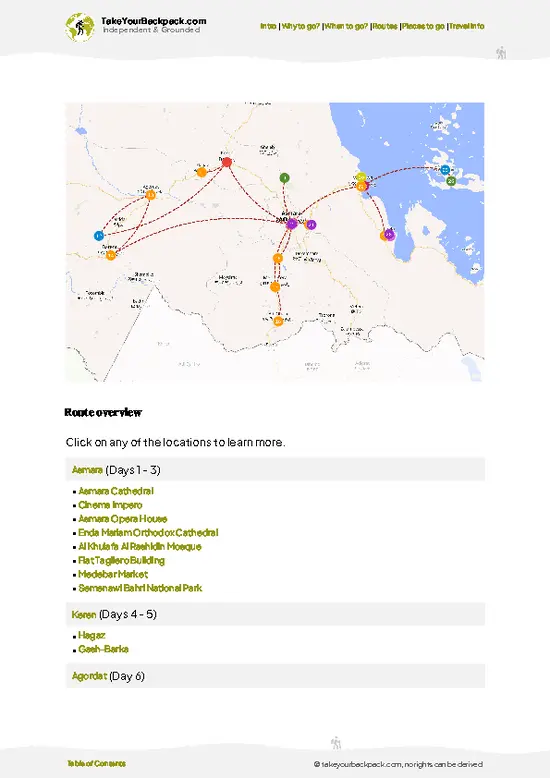
- Monday Livestock Market: Camels, goats, sheep and cattle are traded in an open field on the town's edge, with herders in from surrounding villages. Come early in the morning, since it thins out by midday. Entry is free, and one to two hours is enough. Keep a respectful distance when photographing, and ask before pointing a lens at people.
- Mariam Dearit Shrine: A huge baobab on the edge of town has a hollow trunk fitted with a statue of the Virgin Mary, and Christians and Muslims both visit it. It sits a short ride outside the center. Visit in the morning or late afternoon, when it is quiet and the light is soft. Free, with a small donation welcome, and 30 to 45 minutes is enough.
- Keren Commonwealth War Cemetery: The graves belong mostly to British and Indian soldiers who died in the 1941 battle
- Monday Livestock Market: Camels, goats, sheep and cattle are traded in an open field on the town's edge, with herders in from surrounding villages. Come early in the morning, since it thins out by midday. Entry is free, and one to two hours is enough. Keep a respectful distance when photographing, and ask before pointing a lens at people.
- Mariam Dearit Shrine: A huge baobab on the edge of town has a hollow trunk fitted with a statue of the Virgin Mary, and Christians and Muslims both visit it. It sits a short ride outside the center. Visit in the morning or late afternoon, when it is quiet and the light is soft. Free, with a small donation welcome, and 30 to 45 minutes is enough.
- Keren Commonwealth War Cemetery: The graves belong mostly to British and Indian soldiers who died in the 1941 battle for the surrounding passes. Rows of headstones sit in a well-kept garden against bare hills. Mornings are best for the cool air. It is free, and half an hour covers it.
- Keren Central Market and Souk: Spice sellers, fabric stalls, tailors and tea counters line the lanes in the middle of town. It is busiest in the morning and is the best place to see ordinary trade. You can wander for an hour or two at no cost, and small purchases such as spices or cloth run US$1 to 5.
- Saint Michael’s Church: A Catholic church in the town center, its Italian-era form and bell tower making it one of the more distinctive landmarks. Services give the best sense of the community, so go in the morning. Entry is free, and 20 to 30 minutes is plenty. Dress modestly.
- Old Town Walk and Coffee Stops: The older quarters have low houses, courtyards and small cafes where macchiato and tea cost under US$1. Late afternoon, when the heat drops, is the pleasant time. Allow one to two hours on foot.
Spotted a mistake or missing something? Contact us.

 Best Backpacking
.jpg) Hi, I’m Johan (Netherlands 🇳🇱), the creator of TakeYourBackpack. Over the past 3 decades, I’ve backpacked through 90+ countries across six continents, gaining extensive experience with independent travel, long-term trips, and overland routes.
Hi, I’m Johan (Netherlands 🇳🇱), the creator of TakeYourBackpack. Over the past 3 decades, I’ve backpacked through 90+ countries across six continents, gaining extensive experience with independent travel, long-term trips, and overland routes.