×

Eritrea🇪🇷 | attractionsNational Museum of Eritreaarchaeological finds, ethnographic displays, colonial-era building, cultural artifacts | things to do and best time to go

Explore Cinema ImperoExplore Tank Graveyard

Backpacking in National Museum of Eritrea
👍 Recommendedattraction ranked #8
By Johan Kruseman 🇳🇱 | Updated September 3, 2026

A guard’s boots echo off marble as you trace your finger along a bullet-pocked Italian helmet, the air tinged with dust and the faint scent of old paper. The hum of a ceiling fan battles the Asmara heat, and outside, the city’s art deco skyline glows through barred windows. The National Museum of Eritrea sits right in the heart of Asmara, Eritrea’s capital—a city that feels like a time capsule with espresso bars and palm-lined boulevards. Here’s the straight talk: this isn’t a blockbuster museum with slick displays or crowds jostling for selfies. You’ll find more cracked glass than Instagrammers, and the exhibits—ancient stelae, colonial relics, and battered Kalashnikovs—are raw, sometimes haphazard, but absolutely real. The wow-factor is in the stories, not the polish. Entry is cheap, but context is priceless; you’ll need to bring your curiosity and patience. Compared to Eritrea’s Red Sea coast or the Danakil Depression, this is a cerebral, quietly intense stop—less adrenaline, more revelation.

Discover everything you want to know in the 📖 Eritrea Travel Guide.


Get your Eritrea guide
61 ranked highlights, routes & tips, works offline (260 pages)
Loading the map 🌍
CLICK TO FILTER
cities
towns
landmarks
national parks
hikes
beaches
attractions
festivals
regions
SHOW COUNTRY’S BESTSHOW ALL

✨ Why go?
Ranked #8 attraction in Eritrea
What sets this place apart

The National Museum of Eritrea isn’t some polished, Instagram-perfect spot where you snap a quick selfie and move on. It’s a gritty, raw dive into a country’s soul that most travelers overlook. Yes, it’s not flashy, and the crowds are minimal—mostly locals and the occasional curious backpacker. But that’s exactly why it’s worth your time. This museum is the beating heart of Eritrea’s complex history, showcasing artifacts that span from ancient civilizations to the brutal struggle for independence. You won’t find glossy displays or high-tech exhibits here; instead, you get the real deal—authentic relics, old photographs, and stories that hit hard. It’s a cultural checkpoint that forces you to slow down and absorb the layers of Eritrea’s identity, beyond the surface-level narratives. For backpackers … read more 👉
The National Museum of Eritrea isn’t some polished, Instagram-perfect spot where you snap a quick selfie and move on. It’s a gritty, raw dive into a country’s soul that most travelers overlook. Yes, it’s not flashy, and the crowds are minimal—mostly locals and the occasional curious backpacker. But that’s exactly why it’s worth your time. This museum is the beating heart of Eritrea’s complex history, showcasing artifacts that span from ancient civilizations to the brutal struggle for independence. You won’t find glossy displays or high-tech exhibits here; instead, you get the real deal—authentic relics, old photographs, and stories that hit hard. It’s a cultural checkpoint that forces you to slow down and absorb the layers of Eritrea’s identity, beyond the surface-level narratives. For backpackers threading through the Horn of Africa, it’s a major milestone—a place to recalibrate your understanding of resilience and heritage. The effort to get here, often through the bustling streets of Asmara, pays off with a deep, unfiltered connection to a country that’s rarely on the typical travel radar but deserves every minute of your attention.
Want to include National Museum of Eritrea in your Eritrea route?
Create a personalized Eritrea itinerary that includes National Museum of Eritrea and the places that fit your trip — based on your travel style, budget, and available time. Get your route in seconds.

Generate my trip

💡 HighlightsTop highlights of National Museum of Eritrea

Italian-Era Architecture and Urban Planning Models
Forget the Instagram filters—what you see here is the raw, unvarnished blueprint of Asmara’s soul. The museum’s collection of scale models and original plans from the Italian colonial period isn’t just for architecture nerds. These battered, hand-built models show you how Mussolini’s planners tried to turn Asmara into a “Little Rome.” You’ll spot the bones of the city you just walked through: the wide boulevards, the Deco facades, the oddball futurist flourishes. It’s a rare, tactile way to connect the dots between colonial ambition and the city’s present-day character. No glossy reinterpretation—just the real, sometimes awkward, always fascinating evidence.


Ancient Axumite Artifacts
You want ancient? Eritrea delivers. The museum’s Axumite … read more 👉
Italian-Era Architecture and Urban Planning Models
Forget the Instagram filters—what you see here is the raw, unvarnished blueprint of Asmara’s soul. The museum’s collection of scale models and original plans from the Italian colonial period isn’t just for architecture nerds. These battered, hand-built models show you how Mussolini’s planners tried to turn Asmara into a “Little Rome.” You’ll spot the bones of the city you just walked through: the wide boulevards, the Deco facades, the oddball futurist flourishes. It’s a rare, tactile way to connect the dots between colonial ambition and the city’s present-day character. No glossy reinterpretation—just the real, sometimes awkward, always fascinating evidence.


Ancient Axumite Artifacts
You want ancient? Eritrea delivers. The museum’s Axumite relics—coins, pottery, and stone inscriptions—are the real deal, dug up from sites like Qohaito and Metera. These aren’t just dusty trinkets; they’re proof of a civilization that traded with Rome and Persia while most of Europe was still figuring out how to build a road. The coins, stamped with kings’ faces and ancient script, are tiny time machines. The pottery, rough and practical, tells you more about daily life than any textbook. This is the kind of history you feel in your bones, not just your brain.


Prehistoric Rock Art Replicas
The Instagram crowd will skip this room. Their loss. The museum’s collection of prehistoric rock art replicas—painstakingly recreated from sites like the Dahlak Islands and the Barka region—offers a rare look at the region’s earliest storytellers. You’ll see stylized giraffes, hunters, and geometric patterns that predate written language. It’s not flashy, but it’s quietly electrifying. These images are older than most religions, and they’re still here, whispering across the millennia.


Ethnographic Gallery: Everyday Eritrea
This is where the museum drops the tourist act and gets real. The ethnographic section is a crash course in Eritrean daily life, from Tigrinya coffee ceremonies to Saho jewelry and Kunama musical instruments. It’s not curated for Western eyes—there’s a lived-in, slightly chaotic feel that makes it honest. You’ll see handwoven baskets, battered cooking pots, and wedding costumes that have actually been worn. It’s a reminder that Eritrea isn’t just a crossroads of empires; it’s a patchwork of fiercely distinct cultures, each with its own rhythm.


War of Independence Memorabilia
If you want to understand Eritrea, you have to confront its scars. The museum’s collection of war memorabilia—homemade weapons, propaganda posters, and battered uniforms—doesn’t sugarcoat anything. There’s no heroic soundtrack, just the raw artifacts of a brutal, decades-long struggle. It’s sobering, but it’s also a testament to resilience. You’ll leave with a deeper respect for the country’s hard-won independence, and maybe a little less patience for travel clichés.
Spotted a mistake or missing something? Contact us.

Things to do near National Museum of Eritrea

Ratings based on Tripadvisor reviews. When you book through this link, you support our work at no extra cost to you.

🌤️ When to go?Weather, crowds, and seasonal trade-offs


  • Weather: Eritrea’s climate is mostly hot and dry, but Asmara, where the National Museum is located, enjoys a mild highland climate. The best weather hits between October and March, with daytime temps around 20-25°C (68-77°F). Avoid the summer months of June to September when it’s hotter and the rainy season can make wandering less pleasant.

  • Temperature: Expect comfortable temperatures in the cooler months—October through March—making museum visits more enjoyable. Daytime highs hover around 22°C (72°F), while nights can dip to 10°C (50°F). The summer heat can push temps above 30°C (86°F), which drains energy fast.

  • Daylight Hours: Eritrea sits near the equator, so daylight hours stay pretty consistent year-round, roughly 12 hours a day. This means you can plan your museum visit any time
read more 👉

  • Weather: Eritrea’s climate is mostly hot and dry, but Asmara, where the National Museum is located, enjoys a mild highland climate. The best weather hits between October and March, with daytime temps around 20-25°C (68-77°F). Avoid the summer months of June to September when it’s hotter and the rainy season can make wandering less pleasant.

  • Temperature: Expect comfortable temperatures in the cooler months—October through March—making museum visits more enjoyable. Daytime highs hover around 22°C (72°F), while nights can dip to 10°C (50°F). The summer heat can push temps above 30°C (86°F), which drains energy fast.

  • Daylight Hours: Eritrea sits near the equator, so daylight hours stay pretty consistent year-round, roughly 12 hours a day. This means you can plan your museum visit any time during daylight without worrying about early sunsets cutting your trip short.

  • Crowds: The National Museum doesn’t draw massive tourist crowds, but local visitors peak during Eritrean holidays and weekends, especially December and January. For a quieter experience, weekdays outside of holiday periods are your best bet.

  • Seasonal Activities: Eritrean Independence Day on May 24th brings cultural events and parades in Asmara, adding a vibrant backdrop if you time your visit then. However, the museum itself can be busier and less peaceful during this period.

  • Price Fluctuations: Entrance fees remain stable year-round, but travel costs to Eritrea can spike during peak tourist seasons (December to February) due to limited flights and higher demand. Booking ahead during these months saves money and stress.


Pro-tip: Aim for late October to early March for the sweet spot of cool weather, manageable crowds, and steady prices—perfect for soaking in the museum’s rich history without the sweat or the scramble.


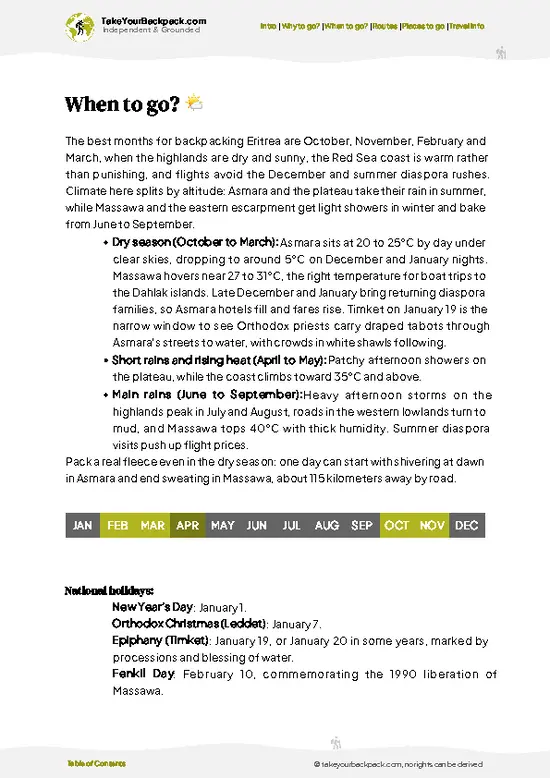
source: climatestotravel.comJANJanuary: highly recommended for travelingFEBFebruary: highly recommended for travelingMARMarch: highly recommended for travelingAPRApril: good for travelingMAYMay: good for travelingJUNJune: fair for travelingJULJuly: fair for travelingAUGAugust: fair for travelingSEPSeptember: fair for travelingOCTOctober: highly recommended for travelingNOVNovember: highly recommended for travelingDECDecember: highly recommended for traveling
eritrea-attraction-national-museum-of-eritrea v1
© Google |

✈️ The backpacker research shortcutEritrea Travel Guide

An offline-friendly backpacking guide with optimized travel routes, ranked highlights, transport advice, and the best areas to stay.
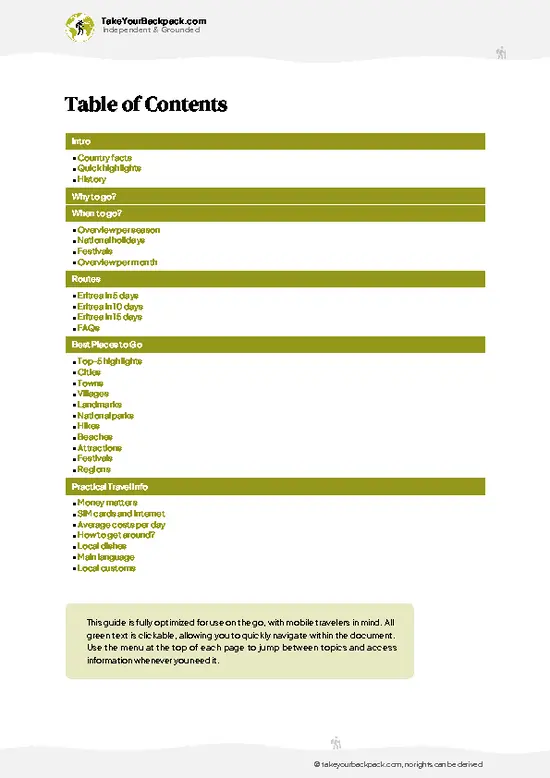
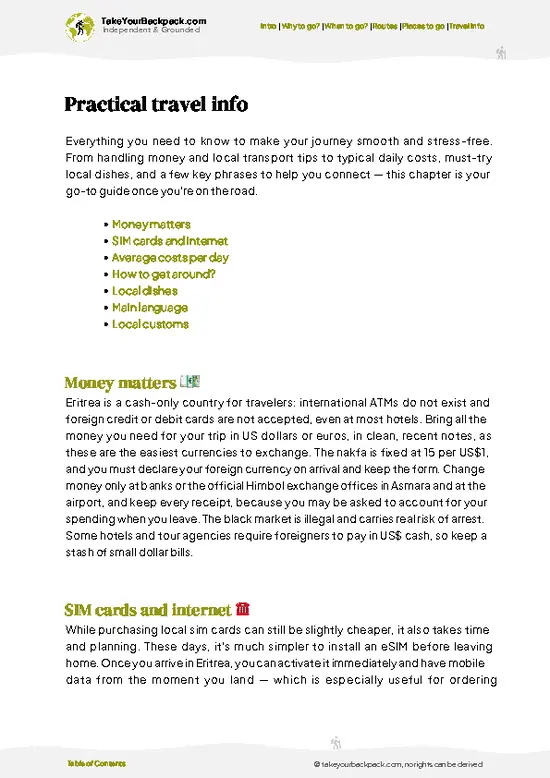
example page 0 from our offline Travel Guide for Eritrea
example page 1 from our offline Travel Guide for Eritrea
example page 2 from our offline Travel Guide for Eritrea
example page 3 from our offline Travel Guide for Eritrea
example page 4 from our offline Travel Guide for Eritrea
example page 5 from our offline Travel Guide for Eritrea
example page 6 from our offline Travel Guide for Eritrea
example page 7 from our offline Travel Guide for Eritrea
The digital guide (260 pages) contains:
61 highlights, ranked by travel appeal
Optimized 5, 10 & 15-day travel routes
Cities, national parks, landmarks, beaches
How to get around
Offline-friendly for travel without Wi-Fi
👉 Click to see all 30+ guide features

📅 Plan smarter in minutes, not weeks
Month by month travel advice
Festivals & national holidays
Budget expectations

🗺️ Go to the right places, skip the overrated ones
Honest pros & cons of destinations
Top hikes, parks & viewpoints
Lesser-known places most travelers miss
Clear “worth it vs skip it” guidance

🛏️ Travel smoothly without rookie mistakes
Best areas to stay
Transport systems explained simply
Common scams & safety advice
SIM cards, money & practical tips

🌍 Understand the country, not just visit it
Culture & traditions
52 Essential phrases & customs
Festivals worth planning around
Traveler-friendly historical context
Insights that make places more meaningful

📱 Built for real travel conditions
Fully downloadable PDF
Works completely offline
Optimized for phone use
Useful in remote areas & buses
Everything in one place
Save weeks of stressful planning
Get instant access to your full guide. 30‑day money-back guarantee.
+ Add another guide for just US$7.80

By proceeding you agree to our terms.
Sent to your inbox immediately after payment • 100% Secure Checkout
Best Backpacking Travel Advisor 2025 tourism awardBest Backpacking
Travel Advisor
2025
What others say about Take Your Backpack Guides:
⭐⭐⭐⭐⭐
Fantastic, amazing amount of information!
⭐⭐⭐⭐⭐
My goodness this is amazing, it's what I've been looking for hats off too you!
⭐⭐⭐⭐⭐
I think this is absolutely BRILLIANT
⭐⭐⭐⭐
Very complete and informative. It's still missing places, but I gotta to commend you
⭐⭐⭐⭐⭐
This is truly amazing, thank you, can't wait to explore it with my kids!
⭐⭐⭐⭐⭐
Awesome resource, thank you!
⭐⭐⭐⭐⭐
This is amazing! Can't wait to explore the ones I haven't seen
⭐⭐⭐⭐
I love this! Well done, great idea.
⭐⭐⭐⭐⭐
Thanks for taking the time to make this gem!
⭐⭐⭐⭐⭐
This might be the best website I've ever seen.
⭐⭐⭐⭐⭐
Congratulations, and thank you so much for your work; it's incredibly valuable.
⭐⭐⭐⭐
In all seriousness I think you did a great job pointing out the important spots
⭐⭐⭐⭐⭐
10/10 very good
⭐⭐⭐⭐⭐
As someone who's only just starting to visit regularly this is awesome, thank you.
⭐⭐⭐⭐
Thank you very much! I'm going to visit my dad, it's going to be very useful!
⭐⭐⭐⭐⭐
This is really cool! We'll be travelling for the first time and this definitely come in handy.
⭐⭐⭐⭐⭐
You are now our minister of culture, congratulations 👨‍💼
⭐⭐⭐⭐⭐
Just wanted to tell you that this is a pearl! Going to follow your recommendations.
⭐⭐⭐⭐⭐
This is so cool. I'll definitely be using the resource for my travels soon.
⭐⭐⭐⭐⭐
This is very impressive! Good work.
⭐⭐⭐⭐⭐
This is an amazing and informative site. Very well done!

🛏️ Where to stay?Choosing the right base

If you’re backpacking near the National Museum of Eritrea in Asmara, the real deal isn’t about fancy hotels or polished tourist traps—it’s about the neighborhoods that put you in the thick of local life without sacrificing safety or social vibes. The area around the city center, especially near Harnet Avenue, is where you want to be. It’s a no-nonsense zone where you can walk to the museum, grab street food, and meet other travelers and locals who aren’t just passing through.

This part of Asmara isn’t flashy, but it’s alive with everyday Eritrean rhythms—cafes buzzing with conversation, markets … read more 👉
If you’re backpacking near the National Museum of Eritrea in Asmara, the real deal isn’t about fancy hotels or polished tourist traps—it’s about the neighborhoods that put you in the thick of local life without sacrificing safety or social vibes. The area around the city center, especially near Harnet Avenue, is where you want to be. It’s a no-nonsense zone where you can walk to the museum, grab street food, and meet other travelers and locals who aren’t just passing through.

This part of Asmara isn’t flashy, but it’s alive with everyday Eritrean rhythms—cafes buzzing with conversation, markets selling fresh injera and coffee beans, and streets lined with Italian-era architecture that’s more than just a backdrop; it’s a conversation starter. You’ll find guesthouses and budget lodgings here that are straightforward, clean, and run by people who know the city inside out. Safety is solid, especially if you stick to the main streets and mingle in the early evening when the city’s pulse is at its best.

Forget the glossy Instagram shots of pristine museums and empty plazas. The magic is in the gritty, lived-in neighborhoods where you can swap stories with other solo travelers over a cup of strong Eritrean coffee or join locals in a spontaneous street game. That’s where the National Museum’s real value hits home—not just the artifacts inside, but the living culture just outside its doors.

👛 Costs (as of 3 September 2026)How expensive it really is

As of the most recent estimates, the entrance fee to the National Museum of Eritrea is approximately 50 Nakfa, which is about €3. Additional costs may include guided tours or special exhibitions, but specific details are not readily available.

source: yzmuseum.org
⚠️ Prices can change and everyone travels differently, so take this as a rough guide. Hope it helps you plan your adventure!

FAQTraveler FAQ

1 to 2 hours is sufficient to visit the National Museum of Eritrea. This allows time to see the main exhibits covering Eritrea's history, culture, and archaeology without rushing.
Yes, the National Museum of Eritrea is worth the entrance fee, which is typically around 10 Eritrean Nakfa. The museum offers valuable insights into Eritrea's heritage, including artifacts from ancient civilizations and colonial periods.
You can get to the National Museum of Eritrea by taxi or local minibus from Asmara city center. It is located near the central area, approximately 2 kilometers from the main market, making it easily accessible by foot or short ride.
⚠️ Things can change over time, so always validate details locally before you go.

Other Eritrean attractions near National Museum of Eritrea

Explore more nearby:


💡 Not sure where to go next?
Create a personalized itinerary for Eritrea including National Museum of Eritrea and the places that fit your trip.

Generate my itinerary

👉 Discover all attractions

Or checkout all Eritrea has to offer (think cities, towns, villages, national parks, hikes, beaches, festivals)
Country photo of Eritrea

We 💚 feedbackParting advice and final tips

The National Museum of Eritrea isn’t about flashy displays or crowds snapping selfies. It’s quiet, a bit rough around the edges, but that’s where its charm lies. You won’t find polished labels or guided tours, just raw history laid bare—ancient artifacts, colonial relics, and stories that hit deeper than any postcard. The real surprise? How much you learn by just sitting with the exhibits, letting the weight of Eritrea’s past settle in. Heads up: it’s not touristy, so bring patience and curiosity, not expectations.

✍️ Help improve this page!
The information on this page is based on in-depth research, insights shared by experienced travelers, and feedback from the local travel community in Eritrea. While every effort is made to keep the information accurate and current, conditions can change — so if you spot anything incorrect or outdated, please get in touch.


🙋‍♂️ Give feedback

👋 Meet the founderWho’s Behind Take Your Backpack?

Johan, backpacker and founder of TakeYourBackpackHi, I’m Johan (Netherlands 🇳🇱), the creator of TakeYourBackpack. Over the past decade, I’ve backpacked through 80+ countries across six continents, gaining extensive experience with independent travel, long-term trips, and overland routes.

This site is built on a combination of firsthand travel experience and carefully curated insights from other backpackers. Many guides are based on places I’ve personally visited, while others bring together tips, observations, and practical advice shared by trusted travelers I’ve met along the way.

The goal is to provide realistic, experience-driven guidance — not generic itineraries — so you can explore destinations with better context, clearer expectations, and more confidence.

Get full Eritrea guide •
Instant download • 61 highlights • Full Offline guide