
×

Eswatini🇸🇿 | festivalsIncwala Ceremonyroyal rituals, sacred kingship, first fruits, ancestral homage | things to do and best time to go

Explore Emafini FestivalExplore Marula Festival

Backpacking in Incwala Ceremony
🌟 Highlightfestival ranked #3
By Johan Kruseman 🇳🇱 | Updated June 3, 2026

Most travel blogs gloss over this, but here’s the twist: you can’t just stroll into the Incwala Ceremony with a camera and a smile—outsiders are tolerated, not welcomed, and the most sacred moments are strictly off-limits. Incwala unfolds at the Royal Kraal in Lobamba, the spiritual heart of Eswatini, where the king and his warriors lead a ritual that’s less about spectacle and more about raw, communal renewal. Forget festival clichés—there’s no pop-up market, no tourist-friendly playlist. Instead, you’ll hear pounding drums, guttural chants, and the stomp of thousands of feet in sync, all swirling around a theme of unity and kingship. The crowd is mostly Swazi, dressed in traditional regalia, with a scattering of respectful foreigners hugging the periphery. The energy is electric but tense, lasting several days, and you’ll feel every hour. If you crave authenticity and don’t mind being an outsider, Incwala is a rare, challenging window into living tradition—just don’t expect a warm welcome or easy photos.

Discover everything you want to know in the 📖 Eswatini Travel Guide.


Get your Eswatini guide
46 ranked highlights, routes & tips, works offline (202 pages)
Loading the map 🌍
CLICK TO FILTER
cities
towns
landmarks
national parks
hikes
attractions
festivals
regions
SHOW COUNTRY’S BESTSHOW ALL

✨ Why go?
Ranked #3 festival in Eswatini
What makes it a must-see festival

Backpackers flock to the Incwala Ceremony in Eswatini for a reason: it’s a cultural powerhouse that pulses with social energy. This festival isn’t just a spectacle; it’s a chance to dive deep into Swazi traditions and connect with locals in a way that’s rare and enriching. You’re not just a spectator; you’re part of a temporary community that celebrates life, unity, and heritage.

Planning your route around Incwala means you’re weaving authentic experiences into your journey. The festival’s affordability compared to similar events in other countries makes it a smart choice for budget-conscious travelers. You’ll find that the cost of participation is often outweighed by the memories you’ll create and the stories you’ll gather.

Plus, it fits seamlessly into longer travel plans. Whether you’re … read more 👉
Backpackers flock to the Incwala Ceremony in Eswatini for a reason: it’s a cultural powerhouse that pulses with social energy. This festival isn’t just a spectacle; it’s a chance to dive deep into Swazi traditions and connect with locals in a way that’s rare and enriching. You’re not just a spectator; you’re part of a temporary community that celebrates life, unity, and heritage.

Planning your route around Incwala means you’re weaving authentic experiences into your journey. The festival’s affordability compared to similar events in other countries makes it a smart choice for budget-conscious travelers. You’ll find that the cost of participation is often outweighed by the memories you’ll create and the stories you’ll gather.

Plus, it fits seamlessly into longer travel plans. Whether you’re trekking through the breathtaking landscapes of Eswatini or exploring nearby attractions, Incwala adds a vibrant layer to your adventure. Don’t miss out on this opportunity to energize your travels and immerse yourself in a celebration that’s as much about the journey as it is about the destination.
Want to include Incwala Ceremony in your Eswatini route?
Create a personalized Eswatini itinerary that includes Incwala Ceremony and the places that fit your trip — based on your travel style, budget, and available time. Get your route in seconds.

Generate my trip

💡 HighlightsEssential experiences to have while celebrating the Incwala Ceremony

  • The King’s First-Fruits Ritual — The whole ceremony pivots around the king eating the season’s first harvest. It’s a powerful, symbolic moment: a blend of religion, politics and agriculture that publicly reaffirms the monarch’s role as protector and provider for the nation.
  • Regimental Dances and Call-and-Response Chants — Rows of young men and regiments perform synchronized dances and traditional calls that are equal parts athletic and hypnotic. The rhythms and coordinated movement are uniquely Swazi and give the festival its intense, communal heartbeat.
  • Spectacular Traditional Regalia — Feathers, animal skins, reed ornamentation and body paint create one of Southern Africa’s most striking visual displays. The outfits aren’t just for show — they signal rank, allegiance and ritual purpose,
read more 👉
  • The King’s First-Fruits Ritual — The whole ceremony pivots around the king eating the season’s first harvest. It’s a powerful, symbolic moment: a blend of religion, politics and agriculture that publicly reaffirms the monarch’s role as protector and provider for the nation.
  • Regimental Dances and Call-and-Response Chants — Rows of young men and regiments perform synchronized dances and traditional calls that are equal parts athletic and hypnotic. The rhythms and coordinated movement are uniquely Swazi and give the festival its intense, communal heartbeat.
  • Spectacular Traditional Regalia — Feathers, animal skins, reed ornamentation and body paint create one of Southern Africa’s most striking visual displays. The outfits aren’t just for show — they signal rank, allegiance and ritual purpose, so every costume tells a story.
  • Sacred Night Ceremonies and Secrecy — Some Incwala proceedings are deliberately solemn and restricted, which gives the whole event an edge of mystery. The contrast between public celebration and closed, sacred rites is what makes the experience feel intimate and profound, even for visitors who only glimpse parts of it.
  • Drumming, Feasting and Collective Joy — Expect loud, layered drumming, community feasts, and plenty of singing that pulls everyone into the moment. It’s a rare mix of formal ritual and full-on celebration where the whole town feels involved — great for soaking up culture and meeting locals.
Spotted a mistake or missing something? Contact us.

🌤️ When to go?When is the celebration of Incwala Ceremony?


  • Topic: Weather – The Incwala Ceremony happens during the dry season, roughly May to July. Expect clear skies and minimal rain, which means your gear stays dry and trails stay firm. Avoid the wet season (November to March) when mud and humidity can sap your energy.

  • Topic: Temperature – Days hover around 20-25°C (68-77°F), perfect for trekking without overheating. Nights dip to 10-15°C (50-59°F), so pack layers. The cool evenings keep you sharp for early starts and late-night cultural events.

  • Topic: Daylight Hours – With roughly 11 to 12 hours of daylight, you get ample time to explore before and after the ceremony’s main events. Plan your hikes and village visits around sunrise and sunset to maximize every minute.

  • Topic: Crowds – The festival draws locals and tourists alike, but Eswatini’s
read more 👉

  • Topic: Weather – The Incwala Ceremony happens during the dry season, roughly May to July. Expect clear skies and minimal rain, which means your gear stays dry and trails stay firm. Avoid the wet season (November to March) when mud and humidity can sap your energy.

  • Topic: Temperature – Days hover around 20-25°C (68-77°F), perfect for trekking without overheating. Nights dip to 10-15°C (50-59°F), so pack layers. The cool evenings keep you sharp for early starts and late-night cultural events.

  • Topic: Daylight Hours – With roughly 11 to 12 hours of daylight, you get ample time to explore before and after the ceremony’s main events. Plan your hikes and village visits around sunrise and sunset to maximize every minute.

  • Topic: Crowds – The festival draws locals and tourists alike, but Eswatini’s scale keeps crowds manageable. Arrive early to secure spots at key ceremonies and avoid the mid-festival rush that can cramp your experience.

  • Topic: Seasonal Activities – Incwala coincides with harvest celebrations and traditional dances, adding layers to your cultural immersion. Timing your visit here means you catch more than just the ceremony—you tap into the full rhythm of Eswatini’s heritage.

  • Topic: Price Fluctuations – Expect accommodation and transport costs to spike during the festival. Booking well in advance locks in better rates and spares you last-minute price gouging. Off-season travel offers savings but misses the core event.


Pro-tip: Time your visit to land just before Incwala kicks off—this way, you dodge the peak prices and crowds but still soak in the festival’s buildup and energy.


source: climatestotravel.comJANJanuary: not recommended for travelingFEBFebruary: not recommended for travelingMARMarch: not recommended for travelingAPRApril: not recommended for travelingMAYMay: highly recommended for travelingJUNJune: highly recommended for travelingJULJuly: highly recommended for travelingAUGAugust: not recommended for travelingSEPSeptember: not recommended for travelingOCTOctober: not recommended for travelingNOVNovember: not recommended for travelingDECDecember: not recommended for traveling

✈️ The backpacker research shortcutEswatini Travel Guide

An offline-friendly backpacking guide with optimized travel routes, ranked highlights, transport advice, and the best areas to stay.
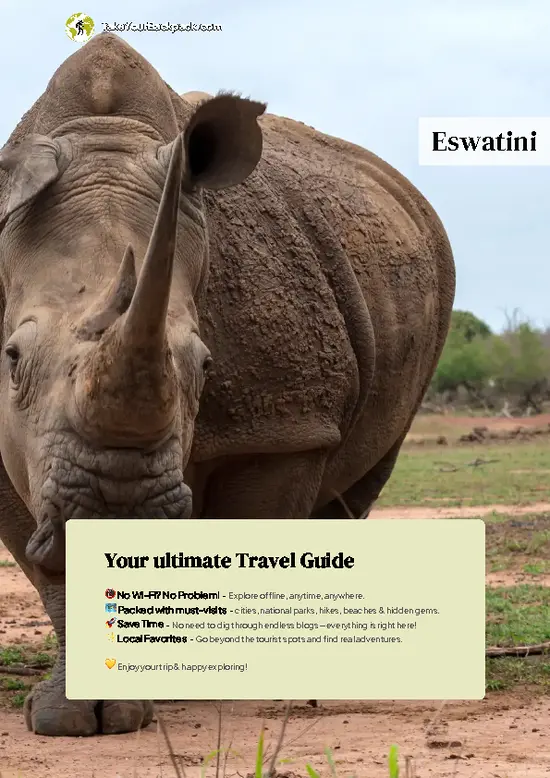
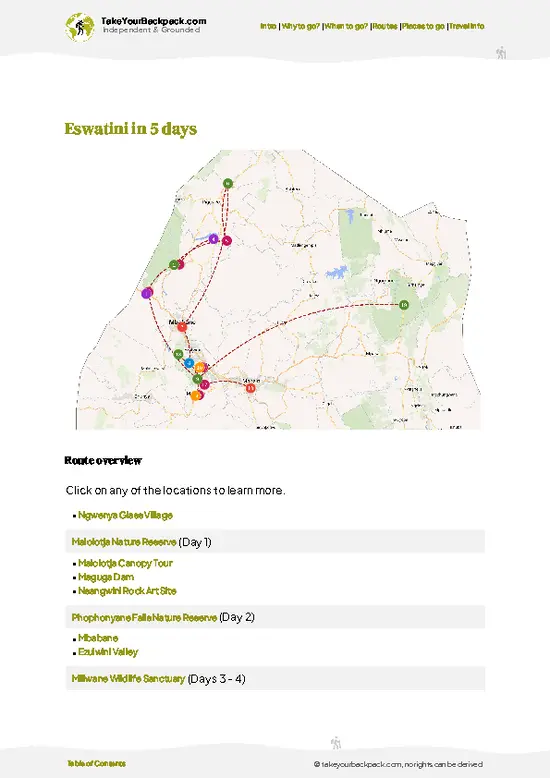
example page 0 from our offline Travel Guide for Eswatini
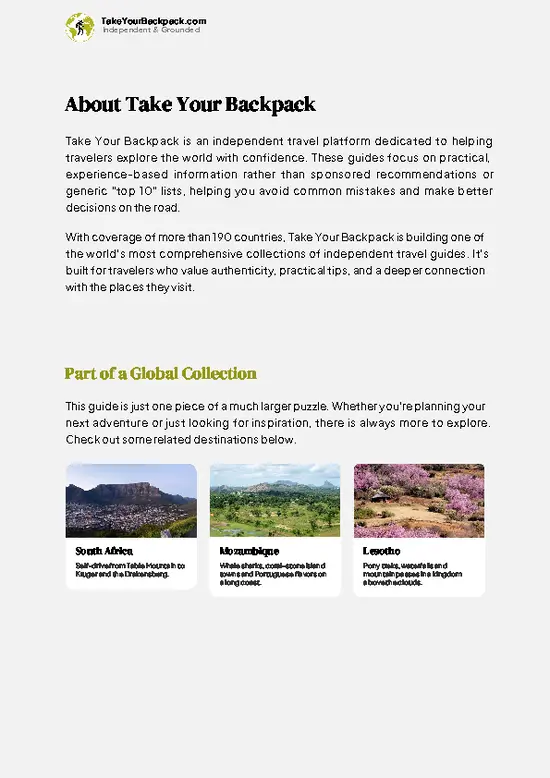
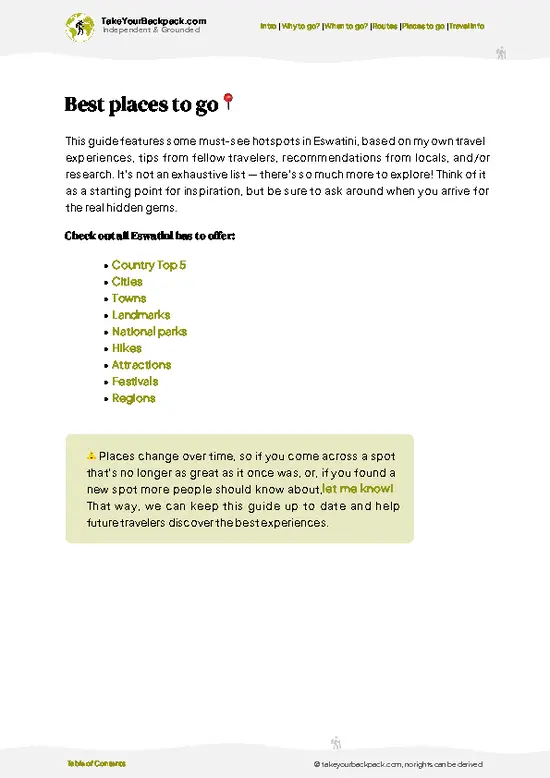
example page 1 from our offline Travel Guide for Eswatini
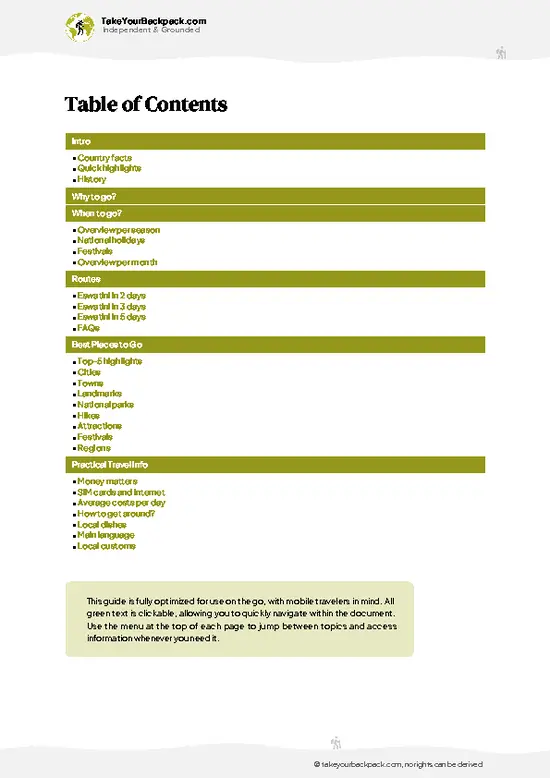
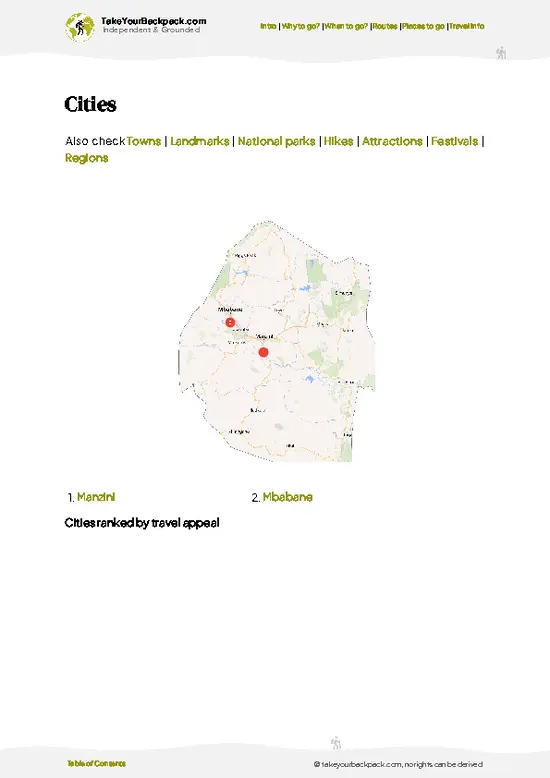
example page 2 from our offline Travel Guide for Eswatini
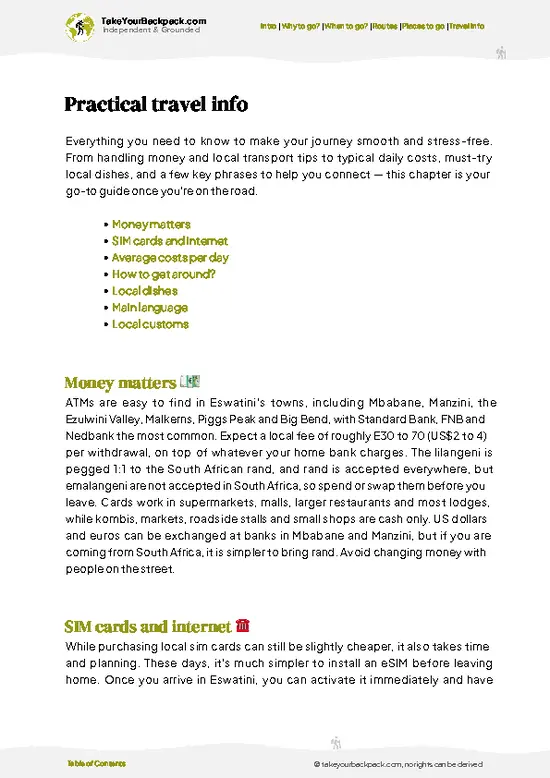
example page 3 from our offline Travel Guide for Eswatini
example page 4 from our offline Travel Guide for Eswatini
example page 5 from our offline Travel Guide for Eswatini
example page 6 from our offline Travel Guide for Eswatini
example page 7 from our offline Travel Guide for Eswatini
The digital guide (202 pages) contains:
46 highlights, ranked by travel appeal
Optimized 2, 3 & 5-day travel routes
Cities, national parks, landmarks, beaches
How to get around
Offline-friendly for travel without Wi-Fi
👉 Click to see all 30+ guide features

📅 Plan smarter in minutes, not weeks
Month by month travel advice
Festivals & national holidays
Budget expectations

🗺️ Go to the right places, skip the overrated ones
Honest pros & cons of destinations
Top hikes, parks & viewpoints
Lesser-known places most travelers miss
Clear “worth it vs skip it” guidance

🛏️ Travel smoothly without rookie mistakes
Best areas to stay
Transport systems explained simply
Common scams & safety advice
SIM cards, money & practical tips

🌍 Understand the country, not just visit it
Culture & traditions
52 Essential phrases & customs
Festivals worth planning around
Traveler-friendly historical context
Insights that make places more meaningful

📱 Built for real travel conditions
Fully downloadable PDF
Works completely offline
Optimized for phone use
Useful in remote areas & buses
Everything in one place
Save weeks of stressful planning
Get instant access to your full guide. 30‑day money-back guarantee.


By proceeding you agree to our terms.
Sent to your inbox immediately after payment • 100% Secure Checkout
Best Backpacking Travel Advisor 2025 tourism awardBest Backpacking
Travel Advisor
2025
What others say about Take Your Backpack Guides:
⭐⭐⭐⭐⭐
Fantastic, amazing amount of information!
⭐⭐⭐⭐⭐
My goodness this is amazing, it's what I've been looking for hats off too you!
⭐⭐⭐⭐⭐
I think this is absolutely BRILLIANT
⭐⭐⭐⭐
Very complete and informative. It's still missing places, but I gotta to commend you
⭐⭐⭐⭐⭐
This is truly amazing, thank you, can't wait to explore it with my kids!
⭐⭐⭐⭐⭐
Awesome resource, thank you!
⭐⭐⭐⭐⭐
This is amazing! Can't wait to explore the ones I haven't seen
⭐⭐⭐⭐
I love this! Well done, great idea.
⭐⭐⭐⭐⭐
Thanks for taking the time to make this gem!
⭐⭐⭐⭐⭐
This might be the best website I've ever seen.
⭐⭐⭐⭐⭐
Congratulations, and thank you so much for your work; it's incredibly valuable.
⭐⭐⭐⭐
In all seriousness I think you did a great job pointing out the important spots
⭐⭐⭐⭐⭐
10/10 very good
⭐⭐⭐⭐⭐
As someone who's only just starting to visit regularly this is awesome, thank you.
⭐⭐⭐⭐
Thank you very much! I'm going to visit my dad, it's going to be very useful!
⭐⭐⭐⭐⭐
This is really cool! We'll be travelling for the first time and this definitely come in handy.
⭐⭐⭐⭐⭐
You are now our minister of culture, congratulations 👨‍💼
⭐⭐⭐⭐⭐
Just wanted to tell you that this is a pearl! Going to follow your recommendations.
⭐⭐⭐⭐⭐
This is so cool. I'll definitely be using the resource for my travels soon.
⭐⭐⭐⭐⭐
This is very impressive! Good work.
⭐⭐⭐⭐⭐
This is an amazing and informative site. Very well done!

🛏️ Where to stay?How to pick the right area

The Incwala Ceremony in Eswatini is a vibrant cultural experience, and where you stay can amplify that energy. Head to Mbabane, the capital, where you’ll find a mix of budget-friendly guesthouses and lively hostels. This area buzzes with backpackers, making it easy to connect with fellow travelers. Plus, it’s a solid base for day trips to the festival.

Another hotspot is Manzini. It’s a bit more laid-back but offers a welcoming atmosphere. You’ll find local markets and eateries that serve up authentic Swazi cuisine. Staying here means you can soak in the local vibe while being just a short ride … read more 👉
The Incwala Ceremony in Eswatini is a vibrant cultural experience, and where you stay can amplify that energy. Head to Mbabane, the capital, where you’ll find a mix of budget-friendly guesthouses and lively hostels. This area buzzes with backpackers, making it easy to connect with fellow travelers. Plus, it’s a solid base for day trips to the festival.

Another hotspot is Manzini. It’s a bit more laid-back but offers a welcoming atmosphere. You’ll find local markets and eateries that serve up authentic Swazi cuisine. Staying here means you can soak in the local vibe while being just a short ride from the festival.

If you’re feeling adventurous, consider the rural areas near the festival site. Look for community-run lodges or campsites. These spots not only provide a unique experience but also immerse you in the local culture. Just be mindful of transport options; plan ahead to avoid last-minute scrambles.

Wherever you choose, prioritize safety and social opportunities. The right place will keep your energy high and your budget intact, allowing you to dive deep into the heart of the Incwala Ceremony.

👛 Costs (as of 28 April 2026)Travel costs and budget guide for Incwala Ceremony

The Incwala Ceremony in Eswatini is a vibrant cultural experience, but navigating the costs can be tricky. Here’s a breakdown to keep your budget intact while you soak in the festivities.
  • Festival Tickets: Entry to the Incwala Ceremony is generally free, but some areas may charge a small fee for access. Expect to pay around $5 to $10 USD if you want to get closer to the action or access specific viewing areas. This is a steal for such an immersive cultural experience.
  • Accommodation: Options range from budget hostels to mid-range hotels. Dormitory beds can be found for about $10 to $20 USD per night, while private rooms in guesthouses typically cost between $30 and $60 USD. Book early, as places fill up fast during the festival.
  • Local Transport: Getting around can be straightforward. Minibus taxis
read more 👉
The Incwala Ceremony in Eswatini is a vibrant cultural experience, but navigating the costs can be tricky. Here’s a breakdown to keep your budget intact while you soak in the festivities.
  • Festival Tickets: Entry to the Incwala Ceremony is generally free, but some areas may charge a small fee for access. Expect to pay around $5 to $10 USD if you want to get closer to the action or access specific viewing areas. This is a steal for such an immersive cultural experience.
  • Accommodation: Options range from budget hostels to mid-range hotels. Dormitory beds can be found for about $10 to $20 USD per night, while private rooms in guesthouses typically cost between $30 and $60 USD. Book early, as places fill up fast during the festival.
  • Local Transport: Getting around can be straightforward. Minibus taxis are the most common and cost-effective way to travel, usually around $1 to $3 USD per ride. If you prefer more comfort, consider hiring a private taxi, which can range from $10 to $30 USD depending on your destination.
  • Food & Drinks: Local cuisine is both delicious and affordable. Street food can cost as little as $2 to $5 USD for a meal, while sit-down restaurants may charge $10 to $20 USD for a full meal. Don’t forget to try local beers, which typically cost around $2 to $4 USD.
  • Miscellaneous Expenses: Budget for souvenirs, tips, and any unexpected costs. A reasonable estimate would be $20 to $50 USD for the duration of the festival. This allows you to grab a few local crafts or support artisans without breaking the bank.

Keep these figures in mind to avoid surprises. The key is to plan ahead and prioritize what matters most to you. Enjoy the festival without the financial hangover!


source: thekingdomofeswatini.com
⚠️ Prices can change and everyone travels differently, so take this as a rough guide. Hope it helps you plan your adventure!

🍲 FoodEating & Drinking in Incwala Ceremony

At the Incwala Ceremony in Eswatini, the air buzzes with the aroma of local specialties. You’ll find stalls brimming with sishwala, a hearty porridge made from maize, often served with a side of beef stew that’s rich and flavorful. Don’t miss out on umncweba, a smoked meat delicacy that’s a festival favorite. Grab a plate, and dive in; it’s all about sharing and community here.

When it comes to drinks, sorghum beer is the star. It’s slightly sour and refreshing, perfect for washing down the hearty fare. Just remember, this isn’t a fancy cocktail bar; it’s a communal experience. You’ll often see people passing around a shared cup, so don’t hesitate to join in.

Be mindful of etiquette: lines can get long, and patience is key. Cash is king here, so leave the cards behind. Serving sizes are … read more 👉
At the Incwala Ceremony in Eswatini, the air buzzes with the aroma of local specialties. You’ll find stalls brimming with sishwala, a hearty porridge made from maize, often served with a side of beef stew that’s rich and flavorful. Don’t miss out on umncweba, a smoked meat delicacy that’s a festival favorite. Grab a plate, and dive in; it’s all about sharing and community here.

When it comes to drinks, sorghum beer is the star. It’s slightly sour and refreshing, perfect for washing down the hearty fare. Just remember, this isn’t a fancy cocktail bar; it’s a communal experience. You’ll often see people passing around a shared cup, so don’t hesitate to join in.

Be mindful of etiquette: lines can get long, and patience is key. Cash is king here, so leave the cards behind. Serving sizes are generous, but don’t be shy about asking for smaller portions if you want to sample more. The vibe is all about connection, so engage with the vendors and fellow festival-goers. This isn’t just a meal; it’s a taste of culture and tradition, and every bite tells a story.

Other Swazi festivals near Incwala Ceremony

Explore more nearby:


💡 Not sure where to go next?
Create a personalized itinerary for Eswatini including Incwala Ceremony and the places that fit your trip.

Generate my itinerary

👉 Discover all festivals

Or checkout all Eswatini has to offer (think cities, towns, villages, national parks, hikes, beaches, festivals)
Country photo of Eswatini

We 💚 feedbackKey takeaways before you go

The Incwala Ceremony is a whirlwind of energy and tradition. You’ll feel the pulse of Eswatini in every drumbeat and dance. The best surprise? The warmth of the locals; they’ll pull you into their world with open arms. But a heads-up: the crowds can be intense, and the heat is no joke. Hydrate and pace yourself. Embrace the chaos; it’s part of the experience. This isn’t just a ceremony; it’s a vibrant celebration of life. Don’t miss it.

✍️ Help improve this page!
The information on this page is based on in-depth research, insights shared by experienced travelers, and feedback from the local travel community in Eswatini. While every effort is made to keep the information accurate and current, conditions can change — so if you spot anything incorrect or outdated, please get in touch.


🙋‍♂️ Give feedback

👋 Meet the founderWho’s Behind Take Your Backpack?

Johan, backpacker and founder of TakeYourBackpackHi, I’m Johan (Netherlands 🇳🇱), the creator of TakeYourBackpack. Over the past decade, I’ve backpacked through 80+ countries across six continents, gaining extensive experience with independent travel, long-term trips, and overland routes.

This site is built on a combination of firsthand travel experience and carefully curated insights from other backpackers. Many guides are based on places I’ve personally visited, while others bring together tips, observations, and practical advice shared by trusted travelers I’ve met along the way.

The goal is to provide realistic, experience-driven guidance — not generic itineraries — so you can explore destinations with better context, clearer expectations, and more confidence.

Get full Eswatini guide •
Instant download • 46 highlights • Full Offline guide