×

Eswatini🇸🇿 | festivalsMarula FestivalEmanwe fruit, buganu beer, Ludzidzini, free entry | things to do and best time to go

Explore Incwala CeremonyExplore Umhlanga Reed Dance

Backpacking in Marula
👌 Worth visitingfestival ranked #5
By Johan Kruseman 🇳🇱 | Updated October 22, 2026

Entry is free at the main events, so the money goes on getting there and sleeping nearby. Marula Festival takes place in Eswatini, in the Lubombo region around the Royal Villages near Lobamba and the Mbabane-Manzini corridor, with the royal celebrations tied to the Ludzidzini area. It is a cultural celebration of the marula fruit, the tree the Swazi call Emanwe, and the beer made from it. Expect traditional dance, song, and regalia, with a mostly Swazi crowd and a small number of visitors. The mood is formal and unhurried. Mistakes cost people here: arrive late and you miss the ceremonies, so leave early. Wear modest clothes, because bare shoulders and short skirts draw disapproval, and carry cash because card machines are scarce. Ask before photographing, particularly regiments and royal events. The marula beer, buganu, is served from large calabashes.

Discover everything you want to know in the 📖 Eswatini Travel Guide.


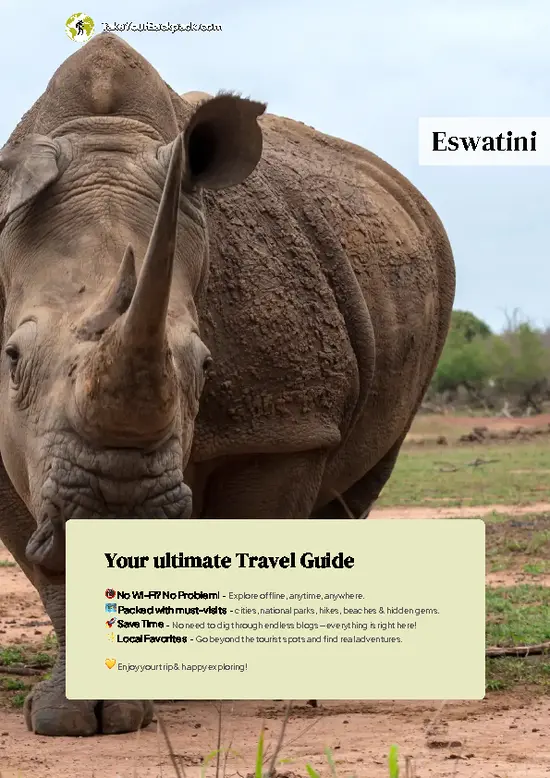
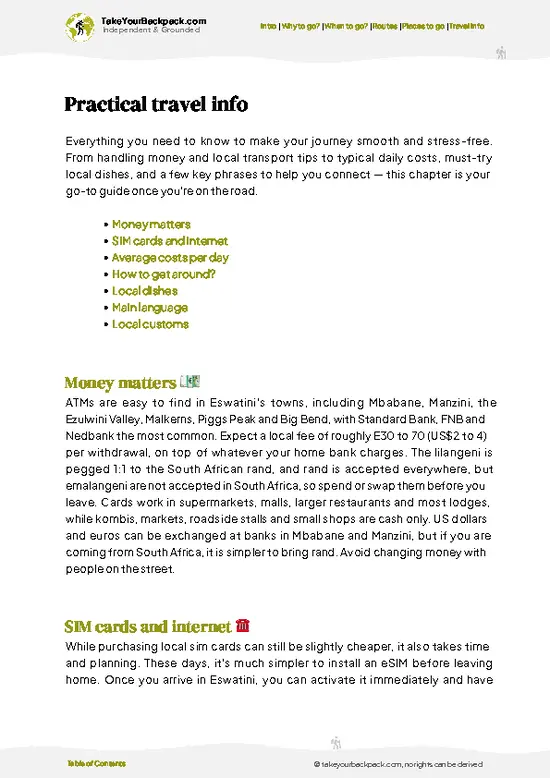
example page 0 from our offline Travel Guide for Eswatini
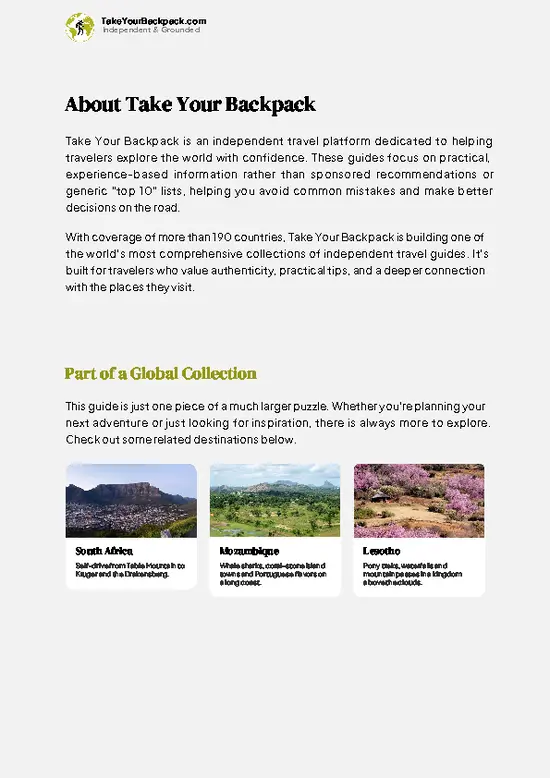
example page 1 from our offline Travel Guide for Eswatini
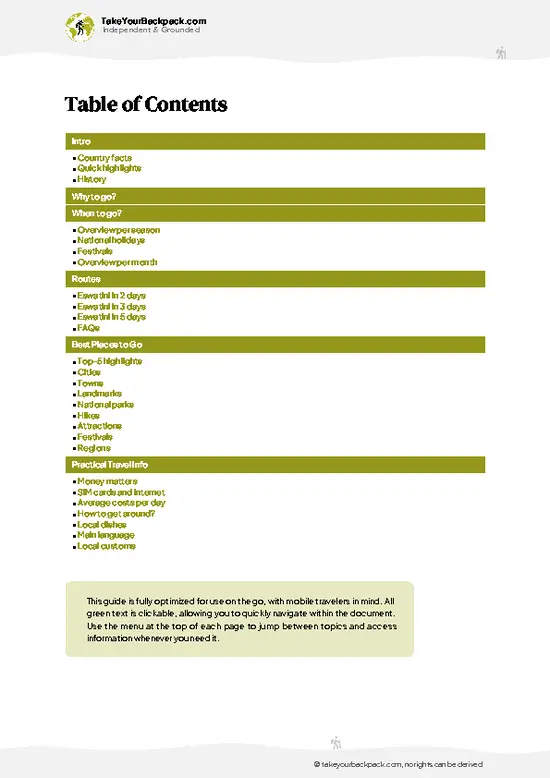
example page 2 from our offline Travel Guide for Eswatini
example page 3 from our offline Travel Guide for Eswatini
example page 4 from our offline Travel Guide for Eswatini
example page 5 from our offline Travel Guide for Eswatini
example page 6 from our offline Travel Guide for Eswatini
example page 7 from our offline Travel Guide for Eswatini
Loading the map 🌍
CLICK TO FILTER
cities
towns
landmarks
national parks
hikes
attractions
festivals
regions
SHOW COUNTRY’S BESTSHOW ALL

✨ Why go?
Ranked #5 festival in Eswatini
What makes this festival worth celebrating

Marula Festival gives backpackers a rare chance to watch Swazi tradition on its own terms, in a country where most visitors only see game reserves. The draw is the Emanwe tree itself, and the way a fruit harvest becomes a national event with song, dance, and the sharing of buganu, the fermented marula beer. You are not a spectator behind a rope. Locals will often explain what a song means or why a regiment is dressed as it is, and a polite question gets a long answer. It also fits well into a longer trip through southern Africa, since Eswatini sits between South Africa and Mozambique, and the festival falls in the fruiting season, around the hot early months of the year. Compared with big commercial festivals, costs stay low and the crowd is small, which suits travelers who would rather talk than queue.

💡 HighlightsEssential experiences to have while celebrating the Marula

  1. The Royal Marula Celebration at Ludzidzini: The best-known part of the festival, centered on the royal residence, where the king and the royal family take part in the ceremonies. It is a formal occasion and the clearest view of how the monarchy and the harvest are linked.
  2. Buganu marula beer: The fermented marula drink is poured from calabashes and shared. It is cloudy, sour, and mildly sweet, and sharing it is part of the social ritual.
  3. Traditional dance and song: Groups in beaded costume and animal skin perform songs about the harvest and the marula tree. The drumming and stamping carry across the field.
  4. Emanwe fruit tasting: The yellow marula fruit has a sharp, citrus-like taste and a hard stone. Stalls and villagers sell it fresh, and jam and juice are also made from it.
  5. Craft stalls: Vendors
… read more 👉
  1. The Royal Marula Celebration at Ludzidzini: The best-known part of the festival, centered on the royal residence, where the king and the royal family take part in the ceremonies. It is a formal occasion and the clearest view of how the monarchy and the harvest are linked.
  2. Buganu marula beer: The fermented marula drink is poured from calabashes and shared. It is cloudy, sour, and mildly sweet, and sharing it is part of the social ritual.
  3. Traditional dance and song: Groups in beaded costume and animal skin perform songs about the harvest and the marula tree. The drumming and stamping carry across the field.
  4. Emanwe fruit tasting: The yellow marula fruit has a sharp, citrus-like taste and a hard stone. Stalls and villagers sell it fresh, and jam and juice are also made from it.
  5. Craft stalls: Vendors sell woven grass baskets, wooden carvings, and beadwork, along with marula oil products. Prices are open to polite bargaining.
Marula Festival has no ticket system for most events, though access to the royal ceremonies depends on the arrangements on the day, so check locally beforehand.
Spotted a mistake or missing something? Contact us.

🌤️ When to go?When is the celebration of Marula Festival?

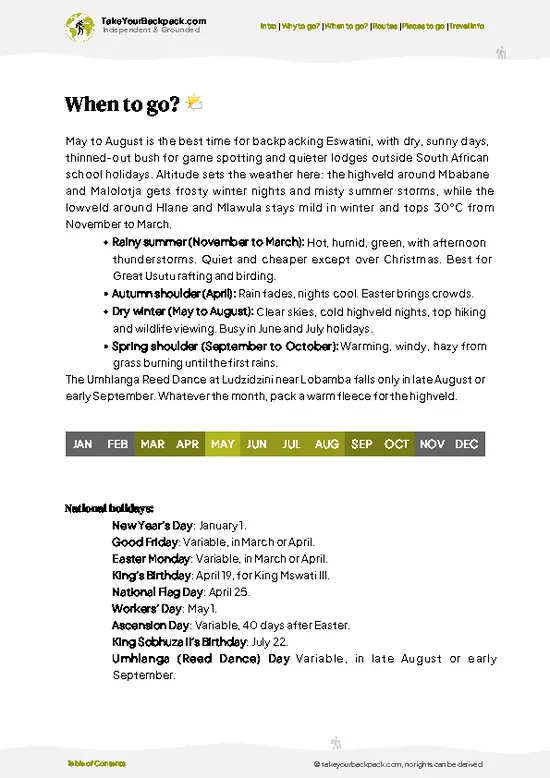
Marula Festival is held over one weekend in late February or early March at the Maphungwane area near Ezulwini Valley, with the date set each year around when the marula fruit ripens. The festival is also centered on the royal Lobamba area, close to Mbabane.
  • Best day: Saturday is the main day, with the biggest crowds, cultural dancing and the fullest stall lineup. Sunday is calmer and good for a slower look at craft stalls.
  • Weather: Expect warm, humid days of 26 to 32°C (79 to 90°F), with afternoon thunderstorms common. Bring a rain jacket, sunscreen, a hat and sandals you can get muddy.
  • Booking: Reserve a bed three to four weeks ahead. Rooms in the valley can rise 20 to 40 percent that weekend.
  • Roads: The Ezulwini road clogs by late morning. Arrive before 10 am and leave before the late-afternoon
… read more 👉
Marula Festival is held over one weekend in late February or early March at the Maphungwane area near Ezulwini Valley, with the date set each year around when the marula fruit ripens. The festival is also centered on the royal Lobamba area, close to Mbabane.
  • Best day: Saturday is the main day, with the biggest crowds, cultural dancing and the fullest stall lineup. Sunday is calmer and good for a slower look at craft stalls.
  • Weather: Expect warm, humid days of 26 to 32°C (79 to 90°F), with afternoon thunderstorms common. Bring a rain jacket, sunscreen, a hat and sandals you can get muddy.
  • Booking: Reserve a bed three to four weeks ahead. Rooms in the valley can rise 20 to 40 percent that weekend.
  • Roads: The Ezulwini road clogs by late morning. Arrive before 10 am and leave before the late-afternoon rush.
Confirm the exact dates with the Eswatini tourism authority a month ahead, since the date shifts yearly.


source: climatestotravel.comJANJanuary: not recommended for travelingFEBFebruary: excellent for travelingMARMarch: not recommended for travelingAPRApril: not recommended for travelingMAYMay: not recommended for travelingJUNJune: not recommended for travelingJULJuly: not recommended for travelingAUGAugust: not recommended for travelingSEPSeptember: not recommended for travelingOCTOctober: not recommended for travelingNOVNovember: not recommended for travelingDECDecember: not recommended for traveling

✈️ The backpacker research shortcutEswatini Travel Guide

An offline-friendly backpacking guide with optimized travel routes, ranked highlights, transport advice, and the best areas to stay.
example page 0 from our offline Travel Guide for Eswatini
example page 1 from our offline Travel Guide for Eswatini
example page 2 from our offline Travel Guide for Eswatini
example page 3 from our offline Travel Guide for Eswatini
example page 4 from our offline Travel Guide for Eswatini
example page 5 from our offline Travel Guide for Eswatini
example page 6 from our offline Travel Guide for Eswatini
example page 7 from our offline Travel Guide for Eswatini
The digital guide (151 pages) contains:
✅ 33 highlights, ranked by travel appeal
✅ Optimized 2, 3 & 5-day travel routes
✅ Cities, national parks, landmarks, beaches
✅ How to get around
✅ Offline-friendly for travel without Wi-Fi
👉 Click to see all 30+ guide features

📅 Plan smarter in minutes, not weeks
✅ Month by month travel advice
✅ Festivals & national holidays
✅ Budget expectations

🗺️ Go to the right places, skip the overrated ones
✅ Honest pros & cons of destinations
✅ Top hikes, parks & viewpoints
✅ Lesser-known places most travelers miss
✅ Clear “worth it vs skip it” guidance

🛏️ Travel smoothly without rookie mistakes
✅ Best areas to stay
✅ Transport systems explained simply
✅ Common scams & safety advice
✅ SIM cards, money & practical tips

🌍 Understand the country, not just visit it
✅ Culture & traditions
✅ 52 Essential phrases & customs
✅ Festivals worth planning around
✅ Traveler-friendly historical context
✅ Insights that make places more meaningful

📱 Built for real travel conditions
✅ Fully downloadable PDF
✅ Works completely offline
✅ Optimized for phone use
✅ Useful in remote areas & buses
✅ Everything in one place
Stop searching, start planning
Get instant access to your full guide. 30‑day money-back guarantee.
+ Add another guide for just

By proceeding you agree to our terms.
Sent to your inbox immediately after payment • 100% Secure Checkout
Best Backpacking Travel Advisor 2025 tourism awardBest Backpacking
Travel Advisor
2025
What others say about Take Your Backpack Guides:
⭐⭐⭐⭐⭐
Fantastic, amazing amount of information!
⭐⭐⭐⭐⭐
My goodness this is amazing, it's what I've been looking for hats off too you!
⭐⭐⭐⭐⭐
I think this is absolutely BRILLIANT
⭐⭐⭐⭐
Very complete and informative. It's still missing places, but I gotta to commend you
⭐⭐⭐⭐⭐
This is truly amazing, thank you, can't wait to explore it with my kids!
⭐⭐⭐⭐⭐
Awesome resource, thank you!
⭐⭐⭐⭐⭐
This is amazing! Can't wait to explore the ones I haven't seen
⭐⭐⭐⭐
I love this! Well done, great idea.
⭐⭐⭐⭐⭐
Thanks for taking the time to make this gem!
⭐⭐⭐⭐⭐
This might be the best website I've ever seen.
⭐⭐⭐⭐⭐
Congratulations, and thank you so much for your work; it's incredibly valuable.
⭐⭐⭐⭐
In all seriousness I think you did a great job pointing out the important spots
⭐⭐⭐⭐⭐
10/10 very good
⭐⭐⭐⭐⭐
As someone who's only just starting to visit regularly this is awesome, thank you.
⭐⭐⭐⭐
Thank you very much! I'm going to visit my dad, it's going to be very useful!
⭐⭐⭐⭐⭐
This is really cool! We'll be travelling for the first time and this definitely come in handy.
⭐⭐⭐⭐⭐
You are now our minister of culture, congratulations 👨‍💼
⭐⭐⭐⭐⭐
Just wanted to tell you that this is a pearl! Going to follow your recommendations.
⭐⭐⭐⭐⭐
This is so cool. I'll definitely be using the resource for my travels soon.
⭐⭐⭐⭐⭐
This is very impressive! Good work.
⭐⭐⭐⭐⭐
This is an amazing and informative site. Very well done!

🛏️ Where to stay?Best areas to stay in Eswatini

Ezulwini Valley is the best base for Marula Festival, because it holds most of the backpacker-friendly beds within a short ride of the grounds. Staying here puts you near the minibus route that runs the valley, so you can reach the festival without a car and come back after dark with other travelers.
The valley's social side is strongest around the cluster of hostels and guesthouses along the main road between Lobamba and Mbabane. Dorms and shared kitchens make it easy to find people to split a taxi with, and solo travelers tend to feel comfortable here. Daytime walking along the main road is fine, … read more 👉
Ezulwini Valley is the best base for Marula Festival, because it holds most of the backpacker-friendly beds within a short ride of the grounds. Staying here puts you near the minibus route that runs the valley, so you can reach the festival without a car and come back after dark with other travelers.
The valley's social side is strongest around the cluster of hostels and guesthouses along the main road between Lobamba and Mbabane. Dorms and shared kitchens make it easy to find people to split a taxi with, and solo travelers tend to feel comfortable here. Daytime walking along the main road is fine, but after dark take a taxi rather than walking.
Mbabane is the cheaper alternative. It has more budget rooms and the main minibus rank, so you have the widest transport choice, though the evening scene is quieter and you will want to leave the festival before dusk to get a ride back. Manzini suits you if you are arriving from elsewhere, since it is the country's main transport hub, but it sits farther from the grounds and gives less of a traveler community.
Book early, because the festival weekend fills the valley.

👛 Costs (as of 22 October 2026)Typical daily expenses

Marula Festival costs most independent travelers about US$33 to 100 a day, including a mid-range dorm or guesthouse bed in the high season.
CategoryBudget RangeLocal Reality
Festival ticketsUS$0 to 15Entry to the main public grounds is low-cost or free, while special viewing areas and organized events charge more.
AccommodationUS$15 to 40Dorms in Ezulwini Valley start near US$15, while private rooms cost more that weekend, and prices rise 20 to 40 percent.
Local transportUS$3 to 15Minibuses along the valley road cost under US$1 per ride, while a private taxi to the grounds can run US$10 to 15.
Food & drinksUS$10 to 20Grilled meat with pap at stalls costs US$3 to 6, while a cup of buganu costs about US$1 to 2.
Miscellaneous expensesUS$5 to 10Craft souvenirs, rain gear, sunscreen and a mobile
… read more 👉
Marula Festival costs most independent travelers about US$33 to 100 a day, including a mid-range dorm or guesthouse bed in the high season.
CategoryBudget RangeLocal Reality
Festival ticketsUS$0 to 15Entry to the main public grounds is low-cost or free, while special viewing areas and organized events charge more.
AccommodationUS$15 to 40Dorms in Ezulwini Valley start near US$15, while private rooms cost more that weekend, and prices rise 20 to 40 percent.
Local transportUS$3 to 15Minibuses along the valley road cost under US$1 per ride, while a private taxi to the grounds can run US$10 to 15.
Food & drinksUS$10 to 20Grilled meat with pap at stalls costs US$3 to 6, while a cup of buganu costs about US$1 to 2.
Miscellaneous expensesUS$5 to 10Craft souvenirs, rain gear, sunscreen and a mobile data bundle.
Total Daily BudgetUS$33 to 100About US$85 a day with a dorm bed and a taxi or two.
⚠️ Prices can change and everyone travels differently, so take this as a rough guide. Hope it helps you plan your adventure!

🍲 FoodEating & Drinking in Marula

The star at Marula Festival is, naturally, the marula fruit itself. Stalls sell it fresh, pressed into juice, and turned into jam. The main drink is buganu, the traditional fermented marula brew, cloudy, slightly sour and gently fizzy. It is served from large containers into shared cups or calabash bowls, and refusing a passed cup can seem impolite, so take a sip even if you decline more.
Alongside it, look for braaied meat on open fires, usually beef or goat, served with pap (a thick maize porridge) and a tomato and onion relish. Sishwala, a stiff porridge, appears with stews, and roasted maize cobs are an easy snack while you walk between dance arenas.
If you want something authentic, try the marula nuts and the amarula-style creamy liqueurs sold by the glass, but start with buganu since it … read more 👉
The star at Marula Festival is, naturally, the marula fruit itself. Stalls sell it fresh, pressed into juice, and turned into jam. The main drink is buganu, the traditional fermented marula brew, cloudy, slightly sour and gently fizzy. It is served from large containers into shared cups or calabash bowls, and refusing a passed cup can seem impolite, so take a sip even if you decline more.
Alongside it, look for braaied meat on open fires, usually beef or goat, served with pap (a thick maize porridge) and a tomato and onion relish. Sishwala, a stiff porridge, appears with stews, and roasted maize cobs are an easy snack while you walk between dance arenas.
If you want something authentic, try the marula nuts and the amarula-style creamy liqueurs sold by the glass, but start with buganu since it is the local pour.
Bring cash, since small stalls rarely take cards and mobile networks can be patchy in a crowd. Portions are generous, so sharing a plate with a fellow traveler is common. Lines build at the meat grills around midday, so eat early, and carry your own water bottle for refills.

FAQTraveler FAQ

Marula Festival takes place over one weekend in late February or early March, timed to the marula fruit season. The main events happen on Saturday, with Sunday as a calmer second day. It is held around the Lobamba and Ezulwini Valley area, about 20 minutes by road from Mbabane.
Attending Marula Festival costs roughly US$0 to 15 for entry, depending on the area you choose. Add US$15 to 40 a night for a bed in Ezulwini Valley, and US$10 to 20 a day for food and drinks. Most backpackers spend US$75 to 95 a day in total.
Marula Festival often has low-cost or free access to its public areas, so advance tickets are not always required. Special enclosures and organized events may sell passes, so check with the Eswatini tourism authority a month before. The bigger need is a bed, which you should book three to four weeks ahead in Ezulwini Valley.
⚠️ Things can change over time, so always validate details locally before you go.

Other Swazi festivals near Marula

Explore more nearby:

  • Umhlanga Reed Dance—Reed cutting, Queen Mother, beaded skirts, late August| 17 km away
  • Incwala Ceremony—Kingship rite, first fruits, regiments in skins, Lobamba| 17 km away
  • Bushfire Festival—Malkerns Valley, late May, music and theater, camping, craft stalls| 21 km away

💡 Not sure where to go next?
Create a personalized itinerary for Eswatini including Marula and the places that fit your trip.

Generate my itinerary

👉 Discover all festivals

Or checkout all Eswatini has to offer (think cities, towns, villages, national parks, hikes, beaches, festivals)
Country photo of Eswatini

We 💚 feedbackParting advice and final tips

Marula Festival is best in the morning, when the air is cool and the ceremonies begin, before the heat of the harvest season builds and the crowds thicken. I would arrive early, wear a hat, and bring small notes for buying fruit and crafts. Skip the midday stretch if the sun is strong, and stay for the late afternoon singing.

✍️ Help improve this page!
The information on this page is based on in-depth research, insights shared by experienced travelers, and feedback from the local travel community in Eswatini. While every effort is made to keep the information accurate and current, conditions can change — so if you spot anything incorrect or outdated, please get in touch.


🙋‍♂️ Give feedback

👋 Meet the founderWho’s Behind Take Your Backpack?

Johan, backpacker and founder of TakeYourBackpackHi, I’m Johan (Netherlands 🇳🇱), the creator of TakeYourBackpack. Over the past 3 decades, I’ve backpacked through 90+ countries across six continents, gaining extensive experience with independent travel, long-term trips, and overland routes.

This site is built on a combination of firsthand travel experience and carefully curated insights from other backpackers. Many guides are based on places I’ve personally visited, while others bring together tips, observations, and practical advice shared by trusted travelers I’ve met along the way.

The goal is to provide realistic, experience-driven guidance — not generic itineraries — so you can explore destinations with better context, clearer expectations, and more confidence.