×

Ethiopia🇪🇹 | festivalsMeskelbonfire ceremony, cross discovery, Demera procession | things to do and best time to go

Explore IrreechaExplore Timkat

Backpacking in Meskel
🏆 Top pickfestival ranked #2
By Johan Kruseman 🇳🇱 | Updated June 19, 2026

Here’s the trick nobody tells you until you’re already in the thick of it: Meskel is the rare festival where the chaos is actually navigable—if you know how to move. Most travelers show up expecting to be swallowed by crowds, but the open-air squares of Addis Ababa give you space to breathe, pivot, and actually see the bonfire instead of just someone’s elbow. Meskel blazes to life in Ethiopia’s capital every September, marking the finding of the True Cross with a fire so massive you’ll feel the heat on your face. The music? Think hypnotic Orthodox chants, punctuated by the thump of drums and the wild ululation of locals—no pop hits, just pure, ancient energy. The crowd is a mix: devout families, curious backpackers, and city kids all jostling for a view. The vibe is electric but grounded, more communal than commercial. It’s one night, but it’ll burn into your memory—if you’re ready to move with it, not against it.

Discover everything you want to know in the 📖 Ethiopia Travel Guide.
Safety warning

The current risk level for Ethiopia is high. Check the advice before going.


Get your Ethiopia guide
101 ranked highlights, routes & tips, works offline (395 pages)
Loading the map 🌍
CLICK TO FILTER
cities
towns
landmarks
national parks
hikes
attractions
festivals
regions
SHOW COUNTRY’S BESTSHOW ALL

✨ Why go?
Ranked #2 festival in Ethiopia
Why visitors keep coming back

Backpackers flock to Meskel in Ethiopia for a reason: it’s a cultural explosion that transforms the landscape into a vibrant tapestry of community and celebration. This festival, marking the finding of the True Cross, draws locals and travelers alike, creating a temporary tribe where everyone shares in the joy. The social energy is palpable; you’ll find yourself swept up in the rhythm of traditional dances and the aroma of local food wafting through the air.

Planning your route around Meskel isn’t just about the festival itself; it’s about immersing yourself in a culture that thrives on connection. Compared to similar events worldwide, Meskel is surprisingly affordable, allowing you to experience a rich tapestry of traditions without breaking the bank.

Plus, it fits seamlessly into longer … read more 👉
Backpackers flock to Meskel in Ethiopia for a reason: it’s a cultural explosion that transforms the landscape into a vibrant tapestry of community and celebration. This festival, marking the finding of the True Cross, draws locals and travelers alike, creating a temporary tribe where everyone shares in the joy. The social energy is palpable; you’ll find yourself swept up in the rhythm of traditional dances and the aroma of local food wafting through the air.

Planning your route around Meskel isn’t just about the festival itself; it’s about immersing yourself in a culture that thrives on connection. Compared to similar events worldwide, Meskel is surprisingly affordable, allowing you to experience a rich tapestry of traditions without breaking the bank.

Plus, it fits seamlessly into longer travel plans. Use it as a launchpad to explore Ethiopia’s stunning landscapes and historical sites. By aligning your itinerary with Meskel, you not only save money but also maximize your energy for the moments that truly matter. Embrace the challenge of navigating this vibrant festival, and you’ll walk away with stories that resonate long after the last bonfire fades.
Want to include Meskel in your Ethiopia route?
Create a personalized Ethiopia itinerary that includes Meskel and the places that fit your trip — based on your travel style, budget, and available time. Get your route in seconds.

Generate my trip

💡 HighlightsEssential experiences to have while celebrating the Meskel

  1. Lighting of the Demera (the bonfire) — The heart of Meskel: a huge pile of bundled sticks and branches topped with bright Adey Abeba (daisies) is set alight amid prayers and singing. It’s loud, smoky, communal and oddly cathartic — everyone crowds in, sparks fly, and you feel the history and symbolism (the Finding of the True Cross) in a very immediate, visual way. (Personal favorite — nothing beats that first whoosh of flame and the collective cheer.)
  2. Processions, priests and liturgical chanting — Rows of clergy in embroidered robes, deacons with towering crosses and thuribles, and choirs singing ancient hymns create a powerful, solemn counterpoint to the revelry. The mix of ritual, incense and chant is a living piece of Ethiopian Orthodox tradition you rarely see anywhere else.
  3. Flower
read more 👉
  1. Lighting of the Demera (the bonfire) — The heart of Meskel: a huge pile of bundled sticks and branches topped with bright Adey Abeba (daisies) is set alight amid prayers and singing. It’s loud, smoky, communal and oddly cathartic — everyone crowds in, sparks fly, and you feel the history and symbolism (the Finding of the True Cross) in a very immediate, visual way. (Personal favorite — nothing beats that first whoosh of flame and the collective cheer.)
  2. Processions, priests and liturgical chanting — Rows of clergy in embroidered robes, deacons with towering crosses and thuribles, and choirs singing ancient hymns create a powerful, solemn counterpoint to the revelry. The mix of ritual, incense and chant is a living piece of Ethiopian Orthodox tradition you rarely see anywhere else.
  3. Flower crowns and the Adey Abeba everywhere — The little yellow-white daisies are the unofficial icon of Meskel: people weave them into crowns, garlands and bonfire toppers. Wandering the crowds or the market stalls piled with flowers gives you a bright, tactile sense of the festival — good for photos, cheaper than a souvenir, and smells nice.
  4. Music, dance and street food — Between chants you’ll hear drums and traditional tunes, and people break into eskista and other dances. Street vendors sell coffee, roasted barley, popcorn, sambusas and platters to share — it’s a full-sensory celebration where eating, dancing and socializing are part of the ritual.
  5. Pilgrimage vibe and hillside bonfires — Outside cities, people walk for miles to light smaller Demeras on hilltops and fields; at dawn you can see a scatter of fires across the landscape. It’s less crowded than Meskel Square and gives a quieter, almost cinematic perspective on the same tradition — more intimate, more atmospheric.
Spotted a mistake or missing something? Contact us.

Things to do around Meskel

Ratings based on Tripadvisor reviews. When you book through this link, you support our work at no extra cost to you.

🌤️ When to go?When is the celebration of Meskel?


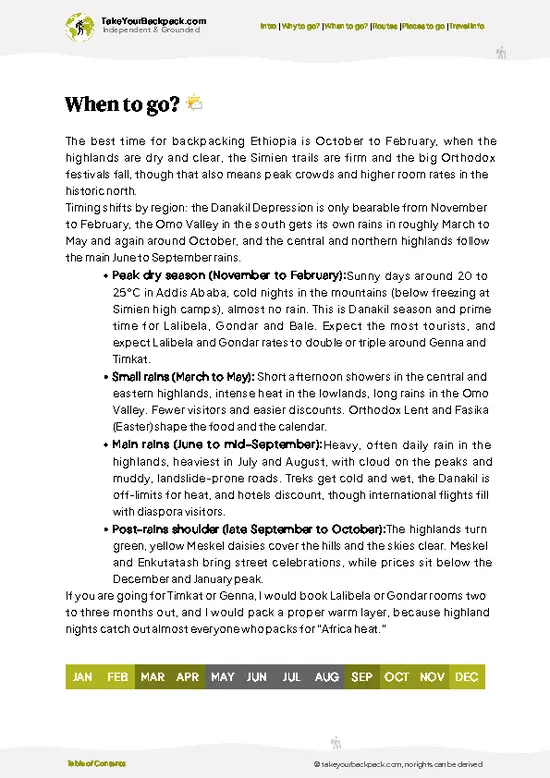
  • Topic: Weather – Meskel happens in late September, right when Ethiopia’s rainy season is wrapping up. Expect cool mornings around 15°C (59°F) and daytime highs near 25°C (77°F). The air is fresh, but the ground can still be muddy, so pack boots that can handle a bit of slick terrain.

  • Topic: Temperature – Nights dip to a comfortable 10-15°C (50-59°F), so bring layers. Days warm up nicely but rarely scorch, making long hours outside manageable without overheating or freezing.

  • Topic: Daylight Hours – Around 12 hours of daylight give you plenty of time to soak in the festival’s energy and explore Addis Ababa’s streets before and after the main event.

  • Topic: Crowds – Meskel draws locals in droves, but international tourists are still relatively low. Arriving early in the week before the 27th gives
read more 👉

  • Topic: Weather – Meskel happens in late September, right when Ethiopia’s rainy season is wrapping up. Expect cool mornings around 15°C (59°F) and daytime highs near 25°C (77°F). The air is fresh, but the ground can still be muddy, so pack boots that can handle a bit of slick terrain.

  • Topic: Temperature – Nights dip to a comfortable 10-15°C (50-59°F), so bring layers. Days warm up nicely but rarely scorch, making long hours outside manageable without overheating or freezing.

  • Topic: Daylight Hours – Around 12 hours of daylight give you plenty of time to soak in the festival’s energy and explore Addis Ababa’s streets before and after the main event.

  • Topic: Crowds – Meskel draws locals in droves, but international tourists are still relatively low. Arriving early in the week before the 27th gives you a front-row seat without the weekend crush.

  • Topic: Seasonal Activities – The end of the rainy season means lush landscapes and vibrant street celebrations. It’s the perfect time to catch traditional dances and community feasts that fade as the dry season sets in.

  • Topic: Price Fluctuations – Expect a slight bump in accommodation prices around the festival date, but booking a week ahead locks in better rates. Transport costs stay steady, but local vendors might hike food prices during peak days.


Pro-tip: Time your arrival a few days before Meskel to acclimate, snag deals, and dive into the build-up—this is where the real magic brews, not just on the day itself.


source: climatestotravel.comJANJanuary: not recommended for travelingFEBFebruary: not recommended for travelingMARMarch: not recommended for travelingAPRApril: not recommended for travelingMAYMay: not recommended for travelingJUNJune: not recommended for travelingJULJuly: not recommended for travelingAUGAugust: not recommended for travelingSEPSeptember: excellent for travelingOCTOctober: not recommended for travelingNOVNovember: not recommended for travelingDECDecember: not recommended for traveling

✈️ The backpacker research shortcutEthiopia Travel Guide

An offline-friendly backpacking guide with optimized travel routes, ranked highlights, transport advice, and the best areas to stay.
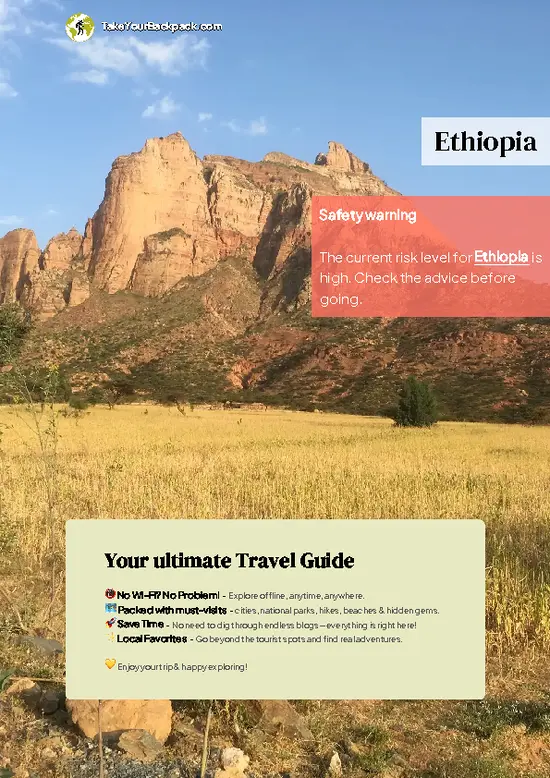
example page 0 from our offline Travel Guide for Ethiopia
example page 1 from our offline Travel Guide for Ethiopia
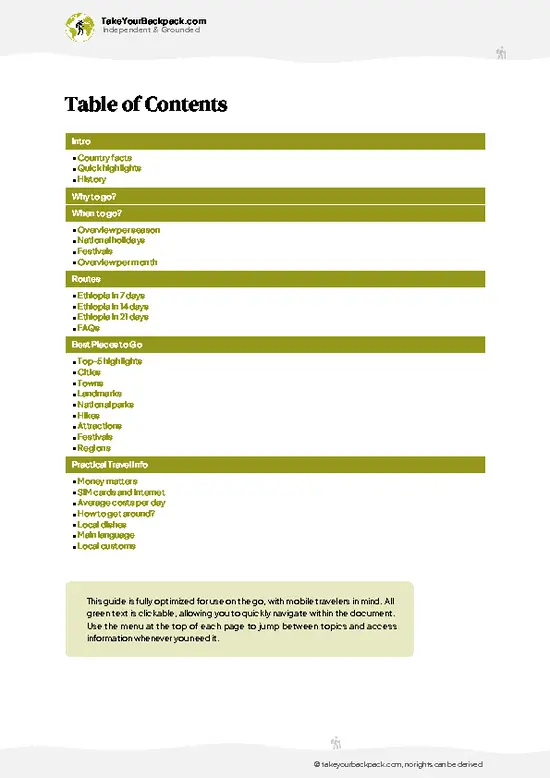
example page 2 from our offline Travel Guide for Ethiopia
example page 3 from our offline Travel Guide for Ethiopia
example page 4 from our offline Travel Guide for Ethiopia
example page 5 from our offline Travel Guide for Ethiopia
example page 6 from our offline Travel Guide for Ethiopia
example page 7 from our offline Travel Guide for Ethiopia
The digital guide (395 pages) contains:
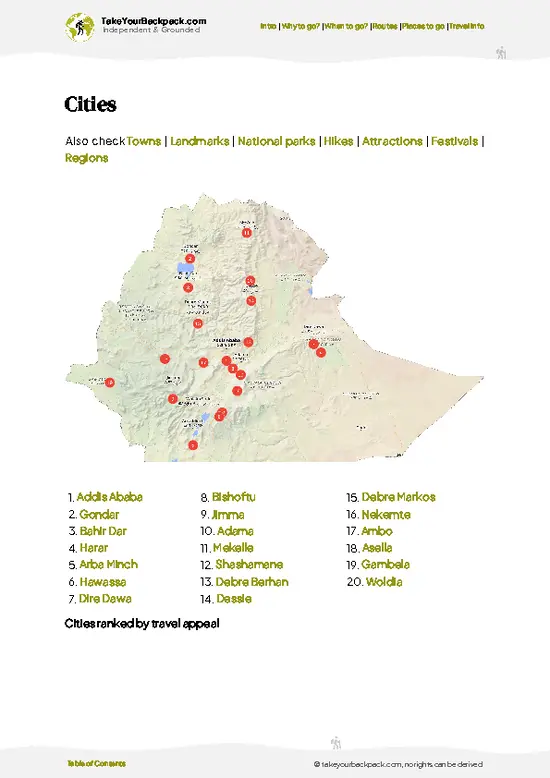
101 highlights, ranked by travel appeal
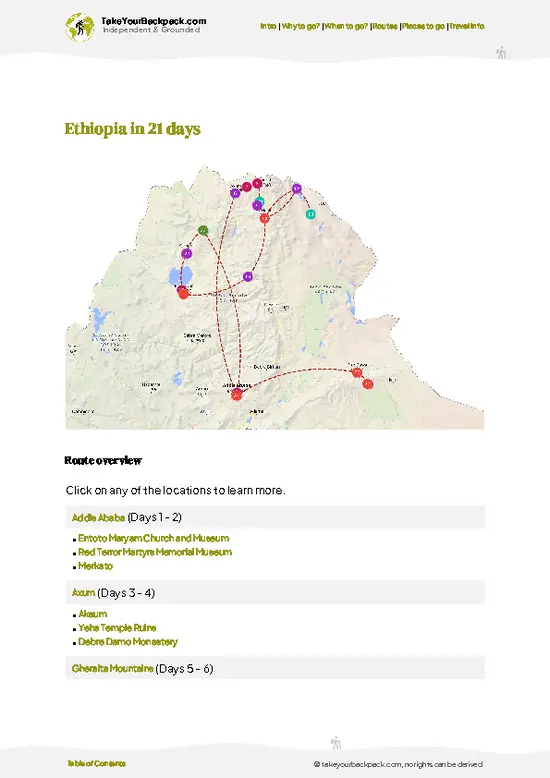
Optimized 7, 14 & 21-day travel routes
Cities, national parks, landmarks, beaches
How to get around
Offline-friendly for travel without Wi-Fi
👉 Click to see all 30+ guide features

📅 Plan smarter in minutes, not weeks
Month by month travel advice
Festivals & national holidays
Budget expectations

🗺️ Go to the right places, skip the overrated ones
Honest pros & cons of destinations
Top hikes, parks & viewpoints
Lesser-known places most travelers miss
Clear “worth it vs skip it” guidance

🛏️ Travel smoothly without rookie mistakes
Best areas to stay
Transport systems explained simply
Common scams & safety advice
SIM cards, money & practical tips

🌍 Understand the country, not just visit it
Culture & traditions
52 Essential phrases & customs
Festivals worth planning around
Traveler-friendly historical context
Insights that make places more meaningful

📱 Built for real travel conditions
Fully downloadable PDF
Works completely offline
Optimized for phone use
Useful in remote areas & buses
Everything in one place
Save weeks of stressful planning
Get instant access to your full guide. 30‑day money-back guarantee.


By proceeding you agree to our terms.
Sent to your inbox immediately after payment • 100% Secure Checkout
Best Backpacking Travel Advisor 2025 tourism awardBest Backpacking
Travel Advisor
2025
What others say about Take Your Backpack Guides:
⭐⭐⭐⭐⭐
Fantastic, amazing amount of information!
⭐⭐⭐⭐⭐
My goodness this is amazing, it's what I've been looking for hats off too you!
⭐⭐⭐⭐⭐
I think this is absolutely BRILLIANT
⭐⭐⭐⭐
Very complete and informative. It's still missing places, but I gotta to commend you
⭐⭐⭐⭐⭐
This is truly amazing, thank you, can't wait to explore it with my kids!
⭐⭐⭐⭐⭐
Awesome resource, thank you!
⭐⭐⭐⭐⭐
This is amazing! Can't wait to explore the ones I haven't seen
⭐⭐⭐⭐
I love this! Well done, great idea.
⭐⭐⭐⭐⭐
Thanks for taking the time to make this gem!
⭐⭐⭐⭐⭐
This might be the best website I've ever seen.
⭐⭐⭐⭐⭐
Congratulations, and thank you so much for your work; it's incredibly valuable.
⭐⭐⭐⭐
In all seriousness I think you did a great job pointing out the important spots
⭐⭐⭐⭐⭐
10/10 very good
⭐⭐⭐⭐⭐
As someone who's only just starting to visit regularly this is awesome, thank you.
⭐⭐⭐⭐
Thank you very much! I'm going to visit my dad, it's going to be very useful!
⭐⭐⭐⭐⭐
This is really cool! We'll be travelling for the first time and this definitely come in handy.
⭐⭐⭐⭐⭐
You are now our minister of culture, congratulations 👨‍💼
⭐⭐⭐⭐⭐
Just wanted to tell you that this is a pearl! Going to follow your recommendations.
⭐⭐⭐⭐⭐
This is so cool. I'll definitely be using the resource for my travels soon.
⭐⭐⭐⭐⭐
This is very impressive! Good work.
⭐⭐⭐⭐⭐
This is an amazing and informative site. Very well done!

🛏️ Where to stay?Best areas to stay in Ethiopia

When you’re gearing up for the Meskel festival in Ethiopia, your choice of where to stay can make or break your experience. Head straight for the heart of Addis Ababa, particularly around the Piazza and Bole areas. These neighborhoods pulse with energy and are packed with budget-friendly options that cater to backpackers and solo travelers.

Piazza is a vibrant hub, rich in history and culture. You’ll find plenty of cafes and bars where you can mingle with locals and fellow travelers. The streets are alive with music and chatter, making it easy to soak in the festival’s spirit. Plus, it’s a short … read more 👉
When you’re gearing up for the Meskel festival in Ethiopia, your choice of where to stay can make or break your experience. Head straight for the heart of Addis Ababa, particularly around the Piazza and Bole areas. These neighborhoods pulse with energy and are packed with budget-friendly options that cater to backpackers and solo travelers.

Piazza is a vibrant hub, rich in history and culture. You’ll find plenty of cafes and bars where you can mingle with locals and fellow travelers. The streets are alive with music and chatter, making it easy to soak in the festival’s spirit. Plus, it’s a short ride to Meskel Square, the festival’s epicenter.

Bole, on the other hand, offers a more modern vibe. It’s a bit quieter but still social, with a mix of expats and locals. You’ll find a range of eateries and shops, perfect for stocking up on snacks or grabbing a quick meal before heading to the festivities.

Both areas are generally safe, but always stay aware of your surroundings. Choose accommodations that encourage interaction, like shared dorms or communal spaces. This way, you’ll not only save money but also build connections that enhance your festival experience.

👛 Costs (as of 24 June 2026)How expensive it really is

The Meskel Festival in Ethiopia is a vibrant celebration that draws locals and travelers alike, but navigating the costs can be tricky. Here’s a breakdown to keep your budget intact while you soak in the experience.
  • Festival Tickets: Entry to the festival is generally free, but you might want to budget around $10 to $20 (€9 to €18) for special seating or guided experiences that enhance your view and understanding of the rituals.
  • Accommodation: Options range from budget hostels at about $10 to $20 (€9 to €18) per night to mid-range hotels costing $30 to $70 (€27 to €63). Book early, as places fill up fast during the festival.
  • Local Transport: Expect to spend around $5 to $15 (€4 to €14) on public transport or shared taxis to get to the festival site. If you prefer a private taxi, budget $20 to
read more 👉
The Meskel Festival in Ethiopia is a vibrant celebration that draws locals and travelers alike, but navigating the costs can be tricky. Here’s a breakdown to keep your budget intact while you soak in the experience.
  • Festival Tickets: Entry to the festival is generally free, but you might want to budget around $10 to $20 (€9 to €18) for special seating or guided experiences that enhance your view and understanding of the rituals.
  • Accommodation: Options range from budget hostels at about $10 to $20 (€9 to €18) per night to mid-range hotels costing $30 to $70 (€27 to €63). Book early, as places fill up fast during the festival.
  • Local Transport: Expect to spend around $5 to $15 (€4 to €14) on public transport or shared taxis to get to the festival site. If you prefer a private taxi, budget $20 to $40 (€18 to €36) for a round trip.
  • Food & Drinks: Street food is your friend here. You can enjoy local dishes for as little as $2 to $5 (€2 to €4). If you opt for sit-down meals, expect to pay $10 to $20 (€9 to €18) per meal. Don’t forget to try the local coffee—it’s a must!
  • Miscellaneous Expenses: Set aside $10 to $30 (€9 to €27) for souvenirs, tips, or unexpected costs. This cushion will help you enjoy the festival without worrying about running out of cash.

Planning ahead will keep your energy focused on the celebration, not on your wallet. Enjoy the vibrant atmosphere and the rich culture of Ethiopia!


source: ethiopia.travel
⚠️ Prices can change and everyone travels differently, so take this as a rough guide. Hope it helps you plan your adventure!

🍲 FoodLocal Flavors for Backpackers

At the Meskel festival in Ethiopia, food and drink become a vibrant part of the celebration. You’ll find injera, the spongy sourdough flatbread, served with a variety of wats (stews) that burst with flavor. Try the doro wat, a spicy chicken stew that’s a festival favorite. The stalls are alive with the aroma of berbere spice, and you can’t miss the kitfo, raw minced beef seasoned with spices, for the adventurous eater.

For drinks, grab a cup of t’ej, the local honey wine, which is sweet and potent. It’s often served in a communal fashion, so be ready to share a toast with new friends. The festival atmosphere encourages camaraderie, and you’ll find that sharing food is a way to connect with locals.

Be mindful of the lines; they can get long, especially for the most popular dishes. Cash is … read more 👉
At the Meskel festival in Ethiopia, food and drink become a vibrant part of the celebration. You’ll find injera, the spongy sourdough flatbread, served with a variety of wats (stews) that burst with flavor. Try the doro wat, a spicy chicken stew that’s a festival favorite. The stalls are alive with the aroma of berbere spice, and you can’t miss the kitfo, raw minced beef seasoned with spices, for the adventurous eater.

For drinks, grab a cup of t’ej, the local honey wine, which is sweet and potent. It’s often served in a communal fashion, so be ready to share a toast with new friends. The festival atmosphere encourages camaraderie, and you’ll find that sharing food is a way to connect with locals.

Be mindful of the lines; they can get long, especially for the most popular dishes. Cash is king here, so leave your cards behind. Serving sizes can be generous, so consider splitting dishes to sample more flavors without overdoing it. Embrace the chaos, savor the tastes, and let the festival spirit fuel your adventure!

Other Ethiopian festivals near Meskel

Explore more nearby:

  • Irreecha—Oromo thanksgiving, riverbank gatherings, grass offerings| 0 km away
  • Timkat—Epiphany processions, tabot parades, mass river baptisms| 1 km away
  • Ashenda—Tigrayan girls’ festival, colorful dresses, group singing| 5 km away

💡 Not sure where to go next?
Create a personalized itinerary for Ethiopia including Meskel and the places that fit your trip.

Generate my itinerary

👉 Discover all festivals

Or checkout all Ethiopia has to offer (think cities, towns, villages, national parks, hikes, beaches, festivals)
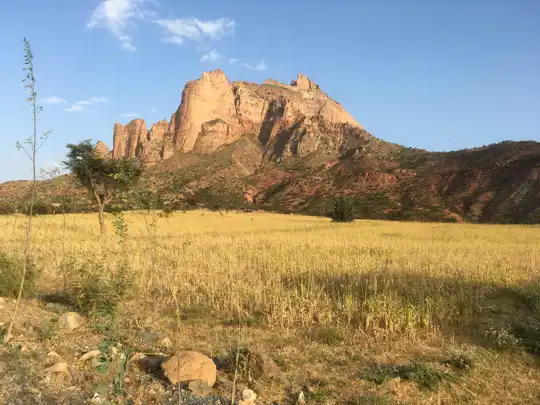
Country photo of Ethiopia

We 💚 feedbackSumming up the experience

Meskel is a whirlwind of color and energy, where the air buzzes with chants and the scent of burning incense fills your lungs. It’s a cultural feast that pulls you in. But be ready for crowds; they can be overwhelming. Plan your accommodations early to avoid a last-minute scramble. Embrace the chaos, and you’ll find that the vibrant spirit of the festival is worth every ounce of effort.

✈️ When did I visit Ethiopia?
Ethiopia I visited back in October 2017. I combined the trip with a visit to Sudan. Ethiopia was a pure suprise with the magical scenery like the Danikal Depression and the Simien Mountains.

✍️ Help improve this page!
The information on this page is based on my own backpacking experience in Ethiopia, supplemented with up-to-date research and feedback from other travelers. Travel details can change, so if you notice anything outdated or incomplete, feel free to let me know.


🙋‍♂️ Give feedback

👋 Meet the founderWho’s Behind Take Your Backpack?

Johan, backpacker and founder of TakeYourBackpackHi, I’m Johan (Netherlands 🇳🇱), the creator of TakeYourBackpack. Over the past decade, I’ve backpacked through 80+ countries across six continents, gaining extensive experience with independent travel, long-term trips, and overland routes.

This site is built on a combination of firsthand travel experience and carefully curated insights from other backpackers. Many guides are based on places I’ve personally visited, while others bring together tips, observations, and practical advice shared by trusted travelers I’ve met along the way.

The goal is to provide realistic, experience-driven guidance — not generic itineraries — so you can explore destinations with better context, clearer expectations, and more confidence.

Get full Ethiopia guide •
Instant download • 101 highlights • Full Offline guide