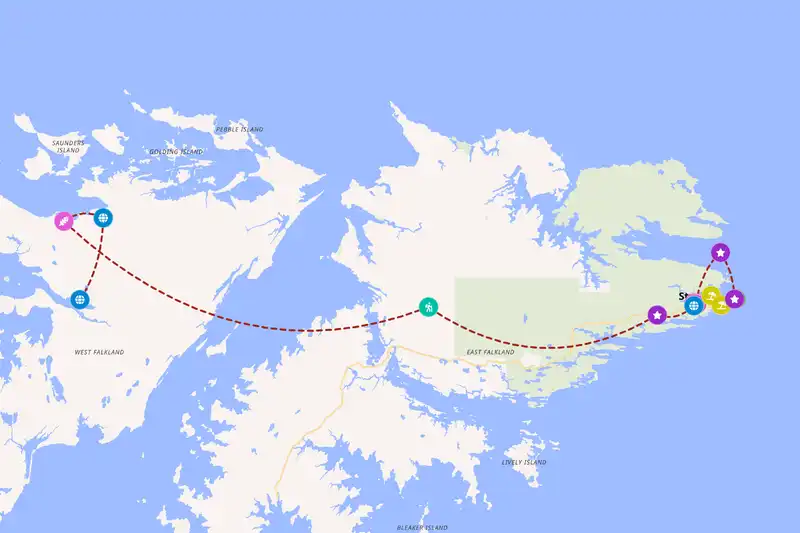
Short version: the Falklands are safe, friendly, and simple to navigate, but they are not a classic backpacker destination and they are absolutely not cheap. Independent travel is doable if you’re organized and realistic about costs.
Why it’s easy:
- English-speaking, tiny population, and people are genuinely helpful.
- Crime is extremely low; you can walk around Stanley and small settlements without stress.
- Trails are mostly informal but navigation is straightforward in clear weather (open landscapes, few trees).
- You can book most things directly with local guesthouses, farms, and tour operators by email.
Why it’s tricky for backpackers:
- Very limited competition = high prices for flights, accommodation, and inter-island transport.
- Wild camping is possible but almost all land is privately owned; you need permission from landowners, which usually means planning ahead.
- Weather is rough: strong wind, fast-changing conditions, and it can feel wintry even in summer. You need solid gear, not ultralight wishful thinking.
- There’s no classic hostel circuit, no cheap public buses between islands, and no last-minute deals if you just “wing it.”
How to make it work on a budget:
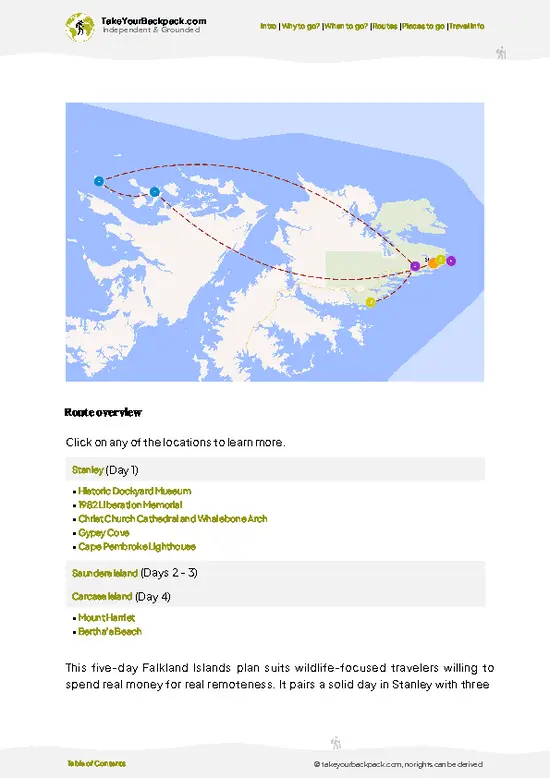
- Base yourself mainly in Stanley and maybe one outer island instead of trying to hop everywhere.
- Travel in a small group of 2–4 to split taxis, tours, and accommodation.
- Use self-catering accommodation where possible and cook your own food; groceries are still pricey but far cheaper than eating out every meal.
- Treat the Falklands as a “special trip” rather than a cheap add-on to South America. You’re optimizing value, not chasing rock-bottom prices.
If you’re comfortable planning ahead, emailing locals, and carrying proper cold-weather gear, independent backpacking here is absolutely possible and very rewarding, just not budget in the usual sense.
For most backpackers, 7–10 days is the sweet spot. Less than that and you’ll feel rushed; more than that and costs stack up fast unless you’re slow-traveling in one place.
Good timeframes:
- 3–4 days (absolute minimum): Base in Stanley only.
- Explore Stanley on foot.
- Day trip to Gypsy Cove for penguins and coastal walks.
- Maybe one guided day trip (e.g., Volunteer Point) if your budget allows.
This works if you’re coming off a cruise or squeezing the Falklands into a longer South America trip.
- 7–10 days (ideal backpacker window):
- 2–3 days in Stanley for history, walks, and logistics.
- 2–3 days on one outer island (Sea Lion, Carcass, or Pebble) for wildlife and hiking.
- 1–2 day trips to key wildlife spots from Stanley (e.g., Volunteer Point, Cape Pembroke area).
This gives you both “town life” and the remote, wild side without trying to see everything.
- 2 weeks+ (for slow travelers or wildlife nerds):
- Time to visit 2–3 outer islands.
- More flexibility for weather delays, which are common.
- Space to do longer hikes and just sit with the penguins instead of sprinting between viewpoints.
Season matters:
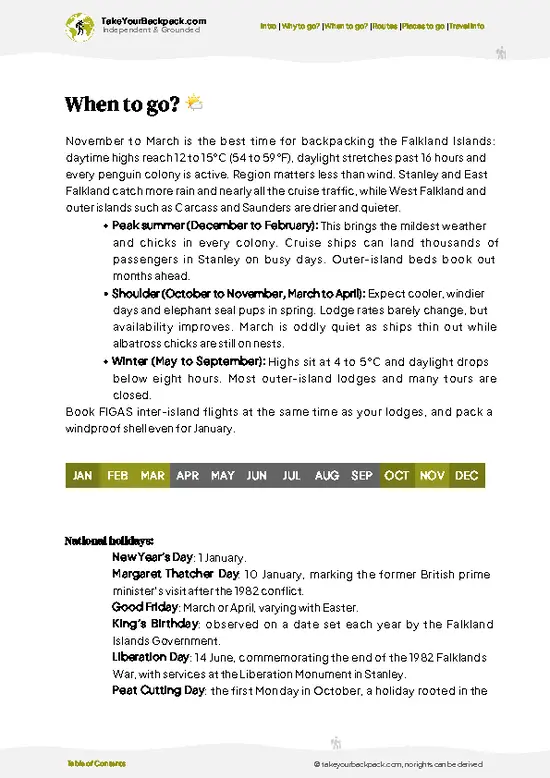
- Peak wildlife and better weather: roughly November–March.
- Shoulder seasons can be cheaper and quieter but colder and windier, with more chance of disruption.
If you’re on a tight budget, it’s better to do 7 focused days well (Stanley + one island + one big wildlife day trip) than 3 frantic days trying to cram in everything.
On East Falkland and in Stanley, you can get around without renting a car, but you’ll need to be flexible and accept that some things will require paid transfers or tours.
Within Stanley:
- Totally walkable. The town is small, and you can reach most places on foot.
- Occasional taxis are available and not outrageous for short hops, especially if you share.
Around East Falkland (outside Stanley):
- No regular backpacker-style bus network.
- Some settlements and sites can be reached by pre-booked 4x4 transfers or tours.
- Roads are a mix of paved and gravel; distances look short on the map but can take time.
- Hitchhiking is possible in theory (tiny, friendly population), but traffic is so light that you cannot rely on it as a primary strategy.
Between islands:
- No ferries for casual travelers between most outer islands.
- You use FIGAS (the small local airline) in light aircraft.
- Flights must be booked in advance, and you pay per leg; this is where your budget really feels it.
Backpacker strategy without a car:
- Base in Stanley and choose day trips that include transport (e.g., Volunteer Point, wildlife colonies, battlefield tours).
- Pick one outer island and stay several nights to make the FIGAS cost worthwhile.
- Walk as much as possible: coastal paths, short hikes from settlements, and town exploring.
- Coordinate with guesthouses and farms; they often help arrange shared transfers with other guests.
You can absolutely have a solid trip without driving, but you trade spontaneity for pre-booked logistics and shared tours.
For a budget-conscious backpacker, “must-visit” in the Falklands means places where you get maximum wildlife, landscape, and sense of place for each pound you burn.
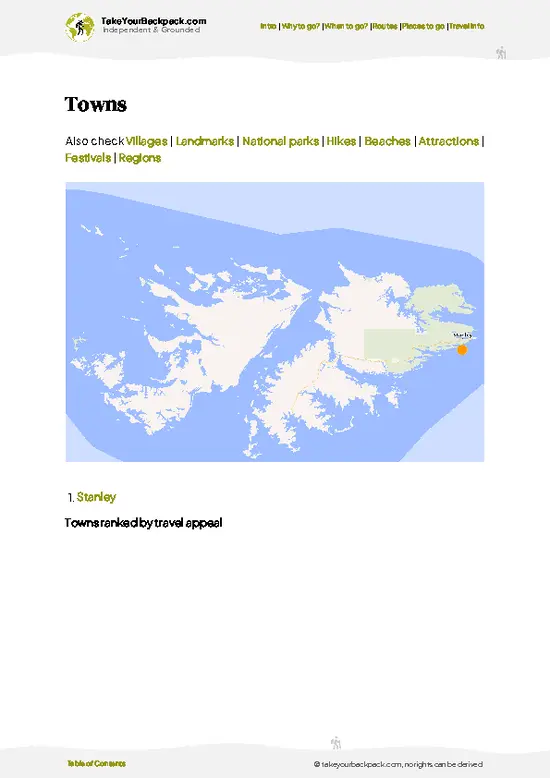
1. Stanley
- Why it’s worth it: It’s your base camp and the social hub. You get a feel for daily life, history, and the quirky mix of British and South Atlantic culture.
- What to do: Walk the waterfront, visit the museum, check out the cathedral and whale bone arch, wander the backstreets, and do short coastal walks from town.
- Value tip: Self-catering stays here help you save on food.
2. Gypsy Cove (near Stanley)
- Why it’s worth it: Easy access to wildlife without a huge tour bill.
- What you see: Magellanic penguins, coastal birds, and good views over white sand and blue water.
- Value tip: You can often reach it via local transport or a reasonably priced taxi share from Stanley, then walk around on your own.
3. Volunteer Point (day trip from Stanley)
- Why it’s worth the splurge: One of the best king penguin colonies accessible to regular travelers anywhere. You’re not just ticking a box; you’re hanging out with thousands of birds in a raw, open landscape.
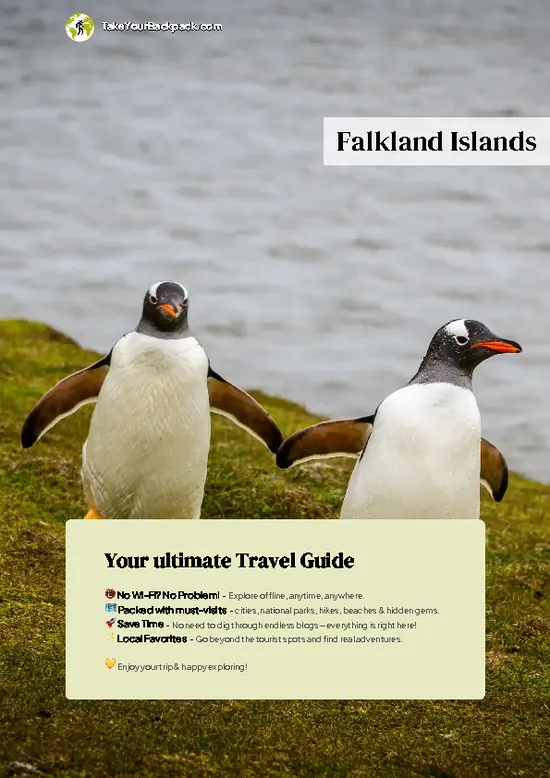
- What you see: King, Gentoo, and Magellanic penguins, plus wide beaches and dunes.
- Value tip: It’s expensive, but if you’re going to blow money on one big day trip, make it this one.
4. One outer island (pick based on your priorities and budget)
- Sea Lion Island: Great for elephant seals, penguins, and easy walking. Compact and very wildlife-dense.
- Carcass Island: Beautiful coastlines, lots of birdlife, and a relaxed, homely feel.
- Pebble Island: Mix of wildlife, beaches, and war history.
- Value tip: Choose one island and stay several nights instead of hopping between many; you save on FIGAS flights and get deeper into the place.
5. Simple coastal hikes from settlements
- Why they matter: Free, flexible, and they give you that big-sky, end-of-the-world feeling.
- Examples: Walks around Cape Pembroke near Stanley, or from farm settlements on East Falkland.
- Value tip: Ask your accommodation for safe, allowed routes; much land is private, but locals are usually happy to point you to good walks.
If you hit Stanley, Gypsy Cove, Volunteer Point, and one well-chosen outer island, you’ve basically nailed the core Falklands experience as a backpacker.
If you’re short on time or cash, skip anything that eats days and money without adding much beyond what you already see elsewhere.
1. Multiple outer islands in one short trip
- Why to skip: Each extra island means more FIGAS flights, more transfers, and more logistics.
- What to do instead: Pick one island that matches your interests (e.g., Sea Lion for seals, Carcass for birds and beaches) and stay longer. Depth beats quantity here.
2. Overly niche battlefield tours (unless you’re a serious history buff)
- Why to skip: Some tours cover very specific sites that feel similar if you’re not deeply into the 1982 conflict.
- What to do instead: Do one well-rounded history tour or visit the main memorials and museum in Stanley, then spend the rest of your time hiking or with wildlife.
3. Expensive, overlapping wildlife trips
- Why to skip: Many colonies have similar species. Paying for three different penguin trips that show you the same birds from slightly different angles is not great value.
- What to do instead: Splurge on one top-tier wildlife experience (like Volunteer Point or a good outer island stay) and use cheaper or free walks for the rest.
4. Trying to “see all the islands” in under 10 days
- Why to skip: You’ll spend more time in small planes and vehicles than actually being outside.
- What to do instead: Focus on East Falkland + one island. You’ll still get the remote, wild feel without turning your trip into a logistics marathon.
5. Fancy restaurants every night in Stanley
- Why to skip: Eating out constantly will nuke your budget fast, and the food, while decent, isn’t the main reason you came.
- What to do instead: Use self-catering, cook simple meals, and treat yourself to a couple of pub or restaurant nights instead of daily splurges.
If you cut the extra islands, duplicate tours, and constant restaurant meals, you free up both time and money for the experiences that actually make the Falklands special: long walks, quiet wildlife encounters, and that surreal feeling of being at the edge of the map.