×

Falkland Islands🇫🇰 | national parksCape Pembroke1855 lighthouse, Yorke Bay dunes, Surf Bay rollers, tidal ponds | things to do and best time to go

Explore Falkland Islands Wildlife ConservationExplore Saunders Island

Backpacking in Cape Pembroke
🏆 Top picknational park ranked #3
By Johan Kruseman 🇳🇱 | Updated October 22, 2026

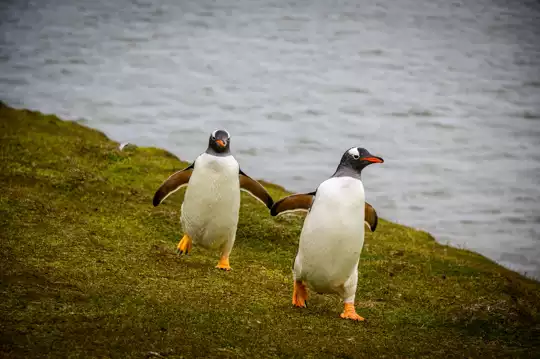
Cape Pembroke is a protected nature reserve on a low peninsula, and a gravel road from the capital runs most of the way to its lighthouse. It lies east of Stanley in the Falkland Islands, at the far end of the Stanley Common. The ground is open heath with no trees, so the wind sets the pace and the horizon is almost always in sight. The coastal walk passes tidal ponds and kelp-strewn beaches, and it ends at a black-and-white lighthouse where the sea is the only thing left to look at. Gentoo and Magellanic penguins, sea lions and oystercatchers turn up along the way, but you have to scan for them. Shelter is nonexistent, and public transport does not reach it. Compared with nearby Gypsy Cove, which is short, busy with cruise passengers and built around penguin burrows, Cape Pembroke is longer, emptier and much windier.

Discover everything you want to know in the 📖 Falkland Islands Travel Guide.


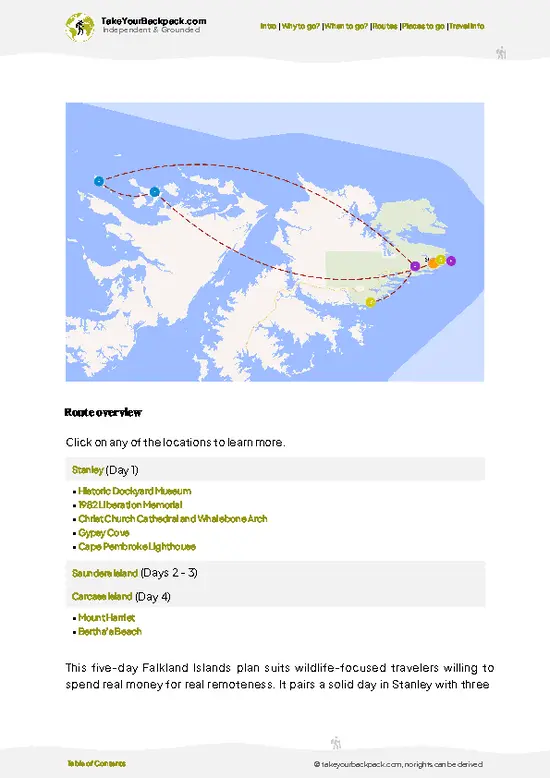
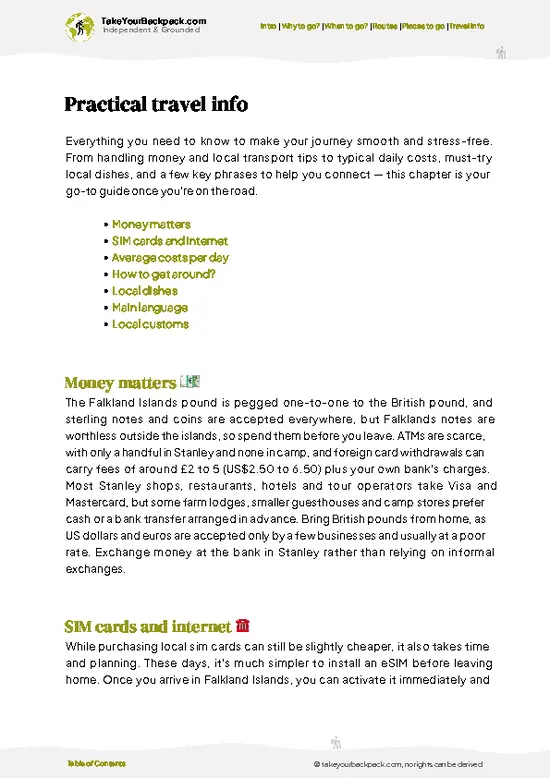
example page 0 from our offline Travel Guide for Falkland Islands
example page 1 from our offline Travel Guide for Falkland Islands
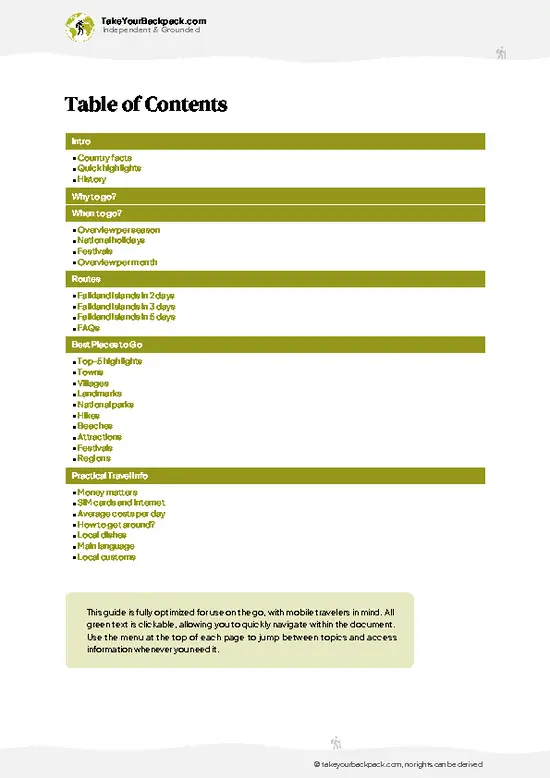
example page 2 from our offline Travel Guide for Falkland Islands
example page 3 from our offline Travel Guide for Falkland Islands
example page 4 from our offline Travel Guide for Falkland Islands
example page 5 from our offline Travel Guide for Falkland Islands
example page 6 from our offline Travel Guide for Falkland Islands
example page 7 from our offline Travel Guide for Falkland Islands
Loading the map 🌍
CLICK TO FILTER
towns
villages
landmarks
national parks
hikes
beaches
attractions
festivals
regions
SHOW COUNTRY’S BESTSHOW ALL

✨ Why go?
Ranked #3 national park in Falkland Islands
What makes it a must-see national park

Cape Pembroke suits backpackers who would rather walk a coastline than join a coach loop. There is no gate, no ranger and no fee, so you decide when to go and how far. The terrain is mostly flat heath and firm sand, and the main sights are linked by a track and open shoreline. That makes it easy to design your own half-day or full-day route without a guide. The reserve also holds a compact mix of habitats: dunes, tidal ponds, rocky points and long beaches. Each one tends to have its own birds, and the walking gets quieter the further you go. The destination is the Cape Pembroke Lighthouse, first lit in 1855, which gives the walk a clear goal. Because everything starts at the edge of the capital, you can sleep in town, carry a packed lunch and still reach open wilderness by mid-morning. Without … read more 👉
Cape Pembroke suits backpackers who would rather walk a coastline than join a coach loop. There is no gate, no ranger and no fee, so you decide when to go and how far. The terrain is mostly flat heath and firm sand, and the main sights are linked by a track and open shoreline. That makes it easy to design your own half-day or full-day route without a guide. The reserve also holds a compact mix of habitats: dunes, tidal ponds, rocky points and long beaches. Each one tends to have its own birds, and the walking gets quieter the further you go. The destination is the Cape Pembroke Lighthouse, first lit in 1855, which gives the walk a clear goal. Because everything starts at the edge of the capital, you can sleep in town, carry a packed lunch and still reach open wilderness by mid-morning. Without a vehicle the trip is longer, but the reserve is easy to understand on foot.

💡 HighlightsEssential experiences to have while exploring Cape Pembroke

  1. Cape Pembroke Lighthouse: The best-known sight of the reserve. The black-and-white tower, first lit in 1855 and rebuilt in 1906, stands at the tip of the peninsula, a landmark for ships approaching Stanley. Its keeper’s buildings sit beside it, and the surrounding coast is rough, wild and very exposed.
  2. Yorke Bay: A long white-sand beach on the northern side of the peninsula, backed by dunes and heath. Gentoo and Magellanic penguins come ashore here, and the sand is wide enough to walk for a long time without meeting anyone.
  3. Gypsy Cove: A short coastal path to a small bay where Magellanic penguins burrow in the sandy turf, usually from spring to early autumn. It is the easiest wildlife stop near the reserve, and the clear water is good for spotting Commerson’s dolphins offshore.
  4. Surf Bay: An open,
… read more 👉
  1. Cape Pembroke Lighthouse: The best-known sight of the reserve. The black-and-white tower, first lit in 1855 and rebuilt in 1906, stands at the tip of the peninsula, a landmark for ships approaching Stanley. Its keeper’s buildings sit beside it, and the surrounding coast is rough, wild and very exposed.
  2. Yorke Bay: A long white-sand beach on the northern side of the peninsula, backed by dunes and heath. Gentoo and Magellanic penguins come ashore here, and the sand is wide enough to walk for a long time without meeting anyone.
  3. Gypsy Cove: A short coastal path to a small bay where Magellanic penguins burrow in the sandy turf, usually from spring to early autumn. It is the easiest wildlife stop near the reserve, and the clear water is good for spotting Commerson’s dolphins offshore.
  4. Surf Bay: An open, windswept beach on the southern shore of the peninsula with real rollers, a rare sight in this sheltered corner of the islands. Southern sea lions sometimes haul out on the sand, and the dunes behind it are worth the climb for the view.
  5. The tidal ponds and heath: Behind the beaches, brackish pools and low diddle-dee heath hold upland geese, ruddy-headed geese, snipe, two-banded plovers and Magellanic oystercatchers. Spend time here with patience rather than speed.
  6. Offshore sea life: From the rocks near the lighthouse you can scan for Peale’s and Commerson’s dolphins, giant petrels, cormorants and the occasional passing whale. The best viewing comes on calm mornings when the water is flat.
All of it together takes about half a day by vehicle, or a long full day on foot with stops.
Spotted a mistake or missing something? Contact us.

🌤️ When to go?Best time to explore Cape Pembroke

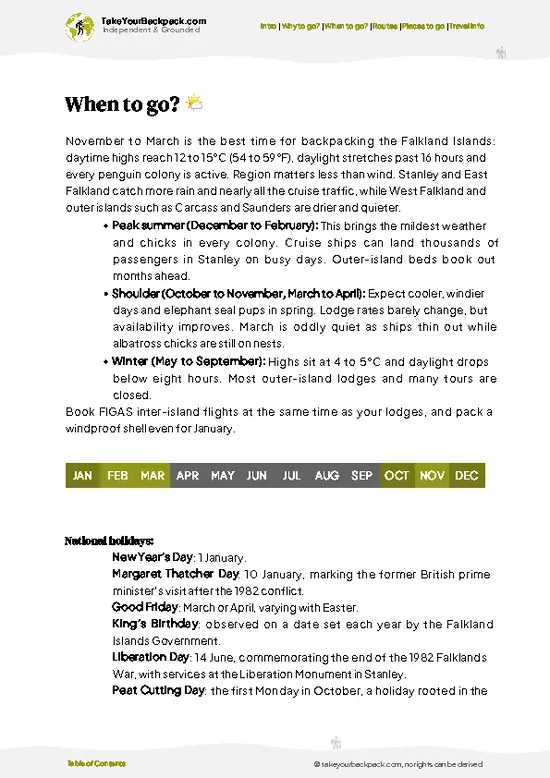
The best window for Cape Pembroke is November to March, when penguins are on the beaches and the wind is at its gentlest.
  • Summer (Nov to Mar): Highs of 11 to 15°C (52 to 59°F), lows of 4 to 7°C (39 to 45°F). Daylight runs to about 16 hours in December. Gentoo and Magellanic penguins are ashore, and the lighthouse walk is at its best. Stanley accommodation is priciest and booked well ahead.
  • Autumn (Apr to May): Highs of 7 to 10°C (45 to 50°F). Penguins leave in April, crowds vanish, and the light is low and clear. Cruise ships are mostly gone.
  • Winter (Jun to Aug): Highs of 3 to 6°C (37 to 43°F), lows near -2°C (28°F), with about 8 hours of light. Frost and occasional snow are possible. Rooms are cheapest and the headland is empty, but wildlife is thin.
  • Spring (Sep to Oct): Highs of 6 to 10°C (43
… read more 👉
The best window for Cape Pembroke is November to March, when penguins are on the beaches and the wind is at its gentlest.
  • Summer (Nov to Mar): Highs of 11 to 15°C (52 to 59°F), lows of 4 to 7°C (39 to 45°F). Daylight runs to about 16 hours in December. Gentoo and Magellanic penguins are ashore, and the lighthouse walk is at its best. Stanley accommodation is priciest and booked well ahead.
  • Autumn (Apr to May): Highs of 7 to 10°C (45 to 50°F). Penguins leave in April, crowds vanish, and the light is low and clear. Cruise ships are mostly gone.
  • Winter (Jun to Aug): Highs of 3 to 6°C (37 to 43°F), lows near -2°C (28°F), with about 8 hours of light. Frost and occasional snow are possible. Rooms are cheapest and the headland is empty, but wildlife is thin.
  • Spring (Sep to Oct): Highs of 6 to 10°C (43 to 50°F). Birds return, and Magellanic penguins arrive from October. Wind is often at its strongest.
Book Stanley beds and rental cars by the previous July if you plan a December or January visit.


source: climatestotravel.comJANJanuary: excellent for travelingFEBFebruary: highly recommended for travelingMARMarch: good for travelingAPRApril: fair for travelingMAYMay: below average for travelingJUNJune: below average for travelingJULJuly: below average for travelingAUGAugust: below average for travelingSEPSeptember: fair for travelingOCTOctober: good for travelingNOVNovember: highly recommended for travelingDECDecember: excellent for traveling
when-to-go

✈️ The backpacker research shortcutFalkland Islands Travel Guide

An offline-friendly backpacking guide with optimized travel routes, ranked highlights, transport advice, and the best areas to stay.
example page 0 from our offline Travel Guide for Falkland Islands
example page 1 from our offline Travel Guide for Falkland Islands
example page 2 from our offline Travel Guide for Falkland Islands
example page 3 from our offline Travel Guide for Falkland Islands
example page 4 from our offline Travel Guide for Falkland Islands
example page 5 from our offline Travel Guide for Falkland Islands
example page 6 from our offline Travel Guide for Falkland Islands
example page 7 from our offline Travel Guide for Falkland Islands
The digital guide (108 pages) contains:
✅ 25 highlights, ranked by travel appeal
✅ Optimized 2, 3 & 5-day travel routes
✅ Cities, national parks, landmarks, beaches
✅ How to get around
✅ Offline-friendly for travel without Wi-Fi
👉 Click to see all 30+ guide features

📅 Plan smarter in minutes, not weeks
✅ Month by month travel advice
✅ Festivals & national holidays
✅ Budget expectations

🗺️ Go to the right places, skip the overrated ones
✅ Honest pros & cons of destinations
✅ Top hikes, parks & viewpoints
✅ Lesser-known places most travelers miss
✅ Clear “worth it vs skip it” guidance

🛏️ Travel smoothly without rookie mistakes
✅ Best areas to stay
✅ Transport systems explained simply
✅ Common scams & safety advice
✅ SIM cards, money & practical tips

🌍 Understand the country, not just visit it
✅ Culture & traditions
✅ Local customs
✅ Festivals worth planning around
✅ Traveler-friendly historical context
✅ Insights that make places more meaningful

📱 Built for real travel conditions
✅ Fully downloadable PDF
✅ Works completely offline
✅ Optimized for phone use
✅ Useful in remote areas & buses
✅ Everything in one place
Stop searching, start planning
Get instant access to your full guide. 30‑day money-back guarantee.
+ Add another guide for just

By proceeding you agree to our terms.
Sent to your inbox immediately after payment • 100% Secure Checkout
Best Backpacking Travel Advisor 2025 tourism awardBest Backpacking
Travel Advisor
2025
What others say about Take Your Backpack Guides:
⭐⭐⭐⭐⭐
Fantastic, amazing amount of information!
⭐⭐⭐⭐⭐
My goodness this is amazing, it's what I've been looking for hats off too you!
⭐⭐⭐⭐⭐
I think this is absolutely BRILLIANT
⭐⭐⭐⭐
Very complete and informative. It's still missing places, but I gotta to commend you
⭐⭐⭐⭐⭐
This is truly amazing, thank you, can't wait to explore it with my kids!
⭐⭐⭐⭐⭐
Awesome resource, thank you!
⭐⭐⭐⭐⭐
This is amazing! Can't wait to explore the ones I haven't seen
⭐⭐⭐⭐
I love this! Well done, great idea.
⭐⭐⭐⭐⭐
Thanks for taking the time to make this gem!
⭐⭐⭐⭐⭐
This might be the best website I've ever seen.
⭐⭐⭐⭐⭐
Congratulations, and thank you so much for your work; it's incredibly valuable.
⭐⭐⭐⭐
In all seriousness I think you did a great job pointing out the important spots
⭐⭐⭐⭐⭐
10/10 very good
⭐⭐⭐⭐⭐
As someone who's only just starting to visit regularly this is awesome, thank you.
⭐⭐⭐⭐
Thank you very much! I'm going to visit my dad, it's going to be very useful!
⭐⭐⭐⭐⭐
This is really cool! We'll be travelling for the first time and this definitely come in handy.
⭐⭐⭐⭐⭐
You are now our minister of culture, congratulations 👨‍💼
⭐⭐⭐⭐⭐
Just wanted to tell you that this is a pearl! Going to follow your recommendations.
⭐⭐⭐⭐⭐
This is so cool. I'll definitely be using the resource for my travels soon.
⭐⭐⭐⭐⭐
This is very impressive! Good work.
⭐⭐⭐⭐⭐
This is an amazing and informative site. Very well done!

🛏️ Where to stay?Best areas and accommodation options

Nothing exists on Cape Pembroke itself, so you sleep in Stanley, which lies roughly 5 km (3 miles) west of the headland. The cape is a protected nature reserve with a lighthouse and no accommodation or campsites, so you visit as a day trip on foot, by bike or by vehicle on the track.
Stanley is the only real base, and it is small. Guesthouses and B&Bs dominate, usually US$100 to 180 a night for a double, with breakfast often included. Self-catering cottages run about US$90 to 170 and suit anyone who wants to cook, which helps because eating out is pricey. There are no hostels and no dorm beds, … read more 👉
Nothing exists on Cape Pembroke itself, so you sleep in Stanley, which lies roughly 5 km (3 miles) west of the headland. The cape is a protected nature reserve with a lighthouse and no accommodation or campsites, so you visit as a day trip on foot, by bike or by vehicle on the track.
Stanley is the only real base, and it is small. Guesthouses and B&Bs dominate, usually US$100 to 180 a night for a double, with breakfast often included. Self-catering cottages run about US$90 to 170 and suit anyone who wants to cook, which helps because eating out is pricey. There are no hostels and no dorm beds, so solo travelers pay close to double-room rates. A few hotels in town charge more, up to US$250 or so in peak season.
Backpackers on a tight budget sometimes ask local farms and settlements about camping, but that means leaving Stanley and is not an option near the cape. Stay in the center near the harbor if you want to walk to pubs, shops and the museum. Rooms on the eastern edge shave a little off the trek toward the cape. Reserve months ahead for December to February.

👛 Costs (as of 22 October 2026)Typical daily expenses

A day at Cape Pembroke costs about US$130 to 320 for a backpacker based in Stanley, with accommodation and food making up most of it.
CategoryBudget RangeLocal Reality
Entrance feeUS$0The reserve is free to enter and has no ticket booth.
Accommodation (high season)US$100 to 180Guesthouses and B&Bs in Stanley. No hostels exist, and winter rates are somewhat lower.
Local transportUS$0 to 60Walking or cycling from Stanley is free. A rental car is about US$80 to 110 a day, while a guided tour or taxi to the track is roughly US$30 to 60.
Food and suppliesUS$30 to 55Supermarket sandwiches and self-catering are far cheaper than pub or café meals, where mains cost US$15 to 25. Imports raise grocery prices.
Guiding or extrasUS$0 to 25Most people walk independently. A wildlife guide or small fee for a local
… read more 👉
A day at Cape Pembroke costs about US$130 to 320 for a backpacker based in Stanley, with accommodation and food making up most of it.
CategoryBudget RangeLocal Reality
Entrance feeUS$0The reserve is free to enter and has no ticket booth.
Accommodation (high season)US$100 to 180Guesthouses and B&Bs in Stanley. No hostels exist, and winter rates are somewhat lower.
Local transportUS$0 to 60Walking or cycling from Stanley is free. A rental car is about US$80 to 110 a day, while a guided tour or taxi to the track is roughly US$30 to 60.
Food and suppliesUS$30 to 55Supermarket sandwiches and self-catering are far cheaper than pub or café meals, where mains cost US$15 to 25. Imports raise grocery prices.
Guiding or extrasUS$0 to 25Most people walk independently. A wildlife guide or small fee for a local map is optional.
Total Daily BudgetUS$130 to 320Mid-range figure of about US$190 to 260 using a guesthouse, self-catering and a taxi or bike.
⚠️ Prices can change and everyone travels differently, so take this as a rough guide. Hope it helps you plan your adventure!

🥾 TrailsPlan your hike in Cape Pembroke: routes, terrain, and sights

Cape Pembroke is a peninsula of flat heath, dunes and beaches that you can walk without a permit or a marked trail system. The reserve has no named, waymarked trails, so people follow the gravel track, the shoreline and the open ground between them.
  • Lighthouse walk: From where the road ends, follow the track across the heath to the Cape Pembroke Lighthouse. Allow about 2 to 3 hours return on easy, level ground, with long stretches of wind and almost no shade or shelter.
  • Yorke Bay shoreline: Walk the beach and dunes in either direction. Expect 1 to 2 hours of soft sand and short grass, with gentoo
… read more 👉
Cape Pembroke is a peninsula of flat heath, dunes and beaches that you can walk without a permit or a marked trail system. The reserve has no named, waymarked trails, so people follow the gravel track, the shoreline and the open ground between them.
  • Lighthouse walk: From where the road ends, follow the track across the heath to the Cape Pembroke Lighthouse. Allow about 2 to 3 hours return on easy, level ground, with long stretches of wind and almost no shade or shelter.
  • Yorke Bay shoreline: Walk the beach and dunes in either direction. Expect 1 to 2 hours of soft sand and short grass, with gentoo and Magellanic penguins close to the waterline. This stretch is easy and suits most fitness levels.
  • Gypsy Cove path: A short loop of roughly an hour along a clear path above the shore. Magellanic penguin burrows are visible from a safe distance, and the viewpoints make good places to watch for dolphins.
  • Surf Bay and dunes: Add this as a longer extension of 2 to 3 hours, on beach sand and low dunes. It is a good place for sea lions and shorebirds, and it is more exposed than the other walks.
Fences and signs mark areas to avoid, so stay on the track and designated paths. There is no entrance fee. No public bus reaches the reserve, so most visitors arrive by taxi, rental car or guided tour, or on foot from the edge of Stanley. Cruise ship days bring groups to Gypsy Cove, while the lighthouse side stays quiet. Weather changes fast, so carry a windproof layer, water and food.
⚠️ Hiking info can sometimes be outdated or inaccurate. Before you hit the trail, check the latest conditions with locals. If you do spot anything that's off, I'd love to hear from you, so I can update it for fellow travelers.

🛡️ SafetyStaying Safe: What Travelers Should Know

Cape Pembroke is a flat, easy headland, and the main hazards are wind and cold.
Weather can swing from sun to horizontal rain within an hour, so carry a windproof shell, a warm hat and gloves even in summer. There is almost no shelter along the roughly 10 km (6 miles) of track, so turn back early if a squall rolls in. Waterproof boots help, because boggy patches and wet sand are common.
Stay on marked paths and behind fences. The Falklands were declared mine-free in 2020. Penguins and elephant seals are not aggressive if left alone, yet keep about 6 meters (20 feet) from them, never block their route to the sea, and watch for sea lions on the beaches.
The usual surprise is distance: it is a long walk out and the wind makes the return feel longer. Bring water and snacks, and tell your guesthouse your plan.

FAQCommon questions from travelers

One full day is enough for Cape Pembroke, though a half day covers the lighthouse walk. The loop from the track end to the lighthouse and back is about 10 km (6 miles), which takes 3 to 4 hours on foot with stops. Add a second day if you want to combine it with Gypsy Cove or Stanley’s museum, both a short drive away.
Yes, but expect a long walk or a ride. Stanley, the only base, sits about 5 km (3 miles) from the start of the cape’s track, so cycling takes 20 to 30 minutes and walking around an hour. Taxis and local tour operators run trips for roughly US$30 to 60, and no public bus serves the headland.
No permit or fee is required for Cape Pembroke, and it is free to visit. Visitors should stay on marked routes because of fenced areas that were formerly mined. Cruise passengers and independent travelers alike need only the Falkland Islands entry requirements, and tours to the cape cost around US$30 to 60.
⚠️ Things can change over time, so always validate details locally before you go.

Ideas for continuing your journey

Cape Pembroke isn’t the only highlight in Falkland Islands. Explore all what Falkland Islands has to offer.
Country photo of Falkland Islands

We 💚 feedbackWhat to keep in mind

At Cape Pembroke, most people head straight for the lighthouse and miss the ponds and dune hollows behind the beaches. That is where the geese, snipe and plovers feed, and where the wind drops enough to hear them. I would walk the lighthouse track first and leave an hour on the way back to sit low among the dunes.

✍️ Help improve this page!
The information on this page is based on in-depth research, insights shared by experienced travelers, and feedback from the local travel community in Falkland Islands. While every effort is made to keep the information accurate and current, conditions can change — so if you spot anything incorrect or outdated, please get in touch.


🙋‍♂️ Give feedback

👋 Meet the founderWho’s Behind Take Your Backpack?

Johan, backpacker and founder of TakeYourBackpackHi, I’m Johan (Netherlands 🇳🇱), the creator of TakeYourBackpack. Over the past 3 decades, I’ve backpacked through 90+ countries across six continents, gaining extensive experience with independent travel, long-term trips, and overland routes.

This site is built on a combination of firsthand travel experience and carefully curated insights from other backpackers. Many guides are based on places I’ve personally visited, while others bring together tips, observations, and practical advice shared by trusted travelers I’ve met along the way.

The goal is to provide realistic, experience-driven guidance — not generic itineraries — so you can explore destinations with better context, clearer expectations, and more confidence.