v2.webp)
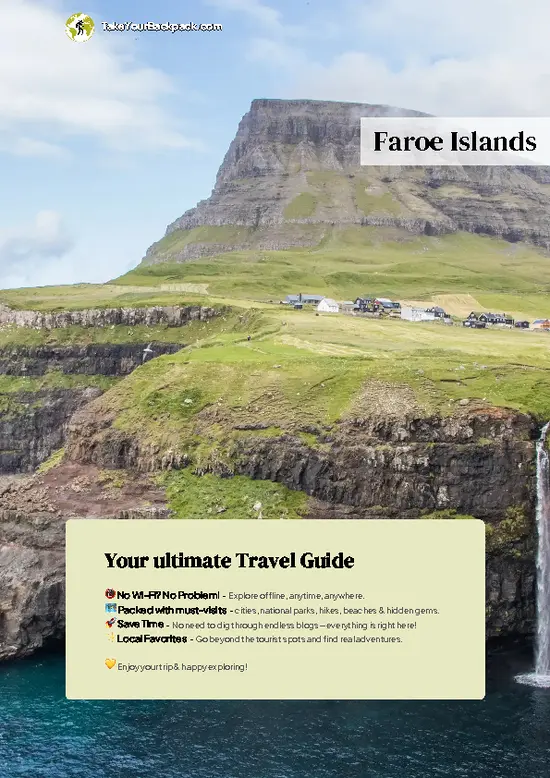
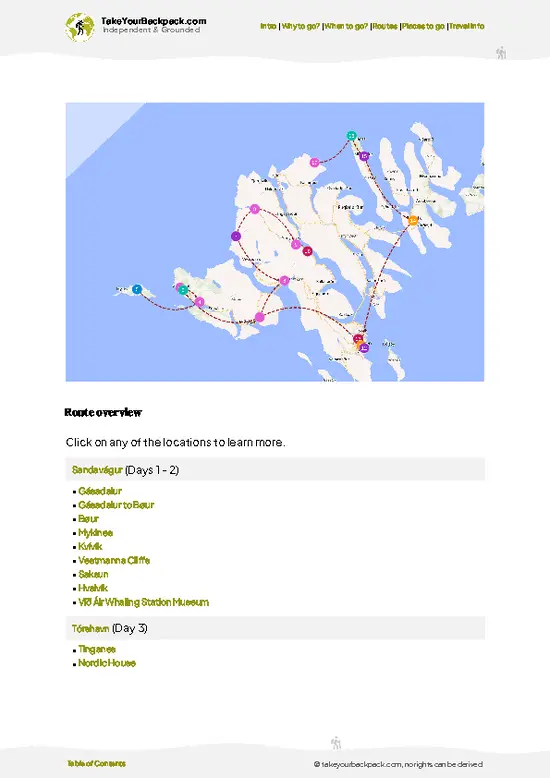
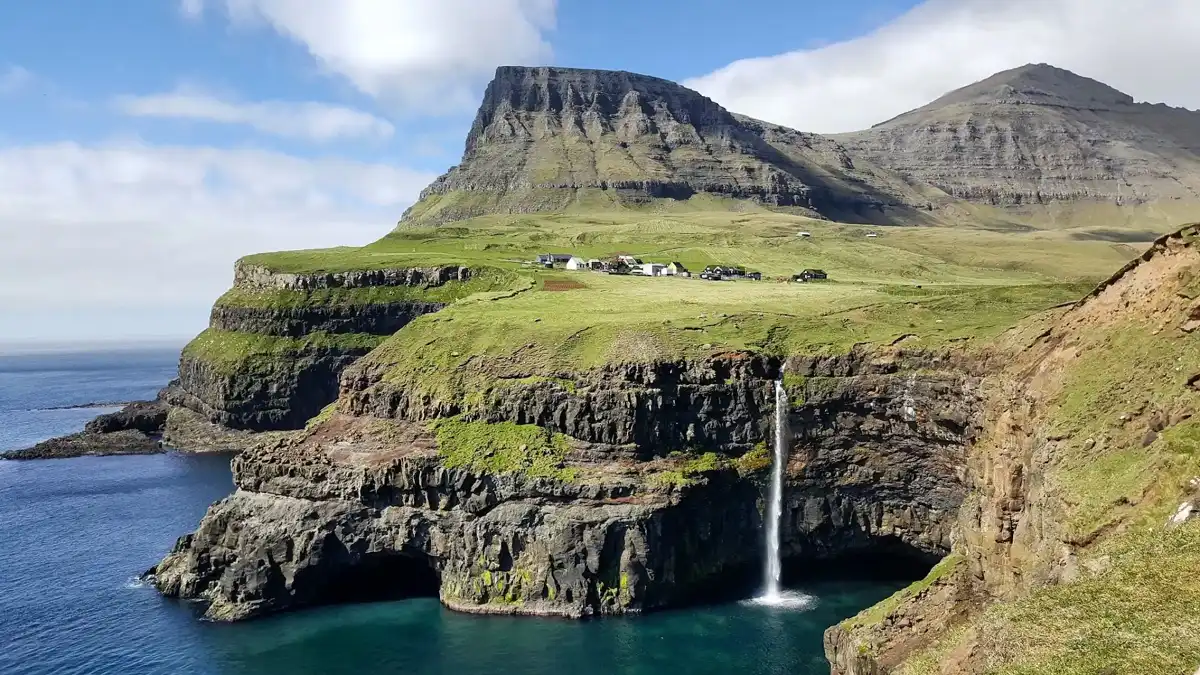
- Múlafossur Waterfall — The postcard shot of Gásadalur: a narrow stream plunging off the village cliffs straight into the ocean. Walk up to the edge, feel the spray, and photograph the falls with the village and sea stacks behind it.
- Cliff-top viewpoints above the waterfall — Short, well-worn paths and ledges give different angles on Múlafossur, Tindhólmur and the ocean. Great for sunrise or late-afternoon light; watch changing weather roll in over the Atlantic.
- Gásadalur Church (kirkja) — A tiny, quietly atmospheric village church and churchyard that holds local history in its gravestones and memorials. It’s a good place to pause and read family names that tell the story of the community.
- Traditional houses and turf-roof glimpses — The cluster of red-roofed and turf-roof houses gives
- Múlafossur Waterfall — The postcard shot of Gásadalur: a narrow stream plunging off the village cliffs straight into the ocean. Walk up to the edge, feel the spray, and photograph the falls with the village and sea stacks behind it.
- Cliff-top viewpoints above the waterfall — Short, well-worn paths and ledges give different angles on Múlafossur, Tindhólmur and the ocean. Great for sunrise or late-afternoon light; watch changing weather roll in over the Atlantic.
- Gásadalur Church (kirkja) — A tiny, quietly atmospheric village church and churchyard that holds local history in its gravestones and memorials. It’s a good place to pause and read family names that tell the story of the community.
- Traditional houses and turf-roof glimpses — The cluster of red-roofed and turf-roof houses gives a real feel for Faroese rural life. Stroll the lanes to see how buildings are sited against the wind and sea; very photogenic and authentic.
- The old mountain trail to Bøur (the historic pass) — The steep footpath that villagers used for generations before the tunnel is still walkable and dramatic. It’s short but sharp—bring good shoes—and rewards you with wild, exposed scenery and local context.
- Gásadalur Tunnel entrance and roadside viewpoints — The tunnel literally changed the village’s life. The portal area and nearby viewpoints are interesting for seeing how modern infrastructure meets remote settlement, and for practical access to the rest of Vágar.
- Village cemetery and churchyard — Small, contemplative, and revealing: the stones show family continuity, emigration patterns, and weather-worn lettering that tells more about daily life here than any brochure.
- Seabird-watching ledges — From the cliff edges around the village you can watch resident seabirds (fulmars, guillemots and others) wheel and nest on the rock faces. Binoculars adds a lot; remember to keep distance and avoid disturbing ledges.
- Sheepfolds, summer huts and grazing terraces — The agricultural features around the houses—old stone sheepfolds, simple summer huts and grazed slopes—show the Faroese subsistence patterns that still shape village rhythms today.
- Interpretive panels and photo spots by the parking/visitor area — The small information boards near the waterfall and parking explain local history, safety on the cliffs, and the dramatic isolation the village experienced; useful, short, and right where you’ll stand taking pictures.
Spotted a mistake or missing something? Contact us.

 Best Backpacking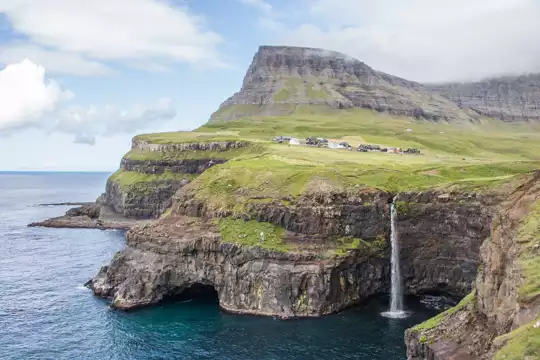
.jpg) Hi, I’m Johan (Netherlands 🇳🇱), the creator of TakeYourBackpack. Over the past 3 decades, I’ve backpacked through 90+ countries across six continents, gaining extensive experience with independent travel, long-term trips, and overland routes.
Hi, I’m Johan (Netherlands 🇳🇱), the creator of TakeYourBackpack. Over the past 3 decades, I’ve backpacked through 90+ countries across six continents, gaining extensive experience with independent travel, long-term trips, and overland routes.