×

Faroe Islands🇫🇴 | villagesGjógvnatural sea gorge, colorful cottages, coastal cliffs | things to do and best time to go

Explore FuglafjørðurExplore Gásadalur

Backpacking in Gjógv
🏆 Top pickvillage ranked #2
By Johan Kruseman 🇳🇱 | Updated July 30, 2026

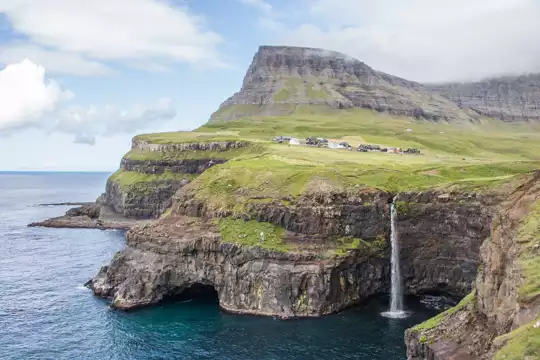
Most people online sell Gjógv as a sleepy postcard stop, but the surprise is how busy it gets in the middle of the day and how quickly it drops back into near-silence once the tour buses leave. Gjógv sits at the far northern tip of Eysturoy, at the end of a road that feels like it’s running out of world: cliffs, grass roofs, and the sea breathing at the bottom of the gorge that gives the village its name.

For backpackers, it’s both a reward and a bottleneck. You come for the cliff-edge walks, the sound of waves echoing in the gorge, and the way the light slides across Kalsoy and the northern islands. You also deal with limited shops, few budget beds, and weather that can erase the views in minutes. Evenings are quiet, more thermos tea than bar crawl, and meeting other travelers depends on who’s in your guesthouse that night. Compared with Funningur or Elduvík, Gjógv is more scenic and more visited, but still feels like a real village first and a viewpoint second.

Discover everything you want to know in the 📖 Faroe Islands Travel Guide.
Loading the map 🌍
CLICK TO FILTER
towns
villages
landmarks
national parks
hikes
beaches
attractions
festivals
regions
SHOW COUNTRY’S BESTSHOW ALL

✨ Why go?
Ranked #2 village in Faroe Islands
Reasons people choose to visit here

In the village of Gjógv, backpackers find a unique blend of atmosphere and natural beauty that makes it a worthwhile stop on any Faroe Islands route. The craggy cliffs and lush valleys create a backdrop that feels both intimate and expansive, inviting you to breathe deeply and slow down. This isn’t just a place to snap photos; it’s where you can truly immerse yourself in the local character. The village has a calm vibe, perfect for solo travelers or couples seeking a break from the busier tourist spots.

Hiking trails abound, leading you to stunning views and secluded beaches. You can tackle the Eiði hike or simply wander along the coastline, where the salty air invigorates your senses. Many travelers linger here, drawn by the slower pace and the chance to connect with locals over a cup of … read more 👉
In the village of Gjógv, backpackers find a unique blend of atmosphere and natural beauty that makes it a worthwhile stop on any Faroe Islands route. The craggy cliffs and lush valleys create a backdrop that feels both intimate and expansive, inviting you to breathe deeply and slow down. This isn’t just a place to snap photos; it’s where you can truly immerse yourself in the local character. The village has a calm vibe, perfect for solo travelers or couples seeking a break from the busier tourist spots.

Hiking trails abound, leading you to stunning views and secluded beaches. You can tackle the Eiði hike or simply wander along the coastline, where the salty air invigorates your senses. Many travelers linger here, drawn by the slower pace and the chance to connect with locals over a cup of coffee. It’s a great pause between more bustling destinations like Tórshavn and Klaksvik.

If you’re a slow traveler or a hiker, Gjógv will resonate with you. It’s not just a stop; it’s a chance to recharge and soak in the essence of the Faroe Islands.
Want to include Gjógv in your Faroe Islands route?
Create a personalized Faroe Islands itinerary that includes Gjógv and the places that fit your trip — based on your travel style, budget, and available time. Get your route in seconds.

Generate my trip

💡 HighlightsTop highlights of Gjógv

  • The Gorge (the gjógv itself) — the narrow sea cleft that gives the village its name: walk down to the edge, watch waves crash into the sheltered harbor and feel why this place was chosen by seafarers for centuries.
  • The harbour and jetty inside the cleft — tiny, dramatic and functional; the boats, ropes and weathered wood give a real sense of living fishing life rather than a staged tourist spot.
  • Cliff-top viewpoint above the village — a short scramble up from town rewards you with sweeping views of the gorge, surrounding peaks and the North Atlantic; sunrise/sunset here is quietly epic and very Faroese.
  • Gjógv Church — a small, white wooden church set against the fjord; it’s a focal point for village life and the little graveyard tells local stories you won’t find in guidebooks.
  • Village
read more 👉
  • The Gorge (the gjógv itself) — the narrow sea cleft that gives the village its name: walk down to the edge, watch waves crash into the sheltered harbor and feel why this place was chosen by seafarers for centuries.
  • The harbour and jetty inside the cleft — tiny, dramatic and functional; the boats, ropes and weathered wood give a real sense of living fishing life rather than a staged tourist spot.
  • Cliff-top viewpoint above the village — a short scramble up from town rewards you with sweeping views of the gorge, surrounding peaks and the North Atlantic; sunrise/sunset here is quietly epic and very Faroese.
  • Gjógv Church — a small, white wooden church set against the fjord; it’s a focal point for village life and the little graveyard tells local stories you won’t find in guidebooks.
  • Village museum / local collection (Bygdasavn-style displays) — small, often in a repurposed house, these displays of tools, photos and household items give context to how people in Gjógv lived and worked.
  • Traditional turf-roofed and painted wooden houses — wander the lanes and you’ll see vernacular Faroese architecture up close: turf, stone walls and cheerful paint that’s practical and picturesque.
  • Boathouses, drying-racks and shoreline working spaces — walk the foreshore for an honest look at how gear is stored and boats tended; great for photos and for understanding the village economy.
  • Coastal cliffs and basalt formations — the headlands around Gjógv have striking rock formations and seabird activity; easy to explore and rewarding for geology and birdwatching fans.
  • Stone walls, sheep folds and pastoral landscape — the patchwork fields, old stone enclosures and seasonal sheep grazing are living heritage—walk them to feel the island’s rural rhythms.
  • Short local walking trails and headland loops — well-marked, short hikes around the valley and out to nearby promontories give immersive views and a chance to meet locals or a flock of sheep.
A few excellent day-trip highlights just outside Gjógv: the sea stacks at Eiði (Risin and Kellingin), the pretty village of Funningur and the hikes up Slættaratindur / along the Eysturoy coast.
Spotted a mistake or missing something? Contact us.

Things to do near Gjógv

Ratings based on Tripadvisor reviews. When you book through this link, you support our work at no extra cost to you.

🌤️ When to go?Best time to visit Gjógv


  • Weather: Gjógv’s weather is famously unpredictable, swinging from misty drizzle to sharp sun in minutes. Summer months, June through August, offer the most stable conditions with less rain and calmer winds, making trails safer and views clearer.

  • Temperature: Expect cool summers, averaging 10–13°C (50–55°F), which means layering is essential. Winters hover around 0–3°C (32–37°F), often too harsh for casual backpacking but perfect for those chasing raw, dramatic landscapes.

  • Daylight Hours: In summer, daylight stretches to nearly 20 hours, giving you long, golden evenings to explore the village and surrounding cliffs. Winter days shrink to about 6 hours, limiting hiking time and making navigation trickier.

  • Crowds: Gjógv is a small village, so summer sees a modest influx of tourists,
read more 👉

  • Weather: Gjógv’s weather is famously unpredictable, swinging from misty drizzle to sharp sun in minutes. Summer months, June through August, offer the most stable conditions with less rain and calmer winds, making trails safer and views clearer.

  • Temperature: Expect cool summers, averaging 10–13°C (50–55°F), which means layering is essential. Winters hover around 0–3°C (32–37°F), often too harsh for casual backpacking but perfect for those chasing raw, dramatic landscapes.

  • Daylight Hours: In summer, daylight stretches to nearly 20 hours, giving you long, golden evenings to explore the village and surrounding cliffs. Winter days shrink to about 6 hours, limiting hiking time and making navigation trickier.

  • Crowds: Gjógv is a small village, so summer sees a modest influx of tourists, especially July and August. Visiting in late May or early September means fewer people, letting you savor the quiet fjord and the scent of sea and grass without interruption.

  • Seasonal Activities: Summer unlocks birdwatching, boat tours, and local festivals, while spring and autumn offer wildflower blooms and migrating seabirds. Winter’s stormy seas and snow-capped peaks are a spectacle but demand respect and preparation.

  • Price Fluctuations: Accommodation and transport costs peak in July and August. Booking outside this window can save you a significant chunk, especially in shoulder seasons when the village feels more like a secret than a destination.


Pro-tip: Aim for late May or early September to catch the sweet spot of decent weather, extended daylight, fewer crowds, and better prices—perfect for soaking in Gjógv’s rugged charm without the rush.


source: climatestotravel.comJANJanuary: fair for travelingFEBFebruary: fair for travelingMARMarch: fair for travelingAPRApril: good for travelingMAYMay: highly recommended for travelingJUNJune: excellent for travelingJULJuly: excellent for travelingAUGAugust: excellent for travelingSEPSeptember: highly recommended for travelingOCTOctober: good for travelingNOVNovember: fair for travelingDECDecember: fair for traveling
faroe-islands-city-gjogv
© Google | Saeed Ullah

✈️ The backpacker research shortcutFaroe Islands Travel Guide

An offline-friendly backpacking guide with optimized travel routes, ranked highlights, transport advice, and the best areas to stay.
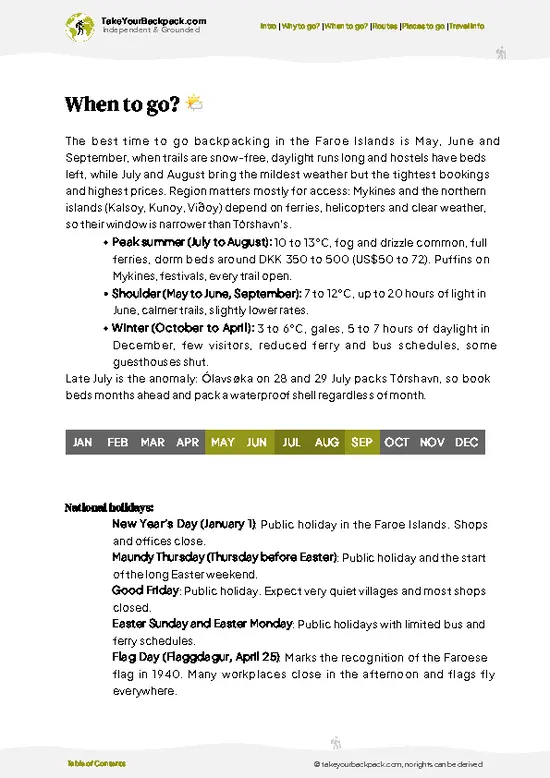
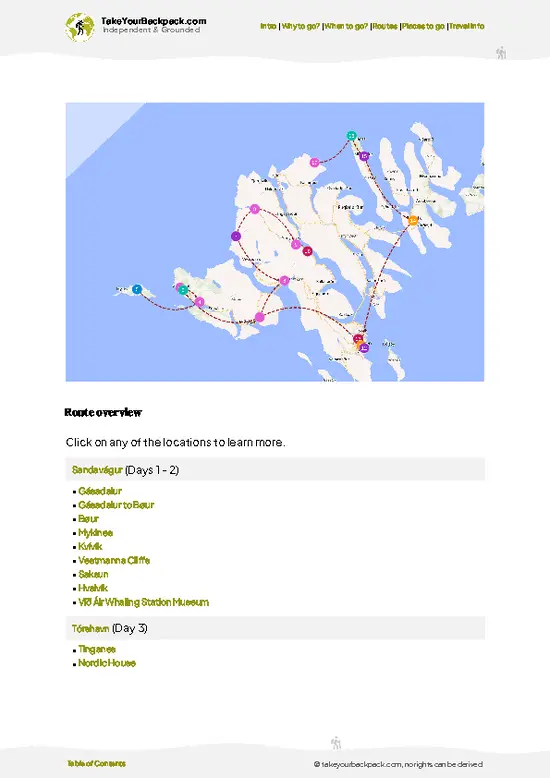
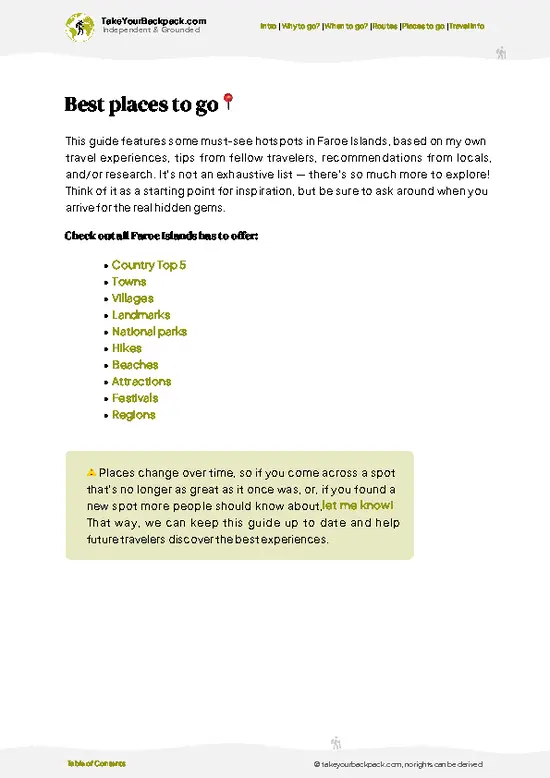
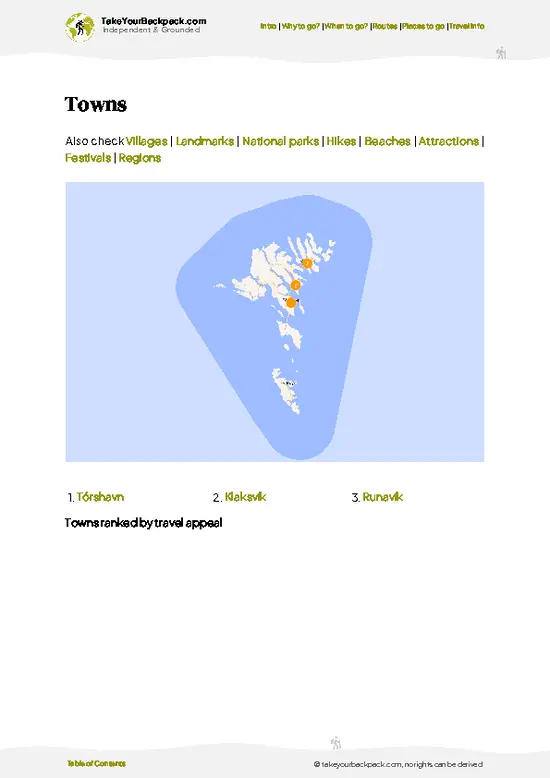
example page 0 from our offline Travel Guide for Faroe Islands
example page 1 from our offline Travel Guide for Faroe Islands
example page 2 from our offline Travel Guide for Faroe Islands
example page 3 from our offline Travel Guide for Faroe Islands
example page 4 from our offline Travel Guide for Faroe Islands
example page 5 from our offline Travel Guide for Faroe Islands
example page 6 from our offline Travel Guide for Faroe Islands
example page 7 from our offline Travel Guide for Faroe Islands
The digital guide (164 pages) contains:
40 highlights, ranked by travel appeal
Optimized 2, 3 & 5-day travel routes
Cities, national parks, landmarks, beaches
How to get around
Offline-friendly for travel without Wi-Fi
👉 Click to see all 30+ guide features

📅 Plan smarter in minutes, not weeks
Month by month travel advice
Festivals & national holidays
Budget expectations

🗺️ Go to the right places, skip the overrated ones
Honest pros & cons of destinations
Top hikes, parks & viewpoints
Lesser-known places most travelers miss
Clear “worth it vs skip it” guidance

🛏️ Travel smoothly without rookie mistakes
Best areas to stay
Transport systems explained simply
Common scams & safety advice
SIM cards, money & practical tips

🌍 Understand the country, not just visit it
Culture & traditions
52 Essential phrases & customs
Festivals worth planning around
Traveler-friendly historical context
Insights that make places more meaningful

📱 Built for real travel conditions
Fully downloadable PDF
Works completely offline
Optimized for phone use
Useful in remote areas & buses
Everything in one place
Save weeks of stressful planning
Get instant access to your full guide. 30‑day money-back guarantee.


By proceeding you agree to our terms.
Sent to your inbox immediately after payment • 100% Secure Checkout
Best Backpacking Travel Advisor 2025 tourism awardBest Backpacking
Travel Advisor
2025
What others say about Take Your Backpack Guides:
⭐⭐⭐⭐⭐
Fantastic, amazing amount of information!
⭐⭐⭐⭐⭐
My goodness this is amazing, it's what I've been looking for hats off too you!
⭐⭐⭐⭐⭐
I think this is absolutely BRILLIANT
⭐⭐⭐⭐
Very complete and informative. It's still missing places, but I gotta to commend you
⭐⭐⭐⭐⭐
This is truly amazing, thank you, can't wait to explore it with my kids!
⭐⭐⭐⭐⭐
Awesome resource, thank you!
⭐⭐⭐⭐⭐
This is amazing! Can't wait to explore the ones I haven't seen
⭐⭐⭐⭐
I love this! Well done, great idea.
⭐⭐⭐⭐⭐
Thanks for taking the time to make this gem!
⭐⭐⭐⭐⭐
This might be the best website I've ever seen.
⭐⭐⭐⭐⭐
Congratulations, and thank you so much for your work; it's incredibly valuable.
⭐⭐⭐⭐
In all seriousness I think you did a great job pointing out the important spots
⭐⭐⭐⭐⭐
10/10 very good
⭐⭐⭐⭐⭐
As someone who's only just starting to visit regularly this is awesome, thank you.
⭐⭐⭐⭐
Thank you very much! I'm going to visit my dad, it's going to be very useful!
⭐⭐⭐⭐⭐
This is really cool! We'll be travelling for the first time and this definitely come in handy.
⭐⭐⭐⭐⭐
You are now our minister of culture, congratulations 👨‍💼
⭐⭐⭐⭐⭐
Just wanted to tell you that this is a pearl! Going to follow your recommendations.
⭐⭐⭐⭐⭐
This is so cool. I'll definitely be using the resource for my travels soon.
⭐⭐⭐⭐⭐
This is very impressive! Good work.
⭐⭐⭐⭐⭐
This is an amazing and informative site. Very well done!

🛏️ Where to stay?Best areas and accommodation options

Gjógv is a tiny village where the air tastes of salt and moss, and the cliffs drop sharply into the North Atlantic’s restless blue. Staying here means embracing simplicity, but that’s exactly the point. The best places for backpackers aren’t flashy hotels—they’re guesthouses and small inns that feel like stepping into a local’s living room, with creaky wooden floors and the faint scent of peat smoke.

Start with the Gjógv Hostel. It’s the go-to for budget travelers because it’s affordable, clean, and right at the village’s edge, where you can hear the ocean’s pulse through the windows. Booking … read more 👉
Gjógv is a tiny village where the air tastes of salt and moss, and the cliffs drop sharply into the North Atlantic’s restless blue. Staying here means embracing simplicity, but that’s exactly the point. The best places for backpackers aren’t flashy hotels—they’re guesthouses and small inns that feel like stepping into a local’s living room, with creaky wooden floors and the faint scent of peat smoke.

Start with the Gjógv Hostel. It’s the go-to for budget travelers because it’s affordable, clean, and right at the village’s edge, where you can hear the ocean’s pulse through the windows. Booking here means you’re close enough to the harbor to catch the morning light spilling over the basalt columns, but far enough from the few houses to enjoy the village’s quiet hum.

If you want a bit more character, try the local guesthouses like Gjáargarður. It’s run by a family who knows the village’s rhythms and can point you to the best hiking trails or the perfect spot to watch puffins dive. Staying here means waking up to the smell of fresh bread and the sound of sheep bells, grounding you in Gjógv’s slow pace.

Avoid the temptation to rush into town or stay in Tórshavn for convenience. Gjógv’s charm is in its stillness and raw edges—embracing that means choosing lodging that’s part of the village’s heartbeat, not just a place to crash.

🚌 Day tripsShort trips worth adding

Nestled in the rugged beauty of the Faroe Islands, Gjógv is your launchpad for unforgettable day trips. The village itself is a postcard of colorful houses and dramatic cliffs, but the real magic lies beyond. Here are some day trips that will elevate your experience.

1. Hike to Slættaratindur
This is the highest peak in the Faroe Islands, standing at 880 meters. The trailhead is about a 30-minute drive from Gjógv. The hike takes roughly 4-5 hours round trip, but the panoramic views of the islands are worth every step. You’ll feel the cool wind on your face as you ascend, and the scent of wildflowers fills the air. Aim for late spring or early summer when the landscape bursts into color. A common mistake? Underestimating the weather; it can change in an instant, so pack layers. Expect to … read more 👉
Nestled in the rugged beauty of the Faroe Islands, Gjógv is your launchpad for unforgettable day trips. The village itself is a postcard of colorful houses and dramatic cliffs, but the real magic lies beyond. Here are some day trips that will elevate your experience.

1. Hike to Slættaratindur
This is the highest peak in the Faroe Islands, standing at 880 meters. The trailhead is about a 30-minute drive from Gjógv. The hike takes roughly 4-5 hours round trip, but the panoramic views of the islands are worth every step. You’ll feel the cool wind on your face as you ascend, and the scent of wildflowers fills the air. Aim for late spring or early summer when the landscape bursts into color. A common mistake? Underestimating the weather; it can change in an instant, so pack layers. Expect to spend around 100 DKK on transportation and snacks. 👉 Explore Gjógv

2. Visit the Village of Saksun
Just a 40-minute drive from Gjógv, Saksun is a serene village with a stunning lagoon and dramatic cliffs. The walk from the parking area to the village is about 20 minutes, and you’ll be greeted by the sound of birds and the gentle lapping of water. Spend time exploring the old church and the surrounding landscape. The best time to visit is during the summer months when the grass is lush and green. Budget around 50 DKK for gas and snacks. A rookie mistake is rushing through; take your time to soak in the tranquility. 👉 Explore Gjógv

3. Explore Tjørnuvík
This charming village is about a 30-minute drive from Gjógv and offers a stunning beach with views of the famous sea stacks, Risin and Kellingin. The walk from the parking area to the beach is short but rewarding. You can spend a couple of hours here, enjoying the sound of waves crashing and the salty breeze. Late summer is ideal for a visit, as the sunsets are breathtaking. Expect to spend around 70 DKK on transportation. Many first-timers miss the best photo spots; take a moment to wander and find your angle. 👉 Explore Gjógv

4. The Waterfall at Múlagljúfur
This hidden treasure is about an hour’s drive from Gjógv. The hike to the waterfall is moderate, taking about 2-3 hours round trip. The sound of rushing water and the sight of the falls cascading down the cliffs create an atmosphere of pure serenity. Late spring is perfect for this trip, as the waterfall is at its fullest. Budget around 150 DKK for gas and snacks. A common oversight is not checking the trail conditions; be prepared for muddy paths. 👉 Explore Gjógv

Each of these trips offers a unique slice of the Faroe Islands, making your base in Gjógv not just a stopover, but a gateway to adventure.
Want to know what more Faroe Islands offers?
The Faroe Islands Travel Guide describes 40 highlights, from cities to national parks, from beaches to hikes

Get the Travel Guide -

Other Faroese villages near Gjógv

Explore more nearby:

  • Fuglafjørður—working harbor, art murals, industrial heritage| 11 km away
  • Tjørnuvík—black sand beach, surf break, Risin og Kellingin view| 11 km away
  • Saksun—tidal lagoon, turf-roofed farm, amphitheater valley| 14 km away

💡 Not sure where to go next?
Create a personalized itinerary for Faroe Islands including Gjógv and the places that fit your trip.

Generate my itinerary

👉 Discover all villages

Or checkout all Faroe Islands has to offer (think cities, towns, villages, national parks, hikes, beaches, festivals)
Country photo of Faroe Islands

We 💚 feedbackSumming up the experience

In Gjógv, the air is thick with the scent of the sea and wildflowers, a reminder that nature reigns here. The village’s charm lies in its rugged cliffs and the vibrant colors of the houses, but don’t rush. Take your time to wander the narrow paths and soak in the local vibe. A surprise? The warmth of the locals—grab a coffee at the small café and chat. Just a heads-up: the weather can change in a heartbeat, so pack layers. Embrace the unpredictability; it’s part of the magic.

✍️ Help improve this page!
The information on this page is based on in-depth research, insights shared by experienced travelers, and feedback from the local travel community in Faroe Islands. While every effort is made to keep the information accurate and current, conditions can change — so if you spot anything incorrect or outdated, please get in touch.


🙋‍♂️ Give feedback

👋 Meet the founderWho’s Behind Take Your Backpack?

Johan, backpacker and founder of TakeYourBackpackHi, I’m Johan (Netherlands 🇳🇱), the creator of TakeYourBackpack. Over the past decade, I’ve backpacked through 80+ countries across six continents, gaining extensive experience with independent travel, long-term trips, and overland routes.

This site is built on a combination of firsthand travel experience and carefully curated insights from other backpackers. Many guides are based on places I’ve personally visited, while others bring together tips, observations, and practical advice shared by trusted travelers I’ve met along the way.

The goal is to provide realistic, experience-driven guidance — not generic itineraries — so you can explore destinations with better context, clearer expectations, and more confidence.

Get full country guide •
Instant download • 40 highlights • Full Offline guide