


×

Fiji🇫🇯 | festivalsDiwali Festivaltemple ceremonies, family gatherings, sweets, lantern displays | things to do and best time to go

Explore Bula FestivalExplore Fiji Day

Backpacking in Diwali
👀 For curious travelersfestival ranked #5
By Johan Kruseman 🇳🇱 | Updated September 4, 2026

Diwali in Fiji is not for anyone chasing all-night techno, anonymous crowds, or a booze-fueled beach rave. It’s slower, brighter, more family-centered. But that’s exactly why backpackers win here: you trade overpriced “festival packages” for real homes, real food, and real stories. Diwali is celebrated across Fiji, with the biggest energy in Suva, Nadi, and Lautoka, where streets and Hindu temples glow with oil lamps and fireworks. The soundtrack is Bollywood hits, devotional bhajans, and Hindi pop blasting from shopfront speakers, with kids setting off firecrackers and aunties pushing plates of sweets into your hands. The vibe is welcoming but conservative: think sandals, modest clothes, and early nights rather than clubbing. It runs over several days, with one main night of lights, and it’s worth visiting if you want cultural immersion and human connection more than a “festival wristband” experience.

Discover everything you want to know in the 📖 Fiji Travel Guide.


Get your Fiji guide
50 ranked highlights, routes & tips, works offline (208 pages)
Loading the map 🌍
CLICK TO FILTER
towns
villages
landmarks
national parks
hikes
beaches
attractions
festivals
regions
SHOW COUNTRY’S BESTSHOW ALL

✨ Why go?
Ranked #5 festival in Fiji
What makes this festival worth celebrating

Backpackers flock to Fiji during the Diwali Festival for a reason that goes beyond the vibrant lights. This celebration is a social energy powerhouse, igniting connections among travelers and locals alike. Imagine sharing laughter and stories with new friends as you feast on traditional sweets and watch the night sky light up with fireworks.

The festival creates a temporary community that feels electric. You’re not just an observer; you’re part of something larger, immersing yourself in the rich tapestry of Fijian culture. This isn’t just a party; it’s a chance to learn about customs, rituals, and the spirit of togetherness that defines the island.

Plus, when you compare costs, Diwali offers a budget-friendly experience. Many events are free or low-cost, allowing you to save your cash for … read more 👉
Backpackers flock to Fiji during the Diwali Festival for a reason that goes beyond the vibrant lights. This celebration is a social energy powerhouse, igniting connections among travelers and locals alike. Imagine sharing laughter and stories with new friends as you feast on traditional sweets and watch the night sky light up with fireworks.

The festival creates a temporary community that feels electric. You’re not just an observer; you’re part of something larger, immersing yourself in the rich tapestry of Fijian culture. This isn’t just a party; it’s a chance to learn about customs, rituals, and the spirit of togetherness that defines the island.

Plus, when you compare costs, Diwali offers a budget-friendly experience. Many events are free or low-cost, allowing you to save your cash for other adventures. Planning your route around Diwali means you can seamlessly integrate this cultural highlight into your longer travel plans, ensuring that every moment is filled with meaning and excitement. Don’t miss out on this opportunity to enrich your journey!
Want to include Diwali Festival in your Fiji route?
Create a personalized Fiji itinerary that includes Diwali Festival and the places that fit your trip — based on your travel style, budget, and available time. Get your route in seconds.

Generate my trip

💡 HighlightsKey sights and experiences for travelers

  1. Temple puja and lamp-lighting — Visiting a Hindu mandir during Diwali is something else: rows of oil lamps, incense, and a communal puja where locals invite visitors to join. It’s quieter than the street chaos but packed with warmth — you’ll feel the festival’s spiritual core while lamps flicker against tropical night air.
  2. Rangoli/kolam and home decorations — Doorsteps and temple courtyards are transformed with intricate colored-powder designs, flower garlands, and strings of lights. The patterns are artistic, often made by whole families, and the bright colors against Fijian greenery give everything a unique island twist.
  3. Live music, classical dance and community shows — Expect bhajans, kirtan and classical dance alongside folk and Bollywood-style performances staged by community groups.
read more 👉
  1. Temple puja and lamp-lighting — Visiting a Hindu mandir during Diwali is something else: rows of oil lamps, incense, and a communal puja where locals invite visitors to join. It’s quieter than the street chaos but packed with warmth — you’ll feel the festival’s spiritual core while lamps flicker against tropical night air.
  2. Rangoli/kolam and home decorations — Doorsteps and temple courtyards are transformed with intricate colored-powder designs, flower garlands, and strings of lights. The patterns are artistic, often made by whole families, and the bright colors against Fijian greenery give everything a unique island twist.
  3. Live music, classical dance and community shows — Expect bhajans, kirtan and classical dance alongside folk and Bollywood-style performances staged by community groups. What’s special in Fiji is the mix: traditionally Indian forms performed with local enthusiasm and occasional island rhythm influences, so it’s both authentic and lively.
  4. Street food, sweet markets and Indo-Fijian flavors — Food stalls sell everything from spicy curries and roti to laddoo, jalebi and other sweets; many vendors add local ingredients like coconut or tropical fruit for a distinctive flavour. Sharing plates is common, so it’s the perfect time to taste homemade treats and chat with locals over food.
  5. Community fairs, fireworks and night-time atmosphere — After dusk the streets fill with stalls, kids with sparklers, and fireworks over open fields or waterfronts. The contrast between the gentle glow of diyas and the louder street-fair energy makes Fiji’s Diwali feel both intimate and celebratory at once.
Spotted a mistake or missing something? Contact us.

🌤️ When to go?When is the celebration of Diwali Festival?


  • Topic: Weather – Diwali in Fiji falls during the dry season, typically late September to early October. Expect warm, stable weather with daytime highs around 28-31°C (82-88°F). This means less sweat and more energy for exploring vibrant celebrations without the interruption of tropical downpours.

  • Topic: Temperature – Nights cool down to a comfortable 20-22°C (68-72°F), perfect for evening festivities without overheating. The balance keeps you alert and ready to dive into the festival’s dynamic atmosphere.

  • Topic: Daylight Hours – With roughly 12 hours of daylight, you get ample time to soak in both daytime rituals and nighttime fireworks. The steady light cycle helps maintain your rhythm, so you’re not rushing or dragging through the experience.

  • Topic: Crowds – Diwali draws local communities
read more 👉

  • Topic: Weather – Diwali in Fiji falls during the dry season, typically late September to early October. Expect warm, stable weather with daytime highs around 28-31°C (82-88°F). This means less sweat and more energy for exploring vibrant celebrations without the interruption of tropical downpours.

  • Topic: Temperature – Nights cool down to a comfortable 20-22°C (68-72°F), perfect for evening festivities without overheating. The balance keeps you alert and ready to dive into the festival’s dynamic atmosphere.

  • Topic: Daylight Hours – With roughly 12 hours of daylight, you get ample time to soak in both daytime rituals and nighttime fireworks. The steady light cycle helps maintain your rhythm, so you’re not rushing or dragging through the experience.

  • Topic: Crowds – Diwali draws local communities and some tourists, but it’s not peak tourist season. You’ll avoid the crush common in summer months, giving you space to engage authentically without feeling overwhelmed or stuck in lines.

  • Topic: Seasonal Activities – This period aligns with cultural events beyond Diwali, like traditional dances and food fairs. Timing your visit here means you catch a broader slice of Fiji’s Indo-Fijian heritage, enriching your backpacking story.

  • Topic: Price Fluctuations – Prices for accommodation and flights are generally lower than the December peak holiday season. Booking around Diwali lets you stretch your budget further, reserving cash for local experiences rather than inflated tourist traps.


Pro-tip: Lock in your trip for late September to early October to dodge rain, crowds, and high prices—keeping your energy and wallet intact for the moments that truly matter.


source: climatestotravel.comJANJanuary: not recommended for travelingFEBFebruary: not recommended for travelingMARMarch: not recommended for travelingAPRApril: not recommended for travelingMAYMay: not recommended for travelingJUNJune: not recommended for travelingJULJuly: not recommended for travelingAUGAugust: not recommended for travelingSEPSeptember: highly recommended for travelingOCTOctober: highly recommended for travelingNOVNovember: not recommended for travelingDECDecember: not recommended for traveling

✈️ The backpacker research shortcutFiji Travel Guide

An offline-friendly backpacking guide with optimized travel routes, ranked highlights, transport advice, and the best areas to stay.
example page 0 from our offline Travel Guide for Fiji
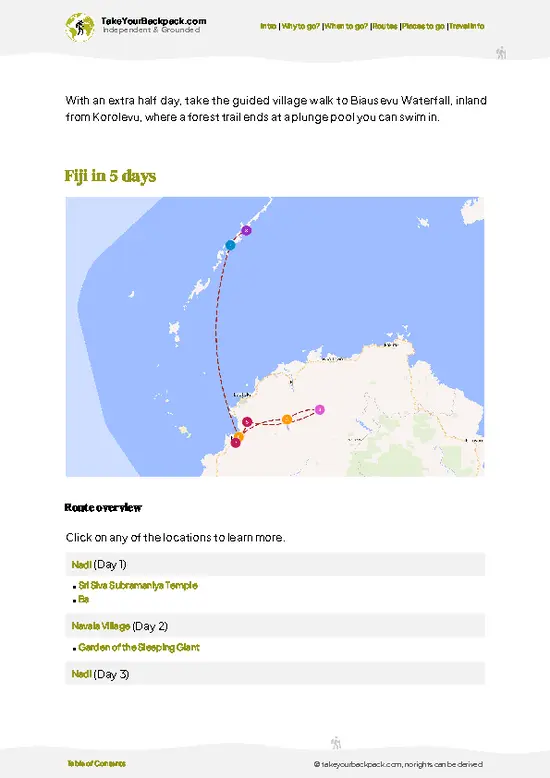
example page 1 from our offline Travel Guide for Fiji
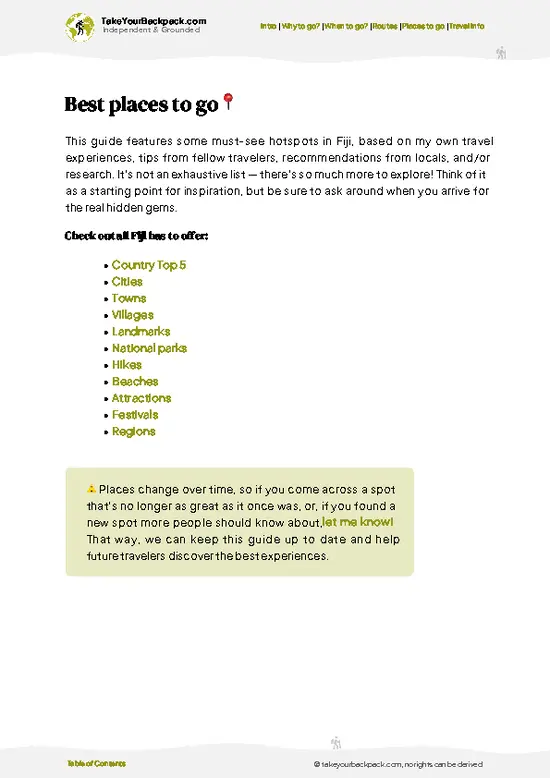
example page 2 from our offline Travel Guide for Fiji
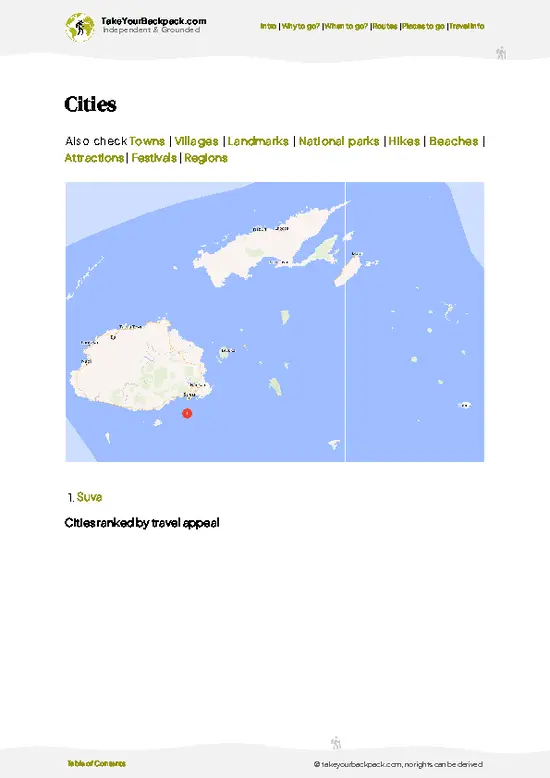
example page 3 from our offline Travel Guide for Fiji
example page 4 from our offline Travel Guide for Fiji
example page 5 from our offline Travel Guide for Fiji
example page 6 from our offline Travel Guide for Fiji
example page 7 from our offline Travel Guide for Fiji
The digital guide (208 pages) contains:
50 highlights, ranked by travel appeal
Optimized 2, 3 & 5-day travel routes
Cities, national parks, landmarks, beaches
How to get around
Offline-friendly for travel without Wi-Fi
👉 Click to see all 30+ guide features

📅 Plan smarter in minutes, not weeks
Month by month travel advice
Festivals & national holidays
Budget expectations

🗺️ Go to the right places, skip the overrated ones
Honest pros & cons of destinations
Top hikes, parks & viewpoints
Lesser-known places most travelers miss
Clear “worth it vs skip it” guidance

🛏️ Travel smoothly without rookie mistakes
Best areas to stay
Transport systems explained simply
Common scams & safety advice
SIM cards, money & practical tips

🌍 Understand the country, not just visit it
Culture & traditions
52 Essential phrases & customs
Festivals worth planning around
Traveler-friendly historical context
Insights that make places more meaningful

📱 Built for real travel conditions
Fully downloadable PDF
Works completely offline
Optimized for phone use
Useful in remote areas & buses
Everything in one place
Save weeks of stressful planning
Get instant access to your full guide. 30‑day money-back guarantee.
+ Add another guide for just CA$11.15

By proceeding you agree to our terms.
Sent to your inbox immediately after payment • 100% Secure Checkout
Best Backpacking Travel Advisor 2025 tourism awardBest Backpacking
Travel Advisor
2025
What others say about Take Your Backpack Guides:
⭐⭐⭐⭐⭐
Fantastic, amazing amount of information!
⭐⭐⭐⭐⭐
My goodness this is amazing, it's what I've been looking for hats off too you!
⭐⭐⭐⭐⭐
I think this is absolutely BRILLIANT
⭐⭐⭐⭐
Very complete and informative. It's still missing places, but I gotta to commend you
⭐⭐⭐⭐⭐
This is truly amazing, thank you, can't wait to explore it with my kids!
⭐⭐⭐⭐⭐
Awesome resource, thank you!
⭐⭐⭐⭐⭐
This is amazing! Can't wait to explore the ones I haven't seen
⭐⭐⭐⭐
I love this! Well done, great idea.
⭐⭐⭐⭐⭐
Thanks for taking the time to make this gem!
⭐⭐⭐⭐⭐
This might be the best website I've ever seen.
⭐⭐⭐⭐⭐
Congratulations, and thank you so much for your work; it's incredibly valuable.
⭐⭐⭐⭐
In all seriousness I think you did a great job pointing out the important spots
⭐⭐⭐⭐⭐
10/10 very good
⭐⭐⭐⭐⭐
As someone who's only just starting to visit regularly this is awesome, thank you.
⭐⭐⭐⭐
Thank you very much! I'm going to visit my dad, it's going to be very useful!
⭐⭐⭐⭐⭐
This is really cool! We'll be travelling for the first time and this definitely come in handy.
⭐⭐⭐⭐⭐
You are now our minister of culture, congratulations 👨‍💼
⭐⭐⭐⭐⭐
Just wanted to tell you that this is a pearl! Going to follow your recommendations.
⭐⭐⭐⭐⭐
This is so cool. I'll definitely be using the resource for my travels soon.
⭐⭐⭐⭐⭐
This is very impressive! Good work.
⭐⭐⭐⭐⭐
This is an amazing and informative site. Very well done!

🛏️ Where to stay?Best areas and accommodation options

When you’re gearing up for the Diwali Festival in Fiji, the right base can make all the difference. Head to Nadi, a bustling hub where the festival’s energy crackles in the air. It’s safe, social, and teeming with fellow travelers. You’ll find a mix of budget-friendly accommodations that encourage camaraderie.

Don’t overlook Lautoka, just a short ride from Nadi. This town offers a more laid-back vibe, with local markets and friendly faces. It’s a great spot to soak in the festival’s spirit without the chaos of larger crowds.

Suva, the capital, is another option. It’s vibrant and diverse, with … read more 👉
When you’re gearing up for the Diwali Festival in Fiji, the right base can make all the difference. Head to Nadi, a bustling hub where the festival’s energy crackles in the air. It’s safe, social, and teeming with fellow travelers. You’ll find a mix of budget-friendly accommodations that encourage camaraderie.

Don’t overlook Lautoka, just a short ride from Nadi. This town offers a more laid-back vibe, with local markets and friendly faces. It’s a great spot to soak in the festival’s spirit without the chaos of larger crowds.

Suva, the capital, is another option. It’s vibrant and diverse, with plenty of cultural experiences. The festival here is a spectacle, and staying in the city means you’re right in the thick of it.

Wherever you choose, prioritize areas that foster interaction. Look for spots near community centers or temples, where celebrations will be in full swing. Avoid places too far from the action; you want to be part of the festivities, not stuck in transit. This way, you’ll preserve your energy and budget for the moments that truly matter.

👛 Costs (as of 4 September 2026)Typical daily expenses

The Diwali Festival in Fiji is a vibrant celebration, but navigating costs can be tricky. Here’s a breakdown to keep your budget in check while you soak in the festivities.
  • Festival Tickets: Expect to pay around $10 to $30 USD for entry to various events. Some larger celebrations may charge more, but many community events are free. Keep an eye out for local flyers to catch the best deals.
  • Accommodation: Prices vary widely. Budget hostels start at about $20 USD per night, while mid-range hotels can range from $60 to $120 USD. If you want a touch of luxury, expect to pay $150 USD and up. Book early to snag the best rates, especially during peak festival times.
  • Local Transport: Buses are your best bet for budget travel, costing around $1 to $5 USD per ride. Taxis are available, but they can add
read more 👉
The Diwali Festival in Fiji is a vibrant celebration, but navigating costs can be tricky. Here’s a breakdown to keep your budget in check while you soak in the festivities.
  • Festival Tickets: Expect to pay around $10 to $30 USD for entry to various events. Some larger celebrations may charge more, but many community events are free. Keep an eye out for local flyers to catch the best deals.
  • Accommodation: Prices vary widely. Budget hostels start at about $20 USD per night, while mid-range hotels can range from $60 to $120 USD. If you want a touch of luxury, expect to pay $150 USD and up. Book early to snag the best rates, especially during peak festival times.
  • Local Transport: Buses are your best bet for budget travel, costing around $1 to $5 USD per ride. Taxis are available, but they can add up quickly, with fares starting around $10 USD for short trips. Consider renting a bike for a fun, economical way to explore.
  • Food & Drinks: Street food is a steal, with meals costing between $5 to $10 USD. Sit-down restaurants will set you back $15 to $30 USD per meal. Don’t forget to budget for drinks; local beers are about $5 USD, while cocktails can reach $10 USD or more.
  • Miscellaneous Expenses: Factor in around $20 to $50 USD for souvenirs, festival-specific items, or unexpected costs. This cushion will help you enjoy spontaneous experiences without stress.

Stay sharp and plan ahead to make the most of your Diwali experience in Fiji.


source: fiji.travel
⚠️ Prices can change and everyone travels differently, so take this as a rough guide. Hope it helps you plan your adventure!

🍲 FoodLocal Flavors for Backpackers

At the Diwali Festival in Fiji, food and drinks transform the atmosphere into a vibrant celebration. You’ll find stalls brimming with local specialties like samosas, paneer, and luscious sweets such as gulab jamun and barfi. The aromas of spices waft through the air, pulling you toward the next culinary delight.

Don’t miss the chance to try kava, a traditional drink that’s both refreshing and a social experience. It’s often served in a communal bowl, so be ready to share and engage with locals. This is where the festival’s spirit truly shines—everyone is in it together.

When it comes to etiquette, be prepared for lines, especially at popular stalls. Patience is key; the best bites are worth the wait. Cash is king here, so stash some Fijian dollars for those spontaneous snack attacks. Serving … read more 👉
At the Diwali Festival in Fiji, food and drinks transform the atmosphere into a vibrant celebration. You’ll find stalls brimming with local specialties like samosas, paneer, and luscious sweets such as gulab jamun and barfi. The aromas of spices waft through the air, pulling you toward the next culinary delight.

Don’t miss the chance to try kava, a traditional drink that’s both refreshing and a social experience. It’s often served in a communal bowl, so be ready to share and engage with locals. This is where the festival’s spirit truly shines—everyone is in it together.

When it comes to etiquette, be prepared for lines, especially at popular stalls. Patience is key; the best bites are worth the wait. Cash is king here, so stash some Fijian dollars for those spontaneous snack attacks. Serving sizes can vary, so don’t hesitate to ask for smaller portions if you want to sample multiple dishes.

Embrace the chaos, savor the flavors, and let the festival’s energy fuel your adventure. Each bite is a piece of the celebration, a taste of Fiji’s heart.

FAQFrequently asked questions about Diwali

Diwali Festival in Fiji typically takes place in October or November, depending on the lunar calendar, lasting for about 1 to 2 days.
Attending the Diwali Festival in Fiji is generally free of charge, as it is a public cultural celebration held in community spaces.
No, you do not need tickets in advance for the Diwali Festival in Fiji; it is an open event accessible to all visitors and locals.
⚠️ Things can change over time, so always validate details locally before you go.

Other Fijian festivals near Diwali

Explore more nearby:

  • Hibiscus Festival—beauty pageant, amusement rides, craft markets, live entertainment
  • Bula Festival—community parades, local music, food stalls, charity events
  • Fiji Day—flag-raising, military marches, cultural performances, national pride

💡 Not sure where to go next?
Create a personalized itinerary for Fiji including Diwali and the places that fit your trip.

Generate my itinerary

👉 Discover all festivals

Or checkout all Fiji has to offer (think cities, towns, villages, national parks, hikes, beaches, festivals)
Country photo of Fiji

We 💚 feedbackFinal thoughts on celebrating the Diwali

The vibe during Diwali in Fiji is electric. Picture vibrant streets alive with laughter, families lighting diyas, and the air thick with the scent of sweet treats. But here’s the kicker: book your accommodations early. Prices skyrocket as locals and tourists flock in. The best surprise? The communal spirit—everyone’s invited to share in the festivities, so don’t shy away from joining in. Embrace the chaos; it’s part of the magic. Keep your energy for the moments that matter, not the stress of last-minute plans.

✍️ Help improve this page!
The information on this page is based on in-depth research, insights shared by experienced travelers, and feedback from the local travel community in Fiji. While every effort is made to keep the information accurate and current, conditions can change — so if you spot anything incorrect or outdated, please get in touch.


🙋‍♂️ Give feedback

👋 Meet the founderWho’s Behind Take Your Backpack?

Johan, backpacker and founder of TakeYourBackpackHi, I’m Johan (Netherlands 🇳🇱), the creator of TakeYourBackpack. Over the past decade, I’ve backpacked through 80+ countries across six continents, gaining extensive experience with independent travel, long-term trips, and overland routes.

This site is built on a combination of firsthand travel experience and carefully curated insights from other backpackers. Many guides are based on places I’ve personally visited, while others bring together tips, observations, and practical advice shared by trusted travelers I’ve met along the way.

The goal is to provide realistic, experience-driven guidance — not generic itineraries — so you can explore destinations with better context, clearer expectations, and more confidence.

Get full Fiji guide •
Instant download • 50 highlights • Full Offline guide